


Fire regimes of Eastern Cascades lodgepole pine communities
Zouhar, Kristin. 2026. Fire regimes of Eastern Cascades lodgepole pine communities. In: Fire Effects Information System, [Online]. U.S. Department of Agriculture, Forest Service, Rocky Mountain Research Station, Missoula Fire Sciences Laboratory (Producer). Available: https://research.fs.usda.gov/feis/fire-regimes/eastern-cascades-lodgepole-pine
Sierra lodgepole pine forests in the eastern Cascade Range mostly occur on the Pumice Plateau on sites with nutrient-poor soils that strongly affect forest structure, composition, and understory fuels. These characteristics result in fire regimes that differ substantially from other lodgepole pine forests in the western United States. Understory fuels tend to be sparse and discontinuous, although antelope bitterbrush likely carried fires historically in some stands. Stand structure and fuel characteristics are also strongly influenced by the interactions of fire, fungi, and mountain pine beetles, which alter canopy and understory fuels and subsequent fire behavior. The likelihood and severity of fires in lodgepole pine stands depend not only on receptive fuel beds, but also on climate and weather conditions affecting these forests and surrounding forests. Fires in surrounding forests are often the source of ignition in lodgepole pine stands. Limited data from a small number of publications suggest that historical fire regimes are characterized by patchy, mixed-severity fires occurring at intervals of about 24 to 150 years.
Contemporary fire regimes in these stands do not seem to have changed much from historical regimes, largely because forest management and fire exclusion did not alter fuels on many sites. However, fire exclusion has led to a decrease in cover of antelope bitterbrush on some sites, thus reducing the likelihood of fire being carried in those stands. Widespread mountain pine beetle outbreaks and associated dwarf mistletoe infection have altered fuel characteristics on many sites and raised concerns about how this might affect fire regimes. However, the connection between these disturbances is probably similar to historical patterns. The effects of fire exclusion and climate change on fire regimes of surrounding forests may affect the frequency of fire in Sierra lodgepole pine forests in the Eastern Cascades.




Introduction
This Fire Regime Synthesis brings together information from the scientific literature (as of 2025), and the Biophysical Settings (BpS) models and associated Fire Regime Data Products developed by LANDFIRE to summarize what is known about historical and contemporary fire regimes in lodgepole pine communities in the eastern Cascade Range. This information supplements that provided by FEIS Species Reviews and can assist with revisions to LANDFIRE models.
The period of reference for describing historical fire regimes is often defined as the few centuries before widespread Euro-American settlement and referred to as the “presettlement” period, which began in the mid-to late 1800s in the eastern Cascade Range [14,15,20]. Euro-American settlement resulted in fire exclusion due to cessation of burning by American Indians, altered fuel structures due to logging and grazing, and active fire suppression beginning around 1905. The presettlement period generally includes the past 400 to 600 years for which fire-scar records are available, but it may also include fire activity over past millennia for which charcoal-deposition records are available (e.g., in bog and lake sediments). The term “historical” refers to any past record of fires, and the term “contemporary” refers to fires in the late 20th and early 21st centuries, when satellite imagery became available and more widely used for fire analyses (~1984-present).
Common names are used throughout this synthesis. For a complete list of common and scientific names of species discussed in this synthesis, see table A1.

Dry conifer forests at Newberry National Volcanic Monument.
Methods
We searched the scientific literature (using the Citation Retrieval System of the U.S. Forest Service Fire Effects Information System, JSTOR, and Web of Science) for published and unpublished studies using combinations of the following keywords: fire history or fire regime, and lodgepole pine and Oregon. This search process concluded in January 2026. We also searched the literature cited of relevant studies for additional related studies.
Papers were included if they met the following criteria: research occurred in the eastern Cascade Range of Oregon in ecosystems dominated by late-successional lodgepole pine on volcanic soils, and studies used dendrochronological information from living and dead trees to characterize fire regime parameters such as fire frequency, season, severity, size, and climate relationships. Both peer-reviewed and gray literature were acceptable, as long as they provided numerical results based on field observations and were not based on modeling, speculation, or opinion.
We identified very few papers that met these criteria, consequently little quantitative information was available. Only 6 publications provided historical fire regime information for lodgepole pine sites in the eastern Cascade Range (i.e., in BpS series 11670): [3,31,33,39,55,81,86]. Agee (1993) summarizes several of these and similar studies in his review of fire regimes in lodgepole pine forests in the Pacific Northwest [5].
Information about historical and contemporary stand structure, fire ignitions, and fire-climate relationships was found in related studies, such as these literature reviews: [5,6,69,77,85], and these vegetation classifications that discuss fire relationships: [21,23,59,76,86].
Contemporary fire studies were also examined to document fire regime characteristics such as current and projected relationships with climate parameters (see Contemporary Fuels and Fire Regimes). Much of this literature focuses on the relationships between mountain pine beetles and wildfires (see Mountain Pine Beetle).
General Distribution
This synthesis focuses on lodgepole pine communities in the Eastern Cascades Slopes and Foothills level 3 ecoregion (hereafter, Eastern Cascades) in south-central Oregon [5,23,76,84] (fig. 1). Most of these forests occur in the Pumice Plateau level 4 ecoregion—an area of broad basins, basalt flows, internally drained topographic depressions, low angle slopes, volcanic domes and isolated cinder cones [46,86]. The entire area is blanketed by pumice, mostly from the eruption of Mt. Mazama (now Crater Lake), about 6,600 years ago [86]. On many sites in this area, soils and topography create conditions that are too harsh for tree species other than lodgepole pine to thrive and dominate, resulting in edaphic and topoedaphic climaxes [5,23,76].

Figure 1—Distribution of lodgepole pine communities in the Eastern Cascades based on the LANDFIRE Biophysical Settings (BpS) 2020 data layer [47].
Lodgepole pine is a shade-intolerant conifer that produces abundant seed, and seedling establishment can be prolific following disturbances that remove vegetation, allowing it to establish dominance in early succession [23,59]. Lodgepole pine retains dominance into late succession on sites where soils and topography limit or exclude other tree species [23,50]. It was one of the pioneering species to occupy infertile pumice deposits in the southern Oregon Cascade Range at the close of the last glacial period [28], and it has retained dominance on sites with deep tephra (air-fall ash and pumice) deposits from more recent volcanic activity [23].

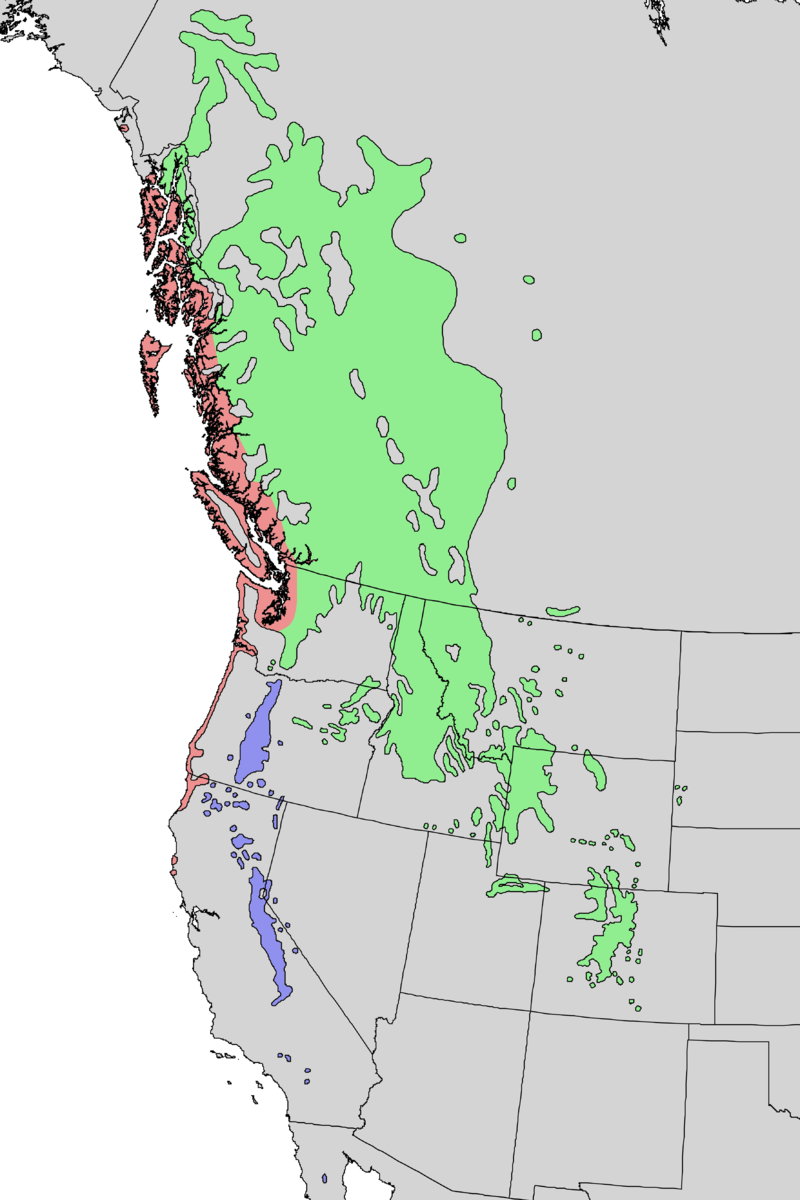
Figure 2—Distribution of lodgepole pine in the United states and Canada. Sierra lodgepole pine distribution is shown in blue, shore pine in pink, and Rocky Mountain lodgepole pine in green. Public domain map from Little.
All three varieties of lodgepole pine are widely distributed in the Pacific Northwest (fig. 2). Lodgepole pine forests on the Pumice Plateau that are the focus of this synthesis are self-replacing stands of nonsertotinous Sierra lodgepole pine. In the absence of disturbance, it is the late-seral dominant [5,23,76]. These communities characterize the Rocky Mountain Poor-site Lodgepole Pine biophysical setting (BpS series 11670) [46], and they occur mostly within the Deschutes, Fremont, and Winema National Forests and surrounding areas.
Lodgepole pine forests also occur in the Blue Mountains Ecoregion of northeastern Oregon at about 1,200-2,300 m [34] on volcanic soils and frost pocket sites [6,23]. However, these forests are dominated by Rocky Mountain lodgepole pine [46] and are apparently mostly fire-created and seral to grand fir [23]. These are not covered in this synthesis; see the FEIS Fire Regime Synthesis, Fire regimes of conifer forests in the Blue Mountains for information on these communities.
Sierra lodgepole pine communities in the upper montane and subalpine zones of the southern Cascade Range in northern California (BpS series 10580) are also characterized by features from recent volcanic activity [62] and typically occur in wet areas, topographic lowlands with cold air drainage, or areas with recent geological disturbances [21]. However, these are more likely fire climax communities that would succeed to California red fir or mountain hemlock in the absence of disturbance [22]. These communities were likely characterized by moderate frequency, stand-replacement fire regimes that maintained dominance of lodgepole pine [47] and are not covered in this synthesis. See the FEIS Fire Regime Report, Fire regimes of California subalpine mixed-conifer communities for information on these communities.
Another ecological system in the Pacific Northwest that is sometimes dominated by lodgepole pine is North Pacific wooded volcanic flowage (BpS series 11730) [47,59], which includes woodland to sparsely vegetated landscapes in mid-stages of primary succession on substrates that limit vegetation development such as recent lava flows, excessively well-drained mudflows (lahars), debris avalanches, and pyroclastic flows [59]. While species such as lodgepole pine, western white pine, and mountain hemlock are common in early succession, they are eventually replaced by white fir and Jeffrey pine in these communities [21]. See the FEIS Fire Regime Report, Fire regimes of Pacific Northwest wooded volcanic flowage, for more information on these communities.
Site Characteristics
Climate and Weather
The climate on the eastern side of the Cascade Range is continental, with more extreme temperatures and less precipitation than the Cascade Crest and western side [6]. Although Pacific air masses moderate temperatures on the east side of the mountains [76], winters tend to be cold and summers hot and dry, with wide diurnal temperature fluctuations and a relatively short growing season during which frosts are common [23]. Mean annual precipitation in the lodgepole pine zone ranges from about 350 to 860 mm, with most falling as snow between late fall and early spring [23,76]; June through August precipitation averages 65 to 70 mm [23]. Mean annual temperature ranges from about 4.3 to 5.8 °C in the lodgepole pine series in the Eastern Cascades of Oregon [76].
Weather patterns that occur in the Eastern Cascades during the fire season (primarily June-September) that include dry lightning, high winds, and low humidity can strongly affect fire ignitions and behavior [6,69,77]. Thunderstorms in which most precipitation evaporates before reaching the ground usually ignite many fires over a relatively short time, and may be accompanied by gusty, erratic, downdraft winds that increase fire spread. These are most common in July and August [69]. Strong foehn or chinook winds [77] can reach 24 to 56 km/hour, with gusts as high as 80 km/hour. As these downward-moving air masses lose elevation, they get warmer and drier and can quickly dry fine fuels and lead to rapid fire spread and extreme fire behavior [69]. These wind patterns can occur several times a month during summer and fall. East-west valleys are most affected, and down-canyon afternoon winds can significantly affect fire behavior in major drainages that flow from the Cascade Crest to the east [6].
Landform, Topography, and Soils
Poor-site lodgepole pine forests on the Pumice Plateau generally occur on two site types, those in topographic depressions and river valleys with high water tables, and those with low thermal capacity soils derived primarily from pumice [46] (fig. 3). There are strong topoedaphic controls on forest structure, composition, and understory fuels in forests on pumice soils, especially in flat basins where cold air pools. Frost heaving and extreme daily variation in surface temperatures limit the overstory to low-density lodgepole pine forests with sparse understories that can take decades to recover following disturbance [55,86].

Figure 3—Sierra lodgepole pine stand on pumice soils in Douglas County, Oregon (CC BY-NC).
The Pumice Plateau is dominated by relatively level topography (slopes <5°), and lodgepole dominates cold-air drainages, depressions and associated flats (broad, level areas) where extended frost pockets occur [5,33,46]. Cold tolerance of lodgepole pine seedlings allows them to establish on these frost pocket sites where other species cannot [50], resulting in topoedaphic climaxes dominated by lodgepole pine [46].
The volcanic soils on these sites are classified as Vitrandepts, and they are coarse textured, have low water-holding capacity, low thermal capacity, are nutrient-poor, and are typically cooler than adjacent sites [6,23,50,59,76,86]. The distinctive chemical and physical properties of these soils strongly influence growing conditions [33] and contribute to lodgepole pine dominance [23] and an edaphic climax [46]. Lodgepole pine is often the only tree species that grows on these infertile sites [50].
Elevation
Most of the Pumice Plateau occupies narrow elevation band between 1,300 and 1,700 m [33]. Lodgepole pine communities in the Eastern Cascades occur at elevations ranging from about 1,200 to 1,800 m [5,23,76], with these specific forest types generally occurring between 1,200 and 1,600 m [46]. Slight increases in elevation enable transition to ponderosa pine communities, and mixed-conifer occupies mid and upper slopes with greater moisture availability [33]. The transition between nearly pure stands of lodgepole pine and those of ponderosa pine on adjacent slopes is often “strikingly abrupt”, though on some sites the species intermingle in a narrow band [23].
Additional information on site characteristics is included with plant community descriptions, below.
Plant Communities
In the Pacific Northwest, lodgepole pine occurs in both extensive, pure stands and as a component of many other forest types [5,23,50]. In pure stands, it may be an early-seral dominant, whose dominance is maintained by disturbances such as fire and insect outbreaks, or a late-seral dominant of self-replacing stands [5,50]. Lodgepole pine is the late-seral dominant in 8 of 17 lodgepole pine-dominated communities identified in the Pumice Plateau [23].
Late-seral (climax) lodgepole pine plant associations on the Pumice Plateau can be separated from seral (fire climax) lodgepole pine forests by the absence of late-successional species, a general lack of understory shrubs and herbs, and the relative dominance of a few shrub or herb species [5,86]. In seral stands, mature lodgepole pines will be replaced by more shade tolerant species after about 50 to 200 years [5,50]. In Crater Lake National Park, seral lodgepole pine stands were more likely to have charcoal of other species mixed with lodgepole pine charcoal near or at the soil surface, while none of the late-seral lodgepole pine stands examined had charcoal of other species [5,90].
The plant community associations covered by this synthesis are represented by one ecological system described by NatureServe [59], and its corresponding LANDFIRE Biophysical Setting (BpS) that is mapped in the Pacific Northwest: Rocky Mountain Poor-Site Lodgepole Pine Forest (BpS series 11670), where it occurs in map zones 1 and 7 [46].
Rocky Mountain Poor-Site Lodgepole Pine Forest (BpS 11670)
This ecological system is widespread but patchy in distribution in the Eastern Cascades, because it is limited to sites with the conditions described above [59].
Neither the tree nor shrub layers are usually dense in these forests, although stands range from open to dense with a shrub stratum that may be conspicuous to absent (see Historical Stand Structure and Fuels). Stands may be multi-aged or even-aged with shrub, grass, or barren understories [59]. In lodgepole pine stands where regeneration is occurring and the population structure is multi-aged, it is likely that low-severity fires, insects, windthrow, or other canopy disturbances created open or patchy conditions that allowed new cohorts to emerge [46].
Lodgepole pine associations that seem to fit in the poor-site lodgepole pine ecological system have been described in south-central Oregon by several authors including Hopkins (1979) [42,43], Volland (1985) [86], Franklin and Dyrness (1988) [23], and Simpson (2007) [76]. Lodgepole pine is typically the sole tree-layer dominant. Other tree species such as western juniper, ponderosa pine, Douglas-fir, white fir, mountain hemlock, Pacific silver fir may be present but have less than 5% canopy cover in either the overstory or regeneration layers. When present, these other tree species typically occur on elevated microsites [86]. Quaking aspen may occur in small patches, typically on inclusions of deeper, fine-textured, poorly drained soils [23,59].
Understory species follow a moisture gradient from dry (dominated by the shrub, antelope bitterbrush [39]) to wet (dominated by grasses and sedges). Poor drainage can characterize depression soils where understory species include Idaho fescue and Ross’ sedge [46]. Simpson (2007) groups 13 lodgepole pine associations and two lodgepole pine community types into three plant association groups that reflect moisture and temperature regimes [76]. Riparian lodgepole pine and dry lodgepole pine communities are included in this synthesis; however, two associations where lodgepole pine codominates with whitebark pine at high elevations are not.
Species diversity and productivity decline as lodgepole pine plant association groups change from wet and warm to dry and cold. The riparian (wet) group consists of seven plant associations:
- lodgepole pine/fewflower spikerush
- lodgepole pine/widefruit sedge
- lodgepole pine/bog blueberry/widefruit sedge
- lodgepole pine/Rose spiraea/widefruit sedge
- lodgepole pine/bog blueberry
- lodgepole pine/Rose spiraea
- lodgepole pine/kinnikinnick
Riparian lodgepole pine sites average 20% to 25% cover of lodgepole pine over a well-developed understory with 15% to 20% shrub cover and 25% to 35% herbaceous cover. Forb layers are diverse, but only average 1% to 5% cover. Common understory species include kinnikinnick, resin birch, Geyer and Lemmon’s willows, Rose spiraea, bog blueberry, strawberry, bluejoint, widefruit sedge, tufted hairgrass, blue wildrye, mountain rush, and Kentucky bluegrass [76].
The dry group consists of four plant associations and two community types:
- lodgepole pine/pinemat manzanita
- lodgepole pine/long-stolon sedge
- lodgepole pine/antelope bitterbrush/Idaho fescue
- lodgepole pine/antelope bitterbrush/western needlegrass (Stipa occidentalis)
- lodgepole pine /Idaho fescue Community Type
- lodgepole pine/western needlegrass Community Type
Dry lodgepole pine communities are characterized by well-drained to excessively well-drained, coarse-textured soils that often occur in small basins, depressions, or slope positions that trap cold air and create frost pockets. Tree layers average 20% to 30% cover of lodgepole pine, and understory vegetation is relatively sparse, with shrubs and graminoids averaging 5% to 10% cover each, and forbs averaging less than 1% cover. Common understory species include antelope bitterbrush, wax currant, snowbrush ceanothus, mountain big sagebrush, Idaho fescue, California oatgrass, long-stolon sedge, Ross’s sedge, squirreltail, western needlegrass, and strawberry [76]. Twinflower and lupine are common forbs [23,59].
The depth of the ash/pumice deposit is important in regulating vegetation patterns. Herbaceous layers on deep pumice appear much drier than the mean precipitation would otherwise indicate, because these excessively well-drained soils allow water to recede beyond the reach of herbaceous species’ root systems, and woody species with deeper roots are favored [76].
Fuel characteristics and forest structure in lodgepole pine forests on the Pumice Plateau result from complex interactions among site characteristics and disturbance agents [5,6]. Fire regime characteristics in these forests are thus variously affected by climate patterns and weather events, as well as insects and diseases that affect mortality, succession, and fuel characteristics, including mountain pine beetle, lodgepole pine dwarf mistletoe, Pandora moth, and root diseases [28,32,50,76]. Because of the unique character of central Oregon's lodgepole pine forests, historical fire regimes cannot be extrapolated from lodgepole pine forests elsewhere [39].
Sites having an understory dominated by antelope bitterbrush could carry fires at about 20- to 80-year intervals even in the absence of other disturbances [39]. On other lodgepole pine sites in the Eastern Cascades, fires of any severity were limited by low surface fuel loadings because harsh soil conditions supported only sparse vegetation [26,28,81], and shrub and herbaceous fuels were typically too scattered and discontinuous to carry surface fires [5]. On these latter sites, fires were likely carried by partially decayed, downed logs from trees killed by mountain pine beetles or previous fires [5] and might only carry fire immediately following mountain pine beetle mortality, after decades of woody fuel accumulation and decay, or during extreme fire weather [26,39,55,80].
When receptive fuels were available or weather was conducive, fires in lodgepole pine stands were often ignited by fires in adjacent forests. Sites with antelope bitterbrush may have been intentionally burned by American Indians, and cultural fires in adjacent plant communities may have spread into lodgepole pine stands (see Historical Fire Ignition). Fires would have been most likely carried during the dry summer months or during extreme fire weather (i.e., dry and windy) (see Historical Fire Season).
Lodgepole pine forests in the Eastern Cascades occur within a larger matrix of ponderosa pine and dry mixed-conifer forests where historical fire regimes were characterized by frequent, mostly low-severity fires, some of which spread into lodgepole pine stands where they had more mixed- and high-severity effects [55]. Two large-scale, systematic fire history studies [33,55] used tree-ring reconstructions to describe historical fire regimes over large areas on the Pumice Plateau:
- Across 10,393-ha of dry conifer forest on the Deschutes National Forest, low-severity, surface fires were frequent (10-33 years) and often extensive, and severe fire was rare and isolated within the analysis period (1650-1871) but occurred in all forest types. In this landscape, lodgepole pine dominated 22 plots, 19 of which occurred in pumice basins. Each of these 22 plots had incomplete fire records, and it was thought that these stands may act as barriers to fire spread, and that fires only intermittently spread through them under specific conditions such as (1) bark beetle attack, subsequent fuel accumulation, and understory development coinciding with severe fire weather, (2) lightning storms igniting multiple fires in the same year across pumice basins, or (3) spotting from embers carried by wind across pumice basins [55].
- Across 85,750 ha of dry conifer forest (mostly ponderosa pine) on the Fremont-Winema National Forest and surrounding areas on the Pumice Plateau, fires larger than 20,000 ha occurred every 9.5 years, on average, from around 1700 to 1918. During this time, seven fires larger than 40,469 ha occurred during periods of extreme drought. High-severity, stand-replacement fire occurred primarily in lodgepole pine stands and patches adjacent to lodgepole pine stands [33].
Details from stand-level observations and analyses are included in the sections that follow.
Historical Stand Structure and Fuels

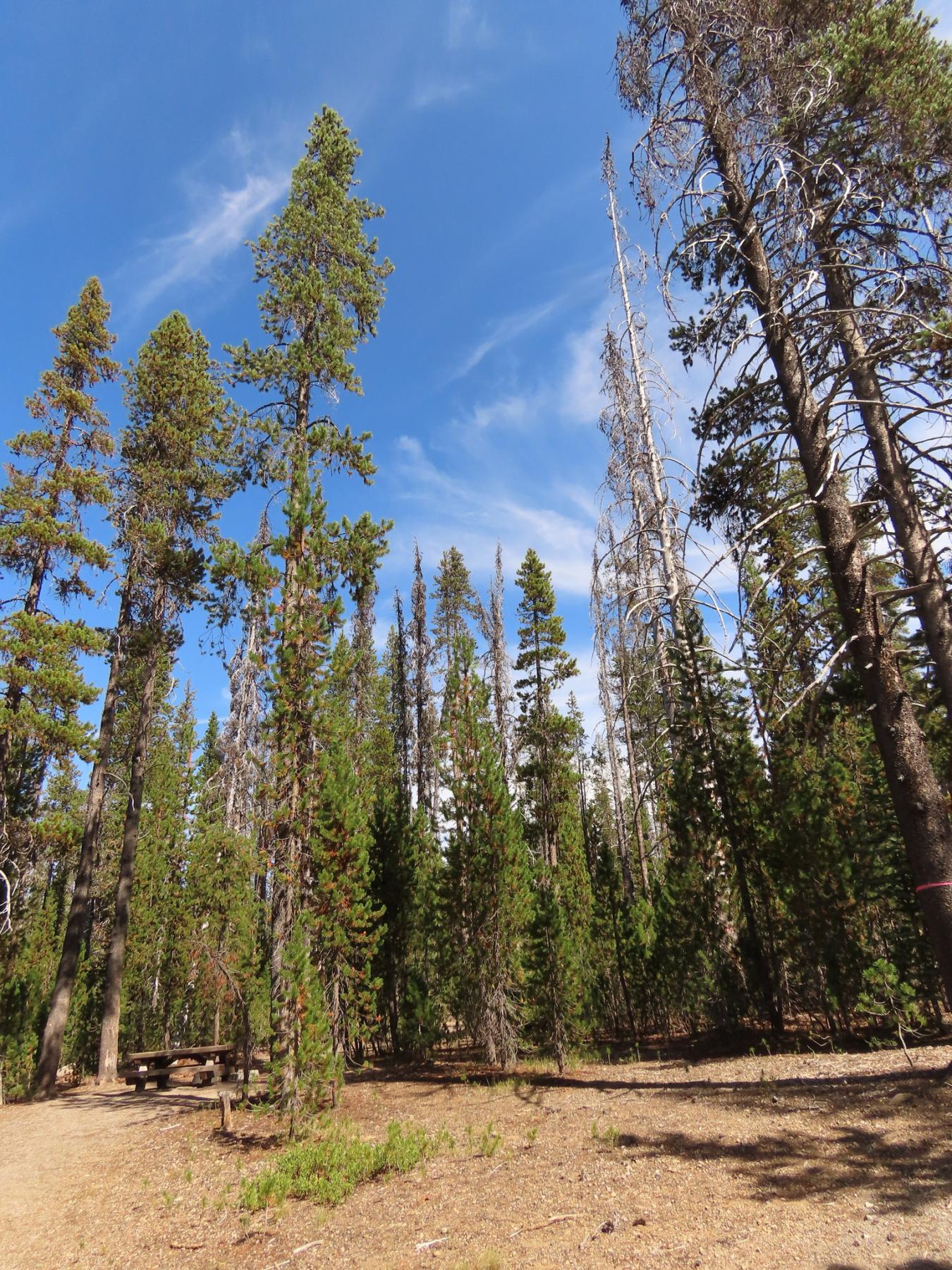
Figure 4—Lodgepole pine stand on the Deschutes National Forest, La Pine, Oregon (CC BY-NC).
Stand structure and fuel characteristics in lodgepole pine forests of the Eastern Cascades are largely shaped by low-fertility soils and interactions among disturbances like insects, disease, and fire [5,6,26]. On lodgepole pine sites with understories dominated by antelope bitterbrush, tree cover may reach 35% to 60%, shrub cover may reach 20% to 60%, and herb cover may reach 30% or more [86]. Antelope bitterbrush is a shade-intolerant, highly flammable, woody shrub that acts as a ladder fuel and facilitates passive crown fire, and it would have carried fire in these stands [39]. Other lodgepole pine associations in the Eastern Cascades tended to be fuel-limited because, in the absence of disturbance, stands had a low density and cover of trees (typically <40% cover of lodgepole pine), relatively sparse understories (typically <20% cover each of shrubs and herbs), and little litter or other surface fuel accumulation [5,26,76,86]. In these stands, shrub and herbaceous fuels were typically too scattered and discontinuous to carry surface fires (fig. 4) [5] and, in the absence of extreme weather, fires were more likely to have been carried by partially decayed, downed logs from trees killed by mountain pine beetles, previous fires [5], or other disturbances.
Canopy Fuels
Canopy fuels are limited in Eastern Cascades lodgepole pine associations, although crown fires have been noted to burn through the crowns under high winds [5]. Tree cover was sparse in all plots (n=32) studied by Heyerdahl et al. (2014), with all but one having <50% canopy cover and about half with <30% canopy cover [39]. Historically, density of conifers >15 cm diameter at 1.37 m height (dbh) exceeded 120 trees/ha on less than 5% of the area covered by dry forests in the Eastern Cascades [33]. This pattern was probably quite stable across the landscape over time, with occasional (50-100 years) region-wide decreases in basal area (30%-50%) resulting from widespread insect attack, fire, or a combination of the two [6,39]. Canopy fuels can also be altered by non-lethal disturbance. For example, infection by dwarf mistletoe and associated brooming can alter the crown height, crown base height, and live crown ratio [32,76], and it frequently occurs after mountain pine beetle outbreaks in lodgepole pine forests [9].
Lodgepole pine stands in the Eastern Cascades are typically multi-aged with a clumped distribution of cohorts, resulting from complex interactions among disturbance agents [5,6,26], with more clumping in the youngest age classes than the oldest [81]. Stands might also be even-aged, such as those studied by Stuart (1983) [81] and Gara et al. (1985) [26], which appeared to have established after a stand-replacement fire in 1840 [6].
Surface Fuels
Stands with an understory of antelope bitterbrush historically had sufficient fuels to carry a surface fire. Although fire initially reduces the abundance and biomass of antelope bitterbrush, it also stimulates regeneration, and populations can recover to prefire levels via a combination of sprouting and germination from seed caches, especially where fire creates canopy gaps. Antelope bitterbrush individuals can be long-lived, but productivity and recruitment decline with increasing shrub age, as well as increasing tree canopy cover, so that without disturbance, antelope bitterbrush becomes senescent and dies off ([39], and references therein).
In other stands, shrub and herbaceous fuels are often too scattered to effectively carry fire [5,76], and annual accumulation of needles, branches, and downed, suppressed trees is generally small and insufficient to carry fire [81]. Late-successional lodgepole pine stands that have not burned for 60 years or more have substantial bare soil exposed, except in areas of high tree density where litter layers may be 1 to 2 cm thick [5]. In addition, fuel beds of short pine needles, such as those of lodgepole pine, are relatively dense, and fire spread and intensity are diminished in high-density fuel beds ([14], and references therein).
Because they lack surface fuels, these stands may act as fuel breaks where wildfires can be stopped or suppressed except under unusual fire weather [5]. Summer fires—both prescribed and wild—have been observed to spread widely across adjacent forests without entering lodgepole pine stands [26]. Fires that did spread into lodgepole pine stands traveled along corridors of partially decayed, downed logs [3,26], which comprise the most continuous vector for surface fire [5,76], although they often have higher moisture content than other fuel classes.
In order for fire to carry in these stands there must be either enough downed, connected, decayed logs (decay class 4: rind mostly gone, heartwood rotten), or a combination of decayed logs, a moderately deep layer of litter, and some aerially supported fuels [81]. These conditions are most likely to occur during the first few years after mountain pine beetle-caused mortality, or approximately 50 years after a mountain pine beetle outbreak [26,39,55,80]. Thus, mortality-causing disturbances are required to create sufficient fuels to carry surface fire [6].
During the first few years after a mountain pine beetle outbreak begins, there is a greater probability of high-intensity fire than without beetles because of increased fine fuel in the crown and on the forest floor. Logs with attached needles and branches may burn soon after falling, or in years of extended drought. Fire potential then declines over time until the beetle-killed trees fall, typically in a widely spaced jackstraw pattern [5,6], increasing the probability of fire again.
The log-to-log pattern of fire spread was observed during wildfires and prescribed fires on the Fremont National Forest [81] and at Crater Lake National Park [3,26,76], and it was inferred for historical fires based on the distribution and ages of fire scars in adjacent lodgepole and ponderosa pine stands on the Fremont National Forest [26]. Observed fires were carried by large, partially decayed logs (decay class 4, greater than 1000-hour time lag), with heat transfer primarily by conduction. In some areas, fire spread through litter and/or aerially supported 1-to-10-hour time lag fuels in small patches. Fire spread was extremely slow (approximately 2 to 5 m/hr) and prescribed fires sometimes needed to be sustained with fuel oil and drip torches [81]. It is likely that a fire that burned around 1840 was sustained by decay class 4 logs from a disturbance that occurred around 1750 as well as an abundance of fine fuel from a mountain pine beetle outbreak that started in 1827. Similarly, a fire around 1899 was likely fueled by decay class 4 logs from the disturbances (fire and mountain pine beetles) that occurred around 1840 as well as a thicker-than-normal litter layer resulting from drought-induced needle drop [81].
Mountain Pine Beetle
Mountain pine beetle outbreaks are an important determinant of stand structure and fuel characteristics in lodgepole pine stands. When stands in the Eastern Cascades reach about 80 to 150 years old and have trees large enough to sustain brood populations (about 25 cm dbh), they become particularly vulnerable to infestation by mountain pine beetles. Trees are especially susceptible after a sustained period of low radial growth [5,28] or many decades after infection by decay fungi [28]. Outbreaks often occur in relatively high-density lodgepole pine stands, last from several years to a decade, and collapse once most preferred host trees are killed [10,28]. In an outbreak, anywhere from 33% to 66% of the stand dominants may be attacked by beetles, and about 75% of those attacked are killed [5,81], although mortality rates vary. Basal area and leaf area of the stand may be reduced by 50% or more [5,28,76].
In these low vigor stands, mountain pine beetle attack often scars trees rather than killing them [79]. Early research suggested that these scars (that damage cambium) might be mistaken for fire scars, and several publications provide information about how to tell them apart [24,57,79].
Mountain pine beetles typically target large-diameter trees with sufficiently thick bark (at least 1.5 mm) and sufficiently thick phloem to support a brood of larvae [6,71]. Nonetheless, dispersing mountain pine beetle adults may first target lodgepole pine trees suffering from injury or disease (e.g., fire damage or fungal infections) before “switching” to larger, healthier trees [25,26]. This process is not fully understood, and at least three hypotheses have been advanced to explain the process of switching attacks from a “focus tree” to a neighboring “recipient” tree [27,71].
Studies of bark beetle activity on four burned areas in the Eastern Cascades found that mountain pine beetle and pine engraver attacks began within 2 weeks after fire, and that infestation rates increased with degree of bole damage, wound height, and percent root kill [26,29]. Mountain pine beetles were most common on undamaged and lightly damaged trees, whereas pine engraver beetles were most common on moderately and severely damaged trees [29]. Within a year after fire, decay fungi infected fire-damaged root tissues [26,49]. Decades later, dispersing mountain pine beetles preferentially landed on fire-scarred and fungus-infected trees [25,26,27]. During the first few years of an outbreak, more fire-scarred than unscarred trees are killed by mountain pine beetle, and fire-scarred trees tend to have more advanced fungal decay than unscarred trees [27]. As outbreaks develop, large-diameter trees nearby those originally selected by dispersing mountain pine beetles are attacked [30]. For example, during development of a mountain pine beetle outbreak at Lookout Point, the beetles preferentially attacked large-diameter trees with advanced butt rot. In subsequent years the largest of the remaining trees were killed until the remaining trees were too small (<25 cm dbh) to support beetle populations [26,28].
Fuel characteristics after a mountain pine beetle epidemic have been well studied; however, most research has been done in the Intermountain West, with only a few studies in the Eastern Cascades [10]. A typical successional pattern for surface fuels in beetle-attacked stands is described by Agne et al. (2016) [10], which is similar to a more detailed account by Woolley et al. (2019) that was based on a chronosequence from 2 to 32 years since mountain pine beetle epidemics in south-central Oregon (1979 to 2008) [88]. The latter account suggests distinct periods in which changes occur in fuels (figs. 5-8). Canopy bulk density was low throughout the chronosequence, with substantial declines soon after beetle activity and a slow recovery over time. Surface fuels, including 10-h, 100-h, and 1000-h fuel loads, live woody fuels, and fuel bed depth increased over time. The 100-h fuel load increased over the entire 30-year period, while 1000-h fuel load leveled off 14 to 26 years following epidemic initiation. Litter and 1-h fuels changed little over time. Live woody fuels consisting of lodgepole pine seedlings and saplings establishing and growing in canopy gaps increased through the initial overstory mortality stage and began to decrease during the overstory recovery stage [88].

Figure 5—The red stage (2-4 years after attack) has a mix of recently killed (red) and living (green) trees; a 50% decrease in canopy bulk density due to mortality and needle loss; and a small increase in needle litter.

Figure 6—The gray, standing snag stage (5-13 years after attack) has a mix of gray, standing snags and living, green trees; further decrease in canopy bulk density; >85% decrease in dead basal area (fallen snags, with most snags fallen by year 13); and increases in 100-hr, 1,000-hr, and live woody surface fuels (lodgepole pine and shrub regeneration).

Figure 7—During the regeneration stage (14-25 years after attack), snags continue to fall, with few standing by year 25; there is >90% decrease in dead basal area; and there are increases in 10-hr, 100-hr, and 1,000-hr surface fuels, fuel bed depth, and live woody fuels.

Figure 8—The overstory recovery stage (26-32 years after attack) is characterized by increased overstory canopy closure, with crown bulk density approaching predisturbance levels and increased live basal area as intermediate canopy trees and saplings grow into the canopy. Both 100-hr and live woody surface fuel loads remain similar to previous stage but with high variability.
Although post-outbreak changes in fuel characteristics are well described, large-scale assessments and reviews have not found a consistent relationship between mountain pine beetle activity and wildfire occurrence (e.g., [36,53,56,60,73]). Spatial and temporal scales are important considerations when evaluating associations between mountain pine beetle outbreaks and subsequent wildfires [60]. At local scales, changes in fuel characteristics can lead to increased potential for wildfire occurrence and severity in these lodgepole pine forests [53,65], although results vary, and other factors may be more important for driving fire occurrence and severity [10].
Fewer data are available to assess these relationships at local scales, although a study of pine forests in Oregon and Washington from 1984 to 2012 found greater-than-expected levels of overlap between mountain pine beetle epidemics both preceding and following wildfire. This included evidence of larger areas of medium- and high-severity burns in locations with prior mountain pine beetle epidemics. However, the authors concluded that fire severity was probably highly dependent on other local and regional drivers—such as climate, local topography, forest composition, and wind throw—which can overwhelm the ability to detect the weaker influence of bark beetle outbreaks [60]. A study of the 2012 Pole Creek Fire in central Oregon suggests that the relationship between fire hazard and previous mountain pine beetle activity varies with time since beetle attack and factors such as topography, drought, fire weather, and previous fire and fuels management [10].
A review by Shaw et al. (2022) [73] suggests that fires in lodgepole pine-mountain pine beetle stands in the red phase have the potential for higher fire intensity, faster rate of spread, lower crowning thresholds, greater consumption of fine dead branches and needles, and more crown fire than predicted by fire behavior models that do not include mountain pine beetle effects (e.g., [65]). Decreased moisture contents and changes in foliar chemistry increase flammability of needles in mountain pine beetle-attacked trees. Laboratory tests found foliar moisture contents were lowest for red needles (12% on average), highest for green needles (109% on average), and most variable for needles of recently attacked trees. Time to needle ignition was strongly negatively related to time since beetle attack. Ignition times varied from 41 seconds for green needles to as little as 11 seconds for red needles [45].
After mountain pine beetle attack, the period of increased crown fire risk depends on the proportion of the overstory affected at a given point in time [73]. An examination of 11 lodgepole pine sites on the Deschutes National Forest in central Oregon and the Salmon-Challis National Forest in central Idaho suggests that preoutbreak forest structure and percent tree mortality influence crown fire behavior while dead needles are in the canopy (i.e., the red stage). This relationship varies with spatial heterogeneity among trees, where clumpy arrangements result in greater canopy fuel consumption and higher crown fire intensity compared to random or uniform spatial patterns [41]. The potential for active crown fire likely decreases during the gray stage and as snags fall, due to decreases in canopy bulk density [10,73]. As fallen logs decay and live woody fuels (i.e., seedlings, saplings, and shrubs) increase, the potential for surface fire increases [3,26,81]. The 1,000+ hour fuels take about 50 to 80 years to be sufficiently decayed to fuel fire [81], at which point they can sustain slow-moving, smoldering fires [6]. As suppressed trees grow into the overstory, crown fire potential may also increase with increased canopy bulk density [10].
An analysis of wildfires and subsequent mountain pine beetle outbreaks in pine forests of Washington and Oregon from 1984–2014 found a clear association of increased mountain pine beetle activity during the first 4 postfire years, especially on living trees growing in high-severity burn areas [60]. These findings are consistent with the general consensus from prescribed burn studies and conceptual models that fire can predispose host pines to subsequent mountain pine beetle attack for the first few postfire seasons. Although fires may not always facilitate subsequent mountain pine beetle epidemics, especially when mountain pine beetle populations are in the low-density endemic phase, they may contribute to mountain pine beetle population increases when they coincide with other drivers that favor successful colonization of host trees (review by [60]).
Historical Fire Ignition
Literature reviews (e.g., [4,6]) suggest that most fires in the Eastern Cascades were ignited by lightning in the dry summer months. While American Indians also ignited fires in the areas covered by this synthesis, it is unclear how cultural burning affected fire regimes in lodgepole pine communities.
Historically and currently, frequency of thunderstorms and associated lightning varies regionally, interannually, and seasonally [1]. Although lightning is frequent in the Eastern Cascades, it may be relatively less common in lodgepole pine stands on the Pumice Plateau. Fires in lodgepole pine forests are more likely to have originated from flaming fronts spreading from adjacent ponderosa pine or mixed-conifer stands. From around 1950 to 1980 very few lightning strikes occurred in the flat terrain of late-seral lodgepole pine forests in the northern part of the Fremont National Forest [81].
Information on the use of fire by American Indians in the Eastern Cascades is limited, although fire use appears to have been widespread. The extent of its influence on vegetation across the landscape is unknown [78]. Historical accounts indicate that the Paiute and Tenino tribes, who resided in the Deschutes River Valley, regularly burned to aid in hunting, improve pasture for wildlife, increase seed yield of harvested plants, and improve berry yield [15]. Evidence suggests that fire was used systematically in Klamath Marsh to encourage growth of wokas (yellow pond lily), a culturally significant resource for Klamath Tribes ([33], and references therein). Native people of the southern Cascade Range used fire to promote production of food and basketry materials, to help gather insects, to improve hunting conditions, and for ceremonial purposes. They may have used fire to keep the forest understory clear of shrubs to facilitate hunting [70].
Historical Fire Season
Little information was available about historical fire season in lodgepole pine stands in the Eastern Cascades. In stands that have adequate fuel connectivity, summers are typically hot and dry enough for fuels to dry, and weather conditions occur that can allow fires to ignite and carry [5]. Fires were likely more limited by fuels than weather, although the relative importance of these two factors varied through time and across space [39]. Fire history studies in adjacent ponderosa pine and montane mixed-conifer forests suggest that wildland fires could ignite as early as May and as late as October [15], but fire was predominantly recorded in latewood or during dormancy (i.e., late summer and into fall) [91].
Fire season varied with elevation in the Eastern Cascades. Growing season fires were more frequent in drier, low-elevation forests than in more mesic or high elevation forests, probably because fuels dry earlier at low elevations. Fires may not start or spread into higher elevation forests until late summer when fuels are dry enough to carry fire [14,82].
Fire season may have varied with ignition source. Most lightning fires were ignited in the dry summer months, whereas ignitions by American Indians may have roughly followed an elevational sequence that corresponded to plant availability, beginning with low-lying areas in May and early June and higher areas in late August through September [16].
Historical Fire Frequency
Fire frequency is not well documented for Eastern Cascades lodgepole pine forests. However, these stands rarely go a century without a major disturbance from fire or insects [5]. These disturbances are linked, in that fires make stands more susceptible to insect attacks and insect attacks alter fuel characteristics in affected stands.
Historical fire intervals estimated from LANDFIRE succession modeling average 111 years for stand-replacing fires (with a minimum of 20 years and maximum of 200 years), 113 years for mixed-severity fires, and 56 years for all fires [46]. Mean fire intervals reported in the literature range from about 24 to 150 years for all fires. Estimates of historical fire frequency found in the published literature are as follows:
- For lodgepole pine forests within Crater Lake National Park, Agee (1981) estimated an historical fire interval of about 60 years based on little data [3,5,6].
- On the Fremont National Forest, Stuart (1983) evaluated 52 scarred lodgepole pine trees and found evidence of fires around 1840 and 1899 and multiple mountain pine beetle outbreaks between 1827 and 1975. He also located at least one stand that had been fire-free for about 350 years [81]. Agee (1993) speculated that mean fire intervals were about 60 to 80 years in the area, and that stands surrounded by higher productivity forests were at the lower end of that range [5].
- Geiszler (1981) documented fire-scar data on lodgepole pines in eight locations in the northern part of the Fremont National Forest and found evidence of 11 fires between 1856 and 1945 [31]. However, later studies suggest that scarring from mountain pine beetles may have been mistaken for fire scars [79].
- Across 79 plots within the lodgepole pine series on the Pumice Plateau, Volland (1985) documented multiple fires in 11 plots within dry lodgepole pine associations, and 5 plots within riparian lodgepole pine associations. Plots in dry lodgepole pine had evidence of 15 historical fires, and fire intervals for low- to moderate-severity fires ranged from 18 to 98 years and averaged 34 years. Plots in riparian lodgepole pine had evidence of 7 previous fires, and fire intervals for low- to moderate-severity fires ranged from 12 to 38 years and averaged 24 years. Plot data suggest a stand-replacement interval of 66 to 120 years in dry lodgepole pine and 75 to 132 years in riparian lodgepole pine [86].
- At their Potholes study site in central Oregon, a reconstruction by Heyerdahl et al. (2014) suggested a 60-year median fire interval from 1650 to 1900 for lodgepole pine stands, ranging from about 26 to 82 years for all fire types. Understories are dominated by antelope bitterbrush, resulting in different surface fuel characteristics than other lodgepole pine forests on the Pumice Plateau (see Historical Stand Structure and Fuels). The intervals recorded at Potholes were long enough for antelope bitterbrush to regain sufficient cover and height between fires to facilitate fire spread across the site and into the canopy in a mosaic pattern [39].
- In a lodgepole pine stand in the Elkhorn Mountains, an unpublished fire history study suggests a mean fire interval ranging from 66 to 150 years between 1504 and 1900 (Bork 1984, cited in [52]).
Fire intervals for all lodgepole pine series sites appear to vary based on the composition of the surrounding forest types. Where they are adjacent to ponderosa pine, white fir, Shasta red fir, or mountain hemlock, the fire frequency approaches the frequencies of the surrounding forest types [76,86], with areas surrounded by higher productivity forests burning at higher frequencies [5].
Historical fire interval estimates from the southern Cascade Range are somewhat shorter (around 38 to 67 years) and more comparable to upper montane California red fir forests (39-60 years) [14,83] than those reported for lodgepole pine in central Oregon. However, lodgepole stands north and east of Mt. Shasta may be more like those of central Oregon because they, too are most extensive on pumice and andesite flats [77]. In the eastern portion of Lassen National Park, on Prospect Peak, longer intervals between fires occurred on more xeric west and south-facing slopes (Taylor 2000). Apparently, the more xeric sites occurring in the rain shadow of Lassen Peak have less fuel production and continuity [21].
Historical Fire Intensity and Severity
While the fire regime of seral lodgepole pine forests is typically considered to be high-severity and stand replacing, lodgepole pine forests in the Eastern Cascades are characterized as having a moderate or mixed-severity fire regime that varied across space and time [6,39]. The presence of fire scars and general lack of cone serotiny in these lodgepole pine forests suggest a mixed- or moderate-severity fire regime [6,39] consisting of low-intensity, low-severity surface fires and high-intensity, high-severity surface and crown fires [4]. Across three lodgepole flats on the Pumice Plateau, fires occurred up to five times per century, were a mix of low-severity and stand-replacing fire, and created a mosaic of multi- and even-aged stands [55]. Recurring moderate- and mixed-severity fires interacting with beetles, disease, and wind events created variable, multi-aged forests at both plot and landscape scales, where about a third of the stands were removed and replaced at intervals of about 60 years [6].
Several lines of evidence support the model of extensive, mixed-severity fires historically, at both site (~800 ha) and plot (~1 ha) scales. At the Potholes site studied by Heyerdahl et al. (2014), widespread synchrony in fire-scar dates prior to 1900 suggests extensive low-severity fires; however, these scar dates were also synchronous with cohorts of tree recruitment, suggesting that individual fires included patches of both high- and low-severity fire [39].
Evidence of low-intensity, low- to moderate-severity fires includes the presence of fire scars on lodgepole pines (e.g., [31,39,81]). Low-intensity fires would have been fueled by the thin litter layer, sparse understory vegetation, and logs burning slowly across the forest floor [3,5] and likely resulted in mostly low or moderate severity effects. Fires burning along downed logs can scar or fatally scorch nearby saplings and trees, depending on the arrangement and loading of logs relative to living trees [59]. The heat from burning logs can also penetrate the soil, damage roots, and kill trees that are otherwise unaffected by the fire. Where fuel discontinuities occur, fires will often extinguish, and fires moving into lodgepole pine stands from adjacent forest types would typically be extinguished on their own due to lack of surface fuels [5].
High-severity fire was spatially limited in the Eastern Cascades, although cohorts of lodgepole pine recruitment coincident with disturbance years (i.e., fire, windthrow, and beetle outbreak) indicate high-severity fire in some areas [22,26,39]. Across 85,750-ha of dry forests on the Pumice Plateau—mostly ponderosa pine and dry mixed conifer with areas of lodgepole pine—patches of high-severity fire were concentrated in and around lodgepole pine stands between 1700 and 1918. For example, timber inventory records indicate stand-replacing fire accounted for 6% of forest area burned in 1918, when widespread fires burned more than 78,900 ha in the Eastern Cascades. Most stand-replacing fire (81%) that year occurred in lodgepole pine, and where it occurred in ponderosa pine or mixed-conifer stands, it was often adjacent to lodgepole pine stands. The largest patch of stand-replacing fire was 710 ha of lodgepole pine in the western edge of Klamath Marsh [33].
Fire behavior simulations suggest active crown fire was not common but may have occurred in spots where shrub cover, especially antelope bitterbrush, and sufficient wind carried fire into the canopy [5,39]. Strong winds are probably required to force fires to crown through late-seral lodgepole pine flats [5]. Many lodgepole pine forests in the Eastern Cascades show evidence of high-severity crown fires [5]. The 1988 Prophecy fire at Crater Lake—a prescribed natural fire that started in California red fir forest—was pushed by a strong westerly wind through a 100-ha patch of lodgepole pine forest as a crown fire, even though the crowns were not touching or continuous across much of the area [5]. Crown fire potential may be higher in stands attacked by mountain pine beetles while foliage is retained on trees [45].
High severity fires, in general, are more likely after disturbances alter fuel characteristics in lodgepole pine forests, such as at various intervals following mountain pine beetle outbreaks. Contemporary observations show that pumice basins dominated by lodgepole can have high-severity fire 1) immediately following mountain pine beetle-caused mortality; 2) after decades of woody fuel accumulation and decay; and 3) during extreme fire weather [3,26,33,81]. See the section on mountain pine beetles for more information about their effects on fuel characteristics over time.
Historical Fire Pattern and Size
Information regarding historical fire patterns and sizes was lacking for lodgepole pine forests in the Eastern Cascades. Most evidence suggests that fires were patchy, depending on configurations of surface fuels, which varied with understory composition and disturbance history, and suggests an historical mixed-severity fire regime.
Lodgepole pine stands with an understory of antelope bitterbrush likely burned in a mosaic pattern. This mosaic pattern would have allowed for postfire regeneration of antelope bitterbrush by creating canopy gaps while maintaining some unburned plants as seed sources and stimulating sprouting from undamaged portions of surviving plants ([39] and references therein).
A reconstruction of historical fire perimeters and the pattern of fire sizes across 10,393 ha of dry conifer forests on the Deschutes National Forests suggests that lodgepole pine-dominated pumice basins likely influence spatial variation in fire regimes where they are embedded in mixed-conifer landscapes. Because lodgepole pine stands tended to act as barriers to fire spread, small fires were more common in forests where these stands were common, whereas large fires prevailed in areas lacking these stands [55].
Historical Fire-Climate Relationships
Little information is available regarding historical fire-climate relationships in lodgepole pine forests in the Eastern Cascades, although drought is known to exacerbate mountain pine beetle outbreaks [28,81], which, in turn, influence fuels and the likelihood of fire in these stands (see Mountain Pine Beetle).
Fires may have been more common during drought in lodgepole pine stands on the Pumice Plateau; however, data are lacking. Between 1700 and 1918 seven fires, each >40,469 ha, occurred during extreme drought (PDSI <- 4.0) in dry conifer forests on the Pumice Plateau [33]. In lodgepole pine stands on the Fremont National Forest, major periods of reduced growth, a likely indication of drought, are evident from 1835–1856, 1881–1885, 1890–1899, 1920–1937, and 1967–1968. Two fires occurred during these periods of slow growth, and mountain pine beetle outbreaks occurred around 1840, during the mid-1920s, and after 1968 [81]. In contrast, fires reconstructed from tree rings at Potholes did not consistently occur during years with warm, dry summers, nor were they synchronous with climatically driven years of widespread fire across the region [39].
Modern management activities appear to have had little impact on fuel conditions in most lodgepole pine forests in the Eastern Cascades; however, large areas have altered fuel characteristics following widespread mountain pine beetle outbreaks, and some stands have reduced shrub cover due to fire exclusion. Overharvest of trees has generally not occurred in lodgepole pine stands because commercial forest potential is lacking; grazing has not occurred because forage has always been limited on these sites, making them unsuitable; and fuels have not built up substantially in the absence of fire because sites are generally low productivity [6]. Fire exclusion may have contributed to increased dwarf mistletoe abundance in some stands, which can affect canopy fuel characteristics [74].
Unlike ecosystems in which fire exclusion has increased the risk of high-severity fire due to increased fuel loads—such as central Oregon's ponderosa pine and dry mixed-conifer forests [33,55]—fire exclusion in central Oregon's lodgepole pine dominated forests may instead have reduced the potential for crown fire on some sites by reducing cover of antelope bitterbrush [39].
Contemporary Stand Structure and Fuels
Stand structure and fuels in contemporary lodgepole pine stands on the Pumice Plateau have been less affected by forest management and fire exclusion than other forest types, although reduced cover of antelope bitterbrush and widespread mountain pine beetle outbreaks have altered fuel characteristics on many sites [36]. Fire exclusion is also thought to have increased dwarf mistletoe abundance in western forests [74]. Dwarf mistletoes can influence fire by causing changes in forest composition, structure, and fuels [8,9,74].
Fire exclusion in central Oregon's lodgepole pine dominated forests may have reduced the potential for patches of high-severity fire by reducing canopy gaps that allow antelope bitterbrush to reproduce and grow [39].
Across the western United States, mountain pine beetles affected 71,000 km2 of pine forest between the mid-1990s and early 2000s, leading to widespread concern that the resulting dead fuels could increase fire frequency, size, and severity [36]. Fuel characteristics in stands with beetle-killed trees differ from unattacked stands. Some characteristics of fuels and fire are enhanced following mountain pine beetle outbreaks and others are unchanged or diminished, with time since outbreak a key factor influencing changes [40]. See the section on Mountain Pine Beetle for more information on the effects of outbreaks on fuel characteristics over time.
Dwarf mistletoes often emerge after mountain pine beetle outbreaks and persist on hosts that are not killed by subsequent fires [8,9,74]. Lodgepole pine dwarf mistletoe spreads directly into regenerating lodgepole pine stands [74]. Fire is a primary determinant of dwarf mistletoe distribution on the landscape, and time since fire controls many aspects of dwarf mistletoe epidemiology. Fire directly affects dwarf mistletoes by killing the host tree or its branches, or by heating/smoking the mistletoe’s aerial shoots and fruits [74]. A comparison of stand structural characteristics in lodgepole pine forests on the Deschutes National Forest found strong evidence of reduced canopy volume, suppressed cohort height, and dominant/codominant cohort diameter with increasing stand-level dwarf mistletoe rating (i.e., infestation level) [8,9].
Contemporary Fire Ignition and Season
No information was available about contemporary ignition patterns or fire season specific to Eastern Cascades lodgepole pine forests. Given that fires in these lodgepole pine stands are often ignited when fire spreads from adjacent stands, and that contemporary fire frequency in those stands has been dramatically reduced, it might be inferred that ignitions are far less frequent in contemporary stands compared to historical stands.
Most contemporary fires and most area burned in the Eastern Cascades and throughout the West still result from lightning ignitions during late summer and fall (July and August) [1,11,13,58]. However, fire seasons have lengthened during the late 20th and early 21st centuries [87] due to combinations of increased frequency of human-caused ignitions, which can occur throughout the year [11,12,13]; and longer, more extreme periods of hot, dry weather caused by climate change (e.g., [2,19]), which is associated with earlier snowmelt and fire ignition dates, later fire control dates, and longer overall burn time for individual fires [87].
Greenhouse gases are also predicted to increase cloud-to-ground lightning strikes in the United States [67]. Fire frequency could increase with predicted increases in lightning strikes across the Eastern Cascades if climate conditions remain conducive to fire ignition and spread. Annual area burned in lightning ignited fires is strongly correlated with fuel abundance and flammability, which are affected by inter-annual climatic factors [1].
Contemporary Fire Frequency
Contemporary fire frequency in dry forests throughout the Eastern Cascades decreased dramatically in the early 20th century compared to the presettlement period. However, since the 1970s, large wildfires (>400 ha) have burned more area and increased in frequency (e.g., [87]). For example, across 756,634 ha on the Deschutes National Forest and surrounding lands in central Oregon, wildfire activity increased dramatically in the early 2000s, with almost 2,000 ignitions and 10 large fire events that combined burned 74,250 ha between 2002 and 2011 [7]. Nonetheless, contemporary dry forests (in the West) show an overall fire deficit compared to presettlement frequency and area burned (e.g., [38,51,64]), particularly of low- and mixed-severity fire [33,38,51,68].
Little information is available regarding contemporary fire frequency in lodgepole pine forests in the Eastern Cascades. Fire atlas records compiled by the USDA Forest Service, Pacific Northwest Region and Fire and Aviation Management show that only a small portion (9%) of the Lodgepole Pine Dry plant association group near the Potholes study site (Deschutes National Forest) burned between 1908 and 2008 [39].
While mountain pine beetle outbreaks clearly impact fuel characteristics in lodgepole pine forests at local scales (see Mountain Pine Beetle), the likelihood of fire in postoutbreak stands compared to unaffected stands is less clear. From 1984 to 2013, climatic variability (i.e., in current and antecedent conditions) appeared more important for the occurrence of large fires in lodgepole pine forests of the western United States than disturbance from mountain pine beetle. Trends of increasing co-occurrence of wildfires and beetle outbreaks were due to a common climatic driver rather than interactions between these disturbances [56]. From 1984 to 2012, fire likelihood was neither higher nor lower following mountain pine beetle activity in dry pine forests of the Pacific Northwest [53]. From 1984 to 2014, mountain pine beetle epidemics were associated with increased fire occurrence in subsequent years in pine forests of Washington and Oregon, although the relationship was not straightforward, and patterns varied with fire severity. In some cases, individual disturbance seasons or events were highly influential on the overall trends. In contrast, there was a clear association of increased bark beetle activity shortly after wildfires [60].
Contemporary Fire Intensity and Severity
Little information specific to contemporary fire intensity and severity in lodgepole pine forests in the Eastern Cascades was found in the literature. Fire intensity and severity in these forests are driven by fuel characteristics, climatic variables, and fire weather conditions. Fuel characteristics in contemporary stands are likely similar to those in historical stands. These fuels are most receptive and likely to carry fire in stands with an understory of antelope bitterbrush and stands that experienced past mountain pine beetle outbreaks, although the association between mountain pine beetle and subsequent fire severity varies. The warmer and drier climate over the past few decades has been associated with more extreme fire weather (e.g., [89]) and with large areas of high-severity fire in contemporary dry forests of the Eastern Cascades [33], although the effects on lodgepole pine forests, specifically, are unclear.
Fire behavior simulations suggest that the lack of antelope bitterbrush in modern in lodgepole pine stands at the Potholes study site (Deschutes National Forest) make understory fuels insufficient to spread the mix of surface and crown fire that occurred historically. Mixed-severity fires are not likely to occur unless antelope bitterbrush cover increases, which is not likely in the absence of disturbances that create canopy gaps [39].
Patterns of fire severity in contemporary lodgepole pine forests in the Eastern Cascades may be similar to those in historical stands on some sites. Across dry forests in the Eastern Cascades, patches of high-severity fire were historically concentrated in and around lodgepole pine stands, whereas in contemporary forests, stand-replacing fire occurred primarily in ponderosa pine and mixed-conifer stands [33]. The 2021 Bootleg Fire in south-central Oregon, which occurred largely in ponderosa pine and lodgepole pine forests on the Fremont-Winema National Forest, exhibited extreme fire behavior and resulted in extensive high severity effects. An assessment of prefire treatments found that prior broadcast burning was most efficient and economical for reducing subsequent fire severity, compared to mechanical thinning with pile burning, and thinning followed by broadcast burning, both of which also reduced subsequent fire severity. Within units treated with broadcast burning, the percentage of area burned at low severity was over 80%, whereas units treated with thinning-only were dominated by moderate severity burns (45%) and untreated forests were dominated by high-severity burns (42%). Riparian areas dominated by willows and lodgepole pines burned at high severity, despite treatment with broadcast burning 13 years prior [72].
Changes in fuel characteristics brought about by mountain pine beetle outbreaks can affect fire intensity and severity in lodgepole pine forests, depending largely on recency of outbreaks and fire weather [35]; however, this relationship is highly variable. Examples of studies examining this relationship in the Pacific Northwest follow:
- A large portion of the 2012 mixed severity (40% high, 36% moderate, 24% low) Pole Creek Fire occurred in gray stage (8–15 years post-MPB epidemic) lodgepole pine forests on the Deschutes National Forest. Across a gradient of mountain pine beetle and fire severity combinations (52 plots), high-severity fire (as measured by the Relativized differenced Normalized Burn Ratio (RdNBR)) was more prevalent in stands with low mountain pine beetle mortality, probably because living trees contribute more fine aerial fuels, which are more likely to carry crown fires [10].
- An examination of 81 mountain pine beetle outbreaks and fire events from 1987 to 2011 across the Pacific Northwest, found that fire severity (as measured by changes in RdNBR) was generally lower in forests with higher prefire outbreak severity, and that specific effects varied with timing of outbreaks relative to fire [54].
- From 1984 to 2014 across all pine forests in Washington and Oregon, the relationship between fire severity and bark beetle epidemics was not straightforward, although there was a clear association of increased bark beetle activity shortly after wildfire [60].
Contemporary Fire Pattern and Size
Very little information was available about contemporary fire patterns and sizes specific to lodgepole pine forests in the Eastern Cascades. The collective arrangement of fuel loadings in concert with fire weather and suppression efforts ultimately determines the resulting perimeter in contemporary fires [7]. From around 1950 to 1980 very few lightning strikes occurred in the flat terrain of late-seral lodgepole pine forests in the northern part of the Fremont National Forest. All of those ignitions were suppressed, and none led to a fire larger than 0.01 ha [81].
Analysis of contemporary burn size and severity (all fires that occurred from 1985 to 2010) across all forest types in Oregon and Washington found no change in the proportion of size burned at any level of severity over time [68].
Although mountain pine beetle infestation and fire activity both increased independently in conjunction with climate warming (2002–2013), annual area burned in the western United States has not increased in direct response to bark beetle activity. No difference between observed area and expected area burned in red-stage or subsequent gray-stage stands was detected during three peak years of wildfire activity [36].
Contemporary Fire-Climate Relationships
Analyses of fire-climate relationships were not available for lodgepole pine forests in the Eastern Cascades.
Annual area burned and fire size in the Eastern Cascades are strongly related to climatic conditions, the length of the fire season, and fine fuel production. More area typically burns during warm, dry climatic conditions [68], and the length of the fire season is impacted by timing of spring snowmelt, which occurs earlier with warming temperatures [17]. Across the western United States, the average fire season lengthened by 84 days between the two time periods of 1973–1982 and 2002–2013, and in the Pacific Northwest, average fire season lengthened from 23 days for 1973–1982 to 116 days for 2003–2012 [87].
Climate warming in the Eastern Cascades has led to longer and drier fire seasons, declining snowpack, and an upward migration of the frost line [51]. Projections from climate models indicate continued increases in minimum and maximum monthly temperatures in the Cascade Range [75], especially in winter and spring, as well as an increase in the frequency and severity of drought stress [18]. These changes are likely to elevate the risks of drought stress, insect attack, and fire [18,37,66] and to drive transitions in forest composition and structure [75].
Models developed to evaluate change in vegetation composition and fuel loads across the western United States, including modeled points located in the Eastern Cascades, indicate fire severity and frequency may increase in future decades [48,63]. Increased fire severity may occur due to higher fuel loads and lengthening fire seasons, with fire danger becoming more extreme [44]. However, by the mid-21st century, high water deficits that result in low plant productivity and less burnable biomass may lead to lower fire severities for large portions of the western United States [48,63].
Compared to other conifer forests in the West, lodgepole pine forests in the Eastern Cascades are less impacted by contemporary forest management activities; the low productivity of these forests has prevented widespread fuel buildup in the absence of fire. Rather, fire exclusion may instead have reduced the potential for crown fire on some sites by reducing cover of antelope bitterbrush (see Contemporary Fuels and Fire Regimes). Fire management in these forests might include prescribed burning to create canopy gaps, reduce fuel loads, and lessen the impacts of some disturbance agents (e.g., dwarf mistletoes [74]). Improving landscape resilience under a changing climate may require increased use of wildland fire [61,63]. However, lack of surface fuels impedes the use of prescribed fire in many lodgepole pine stands [5].
Lodgepole pine forests on pumice soils in the Eastern Cascades are ecologically distinct from other lodgepole pine forests in the western United States. The relatively frequent, mixed-severity historical fire regime described in the available literature (26-150 years) (see Historical Fire Frequency) is similar to that described by LANDFIRE for these forests (113 years for mixed severity and 111 years for replacement severity), although LANDFIRE models suggest a larger proportion of stand-replacement fires than found in the literature (see LANDFIRE Biophysical Settings section) [46]. These estimates differ substantially from lodgepole pine forests in the Rocky Mountains, which are characterized by longer-interval (100-333 years for all fire types), predominantly stand-replacing fires (see Fire regimes of Rocky Mountain lodgepole pine communities).
Mixed-severity fire in lodgepole pine forests embedded within the frequent-fire environment of the Eastern Cascades resulted in mixed-age stands with relatively open canopies, which likely maintained high-quality antelope bitterbrush browse and other native plants and the animals dependent on them. For example, Leona’s little blue butterfly is vulnerable to loss of habitat due to closure of canopy gaps on lodgepole pine flats. Potential for mixed-severity fire patterns has likely been diminished because fire exclusion has reduced antelope bitterbrush cover [33,39].
Lodgepole pine is considered fire sensitive because it has thin bark and is easily damaged or killed by moderate-intensity surface fires [77]. Sierra lodgepole pine has nonserotinous cones, so fire is not required for regeneration, but fire creates conditions that benefit both its seedling establishment (i.e., increased light, reduced competition, and reduced litter and duff) [5,28,31], and maintenance of antelope bitterbrush [39].
Table A1
| Life Form | Common name | Scientific name |
|---|---|---|
| Tree | California red fir | Abies magnifica |
| Tree | Douglas-fir | Pseudotsuga menziesii |
| Tree | grand fir | Abies grandis |
| Tree | Jeffrey pine | Pinus jeffreyi |
| Tree | lodgepole pine | Pinus contorta |
| Tree | mountain hemlock | Tsuga mertensiana |
| Tree | Pacific silver fir | Abies amabilis |
| Tree | ponderosa pine | Pinus ponderosa |
| Tree | quaking aspen | Populus tremuloides |
| Tree | Rocky Mountain lodgepole pine | Pinus contorta var. latifolia |
| Tree | Shasta red fir | Abies magnifica var. shastensis |
| Tree | shore pine | Pinus contorta var. contorta |
| Tree | Sierra lodgepole pine | Pinus contorta var. murrayana |
| Tree | western juniper | Juniperus occidentalis |
| Tree | western white pine | Pinus monticola |
| Tree | white fir | Abies concolor |
| Tree | whitebark pine | Pinus albicaulis |
| Tree-Shrub | Geyer willow | Salix geyeriana |
| Tree-Shrub | willow | Salix spp. |
| Shrub | antelope bitterbrush | Purshia tridentata |
| Shrub | bog blueberry | Vaccinium uliginosum |
| Shrub | Dwarf mistletoe | Arceuthobium spp. |
| Shrub | kinnikinnick | Arctostaphylos uva-ursi |
| Shrub | Lemmon’s willow | Salix lemmonii |
| Shrub | lodgepole pine dwarf mistletoe | Arceuthobium americanum |
| Shrub | mountain big sagebrush | Artemisia tridentata subsp. vaseyana |
| Shrub | pinemat manzanita | Arctostaphylos nevadensis |
| Shrub | resin birch | Betula glandulosa |
| Shrub | rose spiraea | Spiraea douglasii |
| Shrub | snowbrush ceanothus | Ceanothus velutinus |
| Shrub | wax currant | Ribes cereum |
| Graminoid | blue wildrye | Elymus glaucus |
| Graminoid | bluejoint | Calamagrostis canadensis |
| Graminoid | California oatgrass | Danthonia californica |
| Graminoid | fewflower spikerush | Eleocharis quinqueflora |
| Graminoid | Idaho fescue | Festuca idahoensis |
| Graminoid | Kentucky bluegrass | Poa pratensis |
| Graminoid | long-stolon sedge | Carex inops |
| Graminoid | mountain rush | Juncus arcticus subsp. littoralis |
| Graminoid | Ross' sedge | Carex rossii |
| Graminoid | squirreltail | Elymus elymoides |
| Graminoid | tufted hairgrass | Deschampsia cespitosa |
| Graminoid | western needlegrass | Stipa occidentalis |
| Graminoid | widefruit sedge | Carex eurycarpa |
| Forb | lupine | Lupinus spp. |
| Forb | strawberry | Fragaria spp. |
| Forb | twinflower | Linnaea borealis |
| Forb | wokas, or yellow pond lily | Nuphar luteum subsp. polysepalum |
| Insect | Leona’s little blue butterfly | Philotiella leona |
| Insect | mountain pine beetle | Dendroctonus ponderosae |
| Insect | Pandora moth | Coloradia pandora |
| Insect | pine engraver | Ips pini |
1. Abatzoglou, John T.; Kolden, Crystal A.; Balch, Jennifer K.; Bradley, Bethany A. 2016. Controls on interannual variability in lightning-caused fire activity in the western US. Environmental Research Letters. 11(4): 1-12. [91092]
2. Abatzoglou, John T.; Williams, A. Park. 2016. Impact of anthropogenic climate change on wildfire across western US forests. Proceedings of the National Academy of Sciences. 113(42): 11770-11775. [91095]
3. Agee, James K. 1981. Initial effects of prescribed fire in a climax Pinus contorta forest Crater Lake National Park. CPSU/UW 81-4. Seattle, WA: University of Washington, College of Forest Resources, Cooperative Park Studies Unit, National Park Service. 10 p. [6559]
4. Agee, James K. 1993. Fire ecology of Pacific Northwest forests. Washington, DC: Island Press. 493 p. [22247]
5. Agee, James K. 1993. Ponderosa pine and lodgepole pine forests. In: Agee, James K. Fire ecology of Pacific Northwest forests. Washington, DC: Island Press: 320-250. [90494]
6. Agee, James K. 1994. Fire and weather disturbances in terrestrial ecosystems of the eastern Cascades. In: Everett, Richard L.; Hessburg, Paul F., tech. eds. [Vol. 3: Assessment]. Gen. Tech. Rep. PNW-GTR-320. Portland, OR: U.S. Department of Agriculture, Forest Service, Pacific Northwest Research Station. 52 p. [23656]
7. Ager, Alan A.; Day, Michelle A.; Finney, Mark A.; Vance-Borland, Ken; Vaillant, Nicole M. 2014. Analyzing the transmission of wildfire exposure on a fire-prone landscape in Oregon, USA. Forest Ecology and Management. 334: 377-390. [89993]
8. Agne, Michelle C. 2013. Influence of dwarf mistletoe (Arceuthobium americanum) on stand structure, canopy fuels, and fire behavior in lodgepole pine (Pinus contorta) forests 21-28 years post-mountain pine beetle (Dendroctonus ponderosae) epidemic in central Oregon. Corvallis, OR: Oregon State University. 169 p. Thesis. [88017]
9. Agne, Michelle C.; Shaw, David C.; Woolley, Travis J.; Queijeiro-Bolanos, Monica E.; Li, Mai-He. 2014. Effects of dwarf mistletoe on stand structure of lodgepole pine forests 21-28 years post-mountain pine beetle epidemic in central Oregon. PLoS ONE. 9(9): e107532. [100315]
10. Agne, Michelle C.; Woolley, Travis; Fitzgerald, Stephen. 2016. Fire severity and cumulative disturbance effects in the post-mountain pine beetle lodgepole pine forests of the Pole Creek fire. Forest Ecology and Management. 366: 73-86. [91104]
11. Balch, Jennifer K.; Bradley, Bethany A.; Abatzoglou, John T.; Nagy, R. Chelsea; Fusco, Emily J.; Mahood, Adam L. 2017. Human-started wildfires expand the fire niche across the United States. PNAS. 114(11): 2946-2951. [93274]
12. Barros, Ana M.; Day, Michelle A.; Preisler, Haiganoush K.; Abatzoglou, John T.; Krawchuk, Meg A.; Houtman, Rachel; Ager, Alan A. 2021. Contrasting the role of human- and lightning-caused wildfires on future fire regime on a central Oregon landscape. Environmental Research Letters. 16(6): 064081. [96578]
13. Bartlein, P. J.; Hostetler, S. W.; Shafer, S. L.; Holman, J. O.; Solomon, A. M. 2008. Temporal and spatial structure in a daily wildfire-start data set from the western United States (1986-96). International Journal of Wildland Fire. 17(1): 8-17. [92462]
14. Bekker, Matthew F.; Taylor, Alan H. 2001. Gradient analysis of fire regimes in montane forests of the southern Cascade Range, Thousand Lakes Wilderness, California, USA. Plant Ecology. 155(1): 15-28. [44058]
15. Bork, Joyce L. 1984. Fire history in three vegetation types on the eastern side of the Oregon Cascades. Corvallis, OR: Oregon State University. 94 p. Thesis. [42571]
16. Boyd, Robert. 1999. Introduction. In: Boyd, Robert, ed. Indians, fire, and the land in the Pacific Northwest. Corvallis, OR: Oregon State University Press: 1-30. [35565]
17. Cansler, C. Alina; McKenzie, Donald. 2014. Climate, fire size, and biophysical setting control fire severity and spatial pattern in the northern Cascade Range, USA. Ecological Applications. 24(5): 1037-1056. [88771]
18. Chmura, Daniel J.; Anderson, Paul D.; Howe, Glenn T.; Harrington, Constance A.; Halofsky, Jessica E.; Peterson, David L.; Shaw, David C.; St. Clair, J. Brad. 2011. Forest responses to climate change in the northwestern United States: Ecophysiological foundations for adaptive management. Forest Ecology and Management. 261(7): 1121-1142. [90095]
19. Dennison, Philip E.; Brewer, Simon C.; Arnold, James D.; Moritz, Max A. 2014. Large wildfire trends in the western United States, 1984-2011. Geophysical Research Letters. 41(8): 2928-2933. [91317]
20. Everett, Richard L.; Schellhaas, Richard; Keenum, Dave; Spurbeck, Don; Ohlson, Pete. 2000. Fire history in the ponderosa pine/Douglas-fir forests on the east slope of the Washington Cascades. Forest Ecology and Management. 129: 207-225. [34708]
21. Fites-Kaufman, Jo Ann; Rundel, Phil; Stephenson, Nathan; Weixelman, Dave A. 2007. Montane and subalpine vegetation of the Sierra Nevada and Cascade Ranges. In: Barbour, Michael G.; Keeler-Wolf, Todd; Schoenherr, Allan A., eds. Terrestrial vegetation of California. Berkeley, CA: University of California Press: 456-501. [82710]
22. Forrestel, Alison B.; Andrus, Robert A.; Fry, Danny L.; Stephens, Scott L. 2017. Fire history and forest structure along an elevational gradient in the southern Cascade Range, Oregon, USA. Fire Ecology. 13(1): 1-15. [91664]
23. Franklin, Jerry F.; Dyrness, C. T. 1988. Natural vegetation of Oregon and Washington. Corvallis, OR: Oregon State University Press. 468 p. [92533]
24. Gara, R. I.; Agee, J. K.; Littke, W. R.; Geiszler, D. R. 1986. Fire wounds and beetle scars. Journal of Forestry. 84(4): 47–50. [100358]
25. Gara, R. I.; Geiszler, D. R.; Littke, W. R. 1984. Primary attraction of the mountain pine beetle to lodgepole pine in Oregon. Annals of the Entomological Society of America. 77(4): 333–334. [100357]
26. Gara, R. I.; Littke, W. R.; Agee, J. K.; Geiszler, D. R.; Stuart, J. D.; Driver, C. H. 1985. Influence of fires, fungi and mountain pine beetles on development of a lodgepole pine forest in south-central Oregon. In: Baumgartner, David M.; Krebill, Richard G.; Arnott, James T.; Weetman, Gordon F., eds. Lodgepole pine: The species and its management: Symposium proceedings; 1984 May 8-10; Spokane, WA; 1984 May 14-16; Vancouver, BC. Pullman, WA: Washington State University, Cooperative Extension: 153-162. [9448]
27. Geiszler, D. R.; Gallucci, V. F.; Gara, R. I. 1980. Modeling the dynamics of mountain pine beetle aggregation in a lodgepole pine stand. Oecologia. 46(2): 244-253. [100359]
28. Geiszler, D. R.; Gara, R. I.; Driver, C. H.; Gallucci, V. F.; Martin, R. E. 1980. Fire, fungi, and beetle influences on a lodgepole pine ecosystem of south-central Oregon. Oecologia. 46(2): 239-243. [16550]
29. Geiszler, D. R.; Gara, R. I.; Littke, W. R. 1984. Bark beetle infestations of lodgepole pine following a fire in south central Oregon. Zeitschrift fur Angewandte Entomologie. 98(4): 389-394. [15046]
30. Geiszler, Daniel R.; Gara, Robert I. 1978. Mountain pine beetle attack dynamics in lodgepole pine. In: Berryman, Alan A.; Amman, Gene D.; Stark, Ronald W., eds. Theory and practice of mountain pine beetle management in lodgepole pine forests: Symposium proceedings; 1978 April 25-27; Pullman, WA. Moscow, ID: University of Idaho, Forest, Wildlife and Range Experiment Station: 182-187. [8820]
31. Geiszler, Daniel Reuben. 1981. Interactions of fire, fungi and mountain pine beetles in a lodgepole pine stand in south-central Oregon. Pullman, WA: University of Washington. 101 p. Dissertation. [6719]
32. Godfree, R. C.; Tinnin, R. O.; Forbes, R. B. 2002. The effects of dwarf mistletoe, witches' brooms, stand structure, and site characteristics on the crown architecture of lodgepole pine in Oregon. Canadian Journal of Forest Research. 32(8): 1360-1371. [42573]
33. Hagmann, R. Keala; Merschel, Andrew G.; Reilly, Matthew J. 2019. Historical patterns of fire severity and forest structure and composition in a landscape structured by frequent large fires: Pumice Plateau ecoregion, Oregon, USA. Landscape Ecology. 34(3): 551-568. [93436]
34. Hall, Frederick C. 1976. Fire and vegetation in the Blue Mountains: Implications for land managers. In: Proceedings, annual Tall Timbers fire ecology conference; 1974 October 16-17; Portland, Oregon. No. 15. Tallahassee, FL: Tall Timbers Research Station: 155-170. [6272]
35. Halofsky, Jessica E.; Peterson, David L.; Harvey, Brian J. 2020. Changing wildfire, changing forests: The effects of climate change on fire regimes and vegetation in the Pacific Northwest, USA. Fire Ecology. 16: 4. [95558]
36. Hart, Sarah J.; Schoennagel, Tania; Veblen, Thomas T.; Chapman, Teresa B. 2015. Area burned in the western United States is unaffected by recent mountain pine beetle outbreaks. Proceedings of the National Academy of Sciences. 112(14): 4375-4380. [91034]
37. Haugo, Ryan D.; Hall, Sonia A.; Gray, Elizabeth M.; Gonzalez, Patrick; Bakker, Jonathan D. 2010. Influences of climate, fire, grazing and logging on woody species composition along an elevation gradient in the eastern Cascades, Washington. Forest Ecology and Management. 260(12): 2204-2213. [81434]
38. Haugo, Ryan D.; Kellogg, Bryce S.; Cansler, C. Alina; Kolden, Crystal A.; Kemp, Kerry B.; Robertson, James C.; Metlen, Kerry L.; Vaillant, Nicole M.; Restaino, Christina M. 2019. The missing fire: Quantifying human exclusion of wildfire in Pacific Northwest forests, USA. Ecosphere. 10(4): e02702. [93439]
39. Heyerdahl, Emily K.; Loehman, Rachel A.; Falk, Donald A. 2014. Mixed-severity fire in lodgepole pine dominated forests: Are historical regimes sustainable on Oregon's Pumice Plateau, USA? Canadian Journal of Forestry. 44(6): 593-603. [89226]
40. Hicke, Jeffrey A.; Johnson, Morris C.; Hayes, Jane L.; Preisler, Haiganoush K. 2012. Effects of bark beetle-caused tree mortality on wildfire. Forest Ecology and Management. 271(1): 81-90. [84994]
41. Hoffman, Chad; Morgan, Penelope; Mell, William; Parsons, Russell; Strand, Eva K.; Cook, Stephen. 2012. Numerical simulation of crown fire hazard immediately after bark beetle-caused mortality in lodgepole pine forests. Forest Science. 58(2): 178-188. [85916]
42. Hopkins, William E. 1979. Plant associations of South Chiloquin and Klamath Ranger Districts--Winema National Forest. R6-Ecol-79-005. Portland, OR: U.S. Department of Agriculture, Forest Service, Pacific Northwest Region. 96 p. [7339]
43. Hopkins, William E. 1979. Plant associations of the Fremont National Forest. R6-ECOL-79-004. Portland, OR: U.S. Department of Agriculture, Forest Service, Pacific Northwest Region. 106 p. [7340]
44. Jolly, W. Matt; Cochrane, Mark A.; Freeborn, Patrick H.; Holden, Zachary A.; Brown, Timothy J.; Williamson, Grant J.; Bowman, David M. J. S. 2015. Climate-induced variations in global wildfire danger from 1979 to 2013. Nature Communications. 6(7537): 1-11. [91323]
45. Jolly, W. Matt; Parsons, Russell A.; Hadlow, Ann M.; Cohn, Greg M.; McAllister, Sara S.; Popp, John B.; Hubbord, Robert M.; Negron, Jose F. 2012. Relationships between moisture, chemistry, and ignition of Pinus contorta needles during the early stages of mountain pine beetle attack. Forest Ecology and Management. 269: 52-59. [86629]
46. LANDFIRE Biophysical Settings. 2020. Biophysical setting 11670: Rocky Mountain poor-site lodgepole pine forest. In: LANDFIRE Biophysical Setting Models and Descriptions [Online]. LANDFIRE. Washington, DC: U.S. Department of Agriculture, Forest Service, Rocky Mountain Research Station, Fire Sciences Laboratory; U.S. Geological Survey; Arlington, VA: The Nature Conservancy (Producers). Available: https://research.fs.usda.gov/sites/default/files/feis/bps/11670_21.pdf [2026, April 15]. [100316]
47. LANDFIRE. 2020. Biophysical settings models and descriptions, [Online]. Washington, DC: U.S. Department of Agriculture, Forest Service; U.S. Department of the Interior; U.S. Geological Survey; Arlington, VA: The Nature Conservancy, (Producers). Available: http://www.landfirereview.org/search.php [2024, February 2]. [96496]
48. Littell, Jeremy S.; Oneil, Elaine E.; McKenzie, Donald; Hicke, Jeffrey A.; Lutz, James A.; Norheim, Robert A.; Elsner, Marketa M. 2010. Forest ecosystems, disturbance, and climatic change in Washington State, USA. Climate Change. 102(1-2): 129-158. [90915]
49. Littke, W. R.; Gara, R. I. 1986. Decay of fire-damaged lodgepole pine in south-central Oregon. Forest Ecology and Management. 17: 279-287. [14638]
50. Lotan, James E.; Critchfield, William B. 1990. Pinus contorta Dougl. ex. Loud. lodgepole pine. In: Burns, Russell M.; Honkala, Barbara H., technical coordinators. Silvics of North America. Volume 1. Conifers. Agric. Handb. 654. Washington, DC: U.S. Department of Agriculture, Forest Service: 302-315. [13393]
51. Mallek, Chris; Safford, Hugh; Viers, Joshua; Miller, Jay. 2013. Modern departures in fire severity and area vary by forest type, Sierra Nevada and southern Cascades, California, USA. Ecosphere. 4(12): 1-28. [90333]
52. Maruoka, Kathleen Ryoko. 1994. Fire history of Pseudostuga menziesii and Abies grandis stands in the Blue Mountains of Oregon and Washington. Seattle, University of Washington. 47 p. [+ appendices]. Thesis. [90690]
53. Meigs, Garrett W.; Campbell, John L.; Zald, Harold S. J.; Bailey, John D.; Shaw, David C.; Kennedy, Robert E. 2015. Does wildfire likelihood increase following insect outbreaks in conifer forests? Ecosphere. 6(7): 1-24. [90893]
54. Meigs, Garrett W.; Zald, Harold S. J.; Campbell, John L.; Keeton, William S.; Kennedy, Robert E. 2016. Do insect outbreaks reduce the severity of subsequent forest fires? Environmental Research Letters. 11(4): 1-10. [90782]
55. Merschel, Andrew G.; Heyerdahl, Emily K.; Spies, Thomas A.; Loehman, Rachel A. 2018. Influence of landscape structure, topography, and forest type on spatial variation in historical fire regimes, central Oregon, USA. Landscape Ecology. 33(7): 1195-1209. [93249]
56. Mietkiewicz, Nathan; Kulakowski, Dominik. 2016. Relative importance of climate and mountain pine beetle outbreaks on the occurrence of large wildfires in the western USA. Ecological Applications. 26(8): 2525-2537. [91489]
57. Mitchell, R. G.; Martin, R. E.; Stuart, John. 1983. Catfaces on lodgepole pine--fire scars or strip kills by the mountain pine beetle? Journal of Forestry. 81(9): 598-613. [16547]
58. Narayanaraj, Ganapathy; Wimberly, Michael C. 2012. Influences of forest roads on the spatial patterns of human- and lightning-caused wildfire ignitions. Applied Geography. 32(2): 878-888. [86094]
59. NatureServe. 2009. International ecological classification standard: Terrestrial ecological classifications. In: NatureServe Central Databases. Arlington, VA: NatureServe. 1172 p. Available online: http://downloads.natureserve.org/get_data/data_sets/veg_data/nsDescriptions.pdf [2024, July 11]. [94380]
60. Nelson, Michael F.; Ciochina, Mark; Bone, Christopher. 2016. Assessing spatiotemporal relationships between wildfire and mountain pine beetle disturbances across multiple time lags. Ecosphere. 7(10): e01482. [100317]
61. North, M. P.; Stephens, S. L.; Collins, B. M.; Agee, J. K.; Aplet, G.; Franklin, J. F.; Fule, P. Z. 2015. Reform forest fire management. Science. 349(6254): 1280-1281. [91408]
62. Parker, Albert J. 1991. Forest/environment relationships in Lassen Volcanic National Park, California, U.S.A. Journal of Biogeography. 18(5): 543-552. [16899]
63. Parks, Sean A.; Miller, Carol; Abatzoglou, John T.; Holsinger, Lisa M.; Parisien, Marc-Andre; Dobrowski, Solomon Z. 2016. How will climate change affect wildland fire severity in the western US? Environmental Research Letters. 11(3): 1-10. [91146]
64. Parks, Sean A.; Miller, Carol; Parisien, Marc-Andre; Holsinger, Lisa M.; Dobrowski, Solomon Z.; Abatzoglou, John. 2015. Wildland fire deficit and surplus in the western United States, 1984-2012. Ecosphere. 6(12): 1-13. [90528]
65. Perrakis, Daniel D. B.; Lanoville, Rick A.; Taylor, Stephen W.; Hicks, Dana. 2014. Modeling wildfire spread in mountain pine beetle-affected forest stands, British Columbia, Canada. Fire Ecology. 10(2): 1-11. [100369]
66. Preisler, Haiganoush K.; Hicke, Jeffrey A.; Ager, Alan A.; Hayes, Jane L. 2012. Climate and weather influences on spatial temporal patterns of mountain pine beetle populations in Washington and Oregon. Ecology. 93(11): 2421-2434. [100318]
67. Price, Colin; Rind, David. 1994. The impact of a 2 x CO2 climate on lightning-caused fires. Journal of Climate. 7(10): 1484-1494. [50410]
68. Reilly, Matthew J.; Dunn, Christopher J.; Meigs, Garrett W.; Spies, Thomas A.; Kennedy, Robert E.; Bailey, John D.; Briggs, Kevin. 2017. Contemporary patterns of fire extent and severity in forests of the Pacific Northwest, USA (1985-2010). Ecosphere. 8(3): e01695. [91673]
69. Riegel, Gregg M.; Miller, Richard F.; Skinner, Carl N.; Smith, Sydney E. 2006. Northeastern Plateaus bioregion. In: Sugihara, Neil G.; van Wagtendonk, Jan W.; Shaffer, Kevin E.; Fites-Kaufman, Joann; Thode, Andrea E., eds. Fire in California's ecosystems. Berkeley, CA: University of California Press: 225-263. [65541]
70. Riegel, Gregg M.; Miller, Richard F.; Skinner, Carl N.; Smith, Sydney E.; Farris, Calvin A.; Merriam, Kyle E. 2018. Northeastern Plateaus region. In: van Wagtendonk, Jan W.; Sugihara, Neil G.; Stephens, Scott L.; Thode, Andrea E.; Shaffer, Kevin E.; Fites-Kaufman, Jo Ann, eds. Fire in California's ecosystems. 2nd ed. Oakland, CA: University of California Press: 219-248. [92957]
71. Safranyik, Les; Carroll, Allan L. 2006. The biology and epidemiology of the mountain pine beetle in lodgepole pine forests. In: Safranyik, Les; Wilson, Wilson. The mountain pine beetle: A synthesis of biology, management, and impacts on lodgepole pine. Victoria, BC: Natural Resources Canada; Canadian Forest Service; Pacific Forestry Centre: 3-66. [100360]
72. Sanna, Astrid; Chamberlain, Caden; Prichard, Susan J.; Cansler, C. Alina; Hudak, Andrew T.; Bienz, Craig; Moskal, L. Monika; Kane, Van R. 2025. Assessing fuel treatments and burn severity using global and local analyses. Fire Ecology. 21: 44. [100319]
73. Shaw, David C., Beedlow, Peter A.; Lee, E. Henry; Woodruff, David R.; Meigs, Garrett W.; Calkins, Stephen J.; Reilly, Matthew J.; Merschel, Andrew G.; Cline, Steven P.; Comeleo, Randy L. 2022. The complexity of biological disturbance agents, fuels heterogeneity, and fire in coniferous forests of the western United States. Forest Ecology and Management. 525: 120572. [97710]
74. Shaw, David C.; Agne, Michelle C. 2017. Fire and dwarf mistletoe (Viscaceae: Arceuthobium species) in western North America: Contrasting Arceuthobium tsugense and Arceuthobium americanum. Botany. 95(3): 231-246. [91815]
75. Sheehan, T.; Bachelet, D.; Ferschweiler, K. 2015. Projected major fire and vegetation changes in the Pacific Northwest of the conterminous United States under selected CMIP5 climate futures. Ecological Modeling. 317: 16-29. [91097]
76. Simpson, Michael. 2007. Forested plant associations of the Oregon east Cascades. Tech. Pap. R6-NR-ECOL-TP-03-2007. Portland, OR: U.S. Department of Agriculture, Forest Service, Pacific Northwest Region. 602 p. [92525]
77. Skinner, Carl N.; Taylor, Alan H. 2006. Southern Cascades bioregion. In: Sugihara, Neil G.; van Wagtendonk, Jan W.; Shaffer, Kevin E.; Fites-Kaufman, Joann; Thode, Andrea E., eds. Fire in California's ecosystems. Berkeley, CA: University of California Press: 195-224. [65540]
78. Skinner, Carl N.; Taylor, Alan H. 2018. Southern Cascades bioregion. In: van Wagtendonk, Jan W.; Sugihara, Neil G.; Stephens, Scott L.; Thode, Andrea E.; Shaffer, Kevin E.; Fites-Kaufman, Jo Ann, eds. Fire in California's ecosystems. 2nd ed. Oakland, CA: University of California Press: 195-218. [92956]
79. Stuart, J. D.; Geiszler, D. R.; Gara, R. I.; Agee, J. K. 1983. Mountain pine beetle scarring of lodgepole pine in south-central Oregon. Forest Ecology and Management. 5(3): 207-214. [9706]
80. Stuart, John D.; Agee, James K.; Gara, Robert I. 1989. Lodgepole pine regeneration in an old, self-perpetuating forest in south central Oregon. Canadian Journal of Forest Research. 19(9): 1096-1104. [9347]
81. Stuart, John David. 1983. Stand structure and development of a climax lodgepole pine forest in south-central Oregon. Seattle, WA: University of Washington. 180 p. [+ appendices]. Dissertation. [92503]
82. Taylor, A. H. 2000. Fire regimes and forest changes in mid and upper montane forests of the southern Cascades, Lassen Volcanic National Park, California, U.S.A. Journal of Biogeography. 27(1): 87-104. [39438]
83. Taylor, Alan H.; Solem, Michael N. 2001. Fire regimes and stand dynamics in an upper montane forest landscape in the southern Cascades, Caribou Wilderness, California. Journal of the Torrey Botanical Society. 128(4): 350-361. [42551]
84. U.S. Environmental Protection Agency. 2013. Level III ecoregions of the continental United States. Corvallis, OR: U.S. Environmental Protection Agency, National Health and Environmental Effects Research Laboratory. 1:7,500,000; map, colored. [92749]
85. Van de Water, Kip M.; Safford, Hugh D. 2011. A summary of fire frequency estimates for California vegetation before Euro-American settlement. Fire Ecology. 7(3): 26-58. [85190]
86. Volland, Leonard A. 1985. Plant associations of the central Oregon pumice zone. R6-ECOL-104-1985. Portland, OR: U.S. Department of Agriculture, Forest Service, Pacific Northwest Region. 138 p. [7341]
87. Westerling, Anthony LeRoy. 2016. Increasing western US forest wildfire activity: Sensitivity to changes in the timing of spring. Philosophical Transactions of the Royal Society B. 371(1696): e20150178. [91318]
88. Woolley, Travis; Shaw, David C.; Hollingsworth, LaWen T.; Agne, Michelle C.; Fitzgerald, Stephen; Eglitis, Andris; Kurth, Laurie. 2019. Beyond red crowns: Complex changes in surface and crown fuels and their interactions 32 years following mountain pine beetle epidemics in south-central Oregon, USA. Fire Ecology. 15(4): 1-17. [95785]
89. Zald, Harold S. J.; Dunn, Christopher, J. 2018. Severe fire weather and intensive forest management increase fire severity in a multi-ownership landscape. Ecological Applications. 28(4): 1068-1080. [92921]
90. Zeigler, Robert S. 1978. The vegetation dynamics of Pinus contorta forest, Crater Lake National Park, Oregon. Corvallis, OR: Oregon State University. 182 p. Thesis. [92548]
91. Zouhar, Kristin; Juran, Ashley. 2024. Fire regimes of East Cascades ponderosa pine and montane mixed-conifer communities. In: Fire Effects Information System, [Online]. U.S. Department of Agriculture, Forest Service, Rocky Mountain Research Station, Fire Sciences Laboratory (Producer). Available: https://research.fs.usda.gov/feis/fire-regimes/east-cascades-ponderosa-pine-and-montane-mixed-conifer. [100314]