


Acer platanoides, Norway maple
Munger, Gregory T. 2003. Acer platanoides, Norway maple. In: Fire Effects Information System, [Online]. U.S. Department of Agriculture, Forest Service, Rocky Mountain Research Station, Fire Sciences Laboratory (Producer). Available: https://research.fs.usda.gov/feis/species-reviews/acepla
| Abbreviation | Common Name | Scientific Name | Classification | Status |
|---|---|---|---|---|
| Plants | ||||
| ACEPLA | Norway maple | Acer platanoides | Life Form: Plants/Tree Kingdom: Plantae Class: Dicot Order: Sapindales Family: Aceraceae Genus: Acer | Fed. Protected: No Nativity: Nonnative Invasiveness: Invasive |


Taxonomy
The currently accepted scientific name for Norway maple is Acer platanoides L. (Aceraceae) [18,45,48,52,63].
Over 100 cultivars of Norway maple have been developed for commercial trade in North America [10,47].
Synonyms
- None
Other Common Names
None
General Distribution
Norway maple is native to continental Europe and western Asia. It was introduced to the United States in the mid- to late 1700s in eastern Pennsylvania [10,36]. A current, accurate description of Norway maple distribution in North America is problematic. It is widely planted throughout much of North America, especially along urban streets and in yards. In many areas it escapes into surrounding forest and woodlands, where it may become invasive (see Impacts). Precise distribution information for Norway maple is lacking.
Based on floras and other literature, herbarium samples, and confirmed observations, Norway maple can potentially be found in North America, growing outside cultivation, in the following areas: from New Brunswick and Cape Breton Island west to Minnesota and south to Tennessee and North Carolina. In the West, it is found in British Columbia, Washington, Idaho, and western Montana [8,18,24,34,45,48,52,54,57,63].
Actual distribution of escaped or invasive Norway maple may be more or less broad than the above description. The following description of potential distribution is based on a map developed by Nowak and Rowntree [36] that describes Norway maple performance when grown as an urban street tree. They describe "optimal range" as areas where Norway maple can be grown with few environmental constraints. Although not confirmed as such, these are areas where it is most likely to escape cultivation and potentially become invasive. The "optimal range" in eastern North America is from southern New England south to Chesapeake Bay, the piedmont of southern Virginia and northern North Carolina, and the Appalachians of western North Carolina, South Carolina, and northern Georgia. This distribution continues west through the northern 1/3 of Alabama and Mississippi and the northern 2/3rds of Arkansas to eastern Oklahoma, then north to southeastern South Dakota and southern Minnesota and Wisconsin. Northern limits of this distribution are delineated by western and northern coastal areas of the Great Lakes and the St. Lawrence River. South of this delineation, inland areas of Maine, eastern Quebec, and the southern Maritimes, as well as northern Vermont/New Hampshire and the Adirondacks, are not included in this distribution [36].
The "optimal range" in western North America includes western sections of British Columbia, Washington and Oregon, the North Coast and Sierra regions of California, and northern Idaho/northwestern Montana. Nowak and Rowntree [36] also describe much of the intermountain west and the rest of western and central Montana as "suboptimal range", where some irrigation is required for successful cultivation. Therefore, we might assume that riparian or other mesic habitat is susceptible to invasion in these areas, given a seed source[36].
There is some indication that Norway maple could be potentially invasive in Canada through climate zone 2b.This includes the Maritime provinces, most of Quebec and Ontario, the southern 2/3rds of Manitoba, Saskatchewan, and Alberta, and all but the coldest areas of British Columbia. However, precise distribution data are lacking [43].
The biogeographic classification systems in Table A1 demonstrate where Norway maple could potentially be found based on the above information. Predicting distribution of nonnative species is difficult due to gaps in understanding of their biological and ecological characteristics, and because they may still be expanding their range. These lists are speculative and may not be accurately restrictive or complete.
States and Provinces
- United States: CT DE ID IL IN KY ME MD MA MI MN MT NH NJ NY NC OH OR PA RI TN VT VA WA WV WI DC
- Canada: BC NB NS ON PE PQ
Site Characteristics
As of this writing, there is very little published information describing the ecological range of Norway maple in North America. Because Norway maple is commonly mentioned as a congener of sugar maple in eastern North America [1,25,31,59,60,61,64], and because of their taxonomic similarity, it is likely that the two species share a similar ecological range in this region. (See the FEIS Species Review on sugar maple for relevant information.)
In Europe, Norway maple occurs within a climatic range characterized by maximum and minimum growing degree days (accumulated temperatures above 5 °C) of 2600 and 1150, respectively [41]. Within this range, it generally occurs in lowland areas, wide river valleys, and low mountain habitats. Norway maple is usually found as individuals or small groups in European mixed forests, and does not form pure stands over large areas [36].
Norway maple grows best on moist, "adequately" drained, deep, fertile soils. It is intolerant of low soil nitrogen conditions and is rare on acidic (pH near 4) soils. Norway maple makes "suboptimum" growth on sandy soils or soils high in lime or clay content, and does not tolerate high evapotranspiration or prolonged drought. Conflicting reports assert that it is rare on poorly drained soils, yet it reportedly can tolerate flooding for up to 4 months [36,41].
Northern distribution of Norway maple in North America is probably limited by cold temperatures. Variation in cold tolerance may be related to genetic source, since many cultivars of Norway maple have been developed for this trait. Seedlings can survive temperatures to at least -12 degrees Fahrenheit (-24 °C), although substantial twig tissue damage can occur. Insulation provided by early-winter snow may reduce seedling damage from cold temperatures [43]. Overwintering flower buds may be killed by prolonged exposure to cold temperatures. In Russia, damage to bud scales and loss of isolated buds have occurred after exposure for 1 hour at temperatures between 23 and 27 degrees Fahrenheit (-5 to -3 °C) and loss of all buds noted below 23 degrees Fahrenheit (-5 °C). Open flowers are more sensitive than buds and may be susceptible to late-season frost. Exposure to temperatures < 27 degrees Fahrenheit (-3 °C) for only 15 minutes produced necrosis in the stigma of the style, and 30 minutes of exposure killed entire flowers [28].
Plant Communities
Norway maple is widely planted throughout much of North America. Because it can produce large numbers of shade-tolerant seedlings, Norway maple may potentially be found within a variety of forest habitats and plant communities [36,59,61,64]. It is perhaps best known for its association with the native sugar maple (Acer saccharum) in the Northeast [31,59,61].
Norway maple is not a climax dominant or indicator species in habitat type classifications in North America.
Botanical Description

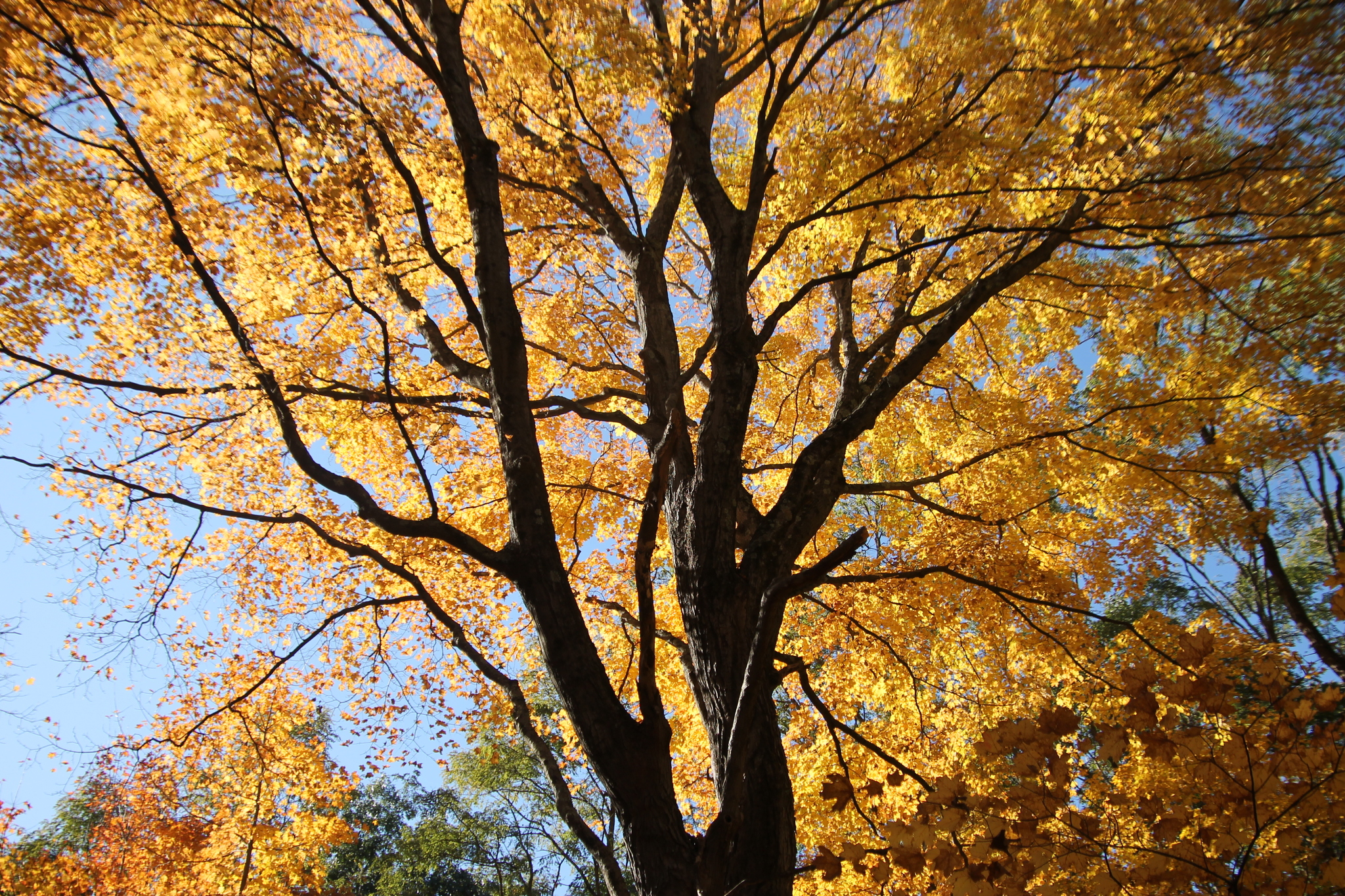
Norway maple at Assabet National Wildlife Refuge, Middlesex County, Massachusetts. (CC BY-NC 4.0)
Norway maple is a nonnative tree, usually 40 to 98 feet (12-30 m) in height, with widely spreading, ascending branches [10,18,29,52]. In Europe, Norway maple trees typically grow to a maximum diameter at breast height of 76 inches (190 cm) and live to 150 years [41]. Bark on older trees becomes furrowed [48,52]. Fruits of Norway maple are 2-winged samaras and each half of the fruit is typically 1.4 to 2.2 inches (3.5-5.5 cm) long [48,52,57].
The preceding description provides characteristics of Norway maple that may be relevant to fire ecology and is not meant to be used for identification. Keys for identifying Norway maple are available in various floras (e.g. [18,34,45,48,52,57,63]). Photos and descriptions of Norway maple are also available online at Plants Database, Michigan State University Extension, and Oregon State University websites.
The biology and ecology of Norway maple are not well-studied in North America. More research is needed to better understand its key biological traits, habitat requirements and limitations, and interactions with native North American flora and fauna.
Raunkiaer Life Form
- Phanerophyte [42]
Seasonal Development
Reproductive buds are formed during summer, overwinter, and open in spring when triggered by warm temperatures [28]. Flowering dates vary geographically, ranging from late April to early June in eastern North America [34,45,48,63]. In Russia, flower buds begin enlargement when temperatures reach 41 to 50 degrees Fahrenheit (5-10 °C). Enlarged buds begin to open when temperatures reach >50 degrees Fahrenheit (10 °C), and fully emerge at between 59 and 68 degrees Fahrenheit (15-20 °C) [28]. Leaves abscise late in autumn (e.g. late October in upper New York) [27]. Norway maple typically sheds its leaves later in the season than most native deciduous species in the northeastern U.S. and adjacent Canada, presumably because the growing season is longer in its native European habitat where it evolved [10,27].
Regeneration Processes
Pollination and Breeding System
Norway maple is dioecious [12] and insect pollinated [36].
Seed Production
No information available on this topic.
Seed Dispersal

Norway maple leaves and samaras, Delaware County, Ohio. (CC BY-NC 4.0)
Norway maple seeds are wind-dispersed [28,32,55]. Dispersal distance from seed source is enhanced by winged samaras [28,32]. Estimated lateral distance traveled by samaras in a 6.2 miles/hour (10 km/hr) breeze when dropped from a height of "approximately 3/4 of the maximum height of the species" was 165 feet (50.3 m) [32]. Norway maple samaras dry substantially before dispersal and seeds are desiccation-tolerant thereafter [14]. Seeds are dispersed in fall, which provides a high likelihood of protection under winter snow, conditions usually sufficient for stratification [28].
Seed Banking
No information available on this topic.
Germination
Seeds germinate in spring [27,28], following an obligatory period of cold stratification at 37 to 40 degrees Fahrenheit (3-4 °C) for 90-120 days [38,39]. Germination is apparently enhanced by soil disturbance [61], although exposure to mineral soil is not a prerequisite for germination [41].
Seedling Establishment and Growth

Norway maple seedlings. (CC BY 3.0 US)
Norway maple produces abundant seedlings each spring [28,29]. First true leaves are formed approximately 3 weeks after seedling emergence [28]. A review of European silvicultural literature characterizes Norway maple seedlings as drought tolerant [41], but other observations indicate that drought resistance of seedlings is low during early development stages [28]. Tolerance to extreme heat or cold is limited during early stages of seedling development. A Russian experiment showed exposure to light frost for 1 hour killed the initial pair of leaves at 28 degrees Fahrenheit (-2 °C) and cotyledons at 25 to 21 degrees Fahrenheit (-4 to -6 °C). Cotyledons and leaves were also killed by exposure to temperatures > 102 degrees Fahrenheit (39 °C) for 2 to 3 hours. Which particular cultivar or variety was used in this experiment is not known [28]. Insulation provided by early-winter snow may reduce seedling damage from cold temperatures [43].
Vegetative Reproduction and Regeneration
Information concerning the biology of asexual regeneration in Norway maple is sparse and conflicting. USDA Natural Resources Conservation Service Plants Database [54] indicates that at least one cultivar of Norway maple (Crimson King) has the ability to "resprout," but none have "coppice potential." However, Simpfendorfer [50] lists Norway maple, along with sugar maple and red maple (A. rubrum), as species that regenerate by "coppicing" following fire. Postharvest stump sprouting has been documented, although sprouts originating from saplings and smaller trees are apparently hardier than those from mature overstory trees [61]. A review of European autecological data categorizes "tendency to sprouting" for Norway maple as "vigorous" [41].
Successional Status
Norway maple seedlings are characterized as shade tolerant to very shade tolerant. They are often strong competitors in closed-canopy forest understories within the species' North American range [31,60,64]. Seedling growth apparently ceases when light levels fall below 3% of full daylight [22]. Norway maple maintains a continuously recruited "seedling-bank" of persistent, multi-aged seedlings, given a seed source [59,61].
It is likely suppressed Norway maple saplings and seedlings respond favorably following gap formation. In the absence of stand-level disturbance, it is also likely that Norway maple could become a dominant overstory species in eastern deciduous forests where it is established. Along with American beech (Fagus grandifolia) and sugar maple, Norway maple is gradually replacing previously dominant oaks (white oak (Quercus alba), northern red oak (Q. rubra), and black oak (Q. velutina)) in the overstory of a New Jersey piedmont forest [59,60]. Norway maple becomes less shade tolerant with age and mature trees have been characterized as intermediate in shade tolerance [36]. Nevertheless, where it becomes the canopy dominant, Norway maple can suppress regeneration of shade tolerant woody species, including even its own seedlings (see Impacts) [31].
Webb and others [61] raise questions concerning whether Norway maple seedlings are equal to those of sugar maple in persistence, shade tolerance, and response to release, and point out the importance of these questions in determining competitive interactions between the two species. Further research is needed to determine impacts of Norway maple invasion on understory species composition and potential effects on successional trajectories.
Immediate Fire Effects
There is no published information available as of this writing (2003) describing the immediate effects of fire on Norway maple. Sugar maple, a native species that appears to share a number of biological and ecological traits with Norway maple, is easily damaged by fire. (See the FEIS Species Review for sugar maple for detailed fire effects information.)
Postfire Regeneration Strategy
- Tree with adventitious bud/root crown/soboliferous species root sucker
- Initial off-site colonizer (off-site, initial community)
- Secondary colonizer (on-site or off-site seed sources) [51]
Fire Adaptations
It is likely that Norway maple increases in the absence of fire. Both sugar maple and red maple, native North American species with similar growth habits and habitat requirements as Norway maple, also increase in the absence of fire.
It is unclear to what extent and at what age Norway maple can survive fire by sprouting.
Plant Response to Fire
Simpfendorfer [50] indicates Norway maple, as well as red maple and sugar maple, regenerate by coppicing following fire.
Fire Regimes
As of this writing, it is difficult to identify interactions between Norway maple and particular fire regimes in North America because distribution of invasive Norway maple is ill-defined. We can probably assume that Norway maple increases in the absence of fire. It is likely that frequent fires would limit Norway maple establishment.
The following table lists fire return intervals for communities or ecosystems throughout North America where Norway maple may occur. This list is presented as a guideline to illustrate historic fire regimes and is not to be interpreted as a strict description of fire regimes for Norway maple. For additional fire regime information, search FEIS for this species by entering the species name on the Advanced Search page and selecting “Fire Regime” as the publication type.
| Community or Ecosystem | Dominant Species | Fire Return Interval Range (years) |
|---|---|---|
| silver fir-Douglas-fir | Abies amabilis-Pseudotsuga menziesii var. menziesii | > 200 |
| grand fir | Abies grandis | 35-200 [3] |
| maple-beech-birch | Acer-Fagus-Betula | > 1000 |
| silver maple-American elm | Acer saccharinum-Ulmus americana | < 35 to 200 |
| sugar maple | Acer saccharum | > 1000 |
| sugar maple-basswood | Acer saccharum-Tilia americana | > 1000 |
| Atlantic white-cedar | Chamaecyparis thyoides | 35 to > 200 [58] |
| Arizona cypress | Cupressus arizonica | < 35 to 200 [40] |
| beech-sugar maple | Fagus spp.-Acer saccharum | > 1000 |
| black ash | Fraxinus nigra | < 35 to 200 [58] |
| western juniper | Juniperus occidentalis | 20-70 |
| Rocky Mountain juniper | Juniperus scopulorum | < 35 [40] |
| western larch | Larix occidentalis | 25-100 [3] |
| tuliptree | Liriodendron tulipifera | < 35 [58] |
| Great Lakes spruce-fir | Picea-Abies spp. | 35 to > 200 |
| northeastern spruce-fir | Picea-Abies spp. | 35-200 [11] |
| southeastern spruce-fir | Picea-Abies spp. | 35 to > 200 [58] |
| blue spruce* | Picea pungens | 35-200 [3] |
| red spruce* | Picea rubens | 35-200 [11] |
| pine-cypress forest | Pinus-Cupressus spp. | < 35 to 200 [3] |
| Rocky Mountain lodgepole pine* | Pinus contorta var. latifolia | 25-300+ [2,3,46] |
| Sierra lodgepole pine* | Pinus contorta var. murrayana | 35-200 [3] |
| shortleaf pine | Pinus echinata | 2-15 |
| shortleaf pine-oak | Pinus echinata-Quercus spp. | < 10 [58] |
| Jeffrey pine | Pinus jeffreyi | 5-30 |
| western white pine* | Pinus monticola | 50-200 |
| Pacific ponderosa pine* | Pinus ponderosa var. ponderosa | 1-47 [3] |
| interior ponderosa pine* | Pinus ponderosa var. scopulorum | 2-30 [3,6,30] |
| red pine (Great Lakes region) | Pinus resinosa | 10-200 (10**) [11,16] |
| red-white-jack pine* | Pinus resinosa-P. strobus-P. banksiana | 10-300 [11,21] |
| pitch pine | Pinus rigida | 6-25 [9,23] |
| pocosin | Pinus serotina | 3-8 |
| eastern white pine | Pinus strobus | 35-200 |
| eastern white pine-eastern hemlock | Pinus strobus-Tsuga canadensis | 35-200 |
| eastern white pine-northern red oak-red maple | Pinus strobus-Quercus rubra-Acer rubrum | 35-200 |
| loblolly pine | Pinus taeda | 3-8 |
| loblolly-shortleaf pine | Pinus taeda-P. echinata | 10 to < 35 |
| Virginia pine | Pinus virginiana | 10 to < 35 |
| Virginia pine-oak | Pinus virginiana-Quercus spp. | 10 to < 35 [58] |
| aspen-birch | Populus tremuloides-Betula papyrifera | 35-200 [11,58] |
| quaking aspen (west of the Great Plains) | Populus tremuloides | 7-120 [3,20,33] |
| black cherry-sugar maple | Prunus serotina-Acer saccharum | > 1000 [58] |
| Rocky Mountain Douglas-fir* | Pseudotsuga menziesii var. glauca | 25-100 [3,4,5] |
| coastal Douglas-fir* | Pseudotsuga menziesii var. menziesii | 40-240 [3,35,44] |
| oak-hickory | Quercus-Carya spp. | < 35 |
| northeastern oak-pine | Quercus-Pinus spp. | 10 to < 35 |
| southeastern oak-pine | Quercus-Pinus spp. | < 10 |
| white oak-black oak-northern red oak | Quercus alba-Q. velutina-Q. rubra | < 35 [58] |
| canyon live oak | Quercus chrysolepis | <35 to 200 |
| blue oak-foothills pine | Quercus douglasii-Pinus sabiniana | <35 [3] |
| northern pin oak | Quercus ellipsoidalis | < 35 [58] |
| Oregon white oak | Quercus garryana | < 35 [3] |
| California black oak | Quercus kelloggii | 5-30 [40] |
| chestnut oak | Quercus prinus | 3-8 |
| northern red oak | Quercus rubra | 10 to < 35 |
| black oak | Quercus velutina | < 35 [58] |
| redwood | Sequoia sempervirens | 5-200 [3,15,53] |
| western redcedar-western hemlock | Thuja plicata-Tsuga heterophylla | > 200 [3] |
| eastern hemlock-yellow birch | Tsuga canadensis-Betula alleghaniensis | > 200 [58] |
| western hemlock-Sitka spruce | Tsuga heterophylla-Picea sitchensis | > 200 [3] |
| elm-ash-cottonwood | Ulmus-Fraxinus-Populus spp. | < 35 to 200 [11,58] |
| *fire return interval varies widely; trends in variation are noted in the species summary | ||
| **mean | ||
Fire Management Considerations
Prescribed fire may or may not be an effective tool for controlling Norway maple. Where physical conditions are sufficient for carrying surface fire, Norway maple presumably can be killed by fire. Although its ecological range in North America is poorly studied, areas where Norway maple is planted and is likely to escape cultivation are subject to a variety of fire regimes.
In the mixed mesophytic and northern hardwoods ecosystem types of the Northeast, where Norway maple is most commonly reported outside cultivation, fire return intervals range from 35 years to many centuries. Some of these areas, especially those with more frequent fire return intervals and a fire tolerant native flora, may provide suitable conditions for using prescribed fire to control invasive Norway maple.
Fire in mesic forest habitats may spread erratically, leaving a mosaic of burned and unburned patches. Prescribed fire is unlikely to be an effective measure for controlling Norway maple in mesic habitats, since many individuals may remain in unburned patches and other fire refugia.
Effects of fire on colonization and invasive potential of Norway maple are unclear. It does not appear that fire would directly promote an increase in Norway maple recruitment. While there is some indication that seed germination is enhanced by soil disturbance [61], exposure to mineral soil is not a prerequisite for germination [41]. In the presence of a seed source, Norway maple maintains a continuously-recruited seedling population. Dense populations of Norway maple seedlings have been encountered in relatively undisturbed forests in the northeastern United States [31,59,64]. It appears as long as a seed source is nearby, Norway maple can continue to recruit seedlings without regard to disturbance regime. Fire that removes all Norway maple stems, including the seed source, should eradicate it or substantially reduce its presence. Presumably, recolonization of burned areas can only occur if a) a surviving seed source is present within seed dispersal distance, b) prefire genets survive via postfire sprouting, or c) a low-severity or patchy fire results in survival of one or more stems in fire refugia. Fire could possibly increase the invasive potential of Norway maple by removing a substantial portion of the forest canopy, enhancing opportunities for postfire sprouts or seedling colonizers from an off-site seed source to gain canopy dominance. It is unclear how long it may take for Norway maple to spread beyond seed-dispersal distance of a solitary seed source. It is also unclear how long it may take post-fire sprouts to reach sexual maturity. It seems likely that time frames for either scenario would be highly variable and dependent upon the local environment, especially availability of light.
Use of fire in areas where Norway maple is present may or may not be appropriate, depending on management goals and the particular ecosystem involved. Using fire to control Norway maple in forest habitats where fire is infrequent may do substantial damage to fire-intolerant native species, such as sugar maple and American beech [61]. Conversely, fire may be appropriate where management goals simultaneously include controlling Norway maple and maintaining native seral species or otherwise enhancing ecosystem structure and function, such as oak (Quercus spp.) forests in the eastern U.S. or ponderosa pine (Pinus ponderosa) in the northern Rockies. For more information regarding fire effects on native flora, see the additional FEIS Species Reviews.
Federal Status
None
Other Status
Norway maple is listed by the state of Vermont as a Category II plant: "Exotic plant species considered to have the potential to displace native plants either on a localized or widespread scale" [56].
Importance to Wildlife and Livestock
There are no reports of the use of Norway maple by North American wildlife, as of this writing, but sugar maple and red maple are browsed by white-tailed deer, moose, and snowshoe hares (see FEIS Species Reviews for sugar maple and red maple).
Palatability and Nutritional Value
No information available on this topic.
Cover Value
No information available on this topic.
Other Uses
Norway maple is a popular landscape and street tree throughout much of the U.S. It is most common in the East and Midwest and less popular in the South [10,19,37,43]. Its popularity is due to its rapid growth, wide site tolerances, attractive autumn foliage, and dense, attractive, shade-providing canopy [10,43].
Norway maple is used sparingly as a lumber species in Europe for veneer and for specialty items such as tool handles, gun stocks and violins [36].
Impacts
Impacts of Norway maple on communities and ecosystems in North America derive from its apparent competitive superiority, especially on forested sites with a cool, moist, rich, shaded environment (see Site Characteristics). Potential effects of Norway maple invasion include reduced abundance and diversity of native species and alteration of forest community structure.
Norway maple negatively impacts sugar maple/American beech forests of the northeastern United States by dominating the seedling layer and displacing shade tolerant native species [62,64]. In a New Jersey Piedmont mixed hardwood forest, Norway maple seedlings reached densities of 40,500 stems/acre (100,000 stems/ha) or 0.9 stems/ft2 (10 stems/m2) [59]. Norway maple seedlings and saplings appear to be strong understory competitors beneath native species such as sugar maple [31].
Norway maple may outcompete sugar maple for understory dominance in eastern deciduous forests by exhibiting superior growth. In a Pennsylvania mixed hardwood forest from 1987 to 1991, Norway maple saplings displayed an average annual height growth increment that was nearly twice that of nearby sugar maple [25]. Kloeppel and Abrams [25] demonstrated how differences in growth may be attributable to physiological characteristics. When daily mean net photosynthesis on a mass basis was compared for saplings of both species at comparable sites throughout a single growing season, values were consistently higher for Norway maple than for sugar maple. Light response curves revealed Norway maple saplings had significantly (P<0.05) higher maximum photosynthetic rates than those of sugar maple, even though saplings of both species had similar respiration rates and light compensation points. Nitrogen and phosphorus use efficiencies were also significantly (P<0.05) higher in Norway maple than in sugar maple on 2 sampling dates. Norway maple saplings also maintained significantly (P<0.05) higher rates of instantaneous water use efficiency than sugar maple saplings at the same site, indicating greater drought tolerance in Norway maple. In addition, average leaf longevity was 12 days longer for Norway maple compared with sugar maple, which probably also contributed to the apparent competitive differences between the 2 species. While these observations represent a single growing season at a single site, they indicate Norway maple may be able to outcompete sugar maple for understory dominance in eastern forests where sugar maple was previously the dominant late-successional species [25].
Presence of Norway maple in the overstory of northeastern forests may lead to reduced woody species diversity. Norway maple canopy trees appear to be more successful at excluding interspecific woody regeneration than canopy sugar maples [31]. In a New Jersey Piedmont mixed hardwood forest, understory/overstory species relationships were assessed to determine impacts of Norway maple canopy trees on understory species diversity. Although understory species composition was similar beneath Norway maple, sugar maple, and American beech canopies, understory richness was significantly lower beneath Norway maple than beneath sugar maple or beech. Norway maple seedlings comprised 83% of stems and 98% of woody seedlings beneath Norway maple trees [59]. Dense shade provided by Norway maple canopies appears to substantially inhibit woody seedling regeneration, including even Norway maple seedlings [31]. There is concern that Norway maple may alter forest structure by shading out other native understory plant species, such as shrubs and spring ephemeral herbs [55], although data supporting this assertion are lacking.
The impact of invasive Norway maple in forested natural areas is likely to be closely related to seed source proximity [1]. While Norway maple doesn't require edge habitat to successfully establish, its spread into previously uncolonized forest habitats is accelerated where adjacent development with landscape plantings provides a substantial seed source. Conversely, large unfragmented forest tracts may become colonized by Norway maple more slowly [59].
More research is needed to determine the nature and extent of risk posed by Norway maple invasion to native plants, plant communities, and ecosystems throughout North America. For example, Norway maple has been identified as a threat for invading conifer forests of west-central Montana [29].
Prevention
No information available on this topic.
Control
While removal of overstory Norway maple trees is necessary to end immediate recruitment of Norway maple seedlings, pre-existing Norway maple seedlings and saplings are likely to be abundant and should be removed to enhance growth and survival of native species and to eliminate potential future Norway maple seed sources. Control efforts may require removal of Norway maple trees outside the immediate vicinity of a treatment area due to the influx of seeds from relatively distant sources [61].
Because removal of Norway maple from a site may entail removing a large proportion of existing plant biomass, drastic changes in site conditions and species composition may result. While such efforts will hopefully benefit native species, there is also substantial risk of facilitating invasion by other nonnative plant species. Removal of overstory Norway maple trees in a New Jersey forest dominated by Norway maple and sugar maple resulted in invasion by new or newly conspicuous nonnatives, including tree of heaven (Ailanthus altissima), Japanese barberry (Berberis thunbergii), winged burning bush (Euonymus alata), Japanese honeysuckle (Lonicera japonica), and garlic mustard (Alliaria petiolata) [61].
As of this writing, there is very little information concerning control methods for Norway maple in North America.
Fire
See Fire Management Considerations.
Physical and Mechanical Control
Research was conducted in a 75- to 80-year old New Jersey forest, dominated in all strata by sugar maples and Norway maples, to determine the effects of a) removal of overstory Norway maples, and b) removal of Norway maple seedlings, on Norway maple and sugar maple seedling banks. Felling or girdling of canopy and subcanopy Norway maple trees significantly (P = 0.003) reduced new recruitment of Norway maple seedlings 2 years after treatment. While sugar maple seedling recruitment did not change significantly (P > 0.05) during this period, overall density of sugar maple seedlings was significantly (P = 0.007) higher. Increased sugar maple seedling density was apparently due to enhanced survivorship of older seedlings, stemming from diminished competition with Norway maple seedlings. In contrast, removal of Norway maple seedlings had no significant (P = 0.12) effect on sugar maple seedling density, and merely resulted in rapid recolonization by newly germinated Norway maple seedlings. Soil disturbance resulting from seedling removal treatments was presumed to enhance germination of Norway maple seeds in the seed bank. It was further speculated that had uprooting of overstory trees been included in the canopy removal treatments, further recruitment of Norway maple seedlings would have occurred [61].
Overstory and subcanopy Norway maple trees that are cut down may resprout from stumps. Larger overstory trees are less likely to produce sprouts that survive for more than a few years, but saplings and subcanopy trees may require further clipping to ensure mortality [61].
Biological Control
No information available on this topic.
Chemical Control
No information available on this topic.
Integrated Management
No information available on this topic.
Revegetation
No information available on this topic.
Table A1— Forest and range ecosystems, Bureau of Land Management (BLM) physiographic regions, Kuchler plant associations, Society for American Foresters (SAF) forest cover types, and Society for Rangeland Management (SRM) rangeland cover types in which this species occurs.
Forest and Range Ecosystems (Garrison et al. 1977)
- FRES10 White-red-jack pine
- FRES11 Spruce-fir
- FRES13 Loblolly-shortleaf pine
- FRES14 Oak-pine
- FRES15 Oak-hickory
- FRES17 Elm-ash-cottonwood
- FRES18 Maple-beech-birch
- FRES19 Aspen-birch
- FRES20 Douglas-fir
- FRES21 Ponderosa pine
- FRES22 Western white pine
- FRES23 Fir-spruce
- FRES24 Hemlock-Sitka spruce
- FRES25 Larch
- FRES26 Lodgepole pine
- FRES27 Redwood
- FRES28 Western hardwoods
BLM Physiographic Regions (Bernard and Brown 1977)
- 1 Northern Pacific Border
- 2 Cascade Mountains
- 4 Sierra Mountains
- 5 Columbia Plateau
- 6 Upper Basin and Range
- 8 Northern Rocky Mountains
- 9 Middle Rocky Mountains
- 11 Southern Rocky Mountains
Kuchler Plant Associations (Kuchler 1964)
- K001 Spruce-cedar-hemlock forest
- K002 Cedar-hemlock-Douglas-fir forest
- K003 Silver fir-Douglas-fir forest
- K005 Mixed conifer forest
- K006 Redwood forest
- K009 Pine-cypress forest
- K010 Ponderosa shrub forest
- K011 Western ponderosa forest
- K012 Douglas-fir forest
- K013 Cedar-hemlock-pine forest
- K014 Grand fir-Douglas-fir forest
- K018 Pine-Douglas-fir forest
- K025 Alder-ash forest
- K026 Oregon oakwoods
- K028 Mosaic of K002 and K026
- K029 California mixed evergreen forest
- K093 Great Lakes spruce-fir forest
- K094 Conifer bog
- K095 Great Lakes pine forest
- K096 Northeastern spruce-fir forest
- K097 Southeastern spruce-fir forest
- K098 Northern floodplain forest
- K099 Maple-basswood forest
- K100 Oak-hickory forest
- K101 Elm-ash forest
- K102 Beech-maple forest
- K103 Mixed mesophytic forest
- K104 Appalachian oak forest
- K106 Northern hardwoods
- K107 Northern hardwoods-fir forest
- K108 Northern hardwoods-spruce forest
- K109 Transition between K104 and K106
- K110 Northeastern oak-pine forest
- K112 Southern mixed forest
SAF Cover Types (Eyre 1980)
- 14 Northern pin oak
- 15 Red pine
- 16 Aspen
- 17 Pin cherry
- 18 Paper birch
- 19 Gray birch-red maple
- 20 White pine-northern red oak-red maple
- 21 Eastern white pine
- 22 White pine-hemlock
- 23 Eastern hemlock
- 24 Hemlock-yellow birch
- 25 Sugar maple-beech-yellow birch
- 26 Sugar maple-basswood
- 27 Sugar maple
- 28 Black cherry-maple
- 30 Red spruce-yellow birch
- 31 Red spruce-sugar maple-beech
- 32 Red spruce
- 33 Red spruce-balsam fir
- 34 Red spruce-Fraser fir
- 35 Paper birch-red spruce-balsam fir
- 39 Black ash-American elm-red maple
- 44 Chestnut oak
- 45 Pitch pine
- 46 Eastern redcedar
- 50 Black locust
- 51 White pine-chestnut oak
- 52 White oak-black oak-northern red oak
- 53 White oak
- 55 Northern red oak
- 57 Yellow-poplar
- 58 Yellow-poplar-eastern hemlock
- 59 Yellow-poplar-white oak-northern red oak
- 60 Beech-sugar maple
- 64 Sassafras-persimmon
- 75 Shortleaf pine
- 76 Shortleaf pine-oak
- 78 Virginia pine-oak
- 79 Virginia pine
- 80 Loblolly pine-shortleaf pine
- 81 Loblolly pine
- 82 Loblolly pine-hardwood
- 87 Sweetgum-yellow-poplar
- 97 Atlantic white-cedar
- 107 White spruce
- 108 Red maple
- 109 Hawthorn
- 110 Black oak
- 210 Interior Douglas-fir
- 211 White fir
- 212 Western larch
- 213 Grand fir
- 215 Western white pine
- 216 Blue spruce
- 217 Aspen
- 218 Lodgepole pine
- 220 Rocky Mountain juniper
- 221 Red alder
- 222 Black cottonwood-willow
- 223 Sitka spruce
- 224 Western hemlock
- 225 Western hemlock-Sitka spruce
- 226 Coastal true fir-hemlock
- 227 Western redcedar-western hemlock
- 228 Western redcedar
- 229 Pacific Douglas-fir
- 230 Douglas-fir-western hemlock
- 231 Port-Orford-cedar
- 232 Redwood
- 233 Oregon white oak
- 234 Douglas-fir-tanoak-Pacific madrone
- 235 Cottonwood-willow
- 236 Bur oak
- 237 Interior ponderosa pine
- 238 Western juniper
- 239 Pinyon-juniper
- 240 Arizona cypress
- 241 Western live oak
- 242 Mesquite
- 243 Sierra Nevada mixed conifer
- 244 Pacific ponderosa pine-Douglas-fir
- 245 Pacific ponderosa pine
- 246 California black oak
- 247 Jeffrey pine
- 248 Knobcone pine
- 249 Canyon live oak
- 250 Blue oak-foothills pine
SRM Rangeland Cover Types (Shiflet 1994)
- 109 Ponderosa pine shrubland
- 110 Ponderosa pine-grassland
- 201 Blue oak woodland
- 203 Riparian woodland
- 204 North coastal shrub
- 207 Scrub oak mixed chaparral
- 208 Ceanothus mixed chaparral
- 209 Montane shrubland
- 411 Aspen woodland
- 413 Gambel oak
- 418 Bigtooth maple
- 419 Bittercherry
- 420 Snowbrush
- 421 Chokecherry-serviceberry-rose
- 422 Riparian
- 805 Riparian
1. Anderson, Rebecca. 1999. Disturbance as a factor in the distribution of sugar maple and the invasion of Norway maple into a modified woodland. Rhodora. 101(907): 264-273. [42563]
2. Arno, Stephen F. 1980. Forest fire history in the Northern Rockies. Journal of Forestry. 78(8): 460-465. [11990]
3. Arno, Stephen F. 2000. Fire in western forest ecosystems. In: Brown, James K.; Smith, Jane Kapler, eds. Wildland fire in ecosystems: Effects of fire on flora. Gen. Tech. Rep. RMRS-GTR-42-vol. 2. Ogden, UT: U.S. Department of Agriculture, Forest Service, Rocky Mountain Research Station: 97-120. [36984]
4. Arno, Stephen F.; Gruell, George E. 1983. Fire history at the forest-grassland ecotone in southwestern Montana. Journal of Range Management. 36(3): 332-336. [342]
5. Arno, Stephen F.; Scott, Joe H.; Hartwell, Michael G. 1995. Age-class structure of old growth ponderosa pine/Douglas-fir stands and its relationship to fire history. Res. Pap. INT-RP-481. Ogden, UT: U.S. Department of Agriculture, Forest Service, Intermountain Research Station. 25 p. [25928]
6. Baisan, Christopher H.; Swetnam, Thomas W. 1990. Fire history on a desert mountain range: Rincon Mountain Wilderness, Arizona, U.S.A. Canadian Journal of Forest Research. 20: 1559-1569. [14986]
7. Bernard, Stephen R.; Brown, Kenneth F. 1977. Distribution of mammals, reptiles, and amphibians by BLM physiographic regions and A.W. Kuchler's associations for the eleven western states. Tech. Note 301. Denver, CO: U.S. Department of the Interior, Bureau of Land Management. 169 p. [434]
8. Braun, E. Lucy. 1961. The woody plants of Ohio. Columbus, OH: Ohio State University Press. 362 p. [12914]
9. Buchholz, Kenneth; Good, Ralph E. 1982. Density, age structure, biomass and net annual aboveground productivity of dwarfed Pinus rigida Moll. from the New Jersey Pine Barren Plains. Bulletin of the Torrey Botanical Club. 109(1): 24-34. [8639]
10. Chaney, William R. 1995. Acer platanoides: Norway maple. Arbor Age. 15(1): 22-23. [42442]
11. Duchesne, Luc C.; Hawkes, Brad C. 2000. Fire in northern ecosystems. In: Brown, James K.; Smith, Jane Kapler, eds. Wildland fire in ecosystems: Effects of fire on flora. Gen. Tech. Rep. RMRS-GTR-42-vol. 2. Ogden, UT: U.S. Department of Agriculture, Forest Service, Rocky Mountain Research Station: 35-51. [36982]
12. Edlin, Herbert L. 1968. Know your broadleaves. Forestry Commission Booklet No. 20. London: Her Majesty's Stationery Office. 142 p. [20459]
13. Eyre, F. H., ed. 1980. Forest cover types of the United States and Canada. Washington, DC: Society of American Foresters. 148 p. [905]
14. Finch-Savage, W. E.; Bergerrvoet, J. H. W.; Bino, R. J.; Clay, H. A.; Groot, S. P. C. 1998. Nuclear replication activity during seed development, dormancy breakage and germination in three tree species: Norway maple (Acer platanoides L.), sycamore (Acer pseudoplatanus L.) and cherry (Prunus avium L.). Annuals of Botany. 81(4): 519-526. [42278]
15. Finney, Mark A.; Martin, Robert E. 1989. Fire history in a Sequoia sempervirens forest at Salt Point State Park, California. Canadian Journal of Forest Research. 19: 1451-1457. [9845]
16. Frissell, Sidney S., Jr. 1968. A fire chronology for Itasca State Park, Minnesota. Minnesota Forestry Research Notes No. 196. St. Paul, MN: University of Minnesota. 2 p. [34527]
17. Garrison, George A.; Bjugstad, Ardell J.; Duncan, Don A.; Lewis, Mont E.; Smith, Dixie R. 1977. Vegetation and environmental features of forest and range ecosystems. Agric. Handb. 475. Washington, DC: U.S. Department of Agriculture, Forest Service. 68 p. [998]
18. Gleason, Henry A.; Cronquist, Arthur. 1991. Manual of vascular plants of northeastern United States and adjacent Canada. 2nd ed. New York: New York Botanical Garden. 910 p. [20329]
19. Gosnell, Ron. 1993. A Halloween tree killer. American Forests. 99(1&2): 34-36. [20049]
20. Gruell, G. E.; Loope, L. L. 1974. Relationships among aspen, fire, and ungulate browsing in Jackson Hole, Wyoming. Lakewood, CO: U.S. Department of the Interior, National Park Service, Rocky Mountain Region. 33 p. In cooperation with: U.S. Department of Agriculture, Forest Service, Intermountain Region. [3862]
21. Heinselman, Miron L. 1970. The natural role of fire in northern conifer forest. In: The role of fire in the Intermountain West: Proceedings of a symposium; 1970 October 27-29; Missoula, MT. Missoula, MT: Intermountain Fire Research Council: 30-41. In cooperation with: University of Montana, School of Forestry. [15735]
22. Helliwell, D. R. 1965. Factors influencing the growth of seedlings of sycamore and Norway maple. Quarterly Journal of Forestry. 59(4): 327-337. [42564]
23. Hendrickson, William H. 1972. Perspective on fire and ecosystems in the United States. In: Fire in the environment: Symposium proceedings; 1972 May 1-5; Denver, CO. FS-276. [Washington, DC]: U.S. Department of Agriculture, Forest Service: 29-33. In cooperation with: Fire Services of Canada, Mexico, and the United States; Members of the Fire Management Study Group; North American Forestry Commission; FAO. [17276]
24. Kartesz, John T.; Meacham, Christopher A. 1999. Synthesis of the North American flora (Windows Version 1.0), [CD-ROM]. Available: North Carolina Botanical Garden. In cooperation with the Nature Conservancy, Natural Resources Conservation Service, and U.S. Fish and Wildlife Service [2001, January 16]. [36715]
25. Kloeppel, Brian D.; Abrams, Marc D. 1995. Ecophysiological attributes of the native Acer saccharum and the exotic Acer platanoides in urban oak forests in Pennsylvania, USA. Tree Physiology. 15: 739-746. [42617]
26. Kuchler, A. W. 1964. United States [Potential natural vegetation of the conterminous United States]. Special Publication No. 36. New York: American Geographical Society. 1:3,168,000; colored. [3455]
27. Kudish, Michael. 1992. Adirondack upland flora: an ecological perspective. Saranac, NY: The Chauncy Press. 320 p. [19376]
28. Kulagin, Yu. Z.; Mushinskaya, N. I. 1985. Critical periods in the seed reproduction of the Norway maple (Acer platanoides L.). Soviet Journal of Ecology. 15(3): 111-114. [42567]
29. Lackschewitz, Klaus. 1991. Vascular plants of west-central Montana--identification guidebook. Gen. Tech. Rep. INT-227. Ogden, UT: U.S. Department of Agriculture, Forest Service, Intermountain Research Station. 648 p. [13798]
30. Laven, R. D.; Omi, P. N.; Wyant, J. G.; Pinkerton, A. S. 1980. Interpretation of fire scar data from a ponderosa pine ecosystem in the central Rocky Mountains, Colorado. In: Stokes, Marvin A.; Dieterich, John H., technical coordinators. Proceedings of the fire history workshop; 1980 October 20-24; Tucson, AZ. Gen. Tech. Rep. RM-81. Fort Collins, CO: U.S. Department of Agriculture, Forest Service, Rocky Mountain Forest and Range Experiment Station: 46-49. [7183]
31. Martin, Patrick H. 1999. Norway maple (Acer platanoides) invasion of a natural stand: understory consequences and regeneration. Biological Invasions. 1(2-3): 215-222. [42566]
32. Matlack, Glenn R. 1987. Diaspore size, shape, and fall behavior in wind-dispersed plant species. American Journal of Botany. 74(8): 1150-1160. [28]
33. Meinecke, E. P. 1929. Quaking aspen: A study in applied forest pathology. Tech. Bull. No. 155. Washington, DC: U.S. Department of Agriculture. 34 p. [26669]
34. Mohlenbrock, Robert H. 1986. [Revised edition]. Guide to the vascular flora of Illinois. Carbondale, IL: Southern Illinois University Press. 507 p. [17383]
35. Morrison, Peter H.; Swanson, Frederick J. 1990. Fire history and pattern in a Cascade Range landscape. Gen. Tech. Rep. PNW-GTR-254. Portland, OR: U.S. Department of Agriculture, Forest Service, Pacific Northwest Research Station. 77 p. [13074]
36. Nowak, David J.; Rowntree, Rowan A. 1990. History and range of Norway maple. Journal of Arboriculture. 16(11): 291-296. [42704]
37. Nowak, David J.; Sydnor, T. Davis. 1992. Popularity of tree species and cultivars in the United States. Gen. Tech. Rep. NE-166. Radnor, PA: U.S. Department of Agriculture, Forest Service, Northeastern Forest Experiment Station. 44 p. [21384]
38. Olson, David F., Jr.; Gabriel, W. J. 1974. Acer L. maple. In: Schopmeyer, C. S., technical coordinator. Seeds of woody plants in the United States. Agric. Handb. 450. Washington, DC: U.S. Department of Agriculture, Forest Service: 187-194. [7462]
39. Pawlowski, Tomasz; Szczotka, Zofia. 1997. Qualitative changes in protein content during cold and warm stratification of Norway maple (Acer platanoides L.) seeds. Seed Science Research. 7: 385-390. [42565]
40. Paysen, Timothy E.; Ansley, R. James; Brown, James K.; [and others]. 2000. Fire in western shrubland, woodland, and grassland ecosystems. In: Brown, James K.; Smith, Jane Kapler, eds. Wildland fire in ecosystems: Effects of fire on flora. Gen. Tech. Rep. RMRS-GTR-42-volume 2. Ogden, UT: U.S. Department of Agriculture, Forest Service, Rocky Mountain Research Station: 121-159. [36978]
41. Prentice, I. Colin; Helmisaari, Harry. 1991. Silvics of north European trees: compilation, comparisons and implications for forest succession modelling. Forest Ecology and Management. 42: 79-93. [30904]
42. Raunkiaer, C. 1934. The life forms of plants and statistical plant geography. Oxford: Clarendon Press. 632 p. [2843]
43. Richer-Leclerc, Claude; Arnold, Neville; Rioux, Jacques-Andre. 1994. Growth evaluation of the Norway maple (Acer platanoides L.) under different natural temperature regimes. Journal of Environmental Horticulture. 12(4): 203-207. [42562]
44. Ripple, William J. 1994. Historic spatial patterns of old forests in western Oregon. Journal of Forestry. 92(11): 45-49. [33881]
45. Roland, A. E.; Smith, E. C. 1969. The flora of Nova Scotia. Halifax, NS: Nova Scotia Museum. 746 p. [13158]
46. Romme, William H. 1982. Fire and landscape diversity in subalpine forests of Yellowstone National Park. Ecological Monographs. 52(2): 199-221. [9696]
47. Santamour, Frank S., Jr.; McArdle, Alice Jacot. 1982. Checklist of cultivated maples. III. Acer platanoides L. Journal of Arboriculture. 8(9): 241-246. [43055]
48. Seymour, Frank Conkling. 1982. The flora of New England. 2d ed. Phytologia Memoirs 5. Plainfield, NJ: Harold N. Moldenke and Alma L. Moldenke. 611 p. [7604]
49. Shiflet, Thomas N., ed. 1994. Rangeland cover types of the United States. Denver, CO: Society for Range Management. 152 p. [23362]
50. Simpfendorfer, K. J. 1989. Trees, farms and fires. Land and Forests Bulletin No. 30. Victoria, Australia: Department of Conservation, Forests and Lands. 55 p. [10649]
51. Stickney, Peter F. 1989. Seral origin of species originating in northern Rocky Mountain forests. Unpublished draft on file at: U.S. Department of Agriculture, Forest Service, Intermountain Research Station, Fire Sciences Laboratory, Missoula, MT. 10 p. [20090]
52. Strausbaugh, P. D.; Core, Earl L. 1977. Flora of West Virginia. 2nd ed. Morgantown, WV: Seneca Books, Inc. 1079 p. [23213]
53. Stuart, John D. 1987. Fire history of an old-growth forest of Sequoia sempervirens (Taxodiaceae) forest in Humboldt Redwoods State Park, California. Madrono. 34(2): 128-141. [7277]
54. U.S. Department of Agriculture, National Resource Conservation Service. 2003. PLANTS database (2003), [Online]. Available: https://plants.usda.gov. [34262]
55. University of Connecticut. 2001. Acer platanoides (Norway maple). In: Invasive plant atlas of New England (IPANE), [Online]. Available: http://webapps.lib.uconn.edu/ipane/browsing.cfm?descriptionid=32 [2002, December 16]. [43056]
56. Vermont Agency of Natural Resources, Department of Environmental Conservation; Department of Fish and Wildlife, Nongame and Natural Heritage Program. 1998. Invasive exotic plants of Vermont: A list of the state's most troublesome weeds. Vermont Invasive Exotic Plant Fact Sheet Series. Waterbury, VT. 2 p. In cooperation with: The Nature Conservancy of Vermont. [38461]
57. Voss, Edward G. 1985. Michigan flora. Part II. Dicots (Saururaceae--Cornaceae). Bull. 59. Bloomfield Hills, MI: Cranbrook Institute of Science; Ann Arbor, MI: University of Michigan Herbarium. 724 p. [11472]
58. Wade, Dale D.; Brock, Brent L.; Brose, Patrick H.; [and others]. 2000. Fire in eastern ecosystems. In: Brown, James K.; Smith, Jane Kapler, eds. Wildland fire in ecosystems: Effects of fire on flora. Gen. Tech. Rep. RMRS-GTR-42-vol. 2. Ogden, UT: U.S. Department of Agriculture, Forest Service, Rocky Mountain Research Station: 53-96. [36983]
59. Webb, Sara L.; Dwyer, Marc; Kaunzinger, Christina K.; Wyckoff, Peter H. 2000. The myth of the resilient forest: case study of the invasive Norway maple (Acer platanoides). Rhodora. 102(911): 332-354. [42443]
60. Webb, Sara L.; Kaunzinger, Christina Kalafus. 1993. Biological invasion of the Drew University (New Jersey) Forest Preserve by Norway maple. Bulletin of the Torrey Botanical Club. 120(3): 343-349. [42618]
61. Webb, Sara L.; Pendergast, Thomas H., IV; Dwyer, Marc E. 2001. Response of native and exotic maple seedling banks to removal of the exotic, invasive Norway maple (Acer platanoides). Journal of the Torrey Botanical Society. 128(2): 141-149. [42560]
62. Westbrooks, Randy G. 1998. Invasive plants: changing the landscape of America. Fact Book. Washington, DC: Federal Interagency Committee for the Management of Noxious and Exotic Weeds. 109 p. [33874]
63. Wofford, B. Eugene. 1989. Guide to the vascular plants of the Blue Ridge. Athens, GA: The University of Georgia Press. 384 p. [12908]
64. Wyckoff, Peter H.; Webb, Sara L. 1996. Understory influence of the invasive Norway maple (Acer platanoides). Bulletin of the Torrey Botanical Society. 123(3): 197-205. [42561]