


Brassica tournefortii, Sahara mustard
Innes, Robin J. 2023. Brassica tournefortii, Sahara mustard. In: Fire Effects Information System, [Online]. U.S. Department of Agriculture, Forest Service, Rocky Mountain Research Station, Missoula Fire Sciences Laboratory (Producer). Available: https://research.fs.usda.gov/feis/species-reviews/bratou
| Abbreviation | Common Name | Scientific Name | Classification | Status |
|---|---|---|---|---|
| Plants | ||||
| BRATOU | Sahara mustard | Brassica tournefortii | Life Form: Plants/Forb Kingdom: Plantae Class: Dicot Order: Capparales Family: Brassicaceae Genus: Brassica | Fed. Protected: No Nativity: Nonnative Invasiveness: Invasive |
This review summarizes the information that was available in the scientific literature as of 2023 on the biology, ecology, and effects of fire and control methods on Sahara mustard in North America.
Sahara mustard is a nonnative, cool-season annual forb that is invasive in parts of the Southwest. It is most invasive in creosotebush-white bursage desert scrub, inland sand dunes and sand flats, desert floodplain and riparian communities, and coastal sage scrub. Sahara mustard regenerates only from seeds. It typically germinates in fall or winter and flowers and fruits in winter or spring. Plants die after seed set. Sahara mustard plants can produce abundant seeds and form a short-term, persistent soil seed bank. It may establish from these on-site seeds after fire. Chemicals present in smoke may stimulate germination of Sahara mustard seeds. Animals, wind, and water may disperse Sahara mustard seeds onto burns from off-site sources. The relative importance of on- and off-site sources to postfire establishment has not be documented. Sahara mustard can also germinate and establish in full sun and on bare soils, conditions often present after fire.
As of 2023, few studies were available on Sahara mustard’s response to fire, and information on postfire abundance is limited and largely anecdotal. Sahara mustard frequently occurs and is often abundant in burned areas within the first few postfire years. However, data from a few studies with small sample sizes are inadequate to detect patterns in postfire abundance over time. Postfire abundance of Sahara mustard appears to be influenced by several factors, including prefire plant community and seed bank composition, postfire weather, and postfire abundance of associated species.
Sahara mustard populations can contribute to increased fine fuel loads and continuity on invaded sites, and when combined with fuels from nonnative grasses such as red brome and Mediterranean grass, may contribute to increased frequency, spread, and size of fires in creosotebush-white bursage desert scrub and other native plant communities. Frequent fires fueled by a combination of Sahara mustard and nonnative invasive grasses favor nonnative grass dominance in postfire succession and may lead to a grass/fire cycle that results in a shift from native, fire-sensitive desert scrub to nonnative, fire-adapted grasslands. Because of these concerns, prescribed fire is not recommended to control Sahara mustard. Preventing postfire establishment and spread, controlling Sahara mustard and associated nonnative grasses, and establishing and/or maintaining competitive desirable vegetation after fire are primary fire management considerations for Sahara mustard.




Taxonomy
The scientific name of Sahara mustard is Brassica tournefortii Gouan (Brassicaceae) [78,111,214].
Naturally occurring hybrids resulting from sexual crossing have not been reported for Sahara mustard in North America, in part due to its high rate of self-compatibility (e.g., [150,174]) (see Pollination and Breeding System) and in part due to incompatibility with many other mustards (Brassica spp.) [116,128]. However, in Great Britain, Sahara mustard was reported to hybridize naturally with canola (Brassica napus) [209]. In the laboratory, hybrids between Sahara mustard and other mustards, such as canola [128,158], black mustard (Brassica nigra) [159], and cabbage (Brassica oleracea) [155,158,159], have been developed to increase drought and salinity tolerance, disease and pest resistance, and yield in mustard crops (e.g., [79,110,115,116,128,159]). All mustards (Brassica spp.) are nonnative in North America [214].
Common names are used throughout this Species Review. See the Appendix for scientific names of plants and wild animals mentioned in this review and links to other FEIS Species Reviews.
Synonyms
- Brassica tournefortii Gouan var. sisymbroides (Fisch.) Grossh. [106,214]
Other Common Names
Saharan mustard, African mustard, Asian mustard
General Distribution

Figure 2—County-wide distribution of Sahara mustard in the southwestern United States.
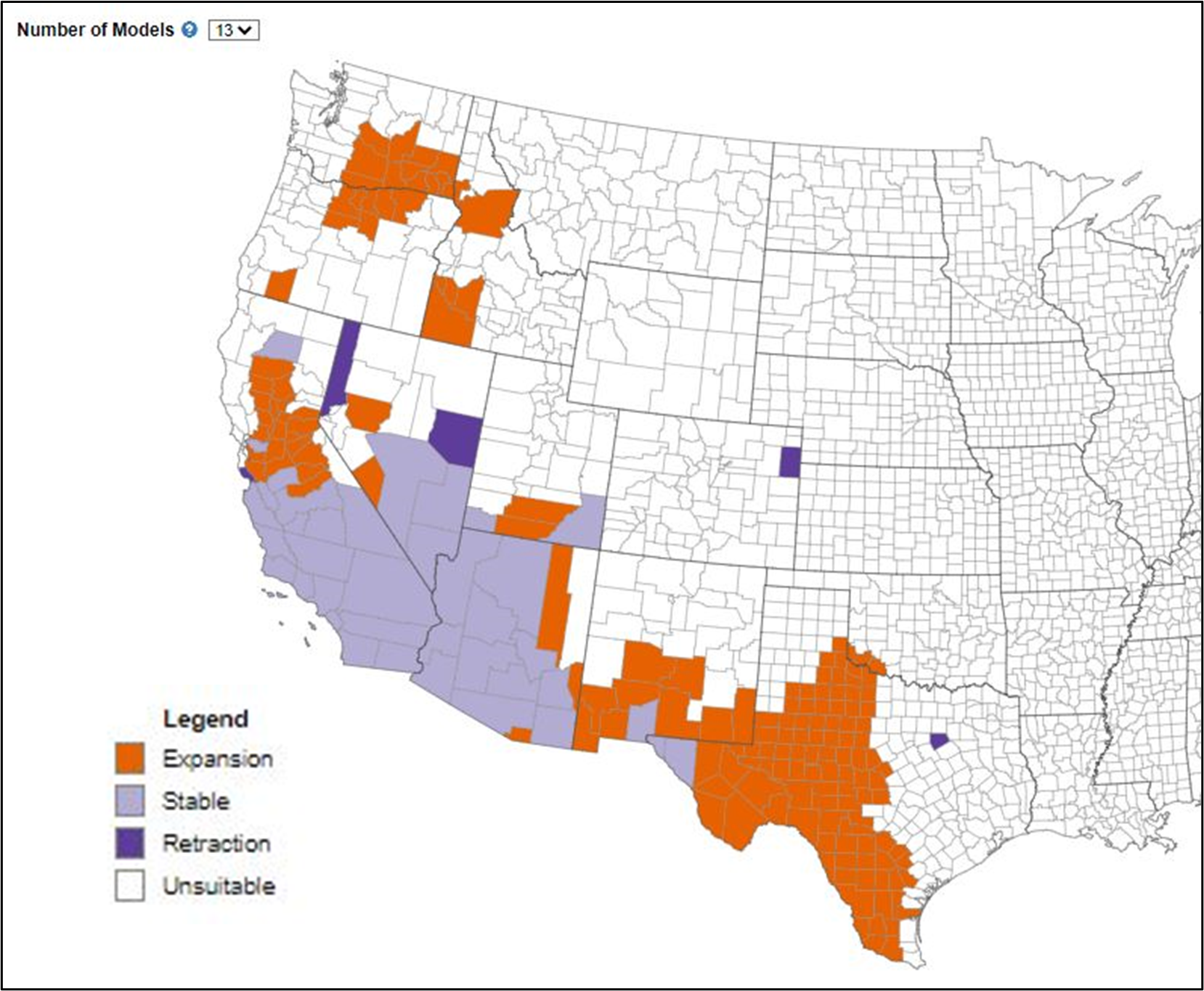
Sahara mustard is native to the Mediterranean region, the Middle East, and Central Asia [125,211,227]. In the United States it occurs from California east to Utah and south to Texas [68,78,111,214] (fig. 2), and it is most common and often invasive in the Mojave and Sonoran deserts [150,211]. It is not widespread in the Chihuahuan Desert [122,234], although models indicate that the climate is suitable [122]. It has been introduced in other parts of the world, including Mexico, Chile, South Africa, northwestern Europe, southern Asia, Australia, and New Zealand [78,79,216,227]. It is considered invasive in Mexico, Chile, South Africa, Australia [79,216,227], and parts of the Middle East [8]. It is cultivated as an oilseed crop in India, Pakistan, and Tibet [67,93,216] (see Other Uses). For a list of countries in which Sahara mustard occurs, see Florin (2022) [79].
Sahara mustard was first introduced to California in the 1920s, although the precise time and location is uncertain, and multiple introductions probably occurred [234]. It was likely introduced with the importation of date palms from the Middle East [92,150]. It was first recorded in Arizona in the 1940s, Texas in the 1970s, Nevada in the 1980s, and New Mexico and Utah in the 1990s [234]. Sahara mustard has been present in northwestern Sonora, Mexico, since at least 1970, and possibly earlier [76]. The genotype most widespread in the Southwest was first introduced near Malibu, California. Other genotypes were introduced to the Coachella Valley and near Nipomo, California. The native range of these introductions is unknown [234].
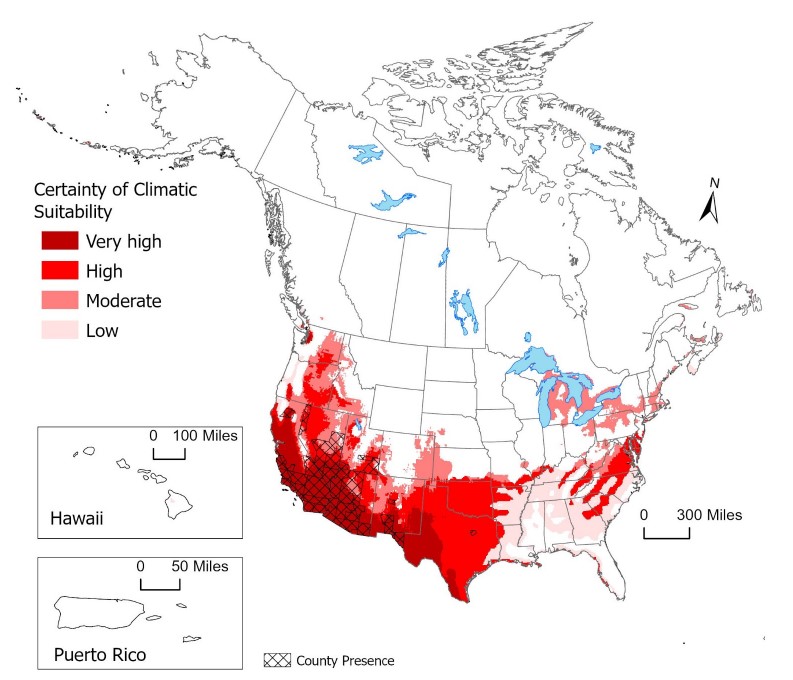
One analysis of herbarium records from North America suggested two lag phases and two periods of spread since Sahara mustard’s introduction to the United States [122], whereas a separate analysis using a combination of herbarium records and genetic data suggested no lag phases and a relatively constant rate of spread since its introduction [234]. The two periods of spread found in the first analysis occurred between the 1960s and the 1980s at all spatial scales, and in the 2000s, at small spatial scales. Results indicated that climate constraints likely limited spread during the 2000s at large (regional) spatial scales but that there was ample space to spread at small (local) spatial scales [122]. Sahara mustard is expected to continue to spread in the United States based on climate suitability modeling (fig. 3) [216].
States and Provinces
- United States: AZ, CA, NM, NV, TX, UT [68,78,111,214]
- Mexico: Baja California, Baja California Sur [48], Sonora [48,138], Chihuahua [222], Toluca, and Puebla [225]

Figure 3—Current and potential distribution of Sahara mustard in the United States and Canada. Potential distribution is based on climate suitability modeling (Magarey et al. 2017, cited in [216]).
Site Characteristics
Climate and Weather
Sahara mustard typically grows in arid and semiarid climates where annual precipitation is generally <860 mm [64,79,168]. Climate in its invaded North American range is generally similar to that in its native range [122,125]. Precipitation regimes in areas with Sahara mustard are typically bimodal, or precipitation occurs mostly in winter. Mean annual temperatures at sites with Sahara mustard generally range from 18 to 30 °C [79]. Climate-based models indicate that Sahara mustard likely occurs in areas where precipitation in winter ranges between 0 and 449 mm, annual precipitation ranges between 0 and 782 mm, mean temperature in winter ranges between -2.3 and 20.6 °C, and mean temperature in summer ranges between 14.8 and 36.7 °C [122]. Freezing temperatures can kill young Sahara mustard plants [92] (see Seedling Establishment and Mortality), and cold temperatures appear to limit Sahara mustard’s range to the north and at higher elevations [55].
Abundance of Sahara mustard varies greatly from year to year in response to precipitation amount and timing [24,148,150], as has been observed in the Mojave Desert in southern California [24,150] and in the Sonoran Desert in southern Arizona [42,62,66]. “Boom-and-bust” cycles have been observed among local populations of Sahara mustard following consecutive years of wet and dry winters and springs [125]. For example, years of ‘‘explosive’’ Sahara mustard abundance occurred in the Coachella Valley during relatively wet periods from 1977 to 1983 [150], from 1994 to 1995 (C. W. Barrows, unpublished data cited in [24]), and in 2005 [24]. Each of these wet periods had precipitation at least double annual means [24]. In contrast, Sahara mustard populations in the Mohawk Valley at the Barry M. Goldwater Range “essentially vanished” on floodplain and hillslope sites and “dramatically declined” on a dune site following 3 years of continuous below-average winter precipitation [120]. At two sites in the Coachella Valley (active sand dunes and stabilized sand fields), Sahara mustard cover varied temporally and spatially between 2002 to 2008 and corresponded with precipitation. When annual precipitation was low (less than about 75 mm) from 2002 to 2004, Sahara mustard cover was low to absent at both sites. Following “near record” precipitation in 2005, Sahara mustard cover increased to about 25% on stabilized sand fields and about 7% on active sand dunes. As annual precipitation decreased from 2005 to 2007, Sahara mustard cover decreased, and no Sahara mustard plants were recorded on either site in 2007. After an increase in precipitation from 2007 to 2008, Sahara mustard cover increased to about 18% on stabilized sand fields and about 5% on active sand dunes [24]. In the Sonoran Desert, along the Hassayampa River, Arizona, Sahara mustard cover was 3.6% during a wet El Niño year (1998) and 0.8% during a dry La Niña year (1999) [66].
Topography
Sahara mustard occurs on a variety of sites that are flat [141] to steep [38,108]. It is common on low dunes, coppice mounds, interdune troughs, sand flats, sandy-gravelly washes, shorelines, rocky slopes, old fields, and roadsides [6,27,38,78,138,220]. For example, at the Barry M. Goldwater Range, Sahara mustard occurs on a range of site types, including creosote flats and dune crests, but it is most common along ephemeral watercourses (e.g., arroyos), the base of north-facing dunes, and along roads. It was absent from stony alluvial dams and steep mountain slopes [138]. However, in the Calico Mountains in the south-central Mojave Desert and the River Mountains in the eastern Mojave Desert, it occurs on toe-slopes, mid-slopes, and the tops of steep colluvial mountains [38]. Areas that appear more resistant to Sahara mustard establishment in desert scrub communities include open, intershrub spaces and desert pavement [27] (see Successional Status).
Sahara mustard occurs on all aspects, but is more common on northern aspects in hot, dry sites [138,176], and it is more common on southern aspects on cool, mesic sites [80]. In dune fields at the Barry M. Goldwater Range, Sahara mustard populations occurred most often at the bases of northeastern, northern, and northwestern aspects and less often on southern aspects and between dune crests [138]. In sarcocaulescent desert scrub in Sonora, Mexico, Sahara mustard was located mostly on northwestern aspects of small mountain ranges [176]. In contrast, in southwestern Utah, Sahara mustard established most densely on south-facing slopes [80].
Sahara mustard is most abundant at low elevations [4,6,76,150], but it occurs up to 1,990 m (table 1). In Clark County, Nevada, for example, Sahara mustard averaged 1.6 occurrences/km at elevations below 610 m, 1.3 occurrences/km at 610 to 915 m, 0.2 occurrences/km at 915 to 1220 m, <0.1 occurrences/km at 1,220 to 1,830 m, and 0 occurrences/km at >1,830 m [6]. At El Pinacate y Gran Desierto de Altar Biosphere Reserve in Sonora, Sahara mustard occurred from sea level up to 1,184 m; however, a model indicated that 64% of the area most suitable for Sahara mustard invasion was below 160 m [177].
| Location | Area | Elevational range (m) |
|---|---|---|
| North America | Throughout | -116–1,990 [48,78,234] |
| Intermountain West | Throughout | 800–1,050 [101] |
| Arizona | Throughout | 71–1,503 [234] |
| Arizona | Barry M. Goldwater Range | 110–230 [138] |
| Arizona | Dateland | 131 [235] |
| Arizona | Organ Pipe Cactus National Monument | 305–610 [31] |
| Arizona | Ragged Top, Pima County | 670–780 [232] |
| Arizona | Saguaro National Park | 963 [235] |
| Arizona | Sawtooth Mountains | 480 [143] |
| Arizona, California, and Nevada | Mojave National Preserve and Lake Mead National Recreation Area | Most frequent below 1,200[4] |
| Arizona and Nevada | Lake Mead National Recreation Area | 287–450 [5,7,198] |
| California | Coachella Valley | 195–460 [180,192] |
| California | Southern California | Up to 1,193 [150,235]; most abundant below 305 [150] |
| California | Throughout | <800 [10], -117–1,193 [145,234] |
| New Mexico | Mesquite and Las Cruces | 1,196 [234,235] |
| Nevada | Clark County | <610–1,830 [6] |
| Nevada | Throughout | 466-962 [234] |
| Texas | Fort Hancock and El Paso | 1,115–1,183 [235] |
| Utah | Throughout | 800–1,050 [80,229,234,235] |
| Mexico | El Pinacate y Gran Desierto de Altar Biosphere Reserve, Sonora | 0–1,184 [177] |
Soils
Soil Texture and Type
While Sahara mustard can occupy a wide range of soil types and textures [6,165,211], it is especially common in loose, sandy soils (e.g., [27,29,62,64,150,157,218,220,226]), likely because its taproot can develop fully through loose sand to tap into deep soil moisture [188]. For example, based on 1,476 locations in the Sonoran Desert of southern Arizona, Sahara mustard was associated with areas of high sand content and/or loose soils [62]. In the Mohawk Valley, Sahara mustard populations were less persistent in clays or gravels than in sands (Y. Li, unpublished data cited in [125]).
Soil Moisture
Although Sahara mustard is drought tolerant and invasive in dry climates (see Climate and Weather), it is likely to grow larger and may dominate on relatively moist microsites [38,138]. Sahara mustard populations can persist in these moist microsites during dry years and act as source populations for population spread during relatively wet years [125]. In the Mojave Desert, relatively mesic microsites beneath shrub canopies and along ephemeral washes are often dominated by Sahara mustard [38]. In the Mohawk Dunes at the Barry M. Goldwater Range, Sahara mustard was “most successful” in areas of high soil moisture, such as ephemeral water courses and roadsides with enhanced run-off [138].
Soil Salinity
Sahara mustard has been classified as salt tolerant [33]. It can occur in saline soils [79], although growth and reproduction are less in saline soils [92]. It can also grow under saltcedar plants and in saltcedar leaf litter [22,165]. It occurs in halophytic grasslands in Chihuahua, Mexico [222], although El-Bana (2009) classified Sahara mustard as a glycophyte, not a halophyte, in its native Egypt [69]. In a greenhouse in India, Sahara mustard plant height decreased by 53%, seedpods per plant decreased by 64%, seeds per seedpod decreased by 38%, and seed yield per plant decreased by 95% with an increase in salinity from 0 to 120 mEq/L of NaCl [61].
Soil pH
Sahara mustard occurs in soils with acid, alkaline, neutral, and very alkaline pH [79].
Soil Fertility
Sahara mustard can grow in very low nutrient soils, such as in sand dunes [79] and in the relatively nutrient poor interspaces between shrubs, but it is often denser in the relatively moist and nutrient-rich spaces under shrubs [27]. For example, in the Chemehuevi Valley in San Bernardino County, California, it established most densely under the canopy of native perennial shrubs both in the microphyll woodland of Chemehuevi Wash and in the creosotebush-white bursage association outside the wash [27]. See Shade Tolerance for more information on this study.
Plant Communities
In its native and nonnative ranges, Sahara mustard occurs in desert scrub, desert shrubland, desert grassland [29,64], annual grasslands [150], floodplains and riparian plant communities—including those along ephemeral riparian corridors, overflow channels, and alluvial fans [64,78,120,124,211,236]—as well as coastal sage scrub [64,150], sparsely vegetated maritime beaches, coastal and inland sand dunes, and sand flats [23,25,63,64,67,83,138,150,201]. It also occurs along roadsides, and in residential and industrial areas, rangelands and pastures, old fields, and cultivated agricultural fields [51,64,78,119,211,233].
In the Mojave and Colorado deserts in California and Nevada, Sahara mustard is invasive in creosotebush and creosotebush-white bursage scrub and in mixed-species shrublands in washes, as well as in sparsely vegetated sand dune communities that often contain rare native plant species, such as the endangered Coachella milkvetch [7,24,190,191,192] (see Impacts on Native Plant Communities). It is often present in the alkali goldenbush desert scrub association, which occurs in the Imperial Valley of the Mojave Desert and the southern San Joaquin Valley [75].
On the Barry M. Goldwater Range in the Sonoran Desert, plant associations with the greatest probability of Sahara mustard presence were dominated by creosotebush, white bursage, and/or honey mesquite. Associated species in these plant communities include yellow paloverde, blue paloverde, desert ironwood, catclaw acacia, desert-thorn, ocotillo, burrobrush, big galleta, and desert palafox [124]. It is invasive in creosotebush-white bursage sand flats, white bursage-creosotebush/big galleta grass dunes, creosotebush-triangle bur ragweed-mesquite floodplains, and paloverde/creosotebush-brittle bush-white bursage hillslopes [120]. It occurs on the Mohawk Sand Dunes of the Range, which are stabilized by a 7% to 15% perennial plant cover (depending on aspect) composed of big galleta, longleaf jointfir, and white bursage, with creosotebush in the swales. It also occurs in low gradient watercourses adjacent to valley floors that support creosotebush, white bursage, and triangle bur ragweed, and, if sandy, big galleta [138].
In southeastern Arizona, Sahara mustard was a characteristic species of the Lehmann lovegrass-red brome-Sahara mustard warm desert ruderal grassland group on alluvial fans, ridges, hills, and valley floors [75]. In the Hassayampa River Preserve, Arizona, Sahara mustard occurs, although rarely, in Fremont cottonwood-Goodding’s willow floodplain forests; in overflow channels with mule-fat, five-stamen tamarisk, and burrobrush; and in Athel tamarix groves [236].
Sahara mustard is invasive in coastal sage scrub communities in California [32,150]. These communities are characterized by California sagebrush, Eastern Mojave buckwheat, white sage, coastal pricklypear [144], and brittle bush [32].
In the El Pinacate and Gran Desierto de Altar Biosphere Reserve in Sonora, Mexico, Sahara mustard was associated with microphyllous desert scrub and microphyllous desert scrub-grassland communities dominated by creosotebush, white bursage, and/or Mediterranean grass and sarcocaulescent desert scrub communities characterized by winter annuals, creosotebush, physicnut, yellow paloverde, elephant tree, ocotillo, desert ironwood, and saguaro [176].
Botanical Description
This description covers characteristics that may be relevant to fire ecology and is not meant for identification. Identification keys are available for North America (e.g., [15,99,101,119,233]). Keys from outside North America are also available (e.g., [29,195,210]).

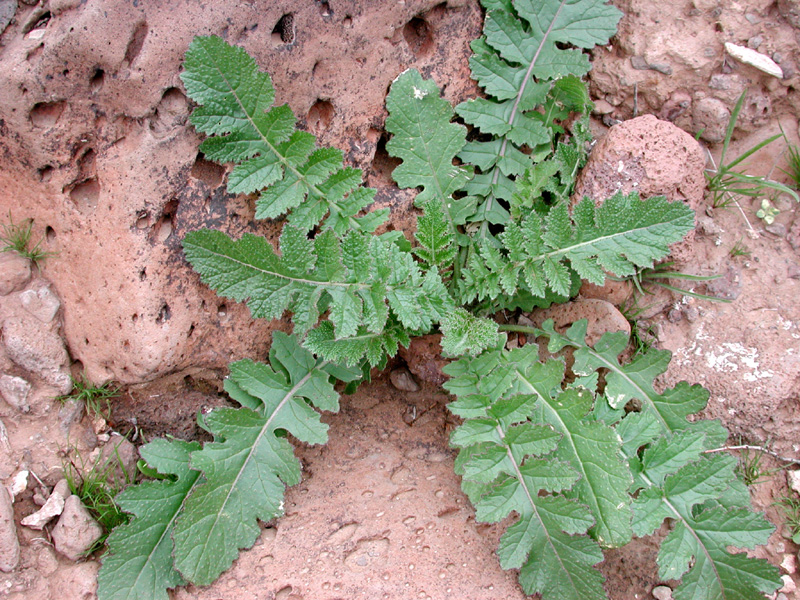
Figure 4—Sahara mustard rosette in Hedgepeth Hills, Maricopa County, Arizona.
Sahara mustard exhibits a high amount of morphological variation [150,220]. Intraspecific variation has arisen both naturally and from breeding and cultivation [216]. Alfaro and Marshall (2019) compared phenotypic variation in native, cultivated, and invasive genotypes of Sahara mustard found worldwide and found that cultivated genotypes are shorter and have more appressed branches than native or invasive genotypes; cultivated genotypes have larger leaves and mature faster than invasive genotypes; and invasive genotypes have larger leaves and tend to mature faster than native genotypes [11].
Sahara mustard is an annual forb (e.g., [10,15,29,76,78,92,101,119,195]). In early growth, Sahara mustard plants form a large basal rosette [211] (fig. 4). Flowering stems grow erect [64,92,150,210] and are branched from the base, but mostly branched above [92,146,210], forming a “witch’s broom appearance” [229]. Plants typically grow up to 100 cm tall [10,15,29,78,101,119,195,210], with some exceptional individuals growing up to 120 cm [64,77,92] 180 cm [146], or even 200 cm [27] tall. Basal rosettes can be more than 100 cm in diameter [220].
At the base, leaves and stems have dense, stiff hairs or bristles [10,64,76,146,150] (fig. 5) and basal leaves are densely hairy underneath [15,92,101,119]. Basal leaves are toothed and pinnately lobed [15,64], with up to 14 lobed pairs [10,64,78,92,101,195], which is more than most other mustards [64]. Basal leaves are up to 56 cm long [15,76,92,101,119,150] and 10 cm wide [101,229]. Leaves quickly reduce in size upward on the stems, so that in the inflorescence only minute bracts are present [15,29,150]. Upper leaves are not lobed [10].

Figure 5—Hairs on Sahara mustard stems and leaf.

Figure 6—A Sahara mustard seed pod.
Inflorescences are racemes with 6 to 20 four-petaled flowers [15,29,76,78,92,101,146,150,195] (fig. 1). The flowers are relatively small and “inconspicuous” compared to other mustards, with petals 4 to 8 mm long and 1.5 to 2.5 mm wide [10,15,64,78,92,101,119,150,195,210].
The fruit is a silique (hereafter, seedpod) [7,92,216]. Seedpods diverge stiffly from the stem at 45° [92,150] (fig. 6). They are 30 to 70 mm long and typically 2 to 3 mm wide, with a distinctive beak typically about 10 to 20 mm long [10,15,29,76,78,101,119,195,210,229].
Each seedpod contains 14 to 30 seeds, with typically 1 or 2 seeds in the beak [10,78,92,101,119,146,150,210,211,216]. Seedpods open from the base to release seeds [64]. Seeds are dimorphic in size and weight [7,83], with seeds in the beak weighing more than seeds at the base [77]. Seeds range from 1 to 1.6 mm in diameter [10,78,92,101,119,150,195,210,216]. The seed coat is mucilaginous when wet [22,78,92,210,211].
Sahara mustard has a taproot [101,119,195] that is variously described as long [195], stout [51,92,119], sturdy [150], and well-developed [76,77,92,146,150].
Population Structure
Sahara mustard density and cover on a site can vary substantially in response to timing and amount of precipitation. It can form dense, monotypic patches [117,147,150,202,211,216] or “thickets” [86] that are “nearly continuous” [117], especially in relatively wet years and on relatively mesic sites (see Climate and Weather). Barrows et al. (2009) described how Sahara mustard formed a “thick, inter-meshed canopy between 0.3 m and 1.0 m from the ground” on sites in the Coachella Valley [24], and Meinke et al. (2007) described plants in dense populations as having closed canopies and overlapping rosettes [147]. In a photo taken from Highway 62 in southern California, Spjut (2009) noted the equal spacing of fruiting Sahara mustard plants and attributed this to possible effects of allelopathy or water availability [189]. Plant density and cover may also vary in response to fire on some sites (see Plant Response to Fire).
Seasonal Development
In North America, Sahara mustard is a cool-season (winter or spring) annual forb (e.g., [10,15,76,78,92,101,119]), although Gayvert (2008) stated that Sahara mustard plants may “occasionally experience more than one flowering season” in some parts of the Mojave Desert [86]. It grows fast and completes its life cycle within about 3 to 4 months [115,140,184,211] (see Plant Growth and Mortality). Its seeds can germinate whenever moisture is sufficient, but typically germinate after the first rains in fall or winter. Observations in parts of the Sonoran Desert indicate that seeds can also germinate after monsoonal rains in summer if temperatures are moderate [137,147,202], although summer germination was not observed at Lake Mead, even after summer rains [22].
Plants first develop into rosettes, from which flowering stems arise. They flower and fruit in winter or spring and set seed and senesce in late winter or spring as soils dry and temperatures rise (table 2). For example, in the Coachella Valley in 2007, seeds germinated after the first fall rains on 30 November, seedlings were in the cotyledon stage on 21-22 December; and plants were flowering and beginning to set seed on 21-22 February [141]. Two or more generations of germinants may occur in a single year during a wet winter [22] (see Germination and Seedling Emergence).
Across its range in the Southwest, winter precipitation was an important predictor of the number of days to germination; as precipitation increased, the length of time to germination decreased (r2 = 0.49, n = 10 locations). It was also an important predictor of the time to first leaf; as precipitation increased, the time to first leaf increased (r2 = 0.56, n = 10 locations) [235].
Sahara mustard flowers earlier than most associated native species [77,150], which can contribute to its invasiveness (see Invasion Success). At two sites in the Coachella Valley, for example, Sahara mustard plants were flowering and beginning to set seed by 21-22 February; in contrast, timing of peak native flowering in that year was in early to mid-March [141].
Sahara mustard may flower earlier during relatively warm winters. In Riverside County, California, Sahara mustard flowering was “premature” after a “hot spell” in February 1993 [150].
| Location | Area | Developmental Stage and Timing |
|---|---|---|
| North America | Throughout | Flowers February–April [78]; open flowers can be present year-round; mostly January–May; fruit present October-June; mostly January–May [48] |
| Intermountain West | Throughout | Flowers January–April [101] |
| Southwest | Sonoran Desert | Flowers February–May [220] |
| Southwest | Southern United States and northern Mexico | Flowers January–March [51] |
| Arizona | Throughout | Flowers late winter-early spring (Epple 1995 cited in [92]); germinates November–December (Sue Rutman, personal communication cited in [92]) |
| Arizona | Barry M. Goldwater Range West | Germinates February, Flowers April [120] |
| Arizona | Organ Pipe Cactus National Monument | Flowers February–May [76] and March–May [31] |
| Arizona and Nevada | Lake Mead National Recreation Area | Germinates late fall and early winter [22] and January–early February [86]; flowers and sets fruit by late March [22]; seeds ripe but seedpods not split apart on 12 May 2010 [7] |
| Arizona and New Mexico | Throughout | Flowers February-April; senesces by May [211] |
| California | Throughout | Flowers January–June [10], Flowering begins December or January; sets seed by February; most plants in fruit or dead by April [150] |
| California | Coachella Valley National Wildlife Refuge | Senesces and disperses seeds late March to early May [147] |
| New Mexico | Throughout | Flowers February–April; senesces by May [171] |
| Texas | Throughout | Flowers January–March [51,119] |
| Utah | Southwestern Utah | Germinates as early as December [80] |
| Mexico | Baja California | Flowers January–June [233] |
Regeneration Processes
Sahara mustard is an annual. It regenerates only from seeds [64,80,92,211].
Pollination and Breeding System
Sahara mustard is self-compatible [150,174] and primarily self-pollinates [234]. Thus, genetic diversity across its nonnative range is thought to be low [234]. Winkler et al. (2019) found that outcrossing occurs ≤12% of the time [234]. However, Hedrick (2020) stated that “some calculation or analysis error” occurred in the Winkler et al. (2019) study, and that outcrossing may be much more common in some populations [95].
Meinke et al. (2007) observed that Sahara mustard plants were pollinated by nonnative honeybees [147].
Seed Production
Because Sahara mustard is self-compatible (see above), seed set is near 100% on most plants [150]. In a greenhouse selfing experiment, Sahara mustard averaged 19 seeds/pod (range: 18-20) and podset averaged 98% (range: 95%-100%). Flowers averaged 22.6 ovules, and 84% of ovules resulted in seeds [174].
Sahara mustard seed production is variable, although a single Sahara mustard plant can produce hundreds or thousands of seeds under some conditions (e.g., [22,52,86,88,147,150,157,211,216]). For example, during a year of below-average precipitation, Sahara mustard seed production in roadside populations at three sites in the Mojave and Sonoran deserts ranged from 0 to 16,554 seeds/plant (mean = 996 seeds/plant). The researchers suggested that seed production would likely be higher during a year of greater precipitation [202]. In addition to precipitation amount, seed production may also be influenced by precipitation timing, freezing temperatures, site characteristics, and plant and community characteristics.
Weather
Seed production is likely to be higher in relatively wet years [200]. For example, during a relatively wet year (2005) in the Coachella Valley National Wildlife Refuge, Sahara mustard averaged 5,597 seeds/plant, compared to 3,193 seeds/plant in a much drier year (2006). During the wet year, one plant had an estimated 130,000 seeds [147].
Freezing temperatures can reduce Sahara mustard seed production. The number of seedpods per plant and seeds per seedpod were lower in potted plants subjected to freezing temperatures than in untreated, control plants. Treated plants were subjected to -3 to -4.5 °C for 2 hours, 20 days after flower initiation, when 20% to 40% of flowers had formed seedpods [60].
Site Characteristics Seed production is likely to be higher on sites with relatively greater water availability [24,198,200]. For example, observations of greater seed production on active sand dunes than stabilized sand fields in the Coachella Valley during 2006 was attributed to greater availability of water in the deep aeolian sands of the active dunes compared to the shallow sands of the stabilized fields [24].
Water-stressed plants are likely to produce fewer seeds [137,140], although study results are inconsistent and may reflect differences among Sahara mustard populations in their response to water stress. Even under high water stress Sahara mustard may produce sufficient seeds for reinvasion of a site [137]. Sahara mustard plants grown in pots from seeds collected from mesic, coastal sage scrub sites and dry, desert sites in California had fewer seedpods and seeds when grown in “low water” conditions (soil volumetric water content averaged 7.0%) than when grown in “high water” conditions (11.7% soil water content) [140]. In Queensland, Australia, one population of Sahara mustard plants produced fewer seeds per plant (about 3,100-4,500 seeds/plant) under high or moderate water stress than under low or no water stress (about 5,600 seeds/plant), while another population produced more seeds under low and moderate water stress (about 4,000 seeds/plant) than under high water stress (about 3,100 seeds/plant) or no water stress (about 3,000 seeds/plant) [137].
Plants growing on sites with high available nitrogen are likely to be larger and produce more seeds than those on sites with low available nitrogen. In greenhouse experiments using seeds collected from California, plants in high nitrogen treatments (15 kg N/ha) had higher biomass, height, and seed count than plants in low nitrogen treatments (3 kg N/ha). Correlations between traits indicated that an increase in both biomass and height of Sahara mustard plants resulting from greater nitrogen availability led to greater reproductive output [187] (see Plant Growth and Mortality).
Plant and Community Characteristics Large Sahara mustard plants are likely to produce more seedpods than small plants [147,187,202]. In roadside populations at three sites in the Mojave and Sonoran deserts, Sahara mustard plant biomass and seed production were positively correlated, with larger plants producing more seeds per plant (r2 = 0.95, n = 135 plants) and greater seed biomass per plant (r2 = 0.94, n = 135 plants) than smaller plants [202]. Two studies in Queensland, Australia, found that earlier established plants were larger and produced more seeds than later established plants. Plants that established in fall averaged 3,500 and 5,675 seeds/plant in the two studies, and those that established in winter or spring averaged 300 and 1,850 seeds/plant [137,152]. In some cases, late-establishing plants may die before seed set (M. Brooks, personal observation cited in [140]).
Sahara mustard plants growing at high intraspecific densities [202] or with crops [137] tend to produce fewer seeds per plant than plants grown at low densities or without interference from other plants. For example, in roadside populations at three sites in the Mojave and Sonoran deserts, Sahara mustard seed production tended to be higher in plots with the lowest Sahara mustard densities [202]. For more information on this study, see Control.
Seed Dispersal
Sahara mustard seeds typically fall near parent plants when seedpods open at maturity [64], although seeds may also be dispersed by wind, water, and animals [66,79,211,216].
Wind dispersal of Sahara mustard seeds is thought to be unlikely because seeds are heavy (1.17 mg) and lack dispersal features [198]. However, others have suggested that some seeds may disperse farther from the parent plant than others based on differences in seed size, weight, and location in the seedpod [77] or the possible presence of dispersal structures on some seeds [224].
Long distance wind dispersal can occur when entire plants break off at ground level and disperse seeds as they tumble in the wind [22,38,64,76,165,202,211]. Sahara mustard plants are most likely to develop into tumbleweeds in open and windy, sandy places [64,76], such as at Lake Mead National Recreation Area [22]. Many seeds may fall where plants accumulate, such as at the bases of shrubs, along fences [38], or in ephemeral stream channels [27].
Water can disperse seeds because Sahara mustard plants and seedpods can float, and seeds can remain viable after extended submergence [22,165] (see Germination: Moisture). Lake Mead was identified as a dispersal route for Sahara mustard seeds, which have been observed floating on the lake and germinating on the shoreline [22,86,165]. In Arizona, washes [43] and stream channels [27] act as dispersal corridors. At the Barry M. Goldwater Range, sheet flooding apparently transported Sahara mustard seeds across creosote flats [138].
Animals can disperse Sahara mustard seeds in several ways. The seed coat is mucilaginous when wet [22,78,92,210,211] (see Botanical Description), which allows seeds to stick to and be dispersed by moving objects, such as animals or vehicles [22,64,150,211]. Wildlife and livestock that eat Sahara mustard seeds (see Importance to Wildlife and Livestock) may disperse them to their caches, nests, or in their feces [216], although no data were available on the latter. Granivorous rodents harvest Sahara mustard seeds and bury them in shallow caches in the soil for later consumption, potentially carrying them long distances [22,38,211]. Rodents moved Sahara mustard seeds up to 100 m at Lake Mead National Recreation Area [165]. Harvester ants carry Sahara mustard seeds to their nests [32], which may contribute to their dispersal [216], although most are apparently consumed [32]. Brooks (2009) observed large flocks of horned larks and sage sparrows feeding on Sahara mustard seeds in the Calico Mountains of the south-central Mojave Desert and the River Mountains of the eastern Mojave Desert and suggested that these birds may disperse seeds long distances (M.L. Brooks, unpublished data cited in [38]). Bangle et al. (2008) suggested that seeds may be dispersed by pigeons [22].
Seed Banking
Limited information suggests that Sahara mustard forms a short-term, persistent soil seed bank [22,24,49,137,211]. Bangle et al. (2008) reported 99% germination after nearly 3 years of dry storage [22]. However, longevity of soil-stored seeds is likely to be shorter than that of laboratory-stored seeds [137]. Nonetheless, even a small proportion of surviving seeds can be sufficient to reinvade a site.
Field studies found that Sahara mustard seed viability declined over time—although some seeds retained viability for at least 225 days [49], 18 months [137], and up to 2 years [200]—and that burial seemed to increase longevity [137]. After 225 days, viability of dormant Sahara mustard seeds collected from South Australia and buried 0, 2, and 5 cm deep was about 10%, 12%, and 18%, respectively. The remaining seeds had either decayed, were predated, or were lost to germination [49]. After 18 months, viability of Sahara mustard seeds collected from two populations in Queensland, Australia, and placed in bags on the soil surface was ≤4%, while that of seeds buried 2 or 10 cm deep averaged 78% and 76%, respectively (table 3). Viability of seeds on the soil surface declined faster than that of buried seeds likely because they were exposed to both sunlight and greater diurnal soil temperature fluctuations than buried seeds [137]. Sahara mustard seeds collected from the Mojave Desert in California and buried in packets “under a thin layer of soil” in the field averaged about 12% viability after 1 year and about 5% after 2 years [200]. Seeds may also be lost from the soil seed bank via soil-borne fungi native to the southwestern United States that can kill Sahara mustard seeds in the soil seed bank during the summer monsoon [123].
In arid regions with summer precipitation (e.g., southern Arizona), Sahara mustard seed banks can be ephemeral because of the combination of a high percentage of seed germination and a low percentage of seed survival during the first growing season [120,121]. For example, seeds of Sahara mustard in the soil seed bank in three different habitat types (open sand flat, shrub sand flat, and open sand dune) in the Mohawk Valley during three consecutive dry winters had high germination rates (up to 100%) and low survival rates of ungerminated seeds (as low as 0%). Viability was determined by examining the appearance of seeds collected from 2-cm deep (open and shrub sand flats) or 5-cm deep (open sand dune) soil samples. Mean viability was higher on the open sand dune (30%) than on the open sand flat (11%), and similar between the open sand flat and the shrub sand flat [120,121,125]. Given the low average survival rate among ungerminated seeds during these dry years, Li (2014) hypothesized that, without further recruitment, the Sahara mustard seed bank would be depleted in about 1 year on the open sand flat and about 1.5 years on the open sand dune [120,121,125]. Meinke et al. (2007) stated that with this species’ boom-and-bust strategy, periodic high precipitation years are particularly important in maintaining year-to-year seed banks for Sahara mustard, so that “even though large fractions of [seeds] are occasionally lost to inopportune germination, there is enough carry-over to support future recruitment” [147].
Large numbers of Sahara mustard seeds can be present in both standing dried plants (i.e., aerial seed bank) and in the soil seed bank. In coastal sage scrub in Riverside, California, an average of about 7,000 Sahara mustard seeds/m2 occurred on the soil surface and in the canopy of plants in summer 2008. However, no data were provided on the abundance of Sahara mustard plants or on precipitation during the study [32].
Experimental removal of plants before seed set showed that Sahara mustard seeds remained viable in the soil seed bank for about 20 months. In the Coachella Valley, soil samples collected in fall 2006 from plots where Sahara mustard plants were removed in January 2005 averaged 41 seeds/m2, while unweeded control plots averaged 132 seeds/m2. Although differences were not statistically significant—possibly due to small sample sizes and high spatial variance in seed distributions—these results show that sufficient Sahara mustard seeds remained in the soil seed bank to reestablish populations nearly 2 years after plants were removed [24].
| Biotype | Burial depth (cm) | Burial duration (months) | ||||||
|---|---|---|---|---|---|---|---|---|
| 0 | 3 | 6 | 12 | 18 | 24 | 30 | ||
| Cropland | 0 | 100 | 77 | 43 | 27 | 1 | 0 | 0 |
| Cropland | 2 | 100 | 89 | 90 | 79 | 78 | 41 | 39 |
| Cropland | 10 | 100 | 86 | 86 | 83 | 56 | 11 | 3 |
| Fence lines | 0 | 100 | 81 | 23 | 3 | 4 | 0 | 0 |
| Fence lines | 2 | 100 | 89 | 88 | 82 | 76 | 46 | 5 |
| Fence lines | 10 | 100 | 90 | 87 | 83 | 69 | 45 | 0 |
Germination and Seedling Emergence
Sahara mustard can germinate under a wide range of light, temperature (e.g., [22,120,136,186,201]), and pH [49], and can germinate en masse with sufficient rainfall (10-40 mm) [137,147,150] (see Moisture), when temperatures are moderate (e.g., between 15 and 28 °C [22,201]). High germination rates in the field (up to 100%) can leave few viable seeds left in the soil seed bank [120] (see Seed Banking).
In the laboratory, Sahara mustard germination rate can reach 100% under optimal germination conditions (e.g., [22]). Optimal germination conditions differ among seeds from different populations (biotypes) [136,137,186]. In general, Sahara mustard germination is best in dark and inhibited by light (e.g., [22,25,49,53,120,132,136,137,186,201]) (see Light and Temperature); germination is better for shallowly buried seeds (0.5-1.0 cm deep) than more deeply buried seeds or seeds on the soil surface [49,186,201] (see Burial); and some proportion of fresh seeds may be dormant [25,49,70,132,136,137,164,186] (see Dormancy), and thus become part of the soil seed bank.
Moisture
In North America, Sahara mustard often germinates en masse after the first rains in fall or winter [137,147,150], but germination can be stimulated whenever rainfall is sufficient and temperatures are moderate (see Seasonal Development). As little as 10 mm [137], 20 mm [120], or 40 mm [150] of precipitation can stimulate germination. Multiple rainfall events of sufficient amount can result in multiple reproductive cohorts [22,24,137]. For example, in the Coachella Valley, Sahara mustard plants germinated after each major rainfall event in the fall of 2004, and by late January 2005 there were at least three age/size classes of Sahara mustard seedlings present [24].
Sahara mustard seeds are relatively tolerant of drought stress and germinate under a range of osmotic potentials (0.0 to -1.0 MPa), although germination decreases as water stress increases [49,186]. Sahara mustard seeds may not germinate in dry years [24]. Sensitivity to water stress appears to be greater for seeds exposed to light [49].
Sahara mustard seeds can germinate after being submerged in water for extended periods. In a laboratory, Sahara mustard seeds germinated after 10 weeks of submergence in water, although germination gradually declined to <10% after 8 to 10 weeks of submergence [22]. Sahara mustard seeds that had been underwater in Lake Mead for 11 weeks remained viable and germinated in a laboratory [165].
Light and Temperature
Sahara mustard germination is optimal in dark at moderate temperatures (15-28 °C) [22,136,186,201]. For example, germination of Sahara mustard seeds collected from Lake Mead National Recreation Area was optimal (95%-100%) between 16 and 28 °C; germination did not occur at very low (5 and 10 °C) or very high (35 and 40 °C) temperatures [22].
Its germination is typically reduced by exposure to light, especially at low to moderate temperatures (e.g., [22,25,49,53,120,132,136,137,186,201]), although one study—using Sahara mustard seeds from the United Arab Emirates—found that germination was lower in dark (19%-29%) than in alternating light/dark (27%-62%) at three alternating temperature regimes [83]. Differences among studies may be due to differences in methods (e.g., differences in temperature regimes tested) [186] and/or differences in populations (biotypes) [83,136,186].
Burial
Sahara mustard germination seems to be highest for seeds that are shallowly buried (about 0.5-1 cm deep) [49,186,201]. Germination is often lower for seeds on the soil surface—possibly because these are exposed to greater light fluctuations [120,136]—and for more deeply buried seeds (greater than about 5-10 cm deep), likely due to Sahara mustard’s relatively small seed size [49,109,186].
Sahara mustard seeds can be buried by soil when it is moved by wind and rain, especially by soils that are relatively mobile, such as soils in sand dunes, along ephemeral watercourses, or in disturbed areas near roads [120,138] (see Soils). Seeds can also be buried in shallow caches by granivorous rodents (see Seed Dispersal and Importance to Wildlife and Livestock), where they may germinate and grow in clumps (M. L. Brooks, unpublished data cited in [38]). Field observations indicated that Sahara mustard plants can germinate and establish below perennial plants [7,22,27,135,138,192,202,216] (see Shade Tolerance), where litter accumulates [22,196], and litter likely buries seeds under plant canopies.
While laboratory and greenhouse studies reported moderate germination of seeds sown on the soil surface (42% and 52%) [5,186], field studies—where seeds are exposed to weather fluctuations and granivory [5]—found 0% [201] and 26% [49] germination for seeds sown on the soil surface. Researchers hypothesized that germination of Sahara mustard seeds on the soil surface was limited by photoinhibition, which may induce dormancy (see below), and that germination was improved by shallow burial due to darker conditions (see Light and Temperature) and better seed-soil moisture contact (e.g., [49,50,201]). Deeper burial (5-10 cm) may inhibit germination (e.g., [5,49]), although one study found 28% germination for seeds buried 8 cm [186]. Disturbances that shallowly bury Sahara mustard seeds (e.g., cultivation, hand pulling plants) [38,137,186,211] are likely to facilitate Sahara mustard germination (see Succession).
Due to lower light and higher moisture conditions under litter, Sahara mustard germination may be greater under litter than on bare soil [151,186], but it may be impeded by thick litter [151,186]. Laboratory and greenhouse studies using seeds collected from Queensland, Australia, found that emergence of Sahara mustard seedlings was greater with litter cover of about 900 to 6,000 kg/ha than without litter [151,186], but germination was lower with high litter cover (7,257 kg/ha) [151]. However, Sahara mustard can germinate and establish on bare soil in the field and does not require litter cover (see Seedling Establishment and Mortality).
Dormancy
While Sahara mustard seeds may germinate shortly after maturity [22], many studies indicate that a portion (up to 100% [136]) of the annual seed crop is dormant [25,49,70,132,136,137,164,186]. Dormancy may be imposed by the seed coat and/or exposure to light [136], and it can be broken by dry after-ripening (e.g., summering seeds in dry conditions at high temperatures) [120,132], warm stratification [132,136], or application of gibberellic acid or other dormancy regulating chemicals (e.g., kinetin, sodium hypochlorite, and potassium nitrate) (e.g., [25,49,70,136,164,193]). Sahara mustard seed dormancy can also be broken and germination stimulated by chemicals present in smoke (e.g., karrikinolide (KAR1)) (e.g., [114,193]). See Postfire Regeneration for more information.
Salinity
Sahara mustard occurs on saline and salt-effected soils in its native range (e.g., [25,63,201]) and nonnative range (e.g., [22]) (see Plant Communities and Soils), and it appears to have a higher tolerance for salinity than other desert annuals [22]. However, germination rates are substantially reduced when seeds are exposed to high salinity levels (3.2-6.7 dS/m) [22] and further reduced when these seeds are exposed to light [49]. Populations of Sahara mustard seeds differ in their salinity tolerance [186].
Soil-borne Fungi
Germination of Sahara mustard seeds in southwestern Arizona may be reduced or enhanced by different strains of soil-borne fungi. Seeds of Sahara mustard and desert Indianwheat (a native winter annual forb) inoculated with actively growing mycelium from each of 18 fungal strains showed increased germination after exposure to certain strains, but only under summer temperatures. Under winter temperatures, germination of both species was minimal. Under summer temperatures, inoculation of 9 of the 18 strains increased mortality of either or both species. One strain resulted in 80% greater mortality of Sahara mustard seeds than desert Indianwheat seeds, while another strain resulted in 44% greater mortality of desert Indianwheat seeds than Sahara mustard seeds. Exposure of inoculated seeds to high temperatures in summer reduced recruitment from those seeds because it resulted in either death of seeds or germination of seeds and subsequent death of seedlings [123].
Seedling Establishment and Mortality
In some locations, such as in parts of the Mojave Desert, Sahara mustard establishment may follow a “boom-or-bust” pattern, with high rates of establishment during relatively wet years or seasons and high rates of mortality occurring during relatively dry years or seasons [22,147,200].
Sahara mustard seedling mortality can be high during dry weather and lower during relatively wet years or on relatively mesic sites (e.g., [24,120]). Sahara mustard seedling mortality rate was high during a growing season with low precipitation (<40 mm from October 2010-February 2011) in the Mohawk Valley on both open and subcanopy microsites. Median mortality rate was about 60% on a hillslope, 63% on a floodplain, 78% to 80% on a sand flat, and 80% to 88% on a sand dune [120].
Young Sahara mustard plants are intolerant of freezing temperatures. In Organ Pipe Cactus National Monument, Arizona, Sahara mustard seedlings were “killed off” by a hard freeze during mid-winter (S. Rutman, personal communication cited in [92]). Cold temperatures limit the distribution of Sahara mustard in North America [55]. For information on how weather affects Sahara mustard abundance, see Climate and Weather.

Figure 7—Sahara mustard plants frequently establish on bare ground.
While germination may be better under litter (see Germination and Seedling Emergence: Burial), Sahara mustard can establish on bare soil [24,82,86] (fig. 7), and disturbances that expose or move bare soil appear to favor its establishment in some areas [86]. For example, Sahara mustard established in “dense thickets” in the drawdown zone of Lake Mead after drought from 2000 to 2005 exposed bare soil along the banks that had been underwater for 10 years [86], and it dominated steep, eroded hillsides in the Caliente Creek area of the San Joaquin Valley [108] (see Succession).
Plant Growth and Mortality
Sahara mustard is quick growing and short lived, completing its life cycle within about 3 to 4 months [115,140,184,211] in both mesic and dry conditions [140,187]. For example, Sahara mustard plants in pots averaged 50 to 55 days to bolting at a mesic California site and 59 to 61 days to bolting at a dry Nevada site; 71 to 78 days to flowering at the mesic site and 71 to 73 days to flowering at the dry site; and 77 to 84 days to seed set at the mesic site and 76 to 78 days to seed set at the dry site. Plants at both sites produced seeds before peak summer temperatures and grew faster than two cooccurring nonnative mustards. Sahara mustard was shorter but grew more rapidly than both shortpod mustard and black mustard; and it bolted, flowered, and set seed as much as 50 days earlier than either species at both sites [140].
Its fast growth enables it to establish earlier and grow larger and taller than associated native annuals in the Southwest [150] (see Invasion Success). For example, Sahara mustard averaged 50 cm tall, while height of 14 associated native annual species averaged between 9 and 30 cm tall [22]. With sufficient moisture, Sahara mustard rosettes can grow up to 1 m in diameter (see Botanical Description), making it the largest herbaceous rosette plant in the Sonoran Desert [220].
Sahara mustard plants grow larger and taller on relatively mesic sites [140] and sites with relatively greater water and soil nutrient availability [187]. Sahara mustard plants at a mesic California site with a mediterranean climate and 265 mm annual precipitation tended to be taller (38-42 cm) and have a greater maximum number of leaves (>20 leaves) than plants at a dry Nevada site (23-25 cm tall; 10-11 leaves) with a desert climate and 114 mm annual precipitation [140]. In greenhouse experiments using seeds collected from California, total dry biomass of plants in “high water” treatments was greater than that in “low water” treatments, and total dry biomass of plants in high nitrogen treatments (15 kg N/ha) was greater than that in low nitrogen treatments (3 kg N/ha) [187].
Drought stress may reduce Sahara mustard growth and reproduction [137,150,220], and plants may senesce and die early during dry years [150] and on dry sites [24], even before plants have reproduced [24,140,200]. In Queensland, Australia, plants in pots subjected to drought stress (25%-75% water-holding capacity) were shorter, had lower shoot and root biomass, and had greater root length than plants grown at 100% water-holding capacity [137]. During a growing season with low rainfall (<40 mm from October 2010-February 2011) in the Mohawk Valley, Sahara mustard plants were “stunted” and “grew poorly” [120]. At two sites in the Coachella Valley, an October 2005 rainfall event of 54.5 mm resulted in a “wave” of Sahara mustard germination and establishment that was followed with only 11.5 mm of rain the following winter and spring. On stabilized sand fields, all Sahara mustard plants died prior to setting seeds, but on active sand dunes, Sahara mustard plants continued to grow, produce flowers, and set seeds. Greater survival on active dunes was attributed to greater soil water-holding capacity and lower plant density resulting in less competition for limited water resources on the active dune community [24].
Increased nitrogen availability may increase the rate of phenological development. In greenhouse experiments using seeds collected from California, Sahara mustard plants in low nitrogen treatments (3 kg N/ha) developed more slowly than plants in high nitrogen treatments (15 kg N/ha) [187].
Sahara mustard plants appear highly susceptible to freeze injury. Biomass of potted Sahara mustard plants subjected to freezing temperatures was lower than that of untreated, control plants 20 days after treatment, and treated plants appeared to be severely damaged. Treated plants were subjected to -3 to -4.5 °C for 2 hours, 20 days after flower initiation, when 20% to 40% of flowers had formed seedpods [60].
Sahara mustard growth (e.g., individual plant size) and abundance (e.g., total biomass on a site) may be reduced when intraspecific and/or interspecific plant densities are high [92,150], possibly due to competition for soil nutrients [154], although information is limited and largely anecdotal. In Riverside County, California, Sahara mustard abundance appeared to be influenced by red brome abundance. After 2 years of drought (1989–91) “killed off” red brome on a dry, southern exposure, Sahara mustard abundance increased. Sahara mustard plant densities were higher, but plants were smaller and total plant biomass was lower during the following two, relatively wet winters (1991–92 and 1992–93). After a fire on the site in November 1993, both density and biomass of Sahara mustard plants were lower, and abundance of other nonnative species (especially red brome) was higher than before the fire [150]. Greenhouse experiments in New South Wales, Australia, showed that Sahara mustard yield was lower when grown with one of two cool-season annual grasses or an annual forb than when it was grown alone, indicating that it was a poor competitor with these plants for soil nutrients [154]. Early germination (in fall) and rapid phenology relative to most associated native species in the Southwest [11,24,140,141,142,202] and Australia [154] enables Sahara mustard to preempt space, water, nutrients, and light before associated native plants germinate and establish [39,79,86,147,150], and allows Sahara mustard plants to complete their life cycle prior to the onset of drought later in the season [140].
Vegetative Reproduction and Regeneration
Sahara mustard does not reproduce or regenerate vegetatively.
Successional Status
Shade Tolerance
While Sahara mustard grows and may be dominant both in the shade of native perennial plants and in the full sun of open interspaces between them [7,22,54,138,192,202,216], it often grows more frequently and more abundantly under native perennial plants in desert scrub communities [27,135,138]. For example, in a creosotebush-white bursage association in the Chemehuevi Valley, Sahara mustard density was higher under the canopies and drip lines of shrubs than in intershrub spaces both within and outside stream channels. Although Sahara mustard was concentrated under creosotebush and white bursage, it also occurred under less common shrubs such as ratany, cacti such as branched pencil cholla and Colorado buckthorn cholla, and under the grass, big galleta [27]. In the Coachella Valley, these patterns were inconsistent. Schneider (2010) described the understories of creosotebush plants at one site being “heavily invaded” by Sahara mustard, while shrub interspaces were ”relatively devoid” of it [180]. Other studies found that Sahara mustard was dominant both underneath and between shrubs in creosotebush communities [141,192]. Under-shrub microsites are not only shaded, they are also more fertile, more protected from environmental extremes [27,141,180,192], and more mesic [27] than open interspaces. Sahara mustard plants may also be more frequent and abundant under shrubs because Sahara mustard plants that tumble in the wind are likely to get caught under these perennial plants and eventually drop their seeds [38] (see Seed Dispersal). Establishment in the shade of under-shrub microsites may enable Sahara mustard to invade some locations that would otherwise be unsuitable, such as at higher elevations [140] or on desert pavement [27]. Sahara mustard biomass in its native India was higher under mesquite canopies than in the open [113].
Succession
Sahara mustard establishes and can replace native plants on both disturbed and relatively undisturbed sites (e.g., [12,27,43,76,80,82,86,138,211]); however, because soil disturbance can increase germination [38,71] (see Germination: Burial) and facilitate Sahara mustard establishment and spread [58] (see Seedling Establishment and Mortality) it may be more common in early succession when soils are disturbed. Because Sahara mustard can also establish in shade of native perennials, and it germinates earlier in the growing season than most native annual species, it is not restricted to disturbed sites with reduced plant cover [86] (see Invasion Success).
Disturbances that may favor Sahara mustard establishment and spread include fire [35,74,100,120,144,148,190,191,192] (see Plant Response to Fire), animal activity (e.g., burrowing and foraging activities) [71,107,161,231], and drought [86,150]. Sahara mustard spread in some parts of coastal southern California during years when drought suppressed other nonnative annuals such as red brome, wild oat, shortpod mustard, and redstem stork’s bill [150]. Human activities that may favor Sahara mustard establishment and spread include road building and maintenance [19,211]. Sahara mustard commonly invades frequently disturbed areas along roads [27,171,177] and water courses [27]. Models of Sahara mustard establishment and spread in the Chemehuevi Valley based on data collected from 1979 to 2009 indicate that Sahara mustard is most likely to invade and colonize areas along roads and ephemeral stream channels [27].
Once established in native communities, Sahara mustard may alter native successional patterns by interfering with the establishment of native plants and reducing their abundance (e.g., [24,103,104,120,142]) (see Impacts on Native Plant Communities) and—in combination with other nonnative invasive plants—by fueling uncharacteristic wildfires in creosotebush-white bursage desert scrub and other native plant communities (e.g., [41]). Frequent fires fueled by a combination of Sahara mustard and nonnative invasive grasses such as red brome and Mediterranean grass favor nonnative grass dominance in postfire succession and may lead to an invasive grass/fire cycle that results in a shift from native, fire-sensitive desert scrub to nonnative, fire-adapted grasslands (e.g., [41]) (see Fuel Characteristics and Fire Regimes).
Sahara mustard can spread rapidly from and along roadsides and ephemeral streams into adjacent native plant communities (e.g., [27,38,40,43,48,138,171,230]), especially during relatively wet years [24,42,66,150] (see Climate and Weather). At an eastern Mojave Desert site, it spread >1.5 km away from a paved road in 6 years (K. Berry, unpublished data cited in [40]). A model indicated that sites within a short distance (100-500 m) to unpaved roads and trails had a high probability of Sahara mustard presence at the El Pinacate and Gran Desierto de Altar Biosphere Reserve [177].
Sahara mustard occurs in and may dominate areas of wind-blown or water-transported sediments, such as active sand dunes in the Coachella Valley [24] and alluvial fans in the Chemehuevi Valley [27]. However, it may be less common on active sand dunes than on stabilized sand fields because of higher sand movement. Sahara mustard is likely to dominate active sand dunes during periods when wind erosion is less and precipitation is above average [24].
Sahara mustard invasion contributes to dune stabilization [20], and thus may alter rates and trajectories of dune succession. At Soda Lake in the Mojave Desert, dried Sahara mustard plants remained at the surface more than a year following a wet spring (2005) and the site showed decreased particle mobilization during this period (R. Fulton and F. Urban, unpublished data cited in [20]).
Sites with biological soil crusts (i.e., generally undisturbed, possibly late-successional sites) or desert pavement appear to be more resistant to Sahara mustard invasion than open, disturbed sites. Germination of Sahara mustard was greater on disturbed mounds created by nonnative European rabbits than on undisturbed, nonmound, cryptogamic surfaces in eucalyptus woodlands in eastern Australia [71]. In the Mojave Desert, Sahara mustard germination was higher on plots where plants had been hoed and soil disturbed than on plots where herbicide was applied and soils left undisturbed (M. L. Brooks, unpublished data cited in [38]). Models of Sahara mustard establishment and spread in the Chemehuevi Valley based on data collected from 1979 to 2009 indicated that Sahara mustard is most likely to invade disturbed areas comprised of young geological deposits (1-7 years old), less likely to invade older deposits associated with desert pavements (20,000-300,000 years old), and least likely to invade the oldest geological deposits (140,000-300,000 years old) with well-developed desert pavements [27]. In a greenhouse, more Sahara mustard plants emerged on the surface of seeded bare surfaces (≈2.5 plants/m2) than on desert pavement (≈1.7 plants/m2) or biological soil crusts (≈1.5 plants/m2) collected from the field and placed in trays, although differences were not statistically significant [58].
Immediate Fire Effects
As of 2022, there was no published information on the immediate effects of fire on Sahara mustard plants. Sahara mustard is an annual and does not sprout. It does not burn well when green [64], so fires at this time are not likely to kill plants. Dry plants are already dead and may serve as fuel for fire spread (see Fuel Characteristics).
Fire probably kills some Sahara mustard seeds still attached to plants or on the soil surface; however, postfire establishment from the soil seed bank suggests that many seeds can survive [98,150]. Minnich and Sanders (2000) stated that fire can cause high seed loss but hypothesized that Sahara mustard's hard seed coat may “enhance partial survival of seeds during a burn” [150]. Burning a Sahara mustard patch with a drip torch in June likely reduced the aerial seed bank by incinerating seeds in seed stalks but probably did not reduce the soil seed bank because the fire “burned fast” and did not heat the soil substantially [96]. For more information, see Postfire Regeneration.
Postfire Regeneration Strategy
- Ground residual colonizer (on site, initial community)
- Initial off-site colonizer (off site, initial community)
- Secondary colonizer (on- or off-site seed sources) [194]
Fire Adaptations
Sahara mustard has several attributes that facilitate its establishment and spread after fire, although it is unclear whether these are adaptations to fire, specifically. It is an annual forb that can produce abundant seeds (see Seed Production) and form a short-term, persistent soil seed bank (see Seed Banking). Chemicals present in smoke may stimulate germination of Sahara mustard seeds, and studies have documented postfire establishment (see Postfire Regeneration). Bare soil is not required but does not inhibit Sahara mustard germination and seedling establishment (see Germination and Seedling Emergence), and it may establish after fire from on-site seeds or from seeds dispersed onto burns from off-site sources by wind, water, or animals (see Seed Dispersal), although the relative importance of on- and off-site seed sources has not been documented. Sahara mustard frequently occurs and is often abundant in burned areas within the first few postfire years. Postfire abundance of Sahara mustard appears to be influenced by several factors, including prefire plant community and seed bank composition, postfire weather, and postfire abundance of associated species.
Plant Response to Fire
Postfire Regeneration
Although it is unclear how a single fire or recurrent fires impact Sahara mustard seed banks [191], available evidence suggests that Sahara mustard can germinate and establish from seeds in the soil seed bank after fire [98,150]. Sahara mustard can also germinate and establish in full sun (see Shade Tolerance) and on bare soils (see Seedling Establishment and Mortality), conditions often present after fire, and germination can be stimulated by chemicals present in smoke [114,131,132,133,193], which could enhance its ability to establish and spread after fire.
Sahara mustard was not common in the soil seed bank of either burned or unburned sites in creosotebush scrub communities in Riverside County, California, despite being “widespread” in the vegetation of all three sites. Only 12 Sahara mustard germinants were counted among 6,357 germinants from 5-cm deep soil samples collected in August 2006 from three sites: a 1.7-ha unburned stand, a 2.7-ha once-burned stand (burned in 1988, 18 years before sampling), and a 3.3-ha twice-burned stand (burned in 1988 and again in 2005, 1 year before sampling). Density of invasive forbs in the soil seed bank (Sahara mustard and redstem stork’s bill combined), was similar among plots and ranged from about 1 to 3 germinants/78.5 cm2 [191]. Sahara mustard plants present 5 months after an April prescribed fire in shrubby she-oak shrublands in Western Australia, likely established from seeds in the soil seed bank [98].
Under some conditions, Sahara mustard germination is enhanced by the application of karrikinolide (KAR1) [114,131,132,133,193], which is a butenolide present in smoke [88] and the most abundant karrikin produced from burning vegetation [199]. For example, KAR1 application enhanced germination of buried seeds in Western Australia in the field experiments [131,132,193]. In the greenhouse, germination in dark was higher with KAR1 than without at all temperatures tested (10-35 oC) [132]. In the field, a single spray application of KAR1 on the soil surface resulted in increased germination of Sahara mustard seeds buried up to 3 cm, and germination increased as concentration of KAR1 increased [193].
Germination conditions that may influence the sensitivity of Sahara mustard seeds to KAR1 include light exposure and temperature [88,132], dormancy state [88,132,193], collection year and storage duration [193], collection location [88,132,193], and hydration state [88,133]. Chemicals in smoke water (generated by bubbling smoke through water), pyrolysis liquid (a liquid by-product of pyrolysis), and biochar (a solid by-product of pyrolysis) may also enhance Sahara mustard germination, but do not appear to be as effective as KAR1, perhaps due to differences in karrikin richness and/or presence of inhibitory compounds [114,193].
Although few studies described postfire establishment of Sahara mustard, Sahara mustard frequently occurs and is often abundant in burned areas within the first few postfire years [74,144,148,190,191,192]. Sahara mustard occurred in burned creosotebush scrub and xeroriparian areas the first growing season after the September to October 2005 King Valley Fire in southwestern Arizona. It was present in 5 and 13 of 260 transects in creosotebush scrub and xeroriparian areas, respectively. The researchers also noted that Sahara mustard “completely dominates large swathes of a previously burned area covering many square kilometers” near King Valley [74]. Sahara mustard was also observed in coastal sage scrub up to 18 months after the November 2007 Witch Creek Fire in San Diego County, California [144]. The California Invasive Plant Council states that it is quick to establish in newly burned areas [35]. Near the Mohawk Dunes, Sahara mustard “was among the first species to recolonize” a 243-ha burn [120]. In Durokoppin Nature Reserve in Western Australia, Sahara mustard was absent from unburned roadsides while its aboveground biomass on burned roadsides averaged 452.8 g/m2, suggesting that burning may have facilitated its establishment [100].
Postfire Abundance
Information on postfire abundance of Sahara mustard is limited and largely anecdotal; data from a few studies with small sample sizes are inadequate to detect patterns in postfire abundance over time. Comparisons of burned and nearby unburned areas suggest that Sahara mustard cover may increase or be little changed up to 21 years after a single fire [148,190,192]. One year after a wildfire in creosotebush scrub in the Snow Creek Drainage in southern California, cover of Sahara mustard was 11% on burned plots and 6% on unburned plots along fire boundaries [148]. In creosotebush scrub communities in the Coachella Valley, Sahara mustard cover was similar between burned and paired unburned plots 3 years after fire, while its cover on burned plots was nearly twice that on unburned plots 21 years after fire. This was the only study that provided data from a site burned more than once. Twenty-one years after the first fire and 3 years after the second fire, cover of Sahara mustard was lower on burned than unburned plots (table 4). Frequency was 6% in both burned and unburned plots, regardless of time since fire [190,192].
| Site | Fire year(s) | Cover on burned plots | Cover on unburned plots |
|---|---|---|---|
| 1 | 2005 | 10.6 | 17.4 |
| 2 | 2005 | 12.0 | 7.3 |
| 3 | 1988 | 41.9 | 22.1 |
| 4 | 1988 & 2005 | 5.2 | 22.1 |
Postfire abundance of Sahara mustard may be reduced after fire when abundance of associated species is high [150,205], but evidence is limited, and nonnative plant cover may increase in later postfire years (e.g., [149]). In Riverside County, California, density and overall biomass of Sahara mustard plants was lower after a November 1993 fire than before, possibly due to increased abundance of other nonnative plants, especially red brome [150]. At one site in Two Trees Canyon near Riverside, California, native annuals “proliferated” the first growing season after a spring fire, comprising 51% to 83% of the total plant biomass during the first 4 postfire years, and nonnative plants comprised 17% to 49%. In postfire year 5, however, nonnative annuals, including Sahara mustard, compact brome, slender oat, redstem stork’s bill, common Mediterranean grass, and shortpod mustard, dominated the site, and nonnative plants comprised 60% of the total plant biomass [149]. In South Australia, density of Sahara mustard and other nonnative plants remained low 10 years after a fall (March) wildfire in a eucalyptus woodland, possibly because native vegetation was abundant in burned areas and interfered with establishment of Sahara mustard and other weeds [205].
Fuel Characteristics
Although an annual, Sahara mustard plants are persistent throughout the year [176]. Litter from seedlings and rosettes breaks down relatively rapidly [141], whereas skeletons of mature plants can remain rooted and upright for long periods [41,104]. When these break off, they can blow like a tumbleweed, spreading seeds (see Seed Dispersal) before lodging in shrubs or fences and potentially accumulating large piles of fuel [27,41]. These piles can become a fire hazard [211], or act as ladder fuels, carrying fire higher than many native species or associated nonnative species, such as Mediterranean grass [120]. Sahara mustard may also act as ladder fuels when it grows in dense patches under native perennial plants [27,135,138] (see Shade Tolerance).
Although Sahara mustard can form dense patches [117,147,150,202,211,216] (see Population Structure), stands of Sahara mustard in the Mojave and Sonoran deserts do not typically reach biomass levels at which they can readily carry fire on their own [36,134]. Helmandollar (2016) described a Sahara mustard monoculture in Gila County, Arizona, where there was “no understory to carry fire other than the mustard itself”, and firefighters had to use drip torches on top of the dried plants to conduct a prescribed fire rather than lighting them from beneath [97].
Nonetheless, Sahara mustard populations can contribute to increased fine fuel loads and continuity on invaded sites, and when combined with fuels from nonnative grasses such as red brome and Mediterranean grass, may contribute to increased frequency, spread, and size of fires [26,34,36,74,81,148,202]. Observations in the Mojave and Sonoran deserts indicate that fires spreading through Sahara mustard stands were typically carried by a combination of Mediterranean grass and/or red brome under Sahara mustard (M. Brooks, personal communication cited in [134]). For example, the combination of senesced Sahara mustard plants and red brome helped fuel a 20-ha fire in creosotebush scrub in the northeastern Mojave Desert (M. Brooks, personal observation cited in [41]). Sahara mustard affected fire behavior by augmenting interspace fuel loads—and thus fire spread rates—and by increasing flame lengths where its biomass was highest near individual creosotebush plants [41]. In a creosotebush-white bursage community in the Mojave Desert in southeastern California, bromes and Mediterranean grass produced abundant and continuous cover of fine fuels, and Sahara mustard and other large nonnative forbs (e.g., shortpod mustard, tall tumblemustard, London rocket, and herb Sophia) added to fine fuel loads and increased fuel continuity during prescribed fires in August 1995 [36]. For more information on this study, see the Research Project Summary.
Mixed stands of Sahara mustard and nonnative grasses can recover rapidly after fire and fuel additional fires, which can eventually convert fire-sensitive native plant communities into communities dominated by nonnative annual plants [36]. During the first few years after the fire described by Brooks (2018), above, Sahara mustard and red brome dominated the site while creosotebush showed no signs of recovery [36]. Just 1 year after a wildfire in creosotebush scrub in the Snow Creek Drainage in southern California, the herbaceous layer—dominated by Sahara mustard, red brome, common Mediterranean grass, and redstem stork’s bill—was nearly contiguous. The researchers concluded that the herbaceous layer cover could easily carry another fire at any time [148]. Sahara mustard is most likely to augment fine fuel loads during relatively wet years [42,89]. The large size and rapid spread of the 1995 Verbenia Fire in the foothills of the southeastern San Bernardino Mountains in Riverside County, California, was attributed to “explosive” increases in Sahara mustard populations following above-average precipitation from 1994 to 1995 [24,134]. Following the experimental addition of Sahara mustard and Arabian schismus to creosotebush shrublands in a Sonoran Desert site, total biomass and total plant density increased while the proportion of native annuals decreased. Experimentally increased precipitation generally favored the invasive annuals, suggesting that fire risk is highest during years of increased precipitation. The potential to shift toward higher dominance by nonnative annuals with fire could further enhance this risk [153]. McIntosh et al. (2011) stated that the combination of Sahara mustard and buffelgrass invasion threatens populations of the endangered Nichol’s Turk’s head cactus in the Waterman Mountains in southeastern Arizona by increasing fire risk [145].
Little information is available on Sahara mustard fuel loads, but Minnich and Sanders (2000) stated that Sahara mustard biomass can reach up to 3.0 tons/ha in California, although it is usually less than 0.5 tons/ha [150].
Fire Regimes
Sahara mustard occurs in ecosystems that historically had varied fuel structures and fire regimes, but is most invasive in desert scrub communities of the Mojave and Sonoran deserts, where fires were historically rare to infrequent because fine fuels were too sparse and discontinuous to carry fire in most years [34,42,73,178,179,202,228]. Dominant plants in these communities are typically not fire adapted and recover slowly after fire (e.g., creosotebush and blackbrush), especially in comparison with nonnative invasive species like red brome [1,3,41,72,81,148]. A mean fire frequency estimate based on LANDFIRE succession modeling for creosotebush-white bursage desert scrub in the Sonoran and Mojave deserts is 330 years, while mean fire frequency estimates in Sonoran desert scrub range from 1,000 years or more in paloverde-mixed cacti desert scrub, to 500 years in Sonoran granite outcrop desert scrub, to 103 to 350 years in mid-elevation desert scrub. Mean fire frequency estimates range from 396 to 831 years in Mojave mid-elevation mixed desert scrub dominated by blackbrush. Sonora-Mojave mixed salt desert scrub ecosystems include closed, saline basins in the Mojave and Sonoran deserts dominated by saltbush (spinescale saltbush and shadscale saltbush). Beyond individual plants torching due to direct lightning strikes, fires did not occur in this vegetation type, historically, due to a lack of fuels and fuel continuity. The only areas in this ecosystem with continuous fuels are in saturated soils and are generally too wet to burn [118].
Fires were also infrequent in desert riparian ecosystems, historically. A fire frequency estimate based on LANDFIRE succession modeling for riparian stringers with either intermittent water or subsurface groundwater flow (e.g., washes, canyon corridors, and small streams) imbedded in the creosote and blackbrush matrix vegetation in the Sonoran and Mojave deserts averages 733 years [118].
Coastal sage scrub is composed of many species that are fire adapted and have traits that allow rapid recovery after fire [144,173]. A fire frequency estimate based on LANDFIRE succession modeling for coastal sage scrub averages 149 years [118].
Sahara mustard invasion—in combination with that of nonnative grasses such as bromes and Mediterranean grass—is increasing fuel loads and continuity, and promoting fire spread in some desert scrub and coastal sage scrub communities by infilling interspaces between native perennial plants [150] (see Fuel Characteristics), although the extent to which this is altering historical fire regimes of these communities is uncertain. Lambert et al. (2010) include Sahara mustard in a list of nonnative invasive plants potentially associated with changes in fire regimes or fuel conditions in California [117]. Increased fire frequency resulting from Sahara mustard and associated nonnative grasses has the potential to convert desert scrub communities to nonnative grasslands [35,55,80], although this has not yet been documented for Sahara mustard.
See these FEIS publications for information on historical fire regimes in plant communities in which Sahara mustard is invasive or potentially invasive:
- Fire regimes of coastal sage scrub communities
- Fire regimes of creosotebush-white bursage desert scrub communities
- Fire regimes of desert riparian communities
- Fire regimes of Sonoran desert scrub
- Fire regimes of Mojave mid-elevation mixed desert scrub communities
- Fire regimes of saltbush desert scrub communities
For additional fire regime information, search FEIS for this species by entering Sahara mustard in the advanced search and selecting “Fire Regime” as the publication type.
Fire Management Considerations
Sahara mustard populations can contribute to increased fuel loads and fuel continuity, and when combined with fuels from nonnative grasses such as red brome and Mediterranean grass, may contribute to increased frequency, spread, size, and severity of fires in invaded communities [26,34,36,81,148,202] (see Fuel Characteristics and Fire Regimes). Therefore, preventing postfire establishment and spread (see below), controlling Sahara mustard and associated nonnative grasses (see Control), and establishing and/or maintaining competitive desirable vegetation after fire (see Revegetation) are primary fire management considerations for Sahara mustard. Steers (2008) stated that while control of invasive grasses alone is “probably sufficient to prevent the majority of invasive plant fire-feedback cases, the subsequent control of invasive forbs is also critical for the recovery of burned desert vegetation”. So, treatments that reduce postfire establishment and spread of both invasive grasses and invasive forbs will benefit native vegetation recovery the most [192]. Prescribed fire is not recommended to control Sahara mustard (see Fire as a Control Agent).
Preventing Postfire Establishment and Spread
Sahara mustard may establish after fire from seeds in the soil seed bank [98,150] (see Postfire Regeneration) or from seeds dispersed from off-site sources [66,79,211,216] (see Seed Dispersal). Fire may stimulate germination of Sahara mustard seeds [114,131,132,133,193], and Sahara mustard is quick to establish on burned areas [35] (see Postfire Regeneration). Preventing Sahara mustard from establishing in weed-free burned areas is the most effective and least costly management method. This may be accomplished through early detection and eradication, careful monitoring and follow-up, and limiting dispersal of invasive plant propagules into burned areas. General recommendations for preventing postfire establishment and spread of invasive plants include:
- Incorporate cost of weed prevention and management into fire rehabilitation plans.
- Include weed prevention education in fire training.
- Minimize soil disturbance and vegetation removal during fire suppression and rehabilitation activities.
- Minimize the use of retardants that may alter soil nutrient availability, such as those containing nitrogen and phosphorus.
- Avoid areas dominated by high priority invasive plants when locating firelines, monitoring camps, staging areas, and helibases.
- Clean equipment and vehicles prior to entering burned areas.
- Regulate or prevent human and livestock entry into burned areas until desirable site vegetation has recovered sufficiently to resist invasion by undesirable vegetation.
- Monitor burned areas and areas of significant disturbance or traffic from management activity.
- Detect weeds early and eradicate before vegetative spread and/or seed dispersal.
- Eradicate small patches and contain or control large invasions within or adjacent to the burned area.
- Reestablish vegetation on bare ground as soon as possible.
- Avoid use of fertilizers in postfire rehabilitation and restoration.
- Use only certified weed-free seed mixes when revegetation is necessary.
For detailed information, see the following publications: [18,37,87,215].
Fire as a Control Agent

Figure 8—A June prescribed fire in a Sahara mustard stand in Globe, Arizona, in 2005.
As of 2022, prescribed fire is not recommended to control Sahara mustard populations because plants can quickly reestablish from the soil seed bank [64,211,227]. Sahara mustard does not burn well when green, so burning actively growing Sahara mustard is usually impractical and is not recommended [64,97]. Burning dried Sahara mustard plants is not recommended because plants are already dead and many seeds have likely dispersed [64] (see Seasonal Development). Because fire “fails to manage the seed bank”, burning after seeds have dispersed is likely to have limited success at controlling Sahara mustard populations [80]. The Field Guide for Managing Sahara Mustard in the Southwest (2017) stated that flaming or spot burning individual Sahara mustard plants may be an alternative to manual removal methods in some areas—to prevent soil disturbance that occurs with manual removal—and that burning piles of hand-pulled or hoed plants may be “an acceptable way to dispose of plant debris” [211]. DiTomaso et al. (2013) stated that “flaming” individual plants in winter after a rain event that stimulates germination has been used to control small patches of Sahara mustard [64], but no further details were provided on its use or efficacy.
Limited evidence suggests that torching of individual dry Sahara mustard plants or small monocultures may help reduce Sahara mustard fuels and thus fire hazard [64,96,97], although more information is needed. Helmandollar (2016) described a small June 2005 prescribed fire conducted by the Globe Fire Department in Gila County, Arizona, to reduce fire potential in drainages and along roadsides where Sahara mustard had formed monocultures (fig. 8). During the fire, there was “no understory to carry fire other than the mustard itself”, so firefighters used drip torches on top of the dried plants rather than lighting them from beneath. Flame lengths were about 0.9 m and plants burned quickly, leaving no stems or skeletons. While Sahara mustard litter was removed, the fire likely had little effect on the density of Sahara mustard seeds in the soil seed bank [97] (see Postfire Regeneration).
Federal Legal Status
None [213]
Other Status
Sahara mustard is listed as a noxious weed in California, Arizona, Nevada, and Utah [17,45,160,217]. Seeds of all mustards are prohibited in Nevada and Utah and restricted in Texas, Arizona, and many other states [212].
Importance to Wildlife and Livestock
Forage
Sahara mustard may, in some circumstances, be used by wildlife and livestock as forage but few studies reported this. Sahara mustard was used by desert mule deer in the Lower Colorado River Valley subdivision of the Sonoran Desert in Imperial County, California, but only in spring (4.2% of the spring diet) and summer (7.7% of the summer diet) [139]. At Lake Mead National Recreation Area, nonnative African wild asses have been observed eating it (J. E. Spencer, unpublished data cited in [2]).
Sahara mustard may be detrimental to some wildlife species by reducing abundance of native forage species. For example, Sahara Mustard invasion could reduce native annual forb populations, which are the main food source of fawns of the federally endangered Sonoran pronghorn [57,207].
Birds eat Sahara mustard seeds. California towhees, white-crowned sparrows, and California thrashers were important predators of mustard seeds in California sage scrub [130], and Brooks (2009) observed horned larks and sage sparrows feeding on Sahara mustard seeds in the Calico Mountains of the south-central Mojave Desert and the River Mountains of the eastern Mojave Desert (M.L. Brooks, unpublished data cited in [38]).
In the Southwest, granivorous rodents harvest Sahara mustard seeds and bury them in shallow caches in the soil for later consumption [22,38,211].
Small amounts of Sahara mustard seeds were eaten by Mohave desert tortoises in Arizona [219] but no other details were provided.
Harvester ants sometimes disperse and may eat Sahara mustard seeds in the Mojave Desert in California and Arizona [197,198,200] and in coastal sage scrub in California [32]; however, Sahara mustard does not appear to be a preferred food for harvester ants [32], and native arthropod species richness and abundance may be reduced on invaded sites [104,105]. In the Mojave Desert, harvester ants carried Sahara mustard seeds to their nests. Because plant density was lower near ant nests, the researchers concluded that harvester ants are seed predators rather than seed dispersers [197]. In coastal sage scrub near Riverside, California, desert harvester ants carried Sahara mustard seeds to their nests occasionally but tended to avoid them and native brittle bush seeds while selecting nonnative redstem stork’s bill seeds. Overall, foraging by desert harvester ants appeared to “have no major effect on the seed bank in the field”, apparently due to the large number of seeds present on the soil [32]. In aeolian sand habitats in the Coachella Valley, Sahara mustard cover was negatively associated with arthropod species richness and abundance. Sahara mustard reduced native plant diversity and biomass, leading to negative impacts on arthropods that utilized the native plants [104,105] (see Impacts on Native Plant Communities).
Although few details are available from the United States, domestic goats, domestic sheep, and cattle will graze mustards [64,90]. In Kuwait [9] and India [113], Sahara mustard is grown and used as fodder. In Australia, domestic sheep will eat the young plants but only “if forced on to them” because plants are “relatively unpalatable” [146]. Caution is warranted when grazing livestock in Sahara mustard-invaded areas—especially those that are heavily grazed—because of toxic compounds in Sahara mustard plants [211,216] (see below).
Palatability and Nutritional Value
Dense, stiff hairs on leaves and stems (fig. 5) (see Botanical Description) and presence of toxic and antiherbivory compounds (e.g., glucosinolates, phytoalexins, and oxalic acid) in plant foliage, roots, and seeds contribute to the relatively low palatability of Sahara mustard plants to some wildlife species and livestock [16,85,163].
Sahara mustard seeds are oil rich (see Other Uses), and observations suggest they are “tasty” and “a favorite of all seed eating animals” at Lake Mead National Recreation Area [165]. However, the glucosinolates present in Sahara mustard plants and seeds can irritate the digestive tract and cause thyroid dysfunction in livestock when consumed in large quantities over time. Symptoms can include colic, diarrhea, excessive salivation, and thyroid enlargement [64]. Excessive intake of glucosinolates in plants has been associated with several health problems in wildlife and livestock, including reduced feed intake and growth, hepatic lesions, photosensitivity, and anemia [46]. The specific effects of glucosinolates in Sahara mustard on wildlife and livestock was not reported as of this writing (2022).
Sahara mustard nutritional value compares favorably with that of other species in the Brassicaceae family. See Rahmani et al. (2020) for information on nutritional value and chemical composition of Sahara mustard leaves, stems, and roots [167].
Cover Value
Sahara mustard plants can contribute to dense and continuous plant cover, which can negatively affect some wildlife species, such as those in desert communities that require open habitats, including the federally threatened Coachella fringe-toed lizard [24,206].
Small Mammals
Observed increases in Sahara mustard cover in creosotebush-big galleta grass and dunal plant associations at the Cabeza Prieta National Wildlife Refuge was considered detrimental to kangaroo rats because these species require open habitats (S. Rutman, personal communication cited in [92]). However, in the Coachella Valley, density of Merriam’s kangaroo rats and round-tailed ground squirrels was similar between plots where Sahara mustard plants had been removed by hand and untreated control plots [24].
Reptiles
Sahara mustard invasion may negatively impact Sonoyta mud turtle by altering plant community composition and increasing the potential for wildfire, which could be detrimental to the turtle by increasing stream siltation [208].
Sahara mustard presence was not significantly related to Mohave desert tortoise presence in Chemehuevi Valley. Other factors, including nonnative African wild ass use and activity and presence of brittle bush were more important factors influencing their presence [28].
Sahara mustard invasion appeared to decrease habitat for the federally threatened Coachella fringe-toed lizard [24]. According to a 2010 status review of the Coachella fringe-toed lizard by the US Fish and Wildlife Service, Sahara mustard has spread over large areas of its habitat and may be a “significant threat” to the lizard, because they will not occupy areas with thick vegetation due to their sunlight requirements for thermoregulation [206]. At the Thousand Palms Preserve in the Coachella Valley, density of Coachella fringe-toed lizards was higher in plots where Sahara mustard had been removed than in untreated control plots the spring and summer after removal on both active sand dunes and stabilized sand fields. The following year, Coachella fringe-toed lizard density remained higher on weeded than control plots on active sand dunes but was similar between weeded and control plots on stabilized sand fields, possibly because no Sahara mustard plants survived on either weeded or control plots in stabilized sand fields that year [24].
Northern desert iguanas favor open habitat, and the number of northern desert iguanas seen along road transects in Avra Valley, Arizona, declined substantially between June 1977 and June 1978, following a relatively wet winter that produced a “bumper crop” of red brome (C. Schwalbe, personal communication cites in [138]). Malusa et al. (2003) hypothesized that similar effects may result from Sahara mustard invasion [138].
Arthropods
One study at two sites in the Coachella Valley examined the effects of Sahara mustard invasion on arthropod abundance during 2 years by comparing harvester ant and beetle density in plots with Sahara mustard and in plots with Sahara mustard removed. The researchers concluded Sahara mustard’s impact on arthropods was “generally benign” during the 2 years; however, results were confounded by exceptionally low precipitation in the second sampling year (2006) [24].
Other Uses
Sahara mustard is not used horticulturally in the United States, although it is cultivated to limited extent in other countries [216]. It is grown on a small scale as an oilseed crop in India, Pakistan, and Tibet [67,93]. Historically, it may have been cultivated from Tibet west to Italy and Spain, but it has largely gone out of cultivation, likely because there are other, better oil-yielding mustards [183,184]. Sahara mustard possesses many traits desirable in crop improvement programs [128], such as resistance to blackleg, Phoma lingam, a fungal pathogen [128,175], and tolerance to mustard aphid [185], cabbage seedpod weevil [110], and pea leafminer (Bakhetia 1987 cited in [223]). In addition, it is considered relatively tolerant of drought [230] and water stress [21] and has relatively low levels of sinapic acid esters that reduce the quality of many mustard crops [223] (see Taxonomy).
The leaves, shoots, seeds, and oil can be consumed by humans [51,79,93]. The high percentage of total fatty acids in Sahara mustard seeds make oils from its seeds potentially useful as lubricants [156]. Its leaves and young shoots are also edible and it is occasionally grown as a vegetable [51,79,93]. In North Africa, it is used in traditional meals [166]. For example, in Tunisia, young Sahara mustard leaves are eaten raw and cooked with couscous and knef (lamb stew) [65], and in Italy they are traditionally eaten boiled [91]. The leaves are said to taste “very good” and are mild and juicy [51]. Fermentation of dried Sahara mustard leaves using a “scoby” was found to increase total phenolic content, increase antioxidant activity, and reduce cytotoxicity, thus improving its food properties [166]. In its native range, Sahara mustard is considered a valuable medicinal plant due to its richness of antioxidant-like isothiocyanates and polyphenols [167]. It has been shown to have antimicrobial activity (e.g., [182]). See Rahmani et al. (2020) for more information on chemical composition, nutraceutical properties, and bioactivity of Sahara mustard leaves, stems, and roots [167].
Impacts

Figure 9—A Sahara mustard invasion in Joshua Tree National Park, California.
Sahara mustard is invasive in parts of its introduced range in North America, South America, Africa, and Australia [79,216,227] (see General Distribution). Sahara mustard invasion is associated with reduced native plant abundance and changes in native plant community composition and structure in the Mojave and Sonoran deserts [24,86,103,104,120,142] (see Impacts on Native Plant Communities). Sahara mustard can occur in dense stands or monocultures [211] (see Population Structure) that: 1) alter fuels loads and fuel continuity (see Fuel Characteristics), 2) reduce wildlife habitat and forage (see Importance to Wildlife and Livestock), and 3) reduce agricultural crop yield (see Impacts on Agriculture). Because Sahara mustard abundance fluctuates with the amount and timing of precipitation and subsequent moisture availability (see Climate and Weather), its impacts are likely to fluctuate among years and sites, as well.
Impacts on Native Plant Communities
Sahara mustard invasion can have substantial negative impacts on native plant communities, including reduced cover [24,120,142], frequency [104], density [24,103,142], diversity (S. D. Gayvert personal observations cited in [86]), seedling survival [120], and reproduction [24,103] of native plant species, and altered structural complexity [104] and depleted seed banks [24]. For example, in areas of dense Sahara mustard, native annuals growing under the canopy of Sahara mustard were taller and weaker and produced fewer flowers and seeds, resulting in a 90% reduction in their reproductive success compared to native annuals growing on plots where Sahara mustard had been removed [103]. Meinke et al. (2007) hypothesized that because Sahara mustard plants are readily visited by nonnative honeybees, they probably compete with native plants for pollinator services [147].
Sahara mustard invasion threatens several rare and endemic plant species. In the Caliente Creek area and the Tejon Hills in southern California, Sahara mustard is considered a threat to the federally endangered California jewelflower and to Comanche layia, a species endemic to southern California [108]. In the Mojave and Colorado deserts in California and Nevada, Sahara mustard threatens the endangered Coachella milkvetch by shading plants, competing for limited resources, and stabilizing and compacting soils in active sand dunes [20,24,147]. Spread of Sahara mustard in the Mojave and Sonoran deserts is of particular concern because it suppresses native annual wildflowers over large areas with high aesthetic and economic value [58,79,85,150,216,227]. By 2005, Sahara mustard had established in about 75% of the most famous wildflower areas in California and Arizona [79,227].
Sahara mustard invasion may impact native plants indirectly by attracting insect pests of crops [126,127,170]. In Riverside, California, bagrada bug, an invasive shield bug, may form dense aggregations on fourwing saltbush in late spring following senescence of Sahara mustard. Approximately 70 times more bagrada bugs recruited to fourwing saltbush when neighbored by Sahara mustard than when alone [126].
Timing of precipitation is important for determining whether Sahara mustard establishes before or after native species, which may affect how native species are impacted [24,86]. In the Coachella Valley, Sahara mustard was more abundant during years with maximum rainfall accumulations in November and December, whereas native plants were more abundant during years with maximum rainfall accumulations in February and March [24], perhaps because Sahara mustard was able to establish before native species during years of earlier rainfall accumulations. A greenhouse experiment showed that aboveground biomass of each of four native species (browneyes, hairy desertsunflower, Arizona lupine, and desert globemallow) grown in pots was lower when Sahara mustard was sown before them than when Sahara mustard was sown after them. Belowground biomass was similarly reduced for three of the four native species [86].
Because Sahara mustard plant size, abundance, and reproductive output tend to be greater during relatively wet years, its impacts may also be greater during these years [24,120,142]. Sahara mustard dominated plant communities during relatively wet years in the Coachella Valley from 1977 to 1983 [150], 1994 to 1995 (Barrows, unpublished data cited in [24]), and in 2005 [24], while native species dominated during periods of average precipitation. In creosotebush scrub in Riverside County, California, density and cover of native annuals were negatively correlated to Sahara mustard density and cover in 2005 (a year of above-average precipitation) but were positively correlated in 2006 (a year of below-average precipitation), suggesting that Sahara mustard may interfere with native annuals more during wet years than dry years, but that individual species may be affected differently [142].
Impacts on Wildlife and Livestock
Sahara mustard invasion can negatively impact wildlife and livestock. For more information, see Importance to Wildlife and Livestock.
Impacts on Agriculture
Although its invasion into agricultural fields “is not yet of great concern” in North America [80], outside of North America, Sahara mustard is often described as a weed in agricultural crops (e.g., [29,59,67]), and it can reduce yield (e.g., [129,137,146,216]), contaminate crops [59,79,146,216], and taint milk when eaten by dairy cows [146,216].
Sahara mustard can be host to plant pathogens (e.g., [14,112,203]) and pests (e.g., [162,221]) that are detrimental to mustards and other agricultural crops in the United States and elsewhere. For example, Sahara mustard is a host of spiroplasmas, which cause major losses of oranges and grapefruits in Arizona [14].
Invasion Success
Several qualities contribute to Sahara mustard’s invasiveness [22,79,80,142,150,216]. These include the following:
- Reproducing primarily by self-fertilization, such that it can spread from a single, isolated plant (see Pollination and Breeding System).
- High reproductive potential (see Seed Production).
- Long-distance seed dispersal (see Seed Dispersal).
- Short-term persistent soil seed bank (see Seed Banking).
- High rate of germination under a wide range of light and temperature conditions (see Germination and Seedling Emergence).
- Germinates early if rainfall is early, and has a rapid phenology relative to most associated native species in the Southwest, which enables it to preempt space, water, nutrients, and light before associated native plants, and avoid drought later in the season (see Plant Growth and Mortality).
- Tall relative to many associated native species (see Plant Growth and Mortality) and can form closed canopies (see Population Structure) such that Sahara mustard can crowd out, shade [22], and “smother” [146] other plants.
- Disturbance such as fire and drought may favor Sahara mustard establishment and spread but it is not restricted to disturbed habitats (see Succession).
- Rapidly adapts to new environments [11,235].
Sahara mustard appears to rapidly adapt to new environments, which may increase its invasiveness in the future [235], and its invasiveness may also increase with hybridization and development of cultivars. Genetic studies show that one introduction in Malibu, California, was likely responsible for most of the populations in North America but two additional introductions in California have occurred more recently: one near Palm Springs and the other near Nipomo. These different genotypes could potentially hybridize and increase the invasive range [234]. In addition, Sahara mustard is grown as an oilseed crop [67,93] (see Other Uses) and has been bred for traits that could potentially make it more likely to establish and spread (e.g., [11]). Unintentional introduction of improved, cultivated forms into natural areas of the Southwest could be cause for concern [216].
Despite its distribution spanning both desert and more mesic sage scrub and grassland ecosystems, researchers found no evidence of different Sahara mustard ecotypes. Instead, they attributed the invasiveness of Sahara mustard in the Southwest to rapid phenology and drought avoidance [140].
Prevention
The best approach for Sahara mustard control is early detection and eradication of newly established plants and proactive management [211]. According to the Guide for Managing Sahara Mustard in the Southwest, management of Sahara mustard should involve 1) careful planning, 2) a rapid response to identify new invasions and control plants, and 3) a long-term commitment to management actions. The guide also recommends the following actions be considered when planning an overall management approach:
- Establish and/or maintain healthy plant communities to limit Sahara mustard establishment and spread (see Revegetation).
- Eradicate new populations of Sahara mustard as early as possible to prevent further spread.
- Prioritize treatment of small or isolated populations as well as corridors such as roadways and hiking trails that act as pathways for spread.
- Combine control methods to increase effectiveness of Sahara mustard control (see Control).
- Detect, report, and map large populations. Conduct surveys after major rain events in early winter through spring to detect rosettes that form the leading edge of expanding populations.
- Discourage vehicles, humans, and livestock from traveling through invaded areas to minimize seed spread. Inspect and clean vehicles and equipment following activities in invaded areas.
- Use certified weed-free seeds and materials for mulch, forage, or fill [211].
See the Guide to Noxious Weed Prevention Practices [215] for specific guidelines in preventing the spread of weed seeds and propagules under different management conditions. See Fire Management Considerations for information on practices for preventing postfire establishment and spread.
Habitat suitability models are available for Sahara mustard [62,181]. Models derived from satellite imagery correspond well with the location of Sahara mustard due to the early phenology of the species and a strong contrast with native vegetation green-up. These models can be used by land and resource managers to determine the presence of Sahara mustard in remote areas [62,181]. In addition, current and future (2050) distribution models are available that can be used by managers to identify locations where Sahara mustard occurs or is likely to occur in the future [62] (see Management Under a Changing Climate).
Control
Because Sahara mustard is an annual with a short-term persistent seed bank, control programs focused on preventing seed production and dispersal and reducing seeds in the soil seed bank are likely to be most successful [79,80,120,171,202,211]. Removing plants during relatively wet, “boom” years before they produce seeds could deplete the soil seed bank and be a successful control strategy [121]. Removing plants in dry, “bust” years may also be important for reducing source populations that can repopulate areas during relatively wet years [120]. Source populations tend to occur in areas with relatively high water availability (e.g., roadsides and washes) [125] (see Soils), so search efforts could be concentrated in these areas during dry years [27,124,150]. Regardless of the strategy used to control Sahara mustard, eradication will likely require 3 to 10 years of repeated control efforts at a given site [79,80,141,211].
To date, the most common methods used to control Sahara mustard are hand pulling and herbicides. Both can reduce Sahara mustard plant density [24,39,80,202] and cover [141,192] in the short term. Based on the economic cost to apply these treatments, researchers recommend hand pulling for small patches (<0.05 ha) or large patches with sparse plants, and herbicides for large or dense patches [39,141].
Regardless of method used, treatments that do not remove all plants at one time might not substantially reduce Sahara mustard populations because growth (biomass) and reproduction of remaining plants may be improved [7,39,202]. For example, Brooks et al. (2006) reported that killing Sahara mustard plants at the rosette stage either by hand pulling or with herbicides in a creosotebush-white bursage community reduced Sahara mustard plant density and seed bank density relative to untreated control plots, but biomass and cover were similar between treated and untreated plots. The authors concluded that residual plants—which either established after treatment or were missed—grew larger, such that there was no difference in total plant biomass and cover between treated and untreated plots even though density was less [39]. Because large plants also produce more seedpods, seed production of individual plants can be higher in plots with lower plant densities [202] (see Seed Production). Therefore, repeated, follow-up monitoring to remove any individuals that were missed is important to control the species [86,202].
Fire
See the Fire Management Considerations section of this Species Review.
Physical and Mechanical Control
Manual Removal
As of this writing (2023), manual removal is the most commonly used method for controlling Sahara mustard [103]. Sahara mustard plants of all ages can be killed by hand-pulling, hoeing, or grubbing [211]; however, plants must be killed before seeds are produced to deplete the seed bank and limit reestablishment [7]. The Field Guide for Managing Sahara Mustard in the Southwest (2017) recommends removing as much of the plant as possible before flowering and seed set [211]. Bolting plants are easier to pull than rosettes [141]; however, undeveloped seeds on pulled plants can mature and germinate [7], leaving a narrow treatment window for hand pulling if plants are to be left on site [64]. Plants with reproductive structures should be bagged and disposed of in a landfill or piled and burned; or seeds may be killed by solarization [7,211]. Soil disturbance should be minimized when manually removing Sahara mustard plants because it may facilitate Sahara mustard germination [38]) (see Germination and Seedling Emergence: Burial). Repeated monitoring is required to prevent reestablishment from the soil seed bank or from pulled plants left on site [64].
Manual removal is most effective for controlling Sahara mustard if used repeatedly throughout the year for several years [39,141,211]. In stabilized sand dunes in the Coachella Valley, mean Sahara mustard density was 289.2 plants/m2 (range: 46-920 plants/m2) in untreated control plots, compared to 124.5 plants/m2 (range: 47-284 plants/m2) about 1 year after hand-pulling. No further removal was conducted, and in posttreatment year 3 (2008), density of Sahara mustard was similar between hand-pulled and untreated control plots [24].
Because manual removal is labor intensive and time consuming, it is most appropriate for small patches (<0.5 ha) [39,64,79,103,141,211]. The “best” strategy may be to select locations of “reasonable size” in areas of high conservation concern [103], such as areas with rare or endangered species.
Mowing
Mowing is not likely to control Sahara mustard, and it is not typically feasible on wildland sites. The Field Guide for Managing Sahara Mustard in the Southwest (2017) recommends mowing at the early bolting or flower bud stages to prevent seed production and dispersal. Mowing may need to be repeated if new flower shoots are produced, although this is not described in the available literature. Mowing after flowering or seed set can disperse seeds and increase establishment and spread [211].
Cultivation
Sahara mustard is often weedy in agricultural fields (e.g., [29,59,67]), and while shallow tillage may kill plants, it is likely to result in greater germination of Sahara mustard by burying seeds at shallow depths [137,186,211]. Deep tillage that buries seeds ≥5 cm deep could reduce its emergence [5,50,137], although some seeds are likely to germinate even when buried relatively deeply (up to 8 cm deep [186]) (see Germination: Burial). While properly timed and repeated tillage that buries Sahara mustard seeds deeply could reduce Sahara mustard populations in areas suitable for these practices [137], caution is warranted and study results are inconsistent [50,137]. Shallow tillage during early growth that kills plants and stimulates germination followed by herbicide application may reduce Sahara mustard populations in the short term [211], but no published studies reported this. No-till crop systems with high residue cover could also promote greater emergence of Sahara mustard [137].
Biological Control
Biological control agents were not available for Sahara mustard as of 2022 [64,211], and because Sahara mustard is in the same genus as many important agricultural crops such as broccoli, cauliflower, Brussels sprouts, canola, and cabbage [150], development of biological control agents would be difficult [103] and unlikely.
Livestock Grazing
Domestic goats, domestic sheep, and cattle may eat Sahara mustard [146]; however, Sahara mustard is relatively unpalatable to all classes of livestock due to toxic and antiherbivory compounds in plant parts [85] (See Importance to Wildlife and Livestock), so livestock grazing is more likely to facilitate its spread than to control it. As of this writing, there are no studies that demonstrate the effectiveness of livestock grazing to control Sahara mustard [64,211]. Grazing management that maintains healthy native plant communities (i.e., prevents overuse [211]) is likely to indirectly provide some Sahara mustard control.
Chemical Control
While herbicides may be effective in gaining initial control of a population, they are rarely a complete or long-term solution to weed management [44]. Control with herbicides is temporary, as it does not change conditions that allow invasions to occur (e.g., [237]). For large populations, herbicides are most effective when incorporated into long-term management plans that include replacement of weeds with desirable species, careful land use management, and prevention of new invasions. See the Weed Control Methods Handbook [204] for considerations on the use of herbicides in natural areas and detailed information on specific chemicals.
Numerous herbicides are used to manage Sahara mustard and other annual mustards. See DiTomaso et al. (2013) [64] and the Field Guide for Managing Sahara Mustard in the Southwest (2017) [211] for information on specific chemicals.
Although herbicides can be used at any stage of plant development to kill Sahara mustard plants (e.g., [7,80]), the Field Guide for Managing Sahara Mustard in the Southwest recommends applying herbicides in early leaf stages and always before flowering to prevent plants from producing flowers or seeds. Any plants that have already produced seeds at the time of application must be manually removed from the site [211]. Preventing dispersal of Sahara mustard seeds onto treated plots from surrounding areas is also important for long-term control [80].
Nontarget effects may also be reduced by treating Sahara mustard plants in early stages of development [92,102,141], because Sahara mustard typically establishes earlier than most associated native winter annuals (see Invasion Success). At two sites in creosotebush scrub in the Coachella Valley, total nonnative cover (including Sahara mustard) was lower on plots where herbicide was applied to Sahara mustard during the cotyledon (early) stage than on untreated control plots, while native species cover was similar between treated and untreated plots. In contrast, both nonnative and native species cover was lower on plots where herbicide was applied during the bolting (late) stage than on untreated plots. Late herbicide application resulted in high cover of litter underneath shrubs, potentially increasing fire hazard earlier in the year than if plants senesced naturally. Early herbicide application is less likely to increase fire hazard because seedling and rosette litter breaks down relatively rapidly [141].
Regardless of the type of herbicide used, follow-up treatments are needed to kill plants that emerge from the soil seed bank after treatments [39,141]. However, there is concern that Sahara mustard may develop herbicide resistance with long-term herbicide use. Although herbicide resistance is not reported in the United States, in Australian agricultural systems, Sahara mustard biotypes have developed resistance to acetolactate synthesis (ALS) inhibitor herbicides [30,59,94,171]. In Great Britain, canola that had been genetically modified to be herbicide resistant interbred with Sahara mustard, a nonnative species in Great Britain, producing hybrid herbicide-resistant plants [209]. Hybridization with herbicide-resistant canola is also a concern in Australia [172]. To reduce the probability of developing herbicide-resistant biotypes, an integrated approach is recommended for managing this species [171] (see below).
Integrated Management
Effective control of Sahara mustard using either herbicide application or manual removal suggests that combining these methods may be an effective means of controlling Sahara mustard in creosotebush–white bursage communities [7,141], and the Guide for Managing Sahara Mustard in the Southwest stated that the effectiveness of physical methods is generally improved when combined with herbicide control [211], although the combined effects of these treatments on Sahara mustard has not been studied. Combining physical and chemical control methods in a way that requires less herbicide could reduce the potential for Sahara mustard to develop herbicide resistance [171] (see Chemical Control).
Several studies in Australia suggested that KAR1 application may be effective in agricultural systems to trigger synchronous germination of Sahara mustard seeds from cultivated seed beds to maximize the efficiency of herbicide application and deplete Sahara mustard seeds in the soil seed bank [88,131,132,133]. Studies of this approach have not been conducted. For more information on KAR1 effects on Sahara mustard germination, see Postfire Regeneration.
Because many sites have more than one nonnative invasive species present (e.g., nonnative annual grasses such as Mediterranean grass or nonnative annual forbs such as redstem stork’s bill), and the reduction of one may lead to an increase in the other [56,141] (see Revegetation), a combination of methods that controls the suite of nonnative invasive species at a site is likely to have the greatest benefit for native communities [141]. Only one study examined this in an area where Sahara mustard was among the target species. In a creosotebush scrub community dominated by Sahara mustard in the Coachella Valley, after control treatments that included application of a grass-specific herbicide combined with the removal by hand of nonnative invasive forbs (Sahara mustard and redstem stork’s bill), nonnative invasive forb cover under shrubs was about 5% in integrated-treatment plots, compared to about 60% in herbicide-only plots and about 55% in control plots within a week after herbicide application. Nonnative invasive grass cover was nearly absent (about 0%) on both integrated-treatment plots and herbicide-only plots, compared to about 6% cover on control plots. Native plant cover and native species richness was greatest in integrated-treatment plots and similar between herbicide-only plots and control plots [192].
Revegetation
No matter what method is used to kill Sahara mustard plants (see Control), establishment or maintenance of desirable plants is needed for long-term control [171,211]. Sahara mustard appears to be a poor competitor with associated plants [154] (see Plant Growth and Mortality), so establishing and/or maintaining healthy and competitive vegetation is important to reduce site invasibility. Revegetation is often necessary after control treatments because removing one species leaves open niches for reinvasion or for new invaders to establish [56,141]. In the Sand Ridge Preserve, Kern County, California, Sahara mustard and Russian thistle established after grass-specific herbicide applications to control nonnative ripgut brome and red brome [56]. Removing Sahara mustard may similarly provide establishment sites for other nonnative invasive species. For example, 2 years after hand weeding Sahara mustard from under shrubs and shrub interspaces in two creosotebush communities in the Coachella Valley—one dominated by nonnative annuals (Sahara mustard, Mediterranean grass, and redstem stork’s bill) (Snow Creek) and the other by native annuals (Willow Hole)—total nonnative cover on treated plots at both sites was lower than on untreated control plots except for in shrub interspaces at Snow Creek. Plots in interspaces at Snow Creek had Mediterranean grass and redstem stork’s bill underneath Sahara mustard canopies, and cover of these species increased after Sahara mustard removal such that total cover of nonnative species was unchanged. In contrast, hand weeding removed nearly all nonnative plants between shrubs at Willow Hole and therefore reduced total cover of nonnative species [141].
Management Under a Changing Climate

Figure 10—County-level distribution of the modeled future range (about 2050) of Sahara mustard in the United States, based on 13 climate change models from Allen et al. (2016) [13].
It is unclear how Sahara mustard’s distribution and invasiveness may change with predicted climate changes. In the Southwest, temperatures are predicted to increase, with longer and hotter heat waves in summer. Predicted changes in precipitation are less certain, and it may decrease in some areas and possibly increase in others, while precipitation extremes in winter are predicted to become more frequent and more intense [84]. Climate suitability models for Sahara mustard are inconsistent, predicting both increases and decreases in Sahara mustard extent [13,55,62,68]. Climate models (n = 13) based on 10,700 reported occurrences of Sahara mustard in the United States [13] predict that by about 2050, Sahara mustard has the potential to spread throughout much of the western United States, especially to the north and east, and may contract from only a few locations (fig. 10) [68]. Climate models (n = 10) based on 1,855 total occurrences of Sahara mustard and 218 point locations of “high abundance” (>10% cover) in southern California, southern Nevada, Arizona, Baja California, and Sonora, Mexico, predict that by about 2050, Sahara mustard presence may contract by 34%, overall, while locations of high abundance may contract by 56%, overall. Areas of contraction (i.e., areas with projected loss of climatic suitability) are predicted primarily in southern Arizona and California, and in Baja California and Sonora, Mexico [55]. For information on how climate change may affect Sahara mustard distribution in its native Tunisia, see Rahmani et al. (2020) [168].
Table A1
| Life form | Common name | Scientific name |
|---|---|---|
| Cactus | branched pencil cholla | Cylindropuntia ramosissima |
| Cactus | coastal pricklypear | Opuntia littoralis |
| Cactus | Colorado buckthorn cholla | Cylindropuntia acanthocarpa var. coloradensis |
| Cactus | saguaro | Carnegiea gigantea |
| Forb | Arizona lupine | Lupinus arizonicus |
| Forb | California jewelflower | Stanfordia californica (syn. Caulanthus californicus) |
| Forb | Coachella milkvetch | Astragalus lentiginosus var. coachellae |
| Forb | Comanche layia | Layia leucopappa |
| Forb | *black mustard | Brassica nigra |
| Forb | *broccoli | Brassica oleracea var. botrytis |
| Forb | browneyes | Camissonia claviformis |
| Forb | *Brussels sprouts | Brassica oleracea var. gemmifera |
| Forb | *cabbage | Brassica oleracea |
| Forb | *canola | Brassica napus |
| Forb | *cauliflower | Brassica oleracea var. botrytis |
| Forb | desert globemallow | Sphaeralcea ambigua |
| Forb | desert Indianwheat | Plantago ovata |
| Forb | desert palafox | Palafoxia arida |
| Forb | Eastern Mojave buckwheat | Eriogonum fasciculatum |
| Forb | Esteve's pincushion | Chaenactis stevioides |
| Forb | hairy desertsunflower | Geraea canescens |
| Forb | *herb sophia | Descurainia sophia |
| Forb | *London rocket | Sisymbrium irio |
| Forb | *mustards | Brassica spp. |
| Forb | *redstem stork’s bill | Erodium cicutarium |
| Forb | *shortpod mustard | Hirschfeldia incana(syn. Brassica geniculate) |
| Forb | *tall tumblemustard | Sisymbrium altissimum |
| Graminoid | *Arabian schismus | Schismus arabicus |
| Graminoid | big galleta | Pleuraphis rigida (syn. Hilaria rigida) |
| Graminoid | *buffelgrass | Pennisetum ciliare |
| Graminoid | *common Mediterranean grass | Schismus barbatus |
| Graminoid | *compact brome | Bromus madritensis |
| Graminoid | *Lehmann lovegrass | Eragrostis lehmanniana |
| Graminoid | *Mediterranean grass | Schismus spp. |
| Graminoid | *red brome | Bromus rubens (syn. Bromus madritensis ssp. rubens) |
| Graminoid | *slender oat | Avena barbata |
| Graminoid | *wild oat | Avena fatua |
| Shrub | alkali goldenbush | Isocoma acradenia |
| Shrub | blue paloverde | Parkinsonia florida |
| Shrub | brittle bush | Encelia farinosa |
| Shrub | burrobrush | Hymenoclea salsola |
| Shrub | white bursage | Ambrosia dumosa |
| Shrub | California sagebrush | Artemisia californica |
| Shrub | catclaw acacia | Senegalia greggii (syn. Acacia greggii) |
| Shrub | creosotebush | Larrea tridentata |
| Shrub | desert ironwood | Olneya tesota |
| Shrub | desert-thorn | Lycium spp. |
| Shrub | elephant tree | Bursera microphyllum |
| Shrub | *five-stamen tamarisk | Tamarix chinensis |
| Shrub | fourwing saltbush | Atriplex canescens |
| Shrub | Goodding’s willow | Salix gooddingii |
| Shrub | honey mesquite | Prosopis glandulosa |
| Shrub | longleaf jointfir | Ephedra trifuca |
| Shrub | mesquite | Prosopis spp. |
| Shrub | mule-fat | Baccharis salicifolia |
| Shrub | ocotillo | Fouquieria splendens |
| Shrub | paloverde | Parkinsonia spp. |
| Shrub | physicnut | Jatropha cuneata |
| Shrub | ratany | Krameria spp. |
| Shrub | *saltcedar | Tamarix ramosissima |
| Shrub | *shrubby she-oak | Allocasuarina campestris |
| Shrub | triangle bur ragweed | Ambrosia deltoidea |
| Shrub | white sage | Salvia apiana |
| Shrub | yellow paloverde | Parkinsonia microphylla |
| Tree | *eucalyptus | Eucalyptus spp. |
| Tree | Fremont cottonwood | Populus fremontii |
Table A2
| Class | Common name | Scientific name |
|---|---|---|
| Arthropod | *bagrada bug | Bagrada hilaris |
| Arthropod | beetles | Coleoptera |
| Arthropod | *cabbage seedpod weevil | Ceutorhynchus obstrictus |
| Arthropod | desert harvester ant | Pogonomyrmex rugosus |
| Arthropod | harvester ants | Pogonomyrmex spp. and Messor spp. |
| Arthropod | *honeybee | Apis mellifera |
| Arthropod | mustard aphid | Lipaphis pseudobrussicae |
| Arthropod | *pea leafminer | Chromatomyia horticola (syn. Phytomyza horticola) |
| Bird | California thrasher | Toxostoma redivivum |
| Bird | California towhee | Melozone crissalis |
| Bird | horned lark | Eremophila alpestris |
| Bird | pigeons | Columbidae |
| Bird | sage sparrow | Amphispiza belli |
| Bird | white-crowned sparrow | Zonotrichia leucophrys |
| Mammal | *African wild ass | Equus asinus |
| Mammal | desert mule deer | Odocoileus hemionus subsp. eremicus |
| Mammal | *European rabbit | Oryctolagus cuniculus |
| Mammal | kangaroo rats | Dipodomys spp. |
| Mammal | Merriam’s kangaroo rat | Dipodomys merriami |
| Mammal | round-tailed ground squirrel | Xerospermophilus tereticaudus (syn. Spermophilus tereticaudus chlorus) |
| Mammal | Sonoran pronghorn | Antilocapra americana sonoriensis |
| Reptile | Mohave desert tortoise | Gopherus agassizii |
| Reptile | Coachella fringe-toed lizard | Uma inornata |
| Reptile | northern desert iguana | Dipsosaurus dorsalis |
| Reptile | Sonoyta mud turtle | Kinosternon sonoriense longifemorale |
1. Abella, S. R. 2009. Post-fire plant recovery in the Mojave and Sonoran Deserts of western North America. Journal of Arid Environments. 73(8): 699-707. [81859]
2. Abella, Scott R. 2008. A systematic review of wild burro grazing effects on Mojave Desert vegetation, USA. Environmental Management. 41(6): 809-819. [97472]
3. Abella, Scott R. 2010. Disturbance and plant succession in the Mojave and Sonoran Deserts of the American Southwest. International Journal of Environmental Research and Public Health. 7(4): 1248-1284. [95419]
4. Abella, Scott R.; Fisichelli, Nicholas A.; Schmid, Sarah M.; Embrey, Teague M.; Hughson, Debra L.; Cipra, Jane. 2015. Status and management of non-native plant invasion in three of the largest national parks in the United States. Nature Conservation. 10: 71-94. [97419]
5. Abella, Scott R.; Lee, Amber C.; Suazo, Alexis A. 2011. Effects of burial depth and substrate on the emergence of Bromus rubens and Brassica tournefortii. Bulletin of the Southern California Academy of Sciences. 110(1): 17-24. [97265]
6. Abella, Scott R.; Spencer, Jessica E.; Hoines, Joshua; Nazarchyk, Carrie. 2009. Assessing an exotic plant surveying program in the Mojave Desert, Clark County, Nevada, USA. Environmental Monitoring and Assessment. 151(1-4): 221-230. [97172]
7. Abella, Scott R.; Suazo, Alexis A.; Norman, Carrie M.; Newton, Alice C. 2013. Treatment alternatives and timing affect seeds of African mustard (Brassica tournefortii), an invasive forb in American Southwest arid lands. Invasive Plant Science and Management. 6(4): 559-567. [97287]
8. Ahmad, Saman A.; Ahmad, Nariman S.; Salih, Sarbagh. 2021. Invasive alien species in Iraq. In: Pullaiah, T.; Lelmini, Michael R. Invasive alien species: Observations and issues from around the world. Volume 1: Issues and invasions in Africa. 1st edition. Hoboken, NJ: John Wiley & Sons, Ltd.: 126-150. [97403]
9. Al-Sayegh, Mohammed. 2017. Eco-physiological implications of conservation of dhubs (Uromastyx aegyptius) in Kuwait. Tempe, AZ: Arizona State University. 63 p. Dissertation. [97479]
10. Al-Shehbaz, Ihsan A. 2012. Brassica tournefortii. In: Jepson Flora Project, eds. Jepson eFlora. Berkeley, CA: University of California, The University and Jepson Herbaria, (Producers). Available: https://ucjeps.berkeley.edu/eflora/eflora_display.php?%20tid=16085 [2022, June 15]. [97180]
11. Alfaro, Brian; Marshall, Diane L. 2019. Phenotypic variation of life-history traits in native, invasive, and landrace populations of Brassica tournefortii. Ecology and Evolution. 9(23): 13127-13141. [97365]
12. Allen, Edith B. 1995. Restoration ecology: Limits and possibilities in arid and semiarid lands. In: Roundy, Bruce A.; McArthur, E. Durant; Haley, Jennifer S.; Mann, David K., compilers. Proceedings: Wildland shrub and arid land restoration symposium; 1993 October 19-21; Las Vegas, NV. Gen. Tech. Rep. INT-GTR-315. Ogden, UT: U.S. Department of Agriculture, Forest Service, Intermountain Research Station: 7-15. [24818]
13. Allen, Jenica M.; Bradley, Bethany A. 2016. Out of the weeds? Reduced plant invasion risk with climate change in the continental United States. Biological Conservation. 203: 306-312 [+Supplements]. [95314]
14. Allen, R. M.; Donndelinger, C. R. 1982. Cultivation in vitro of Spiroplasmas from six plant hosts and two leafhopper vectors in Arizona. Plant Disease. 66(8): 669-672. [97497]
15. Allred, Kelly W.; Jercinovic, Eugene M.; DeWitt, Ivey. 2020. Flora Neomexicana III: An illustrated identification Manual; Part 2: Dicotyledonous plants. 2nd ed.: Independently published. 795 p. [94735]
16. Aplin, T. E. H.; Cannon, J. R. 1971. Distribution of alkaloids in some western Australian plants. Economic Botany. 25(4): 366-380. [97483]
17. Arizona Department of Agriculture. 2022. Noxious weeds. In: Arizona Department of Agriculture: Plants/produce, (Producer). 2 p. Available: https://agriculture.az.gov/pestspest-control/agriculture-pests/noxious-weeds. [96980]
18. Asher, Jerry, Dewey, Steven, Olivarez, Jim, Johnson, Curt. 1998. Minimizing weed spread following wildland fires. In: Christianson, Kathy, ed. Proceedings of the Western Society of Weed Science; Vol. 51.; 1998 March 10-12; Waikoloa, HI. Westminster, CO: Western Society of Weed Science: 49. Abstract. [40409]
19. Avila-Jimenez, Denise Z. 2005. Changes in the Pinacate Reserve ecosystems: Invasion of non-native plants. In: Gottfried, Gerald J.; Gebow, Brooke S.; Eskew, Lane G.; Edminster, Carleton B., comps. Connecting mountain islands and desert seas: Biodiversity and management of the Madrean Archipelago II; 2004 May 11-15; Tucson, AZ. Proceedings RMRS-P-36. Fort Collins, CO: U.S. Department of Agriculture, Forest Service, Rocky Mountain Research Station: 295-297. [61745]
20. Ballantine, John-Andrew Chapin. 2008. The influence of source landforms, antecedent precipitation, and winds on dust events in North Africa. Santa Barbara, CA: University of California. 365 p. Dissertation. [97495]
21. Banga, S. S.; Labana, K. S.; Singn, Kuldeep. 1987. Wide hybridization in the genus Brassica. 1. B. tournefortii x B. campestris and B. nigra x B. alboglabra. In: Proceedings of the 7th international rapeseed congress; 1987 May 11-14; Poznan, Poland. 404-409. [97465]
22. Bangle, Dianne N.; Walker, Lawrence R.; Powell, Elizabeth Ann. 2008. Seed germination of the invasive plant Brassica tournefortii (Sahara mustard) in the Mojave Desert. Western North American Naturalist. 68(3): 334-342. [97263]
23. Barbour, Michael G.; Keeler-Wolf, Todd; Schoenherr, Allan A., eds. 2007. Terrestrial vegetation of California, 3rd ed. Berkeley, CA: University of California Press. 712 p. [82605]
24. Barrows, Cameron W.; Allen, Edith B.; Brooks, Matthew L.; Allen, Michael F. 2009. Effects of an invasive plant on a desert sand dune landscape. Biological Invasions. 11(3): 673-686. [75506]
25. Batanouny, K. H. 1974. Breaking dormancy by GA3 in negatively photoblastic seeds of Brassica tournefortii Gouan. Biochemie und Physiologie der Pflanzen. 165(3): 233-238. [97491]
26. Bell, Carl E.; DiTomaso, Joseph M.; Brooks, Matthew L. 2009. Invasive plants and wildfires in southern California. Oakland, CA: Regents of the University of California, Division of Agricultural and Natural Resources. 5 p. [88745]
27. Berry, Kristin H.; Gowan, Timothy A.; Miller, David M.; Brooks, Matthew L. 2014. Models of invasion and establishment for African mustard (Brassica tournefortii). Invasive Plant Science and Management. 7(4): 599-616. [97353]
28. Berry, Kristin H.; Yee, Julie L.; Lyren, Lisa M. 2020. Feral burros and other influences on desert tortoise presence in the western Sonoran Desert. Herpetologica. 76(4): 403-413. [97463]
29. Blakelock, R. A. 1955. Notes on the flora of 'Iraq with keys: Part II. Kew Bulletin. 10(4): 497-565. [97173]
30. Boutsalis, Peter; Karotam, Jill; Powles, Stephen B. 1999. Molecular basis of resistance to acetolactate synthase-inhibiting herbicides in Sisymbrium orientale and Brassica tournefortii. Pesticide Science. 55(5): 507-516. [97504]
31. Bowers, Janice E. 1980. Flora of Organ Pipe Cactus National Monument. Journal of the Arizona-Nevada Academy of Science. 15(2): 33-47. [97175]
32. Briggs, C. M.; Redak, R. A. 2016. Seed selection by the harvester ant Pogonomyrmex rugosus (Hymenoptera: Formicidae) in coastal sage scrub: Interactions with invasive plant species. Environmental Entomology. 45(4): 983-990. [97150]
33. Brofas, Geroge; Karetsos, George; Panitsa, Maria; Theocharopoulos, Michalis. 2001. The flora and vegetation of Gyali island, SE Aegean, Greece. Willdenowia. 31(1): 51-70. [97440]
34. Brooks, M. L.; Matchett, J. R. 2006. Spatial and temporal patterns of wildfires in the Mojave Desert, 1980-2004. Journal of Arid Environments. 67(Supplement): 148-164. [65283]
35. Brooks, Matt. 2022. Plant assessment form: Brassica tournefortii. In: California invasive plant inventory, [Online]. Cal-IPC Publication 2006-02. Berkeley, CA: California Invasive Plant Council, (Producer). Available: https://www.cal-ipc.org/plants/profile/brassica-tournefortii-profile/ [2022, June 13]. [97145]
36. Brooks, Matthew L. 1999. Alien annual grasses and fire in the Mojave Desert. Madrono. 46(1): 13-19. [34386]
37. Brooks, Matthew L. 2008. Effects of fire suppression and postfire management activities on plant invasions. In: Zouhar, Kristin; Smith, Jane Kapler; Sutherland, Steve; Brooks, Matthew L., eds. Wildland fire in ecosystems: Fire and nonnative invasive plants. Gen. Tech. Rep. RMRS-GTR-42. Vol. 6. Ogden, UT: U.S. Department of Agriculture, Forest Service, Rocky Mountain Research Station: 269-280. [70909]
38. Brooks, Matthew L. 2009. Spatial and temporal distribution of non-native plants in upland areas of the Mojave Desert. In: Webb, R. H.; Fenstermaker, L. F.; Heaton, J. S.; Hughson, D. L.; McDonald, E. V.; Miller, D. M., eds. The Mojave Desert: Ecosystem processes and sustainability. 1st edition. Reno, NV: University of Nevada Press: 101-124. [97405]
39. Brooks, Matthew L.; Draper, Julie V.; Trader, Melissa R. 2006. Controlling Sahara mustard: Evaluation of herbicide and mechanical treatments (California). Ecological Restoration. 24(4): 277-278. [97399]
40. Brooks, Matthew L.; Esque, Todd C. 2002. Alien plants and fire in desert tortoise (Gopherus agassizii) habitat of the Mojave and Colorado deserts. Chelonian Conservation Biology. 4(2): 330-340. [44468]
41. Brooks, Matthew L.; Minnich, Richard A.; Matchett, John R. 2018. Southeastern deserts bioregion. In: van Wagtendonk, Jan W.; Sugihara, Neil G.; Stephens, Scott L.; Thode, Andrea E.; Shaffer, Kevin E.; Fites-Kaufman, Jo Ann, eds. Fire in California's ecosystems. 2nd ed. Oakland, CA: University of California Press: 353-378. [93914]
42. Brooks, Matthew L.; Pyke, David A. 2001. Invasive plants and fire in the deserts of North America. In: Galley, Krista E. M.; Wilson, Tyrone P., eds. Proceedings of the invasive species workshop: The role of fire in the control and spread of invasive species. Fire conference 2000: 1st national congress on fire ecology, prevention, and management.; 2000 November 27 - December 1; San Diego, CA. Misc. Publ. No. 11. Tallahassee, FL: Tall Timbers Research Station: 1-14. [40491]
43. Burgess, Tony L.; Bowers, Janice E.; Turner, Raymond M. 1991. Exotic plants at the Desert Laboratory, Tucson, Arizona. Madrono. 38(2): 96-114. [15362]
44. Bussan, Alvin J.; Dyer, William E. 1999. Herbicides and rangeland. In: Sheley, Roger L.; Petroff, Janet K., eds. Biology and management of noxious rangeland weeds. Corvallis, OR: Oregon State University Press: 116-132. [35716]
45. California Department of Food and Agriculture. 2021. CDFA weed pest ratings and CCR 4500 Noxious Weeds as of June 22, 2021. 11 p. Available online: https://www.cdfa.ca.gov/plant/ipc/encycloweedia/pdf/CaliforniaNoxiousWeeds.pdf. [97166]
46. Camp, Amanda; Croxford, Adam E.; Ford, Caroline S.; Baumann, Ute; Clements, Peter R.; Hiendleder, Stefan; Woolford, Lucy; Netzel, Gabrielle; Boardman, Wayne S. J.; Fletcher, Mary T.; Wilkinson, Mike J. 2020. Dual-locus DNA metabarcoding reveals southern hairy-nosed wombats (Lasiorhinus latifrons Owen) have a summer diet dominated by toxic invasive plants. PLoS ONE. 15(3): e0229390. [97461]
47. Carta, Angelino; Skourti, Evangelia; Mattana, Efisio; Vandelook, Filip; Thanos, Costas A. 2017. Photoinhibition of seed germination: Occurrence, ecology and phylogeny. Seed Science Research. 27(2): 131-153. [97442]
48. CCH2 Portal. 2022. Brassica tournefortii, [Online]. In: CCH2: Specimen data from the Consortium of California Herbaria, (Producer). 1 p. Available: https://www.cch2.org/portal/taxa/index.php?taxon=Brassica+tournefortii&formsubmit=Search+Terms. [2022, June 15]. [97142]
49. Chauhan, Bhagirath S.; Gill, Gurjeet; Preston, Christopher. 2006. African mustard (Brassica tournefortii) germination in southern Australia. Weed Science. 54(4): 891-897. [97276]
50. Chauhan, Bhagirath S.; Gill, Gurjeet; Preston, Christopher. 2006. Seedling recruitment pattern and depth of recruitment of 10 weed species in minimum tillage and no-till seeding systems. Weed Science. 54(4): 658-668. [97275]
51. Cheatham, Scooter; Johnston, Marshall C.; Marshall, Lynn. 2000. Brassica. In: Cheatham, Scooter; Johnston, Marshall C.; Marshall, Lynn. The useful wild plants of Texas, the southeastern and southwestern United States, the southern plains, and northern Mexico. Vol. 2. Austin, TX: Useful Wild Plants, Inc.: 373-401. [97458]
52. Choudhary, B. R.; Joshi, P. 2012. Crossability of Brassica carinata and B. tournefortii, and cytomorphology of their F1 hybrid. Cytologia. 77(4): 453-458. [97417]
53. Cousens, R., Baweja, R., Vaths, J. and Schofield, M. 1993. Comparative biology of cruciferous weeds: A preliminary study. In: Swarbrick, J. T.; Henderson, C. W. L.; Jettner, R. J.; Streit, L.; Walker, S. R.; eds. Proceedings of the 10th Australian Weeds Conference and 14th Asian-Pacific Weed Science Society Conference; 1993 September 6-10; Brisbane, Australia. Brisbane, Australia: Weed Society of Queensland: 376-380. [97184]
54. Craig, Donovan J.; Craig, Jill E.; Abella, Scott R.; Vanier, Cheryl H. 2010. Factors affecting exotic annual plant cover and richness along roadsides in the eastern Mojave Desert, USA. Journal of Arid Environments. 74(6): 702-707. [81110]
55. Curtis, Caroline A.; Bradley, Bethany A. 2015. Climate change may alter both establishment and high abundance of red brome (Bromus rubens) and African mustard (Brassica tournefortii) in the semiarid southwest United States. Invasive Plant Science and Management. 8(3): 341-352. [90033]
56. Cypher, Ellen; Fiehler, Craig. 2006. Preliminary study to determine the effect of nonnative grasses on the survival and reproduction of Bakersfield cactus. Final Report to the US Bureau of Reclamation, Sacramento and Fresno, CA. Fresno, CA: California State University, Endangered Species Recovery Program. 18 p. [97522]
57. Dahlin, Kyle; Konig, Erika; Laubmeier, Amanda; Wehn, Austin; Rios-Soto, Karen. 2012. Competition model between the invasive Sahara mustard and native plants in the Sonoran Desert. In: National Society for Advancement of Chicanos/Hispanics and Native Americans in Science convention; 2012 October 11-14; Seattle, WA. National Society for Advancement of Chicanos/Hispanics and Native Americans in Science: 1-38. [97525]
58. DeCorte, Adria. 2011. Relationships of exotic plant invasions with biological soil crust, desert pavement, and soil carbon in the eastern Mojave Desert. Las Vegas, NV: University of Nevada. 93 p. Thesis. [97176]
59. Dellow, J. J.; Storrie, A. H.; Cheam, A. H.; King, W. McG.; Jacobs, S.; Kemp, D. R. 2006. Major brassicaceous weeds in Australian agriculture. In: Cheam, A. H. ed. Wild radish and other cruciferous weeds: Proceedings of a symposium held at the Department of Agriculture and Food Western Australia; 2006 July 11-12; South Perth, Australia. Perth WA, Australia: Department of Agriculture and Food Western Australia: 1-12. [97533]
60. Dhawan, A. K.; Chhabra, M. L.; Yadava, T. P. 1983. Freezing injury in oilseed Brassica species. Annals of Botany. 51(5): 673-677. [97171]
61. Dhawan, Rupa S.; Sharma, D. R.; Chowdhary, J. B. 1987. Effects of salinity on germination and yield components in three species of Brassica. Indian Journal of Agricultural Sciences. 57(2): 107-111. [97364]
62. Dickson, Brett G.; Sisk, Thomas D.; Sesnie, Steven E.; Bradley, Bethany A. 2015. Integrated spatial models of non-native plant invasion, fire risk, and wildlife habitat to support conservation of military and adjacent lands in the arid Southwest. SERDP Project RC-1722. Flagstaff, AZ: Northern Arizona University Landscape Conservation Initiative School of Earth Sciences and Environmental Sustainability. 106 p. [95722]
63. Dimopoulos, Panayotis; Raus, Thomas; Bergmeier, Erwin; Constantinidis, Theophanis; Iatrou, Gregoris; Kokkini, Stella; Strid, Arne; Tzanoudakis, Dimitrios, comps. 2013. Vascular plants of Greece: An annotated checklist. Englera. 31: 372 p. [94694]
64. DiTomaso, Joseph M.; Kyser, Guy B.; Oneto, Scott R.; Wilson, Rob G.; Orloff, Steve B.; Anderson, Lars W.; Wright, Steven D.; Roncoroni, John A.; Miller, Timothy L.; Prather, Timothy S.; Ransom, Corey; Beck, K. George; Duncan, Celestine; Wilson, Katherine A.; Mann, J. Jeremiah. 2013. Weed control in natural areas in the western United States. Davis, CA: University of California, Weed Research and Information Center. 544 p. [91004]
65. Dop, Marie Cloude; Kefi, Faycal; Karous, Olfa; Verger, Eric O.; Bahrini, Asma; Ghrabi, Zeineb; El Ati, Jalila; Kennedy, Gina; Termote, Celine; MEDINA Study Group. 2020. Identification and frequency of consumption of wild edible plants over a year in central Tunisia: A mixed-methods approach. Public Health Nutrition. 23(5): 782-794. [97159]
66. Drezner, Taly Dawn; Fall, Patricia L. 2002. Effects of inter-annual precipitation patterns on plant cover according to dispersal mechanisms along a riparian corridor in the Sonoran Desert, USA. Journal of the Arizona-Nevada Academy of Science. 34(2): 70-80. [97169]
67. Duhoon, S. S.; Koppar, M. N. 1998. Distribution, collection and conservation of bio-diversity in cruciferous oilseeds in India. Genetic Resources and Crop Evolution. 45(4): 317-323. [97160]
68. EDDMapS. 2022. Early detection & distribution mapping system, [Online]. Athens, GA: University of Georgia, Center for Invasive Species and Ecosystem Health. Available: http://www.eddmaps.org. [93957]
69. El-Bana, Magdy I. 2009. Factors affecting the floristic diversity and nestedness in the islets of Lake Bardawil, North Sinai, Egypt: Implications for conservation. Journal of Coastal Conservation. 13(1): 25-27. [97177]
70. El-Keblawy, Ali; Gairola, Sanjay. 2017. Dormancy regulating chemicals alleviate innate seed dormancy and promote germination of desert annuals. Journal of Plant Growth Regulation. 36(2): 300-311. [97528]
71. Eldridge, David J; Simpson, Robyn. 2002. Rabbit (Oryctolagus cuniculus L.) impacts on vegetation and soils, and implications for management of wooded rangelands. Basic and Applied Ecology. 3(1): 19-29. [97449]
72. Engel, E. Cayenne; Abella, Scott R. 2011. Vegetation recovery in a desert landscape after wildfires: Influences of community type, time since fire and contingency effects. Journal of Applied Ecology. 48(6): 1401-1410. [83972]
73. Esque, Todd C.; Schwalbe, Cecil; Lissow, Jessica A.; Haines, Dustin F.; Foster, Danielle; Garnett, Megan C. 2006. Buffelgrass fuel loads in Saguaro National Park, Arizona, increase fire danger and threaten native species. Park Science. 24(2): 33-37. [69872]
74. Esque, Todd C.; Webb, Robert H.; Wallace, Cynthia S. A.; van Riper, Charles, III; McCreedy, Chris; Smythe, Lindsay. 2013. Desert fires fueled by native annual forbs: Effects of fire on communities of plants and birds in the lower Sonoran Desert of Arizona. The Southwestern Naturalist. 58(2): 223-233. [87384]
75. Federal Geographic Data Committee, Vegetation Subcommittee. 2021. U.S. National Vegetation Classification, [Online]. Vers. 2.03. Washington, DC: Federal Geographic Data Committee, (Producer). Available: http://usnvc.org/ [2021, May 24]. [90140]
76. Felger, Richard S. 1990. Non-native plants of Organ Pipe Cactus National Monument, Arizona. Tech. Rep. No. 31. Tucson, AZ: University of Arizona, School of Renewable Natural Resources, Cooperative National Park Resources Studies Unit. 93 p. [14916]
77. Felger, Richard Stephen. 2000. Flora of the Gran Desierto and Rio Colorado of northwestern Mexico. Tucson, AZ: The University of Arizona Press. 673. [97409]
78. Flora of North America Editorial Committee, eds. 2023. Flora of North America north of Mexico, [Online]. Flora of North America Association, (Producer). Available: http://www.efloras.org/flora_page.aspx?flora_id=1. [36990]
79. Florin, Madeleine. 2022. Brassica tournefortii (African mustard), [Online]. In: Invasive Species Compendium. 24 p. Available: https://doi.org/10.1079/cabicompendium.50069. [97146]
80. Fronk, Natalie L. 2022. Management of garlic mustard (Alliaria petiolata), Sahara mustard (Brassica tournefortii), and elongated mustard (Brassica elongata) in Utah. Logan, UT: Utah State University. 117 p. Thesis. [97301]
81. Fuentes-Ramirez, Andres; Veldman, Joseph W.; Holzapfel, Claus; Moloney, Kirk A. 2016. Spreaders, igniters, and burning shrubs: Plant flammability explains novel fire dynamics in grass-invaded deserts. Ecological Applications. 26(7): 2311-2322. [91269]
82. Gade, Kristin Joan. 2010. Plant migration along freeways in and around an arid urban area: Phoenix, Arizona. Tempe, AZ: Arizona State University. 231 p. Dissertation. [97445]
83. Gairola, Sanjay; Mahmoud, Tamer; Shabana, Hatem A.; AlKetbi, Asma; Phartyal, Shyam S. 2021. Effect of seed size on germination in three species from arid Arabian deserts. Botany. 99(2): 69-74. [97267]
84. Garfin, Gregg; Jardine, Angela; Merideth, Robert; Black, Mary; LeRoy, Sarah; eds. 2013. Assessment of climate change in the Southwest United States. National Climate Assessment 2013 Report. Washington, DC: Island Press. 533 p. [97406]
85. Garmon, J. David; Bell, Carl; Huxman, Travis E.; Rebman, Jon P.; Staehle, Robert L.; Paul, Lori L. 2014. Seeking biocontrols to enable a long-term solution for Sahara mustard (Brassica tournefortii) invasion in North American deserts. San Diego, CA: Tubb Canyon Desert Conservancy. 8 p. Available online: http://tubbcanyondesertconservancy.org/pdf/2015-biocontrol_white_paper.pdf. [97481]
86. Gayvert, Stephanie Dianne. 2008. Colonization and invasion of a lake drawdown in the Mojave Desert. Las Vegas, NV: University of Nevada, Las Vegas. 98 p. Thesis. [86284]
87. Goodwin, Kim; Sheley, Roger; Clark, Janet. 2002. Integrated noxious weed management after wildfires. EB-160. Bozeman, MT: Montana State University, Extension Publications. 46 p. [45303]
88. Gorecki, M. J.; Long, R. L.; Flematti, G. R.; Stevens, J. C. 2012. Parental environment changes the dormancy state and karrikinolide response of Brassica tournefortii seeds. Annals of Botany. 109(7): 1369-1378. [97418]
89. Gray, Miranda E.; Dickson, Brett G.; Zachmann, Luke J. 2014. Modelling and mapping dynamic variability in large fire probability in the lower Sonoran Desert of south-western Arizona. International Journal of Wildland Fire. 23(8): 1108-1118. [88832]
90. Grupenhoff, Ashley; Molinari, Nicole. 2021. Plant community response to fuel break construction and goat grazing in a southern California shrubland. Fire Ecology. 17(1): 1-17. [97478]
91. Guarrera, P. M.; Savo, V. 2016. Wild food plants used in traditional vegetable mixtures in Italy. Journal of Ethnopharmacology. 185: 202-234. [97475]
92. Guertin, Patricia. 2003. USGS Weeds in the West project: Status of introduced plants in southern Arizona parks. 31 p. Available online: https://static1.squarespace.com/static/51481c79e4b07ce921202012/t/61be4321bc1f33115124ede4/1639858979218/USGS+Weeds+in+the+West+project.pdf. [97148]
93. Hammer, K.; Gladis, T.; Laghetti, G.; Pignone, D. 2012. The wild and the grown - remarks about the botanical classification of Brassica. In: Branca, F.; Tribulato, A., eds. Proceedings of the 6th IS on Brassicas and 28th Crucifer Genetics Workshop; 2012 November 12; Catania, Italy. Korbeek-Lo, Belgium: International Society of Horticultural Science: 49-59. [97164]
94. Heap, Ian. 2022. International Herbicide-Resistant Weed Database, [Online]. 1993-2023 WeedScience.org, (Producer). Available: http://www.weedscience.org/Pages/Species.aspx [2022, December 7]. [97469]
95. Hedrick, P. W. 2020. Heterozygosity levels and estimation of self-fertilization in an invasive species. Ecology and Evolution. 10(24): 14451. [97190]
96. Helmandollar-Powell, Meckenzie. 2022. Personal communication [Email to Robin Innes]. 29 September. Regarding photos of Sahara mustard and prescribed fire. Gila County, Arizona: University of Arizona, Gila County Cooperative Extension. Unpublished information on file with: U.S. Department of Agriculture, Forest Service, Rocky Mountain Research Station, Fire Sciences Laboratory, Missoula, MT; FEIS files. [97459]
97. Helmandollar, Mechenzie A. 2016. Eliminating the possibility of Saharan mustard wildfires in Globe, Arizona in 2005, with seedstalk torching, [Online]. Tucson, AZ: University of Arizona; Gila County Cooperative Extension, (Producer). 5 p. Available: https://www.ecoseeds.com/mustards.globeARIZ.html [2022, January 15]. [97312]
98. Hester, A. J.; Hobbs, R. J. 1992. Influence of fire and soil nutrients on native and non-native annuals at remnant vegetation edges in the western Australian wheatbelt. Journal of Vegetation Science. 3(1): 101-108. [48337]
99. Hickman, James C., ed. 1993. The Jepson manual: Higher plants of California. Berkeley, CA: University of California Press. 1400 p. [21992]
100. Hobbs, R. J.; Atkins, L. 1991. Interactions between annuals and woody perennials in a western Australian nature reserve. Journal of Vegetation Science. 2(5): 643-654. [97151]
101. Holmgren, Noel H.; Holmgren, Patricia K.; Cronquist, Arthur. 2005. Intermountain flora: Vascular plants of the Intermountain West, U.S.A. Vol. 2, Part B: Subclass Dilleniidae. New York: The New York Botanical Garden. 488 p. [63251]
102. Holt, J. S.; Marushia, R. G. 2011. Ecological determinants of invasion by Sahara mustard (Brassica tournefortii) in southwest deserts. Chao, Wun, ed. In: Weed Science Society of America: 51st Annual Meeting; 2011 February 7-10; Portland, OR. Westminster, CO: Weed Science Society of America: 201. Abstract. [97482]
103. Holt, Jodie; Barrows, Cameron W. 2022. Sahara mustard, Brassica tournefortii, [Online]. Riverside, CA: University of California, Department of entomology, Center for Invasive Species Research, (Producer). 8 p. Available: https://cisr.ucr.edu/invasive-species/sahara-mustard. [97503]
104. Hulton VanTassel, Heather L.; Hansen, Anne M.; Barrows, Cameron W.; Quresh, Latif; Simon, Margaret W.; Anderson, Kurt E. 2014. Declines in a ground-dwelling arthropod community during an invasion by Sahara mustard (Brassica tournefortii) in aeolian sand habitats. Biological Invasions. 16(8): 1675-1687. [97281]
105. Hulton VanTassel, Heather Lynn. 2014. Ground-dwelling arthropod and small mammal responses to anthropogenic disturbances within southern California deserts: From plant invasions to altered fire regimes. Riverside, CA: University of California. 104 p. Dissertation. [90301]
106. ITIS. 2023. Brassica tournefortii. In: The Integrated Taxonomic Information System (ITIS) database, [Online]. Available: http://www.itis.gov [2022 June, 10]. [51763]
107. James, Alex I.; Eldridge, David J.; Koen, Terry B.; Moseby, Katherine E. 2011. Can the invasive European rabbit (Oryctolagus cuniculus) assume the soil engineering role of locally-extinct natives? Biological Invasions. 13(12): 3027-3038. [97450]
108. Jensen, Nicholas J. 2018. A floristic study of Tejon Ranch initiates a systematic study in Streptanthus and the description of two new species in Southern California. Claremont, CA: Claremont Graduate University. 337 p. Dissertation. [97179]
109. Jurado, E.; Westoby, M. 1992. Seedling growth in relation to seed size among species of arid Australia. Journal of Ecology. 80(3): 407-416. [97527]
110. Kallschuk, A. R.; Dosdall, L. M. 2004. Susceptibilities of seven Brassicaceae species to infestation by the cabbage seedpod weevil (Coleoptera: Curculionidae). The Canadian Entomologist. 136(2): 265-276. [97402]
111. Kartesz, J. T. 2015. The Biota of North America Program (BONAP). Taxonomic Data Center, [Online]. Chapel Hill, NC: The Biota of North America Program, (Producer). Available: http://bonap.net/tdc [maps generated from Kartesz, J. T. 2015. Floristic synthesis of North America, Version 1.0. Biota of North America Program (BONAP)] (in press). [84789]
112. Kaur, Parwinder; Sivasithamparam, Krishnapillai. 2011. Host range and phylogenetic relationships of Albugo candida from cruciferous hosts in western Australia, with special reference to Brassica juncea. Plant Disease. 95(6): 712-718. [97501]
113. Kaushik, N.; Kumar, Virendar. 2003. Khejri (Prosopis cineraria)-based agroforestry system for arid Haryana, India. Journal of Arid Environments. 55(3): 433-440. [97181]
114. Kochanek, Jitka; Long, Rowena L.; Lisle, Allan T.; Flematti, Gavin R. 2016. Karrikins identified in biochars indicate post-fire chemical cues can influence community diversity and plant development. PLoS ONE. 11(8): e0161234. [97434]
115. Kumar, Arun; Singh, Binay Kumar; Meena, Hari Singh; Singh, Vijay Veer; Singh, Yash Pal; Singh, Dhiraj. 2015. Cytomorphological and molecular characterization of F1 hybrids between Brassica tournefortii and B. rapa. Cytologia. 80(3): 317-326. [97191]
116. Kumar, Raj; Chowdhury, J. B.; Jain, R. K. 2001. Interspecific hybridization in Brassica juncea and Brassica tournefortii through embryo rescue and their evaluation for biotic and abiotic stress tolerance. Indian Journal of Experimental Biology. 39(9): 911-915. [97401]
117. Lambert, Adam M.; D'Antonio, Carla M.; Dudley, Tom L. 2010. Invasive species and fire in California ecosystems. Fremontia. 38(2): 29-36. [89006]
118. LANDFIRE. 2020. Biophysical settings models and descriptions, [Online]. Washington, DC: U.S. Department of Agriculture, Forest Service; U.S. Department of the Interior; U.S. Geological Survey; Arlington, VA: The Nature Conservancy, (Producers). Available: http://www.landfirereview.org/search.php [2022, February 2]. [96496]
119. Lemke, David E.; Worthington, Richard D. 1991. Brassica and Rapistrum (Brassicaceae) in Texas. The Southwestern Naturalist. 36(2): 194-197. [15963]
120. Li, Max; Malusa, Jim. 2014. Characterizing and modeling Sahara mustard on the Barry M. Goldwater Range, Arizona. Final Report. Cooperative Agreement W9126G-11-0065. Tucson, AZ: The University of Arizona, Marine Corps Air Station. 51 p. [97311]
121. Li, Yue M.; Chesson, Peter. 2018. Seed demographic comparisons reveal spatial and temporal niche differentiation between native and invasive species in a community of desert winter annual plants. Evolutionary Ecology and Research. 19(1): 71-84. [97220]
122. Li, Yue M.; Dlugosch, Katrina M.; Enquist, Brian J. 2015. Novel spatial analysis methods reveal scale-dependent spread and infer limiting factors of invasion by Sahara mustard. Ecography. 38(3): 311-320. [97315]
123. Li, Yue M.; Shaffer, Justin P.; Hall, Brenna; Ko, Hongseok. 2019. Soil-borne fungi influence seed germination and mortality, with implications for coexistence of desert winter annual plants. PLoS ONE. 14(10): e0224417. [97492]
124. Li, Yue M.; Stauffer, Brett; Malusa, Jim. 2019. Vegetation classification enables inferring mesoscale spatial variation in plant invasibility. Invasive Plant Science and Management. 12(3): 161-168. [97302]
125. Li, Yue. 2016. Biodiversity in a dynamic world: How environmental variability influences coexistence between introduced and native species. Tucson, AZ: The University of Arizona. 179 p. Dissertation. [97303]
126. Lillian, Sarah; Redak, Richard A.; Daugherty, Matthew P. 2018. Associational susceptibility of a native shrub induced by context-dependent attraction of an invasive herbivore. Ecosphere. 9(10): e02442. [97508]
127. Lillian, Sarah; Redak, Richard A.; Daugherty, Matthew P. 2019. Assessing the role of differential herbivore performance among plant species in associational effects involving the invasive stink bug Bagrada hilaris (Hemiptera: Pentatomidae). Environmental Entomology. 48(1): 114-121. [97510]
128. Liu, Ji-Hong; Dixelius, Christina; Eriksson, Ingrid; Glimelius, Kristina. 1995. Brassica napus (+) B. tournefortii, a somatic hybrid containing traits of agronomic importance for rapeseed breeding. Plant Science. 109(1): 75-86. [97192]
129. Llewellyn, Rick; Ronning, David; Clarke, Michael; Mayfield, Allan; Walker, Steve; Ouzman, Jackie. 2016. Impacts of weeds on Australian grain production: The cost of weeds to Australian grain growers and the adoption of weed management and tillage practices. Report for Grains Research and Development Corporation. Canberra, Australia; CSIRO. 112 p. [97496]
130. Loesberg, Jenna A.; Meyer, Wallace M. III. 2021. Granivory in California sage scrub: Implications for common plant invaders and ecosystem conservation. Plant Ecology. 222(10): 1089-1100. [97477]
131. Long, Rowena; Griffiths, Erin; Stevens, Jason; Merritt, David; Dixon, Kingsley; Powles, Stephen. 2010. Smoking out the enemy: Triggering agricultural weed seeds to germinate with karrikinolide. In: Zydenbos, Sue M., ed. Proceedings of the 17th Australasian Weeds Conference. 26-30 September; Christchurch, New Zealand. Christchurch, New Zealand: New Zealand Plant Protection Society: 26-30. [97432]
132. Long, Rowena L.; Stevens, Jason C.; Griffiths, Erin M.; Adamek, Markus; Gorecki, Mart J.; Powles, Stephen B.; Merritt, David J. 2011. Seeds of Brassicaceae weeds have an inherent or inducible response to the germination stimulant karrikinolide. Annals of Botany. 108(5): 933-944. [97429]
133. Long, Rowena L.; Williams, Kimberlyn; Griffiths, Erin M.; Flematti, Gavin R.; Merritt, David J.; Stevens, Jason C.; Turner, Shane R.; Powles, Stephen B.; Dixon, Kingsley W. 2010. Prior hydration of Brassica tournefortii seeds reduces the stimulatory effect of karrikinolide on germination and increases seed sensitivity to abscisic acid. Annals of Botany. 105(6): 1063-1070. [97433]
134. Lovich, Jeffrey E.; Ennen, Joshua R.; Madrak, Sheila V.; Loughran, Caleb L.; Meyer, Katherin P.; Arundel, Terence R.; Bjurlin, Curtis D. 2011. Long-term post-fire effects on spatial ecology and reproductive output of female Agassiz's desert tortoises (Gopherus agassizii) at a wind energy facility near Palm Springs, California, USA. Fire Ecology. 7(3): 75-87. [85188]
135. Lucero, Jacob E.; Faist, Akasha M.; Lortie, Christopher J.; Callaway, Ragan M. 2022. Risk of facilitated invasion depends upon invader identity, not environmental severity, along an aridity gradient. Frontiers in Ecology and Evolution. 10: 1-10. [97182]
136. Mahajan, Gulshan; Mutti, Navneet Kaur; Jha, Prashant; Walsh, Michael; Singh Chauhan, Bhagirath. 2018. Evaluation of dormancy breaking methods for enhanced germination in four biotypes of Brassica tournefortii. Scientific Reports. 8: 17103. [97268]
137. Mahajan, Gulshan; Singh, Rajandeep; Chauhan, Bhagirath S. 2020. Biology of Brassica tournefortii in the northern grains region of Australia. Crop and Pasture Science. 71(3): 268-277. [97272]
138. Malusa, Jim; Halvorson, Bill; Angell, Deborah. 2003. Distribution of the exotic mustard Brassica tournefortii in the Mohawk Dunes and Mountains, Arizona. Desert Plants. 19(1): 31-35. [45272]
139. Marshal, Jason P.; Bleich, Vernon C.; Andrew, Nancy G.; Krausman, Paul R. 2004. Seasonal forage use by desert mule deer in southeastern California. The Southwestern Naturalist. 49(4): 501-505. [51969]
140. Marushia, Robin G.; Brooks, Matthew, L.; Holt, Jodie S. 2012. Phenology, growth, and fecundity as determinants of distribution in closely related nonnative taxa. Invasive Plant Science and Management. 5(2): 217-229. [97291]
141. Marushia, Robin G.; Cadotte, Marc W.; Holt, Jodie S. 2010. Phenology as a basis for management of exotic annual plants in desert invasions. Journal of Applied Ecology. 47(6): 1290-1299. [81438]
142. Marushia, Robin Gene. 2009. Brassica tournefortii: Phenology, interactions and management of an invasive mustard. Riverside, CA: University of California. 143 p. Dissertation. [97299]
143. Mauz, Kathryn. 1999. Flora of the Sawtooth Mountains, Pinal County, Arizona. Desert Plants. 15(2): 3-27. [38731]
144. McCullough, Sarah A.; Endress, Bryan A. 2012. Do postfire mulching treatments affect plant community recovery in California coastal sage scrub lands? Environmental Management. 19(1): 142-150. [84693]
145. McIntosh, Margrit E.; Boyd, Amy E.; Jenkins, Philip D.; McDade, Lucinda A. 2011. Growth and mortality in the endangered Nichol's Turk's head cactus Echinocactus horizonthalonius var. nicholii (Cactaceae) in southeastern Arizona, 1995-2008. The Southwestern Naturalist. 56(3): 333-340. [97518]
146. Meadly, G. R. W. 1958. Weeds of Western Australia: Wild turnip (Brassica tournefortii Gouan.). Journal of Agriculture. 7(4): 441-444. [97270]
147. Meinke, Robert J.; Amsberry, Kelly; Currin, Rebecca E.; Meyers, Stephen C.; Knaus, Brian. 2007. Evaluating the biological conservation status of the Coachella valley milkvetch (Astragalus lentiginosus var. coachellae), [Online]. Oregon Department of Agriculture. Native Plant Conservation Program. 72 p. Available: https://nrm.dfg.ca.gov/FileHandler.ashx?DocumentID=72374. [97515]
148. Minnich, Richard A. 1995. Postfire succession in desertscrub communities of southern California. In: Fletcher-Jones, Anne, ed. The Desert Tortoise Council: Proceedings of 1994 symposium; 1994. San Bernardino, CA: Desert Tortoise Council: 93-112. [97152]
149. Minnich, Richard A.; Dezzani, Raymond J. 1998. Historical decline of coastal sage scrub in the Riverside-Perris Plain, California. Western Birds. 29(4): 366-391. [97183]
150. Minnich, Richard A.; Sanders, Andrew C. 2000. Brassica tournefortii Gouan. In: Bossard, Carla C.; Randall, John M.; Hoshovsky, Marc C., eds. Invasive plants of California's wildlands. First Edition. Berkeley, CA: University of California Press: 68-72. [97149]
151. Mobli, Ahmadreza; Chauhan, Bhagirath Singh. 2020. Crop residue retention suppresses seedling emergence and biomass of winter and summer Australian weed species. Weed Biology and Management. 20(3): 118-128. [97530]
152. Mobli, Ahmadreza; Manalil, Sudheesh; Khan, Asad Muhammad; Jha, Prashant; Chauhan, Bhagirath Singh. 2020. Effect of emergence time on growth and fecundity of Rapistrum rugosum and Brassica tournefortii in the northern region of Australia. Scientific Reports. 10(1): 1-10. [97398]
153. Moloney, Kirk A.; Mudrak, Erika L.; Fuentes-Ramirez, Andres; Parag, Hadas; Schat, Marjolein; Holzapeel, Claus. 2019. Increased fire risk in Mojave and Sonoran shrublands due to exotic species and extreme rainfall events. Ecosphere. 10(2): e02592. [96102]
154. Moore, R. M.; Williams, J. D. 1983. Competition among weedy species: Diallel experiments. Australian Journal of Agricultural Research. 34(2): 119-131. [97516]
155. Mukhopadhyay, A.; Arumugam, N.; Pradhan, A. K.; Murthy, H. N.; Yadav, B. S.; Sodhi, Y. S.; Pental, D. 1994. Somatic hybrids with substitution type genomic configuration TCBB for the transfer of nuclear and organelle genes from Brassica tournefortii TT to allotetraploid oilseed crop B. carinata BBCC. Theoretical Applied Genetics. 89(1): 19-25. [97490]
156. Murphy, Denis J. 2002. Biotechnology and the improvement of oil crops-genes, dreams and realities. Phytochemistry Reviews. 1(1): 67-77. [97165]
157. Nagmouchi, S.; Alsubeie, M. 2020. Influence of the allelopathic properties of the soils on the genetic, physiological and morphological parameters of Brassica tournefortii from different populations in northern Saudi Arabia. Russian Journal of Ecology. 51(3): 233-241. [97185]
158. Nagpal, R.; Raina, S. N.; Sodhi, Y. S.; Mukhopadhyay, A.; Arumugam, N.; Pradham, A. K.; Pental, D. 1996. Transfer of Brassica tournefortii (TT) genes to allotetraploid oilseed Brassica species (B. juncea AABB, B. napus AACC, B. carinata BBCC): Homoeologous pairing is more pronounced in the three-genome hybrids (TACC, TBAA, TCAA, TCBB) as compared to allodiploids (TA, TB, TC). Theoretical and Applied Genetics. 92(5): 566-571. [97486]
159. Narain, Anubhava; Prakash, Shyam. 1972. Investigations on the artificial synthesis of amphidiploids of Brassica tournefortii Gouan with the other elementary species of Brassica. I. Genomic relationships. Genetica. 43(1): 90-97. [97485]
160. Nevada Department of Agriculture. 2021. Nevada noxious weed list by category. Revised 2/2/21. 4 p. Available online: https://agri.nv.gov/uploadedFiles/agrinvgov/Content/Plant/Noxious_Weeds/Documents/NVNoxiousWeedList_by%20category_2012.pdf. [97167]
161. Palmer, Bryony J.; Valentine, Leonie E.; Lohr, Cheryl A.; Daskalova, Gergana N.; Hobbs, Richard J. 2021. Burrowing by translocated boodie (Bettongia lesueur) populations alters soils but has limited effects on vegetation. Ecology and Evolution. 11(6): 2596-2615. [97451]
162. Pearson, Armin C.; Sevacherian, Vahram; Ballmer, Gregory R.; Vail, Patrick V.; Henneberry, Thomas J. 1988. Spring annual hosts of five noctuid pests in the Imperial Valley of California (Lepidoptera: Noctuidae). Journal of the Kansas Entomological Society. 61(4): 464-470. [97498]
163. Pedras, M. Soledade C.; Yaya, Estifanos E. 2014. Tenualexin, other phytoalexins and indole glucosinolates from wild cruciferous species. Chemistry and Biodiversity. 11(6): 910-918. [97480]
164. Picciau, Rosangela; Pritchard, Hugh W.; Mattana, Efisio; Bacchetta, Gianluigi. 2019. Thermal thresholds for seed germination in Mediterranean species are higher in mountain compared with lowland areas. Seed Science Research. 29(1): 44-54. [97529]
165. Powell, Elizabeth Ann. 2005. Southwest desert exotic mustard survey: Reports from Lake Mead National Recreation Area - April 2005. In: Ecoseeds, [Online]. Craig's juicy native grass gossip & research internet newsletter, (Producer). Available: https://www.ecoseeds.com/lake.mead.html [2022, December 15]. [97408]
166. Rahmani, Rami; Beaufort, Sandra; Villarreal-Soto, Silvia Alejandra; Taillandier, Patricia; Bouajila, Jalloul; Debouba, Mohamed. 2019. Kombucha fermentation of African mustard (Brassica tournefortii) leaves: Chemical composition and bioactivity. Food Bioscience. 30: e100414. [97157]
167. Rahmani, Rami; Bouajila, Jalloul; Jouaidi, Marwa; Debouba, Mohamed. 2020. African mustard (Brassica tournefortii) as source of nutrients and nutraceuticals properties. Journal of Food Science. 85(6): 1856-1871. [97156]
168. Rahmani, Rami; Neji, Mohamed; Belgacem, Azaiez Ouled; Debouba, Mohamed. 2020. Potential distribution and the habitat suitability of the African mustard (Brassica tournefortii) in Tunisia in the context of climate change. Arabian Journal of Geosciences. 13(13): 512. [97170]
169. Raunkiaer, C. 1934. The life forms of plants and statistical plant geography. Oxford, England: Clarendon Press. 632 p. [2843]
170. Reed, Darcy A.; Palumbo, John C.; Perring, Thomas M.; May, Crystal. 2013. Bagrada hilaris (Hemiptera: Pentatomidae), an invasive stink bug attacking cole crops in the southwestern United States. Journal of Integrated Pest Management. 4(3): 1-7. [97509]
171. Renz, Mark J. 2006. Sahara Mustard (Brassica tournefortii). New Mexico State University weed-factsheet. New Mexico State University Extension. 4 p. Available online: https://weeds.nmsu.edu/pdfs/Sahara_mustard_factsheet_3-14-06.pdf. [97147]
172. Rieger, Mary A.; Preston, Chris; Powles, Stephen B. 1999. Risks of gene flow from transgenic herbicide-resistant canola (Brassica napus) to weedy relatives in southern Australian cropping systems. Australian Journal of Agricultural Research. 50(2): 115-128. [97506]
173. Rundel, Philip W. 2007. Sage scrub. In: Barbour, Michael G.; Keeler-Wolf, Todd; Schoenherr, Allan A., eds. Terrestrial vegetation of California. Berkeley, CA: University of California Press: 208-228. [82701]
174. Salisbury, Philip A.; Fripp, Yvonne J.; Gurung, Allison M.; Williams, Warren M. 2017. Is floral structure a reliable indicator of breeding system in the Brassicaceae? PLoS One. 12(3): e0174176. [97392]
175. Salisbury, Philip Anthony. 1991. Disease and pest resistance of wild crucifers. 6A Blackleg resistance. In: Genetic variability in Australian wild crucifers and its potential utilisation in oilseed Brassica species. Bundoora, Victoria: La Trobe University. 71-80. Dissertation. [97453]
176. Sanchez-Flores, E.; Rodriguez-Gallegos, H.; Yool, S. R. 2008. Plant invasions in dynamic desert landscapes. A field and remote sensing assessment of predictive and change modeling. Journal of Arid Environments. 72(3): 189-206. [69074]
177. Sanchez-Flores, Erick. 2007. GARP modeling of natural and human factors affecting the potential distribution of the invasives Schismus arabicus and Brassica tournefortii in 'El Pinacate y Gran Desierto de Altar' Biosphere Reserve. Ecological Modeling. 204(3-4): 457-474. [97494]
178. Schiermeier, Quirin. 2005. Pall hangs over desert's future as alien weeds fuel wildfires. Nature. 435(7043): 724. [53380]
179. Schmid, Mary K.; Rogers, Garry F. 1988. Trends in fire occurrence in the Arizona upland subdivision of the Sonoran Desert, 1955 to 1983. The Southwestern Naturalist. 33(4): 437-444. [6103]
180. Schneider, Heather Elaine. 2010. From seed bank to communities: Effects of plant invasions and nitrogen deposition on desert annual forbs. Riverside, CA: University of California. 181 p. Dissertation. [97443]
181. Sesnie, Steven E.; Dickson, Brett G. 2015. A new time series remote sensing approach to mapping fine fuels in Sonoran Desert ecosystems. Final Report, Project ID: 10-1-04-7. Boise, ID: Joint Fire Science Program. 39 p. [96092]
182. Shaaban, Mohamed T. 2012. Microbiological Studies on Aeromonas and Pseudomonas species isolated from contaminated fish foods. Life Science Journal. 9(2): 970-979. [97474]
183. Shrinivasachar, D. 1964. Interspecific hybridization in Brassica---Crossability relationships between B. tournefortii and some 20-chromosome species. Current Science. 33(16): 497-499. [97452]
184. Singh, Ranbir; Semwal, D. P.; Bhatt, K. C. 2015. Characterization and evaluation of Asian mustard (Brassica tournefortt Gouan.) - an endangered oilseed crop of northwestern India. Indian Journal of Plant Genetic Resources. 28(3): 278-281. [97536]
185. Singh, Shiv Raj; Narain, A.; Srivastava, K. P.; Siddiqui, J. A. 1965. Fecundity of mustard aphid on different rapes and mustard species. Indian Oilseeds Journal. 9(3): 215-219. [97454]
186. Singh, Sohraab; Mahajan, Gulshan; Singh, Rajandeep; Chauhan, Bhagirath S. 2021. Germination ecology of four African mustard (Brassica tournefortii Gouan) populations in the eastern region of Australia. Weed Science. 69(4): 461-467. [97271]
187. Song, Laura Jeong-Eun. 2018. The influence of resource availability on growth, phenology, and reproduction of the invasive annual Brassica tournefortii. Fullerton, CA: California State University. 65 p. Thesis. [97416]
188. Sonoran Desert Cooperative Weed Management Area. 2022. Invasive species: Sahara mustard (Brassica tournefortii), [Online]. Arizona-Sonoran Desert Museum, (Producer). 4 p. Available online: https://sdcwma.org/species/saharamustard.php. [97420]
189. Spjut, Richard W. 2011. Decline in native annual and increase in nonnative annual in the California deserts. In: Society, California Native Plant; Society, California Native Plant. Proceedings of the CNPS Conservation Conference; 2009 January 17-19; CA. California Native Plant Society: 348-358. [97447]
190. Steers, Robert J.; Allen, Edith B. 2011. Native annual plant response to fire: An examination of invaded, 3 to 29 year old burned creosote bush scrub from the western Colorado desert. In: Monaco, T A.; Schupp, E. W.; Pendleton, R. L.; Kitchen, S. G.; Palacios, P. K., eds. Proceedings--threats to shrubland ecosystem integrity; 2010 May 18-20; Logan, UT. Natural Resources and Environmental Issues, Volume XVII. Logan, UT: S. J. and Jessie E. Quinney Natural Resources Research Library: 1-11. [86365]
191. Steers, Robert J.; Allen, Edith B. 2012. Impact of recurrent fire on annual plants: A case study from the western edge of the Colorado Desert. Madrono. 59(1): 14-24. [86112]
192. Steers, Robert Jeremy. 2008. Invasive plants, fire succession, and restoration of creosote bush scrub in southern California. Riverside, CA: University of California Riverside. 197 p. Dissertation. [97153]
193. Stevens, J. C.; Merritt, D. J.; Flematti, G. R.; Ghisalberti, E. L.; Dixon, K. W. 2007. Seed germination of agricultural weeds is promoted by the butenolide 3-methyl-2H-furo[2,3-c]pyran-2-one under laboratory and field conditions. Plant and Soil. 298(1): 113-124. [97430]
194. Stickney, Peter F. 1989. Seral origin of species comprising secondary plant succession in northern Rocky Mountain forests. FEIS workshop: Postfire regeneration. Unpublished draft on file at: U.S. Department of Agriculture, Forest Service, Rocky Mountain Research Station, Fire Sciences Laboratory, Missoula, MT. 10 p. [20090]
195. Strid, Arne. 2016. Atlas of the Aegean flora. Part 1: Text & plates. Englera. Berlin, Germany: Botanic Garden and Botanical Museum Berlin, Freie University. 33: 700 p. [97441]
196. Strojan, Carl L.; Turner, Frederick B.; Castetter, Richard. 1979. Litter fall from shrubs in the northern Mojave Desert. Ecology. 60(5): 891-900. [2266]
197. Suazo, Alexis A. 2012. Desert seed consumers as predators and dispersers of a non-native invasive plant. In: Ecological Society of America's 97th annual meeting: Life on Earth: Preserving, utilizing, and sustaining our ecosystems; 2012 August 5-10; Portland, OR. Washington, DC: Ecological Society of America: 1. [97283]
198. Suazo, Alexis A.; Spencer, Jessica E.; Engel, E. Cayenne; Abella, Scott R. 2012. Responses of native and non-native Mojave Desert winter annuals to soil disturbance and water additions. Biological Invasions. 14(1): 215-227. [97282]
199. Sun, Yueming Kelly; Yao, Jiaren; Scaffidi, Adrian; Melville, Kim T.; Davies, Sabrina F.; Bond, Charles S.; Smith, Steven M.; Flematti, Gavin R.; Waters, Mark T. 2020. Divergent receptor proteins confer responses to different karrikins in two ephemeral weeds. Nature Communications. 11(1): 1-3. [97154]
200. Tanner, Karen E.; Parker, Ingrid M.; Haji, Sophia; Moore-O'Leary, Kara A.; Hernandez, Rebecca R. 2020. Do solar panels mean sunny times for Saharan mustard? Dispatch (Cal-IPC). 28(3): 12-13. [97300]
201. Thanos, C. A.; Georghious, K.; Douma, Dimitra J.; Marangaki, Christie J. 1991. Photoinhibition of seed germination in Mediterranean maritime plants. Annals of Botany. 68(5): 469-475. [97264]
202. Trader, Melissa R.; Brooks, Matthew L.; Draper, Julie V. 2006. Seed production by the non-native Brassica tournefortii (Sahara mustard) along desert roadsides. Madrona. 53(4): 313-320. [97284]
203. Tsror, Leah; Rotem, Shapira; Lebiush, Sara. 2017. Role of alternative hosts of Spongospora subterranea. In: In: Merz, Ueli; Falloon, Richard E. Proceedings of the 3rd international powdery scab workshop; Einsiedeln, Switzerland; 2016 July 18-21. Potato Research. 60(2): 203. Abstract. [97500]
204. Tu, Mandy; Hurd, Callie; Randall, John M. 2001. Weed control methods handbook: Tools and techniques for use in natural areas. Version April 2001. Davis, CA: The Nature Conservancy Wildland Invasive Species Team. 194 p. [37787]
205. Turner, Peter J.; Virtue, John G. 2009. Ten year post-fire response of a native ecosystem in the presence of high or low densities of the invasive weed, Asparagus asparagoides. Plant Protection Quarterly. 24(1): 20-26. [97155]
206. U.S. Fish and Wildlife Service. 2010. Coachella Valley fringe-toed lizard (Uma inornata) 5-year review: Summary and evaluation. Carlsbad, CA: U.S. Department of Interior, U.S. Fish and Wildlife Service, Carlsbad Fish and Wildlife Office. 53 p. Available online: https://ecos.fws.gov/docs/five_year_review/doc3562.pdf [2022, December 5]. [97464]
207. U.S. Fish and Wildlife Service. 2010. Final environmental assessment for reestablishment of Sonoran pronghorn. U.S. Department of the Interior, Fish and Wildlife Service, Region 2. 155 p. [97473]
208. U.S. Fish and Wildlife Service. 2014. U.S. Fish and Wildlife Service species assessment and listing priority assignment form: Kinosternon sonoriense longifemorale. 24 p. Available online: https://ecos.fws.gov/docs/candidate/assessments/2014/r2/C067_V01.pdf [2022, December 5]. [97462]
209. United Kingdom Food Standards Agency. 2003. UK Government report shows GM crops are interbreeding with conventional crops and weeds. Biotechnology News. Pesticide News. 14(1): 6. [97158]
210. University of Karachi, Missouri Botanical Garden. 2011. Brassica tournefortii Gouan. Flora of Pakistan, [Online]. In: Tropicos.org. Karachi, Pakistan: University of Karachi; St. Louis, MO: Missouri Botanical Garden, (Producers). Available online: http://legacy.tropicos.org/Project/Pakistan [2022, June 28]. [97178]
211. USDA. 2017. Field guide for managing Sahara mustard in the Southwest. TP-R3-16-32. Albuquerque, NM: United States Department of Agriculture, Forest Service, Southwestern Region. 9 p. [97143]
212. USDA. 2022. State noxious-weed seed requirements recognized in the administration of the Federal Seed Act. Washington, DC: U.S. Dept. of Agriculture, Agricultural Marketing Service, Livestock and Seed Division, Seed Branch. 145 p. Available online: https://www.ams.usda.gov/sites/default/files/media/StateNoxiousWeedsSeedList.pdf. [97168]
213. USDA, Animal and Plant Health Inspection Service. 2010. Federal noxious weed list, [Online]. In: Plant health--Noxious weeds program. Washington, DC: U.S. Department of Agriculture, Animal and Plant Health Inspection Service (Producer). Available: https://www.aphis.usda.gov/plant_health/plant_pest_info/weeds/downloads/weedlist.pdf [2021, March 23]. [36689]
214. USDA, NRCS. 2023. The PLANTS database, [Database]. Greensboro, NC: U.S. National Plant Data Team, (Producer). Available: https://plants.usda.gov/. [34262]
215. USDA, NRCS. 2001. Guide to noxious weed prevention practices. Washington, DC: U.S. Department of Agriculture, Forest Service, (Producer). 25 p. Available online: https://www.fs.usda.gov/invasivespecies/documents/FS_WeedBMP_2001.pdf [2021, February 3]. [37889]
216. USDA, Plant Protection and Quarantine (PPQ). 2021. Weed risk assessment for Brassica tournefortii Gouan (Brassicaceae) - Sahara mustard. Version 1. Raleigh, NC: U.S. Department of Agriculture, Animal and Plant Health Inspection Service, Plant Protection and Quarantine (PPQ). 24 p. [97144]
217. Utah Department of Agriculture and Food. 2022. State of Utah noxious weed list. Utah Department of Agriculture and Food, (Producer). 3 p. Available: https://ag.utah.gov/farmers/plants-industry/noxious-weed-control-resources/state-of-utah-noxious-weed-list/. [97083]
218. Valdes, Benito; Montserrat, Jose Maria; Font, Xavier. 2006. A phytogeographical analysis of the N Moroccan flora. Willdenowia. 36 (Special Issue): 397-408. [97438]
219. Van Devender, Thomas R.; Averill-Murray, Roy C.; Esque, Todd C.; Holm, Peter A.; Dickinson, Vanessa M.; Schwalbe, Cecil R.; Wirt, Elizabeth B.; Barrett, Sheryl L. 2002. Grasses, mallows, desert vine, and more: Diet of the desert tortoise in Arizona and Sonora. In: Van Devender, Thomas R., ed. The Sonoran desert tortoise: Natural history, biology, and conservation. Arizona-Sonora Desert Museum Studies in Natural History. Tucson, AZ: The University of Arizona Press; The Arizona-Sonora Desert Museum: 159-193. [69907]
220. Van Devender, Thomas R.; Felger, Richard S.; Burquez, Alberto. 1997. Exotic plants in the Sonoran Desert region, Arizona and Sonora. In: Kelly, M.; Wagner, E.; Warner, P., eds. Proceedings, California Exotic Pest Plant Council symposium; 1997 October 2-4; Concord, CA. Volume 3. Berkeley, CA: California Exotic Pest Plant Council: 10-15. [44103]
221. Vanstone, V. A.; Hollaway, G. J.; Stirling, G. R. 2008. Managing nematode pests in the southern and western regions of the Australian cereal industry: Continuing progress in a challenging environment. Australasian Plant Pathology. 37(3): 220-234. [97502]
222. Vega-Mares, Jose Humberto; Estrada-Castillon, Andres Eduardo; Villarreal-Quintanilla, Jose Angel; Martinez, Gustavo Quintana. 2014. Flora of the halophytic grasslands in the Valle de Janos, Chihuahua, Mexico. Journal of the Botanical Research Institute of Texas. 8(1): 151-163. [95985]
223. Velasco, Leonardo; Mollers, Christian. 1998. Nondestructive assessment of sinapic acid esters in Brassica species: II. Evaluation of germplasm and identification of phenotypes with reduced levels. Crop Science. 38(6): 1650-1654. [97455]
224. Venable, D. Lawrence; Lawlor, Lawrence. 1980. Delayed germination and dispersal in desert annuals: Escape in space and time. Oecologia. 46(2): 272-282. [97407]
225. Vibrans, H. 2003. Notes on neophytes 3. Distribution of some Brassicaceae recently introduced in central Mexico. Acta Botanica Mexicana. 65: 31-44. [97404]
226. Wang, Ophelia; Zachmann, Luke J.; Sesnie, Steven E.; Olsson, Aaryn; Dickson, Brett G. 2014. An iterative and targeted sampling design informed by habitat suitability models for detecting focal plant species over extensive areas. PLoS ONE. 9(7): e101196. [97437]
227. Weber, Ewald. 2017. Invasive plant species of the world: A reference guide to environmental weeds. 2nd ed.: Cambridge, MA: CABI Publishing. 581 p. [97436]
228. Weiss, Jeremy L.; Overpeck, Jonathan T. 2005. Is the Sonoran Desert losing its cool? Global Change Biology. 11(12): 2065-2077. [95504]
229. Welsh, Stanley L.; Atwood, N. Duane; Goodrich, Sherel; Higgins, Larry C., eds. 2015. A Utah flora. 5th ed. Provo, UT: Brigham Young University. 987 p. [94185]
230. West, Patricia; Nabhan, Gary Paul. 2002. Invasive plants: Their occurrence and possible impact on the central Gulf Coast of Sonora and the Midriff Islands in the Sea of Cortes. In: Tellman, Barbara, ed. Invasive exotic species in the Sonoran region. Arizona-Sonora Desert Museum Studies in Natural History. Tucson, AZ: University of Arizona Press; Arizona-Sonora Desert Museum: 91-111. [48653]
231. Westbrooks, Randy G. 1998. Invasive plants: Changing the landscape of America. Fact Book. Washington, D.C.: Federal Interagency Committee for the Management of Noxious and Exotic Weeds (FICMNEW). 109 p. [33874]
232. Wiens, John F. 2000. Vegetation and flora of Ragged Top, Pima County, Arizona. Desert Plants. 16(2): 3-31. [39488]
233. Wiggins, Ira L. 1980. Flora of Baja California. Stanford, CA: Stanford University Press. 1025 p. [21993]
234. Winkler, Daniel E.; Chapin, Kenneth J.; Francois, Olivier; Garmon, J. David; Gaut, Brandon S.; Huxman, Travis E. 2019. Multiple introductions and population structure during the rapid expansion of the invasive Sahara mustard (Brassica tournefortii). Ecology and Evolution. 9(14): 7928-7941. [97314]
235. Winkler, Daniel E.; Gremer, Jennifer R.; Chapin, Kenneth J.; Kao, Melanie; Huxman, Travis E. 2018. Rapid alignment of functional trait variation with locality across the invaded range of Sahara mustard (Brassica tournefortii). American Journal of Botany. 105(7): 1188-1197. [97313]
236. Wolden, L. G.; Stromberg, J. C.; Patten, D. T. 1995. Flora and vegetation of the Hassayampa River Preserve, Maricopa County, Arizona. Journal of the Arizona-Nevada Academy of Science. 28(1/2): 76-111. [76988]
237. Youtie, Berta; Soll, Jonathan. 1990. Diffuse knapweed control on the Tom McCall Preserve and Mayer State Park. Grant proposal prepared for the Mazama Research Committee, Portland OR. Unpublished paper on file at: U.S. Department of Agriculture, Forest Service, Rocky Mountain Research Station, Missoula Fire Sciences Laboratory. 18 p. [38353]