


Callitropsis nootkatensis, yellow-cedar
Zouhar, Kristin. 2025. Callitropsis nootkatensis, yellow-cedar. In: Fire Effects Information System, [Online]. U.S. Department of Agriculture, Forest Service, Rocky Mountain Research Station, Missoula Fire Sciences Laboratory (Producer). Available: https://research.fs.usda.gov/feis/species-reviews/calnoo
| Abbreviation | Common Name | Scientific Name | Classification | Status |
|---|---|---|---|---|
| Plants | ||||
| CALNOO | yellow-cedar | Callitropsis nootkatensis | Life Form: Plants/Tree Kingdom: Plantae Class: Conifer Order: Pinales Family: Cupressaceae Genus: Callitropsis | Fed. Protected: No Nativity: Native Invasiveness: Noninvasive |
This review summarizes the information that was available in the scientific literature as of 2025 on the biology, ecology, and effects of fire on yellow-cedar in North America.
Yellow-cedar is a native, evergreen, long-lived tree that occurs along the Pacific Coast of North America from southeastern Alaska to northern California, with two relict populations occurring farther inland. It occurs from sea level to treeline in the northern part of its range and occurs at increasingly high elevations in the southern part. Yellow-cedar requires a cool, humid climate and occurs most commonly in areas with short growing seasons and perennial moisture availability. It usually occurs singly or in scattered clumps intermixed with other tree species, and only occasionally grows in pure stands. Its size and growth form differ among sites, ranging from short-statured and shrublike forms at the highest elevations and harshest sites, to very large trees in more productive sites. It is a common to codominant component of plant communities with differing stand structures, including short-statured and open-canopy forested wetlands; tall, closed-canopy coastal rainforests; and subalpine forest patches with large trees, dwarfed trees, or krummholz.
Yellow-cedar reproduces by seed and by layering. Layering occurs mostly in wetlands, subalpine sites, and in avalanche tracks, where heavy snow loads force its flexible stems and branches to contact soil. Seedling establishment and recruitment are rare to infrequent and sporadic on most sites because seed production is irregular, seed viability and germination rates are low, and seedlings often die. Yellow-cedar trees can be long-lived, with age estimates exceeding 1,500 years.
Information on yellow-cedar’s fire adaptations and response to fire is limited, largely because it occurs in plant communities with rare to infrequent fires. It is considered to have a low tolerance to fire and is not expected to survive even low-intensity fires due to its thin bark and shallow roots. Nonetheless, fire-scarred individuals have been documented, especially in the relict, inland stand, which is surrounded by a dry mixed-conifer forest with a history of frequent, low-intensity fires. Yellow-cedar does not regenerate vegetatively after fire. It may establish from seed after fire on some sites, depending on available seed sources, plant community composition, site characteristics, and postfire weather.
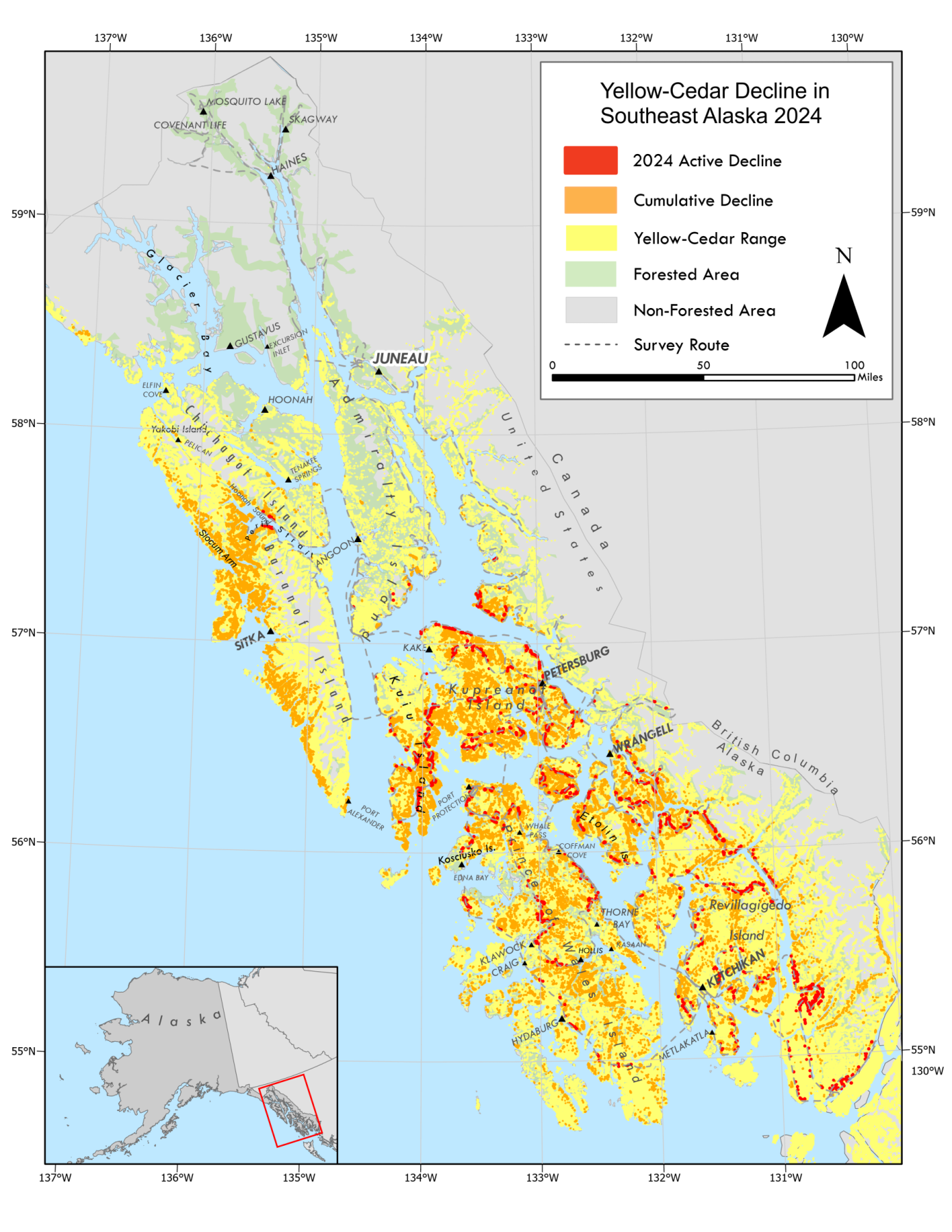
Extensive yellow-cedar mortality in southeastern Alaska and adjacent British Columbia—yellow-cedar decline—is a widespread and long-term management concern that is caused by interrelated factors driven largely by climate change and its effects on winter snowpack.


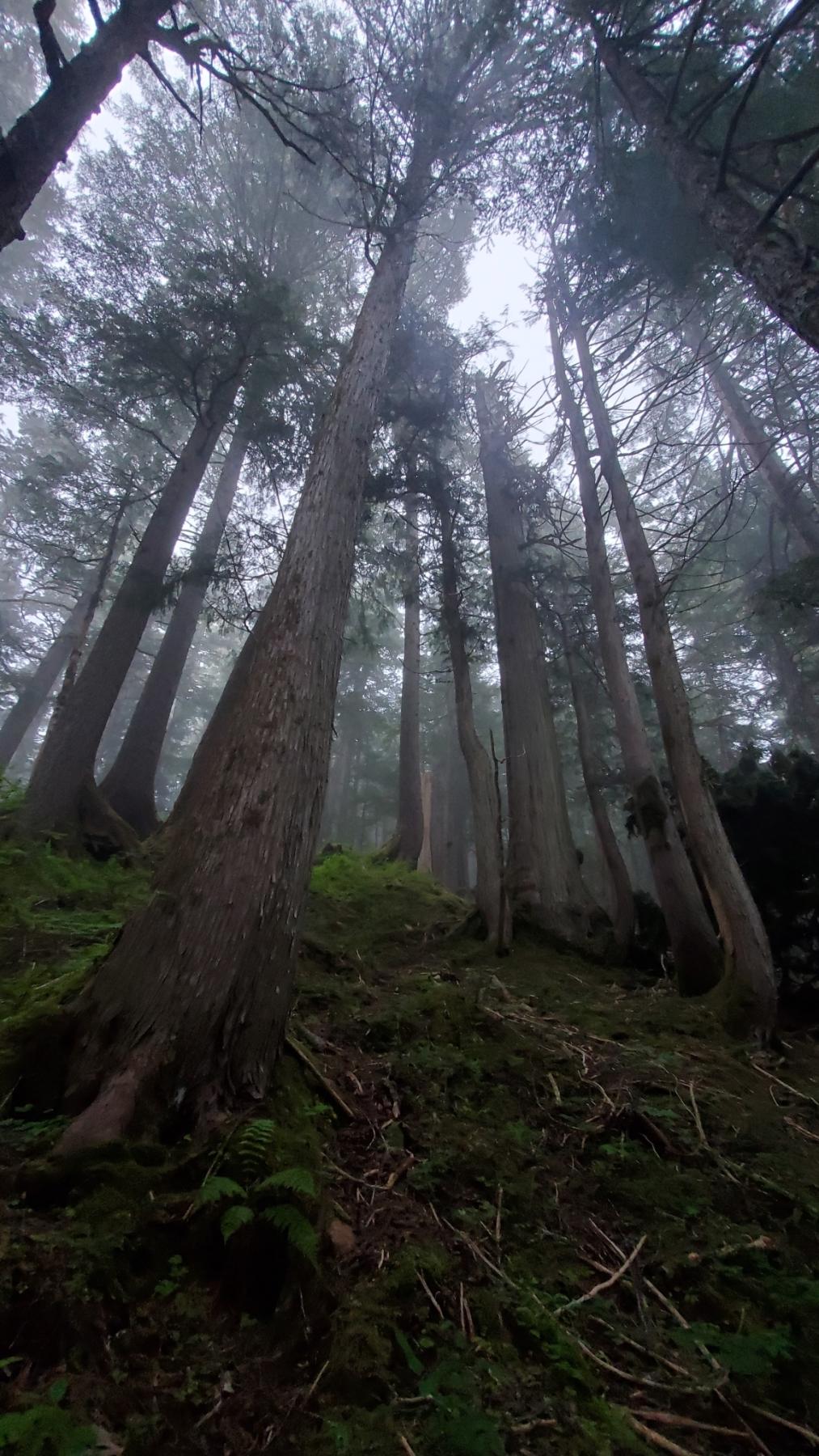

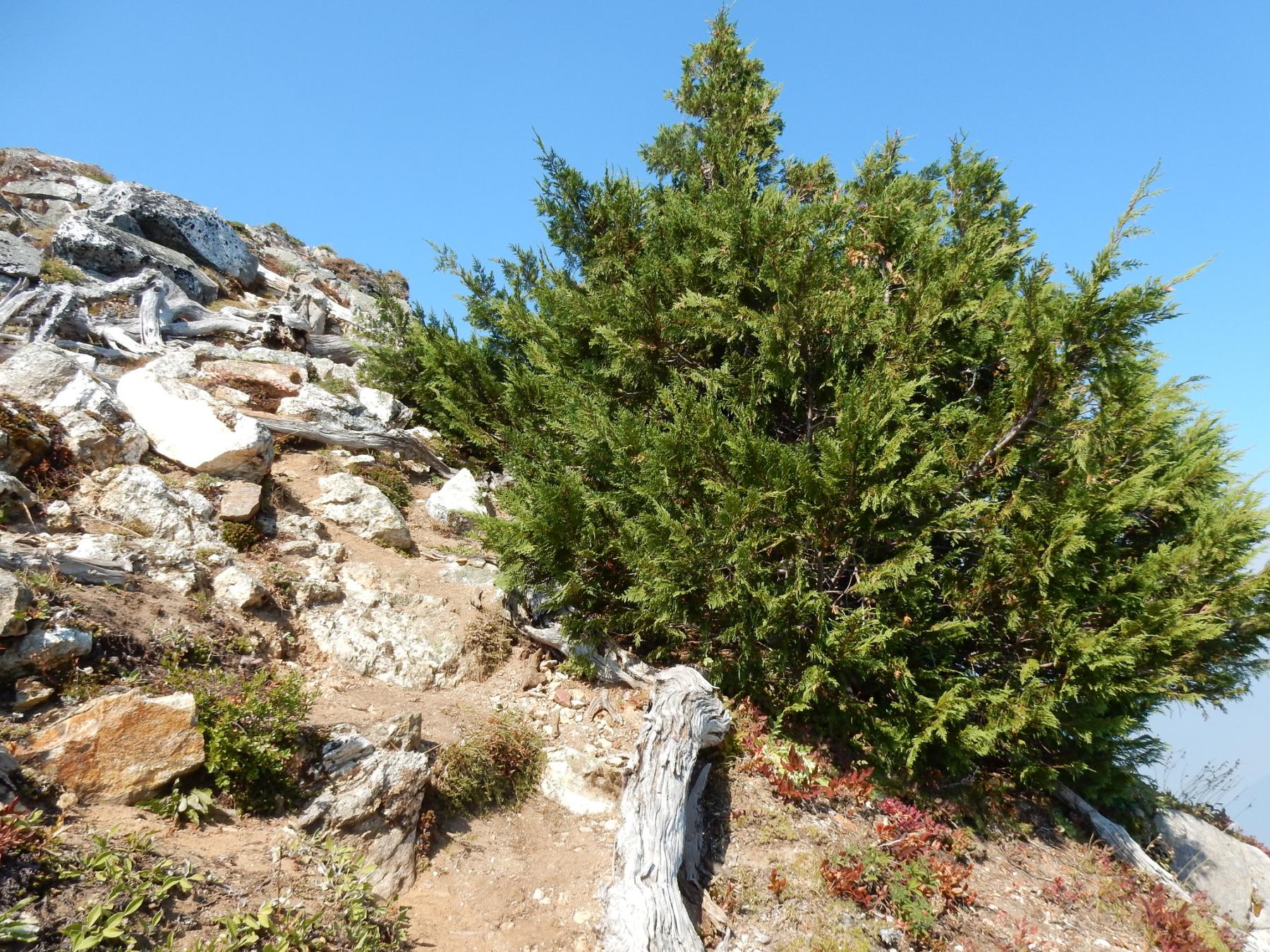






Largest known yellow-cedar, Olympic National Park, Washington.
Taxonomy
The scientific name of yellow-cedar is Callitropsis nootkatensis (D. Don) Oerst. ex D.P. Little. It is a member of the cypress family (Cupressaceae) [59,62,71,116,119]. Some systematists place yellow-cedar in the genus Chamaecyparis (see Synonyms). However, Little et al. (2004) [82] present phylogenetic (anatomical, embryological, and chemical data) and historical evidence that this species belongs in the genus Callitropsis.
Yellow-cedar hybridizes with species in the Hesperocyparis and Xanthocyparis genera [82,119]. Leyland cypress (×Hesperotropsisleylandii) (Hesperocyparis macrocarpa x Callitropsis nootkatensis) is one example [119].
Yellow-cedar is popular for ornamental plantings, and there are at least 20 recognized cultivars [125].
Synonyms
- Chamaecyparis nootkatensis (D. Don) Spach. [29,38,61,96,107,122]
- Cupressus nookatensis D. Don. (documented in [119])
- Xanthocyparis nootkatensis (D. Don) Farjon & Harder [36,63]
Other Common Names
Alaska-cedar, Alaska cedar, Alaska yellow-cedar, Alaska yellow cedar, Alaska cypress, mountain cypress, Nootka cypress, Sitka cypress, yellow cypress
Methods
Citation databases were searched for scientific literature on the biology and ecology of yellow-cedar. An emphasis was placed on literature describing regeneration processes, response to disturbances (i.e., successional roles), fire effects, postfire responses, fire regimes, and fire histories. A literature review by Hennon et al. (2016) was relied upon for much of the information on yellow-cedar biology, its decline, and management considerations [59]. Information on these topics that was published since 2016 was added when available.
Common names are used throughout this review. See table A1 for a list of species mentioned and their scientific names.
General Distribution

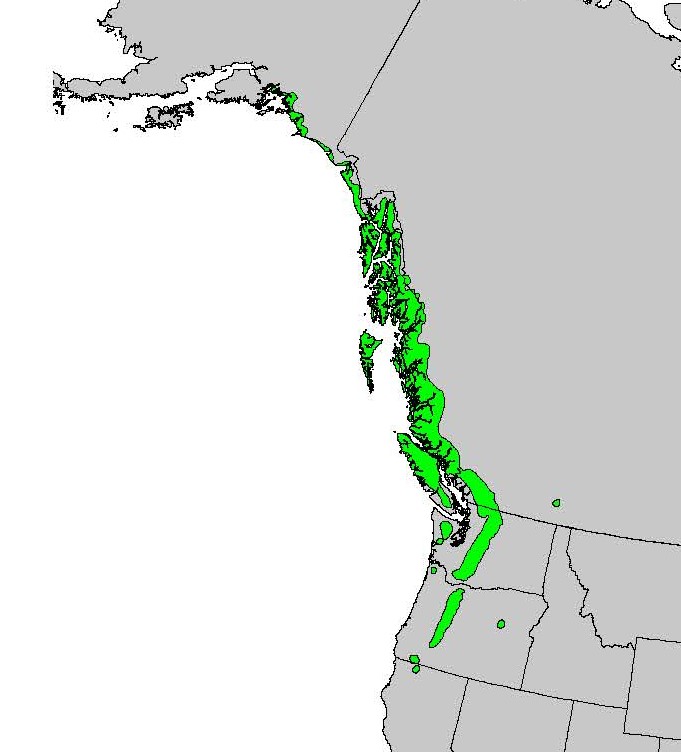
Figure 1—Yellow-cedar distribution.
Yellow-cedar is generally confined to a cool, humid climate characteristic of the north Pacific Coast [43]. It occurs in coastal temperate rainforests and montane and subalpine mixed-conifer forests of the northern Pacific coastal mountain ranges, mostly within 160 km of the Pacific Coast (fig. 1). It ranges from Prince William Sound in south-central Alaska, southeast through the islands and coastal mainland of southeastern Alaska and western British Columbia, southward into the Olympic Mountains in Washington and the Cascade Range in Washington and Oregon. It reaches its southernmost extent in the Siskiyou Mountains in northwestern California near the Oregon border, where it grows in a few disjunct locations [8,53,59,123]. It is widespread and locally abundant in the northern part of its distribution, but it is less frequent and abundant south of Mount Rainier, Washington [8].
Two disjunct populations of yellow-cedar occur farther inland (fig. 1): one in the Selkirk Mountains, near Slocan and Evans lakes, in interior southeastern British Columbia, and the other in the Aldrich Mountains of northeastern Oregon [43,59]. These disjunct populations may be relicts of a cool, moist forest type that was more widely distributed during the Last Glacial Period and early postglacial times and was subsequently reduced and fragmented into isolated patches as the climate warmed and dried and fire became more frequent [43] (~11,000 to 9,000 years ago) [3].
States and Provinces
- United States: AK, CA, OR, WA
- Canada: BC [119]
Site Characteristics
Yellow-cedar occurs on wet to mesic slopes and bogs in lowland, montane, and subalpine zones [29], corresponding with the Coastal Western Hemlock and Mountain Hemlock biogeoclimatic zones in British Columbia [121]. Its growth form varies among the sites it occupies. On exposed, rocky sites near treeline, it forms sprawling, shrublike krummholz; whereas in cold, wet subalpine basins, it sometimes develops into large trees over 1,000 years or more [11]. Photosynthetic rates of yellow-cedar are highest when water availability is not limited and decrease with increasing moisture stress [47]. It is more tolerant of cold, wet conditions than many other members of the cypress family [47,59]. It survives heavy snow loads because its narrow, flexible crown and drooping branches are more likely to bend than break [53], and heavy snow loads can force branches to contact the soil surface, which may result in regeneration by layering (see Vegetative Reproduction and Regeneration).
Although it is tolerant of cold temperatures and deep snowpack, fine root sensitivity to freezing has been identified as a key vulnerability of yellow-cedar, especially on low-elevation sites with poorly drained soils where roots are shallow [59] (see Yellow-cedar Decline). Yellow-cedar appears to be most stable on sites where snow persists past the last spring frost and on relatively well-drained soils, where roots grow deeper than on poorly drained soils [60].
Climate
Yellow-cedar requires a cool, humid climate and occurs most commonly in areas with short growing seasons [53] in hypermaritime, maritime, and submaritime climate zones [96] where most precipitation occurs in winter [8], snowfall accumulates to great depths, and temperatures rarely fall below -18 °C [11]. Yellow-cedar codominates associations in rainforests along the immediate coast, where the maritime climate is uniformly wet and mild, and precipitation ranges from 100 to 300 cm per year with frequent fog and low clouds during warmer months [96]. In northwestern Washington, yellow-cedar is most frequent on sites receiving 200 to 400 cm total annual precipitation with mean annual temperature ranging from 3 to 6 °C [80]. Yellow-cedar associations at high montane and subalpine elevations have a climate characterized by short, cool summers, rainy autumns, and long, cool, wet winters with heavy snow cover for 5 to 9 months. Summers tend to be relatively drier in southern Oregon than elsewhere in the species range [96].
Yellow-cedar frequently occurs in wet habitats at low elevations, where average precipitation exceeds 200 cm and occurs mostly as snow [53]. On these sites, yellow-cedar roots are fine and shallow, which allows it to outcompete other species for soil nitrogen but exposes roots to possible freezing injury, especially in years with low snowpack or early snow melt [60]. The open canopy on these sites allows a more extreme microclimate than in other yellow-cedar associations, including greater warming, which can melt snow in late winter and appears to trigger dehardening and damage of fine roots [60].
Yellow-cedar roots develop minimal winter cold hardiness, which increases from November to January. Yellow-cedar root tissue was less cold tolerant than that of associated species—western redcedar, mountain hemlock, western hemlock, and Sitka spruce (ordered from lowest to highest tolerance)—on all dates tested (November, January, March, and May) [59,110]. Yellow-cedar roots are tolerant to about -6 °C in winter and typically become fully dehardened by March [59,110]. Early tissue dehardening makes fine roots susceptible to injury during periodic spring freezing events on sites lacking an insulating snow layer [59], when soil temperatures below -5 °C become lethal to yellow-cedar fine roots [60,111]. Repeated injury to roots can gradually result in tree mortality (see Yellow-cedar Decline). Spring freezing injury is influenced by a number of interacting factors, including long-term climate and short-term weather events [59]. Freezing injury is more likely to occur in a subset of yellow-cedar’s distribution, especially these wetland sites [60].
Elevation
Across much of its distribution in North America—along 2,500 km of the Pacific Coast—yellow-cedar occurs from sea level to timberline [99], although it becomes limited to progressively higher elevations in the southern portion of this range [34,59]. The Flora of North America gives an elevational range of 0 to 1,500 m for yellow-cedar [38]; however, it occurs at higher elevations in the southern part of its range and reaches up to 2,300 m at its southern limit [99]. The two disjunct, interior populations occur at montane elevations: 1,700 m elevation in southeastern British Columbia, and approximately 1,750 m elevation in southeastern Oregon [43].
In the northern part of its range in southeastern Alaska, yellow-cedar occurs from sea level to near tree line—up to about 300 m around Prince William Sound and 900 m in southeastern Alaska [53,59,122]—but it is “best developed” at 150 to 365 m elevation [122]. Based on analyses of forest inventory plot data from southeastern Alaska, live yellow-cedar abundance peaks at mid-elevations (297 m (SE 31 m)) [59]. On the Tongass National Forest, yellow-cedar occurs in western hemlock–yellow-cedar and mixed-conifer associations at all elevations below the subalpine mountain hemlock zone (around 500–800 m elevation), usually on soils that are somewhat poorly to poorly drained, with deep organic matter [85]. At low elevations, yellow-cedar often dominates marginal sites with saturated peatland soils [59]. Mixed-conifer associations that include yellow-cedar are most common at low elevations, where few microsites are sufficiently drained to support tree establishment, and most trees establish on old logs or stumps [85]. South of Juneau, yellow-cedar’s sea level distribution diminishes, and it is more commonly found at higher elevations [11,43].
In northern British Columbia, the west coast of Vancouver Island, and on the Olympic Peninsula, yellow-cedar occurs from sea level to tree line [53]. In southern mainland British Columbia [53], Washington, and Oregon [62] it mostly occurs at higher elevations [53]—between 750 and 2,000 m [11]. In southern mainland British Columbia it usually occurs between 600 and 1,500 m [53]. On the Olympic and Mount Baker–Snoqualmie National Forests in northwestern Washington, yellow-cedar has highest cover at middle elevations (1,200–1,500 m) and also occurs at higher elevations [80]. In Mount Rainier National Park, yellow-cedar occurs from around 1,200 m up to treeline (>1,600 m), where cold temperatures and deep snowpack limit its establishment and growth rate [34]. South of Mount Rainier, it occurs almost exclusively above 1,100 m and occasionally reaches timberline [8]. In Oregon, most yellow-cedar grows on ridges and peaks from 1,500 to 1,700 m in the western Cascade Range; and at the southern end of its range, in southern Oregon and northern California, yellow-cedar occurs mostly at elevations around 1,500 m and only rarely below 600 m [53,59].
Additional information about elevational ranges for specific plant communities is included in the Plant Communities section.
Landform, Topography, and Soils
Yellow-cedar occurs on flat lowlands, benches or gently sloping landforms, steep mountainsides, and subalpine peaks and ridges [53]. It can be a major component of stands on both very wet sites and relatively dry, rocky ridges [8]. It grows on poorly drained to moderately well-drained soils. It tends to dominate on poorly drained soils, but its growth rate is highest on relatively well-drained soils [59,85].
On lowlands, benches, and gentle slopes, it typically occurs on relatively wet sites, often with poorly drained or saturated soils and deep organic layers. On mountain sites, soils are mostly shallow mineral soils over bedrock or glacial till and may range from somewhat poorly to moderately well-drained [85]. It often occurs in moist, V-shaped ravines and avalanche tracks [96], where the flexibility of its stems and branches allows it to survive frequent burial by snow [53]. In the southern part of its range (south of Mount Rainier), yellow-cedar populations consistently occur near sites that lack, and probably cannot support, a closed tree canopy, such as rock outcrops, avalanche tracks, and the margins of meadows, lakes, and streams [8].
Soils on yellow-cedar sites are variable, but they typically have abundant moisture and organic matter and are often nutrient-limited. Yellow-cedar grows most commonly on Histosols and Spodosols [53]. Compact till and volcanic ash are common parent materials [85]. Yellow-cedar is rare in the droughty, deep pumice soils along the Cascade crest in southern Oregon [11]. It grows fastest and can achieve its greatest stature on productive sites with deep, relatively well-drained soils [53,60], and it is most abundant on moderately productive sites [59]. However, it occurs more frequently and tends to dominate communities on less productive sites with poorly drained and/or shallow, nutrient-poor soils, because many associated tree species cannot tolerate these conditions [53,59,85]. On non-alluvial, low-elevation sites on the Tongass National Forest, for example, yellow-cedar abundance increases as soil drainage becomes poorer within the hemlock, hemlock–cedar, and mixed-conifer series [85].
On saturated peatland and other nutrient-poor soils, yellow-cedars concentrate fine root growth near the soil surface, which allows roots to respire under saturated conditions [59] and to outcompete associated species for limited nutrients [47]. Coupled assimilation of calcium and nitrogen may facilitate yellow-cedar survival on nutrient-poor sites [60]. It invests less in reproduction or fast growth on these sites, resulting in open canopies with relatively small-statured trees [59].
Yellow-cedar accumulates calcium and grows best in areas with calcium-bearing rocks or soils rich in calcium and magnesium [53,60]. On sites with abundant soil calcium, yellow-cedar sequesters calcium in its foliage, and it has higher foliar calcium concentrations than other tree species. This calcium is transferred to the forest floor during leaf senescence, and decomposition of this calcium-rich litter raises soil pH levels and increases calcium availability at the soil surface, which, in turn, increases the concentration of available soil nitrogen [59,60].
The disjunct population of yellow-cedar in the Aldrich Mountains is a small grove occupying an area of about 4.3 ha and extending downstream from a series of springs that form the source of a perennial creek (Buck Cabin Creek). Scattered yellow-cedar trees occur along the creek below the main stand. Soils in the area are generally shallow, rocky, coarse loams from volcanic conglomerate with low fertility; however, yellow-cedar occurs on moist sites with relatively deep soils within the larger area [43].
Plant Communities
Yellow-cedar usually occurs singly or in scattered clumps intermixed with other tree species, and only occasionally grows in pure stands [53]. It most frequently occurs in wet forests, but it can also occur in comparatively drier mixed-conifer forests. It is a component of cover types dominated by mountain hemlock [40], Sitka spruce [49], western hemlock [50], western hemlock–Sitka spruce [94], coastal true fir–hemlock [39], western redcedar–western hemlock [51], and western redcedar [52]. Associated tree species vary with location and latitude (table 1), and plant community composition at a given latitude is largely controlled by soil drainage, elevation, aspect, and resulting microclimate [59].
In wetter regions of the Pacific Northwest coast, there is an elevational sequence of three main forest types, and yellow-cedar is a component of each [18]: 1) old-growth, temperate rainforest stands with western redcedar and western hemlock at low elevations [18,101]; 2) montane and subalpine forests with Sitka spruce and western hemlock at intermediate elevations [18,122]; and 3) subalpine parkland with interspersed tree islands and meadows [18] with mountain hemlock and Pacific silver fir just below treeline [122].
| Location | Associated tree species |
|---|---|
| Alaska | Western hemlock, mountain hemlock, Sitka spruce, western redcedar, and shore pine |
| British Columbia | Western hemlock, mountain hemlock, western redcedar, shore pine, Pacific silver fir, and western white pine |
| Washington and Oregon | Western hemlock, mountain hemlock, subalpine fir, whitebark pine, Pacific silver fir, noble fir, and western white pine |
| California | California red fir, Brewer spruce, incense-cedar, Pacific yew, and western white pine |
Yellow-cedar is a named dominant in multiple plant associations, alliances, and groups that occur in five macrogroups described by NatureServe (2024) [96]. A brief description of some of the plant communities that comprise these macrogroups follows, organized by general forest type.
Forested Wetlands

Figure 2—Yellow-cedar in a wetland near Sitka, Alaska (CC BY-NC).
Yellow-cedar is a named dominant in 1 alliance and 16 associations in 3 groups within the Vancouverian Flooded & Swamp Forest Macrogroup, and it dominates in 1 association within the North Pacific Bog & Fen Macrogroup.
The Vancouverian Flooded & Swamp Forest Macrogroup includes forested wetlands and riparian areas of coastal lowlands and mountains from southeastern Alaska south into Oregon; most yellow-cedar-dominated communities occur in British Columbia and Alaska. These communities occur at all elevations, on sites that receive heavy snowfall in winter, and on landforms and topographic positions that are conducive to poorly drained and saturated soils (fig. 2). The nutrient regimes are poor to medium, and organic layers can be well-developed. Forests are often low-statured with open canopies and may be codominated by western redcedar, western hemlock, mountain hemlock, Sitka spruce, and/or Pacific silver fir. Shore pine may also be present. Shrub layers may be sparse to moderately well-developed, and common species include the dominant tree species as well as red huckleberry, oval-leaf huckleberry, Alaska blueberry, rusty menziesia, Sitka alder, Pacific yew, salal, copperbush, Alaska bellheather, and deercabbage. The herbaceous layer can be well-developed and may include species such as Pacific reedgrass, Howell's marsh marigold, fernleaf goldthread, green false hellebore, and/or false lily of the valley [96].

Figure 3—Yellow-cedar in a rainforest stand in Sitka County, Alaska (CC BY-NC).
Yellow-cedar codominates one association in the North Pacific Bog & Fen Macrogroup. The western redcedar–yellow-cedar–western hemlock/fernleaf goldthread/peatmoss species treed bog Association is a stunted bog forest community that occurs from near sea level to about 700 m elevation. It occurs on valley bottom seepage slopes or depressions with very poorly drained soils [96]. A few slow-growing, poorly formed shore pine, western hemlock, or yellow-cedar are also scattered on drier sites within otherwise treeless bogs at low elevations in Alaska [122].
Coastal Rainforest
Yellow-cedar is a named dominant in 13 plant associations, occurring in 3 groups within the Vancouverian Coastal Rainforest Macrogroup. The macrogroup extends across nearly 30 degrees of latitude, from the Gulf of Alaska to northern California, and lying within 60 to 120 km of the Pacific Coast from sea level to mid-montane elevations (0–1,067 m), from the hypermaritime zone (within salt spray exposure) to the leeward Coast and west-side Cascade ranges [96]. It corresponds with Krajina's (1965) Coastal Western Hemlock Zone [72], and the Sitka spruce, western hemlock, and Pacific silver fir zones of Oregon and Washington described by Franklin and Dyrness (1988) [41].
These forests may be tall (>25 m) with closed- to moderately open canopies (fig. 3), or lower statured forests with a scrubby structure. They are mixed-conifer and mixed broad-leaved evergreen forests and woodlands, with abundant snags and a mix of several species that change with substrate and aspect [96]. Forest dominants include yellow-cedar, western redcedar, western hemlock, Pacific silver fir, Sitka spruce, and shore pine. The shrub layer may be sparse to dense and may include Alaska blueberry, oval-leaf blueberry, red huckleberry, devilsclub, rusty menziesia, and/or salal. The herbaceous layer can be sparse, but it is usually a dense layer of shade-tolerant forbs and ferns, such as bunchberry dogwood and strawberryleaf raspberry, false lily of the valley, northwestern twayblade, green false hellebore, claspleaf twistedstalk, twinflower, American skunkcabbage, and/or deer fern. The moss layer has a wide variety of mosses, liverworts, and lichens. Soils range from moderately to poorly drained [96].

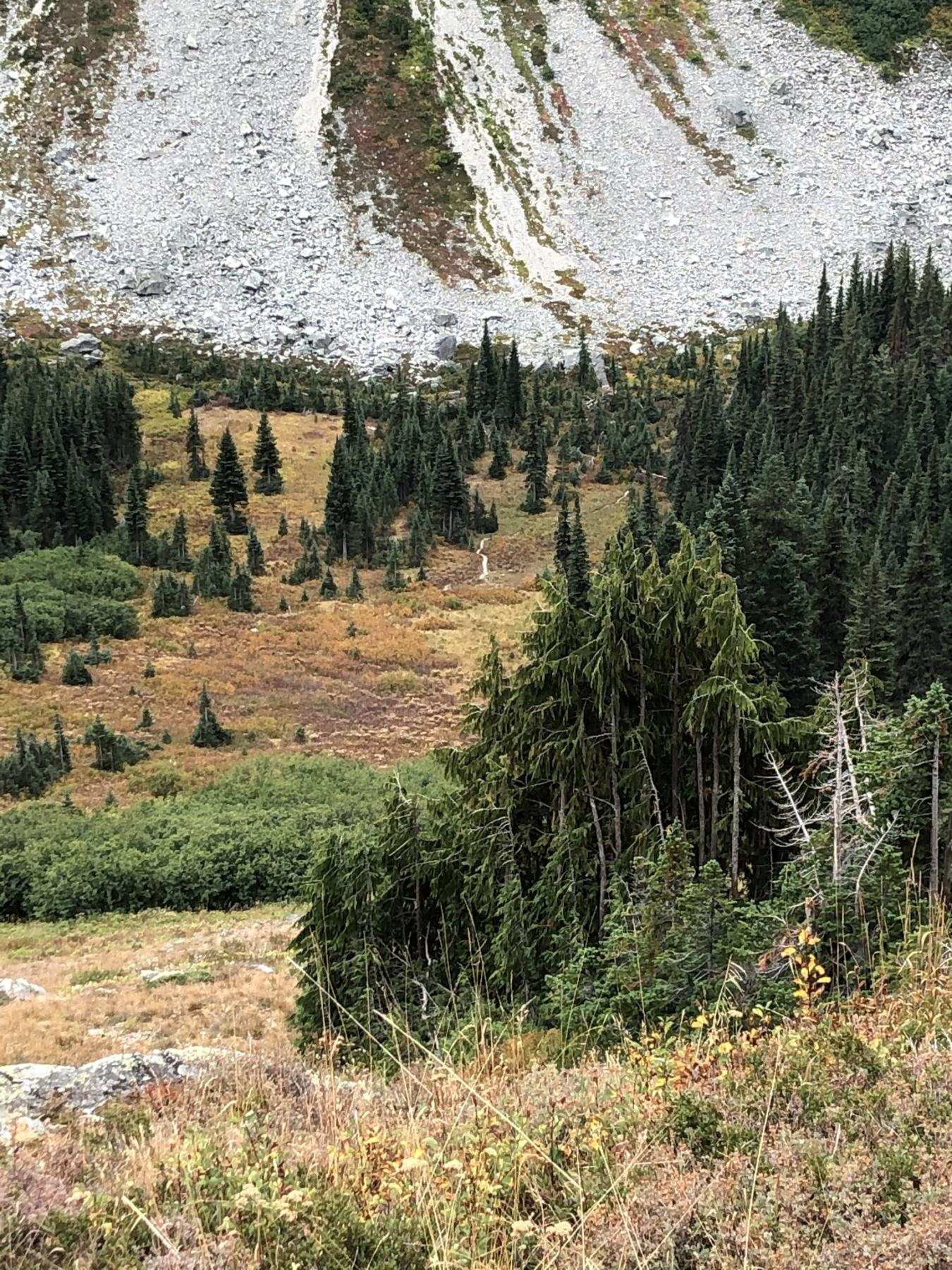
Figure 4—Yellow-cedar patch in a mixed-conifer subalpine stand in North Cascades National Park, Washington (CC-BY).
Subalpine & High Montane Forest
Yellow-cedar is a named dominant in one alliance and two associations in the Mountain Hemlock - Pacific Silver Fir - Alaska-cedar Woodland Group within the Vancouverian Subalpine-High Montane Forest Macrogroup. This forested group occurs throughout the mountains of the North Pacific, from the Cook Inlet south to the central Cascades of Oregon, and it is the predominant forest of subalpine elevations (300–2,300 m) in the coastal mountains of Alaska, British Columbia, western Washington, and western Oregon. It also occurs on mountain slopes on the outer coastal islands of British Columbia. These forests may be dense to open, 15 m to 35 m tall, and are dominated mostly by mountain hemlock, but Pacific silver fir, subalpine fir, yellow-cedar, and/or western hemlock can be codominant.
At the highest elevations, these forests may begin to break up, forming "tree islands" (fig. 4). These clumps of 10 to 50 trees have a closed to open canopy less than 20 m tall, and they often occur on ridges and hummocks that are surrounded by meadows or shrublands that occur in topographic depressions where extremely deep snowpacks discourage tree growth [86,96]. This vegetation mosaic is represented by the Mountain hemlock–Pacific silver fir–Yellow-cedar Tree Island Alliance, which occurs in the Washington and Oregon Cascades, on the Olympic Peninsula, and in the Coast Ranges of British Columbia in a narrow (300- to 400-m) elevational band near treeline, above the closed-canopy subalpine forests and below the alpine meadows, at elevations ranging from 1,700-2,300 m depending on aspect and latitude. Where adequate light intensities reach the ground, a shrub layer may be present. The herbaceous layer is present and dominated by subalpine forbs and graminoids. Substrates are typically shallow, rocky, coarse-textured soils derived from volcanic rocks such as deposits of pumice, cinder and ash, and lava flows. Yellow-cedar often occurs in scrubby krummholz stands [96]. Extensive krummholz stands composed of subalpine fir, mountain hemlock, whitebark pine, and yellow-cedar are described in North Cascades National Park [81].

Figure 5—Living and dead yellow-cedars in the Aldrich Mountains, 13 years after the 2006 Shake Table fire.
Inland Mixed-conifer Forest
The disjunct, interior populations of yellow-cedar probably both occur in the Central Rocky Mountain-Interior Moist Montane Forest Macrogroup, although no information on the stand in British Columbia was available. The disjunct population in central Oregon is a single stand that occurs as an inclusion in a grand fir mixed-conifer forest (fig. 5) [43]. Frenkel (1974) provides a detailed description of this stand before it burned in 2006 [43]. Both yellow-cedar and grand fir seedlings occurred in shady microsites. Yellow-cedar seedlings were most numerous in moist sites, and grand fir seedlings occurred in drier sites [43].
Botanical Description
This description covers characteristics that may be relevant to fire ecology and is not meant for identification. Keys for identification are available (e.g., [29,122]).

Figure 6—Yellow-cedar in Sitka County, Alaska (CC BY-NC).
Yellow-cedar and western redcedar co-occur in the southern part of southeastern Alaska and coastal British Columbia where they are sometimes confused because of their similar morphology and affinity for wet soils. Hennon et al. (2016) provide a detailed comparison of the morphology and genetics of these two species [59].
Aboveground Description
Yellow-cedar is a native, evergreen, long-lived tree [10,53,122]. It is typically a small- to medium-sized tree, 12 to 24 m tall and 30 to 60 cm diameter at maturity [122] due to its slow growth rate and common occurrence on cold, unproductive sites [11]. In upper subalpine environments, for example, it is typically dwarfed and shrublike [38,53,107]. Occasionally, however, it can reach heights over 30 m tall and diameters greater than 120 cm on productive sites [53,122]—such as subalpine ravines and basins [11]. Heights of 40 to 52 m and diameters of 200 cm have been reported [38,59,62], and the largest individuals are said to measure 3.5 to 4 m in diameter and 40 to 60 m tall, despite broken tops [11]. The largest yellow-cedar on record in 1990 was located in Olympic National Park, Washington, with a diameter of 370 cm, a height of 37 m, and a crown spread of 8.2 m [53].
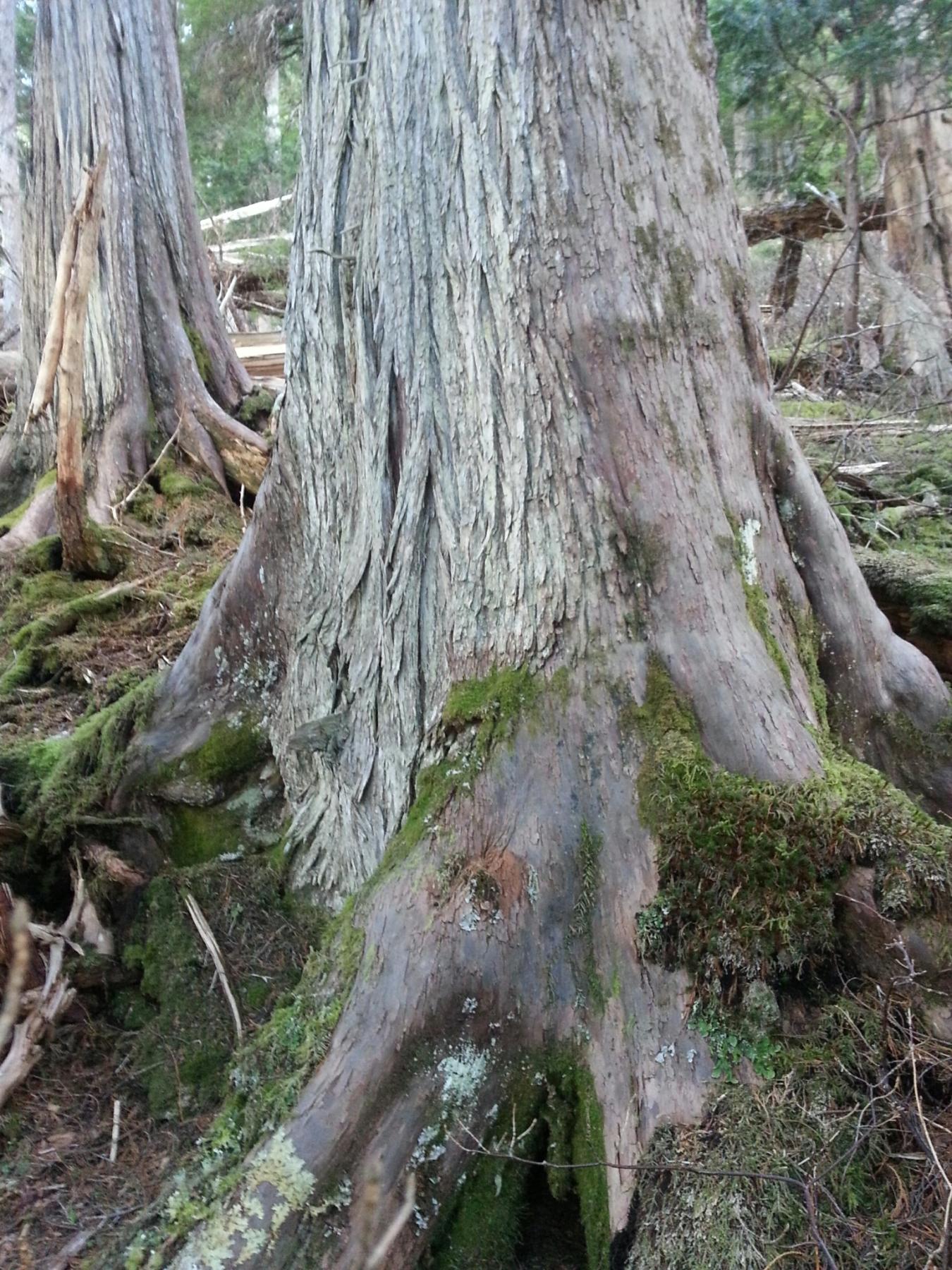
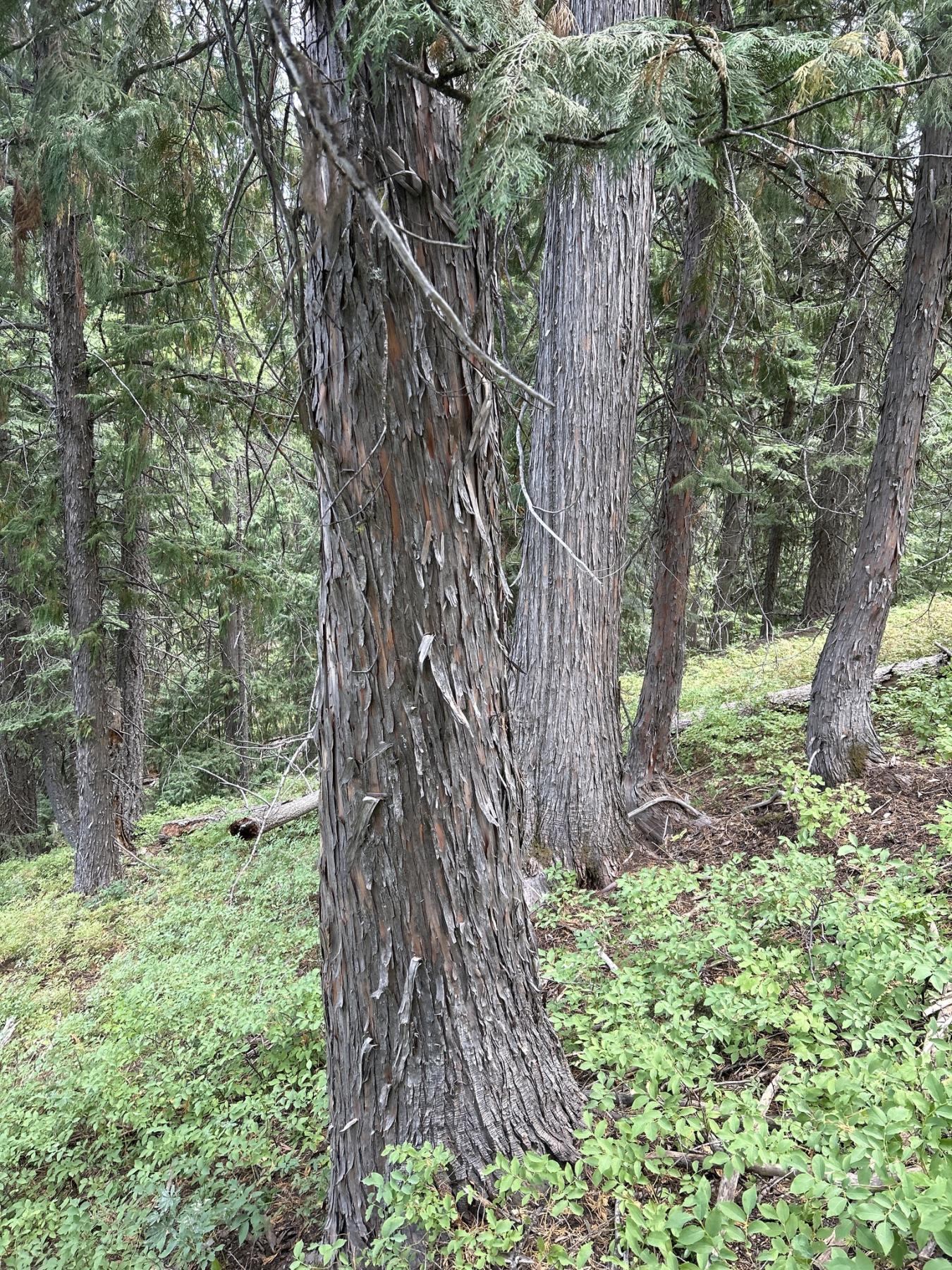
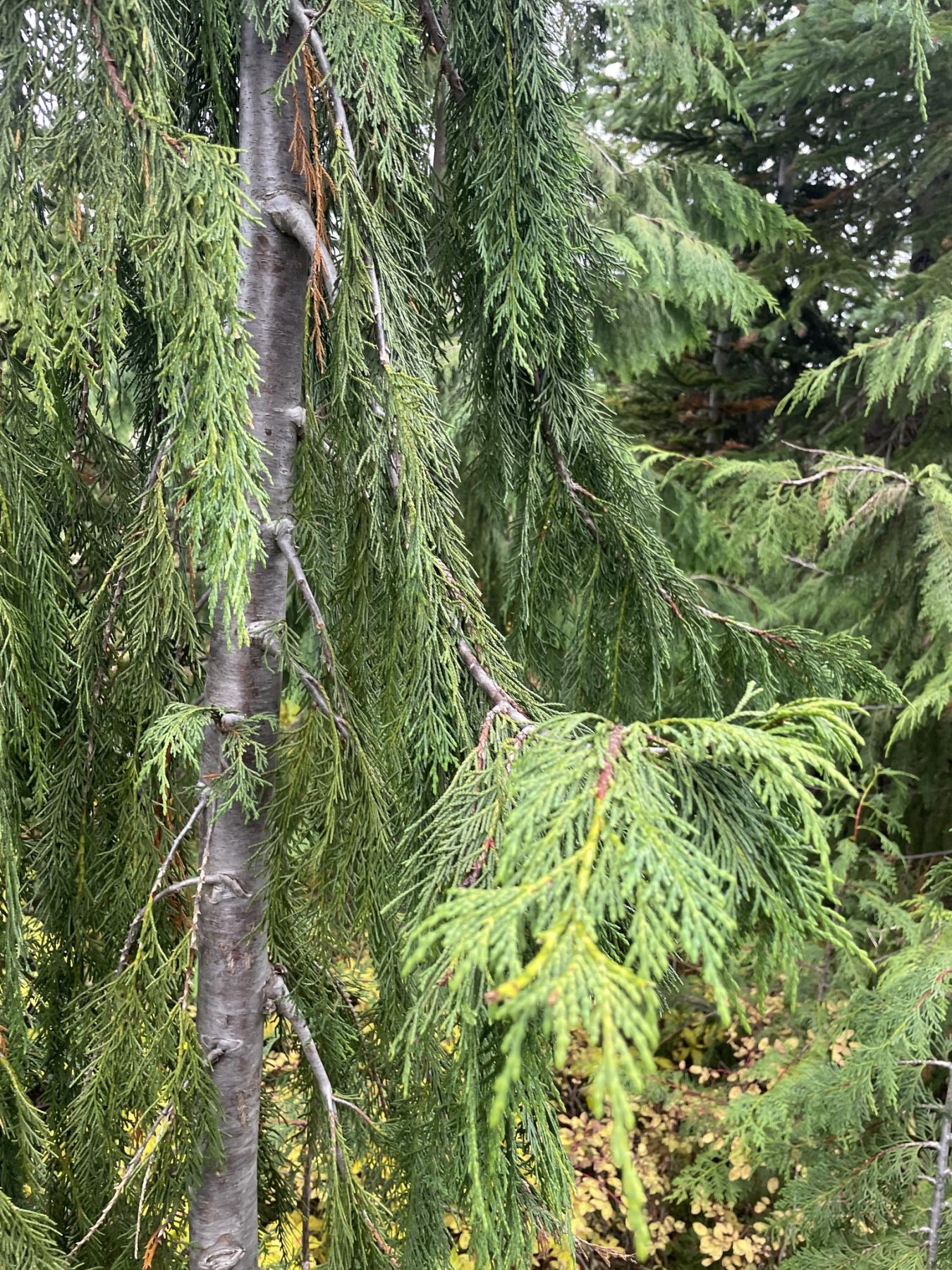
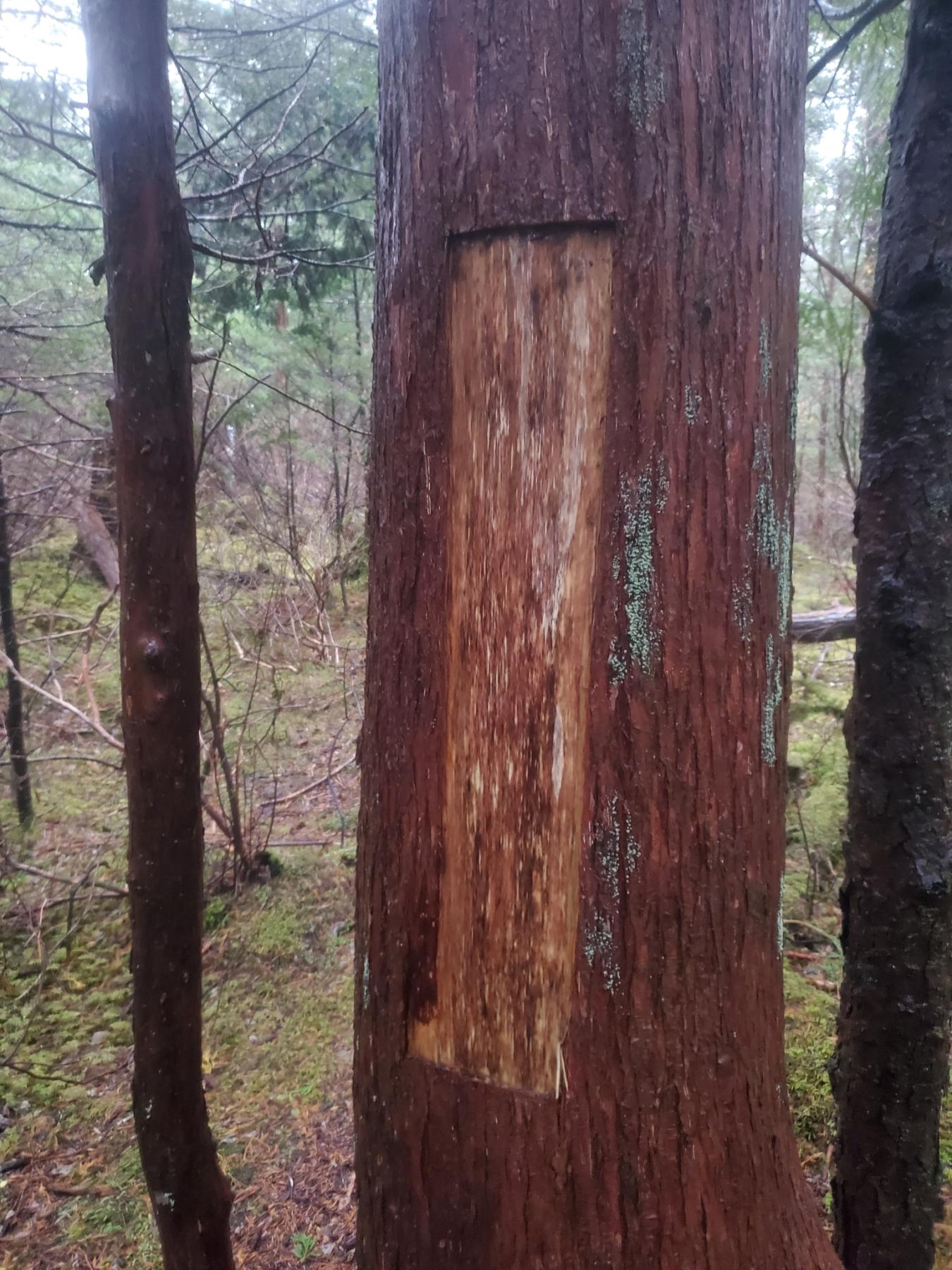
Boles of mature trees spread out widely at the base (fig. 6) [64,101]. The bark of young trees is thin and scaly, while that of mature trees is fibrous and leathery and composed of narrow, intersecting ridges [59,101], variously described as irregularly fissured [38], ridged and fissured [29], or grooved [101]. Bark is 1 to 2 cm thick [38] and shreddy (fig. 7). Several sources suggest that the bark tends to peel off in long, narrow strips [62,64,107,122], while others suggest that it does not do this [11,29,104] (see Other Uses). Some mature yellow-cedar trees retain the smooth bark of young trees (fig. 8) [59]. The bark of yellow-cedar contains resin ducts, a trait that can be used to distinguish it from western redcedar [59].

Figure 7—Yellow-cedar on the Malheur National Forest, Oregon.

Figure 8—Young yellow-cedar tree in Comox Valley, British Columbia, showing smooth bark (CC-BY).
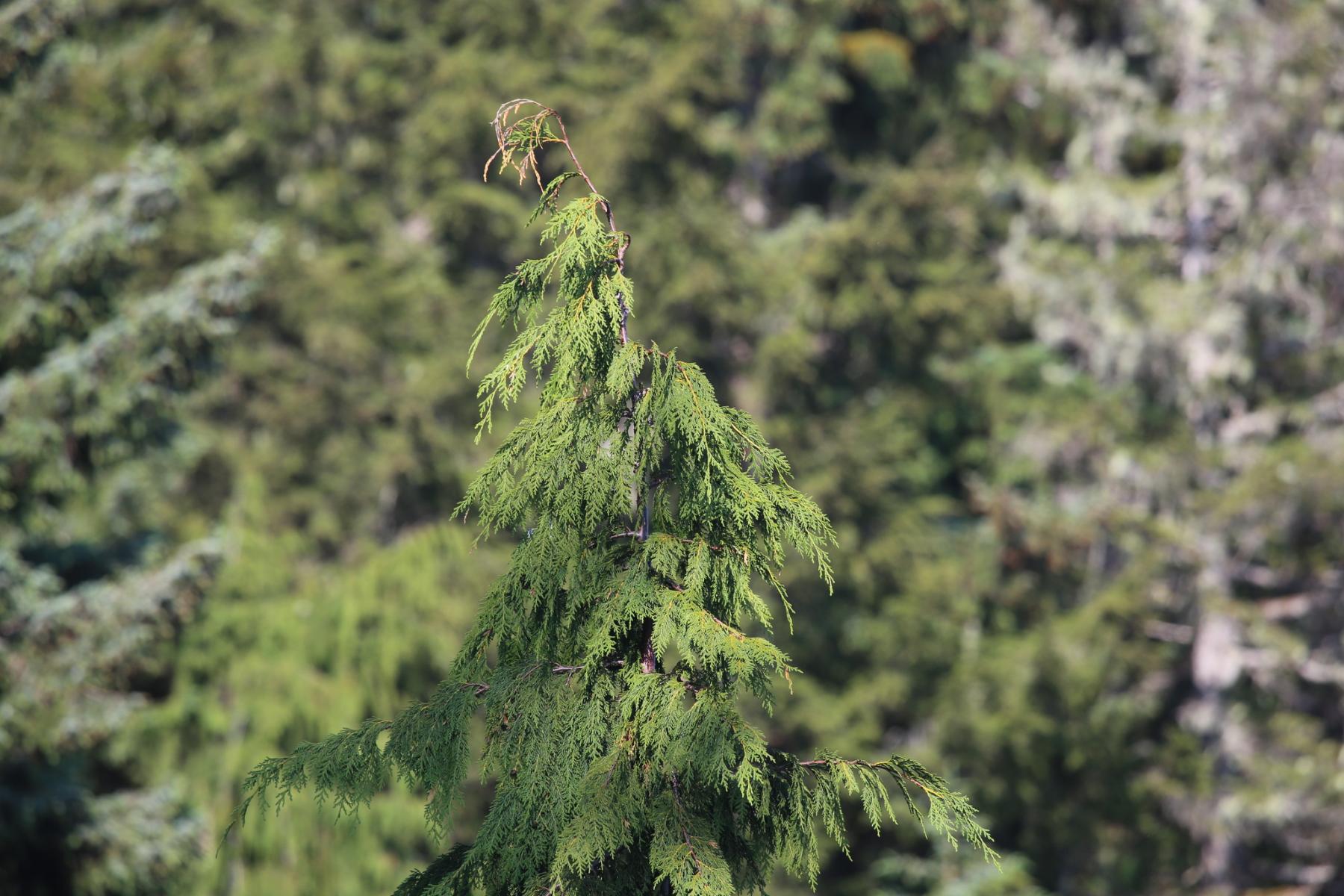
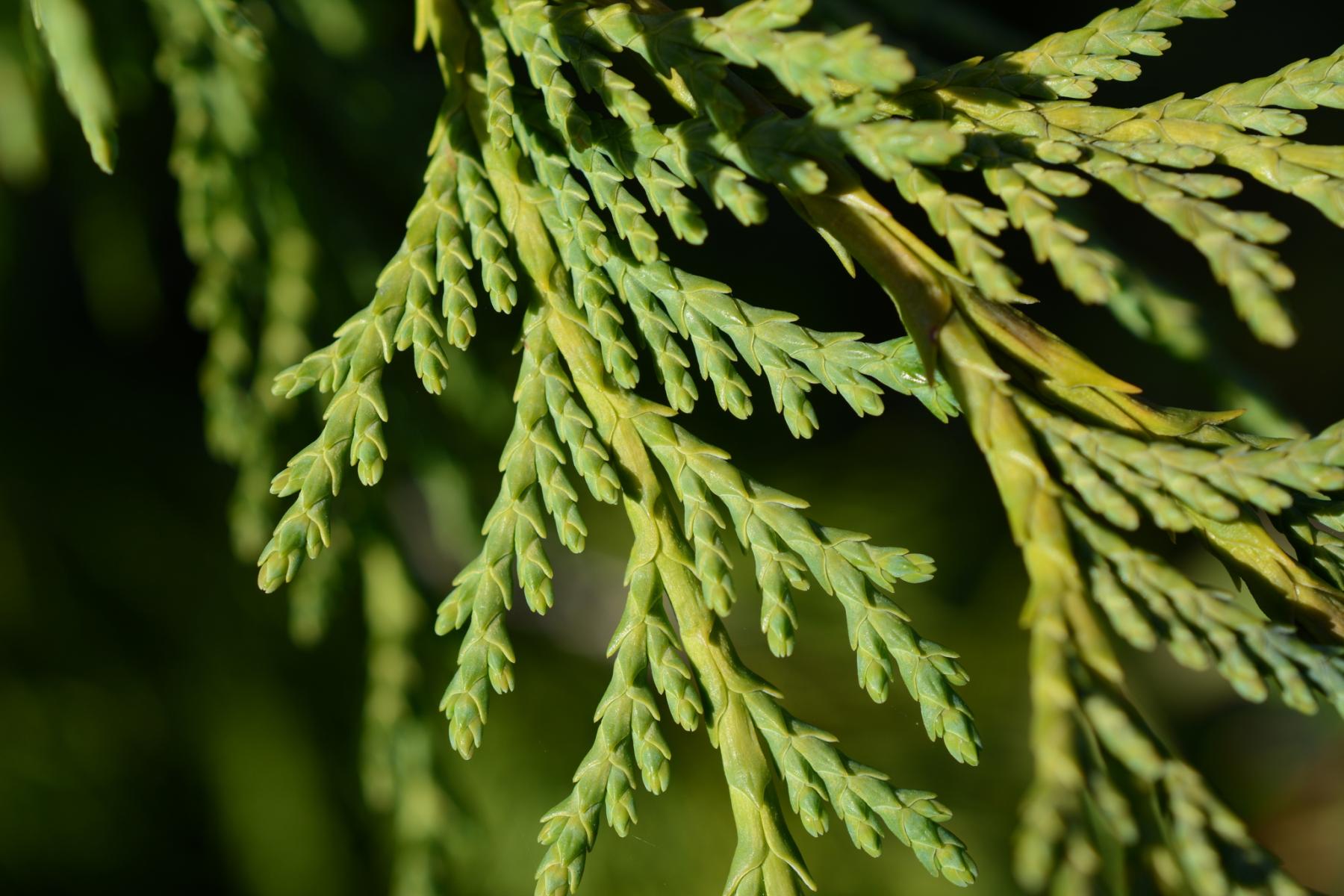
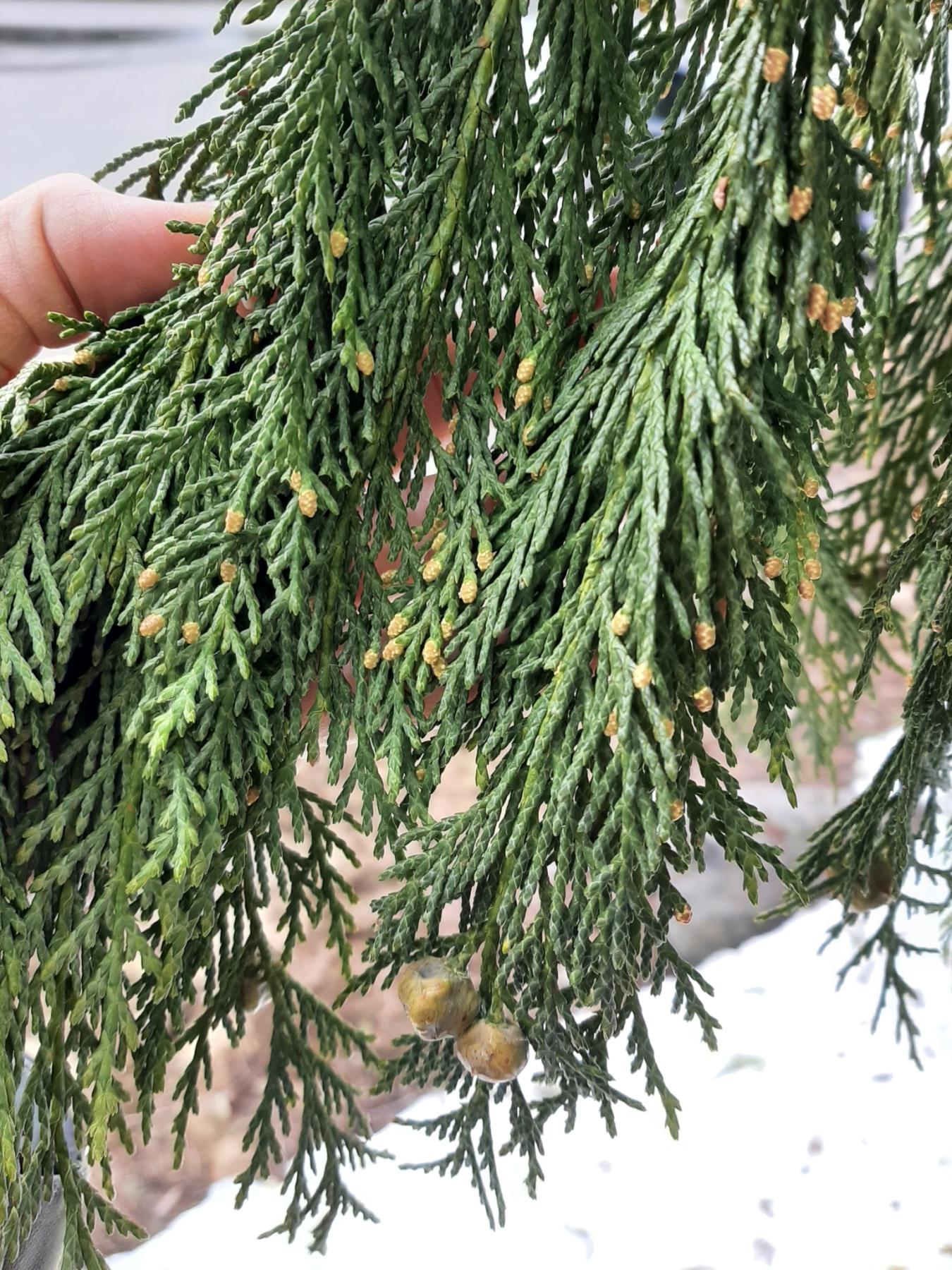
Yellow-cedar trees have a narrow, conical crown with a slender, drooping leader (fig. 9) [62] and spreading, drooping branches with small, loosely hanging branchlets [29,59,62,101,104,107,122]. Crowns and branches are flexible [96]. The leaves are stout [38], scalelike [10,29,105,107,122], and 1.5 to 3 mm long [10,105,107,122] (fig. 10).
Pollen cones are 2 to 5 mm long. Seed cones are scattered, short-stalked, hard [101,122], nearly round, and 6 to 12 mm in diameter [29,38,53,101,116,122]. Seed cones are berry-like in the first year and become woody as they mature [101]. Mature cones have four or six paired, umbrella-shaped scales [38,101], with two to four seeds per scale [38] (<15/cone [116]). Seeds are 2 to 5 mm long and have two broad wings [62,99,122], equal to or broader than the body [38]. Seed cones become resinous as they mature [38].

Figure 9—Drooping leader on a yellow-cedar tree in Ketchikan Gateway, Alaska (CC-BY).

Figure 10—Yellow-cedar leaves (CC-BY).
Belowground Description
Most information on yellow-cedar rooting depth and habit is based on knowledge of tree physiology as it relates to soil drainage and nutrient availability. Information on the rooting habits of mature yellow-cedar on well-drained soils is limited [53,59], making it difficult to predict where roots from large trees occur, either vertically or laterally [59], although rooting depth is greater on relatively well-drained soils [60]. In krummholz, yellow-cedar roots are often “exposed and partially stripped of bark as they extend across a rocky slope” [12]. One such root in the Olympic Mountains was about 10 cm in diameter, stretched about 23 m along a steep slope, and the tip of it was about 30 m from the small yellow-cedar that it helped support [12].
On sites with saturated soils and low nutrient availability, yellow-cedar trees concentrate fine roots near the soil surface to allow for root respiration and nutrient uptake, particularly calcium and nitrogen [59]. In bogs, prostrate clumps of yellow-cedar grown from repeated branch layering develop shallow roots in complex patterns [53].
Raunkiaer Life Form
- Phanerophyte
- Chamaephyte [129]
Stand Structure

Figure 11—Yellow-cedar near treeline in Snohomish County, Washington (CC-BY).
Yellow-cedar is a common to codominant component in several forest types, including low-statured, open-canopy stands on wet, low-productivity soils in coastal Alaska [59,85,101]; old-growth, low- to mid-elevation, closed-canopy rainforests of Alaska, British Columbia, and Washington, where it reaches its largest size; and variable density, often old-growth, mixed-conifer forests at low to subalpine elevations. At the highest subalpine elevations, yellow-cedar usually occurs as single trees (fig. 11), or in small krummholz stands [11,101]. At timberline and on wetland sites, yellow-cedar often develops a shrublike or prostrate form [53,85,95,101].
Forest stands that yellow-cedar codominates typically have multiple canopy layers with trees of various ages, indicating gap-phase regeneration and a lack of large-scale, stand-replacing disturbance (see Successional Status) [59,63]. Stand replacement in these stands is gradual, driven by small gaps resulting from the death of a single tree or small groups of canopy trees due to root-rots, bark beetles, or windthrow. Larger gaps, more frequent disturbance, and younger age classes are expected on wind-exposed sites, where windthrow and breakage tend to keep these forests from becoming or remaining very old [96].
Yellow-cedar often occurs in all size and age classes in forests where it codominates (e.g., [63,100]). In an old-growth, 1,000-year-old subalpine stand at 1,060 to 1,100 m on the southern coast of British Columbia, yellow-cedar codominates with Pacific silver fir and mountain hemlock and occurs in all size classes, including the seedling size class (table 2). Yellow-cedar has a high propensity for layering at this site, and most old yellow-cedar “seedlings” and saplings appear to have originated vegetatively, rather than from seed. Actual seedlings of yellow-cedar were common, but not likely to survive more than 15 years, whereas layered individuals might survive >100 years [100].
| Size class name | Size class definition | Yellow-cedar density (stems/ha) | Yellow-cedar relative abundance (%) |
|---|---|---|---|
| Canopy trees | ≥18 m tall or ≥30 cm DBH | 82 | 27.5 |
| Subcanopy trees | <18 m tall and ≥4 to <30 cm DBH | 326 | 29.2 |
| Saplings | 1.3 m tall but <4 cm diameter | 3,694 | 54.2 |
| Seedlings | <1.3 m tall | 4,562 | 7.4 |
Although timing of yellow-cedar establishment at this site is uncertain because of possible origin from layering, yellow-cedar shows peaks in establishment in the mid-1700s and around 1810. No trees establishing after the mid-1700s had reached the canopy [100]. Antos and Zobel (1991) provide size-class distribution data for yellow-cedar and other trees in several forest stands—ranging from 50 years old to old-growth (>200 years old)—south of Mount Rainier [8].

Figure 12—Yellow-cedar at tree line on the Central Coast, British Columbia.
Yellow-cedar individuals growing at timber line may form small krummholz patches (fig. 12). One such krummholz patch in Olympic National Park was about 15 m across and 1 m tall with a hollow center. It was thought to be many centuries old [11].
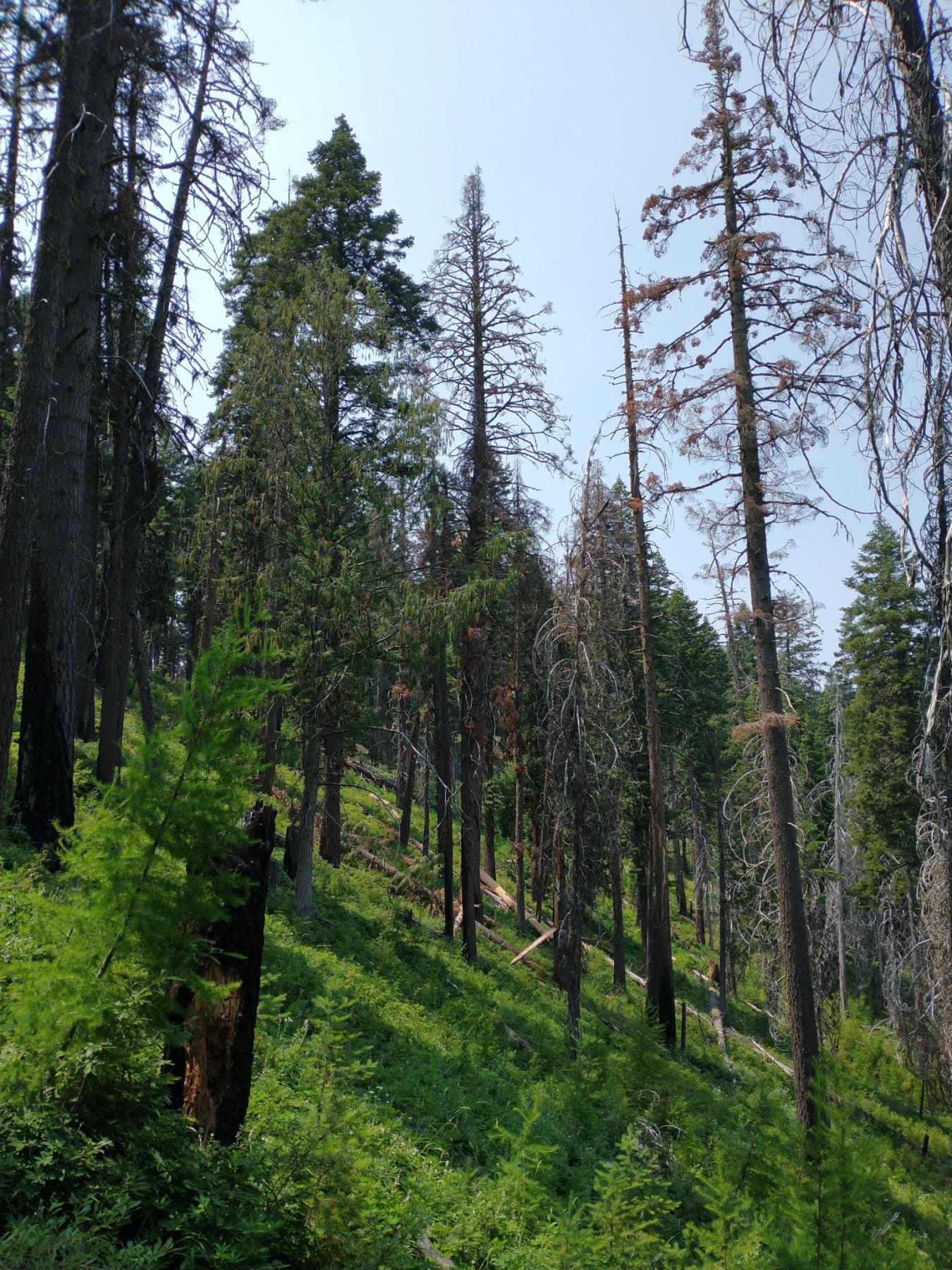
As a long-lived, dominant tree that is very slow to decay when it dies, yellow-cedar is an important long-term contributor to structural diversity in mixed-species stands [59]. The life span of yellow-cedar can exceed 1,500 years on some sites (see Plant Growth and Mortality), and it lives nearly twice as long as associated spruces and hemlocks in southeastern Alaska. Many yellow-cedar trees die standing and persist as snags (fig. 13) for 80 to 100 years [59], or possibly longer [44]. New estimates suggest that about 59% of yellow-cedar snags that had lost their branches (Class 5 snags) had been standing for >200 to 450 years [44]. This results in a two-tiered woody debris system: spruce and hemlock provide downed woody debris and logs in various stages of decay, while yellow-cedar provides standing, relatively undecayed snags. This adds structural diversity that favors a diversity of other plants and wildlife [59].

Figure 13—Yellow-cedar snags in a forest along Slocum Arm, Chichagof Island.
The yellow-cedar stand in the Aldrich Mountains is codominated by grand fir and had a mixed-age structure of the two dominants in 1974. The largest yellow-cedar tree measured was 1.60 m DBH, and several other yellow-cedar trees were of comparable size, whereas only a few grand fir approached this diameter. Researchers observed evidence that many yellow-cedar individuals had survived past fires, as well as evidence of “healthy reproduction” that approximated overstory forest structure and composition at that time [43]. See Plant Response to Fire and Fire Regimes for more information about this stand.
Seasonal Development
Throughout yellow-cedar’s latitudinal and elevational range, the growing season lasts approximately 150 days, from mid-April through mid-September. Events that occur during the middle of the growing season, in late spring and early summer, take place at close to the same time throughout its range [99].
The reproductive cycle of yellow-cedar, from pollen-cone and seed-cone initiation to the release of mature seed, occurs over 28 months and 3 growing seasons [59,99]. Cones generally mature in 2 years, but on sites with longer growing seasons in the southern part of the range, they may mature in 1 year [33,53]. The rate of embryo development appears to be temperature dependent. Seeds produced in 1 year were similar in germinability and size to those produced in 2 years [33].
Yellow-cedar produces pollen cones early in the growing season (April to May) [59], and initiates seed cone production in the late spring and early summer (April in the south to June in the north [53]). Pollination occurs the following spring—beginning in late March in coastal areas and in late April at higher elevations and at the northern limits of its range. The pollination period typically lasts about 1 week, but may extend to 2 or 3 weeks, depending on location, and from 1 to 2 months at the extremes of its range. Fertilization follows soon after, and the female gametophyte reaches maturity in late July, about 12 weeks after pollination. Embryo development is completed the following spring and summer [99]. In British Columbia and Alaska, seeds ripen from mid-September to late September [53].
Seed dispersal begins in the fall of the third growing season [99] and continues to the following spring, primarily during periods of dry weather. Fall-dispersed seeds overwinter in snow over much of yellow-cedar’s range [53,59]. Seeds typically germinate and seedlings establish in spring [99]. Empty cones persist on trees for a year or more after seed dispersal [53,59].
Shoot growth is initiated after receiving 700 thermal hours (hourly average >5 °C), and it is at a maximum when ample water is available; water availability limits shoot growth in summer [47].
Freezing tolerance and drought tolerance change seasonally. Freezing tolerance increases in fall and early winter and decreases in late winter and early spring. Drought tolerance is lowest when yellow-cedar is actively growing and exposed to temperatures above 15 °C, and it increases in response to summer drought conditions and declining temperatures [47].
Regeneration Processes
Yellow-cedar regenerates sexually by seed [8,59,85,99] and asexually by layering [8,53,73,74,99]. It is said to have poor regeneration capacity [59], probably because regeneration is not uniform in time or space and does not occur on all sites, due to a number of factors including irregular seed crops, limited cone production, low rates of seed viability and germination, reduced seed production in areas of forest decline, interference from other species, and seedling vulnerability to freezing injury [59] and browsing. These factors and strict germination requirements contribute to relatively infrequent yellow-cedar seedling establishment and recruitment under field conditions, especially at mid- to high-elevation sites [59,85,99].
Yellow-cedar is recruited into populations both through seedling establishment and layering. Of 1,909 plants less than 0.3 m tall that were examined on 75 sites throughout the southern part of its range, 85% had juvenile foliage and thus definitely originated from seed and 9% obviously established from layering. Most stems established from layering exceeded 0.3 m tall. Of 3,137 plants 0.3 to 2 m tall, 65% clearly established from layering. Of the stems taller than 2 m, few appear to have established from layering; however, evidence of plant origin becomes obscured as plants grow. Most layering occurred on dry, open stands, which had fewer seedlings than forest stands. In many open and some forest stands, layering is virtually the only means of regeneration [8].
Breeding System and Pollination
Yellow-cedar is monoecious, having both male (pollen) and female (seed) cones on the same plant [53]. Seed cones are wind pollinated [59].
Pollen viability appears to be diminished by warm spring temperatures. Lower quantities of viable seed were produced in low-elevation seed orchards than in higher elevation native stands, which may be related to decreased pollen viability due to higher temperatures during pollen development [59].
Seed Production and Predation

Figure 14—Several yellow-cedar pollen cones and two seed cones on one branch, at Mount Rainier National Park, Washington (CC BY-NC).
Yellow-cedar begins to produce pollen and seed cones (fig. 14) at an early age, often by 7 to 8 years old [59]. While some seeds are produced every year, annual cone production is generally low compared to other conifers, and seed set is poor. Relatively moderate to large cone crops may occur every 2 to 4 years [53,59], and large seed crops every 4 to 7 years [125]. However, seed production is never as abundant as that of associated conifers [59].
Seed viability is generally low but highly variable [53,59]. Seed set potential is about 8 to 12 seeds per cone [99]. One study in British Columbia found an average of 7.2 seeds per cone, and the proportion of filled seeds was 29% [53].
No information is available about yellow-cedar seed predation; however, ungerminated seeds may be consumed by birds or rodents or decayed by fungi [59].
Seed Dispersal
Yellow-cedar seeds are small, averaging 240,000 seeds per kg [53]. Seed wings are present but are sometimes reduced [59]. Consequently, seeds are dispersed by gravity and wind, but do not go far [99]. No data are available on dispersal distances for yellow-cedar seeds; however, yellow-cedar seeds are probably not dispersed beyond the 120 m reported for related species [53,99].
Yellow-cedar seedlings did not establish far beyond main population boundaries at the northern end of yellow-cedar’s range near Juneau. The mean dispersal distance from these stands was 4.65 m into areas where yellow-cedar was not present, and seedlings were rarely found farther than 11 m from main population boundaries [75]. However, few of these germinants appeared to be surviving to maturity (see Seedling Establishment and Mortality).
Seed Banking
No information is available on seed banking in yellow-cedar, although evidence suggests no more than a transient or short-term persistent seed bank. Hennon et al. (2016) note that dispersed seeds overwinter in the snowbank in much of the species’ range, and that ungerminated, unpredated seeds may persist in the soil and germinate the following year. No data were provided [59].
Germination
Information about yellow-cedar germination requirements is limited. Stratification requirements are said to be complex, and seed viability and germination rates tend to be very low. Even with pretreatment and under laboratory conditions, germination rates ranged from 0% to 10% (review by [17]). It is not clear whether low germination rates in the genus are due to seed dormancy or generally low-quality seed [125]. A brief review of a small number of germination studies and techniques is provided by Hennon et al. (2016) [59].
Yellow-cedar seeds are apparently dormant when ripe [17], and warm stratification followed by a long period of cold stratification can improve germination rates [53,99]. When stratification requirements are met, germination and seedling establishment occur in the spring [99]. If stratification requirements are not met and seeds do not germinate the first year after dispersal, remaining viable seeds that are not consumed by birds or rodents or decayed by fungi may germinate the next year if stratification requirements are met [59].
Germination rates are highest on bare mineral soil; however, interference from associated species, particularly alder and spruce, limit yellow-cedar establishment on bare microsites [59].
Seedling Establishment and Mortality
Yellow-cedar seedling establishment and recruitment are rare to infrequent and sporadic on most sites, because seed production is irregular, germination rates are low, seedlings of associated species interfere with yellow-cedar seedlings, and yellow-cedar seedlings are susceptible to mortality from many causes such as predation from browsing animals, especially deer.
Yellow-cedar seedlings may establish under the forest canopy [7,57], grow very slowly, and remain in the understory for many years or decades, only reaching the canopy following the death of one or more surrounding trees [7]. Yellow-cedars in the understory may develop a shrublike or prostrate form by layering. For example, two forest stands sampled in the Siskiyou Mountains have thickets of small-statured, layered yellow-cedars, but no seedlings [8].
Evidence from several sites in southeastern Alaska and one site on Vancouver Island shows infrequent and irregular yellow-cedar seedling establishment and low seedling survival rates. Near Juneau, yellow-cedar seedlings (>10 cm tall) were uncommon both within (160 seedlings/ha) and adjacent to (73 seedlings/ha) yellow-cedar stands, and sub-tree size seedlings (100–140 cm tall) were extremely uncommon both within (7 seedlings/ha) and adjacent to (13 seedlings/ha) yellow-cedar stands [73]. In mostly unmanaged stands on the Tongass National Forest, yellow-cedar seedling establishment was “sporadic” and “uncommon”, due to irregular seed crops, interference from western hemlock, and areas of high deer use [59]. In the western hemlock–yellow-cedar series of the Chatham Area, yellow-cedar regeneration was detected in only half of the examined stands, and yellow-cedar seedlings were far less common than those of western hemlock [59,85]. In managed stands on the Tongass National Forest, yellow-cedar seedling establishment was observed after harvest, and young, second-growth stands that contain >2% relative cover of yellow-cedar were observed [59]. On Mount Cain, Vancouver Island, 4,992 tree seedlings up to 1.3 m tall were sampled in a mountain hemlock forest. Most were Pacific silver fir (52%), western hemlock (19%), and mountain hemlock (14%), and 15% were yellow-cedar, of which only 0.4% were >20 cm tall. The number of seedlings decreased rapidly with age for all species. Yellow-cedar had the highest percentage of seedlings 1 to 5 years old (79%), the lowest percentage of seedlings >50 years old (0.4%), and the lowest density of trees >4 cm in diameter. Some individuals of all species except yellow-cedar exceeded 100 years [7].
Snow seems to hinder yellow-cedar regeneration on high-elevation sites. In subalpine meadows, for example, yellow-cedar establishes most frequently on microsites where snow melts earliest, such as on mounds and downed wood. In the mountain hemlock zone in southwestern coastal British Columbia, 71% of understory yellow-cedars were on mounds, compared with 62% of Pacific silver firs and 54% of mountain hemlocks, and the proportion of trees on mounds was greatest on late-snowmelt sites and least on early-snowmelt sites [18]. In the North Cascade Range of Washington, rotten, downed-wood microsites had greater tree seedling densities, greater seedling survival, higher temperatures, and higher moisture contents than adjacent soil microsites (e.g., [66,67]).
Yellow-cedar seedlings are often much less abundant than associated species, such as mountain hemlock and Pacific silver fir. At a subalpine site on Mount Baker, Washington, the latter species had established in distinct pulses, whereas yellow-cedar had not [48]. Stands with little Pacific silver fir tend to have relatively abundant and successful yellow-cedar regeneration in the Oregon Cascades and the Aldrich Mountains. Stands in the Aldrich Mountains had the most yellow-cedar seedlings recorded across several sites in the southern part of its range [8].
Yellow-cedar seedlings can die from several causes, and primary causes likely change as seedlings age. Deer browsing is a common cause of seedling mortality. Young, juvenile foliage of seedlings contains lower concentrations of defense compounds than older individuals, making them significantly more susceptible to herbivory [59], although snowpack may provide protection for fragile juvenile foliage from ungulate browse each winter [74]. In high-elevation plantations at the southern part of the mountain hemlock zone in British Columbia, mortality of planted yellow-cedar seedlings during the first 5 years was mostly due to poor microsites (a combination of drought, submersion, erosion, and burying injuries); mortality from year 5 to year 7 was mostly due to interference from dense vegetation such as fireweed; and from years 9 to 20, mortality was increasingly caused by root rot. Breakage from heavy snows was another common cause of mortality in planted yellow-cedars [22].
Plant Growth and Mortality
Yellow-cedar is slow-growing and long-lived. It can reach a very large size on productive sites [53,124], but remains relatively small or even shrublike in understories and in habitats with pronounced limits to growth, such as in bogs and at treeline [7,22]. Over large areas of southeastern Alaska and coastal British Columbia, yellow-cedar is experiencing high mortality rates (see Yellow-cedar Decline). Outside of these areas, mortality rates of mature trees are exceptionally low, making it difficult to generalize patterns in the rates and causes of mortality [77].
Yellow-cedar is one of the slowest growing conifers in the Pacific Northwest. Growth rings of 16 to 20 rings per cm are common [53], and large trees commonly have “paper-thin” growth rings [95] indicating very slow growth rates. In Alaska, suppressed trees with a 15-cm DBH are frequently more than 300 years old [53]. In the northwestern Cascade Range, yellow-cedars reached the 3 to 10-cm DBH size class in about 200 years [80]. More typically, a tree that is 38 to 51 cm DBH may be 200 to 300 years old [122], and dominant and codominant trees 60 to 90 cm DBH are generally 300 to more than 700 years old [53].
Yellow-cedar growth rates vary with age, canopy position, and site characteristics. In a mixed-conifer stand on Mount Elphinstone, British Columbia, 69.2% of yellow cedar seedlings (defined as individuals <1.3 m tall) were 1 to 5 years old. Yellow-cedar seedlings <15 years old had the highest annual radial increment (0.26 mm/year) among species tested (Pacific silver fir, western hemlock, and mountain hemlock) and a mean height increment (8.32 mm/year) comparable to both hemlocks. The fastest growing seedlings were always in plots with open microsites. Rapid early growth (≥0.3 mm/year) was apparent in 20% of yellow-cedar canopy trees (≥18 m tall or ≥30 cm DBH). The remaining 80% grew very slowly for the first 30 years, with mean annual radial increments of 0.194 mm/year for trees ≥4 cm DBH, and 0.215 mm/year for canopy trees. The relationship between height and age was linear for all species except yellow-cedar, and it appeared that yellow-cedar seedlings would be unlikely to ever reach 100 cm in height due to the lack of open microsites. Most of the seedling-sized yellow-cedar individuals in this stand seemed to have established from layering rather than from seed, and the authors speculate that yellow-cedar seedlings are not likely to survive more than 15 years in this stand, whereas layered individuals might survive more than 100 years [100].
Yellow-cedar trees can be long-lived in marginal habitats such as in bogs and at treeline, although they remain small or even shrublike. For example, they outlive associates on saturated, nutrient-poor sites by accumulating defensive compounds in heartwood and foliage [59], but they remain relatively small on those sites [7,22]. At the three highest elevations sampled in Mount Rainier National Park, yellow-cedar growth was inversely related to depth of snowpack [34].

Figure 15—Large yellow-cedar individual in Mount Baker National Forest (CC-BY).
Dendrochronological analyses indicate that yellow-cedar tends to grow faster with warmer temperatures [26]. Optimum root growth occurs at soil temperatures around 22 °C. Lower soil temperatures can reduce root growth by about 7% per 1 °C below 22 °C [47]. This optimum temperature exceeds a typical shallow soil temperature in yellow-cedar forests in Alaska [59]. Seedling trials (using seed sourced from 12 sites ranging from Alaska to California) and climate models suggest that productivity (a combination of height, survival, and cold hardiness) of yellow-cedar was greatest on warmer, wetter, less snowy sites than the seed’s location of origin [109]. Yellow-cedar growth responded strongly to multi-decadal climate variation associated with the Pacific Decadal Oscillation (PDO) and was greater when growing season temperatures were warmer (i.e., after 1946). In contrast, yellow-cedar growth was limited by warm winter temperatures that reduced snowpacks after 1977, an early indicator of its susceptibility to decline [89] (see Yellow-cedar Decline).
Yellow-cedar trees can be long-lived and large (fig. 15). On average, yellow-cedar lives for about 500 to 750 years [59], and extremely old trees—often exceeding 1,000 years [42,59,63]—have been reported [53], although the actual age of the large trees cannot be determined due to heart rot and large size [95]. A yellow-cedar tree near Campbell River, British Columbia, was documented to be 1,600 years old [59]. In the northwestern Cascade Range, yellow-cedars were the oldest trees in the study area (many were 1,000 to 1,500+ years old), and cover of yellow-cedar was highest in the oldest stands studied (300 to 1,500+ years old). Yellow-cedar dominated the 0.3–1 m and >1m DBH size classes in the oldest stands, and yellow-cedar trees >1 m DBH were uncommon in forests less than 500 years old [80]. Eight groves of ancient yellow-cedar occur on the windward side of the Olympic Mountains at 800 to 1,000 m elevation, where precipitation is high and fire frequency is low. These groves have not burned for more than 1,000 years and contain the oldest trees in Washington. Large yellow-cedars in these groves range from 150 to 365 cm DBH. The 365-cm DBH tree is the largest yellow-cedar in the United States and is estimated to be more than 2,000 years old [95]. A hollow tree that was 180 cm DBH had more than 900 growth rings in the 30-cm outer shell [53,95].

Figure 16—Large yellow-cedar with a broken top near Sitka, Alaska (CC BY-NC-SA).
Outside of areas of decline (see Yellow-cedar Decline), causes of yellow-cedar mortality are not always apparent (e.g., [79]), and yellow-cedar mortality rates are very low for canopy trees. Yellow-cedar longevity is attributed, in part, to the phenolic compounds in its heartwood, whose antimicrobial and antifungal properties protect it from fungi, insects, and other organisms, allowing it to far exceed the longevity of most associated tree species [59]. Causes of mortality were studied over 30 years in Mount Rainier National Park. Of 625 yellow-cedar individuals, a total of 58 trees died during the study, resulting in average annual mortality rates of 0.2% to 0.3%. Mechanical processes (uprooting, stem breakage, and crushing by falling woody debris) accounted for most (53.4%) yellow-cedar mortalities. Data were not given for other mortality causes. Mortality rates were so low that patterns were not generalizable, and more information from different sites is needed [77].
Although yellow-cedar is generally less prone to windthrow than associated species because it tends to have a sparser tree crown (“sail area”), wind can damage and kill shallow-rooted and large, old yellow-cedars. Yellow-cedar can be vulnerable to windthrow on sites with poor drainage and shallow soils, due to its shallow rooting depth on these sites, although stand-replacing events are rare. Trees in thinned stands and stands adjacent to clearcuts are likely to be more exposed to wind and thus more vulnerable to windthrow and breakage. Internal stem decay can make large, old yellow-cedars vulnerable to snapped boles (fig. 16) and subsequent mortality [59]. Further degradation by fungi and insects can result in heart or trunk rot, root rot, and butt rot [114]. Sturrock et al. (2010) provide detailed information on these decay fungi [114].
Vegetative Reproduction and Regeneration
Yellow-cedar can reproduce vegetatively by layering. Yellow-cedar’s stems and branches are very flexible and form roots easily when in contact with soil [8]. Layering helps yellow-cedar reproduce and spread laterally on open-canopy sites and sites with severe climates and short growing seasons [99], such as low-elevation bogs [59,74] and high-elevation subalpine and treeline sites [53,74]. In open canopy bogs and peatlands, live lower branches of yellow-cedar trees are retained but make direct contact with the ground. These branches can develop roots while still attached to the parent plant, become separated from parent plants as organic matter accumulates, and later detach to form an independent clone (ramet) of the parent plant (genet) [59,74].
Layering is also common on sites with heavy snow loads, such as at treeline and in avalanche tracks, where the snowpack forces the flexible branches of typically shrubby individuals to contact the soil surface [8,74]. Understory trees have also shown adventitious rooting the year after partial burial by volcanic tephra [53]. Layering may allow yellow-cedar to persist and spread in these habitats, which may be unfavorable for sexual reproduction. Layering is less common on better drained, low- and mid-elevation sites [53,59].
Clonal growth through layering may help yellow-cedar individuals capture more resources and occupy a larger physical space. A disadvantage of clonal reproduction is that the effective size of local populations may be reduced relative to stands produced by sexual reproduction, thereby leading to an increase in the self-fertilization rate, and the expression of deleterious mutations. Hennon et al. (2016) provide a detailed discussion and references to primary literature on genetics and evolution as it relates to clonal growth in yellow-cedar [59].
Ramets derived from layering may be ubiquitous on the landscape (e.g., [73,74]). High densities of individuals established via layering occurred across stands near Juneau [73,74]. Layering was significantly more common in subplots within yellow-cedar stands (1,698 individuals/ha) than in subplots adjacent to yellow-cedar stands (411 individuals/ha) [73]. Although most documented clones derived from layering have been small, large ancient ramets have been identified in the Echo Basin area of the Oregon Cascades (Rich Cronn, unpublished data cited in [59]).
Successional Status
Yellow-cedar is a shade-tolerant, slow growing, long-lived, late-successional species that occurs in communities where large-scale, stand-replacing disturbances are generally rare to infrequent (see Fire Regimes). Regeneration through gap dynamics is common in these late-seral stands at all elevations, where stand replacement occurs gradually, and succession is driven mostly by the death of single trees or small groups of trees that leaves canopy gaps where seedlings and sprouts can grow into the overstory [59,63].
Although yellow-cedar is not as shade tolerant as its associates, seedlings can establish under a closed canopy, survive in the understory for decades, and grow slowly into the canopy when gaps are formed. Yellow-cedar grows slowly and does not compete well with its commonly associated species (Sitka spruce, western redcedar, and western hemlock) for light, water, and nutrients, except in areas less favorable for those species such as those with poorly drained or nutrient-poor soils [99]. Because of this, yellow-cedar tends to be less abundant than associated species, but it is often a prominent, long-lived, component of the older age-classes [57].
Yellow-cedar reproduction from seeds is uncommon or sparse on many sites (see Seedling Establishment and Growth), making it less likely to be prominent in early succession after canopy-opening disturbances, unless surviving individuals reproduce by layering. For example, yellow-cedar seedlings are rare in mixed or nearly pure stands in Alaska [53]. Although yellow-cedar establishes well on bare soil, associated species such as Douglas-fir, true firs, and alders do it better [85]. Yellow-cedar is uncommon on recently deglaciated, early-seral environments [59], whereas, late-seral stands of yellow-cedar are abundant in southeastern Alaska. These stands may be subject to dieback and generally include little or no yellow-cedar regeneration to replace canopy losses [85]. On high-elevation sites with deep snowpack (throughout its range), yellow-cedar seedlings may establish in clumps on raised tree islands where snow melts earliest [59].
Shade Tolerance
Information on yellow-cedar shade tolerance is mostly anecdotal. In general, yellow-cedar is classified as shade-tolerant, but it is less tolerant in the northern parts of its range than in the southern parts, and it is less tolerant than many associated species [53,59]. Seedlings are less shade tolerant than those of Pacific silver fir, western redcedar, or western hemlock [78,99]. In the understory of western hemlock-yellow-cedar stands, yellow-cedar seedlings and saplings are patchily distributed and far less abundant than prolific, highly shade-tolerant western hemlock [59]. On sites south of Mount Rainier, yellow-cedar seedlings can establish and survive under moderately dense canopies, but shade-grown seedlings may fail to develop a strong upright trunk [53].
Yellow-cedar requires high levels of photosynthetically active radiation to reach light saturation. As light availability increases from 0% to 25% of full sunlight, yellow-cedar shows a sharp increase in photosynthetic capacity, which increases more gradually from 25% to 100% full sunlight [59].
Successional Patterns by Plant Community Type
Yellow-cedar’s successional roles likely differ among the variety of communities in which it occurs, as do the frequency, severity, and types of disturbances. The following is a summary of available information about its successional role in forested wetlands, coastal rainforests, subalpine communities, and inland mixed-conifer forests.
Forested Wetlands
The forested wetlands that yellow-cedar dominates or codominates are typically late-seral, mixed-age communities that can persist for very long periods. Fires are rare to infrequent due to high fuel moisture and sheltered topographic positions. Windthrow is the most common disturbance, due to wet soils and shallow rooting of trees, resulting in small canopy gaps that appear to be the most important disturbance in these stands [85,96]. Although gale-force winds are common in low-elevation swamps and bogs, most trees have a rigid bole (due to slow growth in poor soils) and an open crown structure which does not offer much wind resistance, so stand-level blowdown is rare [96].
Little is known about secondary plant succession because stand-level disturbance by blowdown, fire, or logging is uncommon in forested wetlands. Because tree growth is slow, canopy closure is expected to take longer than on better-drained sites and may only occur in small clumps [96].
Coastal Rainforest
For thousands of years coastal rainforests in Alaska and the Pacific Northwest were dominated by old-growth conifer stands with large, old trees and multiple canopy layers in a mosaic with wetlands and small disturbance gaps. Large-scale, stand-replacing disturbances were rare to infrequent, and small-scale windthrow and breakage were more common. Thus, stand replacement occurred gradually, through the mortality of individual or small numbers of canopy trees, resulting in uneven-aged forests with young to very old trees [128].
These uneven-aged forests were very long-lived, with highly variable vertical structure and other attributes that require centuries to develop. A history of aggressive logging has dramatically reduced the extent of many of these forests. Active logging continues, including heli-logging of yellow-cedar at high elevations in British Columbia. At least half of the productive stands in the western hemlock–Pacific silver fir–(yellow-cedar)/Alaska blueberry Forest Association in British Columbia have been converted to younger seral stages by logging, leading them to be ranked as vulnerable (see Other Status). Yellow-cedar does not regenerate naturally in logged stands, and there has been little attempt to re-establish it [96].
Fire is uncommon throughout the coastal rainforests in which yellow-cedar occurs, but it is more likely in the southern part of its range, where summer drying is greater [96]. A few stands that originated after stand-replacing, human-caused fires are present in southeastern Alaska. These fires occurred during drought years and included fires on south Etolin Island in the late 1600s, and in Behm Canal and Goddard Hot Springs (on Baranof Island) in the 1930s. Canopies in these stands remained open decades to centuries after these fires, with shifts in species composition during succession. For example, a 300-year-old, hemlock–yellow-cedar stand on south Etolin Island that originated after fire had only one age and size class of trees and did not meet the regional old-growth definition due to lack of snags and forbs [85].
Yellow-cedar regeneration may be abundant on some old-growth sites, such as in the western hemlock-yellow-cedar/blueberry-devil's club Association in southeastern Alaska [85]; however, associated species tend to be more abundant in regeneration layers. Old-growth stands dominated by Pacific silver fir, mountain hemlock, western hemlock, and yellow-cedar on well-drained, productive sites near the lower elevational limits for yellow-cedar on the southern British Columbia coast appeared to be succeeding to Pacific silver fir based on its abundant regeneration in gaps created by the death of one or a few trees. The relative abundance of yellow-cedar regeneration was 5.2% lower than its relative abundance in the canopy (where it had the lowest abundance among dominant trees) and was present almost entirely in small gaps. Mountain hemlock and western hemlock regeneration was also less than expected in gaps based on their relative abundance in the canopy. All four species are shade tolerant, but Pacific silver fir is the most shade tolerant [78].
Subalpine & High Montane Forest
Heavy snows and avalanches are common disturbances in subalpine communities, and fires are infrequent to rare. Consequently, yellow-cedar and associated trees in these communities generally resist damage from heavy snows and avalanche, but they are sensitive to fire and are easily killed by surface fires. Yellow-cedar forms shrub communities with Sitka alder in dense thickets on frequently disturbed avalanche chutes and steep slopes [45], while it forms old-growth stands on more stable slopes where fire and other large-scale disturbances are rare, especially in the northern part of the mountain hemlock zone [18], where yellow-cedar is classified as a minor climax species [2].
Most canopy turnover in the mountain hemlock zone is instead caused by standing mortality and small-scale windthrows [18]. At the lower edge of the mountain hemlock zone in British Columbia, gaps from mortality of single trees ranged from about 20 to 200 m2. These gaps are usually filled by shade-tolerant Pacific silver fir [2]. Most tree regeneration in the subalpine parkland, including that of yellow-cedar, is clumped on raised tree islands where snow melts earliest [18,41]. During long fire-free intervals, trees, including yellow-cedars, may establish and spread into adjacent meadows, especially during periods of above-average precipitation [96].
All of yellow-cedar’s subalpine tree associates occupy early- and late-successional stages of stand development because they are both shade tolerant and grow well in full light. Regeneration cycles are exceptionally long for all component species, and it may take 500 years for a tree to reach the canopy layer [18]. Component species are also very long-lived, with recorded maxima exceeding 900 years for yellow-cedar, mountain hemlock, and Pacific silver fir. At a site in British Columbia with no evidence of recent disturbance, canopy trees were commonly >600 years old. Mountain hemlock and yellow-cedar were the most common canopy trees, but Pacific silver fir dominated in all other height classes [18].
A decade after the 1980 eruption of Mount St. Helens, Washington, areas of tephra deposition left the old-growth mountain hemlock–Pacific silver fir forest canopy intact but greatly modified the structure, species composition, and overall abundance of the forest understory. Many seedlings of canopy species established and survived well on tephra deposits. Yellow-cedar seedlings established well on one site, but none survived past year 1, and “a few” seedlings established on another site, where 40% to 71% survived at least 7 years [126].
Inland Mixed-conifer Forest
In the Aldrich Mountain yellow-cedar stand, observations of regeneration in the understory in the early 1970s suggested that, barring a severe disturbance, the stand would continue to resemble the composition and structure of the mature stand over the next several hundred years. The author inferred that the stand was a topo-edaphic climax, given its location in the relatively wet creek bottom of an otherwise dry forest stand [43]. See Plant Response to Fire for more current information on this stand.
Immediate Fire Effects
Information on the immediate effects of fire on yellow-cedar is very limited because it occurs in ecosystems where fire is rare to infrequent. Consequently, postfire observations are rare. Its thin bark makes it susceptible to cambium damage from even low-intensity fire (see Fire Adaptations). However, mature yellow-cedars with fire scars have also been observed on some sites (see Fire Adaptations), suggesting some resistance to fire (see Plant Response to Fire).
Postfire mortality data are very limited for yellow-cedar. Observations of 26 yellow-cedars (13 living and 13 dead) after the 2003 Griff Fire on the Olympic National Forest show that living trees had a significantly lower mean cambium kill rating than dead trees (2.8 versus 3.8; range 0–4). Mean crown volume scorch was significantly greater in living (2.8%) than dead (0.6%) trees, but still very low—none had crown volume scorch exceeding 20%. DBH was not significantly different between live and dead trees. Sample sizes were too small to develop models or draw conclusions [46].
Postfire Regeneration Strategy
- Initial off-site colonizer (off site, initial community)
- Secondary colonizer (on- or off-site seed sources) [113]
Fire Adaptations
Yellow-cedar is considered to have a low tolerance to fire and is generally not expected to survive even low-intensity fire [31,37,93] because its thin bark provides little protection from heat injury to the cambium [31,59,93]. Shallow roots are also likely to be exposed to heat injury from fire [59], although this has not been documented. Yellow-cedar does not regenerate vegetatively after top-kill or injury from fire [93].
Yellow-cedar seedling establishment is infrequent and sporadic, in general, although Arno (2000) states that it can establish in early succession after fire [9]. This was observed in the Aldrich Mountain stand [31], and one of the few even-aged forests dominated by yellow-cedar in southeastern Alaska regenerated after a wildfire around 1900 [59].
Fire scars have been observed on yellow-cedars in the Olympic National Forest [46] and in the Aldrich Mountain stand [8,31,43], indicating that individuals can survive some degree of cambium damage. Hemstrom (1982) states that yellow-cedar “can survive fires”, although they observed no fire scars in study sites at Mount Rainier National Park [57].
Fire resistance scores based on physical traits (bark thickness, maximum tree height, and degree of self-pruning) and traits relating to litter flammability (flame length, percentage consumed, and flame duration) indicate that yellow-cedar’s fire resistance score is low to moderate (0.38) compared with other species (table 3). Fire resistance scores ranged from 0.83 for redwood to 0.15 for twoneedle pinyon. These scores indicate the likelihood of crown survival, not postfire regeneration, and yellow-cedar’s score reflects its occurrence in communities with relatively infrequent fire [112].
| Bark thickness (cm) | Plant height (m) | Self-pruning (scale of 1-10) | Flame length (cm) | Percentage consumed | Flame duration (sec) | Fire resistance score |
|---|---|---|---|---|---|---|
| 0.56 | 35.4 | 6 | 48.0 | 65.7 | 134.1 | 0.38 |
Plant Response to Fire
Observations and measurements of yellow-cedar’s response to fire are rare in the literature. Although some accounts of individuals with fire scars (see Fire Adaptations) suggest that individuals may survive low-intensity fires, its lack of fire adaptations and infrequent seedling establishment (see Seedling Establishment) suggest that postfire survival or regeneration are infrequent. Therefore, it is expected to decline in abundance and recover slowly after high-severity fires that are characteristic of plant communities where it is most common (see Fire Regimes). Fuels, fire behavior, and postfire response are likely to vary among plant communities, and the few observations of yellow-cedar’s postfire response are limited to subalpine stands and the Aldrich Mountain stand.
Subalpine communities typically have high postfire mortality and are slow to recover to prefire composition and structure. For example, in burned krummholz stands on Sourdough Ridge in North Cascades National Park, Washington, only two small, poorly developed whitebark pine and mountain hemlock trees survived. The rest of the trees were killed, and only their dead trunks and branches remained 29 years after the fire, whereas unburned stands had a “solid overstory” of subalpine fir (55% cover), mountain hemlock (38%), and yellow-cedar (8%) (with trace whitebark pine) [28].

Figure 17¬—Grand fir–yellow-cedar stand in the Aldrich Mountains, Oregon, 15 years after the Shake Table Fire. Most of the standing yellow-cedars are dead.
Yellow-cedar and associated trees in subalpine communities can colonize burned sites, especially at lower elevations, and may establish and spread into adjacent meadows [96]. However, these communities are unlikely to resemble prefire communities for decades or even centuries because postfire establishment and succession are slow [6]. In coastal true fir-mountain hemlock subalpine forests, several early-seral conifers, including yellow-cedar, established in burns [9]. Only a few yellow-cedars established after fires on subalpine sites in the Olympic Mountains, where postfire regeneration of all tree species was limited and largely unpredictable, even 88 years after fire. Tree establishment was greater during growing seasons with normal or above-average precipitation, and it was greater near the edges of the burned areas, where surviving trees were present [6]. About 15 yellow-cedars (and few other trees) had established in the Mt Wilder burned area 55 years after the fire [6]. Burned areas were still quite open and dominated by blueberries 55 and 88 years after the fires [2,6].
The relict population of yellow-cedar in the Aldrich Mountains is a very small grove in a riparian stringer surrounded by a much drier forest type. Evidence suggests these yellow-cedars survived several fires historically [3,43] but suffered high mortality after the Shake Table Fire in 2006 (fig. 17) [31]. Historically, low-severity fires burned the surrounding forest frequently, and typically stopped at the edge of the grove. However, one or more fires burned into the grove during the 20th century [3], as indicated by charred stumps, buried pieces of charcoal, and fire scars on living trees in the grove. The largest yellow-cedar trees established before the most recent fire in the grove (about 130 years prior the study) and had multiple fire scars predating that fire [43], indicating that the stand had survived several low-severity fires [3,43]. In contrast, mortality of mature yellow-cedars (DBH > 11.43 cm) was >90% 1 year after the 2006 Shake Table Fire. However, by 2017 postfire regeneration was abundant (median = 8,125 seedlings/ha) [31].
Growth and survival of planted yellow-cedars was better on burned than unburned silvicultural sites after prescribed fires were used for site preparation, likely because interference from associated shrubs (salal and several blueberry species) was reduced on burned sites [15]. Similarly, planted yellow-cedar seedlings had good survival and growth on a clearcut and burned site on Etolin Island [59].
Fuel Characteristics
No information specific to yellow-cedar fuel characteristics was found in the available literature. Fuels in most yellow-cedar communities are typically too wet to burn most of the time, due to saturated and poorly drained soils, high precipitation amounts, deep snowpack, and short growing seasons. Downed woody material is likely to be abundant on most sites, due to low decomposition rates and lack of fire [85].
Large areas of logged forest in southeastern Alaska can have potentially hazardous fuel conditions [97]. Logging slash is highly flammable when fresh, and it can remain a fire hazard until the canopy closes [27]. During the 1900s, most fires in southeastern Alaska and northern coastal British Columbia [54,97,102] and many of the biggest fires in Haida Gwaii, British Columbia, were associated with logging, likely due to the large amounts of slash fuels [27].
Fire Regimes
Fire is rare to infrequent, and more sporadic than cyclical, in plant communities where yellow-cedar is common. An exception is the relatively dry mixed-conifer forest community that surrounds the relict riparian yellow-cedar stand in the Aldrich Mountains, which had a history of frequent, low-severity fires that sometimes burned into the yellow-cedar stand [3,43].
Exclusion of fire from western forests began during European-American settlement in the late 1800s. However, the effects of fire exclusion are probably minimal in places that rarely burned historically—such as in communities where yellow-cedar occurs. Nonetheless, late-successional stands in these communities may be more frequent and cover larger areas than they did before the era of fire exclusion began [65], unless they have been logged.
A brief summary of fire regimes in forests where yellow-cedar is most common follows. For additional fire regime information, search FEIS for this species by entering the species name on the Advanced Search page and selecting “Fire Regime” as the publication type.
Forested Wetlands
Yellow-cedar is a characteristic species in forested wetlands along the Pacific Coast from southeastern Alaska to southwestern Oregon. These ecosystems do not typically burn and instead act as a fire break for fires coming from adjacent uplands. Structure and composition of these forests are primarily driven by the hydrologic regime, as well as by windthrow, beaver activity, and anthropogenic disturbances [76].
Fire rotation intervals for the (Mountain Hemlock, Western Hemlock) - Pacific Silver Fir Riparian & Swamp Forest Alliance (which includes two yellow-cedar Associations) have been estimated at approximately 1,000 years in central Washington [96].
For more information on historical fire regimes in these plant communities, see the FEIS Fire Regime Synthesis on Alaskan Pacific maritime ecosystems, and the FEIS Fire Regime Report on North Pacific Wetlands.
Coastal Rainforest
Yellow-cedar occurs in coastal rainforest ecosystems from southeastern Alaska to northern California. These generally have abundant, year-round precipitation and very low risk of wildfire [59,96]. Although forest structure, species composition, patch size, and total precipitation differ among stands, fire was historically rare to infrequent throughout, with increasing likelihood of infrequent fire in relatively drier areas, such as in southern and submaritime stands [96]. For example, in coastal rainforests of southeastern Alaska, evidence indicates that fires have been extremely rare over the past several millennia [128]. In British Columbia, fire intervals are estimated at around 2,000 years for coastal rainforests [96]. Despite “extensive lightning activity” in Olympic National Park, fires have been relatively infrequent and did not burn large areas when they occurred [103]. In relatively drier southern and submaritime stands, estimates for stand-replacing fire intervals range from 150 to 500 years and estimates for mixed-severity fire intervals range from 50 to 100 years [96].
It is generally thought that when rare fire occurs in the coastal rainforest, it is stand-replacing [59]. However, fire activity has increased in Alaskan coastal rainforests during the postsettlement period, and contemporary fire behavior and effects suggest that fires in these ecosystems were more likely to have been mixed severity. Most recent fires have been human-caused ground fires that burned less than 0.4 hectare due to variability in fuel moisture, slow fire spread, and effective fire suppression; however, impacts to burned areas, including tree mortality, erosion, and delayed regeneration have been severe [128]. These fires killed trees by charring and girdling roots, and they consumed the nutrient-rich duff layer [83,91,92], leading to slope instability, erosion, and delayed regeneration [83].
Fires may become more common in these ecosystems as logging continues, human populations increase, the climate continues to warm. Since the late 1800s, several fires have been recorded in southeastern Alaska—usually associated with logging activity and extended dry periods— and were predominantly human-caused [54,97,102]. For example, several small, high-severity ground fires occurred in southeastern Alaska during the early 21st century, after warm, dry weather dried the forest floor enough to ignite and carry fire (e.g., [83,91,92]). In Olympic National Park, lightning started fires in 22 of the 60 years between 1916 and 1975. The probability of one or more fires resulting from a thunderstorm depended on the number of days without at least 2.5 mm of rain preceding the storm [103]. Because humans cause most contemporary fires, more fires may be expected in the future as human populations expand [54,108], especially if global climate changes lead to higher temperatures and periods of drought sufficient to dry the large biomass of fuels present in these ecosystems [128].
Fire regimes in coastal rainforests are further detailed in two FEIS publications: Fire regimes of Alaskan Pacific maritime ecosystems and Fire regimes of Pacific Northwest coastal forests.
Subalpine & High Montane Forest
Yellow-cedar is an infrequent to codominant component of western hemlock, mountain hemlock, and Pacific silver fir forests at subalpine and high montane elevations throughout its range, from southeastern Alaska to northern California.
Historical Fire Regimes: Although little fire history information is available, the cool, wet climate and infrequent lightning in Alaskan mountain hemlock ecosystems suggest that fires were historically rare or absent because moist fuels likely impeded ignition and fire spread in these ecosystems even during years of extreme drought [127]. While Pacific Northwest mountain hemlock ecosystems have a somewhat warmer, drier climate with more frequent lightning, they also have a history of rare to infrequent, high-severity fires, with fire more likely, but still infrequent, on relatively drier sites, such as in the southern part of the range [1,4,9,57,65,84,96,115]. In Alaska, presettlement fires are generally thought to have been small and of little ecological significance [127], while farther south, presettlement fires in the mountain hemlock zone were usually associated with larger fires that swept through adjacent types under conditions of extreme drought and dry east winds [1,65]. Under less severe weather conditions, these forests may act as a barrier to fire spread [1,65].
Broadscale climate variability (e.g., ENSO) likely drove fire occurrence in subalpine and high montane forests in the Pacific Northwest [84], and fires typically occurred during dry, windy conditions [9]. Since 1300, all but two major fires in Mt Rainier National Park occurred during major droughts [55]. On the Olympic Peninsula, the alignment of several factors was necessary to support large lightning fires, including a period of drought before ignition, lightning to ignite a fire, dry weather, and an east wind after ignition. On the westside of the Olympic Peninsula, wildfires were also most likely to occur on steep (>40%), south-facing slopes [5,103].
Historically, ignitions may have also resulted from American Indian burning practices. American Indians traditionally used fire in subalpine ecosystems of the Cascade Range to maintain culturally desirable vegetation such as huckleberries [48]. Many of the southern Vancouver Island charcoal records also suggest an increase in fires during the late Holocene even though climate was cooler and moister relative to all other Holocene intervals. It may be that some of these fires reflect their use as a landscape management tool [19].
Coastal subalpine and high montane forests where yellow-cedar is a common to codominant component are generally characterized by rare to infrequent fires [96], although historical fire frequency estimates reflect a broad range and vary with latitude, elevation, and plant species composition. Historically, fires were generally less frequent in the north and more frequent in the south. LANDFIRE modelling estimates mean fire intervals of 1,112 years in the northern variant of Alaskan Pacific maritime mountain hemlock forest, and it is possible that fire-free intervals were even longer [127]. Fire intervals in subalpine forests dominated by mountain hemlock are thought to exceed 1,500 years in British Columbia [79] and to average around 800 to 1,150 years in Washington and Oregon [2,35,59]. Fire intervals may range from about 300 to 600 years in Pacific silver fir forests on the westside of the Cascade Range [1,57]. Mean fire intervals were calculated at 137 years over the past ~400 years in mountain hemlock-Pacific silver fir communities on Desolation Peak (where yellow-cedar is a minor component), in the northern Cascade Range of Washington [4]. In Mount Rainier National Park, yellow-cedar is a component of forests with evidence of few major fires over the past several millennia [32,55,56,57], and of forests where fires were relatively common during the last 1,000 years [57,84]. At montane elevations, yellow-cedar is a widespread but minor component in Douglas-fir–western hemlock forests, where fire regimes are generally characterized by infrequent, high-severity (stand-replacement) wildfires and more frequent mixed-severity fires on relatively drier sites [96,115].
Estimations of fire severity and effects in subalpine forests are complicated by the erratic and infrequent nature of these fires. Because they usually occur during summer drought and east winds, fires tend to be high-intensity, and because the dominant tree species in these communities lack adaptations to survive fire, postfire mortality rates are high, such that most historical fires were high-severity, stand-replacement events [1,9,31,65]. In mountain hemlock forests of the Olympic Mountains, for example, the 1978 Hoh fire and 1981 Chimney Peak fire were high-intensity crown fires with high-severity effects [2]. Stand establishment after fire is slow and can last for decades because it is inhibited by the harsh climate, short growing seasons, and poor seed dispersal [65].
Fires in subalpine forests tend to be smaller than those in lower elevation mixed-conifer forest types. The size or extent of subalpine fires is driven by fire weather and fuel continuity. Subalpine forests are often patchy and may grade into herbaceous parkland or rock or snow, limiting fire spread. In the mountain hemlock zone of Washington, fires tended to be confined to individual slopes or river valleys due to the discontinuous nature of the forests. Historical fires in the mountain hemlock zone of Oregon were mostly patches <500 ha each, although some were >3,200 ha [2].
Contemporary Fire Regimes: Fire suppression and exclusion during the 20th century did not have as much impact on contemporary fire frequency and forest structure in subalpine zones as it did in lower elevation forest zones, because historical fire-free intervals were generally longer than the period of fire exclusion (around 100–150 years) [2]. In addition, ignitions are likely more frequent since European-American settlement than historically due to increasing human populations and human-caused ignitions. On the Olympic Peninsula, for example, human-caused fires are common. They occurred almost every year between 1916 and 1975, accounting for 63% of all ignitions (but only 19% of the area burned). Lightning fires occurred in less than one-third of the years [5,103]. Nonetheless, far less forest burned in subalpine communities in the National Parks of Washington state each year from 1986 to 1996 than would be required to maintain historical fire regimes [88].
Fire regimes in coastal subalpine communities are further detailed in two FEIS publications: Fire regimes of Alaskan Pacific mountain hemlock ecosystems, and Fire regimes of Pacific Northwest mountain hemlock ecosystems.
Inland Mixed-conifer Forest
The disjunct population of yellow-cedar in the Aldrich Mountains is a 5-ha grove associated with topoedaphic features (i.e., a north-facing slope along the margins of a perennial, spring-fed creek) that support persistent fire refugia—areas where fire burns less frequently or severely than the surrounding landscape. This decoupling from the surrounding, frequent-fire landscape has allowed yellow-cedar to persist [30], despite evidence that several, low-severity fires occurred in and around the grove over the past few centuries [3,43] (see Plant Response to Fire).
Presettlement mean fire intervals in the surrounding dry, mixed-conifer forests were estimated to range from 10 to 21 years [68]. Results from tree-ring reconstructions of multi-century fire histories indicated that fire was less frequent in the yellow-cedar grove (mean fire interval = 35.8 years) than in the surrounding dry mixed-conifer forest (mean fire interval = 14.4 years), and that historical fire occurrence in the grove was associated with relatively hotter and drier conditions than average [31].
Concerns emerged in the 1990s that fuel buildup associated with fire exclusion could result in uncharacteristically severe fire effects in and around the grove, causing the extirpation of yellow-cedar from the region [31]. In 2006, the grove burned in the 6,000-ha Shake Table Fire, which killed an estimated 90% of mature yellow-cedars, despite burning as a low-intensity, surface fire that resulted in very low mortality of grand fir, western larch, and ponderosa pine in the stand (W. Downing, unpublished data) [30]. By 2017, postfire regeneration of yellow-cedar was abundant (median = 8,125 seedlings/ha) [31].
Fire Management Considerations
Fires are generally rare to infrequent in areas where yellow-cedar is most common. When fires do occur, they tend to result in high overstory mortality, and postfire regeneration is slow (see Fire Regimes). Yellow-cedar establishment and growth is particularly slow, therefore it can be expected to have reduced abundance for several years, decades, or centuries after fire (see Plant Response to Fire).
Forest establishment after fire is particularly slow in subalpine and high montane communities, due to short growing seasons.
The effects of the 2006 Shake Table Fire suggest that even refugia that supported populations for centuries or millennia may be at risk of “winking out” as climate and disturbance regimes continue to depart from reference conditions [30]. Although postfire seedling establishment was significant in the grove, active management may be required to protect this population [31].
Federal Status
A petition was filed by the U.S. Fish and Wildlife Service (USFWS) in 2014 requesting that yellow-cedar be listed as an endangered or threatened species, presenting “substantial scientific or commercial information indicating that the petitioned action may be warranted for yellow-cedar" [118]. In 2019, however, they found that it was not warranted to list yellow-cedar at that time [120].
Other Status
Although the species itself is ranked by NatureServe as Apparently Secure (G4), and a large portion of yellow-cedar associations are ranked Secure (G5) [96], several yellow-cedar associations are ranked as Vulnerable (G3), largely due to timber harvesting and yellow-cedar decline, but also because they are uncommon to begin with. Vulnerable associations include:
- Western Hemlock - Western Red-cedar / (Alaska Blueberry, Oval-leaf Blueberry) / Splendid Feathermoss Forest. Only half of these formally extensive old-growth forests remain, and trends indicate a rapid decline in recent decades. Approximately 32% of mapped area has been recently disturbed, mostly by timber harvesting, but also by some natural events. Harvesting pressure continues.
- Western Hemlock - Alaska-cedar / (Alaska Blueberry, Oval-leaf Blueberry) - Devil's-club Forest. This association is ranked Vulnerable because it is uncommon within its range in southeastern Alaska, although the number of occurrences is unknown. Timber harvesting in southeastern Alaska has likely disturbed some sites. The yellow-cedar decline has also reduced the occurrence of this association.
- Western hemlock – Pacific silver fir – (Alaska-cedar)/Alaska blueberry Forest. This association has declined over the long term, and the decline has increased in scope during recent decades due to timber harvesting.
- Alaska-cedar Subalpine Parkland Woodland
- Three of the five yellow-cedar associations in Mountain Hemlock - Western Hemlock - Alaska-cedar Forest & Woodland Alliance are ranked Vulnerable.
- Four of the eight yellow-cedar associations in the Western Hemlock - Sitka Spruce Alaskan Swamp Forest Alliance are ranked Vulnerable. These are not well described [96].
Importance to Wildlife and Livestock
Little information was available about use of yellow-cedar by wildlife. It is used by brown bears and deer, as well as several species of birds, including the endangered marbled murrelet.
Brown bears and Sitka black-tailed deer are the primary animal damaging agents of yellow-cedar in southeastern Alaska. The western hemlock-yellow-cedar series, especially the American skunkcabbage association, is reported to be heavily used by deer and bears in spring, and by deer in the fall [59].
Brown bears often damage mature yellow-cedar trees [59] in southeastern Alaska, by biting and stripping bark [53] from the lower boles to eat the sugary phloem tissue in spring. In some locations with high brown bear populations, such as Chichagof and Baranof Islands, up to half of the yellow-cedar boles may be scarred by brown bears. The highest incidence of basal scarring occurs on productive sites with deep soil drainage, where yellow-cedar reaches its greatest size. Wounding from brown bear feeding creates avenues for infection by decay fungi, but yellow-cedar walls off (i.e., compartmentalizes) the fungi to create narrow bands of decay. Bear damage is not a factor in yellow-cedar decline [59].
Sitka black-tailed deer typically browse 1- to 2-year-old foliage of yellow-cedar seedlings and saplings [59]. Juvenile foliage is more palatable probably because it contains lower concentrations of defense compounds than older foliage. Seedlings that survive browsing over consecutive years assume a bushy form. In locations with large deer populations, they may have a significant impact on yellow-cedar regeneration [59].
Yellow-cedar likely provides habitat for many bird species. The Canada jay relies on perishable foods cached in trees and under bark, and the antimicrobial properties of yellow-cedar preserve cached foods better than associated trees [106]. The marbled murrelet is a threatened seabird that nests on moss platforms in old-growth forests of the coastal Pacific Northwest. Nesting habitat includes areas with high cover of epiphytes and abundant platform trees [21,121]. In British Columbia, large yellow-cedar trees (>60 cm DBH) provide potential nest platforms for marbled murrelets more often than other species except for Sitka spruce and Douglas-fir [21]. In old-growth forests of southwestern British Columbia, natural-edged patches (along rivers and avalanche chutes) had the greatest levels of epiphyte cover and platform tree density, whereas hard-edged patches (recent clearcuts) had the lowest epiphyte cover and fewer platform trees. Yellow-cedar was a component of all edge types on sites at 509 to 837 m elevation in the coastal western hemlock and mountain hemlock biogeoclimatic zones [121].
In subalpine and high montane forests, postfire communities favor ground- and brush-dwelling bird species over canopy feeders for up to a century or more after fire. Bird species that use edges and forest openings, such as olive-sided flycatcher, may benefit from fires in these communities [65].
Value for Rehabilitation or Restoration of Disturbed Sites
Porcupines tend to avoid feeding on yellow-cedar. Therefore, it may be a good option for rehabilitating sites with significant damage from porcupine feeding [59].
Other Uses
Yellow-cedar wood is valuable because it is extremely durable and resists rot [53,96,114]. It has straight grain and yellow color, and it is excellent for specialty uses, is easily worked, and takes a beautiful finish. It is valuable for interior finish, furniture, cabinet work, patterns, and novelties; window frames, exterior doors, decking, boardwalks, and boats [53,59,85,101,122].

Figure 18—Yellow-cedar tree with scar where bark was stripped off, Sitka county, Alaska (CC BY-NC).
Yellow-cedar has both spiritual and practical significance to Native peoples in Alaska and British Columbia, who have long used nearly every part of yellow-cedar trees for many purposes [59]. The wood is used in a variety of ways including construction and carving items such as canoe paddles, totem poles, masks, dishes, and bows [85,122]. The bark is used for many purposes. It can be woven to make clothing and blankets, and the inner bark can be eaten [59,101]. Yellow-cedar trees can survive long after having sections of bark removed, and the traditional practice was to remove less than one-quarter or one-third of the circumference to avoid injury. Mature yellow-cedar trees with bark sections removed are common in southeastern Alaska (fig. 18) [59]. The roots are used for weaving, basket, and hat construction [85].
Yellow-cedar has been an important timber species in British Columbia [99]. In Alaska, yellow-cedar has fluctuated in commercial value from being noncommercial to being the most valuable wood in the region [59], making dead and dying trees worth salvage logging since much of the wood is often still sound [85]. Its wood is particularly valuable in the Asian lumber market [85,122] because of its similarity to a native Japanese cedar that was overharvested and no longer readily available. That species was used for coffins, temples, and other ceremonial purposes [85].
Yellow-cedar snags retain strength and decay resistance properties long after tree death, which greatly limits snag deterioration. The salvage potential, wood properties, and heartwood chemistry of dead yellow-cedar are covered by Hennon et al. (2016) [59].
Extractable bioactive compounds of yellow-cedar heartwood have shown inhibition of pathogens such as Phytophthora ramorum, the cause of sudden oak death, in culture. Some constituents also showed activity against mosquitos, ticks, and fleas, even at very low concentrations [59,70].
Other Management Considerations
Important management considerations for yellow-cedar include the effects of timber harvesting, yellow-cedar decline, and related climate change considerations.
Effects of Timber Harvesting
Management of yellow-cedar as a timber species is usually considered in the context of management of western hemlock and Sitka spruce, because those species are more abundant on productive forestland in southeastern Alaska and British Columbia. The logging history and silvicultural considerations for yellow-cedar are detailed by Hennon et al. (2016) [59].
Timber harvest is not believed to be a significant threat to yellow-cedar, although it is unclear if the species is being overutilized, with harvest exceeding the mean annual growth. Wet forested communities dominated by yellow-cedar are not typically harvested but may be affected by adjacent harvesting [96]. Single-tree salvage logging of yellow-cedar in southeastern Alaska was found to maintain ecological integrity but with limited economic viability [16].
The Tongass National Forest relies on natural regeneration to restock harvested stands. However, interest has increased in planting yellow-cedar to meet management objectives, such as increasing species diversity, improving future commercial timber values, and establishing yellow-cedar in areas where it is not prone to decline. Several studies have been conducted in southeastern Alaska to evaluate the feasibility of planting yellow-cedar. See Hennon et al. (2016) for details [59].
Insects and Disease
Yellow-cedar has fewer problems with insects and pathogens than most other conifers. Defensive compounds (secondary metabolites) in the heartwood limit the growth and establishment of pathogens and insect organisms, although some agents are specialized to overcome these chemical defenses [59].

Figure 19—Map showing yellow-cedar's range and areas of decline in southeastern Alaska as of 2024.
Yellow-cedar Decline
Yellow-cedar decline is a primary management consideration for forests in southeastern Alaska and British Columbia (fig. 19). Extensive yellow-cedar mortality in southeastern Alaska and adjacent coastal British Columbia is considered a “classic forest decline”: widespread and long-term (i.e., not single events) and caused by a complex of interrelated biotic and abiotic factors [59]. It may be the most severe forest species decline in North America [26].
Yellow-cedar decline is driven by warm winter temperatures and low winter precipitation, which result from climate warming and are exacerbated by the positive phase of the Pacific Decadal Oscillation (PDO) [24]. Although the cause of yellow-cedar decline is complex, landscape models that incorporate two primary risk factors—levels of snow and soil drainage—can identify favorable habitat (where yellow-cedar is healthy and thriving) and unfavorable habitat (where yellow-cedar is dying and dead, a.k.a., zones of maladaptation) [59]. Hennon et al. (2016) provide considerations for management and conservation of both favorable and unfavorable yellow-cedar habitats in protected and active management status [59].
The decline of yellow-cedar began around 1880 to 1900, coincident with regional warming trends near the end of the Little Ice Age, and it increased in the late 1900s, with large pulses of mortality in the 1970s and 1980s during a notably warm period of the PDO [24,26,59,111]. By the early 21st Century, standing dead and dying yellow-cedar occurred on about 250,000 ha of coastal forests [26,60,111] from the western coast of Chichagof Island (57.6° N), south throughout southeastern Alaska and British Columbia, to an area just south of latitude 51° N [59]. In impacted areas, around 70% (sometimes up to 100%) of the mature yellow-cedar trees are dead [96]. The acreage of yellow-cedar decline represents a persistent feature on affected landscapes (fig. 20), not only because tree death occurs gradually, but also because yellow-cedar snags remain standing for 100 years or more (fig. 21) [44,59].

Figure 20—Yellow-cedar decline observed during a 2022 aerial detection survey. The white snags died long ago, and reddish tree crowns indicate recent mortality.
Every year, forest health reports document new areas of active yellow-cedar decline [59]. However, FIA plot data from south-central and southeastern Alaska do not reveal net biomass loss of live yellow-cedar from 1995–2003 or 2004–2010 [14]. Despite high mortality of yellow-cedar before 1995, little range contraction has occurred in Alaska, and population monitoring between 1995 and 2013 indicates an overall increase in live basal area of 0.3% to 3.3% per decade and a relatively low mortality rate of 0.41% of trees per year [13]. Hennon et al. (2016) [59] suggest that this may be due to sampling methods or could be the result of regeneration and tree growth gains in forests at higher elevations or beyond the distribution of yellow-cedar decline, which may have compensated for mortality losses in decline-affected forests. Evidence also suggests that the roughly 30% of surviving yellow-cedar trees in decline patches eventually release and have good growth as the forest recovers [59].

Figure 21—Yellow-cedar decline along Slocum Arm, north of Salisbury Sound, Chichagof Island. There is a mix of dead, dying, and healthy yellow-cedar in the affected forest.
Root injury caused by exposure to freezing temperatures best explains the pattern of observed symptoms that lead to yellow-cedar mortality [26], and factors related to climate change are implicated [111]. In particular, warming late-winter temperatures lead to reduced snowpack and early dehardening of yellow-cedar’s shallow, fine roots, leaving them uninsulated and susceptible to persistent, late-winter freezing events [58,59,111] (see Belowground Description). Root death leads to foliar die off and crown die-back and eventually tree death, which may take 15 years or more after the initial injury. Models indicate a threshold of about 25 cm of annual snowfall distinguishes susceptible forests from healthy ones [58,59].
Many of the yellow-cedar canopy trees that died throughout the 1900s and early 2000s established and grew into their dominant positions during the Little Ice Age. Yellow-cedar is thought to have colonized low-elevation sites during that period, flourishing with deep winter snowpacks and late spring snowmelt [58]. Yellow-cedar in declining stands tend to be young (<500 years old) relative to the species’ potential lifespan (>1000 years), implying that mortality is affecting trees that established at low elevations during cooler climates between 1350 and 1850 [26].
Yellow-cedar decline has elevational limits that vary by latitude. At southern latitudes in British Columbia, decline occurs at elevations ranging from about 200 to 700 m. At the northern extent of the decline on Chichagof Island, Alaska, yellow-cedar decline occurs in a narrow, low-elevation band from sea level up to about 150 m [59]. Yellow-cedar is expected to continue to decline at low elevations, underscoring the importance of maintaining yellow-cedar populations at higher elevations [98]. Future declines are predicted at the northern edge of the species range and progressively higher elevation sites where snowpack may decrease with warming winters due to climate change [96].
See the comprehensive review of yellow-cedar by Hennon et al. (2016) [59] for more information and references to the primary literature on yellow-cedar decline.
Management Under a Changing Climate
Changing climate has led to warmer temperatures and increased frequency and intensity of extreme climatic events along the southeastern coast of Alaska and northern coast of British Columbia during the 20th century and early 21st century [26]. In coastal British Columbia, mean annual temperatures increased 0.6 °C [26], including significantly warmer summers [90] and warmer winters with fewer days where temperatures went below 0 °C [26].
Mortality estimates for 53 species of large trees across 48 ecological sections showed a low mortality rate for yellow-cedar (0.11% per year) in the lower 48 for 2000–2010, but estimates project a future (10-year) increase to 2.6% per year [87].
Climate warming contributes to yellow-cedar decline (see above). Above-average winter temperatures result in more rain than snow, reduced snowpack, earlier snowmelt in low-elevation forests [26], and early dehardening of plants [96]. The frequency and intensity of late-winter thaws and freezes have increased disproportionately relative to climatic means [26]. Reduced snowpack also exposes seedlings to browsing by Sitka black-tailed deer during the winter [96]. Deer have greater winter survival and increased overall population levels due to better access to yellow-cedar and other critical winter forage plants [69].
Yellow-cedar occupies a very small percentage of its suitable habitat (<0.8%) [75], and some available habitat will disappear as winters warm and snowpack is reduced [23,74]. The range of yellow-cedar decline (see above) is expanding northward and rapidly approaching the species’ leading edge in southeastern Alaska. Under high emissions future climate scenarios, 9 of 11 stands (82%) may become exposed to climate conditions that predispose yellow-cedar to root freezing injury by 2070 [74].
While yellow-cedar decline is evident in parts of the species range, including southeastern Alaska, the species is also thought to be expanding its range into the northeastern panhandle of southeastern Alaska [73], and the overall bioclimatic envelope of yellow-cedar is predicted to expand over the next 40 years. However, the effects will vary in different parts of its distribution [26], and range expansion has been and is expected to be very slow and punctuated because the species has low reproductive capacity and limited dispersal, limiting its ability to migrate into suitable habitat [74,96]. New seedlings are establishing at high rates in northeastern British Columbia [26]. In southeastern Alaska, large quantities of seed are germinating within stands and just beyond leading edge boundaries, but seedlings are not developing to maturity. Furthermore, 100- to 200-year-old yellow-cedar trees are located abruptly at stand boundaries, indicating the last pulse of stand expansion occurred at the end of the Little Ice Age. Successful colonization of new habitat may be tied to episodic, threshold-related landscape phenomena, dispersal ability, and competition with existing plant communities [74].
Yellow-cedar establishment may increase at high elevations, where growth rates have increased with warming temperatures [26]. Using FIA data from south-central and southeastern Alaskan coastal forests and modeled distribution and productivity data, Caouette et al. (2016) found indications that yellow-cedar may be shifting upslope in some areas [23].
Other species may be favored in a warming climate and following yellow-cedar decline, allowing forest expansion and increased biomass accumulation even while species such as yellow-cedar decrease, although successional trends following large-scale morality of yellow-cedar are relatively unknown [20]. Western hemlock, Sitka spruce, western redcedar, and shore pine may be favored with warmer conditions [23,26,98,117]. Managing for Sitka spruce and mountain hemlock may help maintain conifer diversity [98]. However, some insects (e.g., spruce aphid), pathogens (e.g., dwarf mistletoe), and herbivores (e.g., mule deer) that impact these tree species may also be favored by warmer temperatures and may therefore offset gains in productivity [23].
| Biophysical Setting | Mean Fire Interval (years) | Fire Severity Percent (%) | ||||||
|---|---|---|---|---|---|---|---|---|
| Code | Fire Regime Group | Low | Mixed | Replacement | All | Low | Mixed | Replacement |
| Series 10360 - North Pacific Hypermaritime Sitka Spruce Forest | ||||||||
| 10360_1_2 | V-B | 657 | 657 | 0 | 0 | 100 | ||
| Series 10470 - Northern Rocky Mountain Mesic Montane Mixed Conifer Forest | ||||||||
| 10470_8_9 | III-A | 351 | 153 | 201 | 70 | 20 | 45 | 35 |
| Series 16570 - Alaskan Pacific Maritime Mountain Hemlock-Shore Pine Peatland | ||||||||
| 16570_75_77_78 | ||||||||
| Series 16810 - Alaskan Pacific Poorly Drained Conifer Woodland | ||||||||
| 16810_73_75_76_77_78 | ||||||||
| Series 10420 - North Pacific Mesic Western Hemlock-Silver Fir Forest | ||||||||
| 10420_1_7 | V-B | 1742 | 3606 | 1172 | 0 | 67 | 33 | |
| Series 10830 - North Pacific Avalanche Chute Shrubland | ||||||||
| 10830_1 | V-B | 998 | 998 | 0 | 0 | 100 | ||
| Series 10411 - North Pacific Mountain Hemlock Forest - Wet | ||||||||
| 10411_1_7 | V-B | 5135 | 10910 | 3461 | 0 | 68 | 32 | |
| Series 10412 - North Pacific Mountain Hemlock Forest - Xeric | ||||||||
| 10412_1_7 | III-B | 1001 | 615 | 294 | 166 | 17 | 27 | 56 |
| Series 10380 - North Pacific Maritime Mesic Subalpine Parkland | ||||||||
| 10380_1_7 | V-B | 5183 | 5183 | 0 | 0 | 100 | ||
| Series 11780 - North Pacific Hypermaritime Western Redcedar-Western Hemlock Forest | ||||||||
| 11780_1_2_7 | ||||||||
| Series 11570 - North Pacific Swamp Systems | ||||||||
| 11570_1_2 | ||||||||
| Series 16460 - Alaskan Pacific Maritime Western Hemlock Forest | ||||||||
| 16460_75_77_78 | ||||||||
| Series 16482 - Alaskan Pacific Mountain Hemlock Forest and Subalpine Woodland - Southeast | ||||||||
| 16482_78 | ||||||||
| Summary | ||||||||
| Minimum | 351 | 153 | 201 | 70 | 0 | 0 | 32 | |
| Maximum | 1001 | 5135 | 10910 | 5183 | 20 | 68 | 100 | |
| Mean | 676 | 1911 | 3121 | 1672 | 5 | 30 | 65 | |
| Median | 676 | 1179 | 998 | 998 | 0 | 27 | 56 | |
| Percentage of fires in 3 fire severity classes, derived from LANDFIRE succession modeling. Replacement-severity fires cause >75% kill or top-kill of the upper canopy layer; mixed-severity fires cause 26%-75%; low-severity fires cause <26%. | ||||||||
| LANDFIRE. 2020. Biophysical settings models and descriptions, [Online]. Washington, DC: U.S. Department of Agriculture, Forest Service; U.S. Department of the Interior; U.S. Geological Survey; Arlington, VA: The Nature Conservancy, (Producers). Available: https://www.landfirereview.org/search.php [96496] | ||||||||
Table A1
| Life Form | Common Name | Scientific Name |
|---|---|---|
| Tree | Brewer spruce | Picea breweriana |
| Tree | California red fir | Abies magnifica |
| Tree | coast Douglas-fir | Pseudotsuga menziesii var. menziesii |
| Tree | fir | Abies spp. |
| Tree | grand fir | Abies grandis |
| Tree | hemlock | Tsuga spp. |
| Tree | incense-cedar | Calocedrus decurrens |
| Tree | Leyland cypress | ×Hesperotropsis leylandii |
| Tree | mountain hemlock | Tsuga mertensiana |
| Tree | noble fir | Abies procera |
| Tree | Pacific silver fir | Abies amabilis |
| Tree | redwood | Sequoia sempervirens |
| Tree | shore pine | Pinus contorta var. contorta |
| Tree | Sitka spruce | Picea sitchensis |
| Tree | spruce | Picea spp. |
| Tree | subalpine fir | Abies lasiocarpa |
| Tree | twoneedle pinyon | Pinus edulis |
| Tree | western hemlock | Tsuga heterophylla |
| Tree | western redcedar | Thuja plicata |
| Tree | western white pine | Pinus monticola |
| Tree | whitebark pine | Pinus albicaulis |
| Tree | yellow-cedar or Alaska cedar | Callitropsis nootkatensis |
| Tree-shrub | alder | Alnus spp. |
| Tree-shrub | Pacific yew | Taxus brevifolia |
| Shrub-tree | Sitka alder | Alnus viridis subsp. sinuata |
| Shrub | Alaska blueberry | Vaccinium alaskaense |
| Shrub | blueberry | Vaccinium spp. |
| Shrub | copperbush | Elliottia pyroliflora |
| Shrub | devilsclub | Oplopanax horridus |
| Shrub | oval-leaf huckleberry | Vaccinium ovalifolium |
| Shrub | red huckleberry | Vaccinium parvifolium |
| Shrub | rusty menziesia | Menziesia ferruginea |
| Shrub | salal | Gaultheria shallon |
| Shrub-subshrub | Alaska bellheather | Harrimanella stelleriana |
| Graminoid | Pacific reedgrass | Calamagrostis nutkaensis |
| Forb-shrub | bunchberry dogwood | Cornus canadensis |
| Forb-subshrub | strawberryleaf raspberry | Rubus pedatus |
| Forb | American skunkcabbage | Lysichiton americanus |
| Forb | claspleaf twistedstalk | Streptopus amplexifolius |
| Forb | deercabbage | Nephrophyllidium crista-galli |
| Forb | false lily of the valley | Maianthemum dilatatum |
| Forb | fernleaf goldthread | Coptis aspleniifolia |
| Forb | fireweed | Chamerion angustifolium |
| Forb | green false hellebore | Veratrum viride |
| Forb | Howell's marsh marigold | Caltha leptosepala ssp. Howellii |
| Forb | northwestern twayblade | Listera caurina |
| Forb | twinflower | Linnaea borealis |
| Fern or Fern Ally | deer fern | Blechnum spicant |
| Bryophyte | peatmoss | Sphagnum spp. |
| Bryophyte | splendid feather moss | Hylocomium splendens |
1. Agee, James K. 1993. Pacific silver fir and red fir forests. In: Agee, James K. Fire ecology of Pacific Northwest forests. Washington, DC: Island Press: 226-249. [90497]
2. Agee, James K. 1993. Subalpine ecosystems. In: Agee, James K. Fire ecology of Pacific Northwest forests. Washington, DC: Island Press: 250-279. [90491]
3. Agee, James K. 1996. Fire in the Blue Mountains: A history, ecology, and research agenda. In: Jaindl, R. G.; Quigley, T. M., eds. Search for a solution: Sustaining the land, people and economy of the Blue Mountains. Washington, DC: American Forests: 119-145. [28827]
4. Agee, James K.; Finney, Mark; de Gouvenain, Roland. 1990. Forest fire history of Desolation Peak, Washington. Canadian Journal of Forest Research. 20(3): 350-356. [11035]
5. Agee, James K.; Scott, David R. M. 1983. Introductory summary. In: Ecological effects of the Hoh Fire. Final Report. NPS Contract CS-9000-0-E079. Seattle, WA: National Park Service, Pacific Northwest Region: 1-19. [18554]
6. Agee, James K.; Smith, Larry. 1984. Subalpine tree reestablishment after fire in the Olympic Mountains, Washington. Ecology. 65(3): 810-819. [6102]
7. Antos, Joseph A.; Guest, Heidi J.; Parish, Roberta. 2005. The tree seedling bank in an ancient montane forest: Stress tolerators in a productive habitat. Journal of Ecology. 93(3): 536–543. [99845]
8. Antos, Joseph A.; Zobel, Donald B. 1986. Habitat relationships of Chamaecyparis nootkatensis in southern Washington, Oregon, and California. Canadian Journal of Botany. 64(9): 1898-1909. [19168]
9. Arno, Stephen F. 2000. Fire in western forest ecosystems. In: Brown, James K.; Smith, Jane Kapler, eds. Wildland fire in ecosystems: Effects of fire on flora. Gen. Tech. Rep. RMRS-GTR-42-vol. 2. Ogden, UT: U.S. Department of Agriculture, Forest Service, Rocky Mountain Research Station: 97-120. [36984]
10. Arno, Stephen F.; Hammerly, Ramona P. 1977. Northwest trees. Seattle, WA: The Mountaineers. 222 p. [4208]
11. Arno, Stephen F.; Hammerly, Ramona P. 2007. Northwest Trees: Identifying and understanding the region's native trees. Anniversary Edition. Seattle, WA: The Mountaineers Books. 246 p. [100102]
12. Arno, Stephen. 1966. Interpreting the timberline: An aid to help park naturalists to acquaint visitors with the subalpine-alpine ecotone of western North America. Missoula, MT: The University of Montana. 217 p. Thesis. [100103]
13. Barrett, T. M.; Pattison, R. R. 2016. No evidence of recent (1995-2013) decrease of yellow-cedar in Alaska. Canadian Journal of Forest Research. 47(1): 97-105. [91348]
14. Barrett, Tara M.; Christensen, Glenn A., tech eds. 2011. Forests of southeast and south-central Alaska, 2004-2008: Five-year forest inventory and analysis report. Gen. Tech. Rep. PNW-GTR-835. Portland, OR: U.S. Department of Agriculture, Forest Service, Pacific Northwest Research Station. 156 p. [86621]
15. Beese, W. J. (Bill); Chrimes, Dillon. 2010. Comparison of western redcedar and yellow-cedar growth under different silvicultural treatments. In: Harrington, Constance A., tech. coord. A tale of two cedars: International symposium on western redcedar and yellow-cedar; 2010 May 24-26; Victoria, BC. General Technical Report PNW-GTR-828. Portland, OR: U.S. Department of Agriculture, Forest Service, Pacific Northwest Research Station: 96. [Abstract]. [83559]
16. Bisbing, S. M.; Buma, B. J.; Vander Nald, B.; Bidlack, A. L. 2022. Single-tree salvage logging as a response to Alaska yellow-cedar climate-induced mortality maintains ecological integrity with limited economic returns. Forest Ecology and Management. 503(11): 119815. [100066]
17. Bonner, Franklin T.; Karrfalt, Robert P., eds. 2008. Woody plant seed manual. Agric. Handbook 727. Washington, DC: U.S. Department of Agriculture, Forest Service. 1223 p. [70515]
18. Brett, Robert B.; Klinka, Karel. 1998. A transition from gap to tree-island regeneration patterns in the subalpine forest of south-coastal British Columbia. Canadian Journal of Forest Research. 28(12): 1825-1831. [90822]
19. Brown, Kendrick J.; Hebda, Richard J. 2002. Ancient fires on southern Vancouver Island, British Columbia, Canada: A change in causal mechanisms at about 2,000 ybp. Environmental Archaeology. 7(1): 1-12. [87791]
20. Buma, Brian; Barrett, Tara M. 2015. Spatial and topographic trends in forest expansion and biomass change, from regional to local scales. Global Change Biology. 21(9): 3445-3454. [90919]
21. Burger, Alan E.; Ronconi, Robert A.; Silvergieter, Michael P.; Conroy, Catherine; Bahn, Volker; Manley, Irene A.; Cober, Alvin; Lank, David B. 2010. Factors affecting the availability of thick epiphyte mats and other potential nest platforms for marbled murrelets in British Columbia. Canadian Journal of Forest Research. 40(4): 727-746. [82527]
22. Burgess, D.; Mitchell, A. K.; Goodmanson, G. 2003. Twenty-year assessment of four tree species planted in the mountain hemlock zone of coastal British Columbia. The Forestry Chronicle. 79(2): 280-284. [44769]
23. Caouette, J. P.; Steel, E. A.; Hennon, P. E.; Cunningham, P. G.; Pohl, C. A.; Schrader, B. A. 2016. Influence of elevation and site productivity on conifer distributions across Alaskan temperate rainforests. Canadian Journal of Forest Research. 46(2): 249-261. [90948]
24. Comeau, Vanessa; Daniels, Lori; Knochenmus, Garrett; Chavardes, Raphael; Zeglen, Stefan. 2019. Tree-rings reveal accelerated yellow-cedar decline with changes to winter climate after 1980. Forests. 10(12): 1085. [100067]
25. D'Amore, David V.; Hennon, Paul E. 2010. The biogeochemistry of cedar forests: The cedar-nitrate hypothesis. In: Harrington, Constance A., tech. coord. A tale of two cedars: International symposium on western redcedar and yellow-cedar; 2010 May 24-26; Victoria, BC. General Technical Report PNW-GTR-828. Portland, OR: U.S. Department of Agriculture, Forest Service, Pacific Northwest Research Station: 25. [Abstract]. [83542]
26. Daniels, Lori D.; Maertens, Thomas B.; Stan, Amanda B.; McCloskey, Shane P. J.; Cochrane, Jed D.; Gray, Robert W. 2011. Direct and indirect impacts of climate change on forests: Three case studies from British Columbia. Canadian Journal of Plant Pathology. 33(2): 108-116. [87995]
27. Dorner, Brigitte; Wong, Carmen. 2003. Natural disturbance dynamics in coastal British Columbia. St. Victoria, BC: Scientific Background Report for the Coast Information Team. 68 p. [87894]
28. Douglas, George W.; Ballard, T. M. 1971. Effects of fire on alpine plant communities in the north Cascades, Washington. Ecology. 52(6): 1058-1064. [6738]
29. Douglas, George W.; Straley, Gerald B.; Meidinger, Del; Pojar, Jim (eds.). 1998. Illustrated flora of British Columbia: Gymnosperms and Dicotyledons (Aceraceae through Asteraceae). Volume 1. Victoria, BC: Ministry of Environment, Lands and Parks and Ministry of Forests. 436 p. [94202]
30. Downing, William M. 2018. Fire refugia function and composition in dry mixed-conifer forests of Oregon’s Blue Mountains. Eugene, OR: Oregon State University. 158 p. Thesis. [99846]
31. Downing, William M.; Johnston, James D.; Krawchuk, Meg A.; Merschel, Andrew G.; Rausch, Joseph H. 2020. Disjunct and decoupled? The persistence of a fire-sensitive conifer species in a historically frequent-fire landscape. Journal for Nature Conservation. 55: 125828. [99155]
32. Dunwiddie, Peter W. 1986. A 6000-year record of forest history on Mount Rainier, Washington. Ecology. 67(1): 58-68. [9698]
33. El-Kassaby, Y. A.; Maze, J.; MacLeod, D. A.; Banerjee, S. 1991. Reproductive-cycle plasticity in yellow-cedar (Chamaecyparis nootkatensis). Canadian Journal of Forest Research. 21(9): 1360-1364. [16222]
34. Ettinger, A. K.; Ford, K. R.; HilleRisLambers, J. 2011. Climate determines upper, but not lower, altitudinal range limits of Pacific Northwest conifers. Ecology. 92(6): 1323-1331. [100065]
35. Fahnestock, George R.; Agee, James K. 1983. Biomass consumption and smoke production by prehistoric and modern forest fires in western Washington. Journal of Forestry. 81(10): 653-657. [12336]
36. Farjon, A.; Hiep, Nguyen Tien; Harder, D. K.; Loc, Phan Ke; Averyanov, L. 2002. A new genus and species in the Cupressaceae (Coniferales) from northern Vietnam, Xanthocyparis vietnamensis. Novon. 12(2): 179-189. [62863]
37. Flanagan, Paul. 1996. Survival of fire-injured conifers. Fire Management Notes. 56(2): 13-16. [27883]
38. Flora of North America Editorial Committee, eds. 2025. Flora of North America north of Mexico, [Online]. Flora of North America Association (Producer). Available: http://www.efloras.org/flora_page.aspx?flora_id=1. [36990]
39. Franklin, Jerry F. 1980. Coastal true fir-hemlock. In: Eyre, F. H., ed. Forest cover types of the United States and Canada. Washington, DC: Society of American Foresters: 103-104. [50041]
40. Franklin, Jerry F. 1980. Mountain hemlock. In: Eyre, F. H., ed. Forest cover types of the United States and Canada. Washington, DC: Society of American Foresters: 85-86. [50022]
41. Franklin, Jerry F.; Dyrness, C. T. 1988. Natural vegetation of Oregon and Washington. Corvallis, OR: Oregon State University Press. 468 p. [92533]
42. Franklin, Jerry F.; Hemstrom, Miles A. 1981. Aspects of succession in the coniferous forests of the Pacific Northwest. In: West, Darrell C.; Shugart, Herman H.; Botkin, Daniel B. Forest succession: Concepts and application. 1st ed. New York: Springer-Verlag, Inc: 212-228. [7931]
43. Frenkel, Robert E. 1974. An isolated occurrence of Alaska-cedar (Chamaecyparis nootkatensis (D. don) Spach) in the Aldrich Mountains, central Oregon. Northwest Science. 48(1): 29-37. [99847]
44. Gaglioti, B. V.; Mann, D. H.; Wiles G. C.; Wiesenberg, N. 2021. Is the modern-day dieback of yellow-cedar unprecedented? Canadian Journal of Forest Research. 51(12): 1953-1965. [100068]
45. Gavin, Daniel G.; McLachlan, Jason S.; Brubaker, Linda B.; Young, Kyle A. 2001. Postglacial history of subalpine forests, Olympic Peninsula, Washington, USA. The Holocene. 11(2): 177-188. [89689]
46. Grayson, Lindsay M.; Progar, Robert A.; Hood, Sharon M. 2017. Predicting post-fire tree mortality for 14 conifers in the Pacific Northwest, USA: Model evaluation, development, and thresholds. Forest Ecology and Management. 399: 213-226. [92017]
47. Grossnickle, Steven; Russell, John H. 2010. Ecophysiological processes of western redcedar (Thuja plicata) and yellow-cedar (Callitropsis nootkatensis). In: Harrington, Constance A., tech. coord. A tale of two cedars: International symposium on western redcedar and yellow-cedar; 2010 May 24-26; Victoria, BC. General Technical Report PNW-GTR-828. Portland, OR: U.S. Department of Agriculture, Forest Service, Pacific Northwest Research Station: 33-36. [83545]
48. Hagedorn, Ben; Flower, Aquila. 2021. Conifer establishment and encroachment on subalpine meadows around Mt. Baker, WA, USA. Forests. 12(10): 1390. [99848]
49. Harris, A. S. 1980. Sitka spruce. In: Eyre, F. H., ed. Forest cover types of the United States and Canada. Washington, DC: Society of American Foresters: 101-102. [50037]
50. Harris, A. S. 1980. Western hemlock. In: Eyre, F. H., ed. Forest cover types of the United States and Canada. Washington, DC: Society of American Foresters: 102-103. [50038]
51. Harris, A. S. 1980. Western redcedar-western hemlock. In: Eyre, F. H., ed. Forest cover types of the United States and Canada. Washington, DC: Society of American Foresters: 104-105. [50042]
52. Harris, A. S. 1980. Western redcedar. In: Eyre, F. H., ed. Forest cover types of the United States and Canada. Washington, DC: Society of American Foresters: 105-106. [50043]
53. Harris, A. S. 1990. Chamaecyparis nootkatensis (D. Don) Spach, Alaska-cedar. In: Burns, Russell M.; Honkala, Barbara H., technical coordinators. Silvics of North America. Volume 1. Conifers. Agric. Handb. 654. Washington, DC: U.S. Department of Agriculture, Forest Service: 97-102. [13373]
54. Harris, Arland S.; Farr, Wilbur A. 1974. The forest ecosystem of southeast Alaska. Chapter 7: Forest ecology and timber management. Gen. Tech. Rep. PNW-25. Portland. OR: U.S. Department of Agriculture, Forest Service, Pacific Northwest Forest and Range Experiment Station. 109 p. [21534]
55. Hemstrom, Miles A. 1979. A recent disturbance history of forest ecosystems at Mount Ranier National Park. Corvallis, OR: Oregon State University. 67 p. Thesis. [7930]
56. Hemstrom, Miles A. 1982. Fires in the forests of Mount Rainier National Park. In: Starkey, Edward E.; Franklin, Jerry F.; Matthews, Jean W., tech. coords. Ecological research in National Parks of the Pacific Northwest: Proceedings, 2nd conference on scientific research in the National Parks; 1979 November; San Francisco, CA. Corvallis, OR: Oregon State University Forest Research Laboratory. [89044]
57. Hemstrom, Miles A.; Franklin, Jerry F. 1982. Fire and other disturbances of the forests in Mount Rainier National Park. Quaternary Research. 18(1): 32-51. [6747]
58. Hennon, Paul E.; D'Amore, David V.; Witter, Dustin T.; Caouette, John P. 2008. Yellow-cedar decline: Conserving a climate-sensitive tree species as Alaska warms. In: Deal, Robert L., tech. ed. Integrated restoration of forested ecosystems to achieve multiresource benefits: Proceedings of the 2007 national silviculture workshop; 2007 May 7-10; Ketchikan, AK. Gen. Tech. Rep. PNW-GTR-733. Portland, OR: U.S. Department of Agriculture, Forest Service, Pacific Northwest Research Station: 233-245. [84746]
59. Hennon, Paul E.; McKenzie, Carol M.; D'Amore, David V.; Wittwer, Dustin T.; Mulvey, Robin L.; Lamb, Melinda S.; Biles, Frances E.; Cronn, Rich C. 2016. A climate adaptation strategy for conservation and management of yellow-cedar in Alaska. Gen. Tech. Rep. PNW-GTR-917. Portland, OR: U.S. Department of Agriculture, Forest Service, Pacific Northwest Research Station. 368 p. [+ appendices]. [90962]
60. Hennon, Paul; D'Amore, Dave; Wittwer, Dustin; Caouette, John. 2010. Bioclimatic envelopes, forest decline risk factors, and modeling suitable habitat for yellow-cedar conservation and management. In: Harrington, Constance A., tech. coord. A tale of two cedars: International symposium on western redcedar and yellow-cedar; 2010 May 24-26; Victoria, BC. General Technical Report PNW-GTR-828. Portland, OR: U.S. Department of Agriculture, Forest Service, Pacific Northwest Research Station: 59-63. [83550]
61. Hitchcock, C. Leo; Cronquist, Arthur. 1973. Flora of the Pacific Northwest. Seattle, WA: University of Washington Press. 730 p. [1168]
62. Hitchcock, C. Leo; Cronquist, Arthur. 2018. Flora of the Pacific Northwest. 2nd ed. Seattle, WA: University of Washington Press. 882 p. [94186]
63. Hoffman, Kira M.; Starzomski, Brian M.; Lertzman, Ken P.; Giesbrecht, Ian J.; Trant, Andrew J. 2021. Old-growth forest structure in a low-productivity hypermaritime rainforest in coastal British Columbia, Canada. Ecosphere. 51(5): e03513. [98693]
64. Hosie, R. C. 1969. Native trees of Canada. 7th ed. Ottawa, ON: Canadian Forestry Service, Department of Fisheries and Forestry. 380 p. [3375]
65. Huff, Mark H.; Seavy, Nathaniel E.; Alexander, John D.; Ralph, C. John. 2005. Fire and birds in maritime Pacific Northwest. In: Saab, Victoria A.; Powell, Hugh D. W., eds. Fire and avian ecology in North America. Studies in Avian Biology No. 30. Ephrata, PA: Cooper Ornithological Society: 46-62. [65143]
66. Johnson, Adelaide C.; Yeakley, J. Alan. 2013. Wood microsites at timberline-alpine meadow borders: Implications for conifer seedling regeneration and alpine meadow conifer invasion. Northwest Science. 87(2): 140-160. [90016]
67. Johnson, Adelaide Chapman; Yeakley, J. Alan. 2016. Seedling regeneration in the alpine treeline ecotone: Comparison of wood microsites and adjacent soil substrates. Mountain Research and Development. 36(4): 443-451. [92189]
68. Johnston, James D.; Bailey, John D.; Dunn, Christopher J. 2016. Influence of fire disturbance and biophysical heterogeneity on pre-settlement ponderosa pine and mixed conifer forests. Ecosphere. 7(11): e01581. [91589]
69. Juday, Glenn Patrick; Ott, Robert A.; Valentine, David W.; Barber, Valerie A. 1998. Forests, climate stress, insects, and fire. In: Weller, G.; Anderson, P. A., eds. Implications of global change in Alaska and the Bering Sea Region: Proceedings of a workshop; 1997 June; Fairbanks, AK. Fairbanks, AK: University of Alaska Fairbanks, The Center for Global Change an Arctic System Research: 23-49. [86058]
70. Karchesy, Joe; Kelsey, Rick; Manter, Daniel; Dolan, Marc; Panella, Nick; Peralta-Cruz, Javier; Khasawneh, Mohammad; Xiong, Yeping. 2010. Characterization and biocidal activity of some yellow-cedar heartwood compounds. In: Harrington, Constance A., tech. coord. A tale of two cedars: International symposium on western redcedar and yellow-cedar; 2010 May 24-26; Victoria, BC. General Technical Report PNW-GTR-828. Portland, OR: U.S. Department of Agriculture, Forest Service, Pacific Northwest Research Station: 147. [Abstract]. [83564]
71. Kartesz, J. T., The Biota of North America Program (BONAP). 2015. Taxonomic Data Center, [Online]. Chapel Hill, NC: The Biota of North America Program, (Producer). Available: http://bonap.net/tdc [maps generated from Kartesz, J. T. 2015. Floristic synthesis of North America, Version 1.0. Biota of North America Program (BONAP)] (in press). [84789]
72. Krajina, Vladimir J. 1965. Biogeoclimatic zones and biogeocoenoses of British Columbia. Ecology of Western North America. Vancouver, BC: University of British Columbia. Vol. 1: 1-17. [51764]
73. Krapek, John P. 2016. Landscape-scale establishment and population spread of yellow-cedar (Callitropsis nootkatensis) at a leading northern range edge. Fairbanks, AK: University of Alaska. 91 p. Thesis. [99850]
74. Krapek, John; Buma, Brian. 2017. Limited stand expansion by a long-lived conifer at a leading northern range edge, despite available habitat. Journal of Ecology. 106(3): 911–924. [99854]
75. Krapek, John; Hennon, Paul E.; D'Amore, David V.; Buma, Brian. 2017. Despite available habitat at range edge, yellow-cedar migration is punctuated with a past pulse tied to colder conditions. Diversity and Distribution. 23(12): 1381-1392. [99855]
76. LANDFIRE. 2020. Biophysical settings models and descriptions, [Online]. Washington, DC: U.S. Department of Agriculture, Forest Service; U.S. Department of the Interior; U.S. Geological Survey; Arlington, VA: The Nature Conservancy, (Producers). Available: http://www.landfirereview.org/search.php [2024, February 2]. [96496]
77. Larson, Andrew J.; Franklin, Jerry F. 2010. Rates and causes of western redcedar and yellow-cedar mortality in old-growth forests of Mount Rainer National Park. In: Harrington, Constance A., tech. coord. A tale of two cedars: International symposium on western redcedar and yellow-cedar; 2010 May 24-26; Victoria, BC. General Technical Report PNW-GTR-828. Portland, OR: U.S. Department of Agriculture, Forest Service, Pacific Northwest Research Station: 71-75. [83552]
78. Lertzman, Kenneth P. 1992. Patterns of gap-phase replacement in a subalpine, old-growth forest. Ecology. 73(2): 657-669. [17962]
79. Lertzman, Kenneth P.; Krebs, Charles J. 1991. Gap-phase structure of a subalpine old-growth forest. Canadian Journal of Forest Research. 21(12): 1730-1741. [17291]
80. Lesher, Robin D.; Henderson, Jan A. 2010. Ecology and distribution of western redcedar and Alaska yellow-cedar in northwestern Washington. In: Harrington, Constance A., tech. coord. A tale of two cedars: International symposium on western redcedar and yellow-cedar; 2010 May 24-26; Victoria, BC. General Technical Report PNW-GTR-828. Portland, OR: U.S. Department of Agriculture, Forest Service, Pacific Northwest Research Station: 13-18. [83540]
81. Lesher, Robin. 1984. Botanical reconnaissance of Silver Lake Research Natural Area, North Cascades National Park, Washington. Res. Note PNW-410. Portland, OR: U.S. Department of Agriculture, Forest Service, Pacific Northwest Forest and Range Experiment Station. 27 p. [1446]
82. Little, Damon P.; Schwarzbach, Andrea E.; Adams, Robert P.; Hsieh, Chang-Fu. 2004. The circumscription and phylogenetic relationship of Callitropsis and the newly described genus Xanthocyparis (Cupressaceae). American Journal of Botany. 91(11): 1872-1881. [62352]
83. Lowell, Abby. 2011. Wildfires of the rain forest. Juneau Empire. Juneau, AK: Sound Publishing, Inc., 4 p. Article on file with: U.S. Department of Agriculture, Forest Service, Rocky Mountain Research Station, Fire Sciences Laboratory, Missoula, MT; FEIS files. [2017, July 3]. [91939]
84. Lukens, Michael Louis. 2013. The roles of humans and climatic variation on the fire history of subalpine meadows - Mount Rainier National Park (Washington). Ellensburg, WA: Central Washington University. 107 p. Thesis. [90661]
85. Martin, Jon R.; Trull, Susan J.; Brady, Ward W.; West, Randolph A.; Downs, Jim M. 1995. Forest plant association management guide: Chatham Area, Tongass National Forest. R10-TP-57. Juneau, AK: U.S. Department of Agriculture, Forest Service, Alaska Region. Variously paginated. [67100]
86. McCain, Cindy; Christy, John A. 2005. Field guide to riparian plant communities in northwestern Oregon. Tech. Pap. R6-NR-ECOL-TP-01-05. [Portland, OR]: U.S. Department of Agriculture, Forest Service, Pacific Northwest Region. 357 p. [63114]
87. McNellis, Brandon; Smith, Alistair M. S.; Hudak, Andrew T.; Strand, Eva K. 2021. Tree mortality in western U.S. forests forecasted using forest inventory and random forest classification. Ecosphere. 12(3): e03419. [96086]
88. Medler, Michael J. 2006. Comparing recent fire occurrence with historical fire return intervals in Washington's national parks. Northwest Science. 80(3): 184-190. [65483]
89. Mercer, Catherine; Comeau, Vanessa; Daniels, Lori; Carrer, Marco. 2022. Contrasting impacts of climate warming on coastal old-growth tree species reveal an early warning of forest decline. Frontiers in Forests and Global Change. 4: 775301. [100069]
90. Meyn, Andrea; Schmidtlein, Sebastian; Taylor, Stephen W.; Girardin, Martin P.; Thonicke, Kirsten; Cramer, Wolfgang. 2013. Precipitation-driven decrease in wildfires in British Columbia. Regional Environmental Change. 13(1): 165-177. [87989]
91. Miller, Emily Russo. 2015. Firefighters battle two Juneau wildfires. Juneau Empire. Juneau, AK: Sound Publishing, Inc. 3 p. Article on file with: U.S. Department of Agriculture, Forest Service, Rocky Mountain Research Station, Fire Sciences Laboratory, Missoula, MT; FEIS files. [2017, July 3]. [91941]
92. Miller, Emily Russo. 2015. One of two area wildfires out. Juneau Empire. Juneau, AK: Sound Publishing, Inc. 2 p. Article on file with: U.S. Department of Agriculture, Forest Service, Rocky Mountain Research Station, Fire Sciences Laboratory, Missoula, MT; FEIS files. [2017, July 3]. [91940]
93. Miller, Melanie. 2000. Fire autecology. In: Brown, James K.; Smith, Jane Kapler, eds. Wildland fire in ecosystems: Effects of fire on flora. Gen. Tech. Rep. RMRS-GTR-42-vol. 2. Ogden, UT: U.S. Department of Agriculture, Forest Service, Rocky Mountain Research Station: 9-34. [36981]
94. Minore, Don. 1980. Western hemlock-Sitka spruce. In: Eyre, F. H., ed. Forest cover types of the United States and Canada. Washington, DC: Society of American Foresters: 103. [50040]
95. Murray, Marshall D. 2010. Ancient yellow-cedar groves in the Olympic Mountains, Washington. In: Harrington, Constance A., tech. coord. A tale of two cedars: International symposium on western redcedar and yellow-cedar; 2010 May 24-26; Victoria, BC. General Technical Report PNW-GTR-828. Portland, OR: U.S. Department of Agriculture, Forest Service, Pacific Northwest Research Station: 153. [Abstract]. [83565]
96. NatureServe. 2025. NatureServe network biodiversity location data, [Online]. Arlington, VA: NatureServe, (Producer). Available: https://explorer.natureserve.org. [94379]
97. Noste, Nonan V. 1969. Analysis and summary of forest fires in coastal Alaska. Juneau, AK: U.S. Department of Agriculture, Forest Service, Pacific Northwest Forest and Range Experiment Station, Institute of Northern Forestry. 12 p. [20192]
98. Oakes, Lauren E., Hennon, Paul E.; O'Hara, Kevin L.; Dirzo, Rodolfo. 2014. Long-term vegetation changes in a temperate forest impacted by climate change. Ecosphere. 5(10): 1-28. [90955]
99. Owens, John N.; Molder, Marje. 1984. The reproductive cycles of western redcedar and yellow-cedar. Victoria, BC: Ministry of Forests, Information Services Branch. 28 p. [20636]
100. Parish, Roberta; Antos, Joseph A. 2006. Slow growth, long-lived trees, and minimal disturbance characterize the dynamics of an ancient, montane forest in coastal British Columbia. Canadian Journal of Forest Research. 36(11): 2826-2838. [67243]
101. Parish, Roberta; Thomson, Sandra. 1948. White spruce. In: Tree book: Learning to recognize trees of British Columbia. Canada-British Columbia Partnership Agreement on Forest Resource Development: FRDA II. Victoria, BC: Canadian Forest Service: 60-64. [88746]
102. Parminter, John. 1983. Fire history and fire ecology in the Prince Rupert Forest Region. In: Trowbridge, R. L.; Macadam, A., eds. Prescribed fire--forest soils: Symposium proceedings; 1982 March 2-3; Smithers, BC. Land Management Report, Number 16. Victoria, BC: Province of British Columbia, Ministry of Forests: 1-35. [8849]
103. Pickford, S. G.; Fahnestock, G. R.; Ottmar, R. 1980. Weather, fuel, and lightning fires in Olympic National Park. Northwest Science. 54(2): 92-105. [7279]
104. Pojar, Jim; MacKinnon, Andy, eds. 1994. Plants of the Pacific Northwest coast: Washington, Oregon, British Columbia and Alaska. Redmond, WA: Lone Pine Publishing. 526 p. [25159]
105. Preston, Richard J., Jr. 1948. North American trees. Ames, IA: The Iowa State College Press. 371 p. [1913]
106. Quarrell, Nathaniel; Strickland, Dan; Norris, Ryan. 2021. Investigating factors that set the lower elevational limit of Canada jays (Perisoreus canadensis) on Vancouver Island, British Columbia, Canada. Canadian Journal of Zoology. 100(999): 34-76. [100070]
107. Robuck, O. Wayne. 1985. The common plants of the muskegs of southeast Alaska. Miscellaneous Publication. Portland, OR: U.S. Department of Agriculture, Forest Service, Pacific Northwest Forest and Range Experiment Station. 131 p. [11556]
108. Ross, Darrell W.; Daterman, Gary E.; Boughton, Jerry L.; Quigley, Thomas M. 2001. Forest health restoration in south-central Alaska: A problem analysis. Gen. Tech. Rep. PNW-GTR-523. Portland, OR: U.S. Department of Agriculture, Forest Service, Pacific Northwest Research Station. 38 p. [87689]
109. Russell, John H.; Krakowski, Jodie. 2010. Yellow-cedar and western redcedar adaptation to present and future climates. In: Harrington, Constance A., tech. coord. A tale of two cedars: International symposium on western redcedar and yellow-cedar; 2010 May 24-26; Victoria, BC. General Technical Report PNW-GTR-828. Portland, OR: U.S. Department of Agriculture, Forest Service, Pacific Northwest Research Station: 65-70. [83551]
110. Schaberg, Paul G.; D'Amore, David V.; Hennon, Paul E.; Halman, Joshua M.; Hawley, Gary J. 2011. Do limited cold tolerance and shallow depth of roots contribute to yellow-cedar decline? Forest Ecology and Management. 262(12): 2142-2150. [84143]
111. Stan, Amanda B.; Maertens, Thomas B.; Daniels, Lori D.; Zeglen, Stefan. 2010. Determining the potential to reconstruct population dynamics of yellow-cedar in declining stands using dendrochronology. In: Harrington, Constance A., tech. coord. A tale of two cedars: International symposium on western redcedar and yellow-cedar; 2010 May 24-26; Victoria, BC. General Technical Report PNW-GTR-828. Portland, OR: U.S. Department of Agriculture, Forest Service, Pacific Northwest Research Station: 41-46. [83547]
112. Stevens, Jens T.; Kling, Matthew M.; Schwilk, Dylan W.; Varner, J. Morgan; Kane, Jeffrey M. 2020. Biogeography of fire regimes in western U.S. conifer forests: A trait-based approach. Global Ecology and Biogeography. 29(5): 944-955. [95605]
113. Stickney, Peter F. 1989. Seral origin of species comprising secondary plant succession in northern Rocky Mountain forests. FEIS workshop: Postfire regeneration. Unpublished draft on file at: U.S. Department of Agriculture, Forest Service, Rocky Mountain Research Station, Fire Sciences Laboratory, Missoula, MT. 10 p. [20090]
114. Sturrock, Rona N.; Pellow, Kevin W.; Hennon, Paul E. 2010. Phellinus weirii and fungi causing decay in western redcedar and yellow-cedar. In: Harrington, Constance A., tech. coord. A tale of two cedars: International symposium on western redcedar and yellow-cedar; 2010 May 24-26; Victoria, BC. General Technical Report PNW-GTR-828. Portland, OR: U.S. Department of Agriculture, Forest Service, Pacific Northwest Research Station: 47-52. [83548]
115. Tepley, Alan J. 2010. Age structure, developmental pathways, and fire regime characterization of Douglas-fir/western hemlock forests in the central western Cascades of Oregon. Corvallis, OR: Oregon State University. 278 p. Dissertation. [85578]
116. The Jepson Herbarium. 2025. Jepson online interchange for California floristics, [Online]. In: Jepson Flora Project. Berkeley, CA: University of California, The University and Jepson Herbaria (Producers). Available: http://ucjeps.berkeley.edu/interchange [70435]
117. Tillmann, Patricia; Glick, Patty. 2013. Climate change effects and adaptation approaches for terrestrial ecosystems, habitats, and species: A compilation of the scientific literature for the North Pacific Landscape Conservation Cooperative Region. Seattle, WA: National Wildlife Federation, Pacific Regional Center. 30 p. [91044]
118. U.S. Department of the Interior, Fish and Wildlife Service. 2015. Endangered and threatened wildlife and plants; 90-day findings on 10 petitions: Evaluation of a petition to list yellow-cedar as an endangered or threatened species under the act. [50 CFR Part 17]. Federal Register 80(69): 19259-19263. [100064]
119. USDA, NRCS. 2025. The PLANTS database, [Database]. Greensboro, NC: U.S. National Plant Data Team, (Producer). Available: https://plants.usda.gov/. [34262]
120. USDI, Fish and Wildlife Service. 2022. Endangered Species Program, [Online]. U.S. Department of the Interior, Fish and Wildlife Service (Producer). Available: https://www.fws.gov/endangered/. [86564]
121. van Rooyen, Jason C.; Malt, Joshua M.; Lank, David B. 2011. Relating microclimate to epiphyte availability: Edge effects on nesting habitat availability for the marbled murrelet. Northwest Science. 85(4): 549-561. [84912]
122. Viereck, Leslie A.; Little, Elbert L., Jr. 1971. Atlas of United States trees. Volume 2. Alaska trees and common shrubs. Misc. Publ. 1293. Washington, DC: U.S. Department of Agriculture, Forest Service. 19 p. [+ maps]. [92675]
123. Viereck, Leslie A.; Little, Elbert L., Jr. 1972. Alaska trees and shrubs. Agric. Handb. 410. Washington, DC: U.S. Department of Agriculture, Forest Service. 265 p. [6884]
124. Viereck, Leslie A.; Little, Elbert L. 1974. Guide to Alaska trees. Agriculture Handbook No. 472. Washington, DC: United States Department of Agriculture, Forest Service. 105 p. [96064]
125. Young, James A.; Young, Cheryl G. 1992. Seeds of woody plants in North America. [Revised and enlarged edition]. Portland, OR: Dioscorides Press. 407 p. [72640]
126. Zobel, Donald B.; Antos, Joseph A. 1997. A decade of recovery of understory vegetation buried by volcanic tephra from Mount St. Helens. Ecological Monographs. 67(3): 317-344. [27932]
127. Zouhar, Kristin. 2017. Fire regimes of Alaskan mountain hemlock ecosystems. In: Fire Effects Information System, (Online). U.S. Department of Agriculture, Forest Service, Rocky Mountain Research Station, Fire Sciences Laboratory, (Producer). Available: https://research.fs.usda.gov/feis/fire-regimes/alaskan-mountain-hemlock [100063]
128. Zouhar, Kristin. 2017. Fire regimes of Alaskan Pacific maritime ecosystems. In: Fire Effects Information System, (Online) U.S. Department of Agriculture, Forest Service, Rocky Mountain Research Station, Fire Sciences Laboratory (Producer). Available: https://research.fs.usda.gov/feis/fire-regimes/alaskan-pacific-maritime [93393]
129. Raunkiaer, C. 1934. The life forms of plants and statistical plant geography. Oxford, England: Clarendon Press. 632 p. [2843]
130. Little, Elbert L., Jr. 1971. Atlas of United States trees. Volume 1. Conifers and important hardwoods. Misc. Publ. 1146. Washington, DC: U.S. Department of Agriculture, Forest Service. 320 p. [1462]
131. Thompson, Robert S.; Anderson, Katherine H.; Bartlein, Patrick J. 1999. Digital representations of tree species range maps from "Atlas of United States trees" by Elbert L. Little, Jr. (and other publications), [Online]. In: Atlas of relations between climatic parameters and distributions of important trees and shrubs in North America. Denver, CO: U.S. Geological Survey, Information Services (Producer). Available: esp.cr.usgs.gov/data/little/ [2015, May 12]. [82831]