


Chlorogalum pomeridianum, wavyleaf soap plant
Fryer, Janet L. 2015. (Revised from Reeves, Sonja L. 2006.) Chlorogalum pomeridianum, wavyleaf soap plant. In: Fire Effects Information System, [Online]. U.S. Department of Agriculture, Forest Service, Rocky Mountain Research Station, Fire Sciences Laboratory (Producer). Available: https://research.fs.usda.gov/feis/species-reviews/chlpom
| Abbreviation | Common Name | Scientific Name | Classification | Status |
|---|---|---|---|---|
| Plants | ||||
| CHLPOM | wavyleaf soap plant | Chlorogalum pomeridianum | Life Form: Plants/Forb Kingdom: Plantae Class: Monocot Order: Liliales Family: Liliaceae Genus: Chlorogalum | Fed. Protected: No Nativity: Native Invasiveness: Noninvasive |

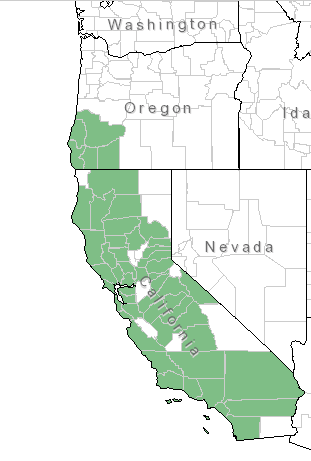


Figure 1. Wavyleaf soap plant flowers.
Taxonomy
The scientific name of wavyleaf soap plant is Chlorogalum pomeridianum (DC.) Kunth (Liliaceae) [19,27,33]. Soap plant is 1 of 5 species in the Chlorogalum genus [15] and the most abundant member of the genus [59]. Accepted varieties are [19,27,33,38]:
- Chlorogalum pomeridianum var. pomeridianum (DC.) Kunth
- Chlorogalum pomeridianum var. minus Hoover
- Chlorogalum pomeridianum var. divaricatum (Lindl.) Hoover
Synonyms
- None
Other Common Names
common soap plant, Indian soap plant, Indian soap root, soap plant, soap root

Figure 2. Wavyleaf soap plant distribution.
General Distribution
Wavyleaf soap plant is distributed from southwestern corner of Oregon southward into southern California [33]. Populations of Chlorogalum pomeridianum var. divaricatum and C. p. var. minus are documented only in California. Chlorogalum p. var. pomeridianum occurs in California and Oregon [66].
States and Provinces
- United States: CA OR
Site Characteristics
The climate in which wavyleaf soap plant grows is mediterranean [54], with cool, wet winters and warm, dry summers [24]. The mean annual precipitation ranges from 16 to 20 inches (410-510 mm) [53].
Wavyleaf soap plant grows from low to midelevations. The following table provides elevations where wavyleaf soap plant has been collected.
| Location | Elevation |
|---|---|
| Oregon (southwestern) | below 5,000 feet (1,524 m) [27] |
| California (across the state) | below 5,000 feet (1,524 m) [27,45,59] |
| Elk Creek Drainage (Sequoia National Park) | 2,100 feet (640 m) [60] |
| Hastings Natural History Reservation, San Lucia Range, Monterey County | 860 to 3,600 feet (262-1,050 m) [61] |
| Pinnacles National Monument | 1,200 to 3,000 feet (370-910 m) [24] |
| Donald and Sylvia McLaughlin University of California Natural Reserve | 1,200 to 3,100 feet (370-950 m) [54] |
| Central Sierra Nevada | up to 6,000 feet (1,800 m) [51] |
| Santa Ana Mountains | average 3,500 feet (1,100 m) [68] |
Plant Communities
Wavyleaf soap plant occurs in annual grasslands, coastal sage scrub, chaparral, oak woodlands, low-elevation conifer forests [14,24,44,59,62,63], and mixed-evergreen forests [18]. It occurs on dry, open sites such as rocky hillsides, bluffs, and balds [13,15,27,32,44,45,59]. It is most common in chaparral [20,26,41,60], particularly chamise (Adenostoma fasciculatum) chaparral [24,63], and it occurs in serpentine chaparral [54]. In Pinnacles National Monument, wavyleaf soap plant is found on south-facing slopes that are drier and have shallower soils than are typical of other chaparral communities in the Park [24]. In addition to oak woodlands, it also occurs in California bay (Umbellularia californica) [18] and interior live oak (Quercus wislizeni) [55] woodlands.
Wavyleaf soap plant is not documented as an indicator or a dominant species in vegetation types of California and Oregon. Vegetation classifications in which wavyleaf soap plant was described as an important component of the plant community follow:
California, general:
- knobcone pine (Pinus attenuata) communities [69]
- purple needlegrass (Nassella pulchra) associations south and east of Monterey [53]
- abundant in chamise chaparral [26]
Bald Hills oak woodlands, Redwood National Park:
- Wavyleaf soap plant showed 0.78% frequency in an Oregon white oak/common snowberry (Quercus garryana/Symphoricarpos albus var. laevigatus) community and 0.83% frequency in an Oregon white oak/orchard grass (Dactylis glomerata) community on mesic, lower concave slopes. It had 0.50% frequency in a mockorange/brittle bladder-fern (Philadelphus lewisii/Cystopteris fragilis) stream channel community with a dense shrub layer. Wavyleaf soap plant had 0.75% frequency in a Sierra gooseberry/varileaf phacelia (Ribes roezlii/Phacelia heterophylla) community, a rock outcrop type with a moderately dense shrub layer. Its cover ranged from 1% to 5% cover in all of these communities [63].
Pinnacles National Monument:
- Wavyleaf soap plant occurred in chamise chaparral with 16.7% mean frequency and 3% mean cover [24].
Ring Mountain Preserve, Marin County:
- Wavyleaf soap plant was common in a serpentine bunchgrass community (characterized by many boulders strewn among native perennial grasses and bulbous plant species), with 9.48% average frequency on north- and south-facing slopes and on ridgetops. It had 0.84% frequency in the nonnative annual grassland community. Wavyleaf soap plant had 3.3% cover in a coyotebrush (Baccharis pilularis) community (a steppe grassland characterized by slopes) and 6.47% frequency in a freshwater seep community (characterized by the presence of surface water, although some drainages typically dry completely by June) [18].
Santa Ana Mountains:
- On a serpentine site dominated by knobcone pine, wavyleaf soap plant occupied exposed sites with 7% cover, but it was not found in surrounding chaparral [68].
Botanical Description
The following description of wavyleaf soap plant provides characteristics that may be relevant to fire ecology, and is not meant for identification. Keys for identification are available [27,38,44,45].

Figure 3. Wavyleaf soap plant seeds.
Wavyleaf soap plant is a native perennial forb. It has a basal tuft of wavy, 1-inch (2.5 cm) wide, linear leaves [13,14,15,29,30,45]. Exposure to sunlight tends to increase the wave patterns in leaf edges [46]. The leaves are flaccid and stretch along the ground up to 18 inches (46 cm). The star-like flowers are borne on a leafless stalk that may grow to 6 feet (1.8 m) tall. The flowers open sequentially from bottom to top of the stalk. Each flower displays for just 1 day, opening in late afternoon and closing before dawn [13,14,15,29,30,45]. There may be just a few to more than 200 flowers per plant [59]. The fruit is a capsule [14] with 1 or 2 seeds per locule [45]. The bulb is large—from 3 to 6 inches (7-15 cm) long and 1 to 3 inches (3-8 cm) wide—and covered with persistent, dense fibers (see Figure 4). Its fresh weight ranges from 0.7 to 12 ounces (20-350 g) [9,13,14,44]. Bulbs of mature plants are buried 4 to 12 inches (10-30 cm) underground. Contractile roots attach to the base of the bulb; these roots pull the bulb downward, so the bulb becomes more deeply buried over the life of the plant [31].
In the Ojai Ranger District of the Los Padres National Forest, total mortality rate of a wavyleaf soap plant population was 43% (13 of 30 plants) over 8 years. Causes of mortality were unknown, but annual mortality was not correlated with precipitation of the current or previous year [9].
Raunkiaer Life Form
- Geophyte [50]
Seasonal Development
Wavyleaf soap's phenology varies depending on habitat and elevation. It sprouts new leaves in late fall or winter, and the leaves elongate with warm spring temperatures [9]. Flowering period ranges from May to August across its range [14,44,45,59]. Leaves usually die back in summer, but the flower stalk stays green until August, when seed disperse [2,9].

Figure 4. Wavyleaf soap plant bulb and contractile roots.
Regeneration Processes
Wavyleaf soap plant regenerates from seed and by sprouting from the bulb.
Pollination
There is only a small window of time in which individual flowers of wavyleaf soap plant can be pollinated, since each flower opens for only 1 afternoon and evening [29,59]. During the day, large bees (honeybees, carpenter bees, and 2 species of bumblebee) pollinate the flowers; rare or infrequent visits are made by yellowjackets, mining bees (Lasioglossum sisymbrii), and Allen's hummingbirds [59]. After dark, sphingid moths visit the flowers [30]. Removal of the shrub layer and the subsequent increase in light availability after fire may enhance pollination rates [22] (see Fire Adaptations).
Breeding System
A laboratory study showed that wavyleaf soap plants are self-compatible [59]; however, in the field, most pollination is probably accomplished by insects [30,59].
Flower and Seed Production
It takes 5 to 7 years for plants to reach reproductive age [59]. Limited data suggest that wavyleaf soap plant does not produce flowers and seeds every year. Two populations on the Los Padres National Forest showed a pattern of alternating years of mass flowering with years of little to no flowering. For individual plants, the probability of producing a flower stalk was positively associated with leaf area (P=0.2). High rates of leaf herbivory were negatively associated with flower production (P<0.0002) [9].
Wavyleaf soap plant flower and seed production increase after fire and other canopy-opening disturbances [8,9,22]. In California chaparral, geophytes such as wavyleaf soap plant typically show good seed production the 1st year after fire [8]. On the Los Padres National Forest, wavyleaf soap plant had higher seed production the year after a prescribed fire than on an adjacent unburned site [9] (see Plant Response to Fire).
Seed Dispersal
Seeds are dispersed by gravity [34] and usually fall beneath parent wavyleaf soap plants [9].
Seed Banking
Wavyleaf soap plant apparently has a short-lived seed bank [34], but as of 2015, studies on the longevity of wavyleaf soap plant seeds in the field had not been conducted.
Germination
Wavyleaf soap plant seeds are not dormant [9]. Viable seeds germinate readily upon wetting, incubating under moderate temperatures [3,34]. In the laboratory, seeds germinated about 7 days after imbibition [31].
Seedling Establishment and Plant Growth
In California chaparral, seedling establishment for most geophytes, such as wavyleaf soap plant, is most common in postfire year 2, when light and nutrient levels remain high but interference from shrubs, herbivory, and seed predation are still low [8]. In order to survive summer drought, seedlings must rapidly develop a large bulb and an adequate root system [34].
Vegetative Regeneration
Wavyleaf soap plant sprouts from the bulb. If disturbances such as fire or rockslide top-kill wavyleaf soap plant during its growing season, it typically sprouts soon after top-kill [3,34]. If the disturbance occurs after plants have already senesced, plants resume growth as usual the next growing season [35]. Vegetative reproduction also occurs by bulb splitting or division, but whether bulb splitting occurs naturally in not known [9]. Sierra Miwoks would often break bulbs apart when harvesting wavyleaf soap plant (see Other Uses), leaving some bulb and root tissue behind to regenerate [2].
Bulb dormancy was rare in an 8-year study on the Los Padres National Forest. Typically, individual wavyleaf soap plants sprouted every year. If they failed to sprout one year, they also failed to sprout in subsequent years and were presumed dead [9].
Successional Status
Wavyleaf soap plant is most common in early seral or open communities. It is a somewhat shade-tolerant species and may persist vegetatively in mature chaparral or closed-canopy forests in low numbers. It seldom flowers under low light, and plants growing in low-light conditions often show extensive damage from animal grazing [7,34,36,43,54,64]. In chaparral, wavyleaf soap plant is common on stand edges or in openings but is infrequent under the shrub canopy [50].
Immediate Fire Effects
Because the leaves and flower stalk are desiccated by late summer and early fall [2,9] (see Seasonal Development), wavyleaf soap plant is little affected by fires that occur during the fire season [35]. Fires that occur from winter to midsummer—during wavyleaf soap plant's growing season—top-kill mature plants [35]. Fires in any season may kill seedlings with small, shallowly buried bulbs. The bulbs of mature plants are usually well protected from fire, regardless of when fire occurs [22,35,40]. Since wavyleaf soap plant has contractile roots that pull the bulb deeper underground throughout the plant's life (see General Botanical Characteristics), the bulb becomes increasingly protected from fire as the plant ages.
As of 2015, the effect of fire on the seeds was unknown. Since this species has an apparently short-lived seed bank that is replenished soon after fire, seeds present in the soil seed bank before fire may not be important for wavyleaf soap plant's postfire regeneration.
Postfire Regeneration Strategy
- Geophyte, growing points deep in soil
- Secondary colonizer (on- or off-site seed sources) [58]
Fire Adaptations
Wavyleaf soap plant sprouts from the bulb and establishes from seed after fire [5,7,9,12,22,34,35,36,43]. Soil insulates the large, deeply buried bulb from fire [12,22], and the bulb is well-endowed with starch and other stored nutrients to postfire growth. Wavyleaf soap plant commonly masts the 1st growing season after fire [11,22]. Gill [22] suggested that wavyleaf soap plant pollination is favored by the increase in light following shrub removal by fire. Further, increased flowering and seed production after fire allows use of the available mineral seed bed, which may result in good seedling establishment in early postfire years [22].
Plant Response to Fire

Figure 5. Wavyleaf soap plant sprouting in a mixed-conifer habitat, 15 months after the 2013 Rim Wildfire on the Stanislaus National Forest.
Wavyleaf soap plant sprouts from its deeply buried bulbs after fire, and it shows "vigorous" growth and masting in the first postfire year [5,7,9,34,35,36,43]. Population size may be larger than prefire levels for 4 or more postfire years [5,55,64]. Postfire sprouting occurs in late fall or winter, during the plant's normal growth cycle [35] (see Seasonal Development). The postfire release of nutrients, increased light, and removal of competing vegetation favors wavyleaf soap plant growth and flowering in early postfire environments [9]. Reynolds [51] suggested that wavyleaf soap plant prefers burned or other disturbed sites and that periodic burning is required to maintain healthy populations.
Many have noted that wavyleaf soap plant is abundant and widespread on burns [8,39,55,56,64]. Sampson [55] called it "one of the most conspicuous broad-leaved herbs" on new chaparral burns. After 2 fires in northern California (Mendocino and Shasta counties), density of wavyleaf soap plant increased for at least 5 postfire years (see Table 2). The fire in Mendocino County occurred in September. Sampson [55] did not provide timing of the fire in Shasta County and did not note whether these fires were prescribed or wild.
| Site/plant community | Prefire | Postfire | Postfire | Postfire | Postfire | Postfire |
|---|---|---|---|---|---|---|
| year 1 | year 2 | year 3 | year 4 | year 5 | ||
| Mendocino County/chamise chaparral | 0.6 | 2.7 | 3.5 | 2.1 | 2.1 | 2 |
| Shasta County/interior live oak-blue oak | 0.1 | 1.4 | 1.3 | 0.7 | 0.4 | 0.4 |
This study suggests that wavyleaf soap plant populations peak in postfire years 2 or 3 but remain large for at least 4 or 5 postfire years. Sweeney [64] also noted that wavyleaf soap plant abundance increased in postfire years 2 and 3. Barbour and others [5] suggested that wavyleaf soap plant numbers remain constant for up to 4 years after fire.
On the Los Padres National Forest, wavyleaf soap plant showed enhanced flower and seed production after prescribed and wildfires. On the Ojai Ranger District, 640 acres (260 ha) of a chamise community was burned under prescription in October 1997. Fire severity was low to moderate. Prefire density of wavyleaf soap plant was higher on the site targeted for burning (Site 1, with 1.9 plants/m²) than on the unburned control (Site 2, with 0.5 plant/m²). Prior to the fire, neither site had burned for over 100 years. The year after the prescribed fire (1998), flower production (flowers/plant) was significantly higher on Site 1 (burned) than on Site 2 (unburned) (P=0.5). In late December 1999, a wildfire burned both sites. On Site 1 (Rx + wildfire), the percentage of flowering stalks was highest year after the prescribed fire. On Site 2 (wildfire only), it was highest after the wildfire. Flower stalk production was synchronous between the 2 sites (P=0.0008), and there was a pattern of alternating years of flowering and no flowering [9] (Figure 6).

Figure 6. Percentage of wavyleaf soap plant individuals flowering after prescribed fire and wildfire on 2 study sites on Los Padres National Forest. The prescribed fire was conducted at Site 1 in 1997, and wildfire burned both sites in late 1999.
On Site 1, flower production increased again in 2000 (after the wildfire), but it did not exceed production of 1999 (the 2nd year after the prescribed fire). On Site 2, flower production was highest in 2000 (Figure 7). Fruit production generally followed the trend of flower production at both sites. The authors concluded that in this study, fire stimulated flowering and seed production in wavyleaf soap plant but was not required for its reproduction. They noted that whether high postfire seed production results in high seedling establishment is not well known [9].

Figure 7. Flowers per plant at each site.
Fire Regimes
The plant communities in which wavyleaf soap plant occurs have a variety of fire regimes. Chaparral communities, in which wavyleaf soap plant is common, have frequent, stand-replacing fires at less than 100-year intervals [47]. The low-elevation oak and low-elevation ponderosa pine woodlands, in which soap plant is also common, historically had mostly frequent, low-severity surface fires [10]. Higher-elevation mixed-conifer communities had mixed-severity and occasional stand-replacement fires at longer intervals [38].
The following table provides fire return intervals for plant communities and ecosystems where wavyleaf soap plant is important. For further information, see the FEIS Species Review of the dominant species listed below. For additional fire regime information, search FEIS for this species by entering the species name on the Advanced Search page and selecting “Fire Regime” as the publication type.
| Community or ecosystem | Dominant species | Fire return interval range (years) |
|---|---|---|
| California chaparral | Adenostoma and/or Arctostaphylos spp. | <35 to <100 |
| Coastal sagebrush | Artemisia californica | <35 to <100 |
| California montane chaparral | Ceanothus and/or Arctostaphylos spp. | 50-100 [47] |
| California steppe | Festuca-Danthonia spp. | <35 [47,62] |
| Jeffrey pine | Pinus jeffreyi | 5-30 |
| Pacific ponderosa pine* | Pinus ponderosa var. ponderosa | 1-47 |
| California mixed conifer | Pinus ponderosa var. ponderosa-Abies concolor-P. lambertiana | 10-150 [38] |
| California mixed evergreen | Pseudotsuga menziesii var. menziesii-Lithocarpus densiflorus-Arbutus menziesii | <35 |
| California oakwoods | Quercus spp. | <35 [4] |
| Coast live oak | Quercus agrifolia | 2-75 [23] |
| Canyon live oak | Quercus chrysolepis | <35 to 200 |
| Blue oak-foothills pine | Quercus douglasii-P. sabiniana | <35 |
| Oregon white oak | Quercus garryana | <35 [4] |
| California black oak | Quercus kelloggii | 5-30 [47] |
| *Fire return interval varies widely; trends in variation are noted in the Species Review. | ||
Fire Management Considerations
Wavyleaf soap plant is well adapted to survive fire and flourish in the open conditions characteristic of early postfire communities. Because it was a valued resource, Pomo Indians burned areas where wavyleaf soap plant grew often enough to reduce other vegetation and maintain open communities, favoring wavyleaf soap plant growth and reproduction [2]. In a study in the Bald Hills of Redwood National Park, wavyleaf soap plant was positively associated with Oregon white oak woodlands (P=0.04) that were burned under prescription at 3- to 5-year intervals. It had "high indicator value" for intact burned woodlands: those that still retained the open structure characteristic of the Bald Hills [40]. This species responds favorably to prescribed and wildfires.
Federal Status
None.
Other Status
None.
Importance to Wildlife and Livestock

Figure 8. Mule deer eating wavyleaf soap plant leaves.
Wavyleaf soap plant is of some importance to livestock and wildlife throughout its distribution. Studies in Alameda and Santa Clara counties found California ground squirrels graze wavyleaf soap plant leaves [16]. Ground squirrels, pocket gophers, other rodents, rabbits, and mule deer consume the leaves and inflorescences [16,28,36,49]. Granivorous rodents eat the seeds [49].
Although livestock use of wavyleaf soap plant is not well documented, it is likely consumed when available. Sampson [55] reported that wavyleaf soap plant is "closely cropped" by cattle, domestic sheep, and domestic goats. On the Hastings Natural History Reservation and the Santa Lucia Range in Monterey County, wavyleaf soap plant occurred only on sites without livestock [61].
Palatability and Nutritional Value
Frequent use of wavyleaf soap plant leaves and flower stalks by wildlife [16,28,36,49] suggests that its palatability is good.
Cover Value
Wavyleaf soap plant is too small to provide cover for vertebrates.
Value for Rehabilitation of Disturbed Sites
Wavyleaf soap plant has been used for restoration. The US Army Corps of Engineers propagated wavyleaf soap plant from seed (in a nursery) for revegetating wildlife habitat in their Los Angeles District [25]. Seeds of wavyleaf soap plant were collected and hydroseeded on San Bruno Mountain, San Bruno State Park [71], although rate of establishment was not reported.
PLANTS Database [2] provides information on propagating wavyleaf soap plant.
Other Uses
Wavyleaf soap plant is planted for landscaping [2].
Wavyleaf soap plant was traditionally used by Indians and early settlers [1]. Tribes using wavyleaf soap plant include but are not limited to the Miwok, Hulpumne Yokuts, and Wailakis [1,3,13,51]. Highly sought for food, utensils, and medicine, wavyleaf soap plant was traditionally one of the most versatile plants in the Miwok economy [51].

Figure 9. Brush made from the outer fibers of a wavyleaf soap plant bulb. California Indians used these brushes to sweep acorn meal from grinding rocks into baskets.
There are many traditional uses of wavyleaf soap plant. The starchy bulb can be used as food and for making utensils [3]. It can be boiled or roasted to remove soapy taste, then eaten like a potato. The young shoots, when thoroughly roasted, are said to be as "sweet as sugar" [13,65]. Wavyleaf soap plant was used as emergency food during lean acorn years [1]. The leaves, which are flexible and half-succulent, can be used to cover bread dough while baking [13]. The bulb in particular has multiple uses. Fibers from the bulb can be used to stuff mattresses and to make brushes, ropes, and baskets [13,14,42,65]. The bulb contains saponin, a soap substitute [2,15], and the bulbs can be crushed to make a lather for laundry and bathing. When the bulb and young shoots are boiled, a resinous substance is exuded that can be used as a glue to attach feathers to arrow shafts [13,14]. The roasted bulb can be used antiseptically as a poultice for sores. The Wailakis use it on the body for cramps and for rheumatism. A decoction of the bulb can also be used as a diuretic and laxative [13].
California Indians also traditionally use wavyleaf soap plant bulbs for fishing. They crush the bulbs, work them into a lather, and throw them into quiet pools. The saponin in the lather stun and immobilize fish, causing them to float to the top of the water where they are easily caught [2,13,14,42].
Other Management Considerations
No further information is available on this topic.
Table A1— Forest and range ecosystems, Bureau of Land Management (BLM) physiographic regions, Kuchler plant associations, Society for American Foresters (SAF) forest cover types, and Society for Rangeland Management (SRM) rangeland cover types in which this species occurs.
Forest and Range Ecosystems
- FRES21 Ponderosa pine
- FRES28 Western hardwoods
- FRES34 Chaparral-mountain shrub
- FRES42 Annual grasslands [21]
BLM Physiographic Regions
- 1 Northern Pacific Border
- 3 Southern Pacific Border
- 4 Sierra Mountains [6]
Kuchler Plant Associations
- K010 Ponderosa shrub forest
- K026 Oregon oakwoods
- K030 California oakwoods
- K033 Chaparral
- K034 Montane chaparral
- K035 Coastal sagebrush
- K036 Mosaic of K030 and K035
- K048 California steppe [37]
SAF Cover Types
- 233 Oregon white oak
- 234 Douglas-fir-tanoak-Pacific madrone
- 244 Pacific ponderosa pine-Douglas-fir
- 245 Pacific ponderosa pine
- 246 California black oak
- 247 Jeffrey pine
- 248 Knobcone pine
- 249 Canyon live oak
- 250 Blue oak-foothills pine
- 255 California coast live oak [17]
SRM Rangeland Cover Types
- 109 Ponderosa pine shrubland
- 110 Ponderosa pine-grassland
- 201 Blue oak woodland
- 202 Coast live oak woodland
- 204 North coastal shrub
- 205 Coastal sage shrub
- 206 Chamise chaparral
- 207 Scrub oak mixed chaparral
- 208 Ceanothus mixed chaparral
- 209 Montane shrubland
- 214 Coastal prairie
- 215 Valley grassland [57]
1. Anderson, M. Kat. 1997. From tillage to table: the indigenous cultivation of geophytes for food in California. Journal of Ethnobiology. 17(2): 149-169. [35818]
2. Anderson, M. Kat; Roderick, Wayne. 2006. Plant guide: Soaproot: Chlorogalum pomeridianum (DC.) Kunth, [Online]. In: PLANTS profile. In: PLANTS database. Baton Rouge, LA: U.S. Department of Agriculture, Natural Resources Conservation Service, National Plant Data Center (Producer). Available: https://plants.usda.gov /plantguide/pdf/cs_chpo3.pdf [2015, June 9]. [89038]
3. Anderson, Marion Kathleen. 1993. The experimental approach to assessment of the potential ecological effects of horticultural practices by indigenous peoples on California wildlands. Berkeley, CA: University of California. 211 p. Dissertation. [33081]
4. Arno, Stephen F. 2000. Fire in western forest ecosystems. In: Brown, James K.; Smith, Jane Kapler, eds. Wildland fire in ecosystems: Effects of fire on flora. Gen. Tech. Rep. RMRS-GTR-42-vol. 2. Ogden, UT: U.S. Department of Agriculture, Forest Service, Rocky Mountain Research Station: 97-120. [36984]
5. Barbour, Michael G.; Burk, Jack H.; Pitts, Wanna D. 1980. Fire. In: Terrestrial plant ecology. Menlo Park, CA: The Benjamin/Cummings Publishing Company, Inc: 365-583. [45716]
6. Bernard, Stephen R.; Brown, Kenneth F. 1977. Distribution of mammals, reptiles, and amphibians by BLM physiographic regions and A.W. Kuchler's associations for the eleven western states. Tech. Note 301. Denver, CO: U.S. Department of the Interior, Bureau of Land Management. 169 p. [434]
7. Biswell, Harold H. 1974. Effects of fire on chaparral. In: Kozlowski, T. T.; Ahlgren, C. E., eds. Fire and ecosystems. New York: Academic Press: 321-364. [14542]
8. Borchert, Mark. 2004. Vertebrate seed dispersal of Marah macrocarpus (Cucurbitaceae) after fire in the western Transverse Ranges of California. Ecoscience. 11(4): 463-471. [55663]
9. Borchert, Mark; Tyler, Claudia M. 2009. Patterns of post-fire flowering and fruiting in Chlorogalum pomeridianum var. pomeridianum (DC.) Kunth in southern California chaparral. International Journal of Wildland Fire. 18(5): 623-630. [81584]
10. Brown, James K.; Smith, Jane Kapler, eds. 2000. Wildland fire in ecosystems: Effects of fire on flora. Gen. Tech. Rep. RMRS-GTR-42-vol. 2. Ogden, UT: U.S. Department of Agriculture, Forest Service, Rocky Mountain Research Station. 257 p. [36581]
11. Chang, Chi-ru. 1996. Ecosystem responses to fire and variations in fire regimes. In: Status of the Sierra Nevada. Sierra Nevada Ecosystem Project: Final report to Congress. Volume 2: Assessments and scientific basis for management options. Wildland Resources Center Report No. 37. Davis, CA: University of California, Centers for Water and Wildland Resources: 1071-1099. [28976]
12. Chapman, Rachel Ross; Crow, Garrett E. 1981. Application of Raunkiaer's life form system to plant species survival after fire. Bulletin of the Torrey Botanical Club. 108(4): 472-478. [617]
13. Chesnut, V. K. 1902. Plants used by the Indians of Mendocino County, California. Contributions from the U.S. National Herbarium. [Washington, DC]: U.S. Department of Agriculture, Division of Botany. 7(3): 295-408. [54917]
14. Dale, Nancy. 1986. Flowering plants: The Santa Monica Mountains, coastal and chaparral regions of southern California. Santa Barbara, CA: Capra Press. 239 p. In cooperation with: The California Native Plant Society. [7605]
15. Dayton, William A. 1960. Notes on western range forbs: Equisetaceae through Fumariaceae. Agric. Handb. 161. Washington, DC: U.S. Department of Agriculture, Forest Service. 254 p. [767]
16. Evans, F. C.; Holdenried, R. 1943. A population study of the Beechey ground squirrel in central California. Journal of Mammalogy. 24(2): 231-260. [55800]
17. Eyre, F. H., ed. 1980. Forest cover types of the United States and Canada. Washington, DC: Society of American Foresters. 148 p. [905]
18. Fiedler, Peggy Lee; Leidy, Robert A. 1987. Plant communities of Ring Mountain Preserve, Marin County, California. Madrono. 34(3): 173-192. [4068]
19. Flora of North America Editorial Committee, eds. 2015. Flora of North America north of Mexico, [Online]. Flora of North America Association (Producer). Available: http://www.efloras.org/flora_page.aspx?flora_id=1. [36990]
20. Fried, Jeremy S.; Bolsinger, Charles L.; Beardsley, Debby. 2004. Chaparral in southern and central coastal California in the mid-1990s: area, ownership, condition, and change. Resource Bulletin PNW-RB-240. Portland, OR: U.S. Department of Agriculture, Forest Service, Pacific Northwest Research Station. 86 p. [50376]
21. Garrison, George A.; Bjugstad, Ardell J.; Duncan, Don A.; Lewis, Mont E.; Smith, Dixie R. 1977. Vegetation and environmental features of forest and range ecosystems. Agric. Handb. 475. Washington, DC: U.S. Department of Agriculture, Forest Service. 68 p. [998]
22. Gill, A. Malcolm. 1977. Plant traits adaptive to fires in Mediterranean land ecosystems. In: Mooney, Harold A.; Conrad, C. Eugene, technical coordinators. Proceedings of the symposium on the environmental consequences of fire and fuel management in Mediterranean ecosystems; 1977 August 1-5; Palo Alto, CA. Gen. Tech. Rep. WO-3. Washington, DC: U.S. Department of Agriculture, Forest Service: 17-26. [4798]
23. Greenlee, Jason M.; Langenheim, Jean H. 1990. Historic fire regimes and their relation to vegetation patterns in the Monterey Bay area of California. The American Midland Naturalist. 124(2): 239-253. [15144]
24. Halvorson, William L.; Clark, Ronilee A. 1989. Vegetation and floristics of Pinnacles National Monument. Tech. Rep. No. 34. Davis, CA: University of California at Davis, Institute of Ecology, Cooperative National Park Resources Study Unit. 113 p. [11883]
25. Harlacher, Richard A. 1985. Production of native plant materials for wildlife management programs. In: Rieger, John P.; Steele, Bobbie A., eds. Proceedings of the native plant revegetation symposium; 1984 November 15; San Diego, CA. San Diego, CA: California Native Plant Society: 62-69. [3345]
26. Hedrick, Donald W. 1951. Studies on the succession and manipulation of chamise brushlands in California. College Station, TX: Texas Agricultural and Mechanical College. 113 p. Dissertation. [8525]
27. Hickman, James C., ed. 1993. The Jepson manual: Higher plants of California. Berkeley, CA: University of California Press. 1400 p. [21992]
28. Hobbs, Richard J.; Mooney, Harold A. 1991. Effects of rainfall variability and gopher disturbance on serpentine annual grassland dynamics. Ecology. 72(1): 59-68. [14103]
29. Jernstedt, Judith A. 1980. Anthesis and floral senescence in Chlorogalum pomeridianum (Liliaceae). American Journal of Botany. 67(5): 824-832. [56111]
30. Jernstedt, Judith A. 1980. Ultraviolet absorption by flowers of Chlorogalum (Liliaceae). Bulletin of the Torrey Botanical Club. 107(2): 163-171. [56112]
31. Jernstedt, Judith A. 1984. Seedling growth and root contraction in the soap plant, Chlorogalum pomeridianum (Liliaceae). American Journal of Botany. 71(1): 69-75. [56110]
32. Jimerson, Thomas M.; Carothers, Sydney K. 2002. Northwest California oak woodlands: environment, species composition, and ecological status. In: Standiford, Richard B.; McCreary, Douglas; Purcell, Kathryn L., technical coordinators. Proceedings of the 5th symposium on oak woodlands: oaks in California's changing landscape; 2001 October 22-25; San Diego, CA. Gen. Tech. Rep. PSW-GTR-184. Albany, CA: U.S. Department of Agriculture, Forest Service, Pacific Southwest Research Station: 705-717. [42366]
33. Kartesz, John T. 1999. A synonymized checklist and atlas with biological attributes for the vascular flora of the United States, Canada, and Greenland. 1st ed. In: Kartesz, John T.; Meacham, Christopher A. Synthesis of the North American flora (Windows Version 1.0), [CD-ROM]. Chapel Hill, NC: North Carolina Botanical Garden (Producer). In cooperation with: The Nature Conservancy; U.S. Department of Agriculture, Natural Resources Conservation Service; U.S. Department of the Interior, Fish and Wildlife Service. [36715]
34. Keeley, Jon E. 1991. Seed germination and life history syndromes in the California chaparral. The Botanical Review. 57(2): 81-116. [36973]
35. Keeley, Jon E. 2006. South Coast bioregion. In: Sugihara, Neil G.; van Wagtendonk, Jan W.; Shaffer, Kevin E.; Fites-Kaufman, Joann; Thode, Andrea E., eds. Fire in California's ecosystems. Berkeley, CA: University of California Press: 350-390. [65557]
36. Keeley, Sterling C.; Keeley, Jon E.; Hutchinson, Steve M.; Johnson, Albert W. 1981. Postfire succession of the herbaceous flora in southern California chaparral. Ecology. 62(6): 1608-1621. [5778]
37. Kuchler, A. W. 1964. United States [Potential natural vegetation of the conterminous United States]. Special Publication No. 36. New York: American Geographical Society. 1:3,168,000; colored. [3455]
38. LANDFIRE Biophysical Settings. 2009. Biophysical setting 0610280: Mediterranean California mesic mixed conifer forest and woodland. In: LANDFIRE Biophysical Setting Model: Map zone 06, [Online]. In: Vegetation Dynamics Models. In: LANDFIRE. Washington, DC: U.S. Department of Agriculture, Forest Service, Rocky Mountain Research Station, Fire Sciences Laboratory; U.S. Geological Survey; Arlington, VA: The Nature Conservancy (Producers). Available: https://www.landfire.gov /national_veg_models_op2.php [2015, June 10]. [89046]
39. Lewis, Henry T. 1973. Patterns of Indian burning in California: ecology and ethnohistory. Ballena Press Anthropological Papers No. 1. Ramona, CA: Ballena Press. 101 p. [28351]
40. Livingston, Amy C. 2014. Plant community responses to fire exclusion, species invasions, and restoration in California woodlands and grasslands. St. Arcata, CA: Humboldt State University. 107 p. Thesis. [88574]
41. McPherson, James K.; Muller, Cornelius H. 1969. Allelopathic effects of Adenostoma fasciculatum, "chamise", in the California chaparral. Ecological Monographs. 39(2): 177-198. [13559]
42. Moerman, Dan. 2003. Native American ethnobotany: A database of foods, drugs, dyes, and fibers of Native American peoples, derived from plants, [Online]. Dearborn, MI: University of Michigan (Producer). Available: herb.umd.umich.edu/ [2015, May 8]. [37492]
43. Muller, Cornelius H.; Hanawalt, Ronald B.; McPherson, James K. 1968. Allelopathic control of herb growth in the fire cycle of California chaparral. Bulletin of the Torrey Botanical Club. 95(3): 225-231. [4973]
44. Munz, Philip A. 1974. A flora of southern California. Berkeley, CA: University of California Press. 1086 p. [4924]
45. Munz, Philip A.; Keck, David D. 1973. A California flora and supplement. Berkeley, CA: University of California Press. 1905 p. [6155]
46. Pacific Bulb Society. 2015. Chlorogalum. Milwaukie, OR: Pacific Bulb Society Wiki (Producer). Available online: http://www.pacificbulbsociety.org/pbswiki/index.php/Chlorogalum [6 June 2015]. [89035]
47. Paysen, Timothy E.; Ansley, R. James; Brown, James K.; Gottfried, Gerald J.; Haase, Sally M.; Harrington, Michael G.; Narog, Marcia G.; Sackett, Stephen S.; Wilson, Ruth C. 2000. Fire in western shrubland, woodland, and grassland ecosystems. In: Brown, James K.; Smith, Jane Kapler, eds. Wildland fire in ecosystems: Effects of fire on flora. Gen. Tech. Rep. RMRS-GTR-42-vol. 2. Ogden, UT: U.S. Department of Agriculture, Forest Service, Rocky Mountain Research Station: 121-159. [36978]
48. Pitschel, Barbara M. 1988. Value of propagule bank revealed by grassland restoration project (California). Restoration & Management Notes. 6(1): 35-36. [5471]
49. Quinn, Ronald D. 1994. Animals, fire and vertebrate herbivory in Californian chaparral and other Mediterranean-type ecosystems. In: Moreno, Jose M.; Oechel, Walter C., eds. The role of fire in Mediterranean-type ecosystems. New York: Springer Verlag: 46-78. [26804]
50. Raunkiaer, C. 1934. The life forms of plants and statistical plant geography. Oxford, England: Clarendon Press. 632 p. [2843]
51. Reynolds, Richard Dwan. 1959. Effect of natural fires and aboriginal burning upon the forests of the central Sierra Nevada. Berkeley, CA: University of California. 268 p. Thesis. [37435]
52. Rice, Carol. 1990. Restoration plays an integral role in fire hazard reduction plan for the Berkeley Hills Area. Restoration & Management Notes. 8(2): 125-126. [13792]
53. Robinson, Richard Hayes. 1971. An analysis of ecological factors limiting the distribution of a group of Stipa pulchra associations. Korean Journal of Botany. 14(3): 61-80. [28363]
54. Safford, Hugh D.; Harrison, Susan. 2004. Fire effects on plant diversity in serpentine vs. sandstone chaparral. Ecology. 85(2): 539-548. [47495]
55. Sampson, Arthur W. 1944. Plant succession on burned chaparral lands in northern California. Bull. 65. Berkeley, CA: University of California, College of Agriculture, Agricultural Experiment Station. 144 p. [2050]
56. Sampson, Arthur W.; Burcham, L. T. 1954. Costs and returns of controlled brush burning for range improvement in northern California. Range Improvement Studies No. 1. Sacramento, CA: California Department of Natural Resources, Division of Forestry. 41 p. [41820]
57. Shiflet, Thomas N., ed. 1994. Rangeland cover types of the United States. Denver, CO: Society for Range Management. 152 p. [23362]
58. Stickney, Peter F. 1989. Seral origin of species comprising secondary plant succession in northern Rocky Mountain forests. FEIS workshop: Postfire regeneration. Unpublished draft on file at: U.S. Department of Agriculture, Forest Service, Rocky Mountain Research Station, Fire Sciences Laboratory, Missoula, MT. 10 p. [20090]
59. Stockhouse, Robert E., II; Wells, Harrington. 1978. Pollination ecology of Chlorogalum pomeridianum (D.C.) Kunth. (Liliaceae). Bulletin of the Southern California Academy of Sciences. 77(3): 124-129. [55797]
60. Stocking, Stephen K. 1966. Influences of fire and sodium-calcium borate on chaparral vegetation. Madrono. 18(7): 193-203. [9794]
61. Stromberg, Mark R.; Griffin, James R. 1996. Long-term patterns in coastal California grasslands in relation to cultivation, gophers, and grazing. Ecological Applications. 6(4): 1189-1211. [41117]
62. Stromberg, Mark R.; Kephart, Paul; Yadon, Vern. 2001. Composition, invasibility, and diversity in coastal California grasslands. Madrono. 48(4): 236-252. [41371]
63. Sugihara, Neil G.; Reed, Lois J. 1987. Vegetation ecology of the Bald Hills oak woodlands of Redwood National Park. Tech. Rep. 21. Orick, CA: Redwood National Park Research and Development, South Operations Center. 78 p. [55266]
64. Sweeney, James R. 1956. Responses of vegetation to fire: A study of the herbaceous vegetation following chaparral fires. University of California Publications in Botany. [Berkeley, CA: University of California Press]. 28(4): 143-250. [3776]
65. Sweet, Muriel. 1962. Common edible and useful plants of the West. Healdsburg, CA: Naturegraph Company. 64 p. [54095]
66. U.S. Department of Agriculture, Natural Resources Conservation Service. 2015. PLANTS Database, [Online]. Available: https://plants.usda.gov /. [34262]
67. van Wagtendonk, Jan W.; Fites-Kaufman, Joann. 2006. Sierra Nevada bioregion. In: Sugihara, Neil G.; van Wagtendonk, Jan W.; Shaffer, Kevin E.; Fites-Kaufman, Joann; Thode, Andrea E., eds. Fire in California's ecosystems. Berkeley, CA: University of California Press: 264-294. [65544]
68. Vogl, Richard J. 1973. Ecology of knobcone pine in the Santa Ana Mountains, California. Ecological Monographs. 43: 125-143. [4815]
69. Vogl, Richard J.; Armstrong, Wayne P.; White, Keith L.; Cole, Kenneth L. 1977. The closed-cone pines and cypress. In: Barbour, Michael G.; Major, Jack, eds. Terrestrial vegetation of California. New York: John Wiley and Sons: 295-358. [7219]
70. Wade, Dale D.; Brock, Brent L.; Brose, Patrick H.; Grace, James B.; Hoch, Greg A.; Patterson, William A., III. 2000. Fire in eastern ecosystems. In: Brown, James K.; Smith, Jane Kapler, eds. Wildland fire in ecosystems: Effects of fire on flora. Gen. Tech. Rep. RMRS-GTR-42-vol. 2. Ogden, UT: U.S. Department of Agriculture, Forest Service, Rocky Mountain Research Station: 53-96. [36983]
71. Walsh, Raymond C.; Reid, Thomas S. 1988. Habitat reclamation for endangered species on San Bruno Mountain. In: Rieger, John P.; Williams, Bradford K., eds. Proceedings of the second native plant revegetation symposium; 1987 April 15-18; San Diego, CA. Madison, WI: University of Wisconsin Arboretum, Society for Ecological Restoration & Management: 70-75. [4098]