


Dryobates borealis, red-cockaded woodpecker
Duchac, Leila. 2025. Dryobates borealis, red-cockaded woodpecker. In: Fire Effects Information System, [Online]. U.S. Department of Agriculture, Forest Service, Rocky Mountain Research Station, Missoula Fire Sciences Laboratory (Producer). https://research.fs.usda.gov/feis/species-reviews/drbo
| Abbreviation | Common Name | Scientific Name | Classification | Status |
|---|---|---|---|---|
| Animals | ||||
| DRBO | red-cockaded woodpecker | Dryobates borealis | Life Form: Animals/Bird Kingdom: Animalia Class: Bird Order: Piciformes Family: Picidae Genus: Dryobates | Fed. Protected: Yes Nativity: Native Invasiveness: Noninvasive |
Red-cockaded woodpeckers are federally endangered birds native to pine forests primarily in the southeastern United States. They are mainly insectivorous, eating arthropods gleaned from trees. Red-cockaded woodpeckers are nonmigratory, cavity-nesters that live in groups consisting of a breeding pair and up to five helpers.
The historical range of red-cockaded woodpeckers was mostly comprised of longleaf pine communities, which is the primary species used for nesting, roosting, and foraging. Red-cockaded woodpeckers also occur in shortleaf pine, loblolly pine, and slash pine communities, and they can use pond pine, Virginia pine, and pitch pine communities at the edges of their range, mainly for foraging. They are particularly dependent on open, “park-like” forests of mature pine trees with few midstory trees or shrubs and a diverse mix of grasses and forbs. Red-cockaded woodpeckers excavate cavities for nesting and roosting into the heartwood of large, living pines. Excavating a new cavity generally takes between 3 and 10 years, depending on conditions. Individuals roost in their own cavity and clusters of cavities are used by groups.
Open pine forests preferred by red-cockaded woodpeckers are maintained by frequent, low-severity fire—burning annually in some areas. Tall southern pines generally survive frequent fire, and longleaf pine can survive even as seedlings. In contrast, understory hardwoods and shrubs are either top-killed or killed by frequent fire. In the absence of frequent fire, hardwoods and shrubs quickly form a dense understory, creating conditions that red-cockaded woodpeckers cannot use. Red-cockaded woodpeckers living in areas with frequent, low-severity fire tend to fledge more young, live in larger groups, and have increased access to prey compared to those living in areas with less frequent fire.
Fire-excluded southern pine forests often have uncharacteristically high fine fuel loads and dense understories, making it difficult to use prescribed fire to improve red-cockaded woodpecker habitat. After more than a century of fire exclusion, mechanical treatments are often necessary to open the understory before prescribed fire can be used without jeopardizing mature pines. Prescribed fires are conducted in both the dormant and growing seasons, with recommended intervals of 5 years or less.
Red cockaded woodpeckers were once widespread and relatively common across the Southeast, but over 95% of their historical habitat has been lost due to logging, development, agriculture, and subsequent fire exclusion since the late 19th century. Southern pine beetle epidemics also threaten remaining red-cockaded woodpecker habitat, especially those in loblolly pine and shortleaf pine communities. Since their federal listing in 1970, large-scale recovery efforts have been successful in increasing their range-wide population from fewer than 10,000 individuals to over 30,000 individuals as of 2020. Long-term recovery efforts include restoring habitat via prescribed burning and thinning, managing southern pine beetles, creating artificial cavities, translocating individuals or groups, and creating new territories.
Climate change has led to increased temperatures, rainfall, frequency and severity of drought, and hurricane severity in red-cockaded woodpeckers’ range. Documented effects on red-cockaded woodpeckers include changes in nesting dates and varying reproductive success. Continued increases in frequency of drought and extreme weather may reduce the number of available days for prescribed burning, complicating management efforts to restore and maintain red-cockaded woodpecker habitat.


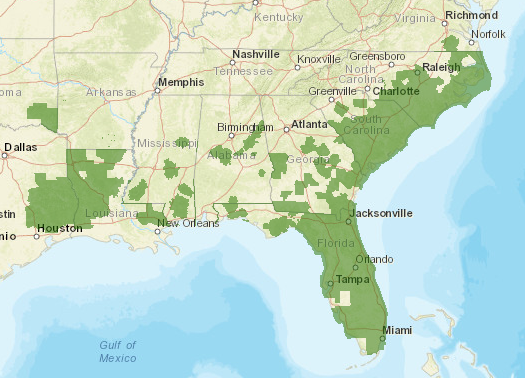


Figure 1— An adult red-cockaded woodpecker with leg bands on the trunk of a pine tree, North Carolina.
The red-cockaded woodpecker is one of the most well-studied bird species in the United States. Detailed reviews of the biology, ecology, and conservation of the red-cockaded woodpecker are available in the Species Status Assessment published by the U.S. Fish and Wildlife Service (2020) [72] and the book The Red-cockaded Woodpecker: Surviving in a Fire-maintained Ecosystem by Conner et al. (2001) [8]. This Species Review relies heavily on these two sources and readers are encouraged to see them and references within for more details on red-cockaded woodpecker biology, ecology, and conservation. This review summarizes information on these topics and reviews the scientific literature about the fire ecology and management of red-cockaded woodpeckers.
Taxonomy
There is considerable disagreement about the taxonomy of North American woodpeckers. Some taxonomists separate most North American woodpecker species into three genera (Picoides, Dryobates, and Leuconotopicus), while others group the species into Picoides and Dryobates, placing most Leuconotopicus woodpeckers into Dryobates. In 2018, the American Ornithologists’ Union reclassified the red-cockaded woodpecker and moved it from the Picoides genus to the Dryobates genus [5,50]. Taxonomists who recognize Leuconotopicus as a genus place red-cockaded woodpeckers in that genus. As of 2023, Dryobates borealis is the most generally accepted scientific name, but both Picoides and Leuconotopicus are used in scientific literature (e.g., [24,75]) and federal agency documents (e.g., [67,72]).
Common names are used throughout this Species Review. See the Appendix for scientific names of animals and plants mentioned in this Species Review and links to other FEIS Species Reviews.
Synonyms
- Picoides borealis [71]
- Leuconotopicus borealis [33]
Other Common Names
None
General Distribution
Red-cockaded woodpeckers are nonmigratory, year-round residents of pine forests in the southeastern United States. Historically, they were relatively common forest birds from southern New Jersey south to southern Florida and west to eastern Texas and Oklahoma (fig. 2). Extensive logging, development, and fire exclusion beginning in the 19th century greatly reduced and fragmented southern and eastern pine forests (see Other Management Considerations) [8]. Over the 20th century, the range of the red-cockaded woodpecker shrank from a wide, continuous swath to small, isolated patches stretching from southern Virginia south to Florida, and west to eastern Texas and Oklahoma [8,72] (fig. 3). Because the red-cockaded woodpecker’s estimated historical distribution is based on data collected after large-scale harvest of longleaf pines had already begun, the historical distribution depicted in figure 2 is likely smaller than its presettlement distribution. Thus, range contraction is likely more substantial than the figure implies [72].

Figure 2—The estimated historical distribution of red-cockaded woodpeckers (orange) and longleaf pines (yellow overlay) based on data from the early 1900s.

Figure 3—Current range of the red-cockaded woodpecker.
States
- United States: AL, AR, FL, GA, LA, MS, NC, OK, SC, TX, VA [8,50,72]
Plant Communities with Site and Fire Regime Characteristics
Red-cockaded woodpeckers are obligates of pine forests in the southeastern United States. Longleaf pine communities historically comprised the bulk of their range and are the primary species used for nesting, roosting, and foraging. Red-cockaded woodpeckers also occur in shortleaf pine, loblolly pine, and slash pine communities, and they can use pond pine, Virginia pine, and pitch pine communities at the edges of their range, mainly for foraging (table 1). Red-cockaded woodpeckers are particularly dependent on “park-like” communities of mature pine trees with few midstory trees or understory shrubs [8]. These communities historically experienced frequent, predominantly low-severity fires [40]. Timber harvest, development, and fire exclusion over the 20th century have greatly reduced the ranges of longleaf pine and shortleaf pine communities (see Other Management Considerations), while loblolly pine and slash pine communities have expanded their ranges.
| Ecoregion | Longleaf pine | Shortleaf pine | Loblolly pine | Slash pine | Pond pine |
|---|---|---|---|---|---|
| Ouachita Mountains | — | X | — | — | — |
| Upper West Gulf Coastal Plain | — | X | X | — | — |
| West Gulf Coastal Plain | X | X | X | — | — |
| Upper East Gulf Coastal Plain | X | X | — | — | — |
| East Gulf Coastal Plain | X | — | — | X | — |
| South Atlantic Coastal Plain | X | — | — | — | — |
| South/Central Florida | X | — | — | X | — |
| Piedmont | — | X | X | — | — |
| Sandhills | X | — | — | — | — |
| Mid-Atlantic Coastal Plain | X | — | — | — | X |
Longleaf Pine

Figure 4—Longleaf pine with a saw palmetto and grass understory in northern Florida (CC BY NC 4.0).
Historically, longleaf pine communities covered approximately 25 million hectares across the southeastern United States [8], covering parts of Virginia, North and South Carolina, Georgia, Florida, Alabama, Mississippi, Louisiana, and eastern Texas [72]. They were the most prevalent communities over most of the red-cockaded woodpeckers’ range, and they continue to support most of the large populations of red-cockaded woodpeckers [8] (fig. 2, fig. 4). Longleaf pine communities often occur in nearly pure stands, but large blackjack oaks or post oaks can occur in the canopy. Scrub oaks and hickories are the most common midstory hardwood trees [72]. The understory includes a diverse mix of grasses, sedges, and forbs, often dominated by wiregrasses and bluestems. Saw palmetto is common in the understory in the southern portion of longleaf pine’s range [8,72]. In the West Gulf Coastal Plain, estimated historical conditions for longleaf pine communities consist of 60% or less canopy cover, less than 20% midstory cover, and more than 65% herbaceous ground cover [27]. Many longleaf pine communities occur in areas with little topographic variation and are classified as flatwoods or savannas [40,72].
Historically, fire was frequent in longleaf pine communities, with modeled historical fire frequency estimates ranging from 2 to 12 years, and fire was almost always of low severity (table 2) [40]. Longleaf pine is fire resistant, even in the seedling stage. Mature longleaf pines can be 40 m tall, 1 m in diameter, and up to 450 years old. When fire is excluded from longleaf pine communities, hardwoods and shrubs quickly establish in the understory and can become dense [8]. Longleaf pine seedlings do not survive in the dense understory and are replaced by more shade-tolerant tree species. As of the early 21st century, approximately 1.2 million hectares—3% to 5% of the historical distribution—of longleaf pine forest remained. Of that, approximately 3% was considered intact [72].
Shortleaf Pine
Shortleaf pine communities used by red-cockaded woodpeckers mostly occur in the Ouachita Mountains and Upper West Gulf Coastal Plain ecoregions in Arkansas, Oklahoma, eastern Texas, and Louisiana. Other pines such as loblolly pine and slash pine may be present. Oaks, including white oak, northern red oak, and black oak, are scattered within stands. Shortleaf pine communities used by red-cockaded woodpeckers tend to be more topographically diverse than longleaf pine flatwood and savanna communities. In areas with steep terrain, shortleaf pine often dominates drier ridges and south- and west-facing slopes, while oaks and maples dominate the cooler, wetter, north-facing slopes.
Historically, low-severity fire was frequent in shortleaf pine communities, with modeled fire frequency estimates ranging from 2 to 7 years (table 2) [40]. Mature shortleaf pines are fire resistant, but seedlings and saplings are less fire-resistant than longleaf pines [26]. When fire is frequent, the understory is dominated by bunchgrasses, especially little bluestem, with little shrub cover. As in longleaf pine communities, fire exclusion leads to rapid growth of shrubs and hardwood trees in the understory [72].
Loblolly Pine
Loblolly pine communities historically comprised a minor part of the red-cockaded woodpecker’s range in eastern Texas, northern Louisiana, and Arkansas, in the Upper West Gulf Coastal Plain and West Gulf Coastal Plain ecoregions. Some historical loblolly pine and loblolly pine-hardwood communities remain, but most have been converted from other forest types (i.e., “off-site” loblolly pine communities), particularly longleaf pine and shortleaf pine. Extensive harvest of longleaf pine and shortleaf pine, fire exclusion, and planting loblolly pine for timber have led to major expansion of loblolly pine communities, and loblolly pine is now the dominant pine species in the southeastern United States [72].
Historically, low-severity fire was frequent in loblolly pine communities, with a modeled fire frequency estimate of 5 to 11 years (table 2) [40] (see Fire Regimes). While loblolly pine saplings and mature trees are relatively fire resistant, seedlings are fire-sensitive. As of 2025, some loblolly pine communities in areas that were previously longleaf pine or shortleaf-loblolly pine communities, support red-cockaded woodpecker populations and are managed for red-cockaded woodpecker persistence [72].
Florida Slash Pine
Florida slash pine is a dominant tree in central and southern peninsular Florida (South/Central Florida ecoregion) that is historically important to red-cockaded woodpeckers. This slash pine variant, unlike the nominal slash pine, is similar to longleaf pine in appearance, and has similar fire resistance and life history. Florida slash pines used by red-cockaded woodpeckers are smaller than pines used in other parts of their range. Nominal slash pine communities are not considered historically important for red-cockaded woodpeckers, as they were typically not dominant, although they codominated with longleaf pine in some areas. However, increases in nominal slash pine abundance through the 20th century due to logging, subsequent planting, and fire exclusion have resulted in some “off-site” slash pine forests that support red-cockaded woodpeckers, such as those occurring in Apalachicola National Forest in the Florida Panhandle [72]. Historical slash pine-dominated communities are not considered red-cockaded woodpecker habitat. Low-severity, frequent fire remains essential to maintaining Florida slash pine forests, with a modeled historical fire frequency estimate of 3 years (table 2) [40].
Pond Pine
Pond pine communities used by red-cockaded woodpeckers are confined to wetland areas of northeastern North Carolina. Historically, pond pine occurred in dry and wet savannas, woodlands, and pocosins [72]. Modeled historical fire frequency estimates ranges from 7 to 8 years, and severities ranged from low to high, with more mixed- and high-severity fire than those in longleaf pine or shortleaf pine communities (table 2) [40]. Pond pine is fire adapted, with bark typically as thick as that of longleaf pine, serotinous cones that open with fire, and the ability to resprout after fire damage. As of the early 21st century, pond pine communities used by red-cockaded woodpeckers occur in small wetland patches, with red-cockaded woodpeckers using these communities in combination with adjacent loblolly pine or other pine forest communities. Pond pine communities have different characteristics than the typical park-like forests used by red-cockaded woodpeckers, with higher canopy cover and denser understories [72].
Biological Characteristics
Red-cockaded woodpeckers are cavity-nesting, cooperative breeding birds. They are nonmigratory, breed annually, and live in stable family groups. They use mature southern pine forests for all life stages and rely on frequent fire to maintain suitable habitat for nesting, roosting, and foraging.
Physical Description
Adult red-cockaded woodpeckers are 20 to 23 cm long [72] and weigh 40 to 55 g. Their plumage is black and white, and adult males have a few red feathers (the “cockade”) on the sides of their face, which are hidden unless they are agitated. Like many woodpecker species, red-cockaded woodpeckers have zygodactyl feet, with two toes facing forward and two facing backward to assist with gripping the vertical bark on tree trunks [8].
Social Structure
Red-cockaded woodpeckers are cooperative breeders, living in groups and defending a shared territory throughout the year. Breeding pairs may have up to five helpers, though most pairs have under three. Most helpers are adult male offspring that remain on their natal territories, although helpers may be females or unrelated males. Helpers do not breed with the breeding pair, but perform all other behaviors associated with breeding, including excavating cavities, incubating eggs, feeding nestlings, and defending territories. Cavities are excavated in mature pine trees, with typically only one active cavity per tree [8,72]. Cavities are used for roosting year-round, and for nesting and raising young during the breeding season. Adults and fledged juveniles each roost in separate cavities. Occasionally, if cavities are lacking, adults will roost in the open on a pine branch [42]. Groups of trees with cavities used by a breeding pair and their helpers are known as cavity clusters. Though they do not roost together in the same cavity at night, red-cockaded woodpecker groups assemble in the morning and travel together throughout the day (fig. 5) [8].

Figure 5—Two red-cockaded woodpeckers foraging on the trunk of a small pine tree, North Carolina.
Cavity excavation takes 3 to 13 years to complete (see Cavity Tree and Nesting Habitat Requirements), and outside of rare occasions of roosting in the open, individuals need cavities to roost in every night, so establishing brand new territories (“pioneering”) is rare. Instead, male helpers typically inherit territories when breeding pairs die or establish new territories in a process known as “budding”. In this process, one or more helpers “bud” off a section of their current territory, including some existing cavities, and create a new territory, splitting the original territory in two. The new breeding pair can consist of two members of the original group, or one member and a novel mate, and the pair may or may not have helpers. Active cavity clusters are vital to the long-term persistence of red-cockaded woodpecker populations—individuals or groups cannot simply move to a new area. Destruction of a cavity cluster by high-severity fire, hurricanes, or southern pine beetles can eliminate groups entirely (See Fire Management Considerations and Other Management Considerations) [8,72].
Movement
Red-cockaded woodpeckers are nonmigratory. Outside of regular travel through a home range, their main movements are dispersal from their natal territories and movement from one territory to another. Juveniles can disperse from the first summer after fledging (≈2-3 months old) to the following spring, just before the breeding season begins. Peak dispersal times are July through August and March through April [8]. Dispersal distances are typically short, with birds dispersing only one to four territories away from their natal territory. In two populations in North Carolina, median dispersal distance was 2.94 km for juvenile males, 3.31 km for juvenile females, 1.27 km for helper males, and 1.88 km for helper females (Kesler 2010, cited in [72]). Long-distance dispersals are rare. Many male red-cockaded woodpeckers do not disperse but remain as helpers in their natal territories. Those that do not become helpers disperse in their first year. Most females disperse from natal territories and seek a new territory as a helper or breeder. Some females move to a new territory every year as helpers until they become breeders. Once a male becomes a breeder, he almost always remains the breeder on that territory until he dies, but females do not follow this pattern. They may leave a breeding pair to find a new breeding territory or become a floater (an individual without a territory or group) or a helper in another territory [8,72].
The U.S. Fish and Wildlife Service defines red-cockaded woodpecker populations as one or more groups at least 6 km from the next group(s). This distance was chosen because juvenile females rarely disperse farther than 6 km (Kesler 2010, cited in [72]), and since males typically remain in their natal territories, female movements from one territory to another provide most of the connections between groups in a population. Natural movement between populations is uncommon due to habitat loss and the subsequent patchy distribution of red-cockaded woodpeckers, and many populations are connected only through managed translocations [72].
Life Span and Mortality
Life Span
Red-cockaded woodpeckers can live up to 17 or 18 years either in the wild or in captivity. Red-cockaded woodpecker first-year and adult survival rates are higher than those of similarly sized birds in temperate regions [72]. Survival rates differ between sexes and ages and vary geographically. In North Carolina and Florida, adult male annual survival estimates range from 75% to 86%, while adult female survival estimates range from 70% to 80% [72]. In general, first-year female survival rates are about 10% to 15% lower than first-year male survival rates within the same population (Walters and Garcia 2016, cited in [72]). For example, first-year male survival rates in three populations in North Carolina were 46% to 57% and first-year female survival rates were 36% to 45% [8,72]. Female survival is thought to be lower than that of males due to increased risk associated with more frequent movements between territories. Females that remain in the same territory have higher survival than females that move between territories. For example, expected annual survival in the North Carolina Sandhills for an adult female that remained on the same territory was 74%, while expected survival for a female that moved to a different territory was 41% (Daniels and Walters 2000, cited in [72]). Annual survival rates are lower (70% for females, 75% for males) in Peninsular Florida, which has lower-quality habitat than those in inland North Carolina Sandhills (80% for females, 86% for males) [72].
Sources of Mortality
The most common predators of adult red-cockaded woodpeckers are Cooper’s hawks and sharp-shinned hawks. Common predators of eggs and nestlings include other woodpecker species, southern flying squirrels, and rat snakes. Red-cockaded woodpeckers maintain resin wells around the entrances of cavities that cause sticky resin to flow down the trunk (fig. 9) and thwart some predators like rat snakes [72].
Cavity kleptoparasitism—a practice where another species invades an existing, occupied cavity, and begins using the cavity—may contribute to nestling mortality. Cavity kleptoparasites of red-cockaded woodpecker cavities include red-bellied woodpeckers, red-headed woodpeckers, eastern bluebirds, and southern flying squirrels. Some kleptoparasite species, like pileated woodpeckers, enlarge the cavity opening and make it unusable for red-cockaded woodpeckers, but most do not. Kleptoparasites aim to use the cavity for nesting, but in some cases, they may also consume eggs or nestlings in the cavity before using it [72].
Hurricanes can cause major mortality through habitat destruction and put isolated populations at risk of local extinction. Hurricane Hugo, a Category 4 hurricane that made landfall in the Francis Marion National Forest in South Carolina in 1989, destroyed 87% of the cavity trees [72] and killed 50% to 67% of the red-cockaded woodpeckers [8,72]. On the Florida Panhandle, 2018 Category 5 Hurricane Michael was estimated to have damaged or killed up to 28% of the remaining global longleaf pine trees [62,80], likely reducing red-cockaded woodpecker habitat.
See below for information about nest failure (loss of eggs or nestlings) and brood loss.
Development and Reproduction
Red-cockaded woodpeckers are monogamous and once a breeding pair is established, the pair typically remains together until one dies. Extra-pair copulation is extremely rare, with some of the lowest known rates of any bird species. If extra-pair copulation occurs, it is with an individual outside the group; male helpers do not breed with the breeding female [8]. One uncommon exception is co-breeding, where two females in a group lay eggs in the same nest, presumably both having copulated with the breeding male of the group. Rarely, a single pair will have two active nests at the same time [72]. An estimated 20% of nests fail, at which point some breeding pairs may attempt to nest a second or even a third time within one breeding season. Approximately 30% of pairs will attempt to renest after a failure [72], and renesting is more common if the nest failed in the egg stage rather than the hatchling or nestling stage. Not all pairs nest every season; younger birds and groups without helpers are less likely to nest than older pairs and groups with helpers. Conflict with red-cockaded woodpeckers outside the group can lead to nest desertion or can cause pairs to forgo nesting for the season [8].
Red-cockaded woodpeckers begin breeding activities in February or March, and lay eggs from late April to early May. Females can lay one to five eggs, with a typical clutch of two to four. If two females are co-breeding, they may lay up to eight eggs in one nest, though five to seven is more typical. Females in larger groups tend to have slightly larger clutches of eggs, but this may be confounded with the fact that larger groups tend to be found in higher-quality habitat [72]. All members of the group incubate the eggs, and incubation begins before all eggs are laid. As a result, eggs hatch asynchronously, in roughly the order they were laid. Incubation, measured from the last egg laid to the first egg hatched, is extremely short (10–11 days) [8]. Nestlings are helpless and hatch without feathers (fig. 6). Nestlings fledge 24 to 29 days after hatching. Adults continue to feed fledglings for several months, with occasional feeding observed 5 months after fledging [8].
High reproductive success has been linked to habitat characteristics including the presence of large, old pines (DBH >35 cm), low overstory hardwood density and/or canopy cover, and low midstory height [22]. Reproductive success also increases in areas that are frequently burned compared to those that burn less frequently (see Reproductive Fitness). Red-cockaded woodpecker reproductive success does not appear to be reduced by military training or other human activities [14,15,19].

Figure 6—A nestling red-cockaded woodpecker in the hands of a bander after receiving colored and aluminum leg bands for identification and monitoring, Georgia.
Partial brood loss is common, averaging 40% across the red-cockaded woodpecker’s range, meaning an average of 60% of each brood survives to fledging. Proportion of brood lost is generally higher in southern and more coastal areas, and lower in northern and inland areas. In the North Carolina Sandhills, partial brood loss averaged 30%, while in two populations in Florida, partial brood loss averaged 20% and 59% [72]. If eggs or hatchlings do not survive, it is typically because a) incubation ended before the last eggs laid hatched, or b) the youngest hatchlings were outcompeted by older hatchlings and died of starvation. Early literature suggests a biased sex ratio of hatchlings, with some studies finding more males than females, and others the opposite pattern. Subsequent studies established that there is no evidence of biased sex ratios of offspring [72].
Habitat
Red-cockaded woodpeckers require open forests with large pines, open midstories, and, in most cases, a dense, diverse grass-forb layer for all life stages. Frequent low-severity fire is essential to create and maintain these conditions. A dense and diverse grass-forb understory with little shrub cover helps maintain high levels of insect prey availability and quality, though some plant communities contain somewhat fewer forbs and grasses and still provide high-quality foraging conditions for red-cockaded woodpeckers [26,28] (See Reproductive Fitness).
Diet and Foraging
Red-cockaded woodpeckers forage primarily on pine trees for insects and other arthropods. If hardwoods are present in a stand, they may spend up to 22% of their time foraging on them (typically, 5%–10%) and seem to increase foraging time on hardwoods in winter. Longleaf pines may carry more than two times the arthropod biomass as similar-sized loblolly pine trees in the same area. This is of note because loblolly pine communities have replaced much of the historical longleaf pine communities due to fire exclusion and planting [28].
Diet
Red-cockaded woodpeckers eat mostly arthropods, particularly ants and cockroaches, as well as small amounts of seeds and fruits. They forage by flaking off bark [30], gleaning from bark and branches, and excavating into dead wood [8,72]. They do not typically excavate into live pines [8]. Generally, over 75% of red-cockaded woodpecker diets are made up of arthropods including arboreal ants and other ant species, wood roaches, spiders, beetles, centipedes, true bugs, crickets, and moths [72]. In the Gulf Coastal Plain and in Apalachicola National Forest, ants comprised approximately 50% of the diet, and approximately 15% was comprised of fruits and seeds from pines, poison ivy, magnolia, wax myrtle, black cherry, wild grape, blueberry, and blackgum ([30], Beal 1941, cited in [72]). Fruit and seed consumption appears to vary geographically; in South Carolina, very little plant matter was found in stomachs (Hooper and Lennartz 1981, cited in [72]). Ants appear important in red-cockaded woodpecker diets across their range, but stomach content analysis methods can be biased toward hard-bodied prey, like ants, so some researchers suggest that ants may make up a smaller proportion of the diet than stomach content analyses suggest [8,72]. During southern pine beetle outbreaks, southern pine beetle adults, eggs, and larvae make up a large portion of red-cockaded woodpeckers’ diets as do other insects that prey on southern pine beetles, particularly long-horned beetles, metallic boring beetles [72], and checkered clerid beetles [8]. For more on southern pine beetle infestations see Southern Pine Beetle Considerations and Southern Pine Beetle Management.
Nestlings eat slightly different diets than those of adults, although most studies are limited to observations of adults delivering food to the nest. Adults were observed delivering centipedes, millipedes, spiders, cockroaches, moths, and caterpillars and other insect larvae to nestlings [8]. However, observations of nest deliveries only provide information about items big enough to observe (Harlow and Lennartz 1977, cited in [8]). Stomach content analysis of nestlings in Apalachicola National Forest found that ants and their larvae, beetles and their larvae, spiders, and centipedes made up the bulk of the diet, with smaller proportions of carpenter bees, wood roaches, moths, and true bugs. Overall, larger arthropods were more common, and ants less common in nestling than adult diets within the same population, and nestling stomachs contained wood fragments, which adult stomachs did not [30].
Foraging Sites
Red-cockaded woodpeckers typically forage in pine forests with open understories and a sparse hardwood midstory. They forage for insects in live and dead pine trees, and less frequently in hardwood trees. Mature turkey oaks, which occur at low densities in longleaf pine communities and are considered an important component of those communities, may act as a “hub” of invertebrate biodiversity [26]. During the nesting season, red-cockaded woodpeckers typically forage near the nest tree, while in winter they may travel farther from cavity clusters to open stands of pines to forage. Male red-cockaded woodpeckers tend to forage on branches and twigs, while females forage on the main lower trunk. Males have slightly longer legs and females have slightly longer tails, which is thought to make each better adapted to foraging in their respective locations, and to reduce competition for food within groups [8].

Figure 7—A red-cockaded woodpecker on the trunk of a burned pine tree, Florida.
Frequent fire—as frequent as every year—is essential to maintain open understory and midstory conditions for red-cockaded woodpecker foraging habitat (see Prey Diversity and Abundance) (fig. 7). Although low densities of midstory hardwoods and occasional canopy oaks are components of high-quality foraging habitat, areas without fire quickly fill in with dense shrubs and hardwoods and become unsuitable for foraging, nesting, or roosting [8,72].
Area Requirements
Red-cockaded woodpecker habitat quality is evaluated at a variety of scales including home range, territory, and cavity cluster. A group’s territory includes only the boundaries that are actively defended by the group, the cavity cluster, and surrounding foraging habitat. Distinguishing territory boundaries can be challenging because territories are relatively large, not all of the territory is visited regularly, and groups occasionally leave the territory. The group’s home range includes its defended territory as well as areas outside the territory that groups visit during foraging or other extraterritorial forays. Forays can bring groups into adjacent occupied territories or into unoccupied areas. Some forays access foraging habitats outside the territory, while others enter habitats not suitable for foraging [8]. Researchers suggest some forays may occur simply because territories are large and loosely defined, and groups tend to have few neighbors and little competition for space [8]. Conservation research suggests that red-cockaded woodpecker territory sizes decrease with more groups in an area, and occurrence of extraterritorial forays may be more restricted [8,72].
Many studies refer to home range and territory interchangeably or may avoid designating territory boundaries and refer more generally to home range. The examples below refer to both home range and territory and the language from each example is retained here, but distinctions between the two may not be defined in each study.
Red-cockaded woodpeckers use home ranges from 6 to 225 ha, depending on habitat quality and density of red-cockaded woodpecker groups in the area [8,17,20,54,72,79]. Within populations, home range size varies widely, with the largest home range approximately twice the size of the smallest. Home ranges are generally smaller in areas of high-quality red-cockaded woodpecker habitat than in areas of low-quality habitat. At the edges of their range, where habitat is marginal, groups tend to use larger home ranges. For example, average home range size varied from 34 ha to 47 ha in mature, fire-maintained longleaf pine forests in southern Arkansas, southwestern Georgia, and the Upper Coastal Plain in Mississippi [4,20,72,79]. However, in slash pine forests of peninsular Florida at the southern edge of their range, and in pond pine communities in coastal Virginia at the northern edge, home ranges averaged 144 and 120 ha, respectively (Nesbitt 1983, Bradshaw 1995, cited in [72]).
Changes to forest conditions that reduce habitat quality may increase the territory or home range size needed. For example, at Fort Johnson in Louisiana, territory size of a group of red-cockaded woodpeckers increased from 135 to 253 ha after a large, forested area within the territory was cleared for military training (Jackson 1995, cited in [8]). Similarly, in winter, red-cockaded woodpeckers may increase home range sizes because they travel farther from their territories to forage than they do during the breeding season [8,72].
Groups of red-cockaded woodpeckers whose movements are constrained by territorial behavior of adjacent groups may have smaller home ranges than those that do not have adjacent groups. In areas where populations have rebounded and territories have multiplied due to budding, pioneering, and translocations, red-cockaded woodpecker territories tend to be smaller than those where populations are smaller [72]. Average home range size in South Carolina in areas with low densities of red-cockaded woodpeckers was 88 ha, compared to 76 ha in areas with high densities [23].
Cavity Tree and Nesting Habitat Requirements
Red-cockaded woodpeckers require clusters of live, mature southern pine trees with cavities for roosting (year-round) and nesting (breeding season). Red-cockaded woodpeckers either excavate new cavities or use existing cavities in live trees. They are one of the only species to excavate cavities into live trees. This takes much longer than it does for birds that excavate cavities into snags. In addition to the difficulty of excavating through live wood, the pine trees they select contain large amounts of sticky resin in the sapwood, which can (and occasionally does) trap red-cockaded woodpeckers and kill them during the excavation process. It can take 3 to over 13 years to excavate a nest cavity, with the longest times in longleaf pine, and shorter times in loblolly pine [72]. Red-cockaded woodpeckers appear to select trees infected with heartwood-infecting wood-rotting fungi, particularly red heart fungus (Phellinus pini), for excavation when available [8,34]. These fungi soften heartwood and can shorten cavity excavation time [72]. Red-cockaded woodpeckers carry fungal spores on their bodies and may introduce new fungal communities to uninfected trees [37]. The time between inoculation by red heart fungus and sufficient infection to soften heartwood is 15 to 20 years [10]. Because nesting and roosting cavities take so long to excavate, some researchers consider the presence of existing cavities to be an essential component of suitable red-cockaded woodpecker habitat [72].
Cavity trees are living pines with active resin flow. Red-cockaded woodpeckers typically excavate cavities in the oldest available pines with relatively more active resin flow. Cavity trees are typically at least 60 to 80 years old and have heartwood that is at least 14 to 15 cm diameter and at least 6 m from the ground. [48]. Cavities may be excavated lower on the trunk in younger and smaller trees if larger ones are not available as long as the heartwood requirement is met; this has potential negative consequences during fires [8,42] (see Fire Effects on Habitat, Movement, and Behavior). Nest cavities are constructed completely within the heartwood [8,72] and tend to be excavated on the southwestern side of the trunk. Afternoon sun exposure is thought to increase resin flow [48].
Red-cockaded woodpeckers prefer cavity trees with first live limb high in the tree canopy. In southwestern Georgia and northern Florida, reintroduced red-cockaded woodpeckers selected trees for new cavity excavation with length from the ground to the first live limb of 12.4 m, while the average length for unselected, control trees was 10.7 m [48].
While cavities in longleaf pines take longer to excavate (see above), they appear to last longer. In eastern Texas, longleaf pines with cavities had annual survival twice as high as shortleaf pines or loblolly pines with cavities; longleaf pines could have active cavities for decades, while shortleaf pines and loblolly pines did not [72].
Nesting habitat consists of large, old pines, with little to no hardwoods in the understory, midstory, or overstory. These conditions are maintained by frequent, low-severity fire. When fire is excluded, hardwoods grow quickly, and red-cockaded woodpeckers typically abandon the cavity or group of cavities [60]. Abandonment has been observed when midstory hardwoods exceed 3.7 m tall, and when their basal area exceeds 5.7 m2/ha [72]. The exact cause of abandonment is not known, though it may be related to prey availability (see Prey Diversity and Abundance).
Cavity clusters are areas of cavity trees in which a group of red-cockaded woodpeckers nests and roosts. Cavity trees are typically all within 100 m of each other but can be farther apart if few suitable trees are available. Because individuals must have their own cavity for roosting each night, a cavity cluster must contain at least as many cavities as individuals within a group. Cavities become unusable over time, and new cavities are constantly being excavated, so there can be 13 or more cavity trees in a cluster, even if only two to four are actively used. A single cavity tree may have multiple cavities, but only one or two cavities are usable at one time, while the rest are in various stages of excavation, or have been damaged by other species [8]. Basal area of overstory trees in cavity clusters (both trees with and without cavities in the cluster) varies geographically but is usually lower than in the surrounding area. Basal area in cavity clusters ranges from 1.9 to 5.7 m2/ha in longleaf pine communities in Florida to 9.2 to 13.8 m2/ha in longleaf pine communities farther north [72]. Red-cockaded woodpeckers forage in areas without cavity trees but cannot use these areas for nesting or roosting. Over time, as a group continues to excavate new cavities, territories may expand or go through “budding”, where a new group is established by dividing an existing territory into two [8,72].
Fire-caused Mortality
Red-cockaded woodpecker behavior during fires is not explicitly known, but there is no documented evidence that they are injured or killed by fire. One exception may be when red-cockaded woodpeckers nest low to the ground in relatively small trees in young forests. In these forests, nest cavities can be less than 1 m from the ground [42], where fire can easily ignite the resin around nest cavities and carry fire into the cavity, resulting in cavity abandonment (Nest Trees) [8] and possibly mortality of eggs, nestlings, and even incubating adults if fire occurs during the nesting season (late April–early May; see Development and Reproduction). If only the resin outside the cavity burns, but the interior of the cavity remains intact, red-cockaded woodpeckers may still abandon the cavity. During the nesting season, this could mean nest failure [21].
Fire Effects on Habitat, Movement, and Behavior
The bulk of the literature on red-cockaded woodpeckers and fire describes their dependence on frequent fire for maintaining suitable nesting, roosting, and foraging habitat, and conservation literature recommends prescribed fire as a management tool for the species, but relatively few studies provide data on the direct and indirect effects of fire on survival, reproduction, movement, or behavior.
Red-cockaded woodpeckers prefer to use [13,26,45,72] and appear to have higher reproductive fitness in areas that burn frequently (as often as 1- to 3- year intervals in many areas) compared to areas that burn less frequently [45,72]. They abandon cavity clusters when the area is unburned and a dense understory of shrubs and hardwoods develops [8,60,72]. Little research finds negative effects of fire on red-cockaded woodpeckers or their habitat, though fire can kill cavity trees, especially uncharacteristically severe fires in communities that historically experienced frequent, low-severity fire [72], and some researchers note that when red-cockaded woodpeckers excavate cavities in smaller trees (when fire-maintained old-growth trees are not available), cavities are nearer to the ground and fire may ignite resin flows [8,42,72].
Nest Trees
Red-cockaded woodpeckers evolved in forests that experienced frequent fire, typically choose healthy, large, fire-resistant trees for cavity construction, and abandon dying cavity trees [42]. Red-cockaded woodpeckers typically require at least 14 to 15 cm diameter heartwood to excavate a cavity [72]. Though small pines may have sufficient heartwood low in the trunk, red-cockaded woodpeckers select large, tall trees with suitable heartwood high in the trunk. In these trees, cavities are typically 6 to 27 m above the ground [8,72]. During and after cavity excavation, resin flows down the trunk, creating a long patch of flammable material. If the resin descends to or near the ground, it could ignite and carry fire into the cavity. For example, in a second-growth longleaf pine forest in northern Florida (approximately 40 to 60 years old), red-cockaded woodpeckers excavated cavities from 0.7 to 9 m above the ground [42], where resin commonly ignites [8], possibly destroying cavities. Resin from cavities high above the ground is less likely to ignite, and frequent surface fire is unlikely to destroy cavities located high in large fire-maintained pines [8,72].
Prey Diversity and Abundance
Arthropod diversity is high in southern pine ecosystems, with at least 4,000 to 5,000 species occurring in dry longleaf pine ecosystems [62]. Frequent fire improves prey availability for red-cockaded woodpeckers in two primary ways: by increasing diversity and density.
In the short-term, frequent fire increases arthropod species richness (total number of species) and beta diversity (variation in species between sites) in longleaf pine and shortleaf pine communities [16,26]. Though red-cockaded woodpeckers forage in trees, dense understories of forbs and grasses are correlated with high productivity of red-cockaded woodpecker groups, likely because most arthropods on southern pine tree trunks crawl up trees from the ground [28,65]. In an old-growth longleaf pine community on the Eglin Air Force Base, arthropod species richness was highest on sites with frequent fire (1- to 5-year intervals) compared to sites burned less frequently (5- to 25-year intervals) and infrequently (>25-year intervals). In a connected study, overall arthropod diversity fluctuated during, immediately after, and 1, 3, and 12 months after growing season (May) prescribed burning of a frequently burned longleaf pine community. Herbivore and predator arthropod diversity increased throughout the first 12 months after fire, while detritivore and parasitoid arthropod diversity varied through the year [16].
In the short term, frequent fire increases arthropod density in southern pine forest communities. On the Eglin Air Force Base, insect abundance increased by two- to seven-fold 6 to 18 months after growing-season (May–June) fires reduced the hardwood understory abundance compared to unburned reference plots. Herbivore densities increased the most compared to other arthropods [55]. In a loblolly pine-shortleaf pine community in eastern Texas, 10 sites with a grass and forb understory that were burned at 7-year intervals (“midstory absent”) had average arthropod densities 1.5 times higher (156,897 arthropods/m2) than 10 sites with a hardwood and shrub understory that had not burned in 50 years (“midstory present”, 91,205 arthropods/m2). The difference in arthropod density was highest at 3 m from the ground, where mean density was 71,654 arthropods/m2 in midstory absent sites compared to 31,075 arthropods/m2 at midstory present sites. At 6 and 9 m from the ground, densities were 44,315 and 40,928 arthropods/m2 in midstory-absent sites and 29,712 and 30,418 arthropods/m2 in midstory-present sites [7]. Higher arthropod densities on frequently burned sites may be due to frequently burned sites having higher herbaceous plant cover and landscape heterogeneity, lower predator and competitor abundances, and weaker host trees (beneficial for southern pine beetles and wood-boring species) [62]. If fire is frequent enough, prey abundance may remain relatively stable. For example, in coastal South Carolina, there was no significant difference in overall prey abundance 1 to 3 years after prescribed burning, either after dormant- or growing-season burns. However, seasonal timing may affect abundance of specific prey in some areas, as spiders and ants were more abundant after dormant-season burns than after growing-season burns [29] (see Fire Management Considerations).
Reproductive Fitness
Red-cockaded woodpecker reproductive fitness tends to be greater in frequently burned areas. Breeding groups and clutches may be larger, and breeding groups may fledge more young in areas with dense herbaceous ground cover maintained by frequent fire than those in areas without dense herbaceous ground cover and less frequent fire [45,72]. In a longleaf pine community in Apalachicola National Forest, average group size increased as percent of wiregrass cover increased, and percent of inkberry (a woody shrub) decreased. In the same community, clutch sizes were compared in the breeding season before and after dormant-season prescribed burning. All study sites were burned one to eight times in the 18 years before the study, but specific fire history for each clutch was not specified. Out of 23 clutches, 12 were larger in the breeding season after fire, 8 were the same, and 3 were smaller compared to clutches laid in the season before burning [36]. In a longleaf pine-sand pine community in Ocala National Forest in central Florida, red-cockaded woodpecker groups that fledged young, compared to groups that did not fledge young, were correlated to habitat characteristics associated with frequent fire (low midstory cover and high herbaceous ground cover) [58]. The importance of individual habitat characteristics can be difficult to separate from the combined effects of frequent fire; for example, a literature review found little direct evidence that the presence of dense herbaceous cover improved red-cockaded woodpecker reproductive success [22]. While the precise postfire conditions that red-cockaded woodpeckers prefer remain unclear, greater prey availability in areas with frequent fire may be one explanation (See Prey Diversity and Abundance).
One study found that fire season had little effect on short-term red-cockaded woodpecker reproductive success. In a South Carolina longleaf pine community, red-cockaded woodpecker clutch size, group size, and number of fledglings were similar over a 3-year period between territories burned annually in the dormant season and those burned annually in the growing season [41]. Long-term studies on the effects of fire season on red-cockaded woodpecker productivity were not available.
Smoke
The effect of smoke on red-cockaded woodpeckers is unknown, but their cavities may protect them somewhat from smoke exposure. In an experimental study meant to simulate fire entering a woodpecker cavity, fine fuels were ignited below cylindrical artificial cavities, causing smoke to carry toward the cavities. Outside the cavities, carbon monoxide concentration, a measure of smoke exposure, was relatively high and variable, peaking at over 300 ppm. Within the cavities, it remained relatively low and steady, never exceeding 160 ppm. Though their behavior during fire has not been observed, this experiment suggests that during wildfire or prescribed fire, red-cockaded woodpeckers could remain at the bottom of their cavities and avoid major smoke exposure [2].
Fire Regimes
Red-cockaded woodpeckers almost always occur in pine forests with historically frequent, low-severity fire. Historical fire frequency estimates based on LANDFIRE succession modeling range from 2 to 12 years in longleaf pine forests, 2 to 7 years in shortleaf pine forests, 5 to 11 years in loblolly pine forests, 3 years in South Florida slash pine forests, 12 to 27 years in coastal maritime pine forests, and 7 to 8 years in pond pine swamps and wetlands (table 2) [40] (see Plant Communities with Site and Fire Regime Characteristics for information about individual plant communities).
In upland longleaf pine-dominated flatwood, woodland, and savanna communities, where the vast majority of red-cockaded woodpeckers occur, 95% to 98% of historical fires were classified as low-severity, 1% were classified as mixed-severity, and 1% to 4% were classified as high-severity. Similarly, 88% to 97% of fires in shortleaf-pine dominated forests and 93% of fires in South Florida slash pine forests were classified as low-severity. In contrast, in pond pine-dominated wetland and swamp communities, where red-cockaded woodpeckers occasionally occur, fire severities can be more mixed, with 0% to 50% of fires classified as low-severity, 35% to 47% classified as mixed-severity, and 14% to 53% classified as high-severity [40] (table 2).
Because southern pine forests occurred in large, uninterrupted swaths across the Southeast, individual fires could burn large areas without encountering fire breaks. Historical growing-season (June–August) fires are attributed to lightning ignitions [21], while historical dormant-season (winter) fires are attributed to indigenous burning. Based on tree ring and fire scar data, some regions historically had proportionately more dormant-season fires (e.g., eastern Texas and coastal South Carolina), some had more growing-season fires (e.g., northern and central Florida), and others had a mix of the two (e.g., Louisiana coastal plain) [26].
Fire exclusion, timber harvest, and pine plantations have greatly altered fire regimes across most of the red-cockaded woodpecker’s range. With fire exclusion, dense shrubs and hardwoods grow beneath the pine canopy, creating high fuel loads and increasing the potential for higher-severity fire that can kill large pines. Red-cockaded woodpeckers do not use areas with dense midstory and understory hardwoods. Timber harvest and planting have also converted forests from open stands of fire-resistant longleaf pine and shortleaf pine to dense stands of relatively less fire-resistant loblolly pine, which may also lead to high- and mixed-severity fire in forests that historically experienced almost exclusively low-severity surface fire [8,72].
Longleaf pine Longleaf pine Longleaf pine Longleaf pine Longleaf pine, shortleaf pine Longleaf pine, pond pine Shortleaf pine Shortleaf pine Shortleaf pine, loblolly pine Atlantic Coastal Plain Streamhead Seepage Swamp-Pocosin-Baygall (14680)
See the LANDFIRE Biophysical Settings section of this review for information from LANDFIRE Biophysical Settings (2020) [40] in plant communities typically used by red-cockaded woodpeckers. For additional fire regime information, search FEIS for this species by entering the species name or acronym on the home page and selecting “Fire Regime” as the publication type.
Fire Management Considerations
Red-cockaded woodpeckers occur in areas that historically experienced frequent, low-severity fire that maintained open, park-like forests with low surface fuel loads. However, over a century of fire exclusion and timber planting has degraded red-cockaded woodpecker habitat and converted longleaf pine communities to shortleaf pine and loblolly pine communities with dense midstory trees and shrubs. Today, very little wildfire is allowed to burn in southern pine forests; instead, prescribed fire is a primary means to restore habitat within the red-cockaded woodpecker recovery strategy. There is general consensus that prescribed fire at 1- to 5-year intervals, or as frequently as fuels allow, is necessary to maintain conditions suitable for red-cockaded woodpecker nesting, roosting, and foraging in most communities where they occur [13,26,45,72]. Pond pine pocosin communities, which are relatively wet compared to other southern pine communities, have fire regimes that include more mixed-severity and high-severity fire and there is a higher risk of prescribed fire escaping containment in long-unburned pond pine communities. Because of this risk, managers are cautious about using prescribed fire in pond pine pocosins, though fire is considered necessary for restoring historical conditions to these communities as well [70,72].
Fire-excluded longleaf pine forests often have uncharacteristically high fine fuel loads and dense midstories making it difficult to use prescribed fire to improve red-cockaded woodpecker habitat. When burned frequently, surface fires burn quickly through longleaf pine leaf litter killing few large trees. However, fire-excluded stands are at risk of smoldering fire due to accumulated litter and duff that can kill longleaf pines. Similarly, dense midstories increase the risk of intense surface fire and crown fire that kills canopy trees [72]. Longleaf pine stands in Ocala National Forest and in South Carolina experienced minimal longleaf pine mortality in second-growth stands burned every 3 to 4 years over the prior two decades. For longleaf pines larger than 5-cm DBH, mean mortality rates ranged from 0.05% to 2.5% [51]. On the other hand, mean longleaf pine mortality after prescribed fire in stands with a history of fire exclusion was as high as 42% (Varner 2007, cited in [26]). Another study documented up to 100% canopy mortality when burning long-unburned stands of old-growth longleaf pine. The researchers described a combination of long-smoldering duff damaging the roots and cambium and ladder fuels that carried surface fires into the canopy [53].
Considerations for using prescribed fire in other pine communities where red-cockaded woodpeckers occur are slightly different from those of longleaf pine communities. In shortleaf pine communities, dense understories resulting from a legacy of fire exclusion may retain moisture, making prescribed fire less effective at restoring historically open understory conditions. On the other hand, prescribed fire may kill small understory and canopy trees in fire-excluded loblolly pine communities because loblolly pine is less fire-resistant than longleaf pine and shortleaf pine, especially when young. Thus, maintaining open understories that red-cockaded woodpeckers prefer without also killing regenerating loblolly pines is difficult. Furthermore, loblolly pine plantations are sometimes densely planted, increasing the risk that prescribed fire will kill mature trees [72]. Often, the ultimate goal is to remove off-site loblolly pines and return the stands to longleaf pine or shortleaf pine communities [26], but this may not be possible if the loblolly pines are in use by red-cockaded woodpeckers. However, some evidence of poor tree health and premature mortality in off-site loblolly pine stands used by red-cockaded woodpeckers suggests that off-site loblolly pine may not be able to support red-cockaded woodpeckers in perpetuity. These observations have spurred efforts to convert these communities back to their historical pine species (longleaf pine or shortleaf pine) [73].
In Florida slash pine communities, managers recommend frequent fire (every 1-3 years) from April to August. Fall fires and less frequent fires tend to increase char height and percent crown scorch, both of which are associated with higher rates of mortality in Florida slash pine communities [26]. In nominal slash pine communities, burning fire-excluded stands can suppress slash pine growth for several years after fire. Nominal slash pine takes more time to establish than other pine species, so prescribed fire intervals of 8 to 10 years are recommended to maintain habitat structure required by red-cockaded woodpeckers [43]. Fires in fire-excluded pond pine communities can spread rapidly and flames can reach the canopy because pond pine communities have highly flammable litter, even though they occur in wet environments (in and around pocosins). Because pond pine occurs in only a few areas managed for red-cockaded woodpeckers, and because the historical fire regime is more mixed, specific recommendations for prescribed fire in these communities are not available [70,72].
Treatments to reduce shrub and hardwood densities are often implemented prior to prescribed burning to reduce the risk of fire killing cavity trees or entire cavity clusters [26,32,45,72], and to improve red-cockaded woodpecker habitat [57]. Depending on plant communities and understory conditions, some managers call for raking, hand cutting, and/or “preburning” (small, targeted prescribed burns) to reduce shrubs, hardwoods, and fine fuels directly around cavity trees before prescribed burning an area [45,77]. In fire-excluded shortleaf pine and loblolly pine stands, selective canopy thinning can reduce the risk of killing mature trees and “jump-start” the restoration process [26]. In longleaf pine stands on the Eglin Air Force Base, red-cockaded woodpeckers moved from adjacent frequently burned stands into unburned stands in 1998, after midstory hardwood reduction treatments in 1995 and 1997 that included prescribed fire, herbicide application, and mechanical felling-girdling. Red-cockaded woodpeckers were detected in all treated stands, but were detected more frequently in stands that were burned and treated with herbicide, compared to those that were only burned, or those that had a combination of burning and felling-girdling, and were not detected at all in the control stands [56]. After initial hardwood reduction treatments, frequent prescribed fire is effective at maintaining high-quality red-cockaded woodpecker habitat [26,72].
A modeling study on the long-term effects of prescribed fire on southern pine forests found that forest trajectories depended on the dominant pine species in burned stands. In models with frequent prescribed burning (30%–50% of the modeled area burned annually at about 2- to 3-year intervals), stands dominated by loblolly pine, loblolly pine-shortleaf pine, mixed pine-longleaf pine, and pine-hardwood transitioned to closed-canopy hardwoods within 200 years, while stands dominated by longleaf pine remained longleaf pine. Results were attributed to higher densities of “fire-suppressive” resprouting hardwood trees and shrubs (i.e., resprouting species such as sweetgum, with foliage that does not burn readily) in loblolly pine and loblolly pine-shortleaf pine forests, in contrast to “fire-facilitating” shrubs and trees (i.e., species with foliage that will burn readily) in longleaf pine communities. In addition, loblolly pine is not fire resistant as a seedling or sapling (see Plant Communities with Site and Fire Regime Characteristics) and cannot establish with very frequent fire. In models without fire or management, stands of all species other than longleaf pine transitioned to closed-canopy hardwood forests within 80 years; the longleaf pine stand transitioned to closed-canopy hardwoods within 200 years. The researchers recommended pairing prescribed burning with other treatments, such as thinning and planting, to manage loblolly pine-shortleaf pine forests for red-cockaded woodpeckers and suggest restoring loblolly pine-shortleaf pine communities to longleaf pine communities when possible [46].
Other Wildlife Considerations
Restoration and management of habitat for red-cockaded woodpeckers benefit a wide range of wildlife species (see Other Management Considerations), and reintroducing fire to southern pine forests generally increases wildlife diversity [21,63,66] (see Foraging Sites); however, burning specifically for red-cockaded woodpecker conservation may not benefit the greatest number of species [13]. According to a review of fire regimes in the longleaf pine ecosystem, sites burned at 3- to 5-year intervals had the highest mean vertebrate diversity (140 species), but red-cockaded woodpeckers rarely used sites burned at this frequency. Sites burned at 1- to 3-year intervals had lower mean vertebrate diversity (115 species) but the highest use by red-cockaded woodpeckers. Sites burned at intervals of >5 years had the lowest mean vertebrate diversity (105 species), and red-cockaded woodpeckers did not use these sites [13]. At Fort Johnson, sites burned annually and at 2- to 3-year intervals were used by red-cockaded woodpeckers, while sites burned at 4- to 7-year intervals were not used by red-cockaded woodpeckers but had overall higher bird species diversity and abundance [76]. In models of longleaf pine forests on the Eglin Air Force Base, burning at 1- to 3-year intervals provided the most benefit for three overlapping species of concern: red-cockaded woodpecker, gopher tortoise, and southern fox squirrel [35].
Frequent, low-severity prescribed fires in fire-excluded stands are likely to create large snags, providing habitat for snag-dependent wildlife species. This may lead to more negative interactions between red-cockaded woodpeckers and other woodpecker species, especially pileated woodpeckers, which may attack red-cockaded woodpeckers and usurp their cavities [10]. Historically, snags were uncommon in red-cockaded woodpecker habitats. Large hardwoods, and thus hardwood snags, were uncommon in southern pine forests, but after a century of fire exclusion, large hardwood snags are more common [52]. Large pine snags were also likely uncommon historically, as mature southern pine mortality rates are low, and unlike hardwoods, pine snags of all sizes decay and fall relatively quickly [9]. Though cavity kleptoparasitism on its own does not pose a major threat to red-cockaded woodpecker persistence, it is just one example of how complex restoration and management for the species can be in communities altered by over a century of fire exclusion.
Fire Season Considerations
Historically, fires were most common during the growing season, but dormant-season fires—a result of American Indian burning—were also common (see Fire Regimes). Both growing season and dormant season fires can be used for red-cockaded woodpecker management to create and maintain low midstory cover and high herbaceous ground cover critical for high-quality red-cockaded woodpecker habitat, with advantages and disadvantages to both. On the Eglin Air Force Base, burning from April to June (late dormant to early growing season) was effective at maintaining grasses and forbs while reducing hardwoods and shrubs [57,72]. Burning under conditions in which fire is intense (e.g., low fuel moisture, high temperatures and low humidity, and high fuel loading) is most likely to topkill woody plants [59]. One study found that dormant-season fires (March–April) burned with greater intensity than late growing-season fires (September–October) and killed more understory and lower midstory hardwoods (Sparks et al. 1999, cited in [45]). However, others have found that growing-season burning (June–August) is more effective at killing hardwoods and shrubs and stimulates flowering and seed production the following fall in fire-dependent species including wiregrass, an important understory plant in many red-cockaded woodpecker habitats ([21], Shearman 2019, cited in [26]). In longleaf pine stands in South Carolina, median percent cover of herbaceous plants was 37% 2 years after growing-season fire, compared to 2.5% 2 years after dormant-season fire. Thus, growing-season fire provided the herbaceous understory conditions that red-cockaded woodpeckers preferred [29]. The differences between growing- and dormant-season fires appears short-lived. Ten- and 20-year studies comparing dormant- and growing-season burning found short-term differences in vegetation patterns, with some shrub and hardwood densities reduced more by growing-season burning. However, after 10 to 20 years of burning every 1 to 6 years during different seasons, differences in vegetation composition and biomass were not apparent [3,25].
Seasonal timing of burning may also affect red-cockaded woodpecker prey availability, though changes may only be short-term. In longleaf pine stands in coastal South Carolina burning in the growing season (summer) reduced the number of soil and litter arthropods collected throughout the following year compared with burning during the dormant season (winter), with 465 collected in one stand the year after the growing-season burn, and 618, 600, and 855 collected immediately after, 1 year after, and 2 years after dormant-season burning, respectively. Average biomass of ants and spiders collected on the bark of longleaf pines was also lower (ants: 0.2 g, spiders: 1.2 g) in stands burned in the growing-season than in stands burned in the dormant season (ants: 0.9 g, spiders: 2.1 g), but overall reductions in biomass were small [29]. A follow-up study at four sites in separate ecoregions found that prey abundance was not affected by burning season [28]. Both studies concluded that any differences in prey abundance after fire were unlikely to affect red-cockaded woodpecker foraging [28,29]. Only one study examined the effect of fire season on reproductive success, and it found minimal differences between fires during the dormant and growing seasons. Long-term studies are lacking (see Reproductive Fitness).
Prescribed Fire Considerations
Although using prescribed fire to improve habitat is a main strategy in the Red-cockaded Woodpecker Recovery Plan [70], implementation is hindered by lack of funding and staff, smoke concerns [11,72], and effects of climate change [6,39,64]. Increased severity and frequency of drought [6,64] are predicted to reduce the available days for prescribed burning in the growing season. Under some predicted climate scenarios, the number of available days to burn in the growing season may be reduced to zero [39]. Hurricanes, which are projected to increase in severity with climate change [26], can also complicate prescribed burn efforts by depositing large amounts of woody fuels on the forest floor. Heavy woody fuels can generate large amounts of smoke when burned, thus, managers may avoid burning after hurricanes [26]. Instead, the fuels remain and increase the risk of high-severity wildfire, which can kill canopy trees, including red-cockaded woodpecker cavity trees. After Hurricane Michael in 2018 in the Florida Panhandle, areas burned in a prescribed fire burned hotter and longer than they tended to burn in prehurricane conditions. Still, researchers recommended posthurricane prescribed burning to aid with clearing downed trees and debris, along with possibly planting pine seedlings and low-impact timber salvage to improve conditions for pine regrowth and subsequent prescribed burning [80].
Southern Pine Beetle Considerations
Southern pine beetles burrow into the bark of southern pine trees, disrupt nutrient transfer, and can kill trees within 2 to 4 months [8]. Researchers speculate that, historically, southern pine beetles were part of southern pine forests’ successional cycle. Infestations likely killed patches of loblolly pines or shortleaf pines, or damaged and/or diseased stands of longleaf pine, but rarely spread to sizes observed from the 1970s to the early 21st century. Frequent fire would subsequently remove snags, and pines would regenerate in the patches [8]. Epidemics causing extensive mortality are likely a consequence of fire exclusion and timber harvest followed by densely planted loblolly pine and shortleaf pine in areas that were historically longleaf pine-dominated [8,72]. Longleaf pines are relatively resistant to southern pine beetle damage due to their copious resin flow that inhibits beetle burrowing; individual longleaf pines that are weak or damaged (mostly by lightning strikes) can be infested and killed by southern pine beetles, but infestations generally do not spread to other longleaf pines [72]. Conversely, loblolly pines and shortleaf pines are easily killed by southern pine beetles, and infestations can spread quickly through these communities. Southern pine beetle populations generally exist at low levels in southern pine forest communities, infesting individual trees or small clusters. During infestations, southern pine beetles and the other insects they attract are an important food source for red-cockaded woodpeckers. Issues arise when their populations irrupt approximately every 5 to 7 years, which leads to epidemics that can become extremely large, killing over 1,500 ha of loblolly pine or shortleaf pine communities at one time [8,72].
For information about management of southern pine beetle infestations, see Southern Pine Beetle Management.
See Glitzenstein et al. (2021) [26] for comprehensive information on fire ecology and management of southern pine forest ecosystems.
Red-cockaded woodpeckers are one of the most intensively managed bird species in the United States due to their endangered status and specific habitat requirements. There is extensive literature documenting the management and recovery of the species since its listing as Endangered in 1970 [71]. For details, see these publications: [8,45,67,70].
Federal Status
Threatened [68]

Figure 8—State conservation status of the red-cockaded woodpecker.
Other Status
Information on state-level protection status of the red-cockaded woodpecker is available at NatureServe, although recent changes in status may not be included. NatureServe lists the red-cockaded woodpecker as Imperiled in seven states, Critically Imperiled in four states, Possibly Extirpated in one state, and Extirpated in three states (fig. 8). It is listed as Vulnerable overall due to increasing population trends in most areas [50].
Other Management Information
The red-cockaded woodpecker was first designated as endangered in 1970 [71]. The species’ decline is broadly understood to be a result of habitat loss due to timber harvest and conversion of forests to agriculture in the 19th and 20th centuries. After this initial loss, fire exclusion further degraded remaining southern pine forests, which historically experienced frequent fire (See Fire Regimes) [72]. In 1978, there were <10,000 red-cockaded woodpeckers in the wild, which is an approximately 97% decline from their numbers in the 18th and 19th centuries [70]. Population numbers and genetic diversity continued to decline through the 1980s [49].
In the 1990s, the introduction of artificial cavities was a conservation breakthrough for the species (fig. 9). The cavities can be created in multiple ways, but are most commonly drilled directly into the trunks of live pines (“drilled cavities”), partially drilled for red-cockaded woodpeckers to continue excavating (“drilled starts”), or built out of wood elsewhere and inserted in holes cut into pines (“inserts”), creating new cavities for nesting or roosting that would otherwise take the woodpeckers years to excavate. Pine species may be a consideration for artificial cavity placement: loblolly pines with inserts appear to have mortality rates more than twice those of longleaf pines with inserts (Hooper 2003, cited in [45]). Red-cockaded woodpeckers readily use all three types of artificial cavities, but because they are ready to use immediately, inserts and drilled cavities are most commonly created when translocating individuals or groups to new areas [8,45].

Figure 9—A red-cockaded woodpecker perched at an artificial nest cavity, with large amounts of resin covering the trunk of the tree and the artificial cavity, Arkansas.
The combination of artificial cavity construction and maintenance, translocation, and intensive habitat management, mostly on federal lands, has successfully reversed the red-cockaded woodpecker’s downward population trends. According to a review, the maximum increase in the rate of red-cockaded woodpecker population growth is 5% to 10% per year with habitat management. With translocation, the population growth rate is expected to be higher, but the actual rate of increase is difficult to calculate, as one or more groups of red-cockaded woodpeckers (up to 40 individual birds [12]) may be translocated from one population to another in a year, increasing the population at the translocation destination and decreasing the source population(s) [72].
By 2020, approximately 30,000 red-cockaded woodpeckers were estimated to occur in the wild across 124 distinct populations, prompting the U.S. Fish and Wildlife Service to petition in 2020 to change their classification from endangered to threatened [67,71]. In November 2024, red-cockaded woodpeckers were reclassified as threatened under the Endangered Species Act, stating that the species no longer met the definition of endangered, which is defined as “in danger of extinction throughout all or a significant portion of its range” [68].
The 2003 Recovery Plan for the Red-cockaded Woodpecker focuses on six management actions that improve habitat conditions, add artificial cavities, and increase populations via translocation [70]. Use of the six management actions varies by ecoregion (table 3). Some focus more on restoring historical pine species and their associated plant communities, such as the shortleaf pine-bluestem community in the Ouachita Mountains of Arkansas and Oklahoma. Others, like in the East and West Gulf Coastal Plains, focus on maintaining existing artificial cavities, translocating birds between populations, and creating new clusters of artificial cavities. All ecoregions use prescribed fire as the primary tool to improve habitat conditions in existing pine forests, and some combine thinning treatments with prescribed fire. Managers have at times removed rat snakes and southern flying squirrels from red-cockaded woodpecker cavity clusters to reduce predation risk [8,72]. However, several recent sources agree that though predators are present, it is uncommon for predators to successfully take red-cockaded woodpecker eggs or nestlings, and there is little evidence that egg or nestling loss from predators has population-level impacts [45,72]. Managing predator populations is included in the 2003 Recovery Plan [70], but as of 2021, is less often implemented than other strategies [45].
| Ecoregion | Prescribed fire | Cavity management | Translocation | Recruitment clusters | Pine restoration | Thinning |
|---|---|---|---|---|---|---|
| Ouachita Mountains | X | — | — | — | X | — |
| Upper West Gulf Coastal Plain | X | X | X | X | — | — |
| West Gulf Coastal Plain | X | X | X | X | X | — |
| Upper East Gulf Coastal Plain | X | X | X | X | — | — |
| East Gulf Coastal Plain | X | X | X | X | X | — |
| South Atlantic Coastal Plain | X | X | X | X | X | — |
| South/Central Florida | X | X | X | — | — | — |
| Piedmont | X | X | — | X | — | X |
| Sandhills | X | X | X | X | X | — |
| Mid-Atlantic Coastal Plain | X | X | X | X | X | X |
Restoration and management for red-cockaded woodpeckers benefit a wide range of wildlife species. Bachman’s sparrow, brown-headed nuthatch, pine warbler, Florida grasshopper sparrow, Henslow’s sparrow, and northern bobwhite are all bird species of conservation concern that use areas restored and managed for red-cockaded woodpeckers [21,78]. In one study, bird species richness and abundance were higher in restoration stands compared to sawtimber stands, and 9 out of the 13 species that were more abundant in the restoration stands had declining global population trends [78]. Several longleaf pine fire-dependent reptile and amphibian species, including the federally threatened eastern indigo snake, also use areas managed for red-cockaded woodpeckers [26,47]. Other species benefit from the presence of both natural and artificial red-cockaded woodpecker cavities. Cavity kleptoparasites, including red-bellied woodpeckers, pileated woodpeckers, eastern bluebirds, and southern flying squirrels, regularly use red-cockaded woodpecker cavities [72] (see Life Span and Mortality). In Apalachicola National Forest, 8% to 17% of red-cockaded woodpecker cavities were filled with water at least part of the year, and those water-filled cavities were used by red-bellied woodpeckers, black rat snakes, corn snakes, tree frogs, scorpions, wood roaches, and various aquatic larvae and microorganisms. Once the cavities were no longer full of water, red-cockaded woodpeckers resumed using them, as did 14 other species including red-bellied woodpeckers and southern flying squirrels [74]. A hooded merganser was observed nesting in an enlarged red-cockaded woodpecker cavity in South Carolina [38], and two types of wasps—mud daubers and paper wasps—overwintered in artificial cavities in the Great Dismal Swamp National Wildlife Refuge in coastal Virginia [31].
Southern Pine Beetle Management
Southern pine beetles can kill large areas of pines in areas managed for red-cockaded woodpeckers, killing entire cavity tree clusters (See Southern Pine Beetles). For small, isolated populations of red-cockaded woodpeckers, the loss of cavity clusters due to southern pine beetle infestations can have population-level impacts and even result in local extinction [72]. In the Sam Houston National Forest in Texas, a southern pine beetle epidemic in 1983 and 1984 destroyed 50 cavity clusters, which greatly degraded roosting, nesting, and foraging habitat [8,72]. Stands in highly productive soils appear more vulnerable to southern pine beetle infestations than those with poor soils [8].
To reduce infestation risk in stands containing red-cockaded woodpeckers, managers treat stands by thinning, burning, and applying insecticides and pheromones. Dense stands of loblolly pine and shortleaf pine (>22m2/ha basal area) [8] are most vulnerable to southern pine beetle infestation and stands with sparse trees (<16-18m2/ha basal area) [8,72] are least vulnerable. Managers prioritize the areas with the highest basal area for preventative thinning treatments (thinning of overstory pines to reduce basal area). However, overstory thinning can be used during an infestation to reduce the beetles’ spread to nearby trees in stands of any density [70]. Prescribed burning can also be used alone or in combination with thinning to open stands and reduce the spread of infestations. Alternatively, pheromone and insecticide applications target the beetles themselves, by repelling or killing them, respectively [8]. This intensive, multi-pronged management strategy may provide long-term benefits to red-cockaded woodpeckers by slowing spread and/or stopping infestations before they grow to epidemic size but carries risks as well. Thinning during an infestation can include the removal of active cavity trees [70], and insecticide treatments can kill other insects and reduce red-cockaded woodpecker prey abundance in treatment areas [8].
Management Under a Changing Climate
Red-cockaded woodpeckers are considered vulnerable to climate change impacts because they are not able to shift to new habitats due to their reliance on large, living pines for their cavity trees, and the length of time needed to excavate new cavities. In addition, they are reliant on artificial cavities and translocations (see above) to facilitate any movement into new areas [8,18].
In southern pine forest communities, climate change is predicted to increase temperatures, rainfall, frequency of drought, and severity of hurricanes [26]. Higher temperatures and increased rainfall can positively or negatively affect red-cockaded woodpecker survival and reproduction. For example, models using long-term data from North Carolina and Florida showed opposing effects of increased maximum temperature on red-cockaded reproductive success depending on life stage. Higher maximum temperature increased the probability of nest initiation at some sites but decreased the probability of fledgling survival [44]. Models using data from Georgia indicated that three emissions scenarios and modeled increases in April precipitation would not alter the dominant vegetation type in a loblolly pine forest and therefore would have little effect on red-cockaded woodpecker reproductive success, but the study did not include other potential effects of climate change (e.g., storms, fires, drought, or disease) on red-cockaded woodpeckers [1].
Two long-term studies tracked red-cockaded woodpecker reproductive behavior over time and found changes in nest initiation timing and productivity with climate change. As spring and summer temperatures rose over 56 years, productivity in 19 populations from across the species’ range increased for 5 populations, remained stable for 8, and declined for 6. In a subset of nine populations with nest initiation data, four populations nested an average of 5.3 days earlier in the season, four nested an average of 3.7 dates later, and one remained stable. Models based on these data combined with weather and climate variables found that increased spring temperature was correlated with advancing nesting by 1 to 7 days, and that with increased precipitation, multiple populations delayed nesting by 2.5 to 5 days. Models also suggested that geographic variation in habitat quality, temperature, and rainfall may result in generally increased productivity of red-cockaded woodpeckers in the northern and eastern portions of their range compared to that of populations in the southern and eastern portions [18]. Data from North Carolina over 19 years indicated that the median laying date of the first egg of clutches was approximately 4 days earlier due to climate warming and/or increased rainfall. Experienced red-cockaded woodpecker females laid eggs earlier when spring temperatures were higher and had higher nest success than inexperienced females, who did not advance laying dates and had lower nest success. More experienced and older females were more likely to advance their laying dates than younger, inexperienced females [61].
The combination of increased frequency of drought and more severe hurricanes associated with climate change [26,80] has the potential to greatly reduce the frequency and extent of prescribed burning in areas managed for red-cockaded woodpeckers. See Fire Management Considerations for more information.
| Biophysical Setting | Mean Fire Interval (years) | Fire Severity Percent (%) | ||||||
|---|---|---|---|---|---|---|---|---|
| Code | Fire Regime Group | Low | Mixed | Replacement | All | Low | Mixed | Replacement |
| Series 14680 - Atlantic Coastal Plain Streamhead Seepage Swamp-Pocosin-Baygall | ||||||||
| 14680_46_55_58_99 | I-B | 16 | 23 | 58 | 8 | 51 | 35 | 14 |
| 14680_60 | I-B | 14 | 28 | 98 | 8 | 62 | 30 | 8 |
| Series 13350 - Atlantic Coastal Plain Dry and Dry-Mesic Oak Forest | ||||||||
| 13350_55_58_60 | I-B | 8 | 98 | 198 | 7 | 89 | 7 | 4 |
| Series 13460 - Atlantic Coastal Plain Fall-line Sandhills Longleaf Pine Woodland | ||||||||
| 13460_54_55_58 | I-A | 4 | 369 | 132 | 4 | 96 | 1 | 3 |
| Series 13490 - East Gulf Coastal Plain Interior Upland Longleaf Pine Woodland | ||||||||
| 13490_46_48_54_55_99 | I-A | 3 | 766 | 116 | 3 | 96 | 1 | 3 |
| Series 13510 - Southeastern Interior Longleaf Pine Woodland | ||||||||
| 13510_48_54_59 | I-A | 3 | 299 | 552 | 3 | 98 | 1 | 1 |
| Series 13560 - Florida Longleaf Pine Sandhill | ||||||||
| 13560_55_56_99 | I-A | 3 | 14720 | 190 | 3 | 98 | 1 | 1 |
| Series 13670 - Ozark-Ouachita Shortleaf Pine-Oak Forest and Woodland | ||||||||
| 13670_32_44 | I-A | 5 | 92 | 347 | 5 | 94 | 5 | 1 |
| Series 13710 - West Gulf Coastal Plain Pine-Hardwood Forest | ||||||||
| 13710_32_36_37_45_98 | I-A | 5 | 64 | 121 | 4 | 89 | 7 | 4 |
| 13710_44 | I-A | 5 | 52 | 121 | 4 | 87 | 9 | 4 |
| Series 13720 - East Gulf Coastal Plain Interior Shortleaf Pine-Oak Forest | ||||||||
| 13720_46_99 | I-B | 8 | 87 | 189 | 7 | 88 | 8 | 4 |
| Series 13780 - West Gulf Coastal Plain Sandhill Oak and Shortleaf Pine Forest and Woodland | ||||||||
| 13780_37_44 | I-A | 5 | 390 | 159 | 5 | 96 | 1 | 3 |
| Series 13820 - Southern Atlantic Coastal Plain Maritime Forest | ||||||||
| 13820_55_58 | I-B | 14 | 882 | 69 | 12 | 82 | 1 | 17 |
| Series 14460 - South Florida Pine Flatwoods | ||||||||
| 14460_56 | I-A | 3 | 1124 | 50 | 3 | 93 | 1 | 6 |
| Series 14490 - Central Atlantic Coastal Plain Wet Longleaf Pine Savanna and Flatwoods | ||||||||
| 14490_58_60 | I-A | 3 | 261 | 89 | 3 | 95 | 2 | 3 |
| Series 14500 - Southern Atlantic Coastal Plain Wet Pine Savanna and Flatwoods | ||||||||
| 14500_55_58 | I-A | 3 | 483 | 100 | 3 | 96 | 1 | 3 |
| Series 14510 - West Gulf Coastal Plain Wet Longleaf Pine Savanna and Flatwoods | ||||||||
| 14510_37_98 | I-A | 2 | 177 | 144 | 2 | 97 | 1 | 2 |
| Series 14520 - Atlantic Coastal Plain Peatland Pocosin and Canebrake | ||||||||
| 14520_58_60 | I-B | 16 | 14 | 7 | 0 | 47 | 53 | |
| Series 14530 - Central Florida Pine Flatwoods | ||||||||
| 14530_55_56 | I-A | 2 | 8941 | 84 | 2 | 96 | 1 | 3 |
| Series 14540 - East Gulf Coastal Plain Near-Coast Pine Flatwoods | ||||||||
| 14540_55_56_99 | I-A | 3 | 482 | 100 | 3 | 96 | 1 | 3 |
| Series 14550 - East Gulf Coastal Plain Southern Loblolly-Hardwood Flatwoods | ||||||||
| 14550_46_99 | I-B | 8 | 78 | 7 | 91 | 0 | 9 | |
| Series 14580 - West Gulf Coastal Plain Pine-Hardwood Flatwoods | ||||||||
| 14580_37_44_45_98 | I-A | 5 | 104 | 179 | 5 | 93 | 4 | 3 |
| Series 14590 - Atlantic Coastal Plain Clay-Based Carolina Bay Wetland | ||||||||
| 14590_58 | I-B | 14 | 315 | 51 | 11 | 76 | 3 | 21 |
| Series 14850 - East Gulf Coastal Plain Savanna and Wet Prairie | ||||||||
| 14850_55_99 | I-A | 3 | 511 | 164 | 3 | 97 | 1 | 2 |
| Series 15070 - Ozark-Ouachita Shortleaf Pine-Bluestem Woodland | ||||||||
| 15070_44 | I-A | 2 | 1223 | 100 | 2 | 97 | 1 | 2 |
| Summary | ||||||||
| Minimum | 2 | 16 | 14 | 2 | 0 | 0 | 1 | |
| Maximum | 16 | 14720 | 552 | 12 | 98 | 47 | 53 | |
| Mean | 6 | 1313 | 140 | 5 | 86 | 7 | 7 | |
| Median | 5 | 307 | 116 | 4 | 94 | 1 | 3 | |
| Percentage of fires in 3 fire severity classes, derived from LANDFIRE succession modeling. Replacement-severity fires cause >75% kill or top-kill of the upper canopy layer; mixed-severity fires cause 26%-75%; low-severity fires cause <26%. | ||||||||
| LANDFIRE. 2020. Biophysical settings models and descriptions, [Online]. Washington, DC: U.S. Department of Agriculture, Forest Service; U.S. Department of the Interior; U.S. Geological Survey; Arlington, VA: The Nature Conservancy, (Producers). Available: https://www.landfirereview.org/search.php [96496] | ||||||||
| Class | Common name | Scientific name |
|---|---|---|
| Amphibian | tree frogs | Family Hylidae |
| Arthropods | ants | Family Formicidae |
| Arthropods | arboreal ant | Crematogaster ashmeadii |
| Arthropods | beetles | Order Coleoptera |
| Arthropods | carpenter bee | Xylocopa spp. |
| Arthropods | centipedes | Class Chilopoda |
| Arthropods | checkered clerid beetle | Family Cleridae |
| Arthropods | cockroaches | Order Blattodea |
| Arthropods | crickets | Superfamily Grylloidea |
| Arthropods | long-horned beetles | Family Cerambycidae |
| Arthropods | metallic boring beetles | Family Buprestidae |
| Arthropods | millipedes | Class Diplopoda |
| Arthropods | moths | Order Lepidoptera |
| Arthropods | mud daubers | Family Sphecidae |
| Arthropods | paper wasps | Polistes spp. |
| Arthropods | southern pine beetle | Dendroctonus frontalis |
| Arthropods | scorpions | Order Scorpiones |
| Arthropods | spiders | Order Araneae |
| Arthropods | true bugs | Order Hemiptera |
| Arthropods | wood roaches | Family Ectobiidae |
| Bird | Bachman’s sparrow | Peucaea aestivalis |
| Bird | brown-headed nuthatch | Sitta pusilla |
| Bird | Cooper’s hawk | Accipiter cooperii |
| Bird | eastern bluebird | Sialia sialis |
| Bird | Florida grasshopper sparrow | Ammodramus savannarum floridanus |
| Bird | Henslow’s sparrow | Centronyx henslowii |
| Bird | hooded merganser | Lophodytes cucullatus |
| Bird | northern bobwhite | Colinus virginianus |
| Bird | pileated woodpecker | Dryocopus pileatus |
| Bird | pine warbler | Setophaga pinus |
| Bird | red-bellied woodpecker | Melanerpes carolinus |
| Bird | red-headed woodpecker | Melanerpes erythrocephalus |
| Bird | sharp-shinned hawk | Accipiter striatus |
| Mammal | southern flying squirrel | Glaucomys volans |
| Mammal | southern fox squirrel | Sciurius niger |
| Reptile | black rat snake | Pantherophis obsoletus |
| Reptile | corn snake | Pantherophis guttatus |
| Reptile | eastern indigo snake | Drymarchon couperi |
| Reptile | gopher tortoise | Gopherus polyphemus |
| Reptile | rat snakes | Pantherophis spp. |
| Life form | Common name | Scientific name |
|---|---|---|
| Graminoid | bluestems | Andropogon spp. or Schizachyrium spp. |
| Graminoid | little bluestem | Schizachyrium scoparium |
| Graminoid | wiregrasses | Aristida spp. |
| Shrub | blueberries | Vaccinium spp. |
| Shrub | inkberry | Ilex gabra |
| Shrub | saw palmetto | Serenoa repens |
| Shrub | scrub oak | Quercus laevis or other shrubby Quercus spp. |
| Shrub | turkey oak | Quercus laevis |
| Shrub | wax myrtle | Morella cerifera |
| Tree | black cherry | Prunus serotina |
| Tree | black oak | Quercus velutina |
| Tree | blackgum | Nyssa sylvatica |
| Tree | blackjack oak | Quercus marilandica |
| Tree | Florida slash pine | Pinus elliottii var. densa |
| Tree | hickories | Carya spp. |
| Tree | loblolly pine | Pinus taeda |
| Tree | longleaf pine | Pinus palustris |
| Tree | magnolia | Magnolia spp. or Liriodendron spp. |
| Tree | northern red oak | Quercus rubra |
| Tree | oaks | Quercus spp. |
| Tree | pines | Pinus spp. |
| Tree | pitch pine | Pinus rigida |
| Tree | pond pine | Pinus serotina |
| Tree | post oak | Quercus stellata |
| Tree | sand pine | Pinus clausa |
| Tree | shortleaf pine | Pinus echinata |
| Tree | slash pine | Pinus elliottii var. elliottii |
| Tree | sweetgum | Liquidambar styraciflua |
| Tree | Virginia pine | Pinus virginiana |
| Tree | white oak | Quercus alba |
| Vine | poison ivy | Toxicodendron radicans |
| Vine | wild grapes | Vitis spp. |
1. Bancroft, Betsy A.; Lawler, Joshua J.; Schumaker, Nathan H. 2016. Weighing the relative potential impacts of climate change and land-use change on an endangered bird. Ecology and Evolution. 6(13): 4468-4477. [98939]
2. Bova, A. S.; Bohrer, G.; Dickinson, M. B. 2011. A model of gas mixing into single-entrance tree cavities during wildland fires. Canadian Journal of Forest Research. 41(8): 1659-1670. [86920]
3. Brewer, J. Stephen. 2006. Long-term population changes of a fire-adapted plant subjected to different fire seasons. Natural Areas Journal. 26(3): 267-273. [63806]
4. Butler, Matthew James. 2001. Red-cockaded woodpecker foraging habitat requirements on industrial forests in southern Arkansas and northern Louisiana. Monticello, AK: University of Arkansas. 121 p. Thesis. [98940]
5. Chesser, R. T.; Billerman, S. M.; Burns, K. J.; Cicero, C.; Dunn, J. L.; Hernandez-Banos, B. E.; Jimenez, R. A.; Kratter, A. W.; Mason, N. A.; Rasmussen, P. C.; Remsen, J. V., Jr.; Winker, K. 2023. Checklist of North and Middle American birds, [Online]. Chicago, IL: American Ornithological Society (Producer). Available: http://checklist.americanornithology.org/taxa. [97323]
6. Clark, James S.; Iverson, Louis; Woodall, Christopher W.; Allen, Craig D.; Bell, David M.; Bragg, Don C.; D'Amato, Anthony W.; Davis, Frank W.; Hersh, Michelle H.; Ibanez, Ines; Jackson, Stephen T.; Matthews, Stephen; Pederson, Neil; Peters, Matthew; Schwartz, Mark W.; Waring, Kristen M.; Zimmermann, Niklaus E. 2016. The impacts of increasing drought on forest dynamics, structure, and biodiversity in the United States. Global Change Biology. 22(7): 2329-2352. [97008]
7. Collins, Christopher S.; Conner, Richard N; Saenz, Daniel. 2002. Influence of hardwood midstory and pine species on pine bole arthropods. Forest Ecology and Management. 164(1-3): 211-220. [98941]
8. Conner, Richard N.; Rudolph, D. Craig; Walters, Jeffrey R. 2001. The red-cockaded woodpecker: Surviving in a fire-maintained ecosystem. Austin, TX: University of Texas Press. 363 p. [43656]
9. Conner, Richard N.; Saenz, Daniel. 2005. The longevity of large pine snags in eastern Texas. Wildlife Society Bulletin. 33(2): 700-705. [98934]
10. Conner, Richard N.; Saenz, Daniel; Rudolph, D. Craig. 2004. The red-cockaded woodpecker: Interactions with fire, snags, fungi, rat snakes and pileated woodpeckers. Texas Journal of Science. 56(4): 415-426. [98424]
11. Costanza, Jennifer K.; Weiss, Jack; Moody, Aaron. 2013. Examining the knowing-doing gap in the conservation of a fire-dependent ecosystem. Biological Conservation. 158: 107-115. [87883]
12. Cox, James A.; McCormick, Joshua K. 2016. New insights from an attempt to reintroduce red-cockaded woodpeckers in northern Florida. Journal of Field Ornithology. 87(4): 360-370. [98942]
13. Darracq, Andrea K. 2016. Burn regime matters: A review of the effects of prescribed fire on vertebrates in the longleaf pine system. Forest Ecology and Management. 378: 214-221. [91251]
14. Delaney, David K.; Pater, Larry L.; Carlile, Lawrence D.; Spadgenske, Eric W.; Beaty, Timothy A.; Melton, Robert H. 2011. Response of red-cockaded woodpeckers to military training operations. Wildlife Monographs. 177(1): 1-38. [98947]
15. Delaney, David; Guertin, Patrick; Tweddale, Scott; White, Michael. 2011. Evaluation of military range berm effectiveness in protecting red-cockaded woodpecker foraging and nesting habitat. Final Report: ERDC/CERL TR-11-13. Champaign, IL: Construction Engineering Research Laboratory. 57 p. [98945]
16. Dell, Jane E. 2018. Untangling patterns of plant and arthropod diversity in a fire-adapted ecosystem: Dynamic relationships between fire, scale, and trophic interactions in longleaf pine forests. Reno, NV: University of Nevada. 183 p. Dissertation. [96138]
17. DeLotelle, Roy S.; Epting, Robert J.; Newman, James R. 1987. Habitat use and territory characteristics of red-cockaded woodpeckers in central Florida. Wilson Bulletin. 99(2): 202-217. [23127]
18. DeMay, Stephanie M.; Walters, Jeffrey R. 2019. Variable effects of a changing climate on lay dates and productivity across the range of the red-cockaded woodpecker. The Condor. 121(4): 1-14. [98928]
19. Doresky, John; Morgan, Ken; Ragsdale, Laura; Townsend, Howard; Barron, Michael; West, Mark. 2001. Effects of military activity on reproductive success of red-cockaded woodpeckers. Journal of Field Ornithology. 72(2): 305-311. [98946]
20. Engstrom, R. Todd; Sanders, Felicia J. 1997. Red-cockaded woodpecker foraging ecology in an old-growth longleaf pine forest. The Wilson Bulletin. 109(2): 203-217. [98948]
21. Engstrom, R. Todd; Vickery, Peter D.; Perkins, Dustin W.; Shriver, W. Gregory. 2005. Effects of fire regime on birds in southeastern pine savannas and native prairies. In: Saab, Victoria A.; Powell, Hugh D. W., eds. Fire and avian ecology in North America. Studies in Avian Biology. No. 30. Ephrata, PA: Cooper Ornithological Society: 147-160. [62500]
22. Garabedian, James E.; Moorman, Christopher E.; Peterson, M. Nils; Kilgo, John C. 2014. Systematic review of the influence of foraging habitat on red-cockaded woodpecker reproductive success. Wildlife Biology. 20(1): 37-46. [98954]
23. Garabedian, James E.; Moorman, Christopher E.; Peterson, M. Nils; Kilgo, John C. 2018. Evaluating interactions between space-use sharing and defence under increasing density conditions for the group-territorial Red-cockaded Woodpecker Leuconotopicus borealis. International Journal of Avian Science. 160(4): 816-831. [98429]
24. Garabedian, James E.; Moorman, Christopher E.; Peterson, M. Nils; Kilgo, John C. 2020. Effects of group size and group density on trade-offs in resource selection by a group territorial central place foraging woodpecker. International Journal of Avian Science. 162(2): 477-491. [98430]
25. Glitzenstein, J.; Streng, D. R.; Masters, Ronald; Platt, William. 2008. Clarifying long-term impacts of fire frequency and fire season in southeastern pine savannas. In: Stringer, W. C.; Andre, J.; Yarrow, G., eds. Proceedings of the sixth eastern native grass symposium: Managing an ecosystem on the edge; 2008 October 7-10: Columbia, SC. Columbia, SC: Clemson University, College of Agriculture, Forestry and Life Sciences: 14-24. [99935]
26. Glitzenstein, Jeff S.; Brewer, J. Stephen; Masters, Ronald E.; Varner, J. Morgan; Hiers, J. Kevin. 2021. Fire ecology and fire management of southeastern coastal plain pine ecosystems. In: Greenberg, Cathryn H.; Collins, Beverly, eds. Fire ecology and management: Past, present, and future of US forested ecosystems. Managing forest ecosystems; Vol. 39. Springer Nature: Cham, Switzerland: 63-104. [96210]
27. Hannah, Taylor I.; Tirpak, John M.; Wathen, Greg; Loman, Zachary G.; Evans, David L.; Rush, Scott A. 2017. Influence of landscape- and stand-scale factors on avian communities to aid in open pine restoration. Forest Ecology and Management. 384: 389-399. [99350]
28. Hanula, James L.; Horn, Scott. 2004. Availability and abundance of prey for the red-cockaded woodpecker. In: Costa, Ralph; Daniels, Susan J., eds. Red-cockaded woodpecker: Road to recovery. Blaine, WA: Hancock House Publishers: 633-645. [98431]
29. Hanula, James L.; New, Kirsten C. 2000. Effect of time elapsed after prescribed burning in longleaf pine stands on potential prey of the red-cockaded woodpecker. In: Moser, W. Keith; Moser, Cynthia F., eds. Fire and forest ecology: Innovative silviculture and vegetation management: Proceedings of the 21st Tall Timbers fire ecology conference: An international symposium; 1998 April 14-16; Tallahassee, FL. No. 21. Tallahassee, FL: Tall Timbers Research: 157. Abstract. [37657]
30. Hess, Charles A.; James, Frances C. 1998. Diet of the red-cockaded woodpecker in the Apalachicola National Forest. The Journal of Wildlife Management. 62(2): 509-517. [29601]
31. Hines, Chance H.; Watts, Bryan D. 2021. Aggregations of polistes wasps over-wintering in artificial red-cockaded woodpecker cavities. Southeastern Naturalist. 20(1): 29-36. [98925]
32. Iglay, Raymond; Greene, Rachel; Leopold, Bruce; Miller, Darren. 2018. Bird conservation potential of fire and herbicide treatments in thinned pine stands. Forest Ecology and Management. 409: 267-275. [98930]
33. ITIS. 2025. Species name. In: The Integrated Taxonomic Information System (ITIS) database, [Online]. Available: https://www.itis.gov [2025, March 24]. [51763]
34. Jackson, Jerome A.; Jackson, Bette J. S. 2004. Ecological relationships between fungi and woodpecker cavity sites. The Condor. 106(1): 37-49. [98953]
35. Jafarov, Elchin E.; Loudermilk, Louise E.; Hiers, Kevin J.; Williams, Brett; Linn, Rodman; Jones, Chas; Hill, Samantha C.; Atchley, Adam L. 2021. Linking habitat suitability with a longleaf pine-hardwood model: Building a species-predictive fire-land management framework. Ecological Modelling. 440: 109387. [98924]
36. James, Frances C.; Hess, Charles A.; Kufrin, Dubravka. 1997. Species-centered environmental analysis: Indirect effects of fire history on red-cockaded woodpeckers. Ecological Applications. 71(1): 118-129. [27692]
37. Jusino, Michelle A.; Lindner, Daniel L.; Banik, Mark T.; Rose, Kevin R.; Walters, Jeffrey R. 2016. Experimental evidence of a symbiosis between red-cockaded woodpeckers and fungi. Proceedings of Biological Sciences. 283(1827): 20160106. [98955]
38. Kappes, John J. 2020. First record of a hooded merganser nest in a red-cockaded woodpecker cavity. Southeastern Naturalist. 19(2): N29-N31. [98927]
39. Kupfer, John A.; Terando, Adam J.; Gao, Peng; Teske, Casey; Hiers, J. Kevin. 2020. Climate change projected to reduce prescribed burning opportunities in the south-eastern United States. International Journal of Wildland Fire. 29(9): 764-778. [99110]
40. LANDFIRE. 2020. Biophysical settings models and descriptions, [Online]. Washington, DC: U.S. Department of Agriculture, Forest Service; U.S. Department of the Interior; U.S. Geological Survey; Arlington, VA: The Nature Conservancy, (Producers). Available: http://www.landfirereview.org/search.php [2024, February 2]. [96496]
41. Lauerman, Sarah. 2007. Effects of season of fire on red-cockaded woodpecker (Picoides borealis) reproduction and the breeding bird community of a longleaf pine ecosystem. Clemson, SC: Clemson University. 101 p. Thesis. [98933]
42. Ligon, J. David. 1970. Behavior and breeding biology of the red-cockaded woodpecker. The Auk. 87(2): 255-278. [98432]
43. Long, A. J.; Behm, A.; Cassidy, L.; DiMartino, J.; Doran, D.; Freeman, D.; Helmers, J.; Keefe, K.; Miller, A.; Ranasinghe, S.; Randall, C.; Rasser, M.; Ruth, A.; Shipley, D.; Van Loan, A. 2004. Prescribed fire and slash pine. In: Dickens, E. D.; Barnett, J. P.; Hubbard, W. G.; Jokela, E. J., eds. Slash pine: Still growing and growing! Proceedings of the slash pine symposium; 2002 April 23-25; Jekyll Island, GA. Gen. Tech. Rep. SRS-76. Asheville, NC: U.S. Department of Agriculture, Forest Service, Southern Research Station: 66-78. [55324]
44. Louthan, Allison M.; Walters, Jeffrey R.; Terando, Adam J.; Garcia, Victoria; Morris, William F. 2021. Shifting correlations among multiple aspects of weather complicate predicting future demography of a threatened species. Ecosphere. 12(9): e03740. [98923]
45. Martin, Emily J.; Gigliotti, Franco N.; Ferguson, Paige F. B. 2021. Synthesis of red-cockaded woodpecker management strategies and suggestions for regional specificity in future management. Ornithological Applications. 123(3): 1-22. [98435]
46. Matusick, George; Hudson, Stephen J.; Garrett, Caleb Z.; Samuelson, Lisa J.; Kent, James D.; Addington, Robert N.; Parker, James M. 2020. Frequently burned loblolly-shortleaf pine forest in the southeastern United States lacks the stability of longleaf pine forest. Ecosphere. 11(2): e03055. [98926]
47. Means, D. Bruce. 2006. Vertebrate faunal diversity of longleaf pine ecosystems. In: Jose, Shibu; Jokela, Eric J.; Miller, Deborah L., eds. The longleaf pine ecosystem: Ecology, silviculture, and restoration. Springer Series on Environmental Management. New York: Springer-Science: 157-213. [87833]
48. Meyer, Robert T.; Cox, James A. 2020. Cavity construction by reintroduced populations of red-cockaded woodpeckers (Dryobates borealis). Restoration Ecology. 29(1): 1-8. [98434]
49. Miller, Mark P.; Vilstrup, Julia T.; Mullins, Thomas D.; McDearman, Will; Walters, Jeffrey R.; Haig, Susan M. 2019. Changes in genetic diversity and differentiation in red-cockaded woodpeckers (Dryobates borealis) over the past century. Ecology and Evolution. 9(9): 5420-5432. [98433]
50. NatureServe. 2025. NatureServe network biodiversity location data, [Online]. Arlington, VA: NatureServe, (Producer). Available: https://explorer.natureserve.org. [94379]
51. Outcalt, Kenneth W. 2008. Lightning fire and longleaf pine: Using natural disturbance to guide management. Forest Ecology and Management. 255(8-9): 3351-3359. [74334]
52. Perry, Roger W.; Jordan, Phillip N.; McDaniel, Virginia L. 2017. Effects of repeated burning on snag abundance in shortleaf pine woodlands. Forest Science. 63(3): 342-347. [92101]
53. Phillips, Ross J.; Waldrop, Thomas A.; Brose, Patrick H.; Wang, Geoff G. 2012. Restoring fire-adapted forests in eastern North America for biodiversity conservation and hazardous fuels reduction. In: Stanturf, John; Madsen, Palle; Lamb, David, eds. A goal-oriented approach to forest landscape restoration. World Forests, Vol. 16. New York: Springer: 187-219. [87866]
54. Porter, Margaret L.; Labisky, Ronald F. 1986. Home range and foraging habitat of red-cockaded woodpeckers in northern Florida. Journal of Wildlife Management. 50(2): 239-247. [98956]
55. Provencher, Louis; Galley, Krista E. M.; Herring, Brenda J.; Sheehan, James; Gobris, Nancy M.; Gordon, Doria R.; Tanner, George W.; Hardesty, Jeffrey L.; Rodgers, H. LeRoy; McAdoo, Jeffrey P.; Northrup, Molly M.; McAdoo, Senta J., Brennan, Leonard A. 1998. Initial effects of hardwood reduction techniques on arthropod families and morphospecies in sandhills at Eglin Air Force Base, Florida. In: Post-treatment analysis of restoration effects on soils, plants, arthropods, and birds in sandhill systems at Eglin Air Force Base, Florida. Annual report to Natural Resources Division, Eglin Air Force Base, Niceville, FL. Gainesville, FL: The Nature Conservancy, Public Lands Program: 111-170. [86545]
56. Provencher, Louis; Gobris, Nancy M.; Brennan, Leonard A.; Gordon, Doria R.; Hardesty, Jeffrey L. 2002. Breeding bird response to midstory hardwood reduction in Florida sandhill longleaf pine forests. The Journal of Wildlife Management. 66(3): 641-661. [42243]
57. Provencher, Louis; Herring, Brenda J.; Gordon, Doria R.; Rodgers, H. LeRoy; Tanner, George W.; Hardesty, Jeffrey L.; Brennan, Leonard A.; Litt, Andrea R. 2001. Longleaf pine and oak responses to hardwood reduction techniques in fire-suppressed sandhills in northwest Florida. Forest Ecology and Management. 148(1-3): 63-77. [39174]
58. Ramirez, Elizabeth; Ober, Holly. 2014. Nest site selection and reproductive success of red-cockaded woodpeckers in Ocala National Forest. The American Midland Naturalist. 171(2): 258-270. [99931]
59. Robertson, Kevin M.; Hmielowski, Tracy L. 2014. Effects of fire frequency and season on resprouting of woody plants in southeastern US pine-grassland communities. Oecologia. 174(3): 765-776. [87774]
60. Saenz, Daniel; Conner, Richard N.; Rudolph, D. Craig; Engstrom, R. Todd. 2001. Is a "hands-off" approach appropriate for red-cockaded woodpecker conservation in twenty-first-century landscapes. Wildlife Society Bulletin. 29(3): 956-966. [98957]
61. Schiegg, Karin; Pasinelli, Gilberto; Walters, Jeffrey R.; Daniels, Susan J. 2002. Inbreeding and experience affect response to climate change by endangered woodpeckers. Proceedings of the Royal Society. 269(1496): 1153-1159. [98938]
62. Sheehan, Thomas N.; Klepzig, Kier D. 2022. Arthropods and fire within the biologically diverse longleaf pine ecosystem. Annals of the Entomological Society of America. 115(1): 69-94. [98428]
63. Steen, David A.; Conner, L. M.; Smith, Lora L.; Provencher, Louis; Hiers, J. Kevin; Pokswinski, Scott; Helms, Brian S.; Guyer, Craig. 2013. Bird assemblage response to restoration of fire-suppressed longleaf pine sandhills. Ecological Applications. 23(1): 134-147. [98943]
64. Strzepek, Kenneth; Yohe, Gary; Neumann, James; Boehlert, Brent. 2010. Characterizing changes in drought risk for the United States from climate change. Environmental Research Letters. 5(044012): 1-9. [99111]
65. Taylor, T. Brandon. 2003. Arthropod assemblages on longleaf pines: A possible link between the red-cockaded woodpecker and groundcover vegetation. Blacksburg, VA: Virginia Polytechnic Institute & State University. 106 p. Thesis. [98937]
66. Tucker, James W.; Hill, Geoffrey E.; Holler, Nicholas R. 2003. Longleaf pine restoration: Implications for landscape-level effects on bird communities in the lower Gulf Coastal Plain. Southern Journal of Applied Forestry. 27(2): 107-121. [44563]
67. U.S. Department of the Interior, Fish and Wildlife Service. 2020. Endangered and Threatened wildlife and plants; Reclassification of the red-cockaded woodpecker from endangered to threatened with a section 4(d) rule. Federal Register. 85(196): 63474-63499. [98128]
68. U.S. Department of the Interior, Fish and Wildlife Service. 2024. Endangered and threatened wildlife and plants; reclassification of the red-cockaded woodpecker from endangered to threatened with a Section 4(d) Rule. Federal Register. 50 CFR Part 17; [Docket No. FWS–R4–ES–2019–0018; FXES1113090FEDR–223–FF09E22000]; RIN 1018–BE09. 89(207): 85294-85338. [99930]
69. U.S. Environmental Protection Agency. 2013. Level III ecoregions of the continental United States. Corvallis, OR: U.S. Environmental Protection Agency, National Health and Environmental Effects Research Laboratory. 1:7,500,000; map, colored. [92749]
70. U.S. Fish and Wildlife Service. 2003. Recovery plan for the red-cockaded woodpecker (Picoides borealis). 2nd revision. Atlanta, GA: U.S. Fish and Wildlife Service. 296 p. [98427]
71. USDI, Fish & Wildlife Service. 2024. ECOS: Environmental conservation online system, [Online]. Available: https://ecos.fws.gov/ecp/ [2024, October 3]. [97326]
72. USDI, Fish and Wildlife Service. 2020. Species status assessment report for the red-cockaded woodpecker (Picoides borealis). Species status assessment reports. Version 1.3. Atlanta, GA: South Atlantic-Gulf and Mississippi-Basin Regions Office. 198 p. [98127]
73. Walker, Joan L.; Wang, G. Geoff. 2014. Managing loblolly pine (Pinus taeda) stands for the restoration of red-cockaded woodpecker (Picoides borealis) habitat. Final Report: SERDP Project RC-1474. Washington, D.C.: U.S. Dept. of Defense, Strategic Environmental Research and Development Program. 510 p. [99932]
74. Walters, Eric; Kneitel, Jamie. 2004. Use of water-filled red-cockaded woodpecker cavities by other organisms. In: Walters, Eric; Kneitel, Jamie. Red-cockaded woodpecker: Road to recovery. Blaine, WA: Hancock House Publishers: 492-497. [98936]
75. Watts, Bryan D.; Hines, Chance; Duval, Laura; Paxton, Barton J. 2021. Investigation of red-cockaded woodpeckers within the Great Dismal Swamp National Wildlife Refuge: 2020 report. CCB Technical Report Series, CCBTR-21-02. Williamsburg, VA: William & Mary. 19 p. [98426]
76. Whiting, R. Montague, Jr.; Fountain, Michael S.; Laterza, Kenneth J. 2007. Effects of prescribed burning frequency on avian communities in longleaf pine forests in western Louisiana. In: Masters, Ronald E.; Galley, Krista E. M., eds. Fire in grassland and shrubland ecosystems: Proceedings of the 23rd Tall Timbers fire ecology conference; 2005 October 17-20; Bartlesville, OK. Tallahassee, FL: Tall Timbers Research Station: 121-128. [69865]
77. Williams, Brett W.; Moser, E. Barry; Hiers, J. Kevin; Gault, Kathy; Thurber, Dale K. 2006. Protecting red-cockaded woodpecker cavity trees predisposed to fire-induced mortality. The Journal of Wildlife Management. 70(3): 702-707. [63584]
78. Wood, Douglas R.; Burger, L. Wes, Jr.; Bowman, Jacob L., Hardy, Carol L. 2004. Avian community response to pine-grassland restoration. Wildlife Society Bulletin. 32(3): 819-829. [61603]
79. Wood, Douglas R.; Vilella, Francisco J.; Burger, L. Wesley. 2008. Red-cockaded woodpecker home range use and macrohabitat selection in a loblolly-shortleaf pine forest. The Wilson Journal of Ornithology. 120(4): 793-800. [98944]
80. Zampieri, Nicole E.; Pau, Stephanie; Okamoto, Daniel K. 2020. The impact of Hurricane Michael on longleaf pine habitats in Florida. Scientific Reports. 10(1): 8483. [98425]