


Echinocereus triglochidiatus, kingcup cactus
Fryer, Janet L.; Matthews, Robin F. 2018. Echinocereus triglochidiatus, kingcup cactus. In: Fire Effects Information System, [Online]. U.S. Department of Agriculture, Forest Service, Rocky Mountain Research Station, Fire Sciences Laboratory (Producer). Available: https://research.fs.usda.gov/feis/species-reviews/echtri
| Abbreviation | Common Name | Scientific Name | Classification | Status |
|---|---|---|---|---|
| Plants | ||||
| ECHTRI | kingcup cactus | Echinocereus triglochidiatus | Life Form: Plants/Cactus, Plants/Shrub Kingdom: Plantae Class: Dicot Order: Caryophyllales Family: Cactaceae Genus: Echinocereus | Fed. Protected: No Nativity: Native Invasiveness: Noninvasive |
This Species Review summarizes the fire effects information and relevant ecology of kingcup cactus in North America that was available in the scientific literature as of 2018. Kingcup cactus is a small cactus native to the American Southwest. It typically grows in rocky crevices in shrublands and conifer woodlands, and fingers into desert grasslands at low elevations. Its stems occur singly or in mounds up to 4 feet in diameter.
Only limited information was available on regeneration and successional patterns of kingcup cactus. Hummingbirds and bees pollinate the flowers, and ants may disperse the tiny seeds. It clones from offshoots of the parent stem and from fallen stem fragments. It grows on disturbed and undisturbed sites.
Information on fire effects and postfire response was lacking for this species. In general, Echinocereus species are sensitive to fire, showing high rates of mortality. Mortality may be lessened when fuel loads are low. Echinocereus cacti may show delayed mortality over several postfire years. While kingcup cactus is usually unpalatable due to its dense spines, postfire browsing can cause high rates of damage or mortality if fire burns off the spines.


Taxonomy
The scientific name of kingcup cactus is Echinocereus triglochidiatus Engelm. (Cactaceae) [2,16,24,54]. A single variety is recognized:
- Echinocereus triglochidiatus Engelm. var. triglochidiatus [54].
Background: Echinocereus triglochidiatus is an early name for a large taxonomic group of diploid (2n) and polyploid (4n) small cacti [16,20] that were formerly lumped as conspecific [2]. Polyploid taxa formerly classified as varieties of Echinocereus triglochidiatus [2] are now treated as distinct species [20,54]. Two diploid taxa [20] from the former grouping are now recognized as distinct species: kingcup cactus (Echinocereus triglochidiatus) and Mojave kingcup cactus (Echinocereus mojavensis) [20,54]. This Species Review provides information on only kingcup cactus.

Figure 1—Kingcup cactus on the Pike-San Isabel National Forest, Colorado.
See table A1 for a complete list of common and scientific names of plant species mentioned in this review and links to other FEIS Species Reviews.
Synonyms
for Echinocereus triglochidiatus Engelm. var. triglochidiatus:
- Echinocereus triglochidiatus Engelm. var. gonacanthus (Engelm. & J.M. Bigelow) Boissev. [13]
- Echinocereus triglochidiatus Engelm. var. toroweapensis P.C. Fisch. [15]
- Echinocereus kunzei Guerke (documented in [54])
Other Common Names
claretcup cactus, kingcup hedgehog cactus, mound hedgehog cactus, red-flowered hedgehog cactus, strawberry cactus
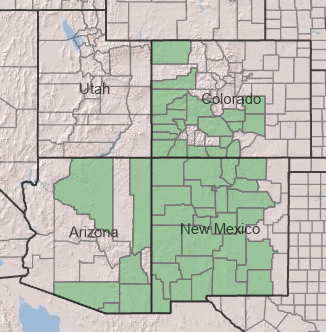
General Distribution

Figure 2—Distribution of kingcup cactus.
States and Provinces
- United States: AZ, CO, NM [54]
- Mexico: Chihuahua, Sonora [39]
Site Characteristics
Kingcup cactus grows on mesas, ridges, and hills and in canyons and woodlands [2,23,49]. It commonly grows in dry rock crevices [8], but it is also a component of floodplain vegetation near the Mimbres River in southwestern New Mexico [3]. Kingcup cactus typically grows on rocky or gravelly soils at low to midelevations. Its overall elevational range is from 500 [43] to 8,000 feet (150-2,400 m) [2,32,49]. In pine-oak woodlands, it generally occurs from 4,000 to 6,000 feet (1,200-1,800 m) [14]. Soil characteristics and elevation ranges where kingcup cacti grow are available for several national parks and monuments. In Grand Canyon National Park, kingcup cactus grew on sands derived from red sandstone, at 4,400 feet (1,340 m) [15]. In Canyon de Chelly National Monument, Arizona, it grew on talus derived from sandstone and conglomerate parent materials at 500 to 1,150 feet (150-350 m) elevation [43]. In White Sands National Monument, New Mexico, a kingcup cactus grows on deep, silty, alkaline soils [16,28,30] derived from gypsum. Populations there grow above a shallow water table at 3,980 to 3,993 feet (1,210-1,217 m) elevation [30,40], mostly on flats between large, slow-moving dunes [30].
Kingcup cactus favors warm sites [1,32]. In the Three Bar Wildlife Area on the Tonto National Forest, Arizona. it occurred on southeast- and southwest-facing slopes at 15% frequency and on northwest- and northeast-facing slopes at 4% frequency (n = 1,021 plots of 23.6-foot (7.2-m) diameter). Elevation was 2,000 to 2,350 feet (600-710 m) [32].
Plant Communities
Kingcup cactus is a minor to common species in shrublands [14,27], pine-oak [36,56], and conifer woodlands [14,27]}, and it may finger into desert grasslands at low elevations [28]. In Arizona, it occurs in interior chaparral, interior chaparral-oak-pine transitional [14,27], pine-oak [14,27,36], pinyon-juniper [27,36,43], and pine woodland [14] communities. Interior chaparral with kingcup cactus is often dominated by littleleaf mountain-mahogany, pointleaf manzanita, and redberry buckthorn [14,27]. In paloverde-cactus associations of the Southwest, kingcup cactus occurs in the understories of small, scattered blue paloverde, yellow paloverde, and/or Jerusalem thorn shrubs. Mesquite and pricklypear may also be present [34]. In the lower Grand Canyon of Arizona, kingcup cactus was noted in a creosote bush-burrobush community on a scarp wash near a spring [55].
In pinyon-juniper woodlands, kingcup cactus is most often associated with twoneedle pinyon and Utah juniper [15,19,21,43]. In Canyon de Chelly National Monument, Arizona, for example, it grows in the understories of twoneedle pinyon-Utah juniper/big sagebrush [19] and Utah juniper/littleleaf mountain-mahogany/James' galleta-New Mexico muhly woodlands. A 1976 survey found kingcup cactus was rare (3% frequency on 100 ~1 m2 quadrats) in the latter woodland [43]. In Tsegi Canyon, Arizona, kingcup cactus grows in twoneedle pinyon-Utah juniper woodlands with green ephedra, rubber rabbitbrush, blue grama, and plains pricklypear [21].
Kingcup cactus is a component of pygmy conifer-oak scrub communities dominated by shrubby pinyon, juniper, and oak species [36,56]. In the Santa Catalina Mountains of Arizona, kingcup cactus grows at midelevations (6,000 to 7,000 feet (1,830-2,130 m)) in relatively open Mexican pinyon-Arizona oak-Emory oak/pointleaf manzanita scrub and more closed Mexican pinyon-Arizona white oak/pointleaf manzanita and Chihuahuan pine-silverleaf oak/sacahuista woodlands. Its greatest density was in Mexican pinyon-silverleaf oak communities (mean = 196 kingcup cactus plants/ha) [36]. In the Mule Mountains of southeastern Arizona, kingcup cactus grows in pygmy Mexican pinyon-alligator juniper-Emory oak-Arizona white oak scrub. The understory is composed of broadleaf sclerophyll shrubs including pointleaf manzanita, Toumey oak, and Wright's silktassel. The ground layer is composed of grasses typical of desert grasslands, including bullgrass, pinyon ricegrass, and sideoats grama [56].
Kingcup cactus is common in understories of ponderosa pine-oak and mixed ponderosa pine-Chihuahuan pine-oak woodlands of the Southwest. Emory oak, Mexican blue oak, netleaf oak, silverleaf oak, and/or Arizona madrone are common in these pine-dominated woodlands [14,27]. Kingcup cactus also occurs in Arizona pine and Apache pine woodlands [14].
At White Sands National Monument, kingcup cactus occurred in fourwing saltbush-alkali sacaton desert grasslands with soaptree yucca and sandhill muhly [28].
Kingcup cactus is not listed as a dominant or indicator species in vegetation classifications. See table A2 for lists of vegetation classifications in which it occurs.

Figure 3—Kingcup cactus mound growing beneath an oak on the Mogollon Rim of the Coconino National Forest, Arizona.
Botanical Description
This description covers characteristics that may be relevant to fire ecology and is not meant for identification. Keys for identification are available (e.g., [2,16,24,54]). Kingcup cactus is a succulent, with stems occurring singly or in clusters. It is a barrel cactus; stems are cylindrical with one joint. Stems are 2 to 12 inches (5-30 cm) tall and 1 to 6 inches (2.5-15 cm) in diameter [2,24]. Offshoot clone stems arise from parent plants [15,40], forming clusters or mounds of typically <50 (but up to 200) stems that may reach 1 foot (0.3 m) tall and 1 to 5 feet (0.3-1.5 m) in diameter [2,24]. At White Sands National Monument, most mounds (n = 48) were around 1.3 feet (0.4 m) in diameter, but one was 5 feet (1.5 m) in diameter [30]. Stems tend to become decumbent with age [28,30,40].
Kingcup cactus has 8 to 12 spines per areole, with central spines difficult to distinguish from radial spines. Spines are straight and long [16] (see fig. 1). The flowers and fruits are red; the fruits have deciduous spines and are juicy at maturity [2,24,27]. Seeds are tiny: from 0.03 to 0.08 inch (0.8-2.0 mm) wide [16]. The roots are mostly fibrous, with a few long horizontal roots. At White Sands National Monument on a site with a high water table, horizontal roots extended 6.5 feet (2 m) from clusters, and vertical roots grew up to 1.3 feet (0.4 m) deep. Some fibrous roots grew up to the soil surface, and in some cases, were exposed [28].
Little information was available on kingcup cactus's age class structure. In a survey in White Sands National Monument, midsized kingcup cactus clusters (1.3-ft (0.4 m) diameter) were most common (n = 40 clusters). Small clusters (≤1.3 ft diameter) were also common (n = 37 clusters), while clusters in the largest size class (2-ft (0.6 m) diameter) were rare (n = 2 clusters) [40].
Raunkiaer Life Form
- Stem succulent [38]
Seasonal Development
Kingcup cactus is diurnal or day-flowering [18]. Flowers reopen each morning, with individual flowers persisting for 2 to 3 days [2,16,24,27]. Flowering season differs with latitude. Kingcup cactus generally flowers from April to June [2,24,42]. It flowers from June to July at ≥5,900 feet (1,800 m) elevation in the White Mountains of east-central Arizona. At low elevations, it is one of the earliest hummingbird food plants to flower [6].
Regeneration Processes
Regeneration is apparently episodic for kingcup cactus, with establishment occurring during consecutive years of above-average summer rainfalls [30].
Pollination and Breeding System
Hummingbirds [6,13,18] and bees [20] pollinate kingcup cactus. Unlike many Echinocereus, the tube of kingcup cactus of flowers are not specialized for hummingbird pollination only [6]. In the White Mountains of Arizona, broad-tailed and rufous hummingbirds were observed feeding on kingcup cactus nectar [6].
Herbaria specimens and field observations show that kingcup cactus is hermaphroditic [20].
Fruit Production and Seed Dispersal
Fruits and flowers are produced on mature plants. At White Sands National Monument, only kingcup cacti over 6 inches (16 cm) tall produced flowers [30]. Rodents and lagomorphs feed on the fruits, thereby dispersing seeds [30]. Loss of fruits may be substantial in some areas or some years. Heavy herbivory of kingcup cactus fruits was noted at White Sands National Monument [29,30]. The herbivores included black-tailed jackrabbits, desert cottontails, and possibly, woodrats [30].
Wind, small mammals, and ants disperse the seeds [30]. Studies of a kingcup cactus population at White Sands National Monument showed a pattern of seed dispersal and seedling establishment from "a few very old plants". Both seeds and seedlings were noted on ant mounds [29].
Seed Banking
No entry.
Seedling Establishment and Growth
Light shade and/or protection from herbivores may favor kingcup cactus establishment and growth; seedlings are vulnerable to desiccation [30]. At White Sands National Monument, its establishment was apparently facilitated by fourwing saltbush; most kingcup cactus seedlings were growing beneath fourwing saltbush [28,29,30] or Fremont cottonwood [30] canopies. Plants beneath fourwing saltbush established in moss, which provided a favorable seedbed [30]. Reid et al. [30,40] report that seedling mortality is high for kingcup cactus. Nine of 17 kingcup cactus seedlings died over 3 years at White Sands National Monument. Surviving individuals grew at an average rate 15% per year. The authors estimated that it would take about 14 years for a seedling to grow from 0.4 inch (1 cm) to 16 inches (40 cm) long, with maximum size attained at about 15 years of age [30].
One study showed long-term growth of kingcup cactus at the population level; otherwise, information on kingcup cactus growth was lacking. A set of replicated photographs taken about 100 years apart in the Grand Canyon, Arizona, showed a 71.4% increase in population size (number of clone clusters) from 1889-1890 and 1994. Five persistent clones were present in both 1889-1890 and 1994; six were present in 1994 [4].
Vegetative Reproduction and Regeneration
Echinocereus species clones from stem offshoots from the parent stem [45,51,53] and from fallen stem fragments [2].
Successional Status
Kingcup cactus grows on open sites [32,36] but tolerates light shade [1,28,30]. At White Sands National Monument, it grows in "stable areas" and old fields. It is concentrated in areas with abandoned ranch facilities [29,30], including an old road, suggesting occurrence on both disturbed and stable soils. No further information was available on succession of kingcup cactus as of 2018.
Immediate Fire Effects
Specific information concerning the effect of fire on kingcup cactus was not available in the literature as of 2018. Effects of fire on kingcup cactus likely vary with fuel loads and plant growth form. In general, the stems of small, succulent cacti are easily damaged by fire [51]. Single-stemmed individuals are probably killed due to their small size and lack of insulation from surrounding stems. When kingcup cactus forms compact mounds, interior stems may be protected by outer stems and survive fire. Kingcup cactus growing in rocky refugia or other areas with sparse fuels likely escape most fires [50]. In general, succulent cacti such as kingcup cactus rarely burn. Stems scorch and blister without pyrolysis, which may leave undamaged parts of the plant alive. However, when cacti with dense spines—such as kingcup cactus (see fig. 1)—are singed, the spines may ignite and singe growing-tip tissues (apical meristems). If the apical meristem is undamaged, the cactus may survive fire and resume growth. Apex survival is critical for small cacti because postfire growth from other meristems (above or below ground) is rare [31,50].
Delayed mortality may occur months or even years after fire [50] (see Plant response to fire), so it may take several years to assess postfire mortality of cacti. Cacti sometimes appear completely scorched with no green tissue visible, yet remain alive at the apical meristem [50]. Scorched or charred stems that appear dead may take several years to sprout [31].
Secondary postfire morality of Echinocereus species can result when fire burns off the spines. Postfire freezing may occur because spines affect airflow, heat conduction and convection, and short-wave light absorbance in cacti [26]. Removal of the spines by fire may increase subsequent herbivory from browsing mammals [11,47] and insects [7], resulting in slow recovery time or plant death [50].
Little information was available about effects of fire on kingcup cactus seeds as of 2018. In a greenhouse study, kingcup cactus seeds showed heat resistance typical for "many xerophytic shrubs". Seeds remained viable after exposure to heat for 1 minute at 570 °F (300 °C) and after exposure to heat for 3 minutes at 200 °F (100 °C) [53].
Postfire Regeneration Strategy
- Herbaceous sprouter, growing points in apical meristems
- Seed banking ability is unknown [48]
Fire Adaptations
Specific information on adaptations for kingcup cactus survival was not available in the literature as of 2018. Succulent cacti in general are poorly adapted to fire [51].
Information on the ability of Echinocereus species seeds to survive fire was very limited. Pinkflower hedgehog cactus apparently established from soil-stored seeds after a stand-replacing wildfire on the Lincoln National Forest in 1992 [46]. Kingcup cacti in refugia likely provide seeds that may spread onto adjacent burned areas.
Plant Response to Fire
No specific information was available on kingcup cactus response to fire. Fallen stem fragments [2] of small cacti may sprout after fire. Responses of other cacti in the Echinocereus genus may give insight to postfire response of kingcup cactus.
Limited studies show a pattern of high mortality of Echinocereus species from fire. In a survey at postfire year 7, only 2 of 20 Fendler's hedgehog cacti had survived a wildfire in a twoneedle pinyon-Utah juniper/Pinchot's juniper woodland in New Mexico [45]. In the Mojave Desert near Palm Springs, California, scattered Engelmann's hedgehog cactus individuals sprouted after a wildfire, but sprouting individuals were "surrounded by numerous skeletons of dead" Engelmann's hedgehog cacti [5]. Surveys of multiple burns in southern Arizona found mortality of Engelmann's hedgehog cactus averaged 82% on burned sites and 46% on adjacent unburned sites [53]. One year after an October wildfire in a Texas shortgrass prairie, mortality of nylon hedgehog cactus was higher on burned than on unburned plots (91% vs. 19%, respectively), and surviving plants on burned plots were shorter and smaller in diameter (P < 0.001) [41].
One study reported neutral effect of fire to an Echinocereus species. In desert grasslands of south-central New Mexico, density of Fendler's hedgehog cactus was similar on burned and unburned sites 1 year after a spring prescribed fire. Flowering responses and fruit production were also similar on burned and unburned sites (P < 0.05) [31].
Light fuel loads likely improve chances of kingcup cactus survival, similar to that of other species of hedgehog cacti. Simulated grassland fires in potted cacti found mortality of bundle hedgehog cactus and pinkflower hedgehog cactus varied with fuel load and fuel depth (i.e., amount of grass litter). Potted cacti were burned at 5 fuel loads ranging from 100 to 1,600 g/m² with three replicates for each species. No fire mortality occurred with a fuel load of <800 g/m², but two of three plants of each species died with a fuel load of 800 g/m². All three hedgehog cactus plants of each species died with a fuel load of 1,600 g/m² [53].
Limited information suggests delayed mortality in burned Echinocereus plants. In the Sonoran Desert of Arizona, very few bundle hedgehog cactus survived a wildfire in a burrobush-blue paloverde grassland. Mean density of bundle hedgehog cactus was 14 plants/acre (35/ha) in postfire year 1 and 8 plants/acre (20/ha) in postfire year 2. Mean density in an adjacent unburned site was much higher, at 84 plants/acre (205/ha) (P < 0.05). Overall mortality of burned bundle hedgehog cactus averaged 88% in postfire year 2. Three percent of the burned plants were only top-killed and sprouted by postfire year 2. Nine percent of the plants escaped the fire [33]. In mixed-grass little bluestem-buffalograss prairie in Callahan County, Texas, spring prescribed fire "severely damaged" lace hedgehog cactus. Mortality averaged 17% in postfire year 1 and 94% by postfire year 3. Most surviving plants were in areas with low prefire fuel loads (<890 lb/acre (1,000 kg/ha)) [7]. This study did not use control plots, so comparison with mortality on unburned sites is impossible. However in an Arizona desert grassland, Thomas [52] found mortality of rainbow cactus increased from the time of an initial postfire survey and a survey in postfire year 1 (P < 0.001). By postfire year 2, mean mortality was 10.2 times greater on burned plots compared to unburned plots [52].
Fuels
There are few fuels in the rocky crevices in which kingcup cactus often grows [8]; hence, probability of fire is low on such sites [51]. Information on fuel loads on other sites with kingcup cactus was lacking.
Fire Regimes
Kingcup cactus grows in plant communities with a full range of fire regimes, including mostly stand-replacement fire (grasslands and shrublands), mixed-severity fire (pinyon-juniper woodlands), and low-severity surface fires (pine woodlands).
For fire regime information, search FEIS for this species by entering the species name on the Advanced Search page and selecting “Fire Regime” as the publication type.
Fire Management Considerations
As of 2018, no information was available on managing kingcup cactus populations with fire or considerations for kingcup cactus management when prescribed fires are planned in plant communities where it occurs.
Federal Status
None
Other Status
NatureServe [35] rates kingcup cactus as G5: secure. Kingcup cactus is listed as protected in Arizona. This protection includes whole plants and plant parts, including the stems, fruits, and seeds. Plant species with protection status are deemed in jeopardy or in danger of extinction in the state [37].
Importance to Wildlife and Livestock
Small mammals use kingcup cactus for food and shelter.
Palatability and Nutritional Value
Spines render kingcup cactus unpalatable to browsing animals. Mule deer avoided it as forage in jojoba thornscrub on the Three Bar Wildlife Area of south-central Arizona [32] and in twoneedle pinyon-Utah juniper woodlands of New Mexico [22]. However, succulent cacti such as kingcup cactus may be heavily grazed after fire burns off the spines.
Cover Value
Rodents occasionally den beneath kingcup cactus; this sometimes results in plant death due to severed roots [29,30]. Kingcup cactus likely provides protection against predators such as coyotes and foxes. At White Sands National Monument, small rodents used kingcup cactus for cover, but lagomorphs did not [30].
Ants build nests beneath kingcup cactus. Fungi associated with the ants may infect the roots, eventually killing the plants [30].
Value for Rehabilitation or Restoration of Disturbed Sites
No information was available on this topic.
Other Uses
The fruit of kingcup cactus is edible at maturity [2,9]. Echinocereus species reportedly have the most flavorful fruits of all cacti in the Southwest. America Indians of the Southwest traditionally removed the spines by burning, then ate the fruits raw and rendered the stems into a pulp used to make baked goods and candy [9].
Other Management Considerations
Kingcup cactus is threatened by disturbances such as mining, off-road vehicle use, illegal collecting, road and utility line construction [42], and campsite development. Kingcup cactus was not present in Grand Canyon National Park in 1984 or 1989 on desert campsites that received high use by backpackers. Its frequency was 2% and 3% in those years, respectively, on nearby control sites [10]. Establishment of kingcup cactus requires adequate precipitation during the first few years of growth [30]. Increasing temperatures and reduced precipitation may result in smaller populations.
| Common name | Scientific name |
| Cacti | |
| bundle hedgehog cactus | Echinocereus fasciculatus |
| Engelmann's hedgehog cactus | Echinocereus engelmannii |
| lace hedgehog cactus | Echinocereus reichenbachii |
| nylon hedgehog cactus | Echinocereus viridiflorus |
pinkflower hedgehog cactus
| Echinocereus fendleri
|
| plains pricklypear | Opuntia polyacantha |
| pricklypear | Opuntia spp. |
| rainbow cactus | Echinocereus pectinatus |
| Graminoids | |
| alkali sacaton | Sporobolus airoides |
| blue grama | Bouteloua gracilis |
| buffalograss | Bouteloua dactyloides |
| bullgrass | Muhlenbergia emersleyi |
| James' galleta | Pleuraphis jamesii |
| little bluestem | Schizachyrium scoparium |
| New Mexico muhly | Muhlenbergia pauciflora |
| pinyon ricegrass | Piptochaetium fimbriatum |
| sandhill muhly | Muhlenbergia pungens |
| sideoats grama | Bouteloua curtipendula |
| Shrubs | |
| burrobush | Ambrosia dumosa |
big sagebrush
| Artemisia tridentata
|
| creosote bush | Larrea tridentata |
| fourwing saltbush | Atriplex canescens |
| green ephedra | Ephedra viridis |
| Jerusalem thorn | Parkinsonia aculeata |
| jojoba | Simmondsia chinensis |
| littleleaf mountain-mahogany | Cercocarpus intricatus |
mesquite
| Prosopis spp.
|
| netleaf oak | Quercus reticulata |
| pointleaf manzanita | Arctostaphylos pungens |
| paloverde | Parkinsonia spp. |
| redberry buckthorn | Rhamnus crocea |
| rubber rabbitbrush | Ericameria nauseosa |
| sacahuista | Nolina microcarpa |
| soaptree yucca | Yucca elata |
| silverleaf oak | Quercus hypoleucoides |
| Toumey oak | Quercus toumeyi |
| Wright's silktassel | Garrya wrightii |
| yellow paloverde | Parkinsonia microphylla |
| Trees | |
| alligator juniper | Juniperus deppeana |
| Apache pine | Pinus engelmannii |
| Arizona madrone | Arbutus arizonica |
| Arizona pine | Pinus arizonica |
| Arizona white oak | Quercus arizonica |
| blue paloverde | Parkinsonia florida |
| Chihuahuan pine | Pinus leiophylla var. chihuahua |
| Emory oak | Quercus emoryi |
| Fremont cottonwood | Populus fremontii |
| Mexican blue oak | Quercus oblongifolia |
| Mexican pinyon | Pinus cembroides |
| oak | Quercus spp. |
| Pinchot's juniper | Juniperus pinchotii |
| pine | Pinus spp. |
| ponderosa pine | Pinus ponderosa var. scopulorum |
| twoneedle pinyon | Pinus edulis |
| Utah juniper | Juniperus osteosperma |
Table A2— Forest and range ecosystems, Bureau of Land Management (BLM) physiographic regions, Kuchler plant associations, Society for American Foresters (SAF) forest cover types, and Society for Rangeland Management (SRM) rangeland cover types in which this species occurs.
Forest and Range Ecosystems (Garrison et al. 1977 [17])
- FRES21 Ponderosa pine
- FRES29 Sagebrush
- FRES30 Desert shrub
- FRES33 Southwestern shrubsteppe
- FRES34 Chaparral-mountain shrub
- FRES35 Pinyon-juniper
- FRES40 Desert grasslands
BLM Physiographic Regions (Bernard and Brown 1977)
- No entry
Kuchler Plant Associations (Kuchler 1964 [25])
- K019 Arizona pine forest
- K023 Juniper-pinyon woodland
- K027 Mesquite bosque
- K031 Oak-juniper woodlands
- K032 Transition between K031 and K037
- K037 Mountain-mahogany - oak scrub
- K038 Great Basin sagebrush ok
- K041 Creosotebush
- K042 Creosotebush-bursage
- K043 Paloverde-cactus shrub
- K044 Creosotebush-tarbush
- K046 Desert: vegetation largely lacking
- K053 Grama-galleta steppe
- K058 Grama-tobosa shrubsteppe
- K065 Grama-buffalograss
- K086 Juniper-oak savanna
- K087 Mesquite-oak savanna
SAF Cover Types (Eyre 1980 [12])
- 68 Mesquite
- 242 Mesquite
- 237 Interior ponderosa pine
- 239 Pinyon-juniper
- 241 Western live oak
- 242 Mesquite
SRM Rangeland Cover Types (Shiflet 1994 [44])
- 402 Mountain big sagebrush
- 403 Wyoming big sagebrush
- 412 Juniper-pinyon
- 413 Gambel oak
- 415 Curlleaf mountain-mahogany
- 416 True mountain-mahogany
- 417 Littleleaf mountain-mahogany
- 503 Arizona chaparral
- 504 Juniper-pinyon pine
- 506 Creosotebush-bursage
- 507 Palo verde-cactus
- 508 Creosotebush-tarbush
- 509 Transition between oak-juniper woodland and mountain-mahogany association
- 735 Sideoats grama-sumac-juniper
1. Arp, Gerald. 1973. Studies in the Colorado cacti V. The spineless hedgehog. Cactus & Succulent Journal. 45(3): 132-133. [22640]
2. Benson, Lyman. 1982. The cacti of the United States and Canada. Stanford, CA: Stanford University Press. 1044 p. [1513]
3. Boles, Patrick H.; Dick-Peddie, William A. 1983. Woody riparian vegetation patterns on a segment of the Mimbres River in southwestern New Mexico. The Southwestern Naturalist. 28(1): 81-87. [65317]
4. Bowers, Janice E.; Webb, Robert H.; Rondeau, Renee J. 1995. Longevity, recruitment and mortality of desert plants in Grand Canyon, Arizona, USA. Journal of Vegetation Science. 6(4): 551-564. [42371]
5. Brown, David E.; Minnich, Richard A. 1986. Fire and changes in creosote bush scrub of the western Sonoran Desert, California. The American Midland Naturalist. 116(2): 411-422. [537]
6. Brown, James H.; Kodric-Brown, Astrid. 1978. Convergence, competition, and mimicry in a temperate community of hummingbird-pollinated flowers. Ecology. 60(5): 1022-1035. [93021]
7. Bunting, Stephen C.; Wright, Henry A.; Neuenschwander, Leon F. 1980. Long-term effects of fire on cactus in the southern mixed prairie of Texas. Journal of Range Management. 33(2): 85-88. [4271]
8. Butterwick, Mary; Parfitt, Bruce D.; Hillyard, Deborah. 1992. Vascular plants of the northern Hualapai Mountains, Arizona. Journal of the Arizona-Nevada Academy of Science. 24-25: 31-49. [18327]
9. Castetter, Edward F. 1935. Ethnobiological studies in the American Southwest. I. Uncultivated native plants used as sources of food. Biological Series No. 4: Volume 1. Albuquerque, NM: University of New Mexico. 62 p. [35938]
10. Cole, David N.; Hall, Troy E. 1992. Trends in campsite condition: Eagle Cap Wilderness, Bob Marshall Wilderness, and Grand Canyon National Park. Res. Pap. INT-453. Ogden, UT: U.S. Department of Agriculture, Forest Service, Intermountain Research Station. 40 p. [17764]
11. Courtney, Rick F. 1989. Pronghorn use of recently burned mixed prairie in Alberta. The Journal of Wildlife Management. 53(2): 302-305. [6701]
12. Eyre, F. H., ed. 1980. Forest cover types of the United States and Canada. Washington, DC: Society of American Foresters. 148 p. [905]
13. Ferguson, David J. 1989. Revision of the U.S. members of the Echinocereus triglochidiatus group. Cactus & Succulent Journal. 61: 217-224. [22641]
14. Ffolliott, Peter. 1980. Western live oak. In: Eyre, F. H., ed. Forest cover types of the United States and Canada. Washington, DC: Society of American Foresters: 118. [50053]
15. Fischer, Pierre C. 1991. Echinocereus triglochidiatus variety toroweapensis: A new variety from the Grand Canyon. Cactus and Succulent Journal. 63(4): 194-195. [22639]
16. Flora of North America Editorial Committee, eds. 2018. Flora of North America north of Mexico, [Online]. Flora of North America Association (Producer). Available: http://www.efloras.org/flora_page.aspx?flora_id=1. [36990]
17. Garrison, George A.; Bjugstad, Ardell J.; Duncan, Don A.; Lewis, Mont E.; Smith, Dixie R. 1977. Vegetation and environmental features of forest and range ecosystems. Agric. Handb. 475. Washington, DC: U.S. Department of Agriculture, Forest Service. 68 p. [998]
18. Grant, Verne; Grant, Karen A. 1979. Pollination of Echinocereus fasciculatus and Ferocactus wislizenii. Plant Systematics and Evolution. 132: 85-90. [25663]
19. Harlan, Annita; Dennis, Arthur E. 1976. A preliminary plant geography of Canyon de Chelly National Monument. Journal of the Arizona Academy of Science. 11(2): 69-78. [75981]
20. Hoffman, M. Timm. 1992. Functional dioecy in Echinocereus coccineus (Cactaceae): Breeding system, sex ratios, and geographic range of floral dimorphism. American Journal of Botany. 79(12): 1382-1388. [20080]
21. Holiday, Susan. 2000. A floristic study of Tsegi Canyon, Arizona. Madrono. 47(1): 29-42. [38998]
22. Hunt, Duston Lamar, Jr. 1978. Diet and habitat utilization of tame mule deer in a pinyon-juniper woodland. Las Cruces, NM: New Mexico State University. 82 p. Thesis. [85057]
23. Jameson, Donald A.; Williams, John A.; Wilton, Eugene W. 1962. Vegetation and soils of Fishtail Mesa, Arizona. Ecology. 43(3): 403-410. [28916]
24. Kearney, Thomas H.; Peebles, Robert H.; Howell, John Thomas; McClintock, Elizabeth. 1960. Arizona flora. 2nd ed. Berkeley, CA: University of California Press. 1085 p. [6563]
25. Kuchler, A. W. 1964. Manual to accompany the map of potential vegetation of the conterminous United States. Special Publication No. 36. New York: American Geographical Society. 166 p. [1384]
26. Lewis, Donald A.; Nobel, Park S. 1997. Thermal energy exchange model and water loss of a barrel cactus, Ferocactus acanthodes. Plant Physiology. 60: 609-612. [72695]
27. Lowe, Charles H. 1964. Arizona's natural environment: Landscapes and habitats. Tucson, AZ: The University of Arizona Press. 136 p. [20736]
28. Lozano, Rogelio. 1979. The distribution and ecology of two Echinocereus triglochidiatus populations in White Sands National Monument, New Mexico. El Paso, TX: University of Texas. 68 p. Thesis. [93031]
29. Lozano, Rogelio; Reid, William. 1980. Life history of Echinocereus triglochidiatus at White Sands National Monument. Arizona-Nevada Academy of Science Journal, Proceedings Supplement. 15: 13-14. [22983]
30. Lozano, Rogelio; Reid, William. 1982. Claret cup cactus at White Sands National Monument. Cactus & Succulent Journal. 54: 196-201. [93155]
31. May, Benjamin C. 2006. The effects of fire on Kuenzler's hedgehog cactus. Lubbock, TX: Texas Tech University. 81 p. Thesis. [70951]
32. McCulloch, Clay Y. 1973. Part I: Seasonal diets of mule and white-tailed deer. In: Deer nutrition in Arizona chaparral and desert habitats. Special Report No. 3: Federal Aid in Wildlife Restoration Act Project W-78-R. Phoenix, AZ: Arizona Game and Fish Department, Research Division: 1-37. In cooperation with: U.S. Department of Agriculture, Forest Service, Rocky Mountain Forest and Range Experiment Station. [9894]
33. McLaughlin, Steven P.; Bowers, Janice E. 1982. Effects of wildfire on a Sonoran Desert plant community. Ecology. 63(1): 246-248. [1619]
34. Morton, Howard L. 1994. SRM 507: Palo verde - cactus. In: Shiflet, Thomas N., ed. Rangeland cover types of the United States. Denver, CO: Society for Range Management: 66-67. [67047]
35. NatureServe. 2018. NatureServe Explorer: An online encyclopedia of life, [Online]. Version 7.1. Arlington, VA: NatureServe (Producer). Available: http://www.natureserve.org/explorer. [69873]
36. Niering, William A.; Lowe, Charles H. 1984. Vegetation of the Santa Catalina Mountains: Community types and dynamics. Vegetatio. 58: 3-28. [12037]
37. Northern Arizona State University. 2018. Protected native Arizona plants, Arizona statute: Highly safeguarded protected native plants, [Online]. Flagstaff, AZ: Northern Arizona University (Producer). Available: http://jan.ucc.nau.edu/~plants-c/endspec5.htm. [93020]
38. Raunkiaer, C. 1934. The life forms of plants and statistical plant geography. Oxford, England: Clarendon Press. 632 p. [2843]
39. Red de Herbarios del Noroeste de Mexico. 2018. Red de Herbarios del Noroeste de Mexico, [Online]. Hermosillo, Sonora, Mexico: University of Sonora (Producer). Available: http://herbanwmex.net/portal/index.php. [93095]
40. Reid, William; Lozano, Rogelio; Odom, Ross. 1983. Non-equilibrium population structure in three Chihuahuan Desert cacti. The Southwestern Naturalist. 28(1): 115-117. [93025]
41. Rideout-Hanzak, Sandra; Wester, David B. Perry, Gad; Britton, Carlton M. 2009. Echinocereus viridiflorus var. viridiflorus mortality in shortgrass plains of Texas: Observations following wildfire and drought. Haseltonia. 15(12): 102-107. [93026]
42. Rutman, Sue, comp. 1992. Handbook of Arizona's endangered, threatened, and candidate plants. Summer 1992. [Phoenix, AZ]: [U.S. Fish and Wildlife Service]. 57 p. On file with: U.S. Department of Agriculture, Forest Service, Rocky Mountain Research Station, Fire Sciences Laboratory, Missoula, MT; FEIS files. [20963]
43. Schmutz, Ervin M.; Dennis, Arthur E.; Harlan, Annita; Hendricks, David; Zauderer, Jeffrey. 1976. An ecological survey of Wide Rock Butte in Canyon de Chelly National Monument, Arizona. Journal of the Arizona Academy of Science. 11(3): 114-125. [75978]
44. Shiflet, Thomas N., ed. 1994. Rangeland cover types of the United States. Denver, CO: Society for Range Management. 152 p. [23362]
45. Sivinski, Robert C. 2007. Effects of a natural fire on a Kuenzler's hedgehog cactus (Echinocereus fendleri var. kuenzleri) and nylon hedgehog cactus (Echinocereus viridiflorus) population in southeastern New Mexico. In: Barlow-Irick, P.; Anderson, J.; McDonald, C., eds. Southwestern rare and endangered plants: Proceedings of the fourth conference. RMRS-P-48CD. 2004 March 22-26; Las Cruces, NM. Fort Collins, CO: U.S. Department of Agriculture, Forest Service, Rocky Mountain Research Station: 93-97. [93028]
46. Sivinski, Robert C. 2007. Effects of a natural fire on a Kuenzler's hedgehog cactus (Echinocereus fendleri var. kuenzleri) and nylon hedgehog cactus (Echinocereus viridiflorus) population in southeastern New Mexico. In: Barlow-Irick, P.; Anderson, J.; McDonald, C., tech. eds. Southwestern rare and endangered plants: Proceedings, 4th conference; 2004, March 22-26; Las Cruces, NM. RMRS-P-48CD. Fort Collins, CO: U.S. Department of Agriculture, Forest Service, Rocky Mountain Research Station: 93-97. [70936]
47. Stelfox, John G.; Vriend, Harold G. 1977. Prairie fires and pronghorn use of cactus. Canadian Field-Naturalist. 91: 282-285. [5179]
48. Stickney, Peter F. 1989. Seral origin of species comprising secondary plant succession in northern Rocky Mountain forests. FEIS workshop: Postfire regeneration. Unpublished draft on file at: U.S. Department of Agriculture, Forest Service, Rocky Mountain Research Station, Fire Sciences Laboratory, Missoula, MT. 10 p. [20090]
49. Taylor, Nigel P. 1985. The genus Echinocereus. Kew Magazine Monograph. Middlesex, England: Collingridge Books. 160 p. In association with The Royal Botanical Gardens, Kew. [22638]
50. Thomas, P. A. 1991. Response of succulents to fire: A review. International Journal of Wildland Fire. 1(1): 11-22. [14991]
51. Thomas, P. A. 1997. Fire and the conservation of succulents in grasslands. In: Greenlee, Jason M., ed. Proceedings, 1st conference on fire effects on rare and endangered species and habitats; 1995 November 13-16; Coeur d'Alene, ID. Fairfield, WA: International Association of Wildland Fire: 173-178. [28134]
52. Thomas, P. A. 2006. Mortality over 16 years of cacti in a burnt desert grassland. Plant Ecology. 183: 9-17. [62622]
53. Thomas, P. A.; Goodson, P. 1992. Conservation of succulents in desert grasslands managed by fire. Biological Conservation. 60(2): 91-100. [19894]
54. USDA, NRCS. 2018. The PLANTS Database, [Online]. U.S. Department of Agriculture, Natural Resources Conservation Service, National Plant Data Team, Greensboro, NC (Producer). Available: https://plants.usda.gov/. [34262]
55. van Devender, Thomas R.; Mead, James I. 1976. Late Pleistocene and modern plant communities of Shinumo Creek and Peach Springs Wash, lower Grand Canyon, Arizona. Journal of the Arizona Academy of Science. 11: 16-22. [84117]
56. Wentworth, Thomas R. 1982. Vegetation and flora of the Mule Mountains, Cochise County, Arizona. Journal of the Arizona-Nevada Academy of Science. 17(2/3): 29-44. [82638]