


Fremontodendron decumbens, Pine Hill flannelbush
Abrahamson, Ilana L. 2022. Fremontodendron decumbens, Pine Hill flannelbush. In: Fire Effects Information System, [Online]. U.S. Department of Agriculture, Forest Service, Rocky Mountain Research Station, Missoula Fire Sciences Laboratory (Producer). Available: https://research.fs.usda.gov/feis/species-reviews/fredec
| Abbreviation | Common Name | Scientific Name | Classification | Status |
|---|---|---|---|---|
| Plants | ||||
| FREDEC | Pine Hill flannelbush | Fremontodendron decumbens | Life Form: Plants/Shrub Kingdom: Plantae Class: Dicot Order: Malvales Family: Malvaceae Genus: Fremontodendron | Fed. Protected: Yes Nativity: Native Invasiveness: Noninvasive |
Pine Hill flannelbush is a decumbent, evergreen shrub with branches that spread horizontally, making the plant much wider than tall. It is a federally listed endangered species endemic to California. It occurs only on Pine Hill in El Dorado County, where it primarily grows in xeric chaparral stands and woodland borders on gabbro outcrops and relatively rocky ridgetops.
Pine Hill flannelbush spreads vegetatively via root sprouts and from seed dispersal. Regeneration from seeds is limited however, because of low seed production, high postdispersal seed predation, and lack of fire to stimulate germination. Seed production is limited by insects that kill flower buds, flowers, and fruits. Pine Hill flannelbush seeds fall from capsules and are primarily dispersed by ants. Rodents and birds are important seed predators. Pine Hill flannelbush seeds are dormant, and germination rates are very low until the seed coat is broken mechanically or by heat. Seeds that are not predated can be long-lived in the soil seed bank; however, their density in the soil seed bank is low compared to that of dominant shrubs.
Pine Hill flannelbush is top-killed by fire, but plants resprout from the base of the crown and from roots. As of 2021, only one study assessed immediate fire effects to Pine Hill flannelbush and the response of Pine Hill flannelbush to fire. It found that while most plants were top-killed after an October prescribed fire, none died, and the fire stimulated resprouting. Seedlings established at much higher rates on burned than unburned sites, but most died within a year. Postfire seedling establishment is limited by herbivory and drought-caused mortality.
Main threats to Pine Hill flannelbush include development and long-term effects of fire exclusion. Other threats include road construction, pollution, and herbivory.

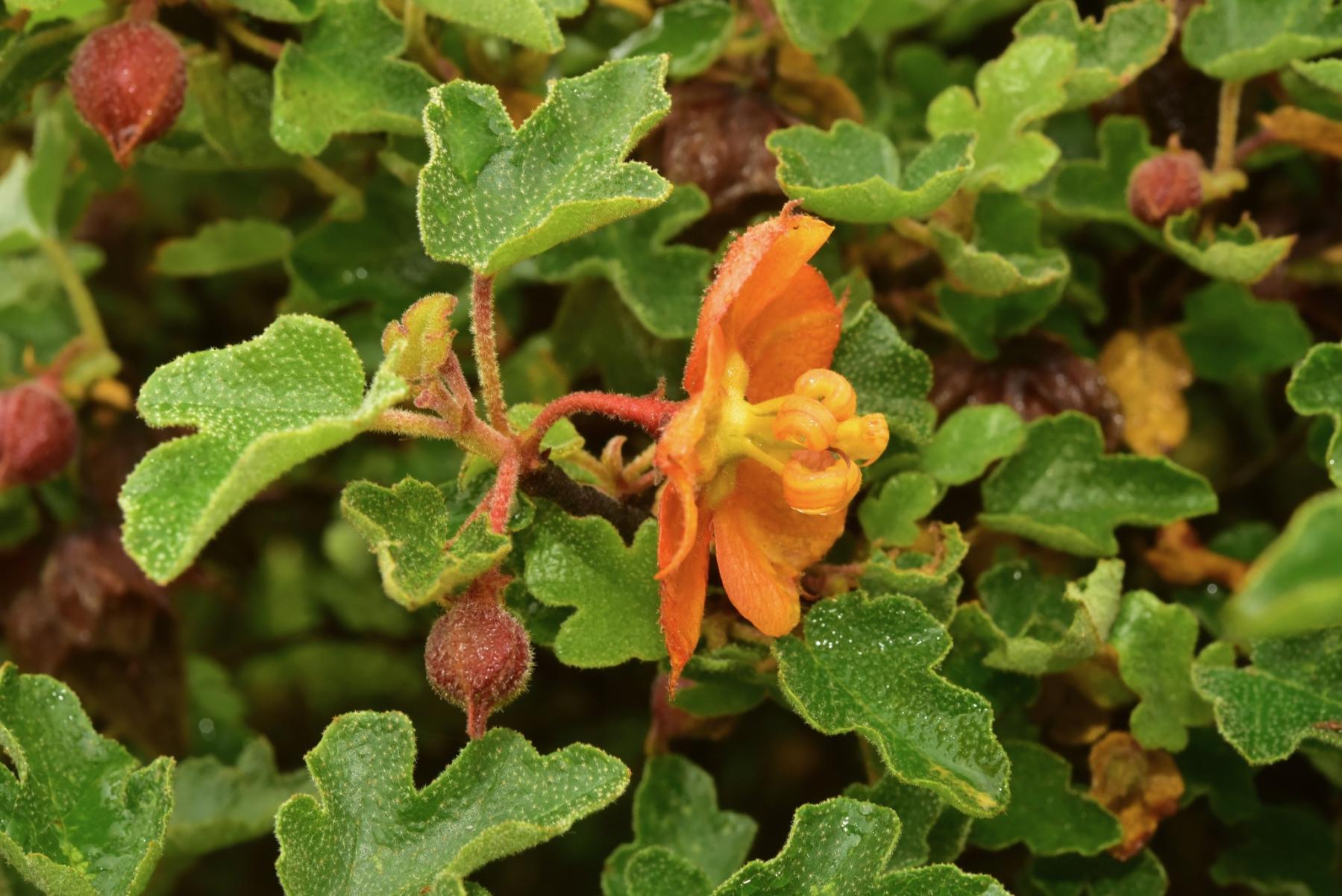
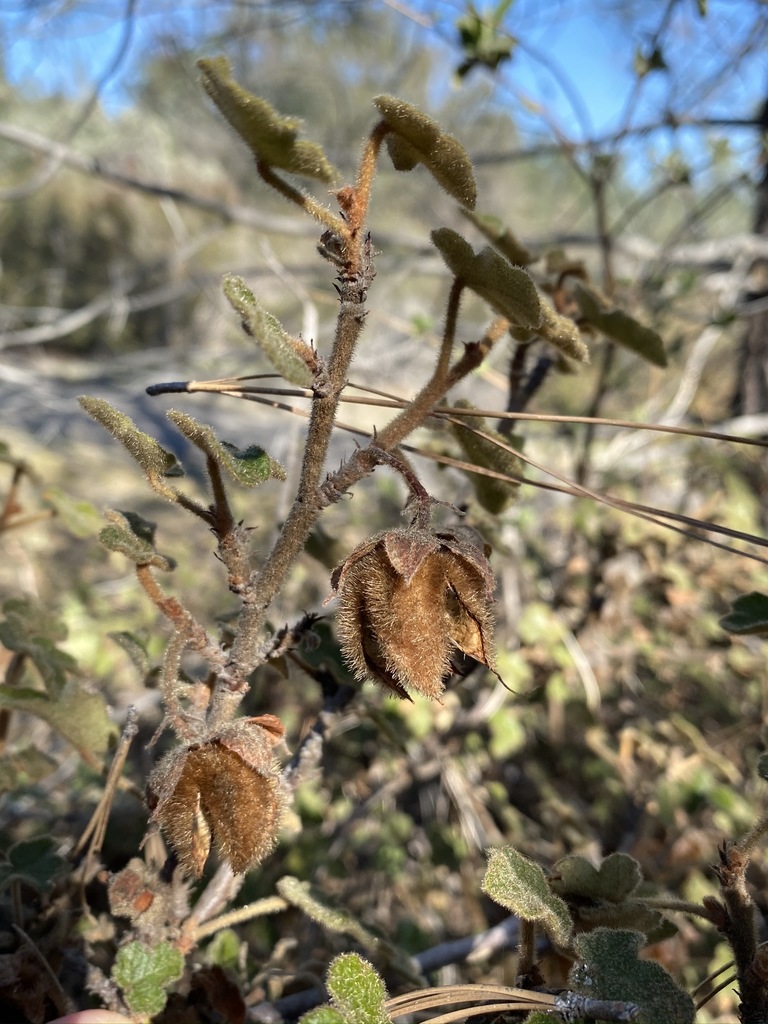

Pine Hill flannelbush.
Taxonomy
The scientific name of Pine Hill flannelbush is Fremontodendron decumbens R. M. Lloyd (Malvaceae) [1,11,13,20]. Pine Hill flannelbush is one of three species in its genus along with California flannelbush and Mexican flannelbush (F. californicum and F. mexicanum, respectively). Genetic and morphological relationships within the genus Fremondodendron are described in Kelman et al. (2006) and Kelman (1991) [15,16]. In this review the genus is referred to as flannelbush.
Pine Hill flannelbush is called Fremontodendron californicum subsp. decumbens by the California Native Plant Society and in some publications (e.g., [6,29]) and may be taxonomically indistinct from California flannelbush, even though it differs in growth form, flower color, and pedicel length [11]. Decumbent flannelbush plants in Yuba County may be historical hybrids between California flannelbush and Pine Hill Flannelbush [15].
Common names are used throughout this Species Review. For scientific names of plants mentioned in this review see table A1.
Synonyms
- Fremontodendron californicum subsp. decumbens [6,29]
Other Common Names
None
General Distribution

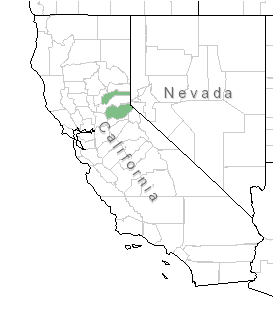
Figure 1—Distribution of Pine Hill flannelbush. The population mapped in Nevada County may be California flannelbush or an historical hybrid between Pine Hill flannelbush and California flannelbush [15].
Pine Hill flannelbush is endemic to California and occurs with certainty only on Pine Hill in El Dorado County, California [11,18]. A few occurrences are documented and mapped in Yuba and Nevada counties (e.g., [9,12,24]). However, decumbent flannelbush plants occurring in Yuba County and possibly Nevada County are genetically distinct from both Pine Hill flannelbush and California flannelbush and may be historical hybrids between the two [15]. Thus, some maps of Pine Hill flannelbush distribution, such as that from the PLANTS Database [24], may also include flannelbush populations that are not Pine Hill flannelbush (fig. 2). The distribution of Pine Hill flannelbush in El Dorado County covers less than 10 km2 [18].
States and Provinces
- United States: CA [24]
Site Characteristics
Pine Hill flannelbush occurs with certainty only in El Dorado County within a few kilometers of the summit of Pine Hill in the central Sierra Nevada foothills of California. Pine Hill is considered an “ecological island” [22] with rich floristic diversity and a high concentration of rare and endangered plants [29]. The summit of Pine Hill is 628 m high [7]. It has a mediterranean climate of hot, dry summers and cool, wet winters [29]. Precipitation is estimated at 760 to 860 mm/year, mostly occurring as rain between October and May (Rogers 1974 cited in [7]).
Pine Hill flannelbush grows on gabbro outcrops [1,11] and rocky ridgetops [3]. A study on the influence of environmental variables on plant distribution on Pine Hill found that Pine Hill flannelbush predominantly occurs in xeric chaparral communities on south-facing slopes that are associated with moderately deep, rocky soils derived from serpentine and gabbro parent materials [29]. It was also found on north-facing slopes [8], but this seems less common.
Plant Communities
Pine Hill flannelbush occurs in xeric chapparal [7,8,29] and in chaparral/pine woodlands [1,8,11], which is also described as oak woodland-chaparral-pine woodland [17]. It is scattered among other shrub species including the dominants chamise and sticky whiteleaf manzanita. Pine Hill flannelbush study sites have between 70% and 80% total cover with less than 5% cover comprised of Pine Hill flannelbush [2,3,7]. Associated tree species include gray pine and ponderosa pine [3,17] and California black oak and interior live oak [17]. Other plant communities on Pine Hill include open grasslands and oak woodlands [29].
Botanical Description

Figure 2—Pine Hill flannelbush flower and fruits.
This description covers characteristics that may be relevant to fire ecology and is not meant for identification. Identification keys (e.g., [1]) and detailed descriptions of the genus and the three flannelbush species [16] are available.
Pine Hill flannelbush is an evergreen shrub that is typically decumbent, growing up to 1.3 m tall and 5.5 m wide [1,11,16,17], but can grow up to 2 m tall in ‘undisturbed’ stands [7]. It branches from the base, and most of its branches are nearly horizontal making individuals much wider than tall [1,16]. Information on bark thickness is lacking. Its palmately-lobed leaves are soft to leathery and are about 1.7 to 6.4 cm long and 0.9 to 4.6 cm wide [1,16]. The orange or coppery-red flowers are comprised of sepals only (5) and are about 3 to 5 cm wide [1,16] (fig. 2). They are solitary and occur opposite a leaf [16]. Fruits (figs. 2 and 3) are ovoid-shaped capsules that are about 1.4 to 3.3 cm long [16]. Capsules are dehiscent [3]. Seeds are about 5 mm long, and each has an eliasome [3,7].
Raunkiaer Life Form
- Chamaephyte
- Geophyte [21]

Figure 3—Dried capsules of Pine Hill flannelbush.
Seasonal Development
Pine Hill flannelbush produces flower buds in late winter, and flowers open in early spring [1,3,7] through early [7] or mid- [1] summer. Flowers remain open for 3 days [2]. Capsules dehisce beginning in late June or early July and continue to early August or mid-September, depending on the year. Capsules mature (dry and open) faster during dry than wet years [3].
Regeneration Processes
Pine Hill flannelbush exhibits both sexual and asexual reproduction. Regeneration from seeds is limited, however, mainly due to lack of fire to break seed dormancy, predehiscence predation of seeds by insects, and postdehiscence predation of seeds by rodents. Regeneration from root sprouting is more prominent. In a study of Pine Hill flannelbush reproductive attrition on unburned sites, the authors conclude that “because asexual reproduction by root sprouting circumvents the high attrition of sexual reproductive effort on unburned sites, root sprouting may be a significant reproductive strategy” [7].
Vegetative Reproduction and Regeneration
Pine Hill flannelbush spreads vegetatively via root sprouts, and it resprouts from the “base of the dead crown” (presumably the root crown) after top-kill from fire and from cut stumps [3,7,8]. While root sprouting is stimulated by fire [8] (see Immediate Fire Effects and Plant Response to Fire), it may be the dominant reproductive strategy in the absence of fire [7]. On sites with no record of fire for at least 50 years but that were cut about 17 years prior to investigation, excavations of small shrubs indicated that they were root sprouts from nearby larger shrubs. These small shrubs were multistemmed at their base, whereas seedlings grew from a single crown. Dispersal of new ramets was limited to within 1 to 2 meters of the parent plant [7].
Pollination and Breeding System
Pine Hill flannelbush is pollinated by native solitary bees. Boyd (1994) found that 99% of >1,700 floral visits to Pine Hill flannelbush were made by an anthophorid bee species (89.4%) and a megachilid bee species (8.7%) [2]. These bees pollinated nearly every open flower. Hand-pollinating individual flowers did not increase the number of capsules compared to open-pollinated flowers; however, hand-pollinated flowers had almost twice the number of seeds/capsule as open-pollinated flowers, indicating that seed production was pollen limited “despite the apparent efficiency of bees in visiting and pollinating the great majority of flowers” [2].
Seed Production and Predation
No information was available about the age that Pine Hill flannelbush plants produce seeds; however, an unspecified flannelbush species produced its first seeds at 2 years old [19].
Pine Hill flannelbush seed production is limited by insects that kill flower buds, flowers, and fruits (i.e., capsules). Less than 2% of initiated flower buds became mature fruits on Pine Hill during 2 years. Plants produced abundant flower buds, but most (90% and 71%) were killed by insect larvae. Nevertheless, a typical shrub on this site had about 300 flowers in a single season. Flower mortality averaged 51%, with 75% caused by insects. Total fruit production (2.5 and 8.0 fruits/branch) varied between years, and seed production per fruit averaged 3.35 and 3.58 seeds/fruit. However, because most fruits failed to produce seeds (81% of the fruits died, with 87% caused by insects), seed production by branch averaged only 1.8 and 5.0 seeds/branch. During the first year, reproductive individuals averaged 32.6 fruits/plant and produced an estimated 96 or 99 seeds/plant, depending on estimation methods used. Fruits were classified as small or large, and two-thirds of small fruits lacked seeds. Small fruits averaged 0.68 seeds/fruit, while large fruits averaged 4.2 seeds/fruit [7]. Because insects reduce seed production, seed production can be increased with insecticide application. Seed production was 14 and 27 times greater in insecticide-treated plots than untreated control plots in two experiments that took place during 2 different years; however, these increases were counteracted by subsequent fruit predation by rodents. Fruit predation varied between the experiments and years. The author suggested that predation was especially high in the experiment that occurred during an El Niño-Southern Oscillation (ENSO) year because fruits matured at least 10 days later than in the experiment that occurred during a non-ENSO year, so rodents were more in need of food [5].
While rodents predate Pine Hill flannelbush fruits before seed dispersal [5], seeds are also predated by rodents and birds after they fall from capsules, with rodents being more important postdispersal predators. One study found that rodents removed an average of 3.3 out of 5 seeds placed in trays under Pine Hill flannelbush canopies per night and birds removed 0.42 of 5 seeds per day [7].
Initial postdispersal predation rates are high. However, seeds that escape initial postdispersal predation have a high probability of survival because they are long-lived, and because they become harder for seed predators to detect as they get worked down into the soil. Over 2 years, 91.5% and 89% of marked seeds manually added onto the litter (i.e., “newly added”) were removed by seed predators relative to seeds in plots that were protected by exclosures. While newly added seeds were also removed from plots with exclosures, significantly more were removed from unprotected, open plots than protected plots. On the other hand, seeds in the preexisting seed bank (i.e., unmarked, “naturally occurring” seeds) were less affected by seed predators. Seed predators did not remove more of these seeds from unprotected, open plots than plots protected by exclosures. The authors speculated that these “naturally occurring” seeds were comparatively safe from predators because the attractiveness and detectability of seeds decrease with age and/or seeds that were missed by predators get buried deeper into the litter and upper soil layer [7].
Seed Dispersal
Pine Hill flannelbush seeds fall from capsules (fig. 3) and are dispersed by ants. Seeds have elaiosomes, which are fatty appendages that may be eaten by ants without harming the seeds [3,14]. A study of Pine Hill flannelbush seed dispersal found that harvester ants carried elaiosome-bearing seeds from beneath parent plants to their nests located in gaps between shrub canopies. Once they removed the elaiosomes, they ejected the seeds from their nests onto middens. Seeds on ant middens were often within 8 m from parent plants. The farthest seed found on a midden was 12 m from the nearest parent plant. Of seeds recovered from ant middens, most were intact, with elaiosomes removed (92.4% of marked seeds, 84.2% of unmarked seeds); at least 5% of seeds were destroyed [3]. Boyd (2001) suggests that seed dispersal by ants benefits Pine Hill flannelbush in two ways [4]. First, seeds are less likely to be taken by predators after ants have removed the elaiosomes than when elaiosomes are attached. The second benefit may occur only after fire modifies the habitat and stimulates seeds to germinate. On burned sites, seedlings from ant-dispersed seeds that occurred in gaps between shrubs were more likely to survive than seedlings that were not ant dispersed and occurred under prefire parent canopies (see Seedling Establishment and Mortality) [4].
Seed Banking
Seeds that are not predated are long-lived under field conditions. One study found that >80% of Pine Hill flannelbush seeds survived after 5.75 years. The authors estimated the soil seed bank had 60 Pine Hill flannelbush seeds/m2, which was much lower than that of dominant chaparral shrubs. They attributed the low density of Pine Hill flannelbush in the soil seed bank to the low relative proportion of Pine Hill flannelbush in the community, and to preferential predation of Pine Hill flannelbush’s relatively large seeds [7].
Germination and Seedling Emergence
Pine Hill flannelbush seeds are dormant due to an impermeable seed coat, and germination and emergence rates are very low until the seed coat is broken mechanically or by heat. A study that evaluated six seed treatments found that treatments that broke the seed coat had 18 to 26 times higher germination rates than untreated, control seeds. Seeds that were heat-treated and then planted into a potting mix with chamise ash and charate had the highest seedling emergence (72.2%), although charate was not required for high emergence rates (65%) under field conditions [7]. Another study found that emergence of seedlings from seeds collected from mature capsules and heated at 100° C for 5 minutes was more than 20 times that of unheated seeds [4].
Fire stimulates germination of Pine Hill flannelbush seeds from the soil seed bank. For more information, see Immediate Fire Effects and Plant Response to Fire.
Seedling Establishment and Mortality
Following germination, Pine Hill flannelbush seedling establishment is limited by herbivory and drought-caused mortality. After planting heat-treated seeds (100° C for 5 minutes) in canopy openings, seedlings emerged in December (2 months after planting) and continued to emerge through mid-March. Sixty-five percent and 59% of seedlings emerged in rodent exclosures and open plots, respectively. Seedlings were killed by herbivory in both exclosures (46%) and open plots (75%). Insect larvae killed seedlings in exclosures, while rodents and insect larvae killed seedlings in open plots. All seedlings that escaped herbivory died from drought in June or July. Twelve naturally occurring seedlings were found on one of the two study sites, but all had died by the end of June [7].
On burned sites, seedling survival in gaps between shrubs is higher than survival under shrubs. Seedlings that occur under prefire Pine Hill flannelbush canopies are considered “doomed”, perhaps because they need sunny conditions or are outcompeted by sprouting plants. However, the author speculates that if the plant fails to sprout, the seedlings may survive [4].
Plant Growth and Mortality
No information is available on these topics.
Successional Status
Pine Hill flannelbush occurs on early successional sites and on sites that have not burned in at least 50 years [8], but literature was lacking about how long it can persist on long-unburned sites. Pine Hill flannelbush regenerates soon after fire (see Immediate Fire Effects and Plant Response to Fire) and seedling establishment may be best on recently burned, open sites (see Seedling Establishment and Mortality).
Immediate Fire Effects and Plant Response to Fire
Pine Hill flannelbush is top-killed by fire, but plants resprout from the “base of the dead crown” (presumably the root crown) and from roots [8]. As of 2021, only one study assessed the immediate effects of fire on Pine Hill flannelbush and Pine Hill flannelbush’s response to fire. This study found that after an October prescribed fire on Pine Hill, no Pine Hill flannelbush shrubs were killed (table 1). Five of 43 shrubs had some living crown after the fire. These five shrubs were on a north-facing slope that did not burn well. Thirty-seven of 38 ‘completely burned’ shrubs resprouted from their bases beginning the following April; the one that did not resprout from its base resprouted from a root about 0.5 m from its crown. Fourteen new root sprouts were found from the first May after fire to the following May (19 months after fire). While two root sprouts were found in an unburned control, the ratio of root sprouts to mature shrubs was higher on the burned site, suggesting that root sprouting was stimulated by the fire. Seedling establishment was also much higher on the burned site than the unburned site. Live seedlings were counted under 25 Pine Hill flannelbush shrubs on both the burned and unburned sites in late March, 5 months after fire. The burned site had 145 seedlings under the 25 shrubs, while the unburned site had only 2 seedlings, suggesting that fire stimulated germination from the soil seed bank. Over the entire burned area, 1,117 seedlings were found, but most died within a year, apparently due to herbivory, summer drought, and competition with resprouting shrubs [8].
| Plant type | Before fire | 7 months after fire | 19 months after fire | 31 months after fire |
|---|---|---|---|---|
| Original plants | 38 | 37** | 37** | 37** |
| New root sprout | No data | 6 | 14 | 13 |
| Seedlings | No data | 94 | 56 | 45 |
*Fire weather conditions: relative humidity = 36%, wind speed = 0 – 4 miles/hour, and 10-hour fuel moisture = 7%. **One “original plant” did not resprout from its base, but it replaced itself with a root sprout 0.5 m from its crown. | ||||
After a larger prescribed fire near this site in June 1985 (versus October 1983), Pine Hill flannelbush basal resprouts, root sprouts, and seedlings were observed the following summer. The researchers commented that even though the timing of the fires were different, the effects on flannelbush “seemed comparable”. However, data and additional information about this fire were not provided [8].
Postfire Regeneration Strategy
- Shrub with a sprouting root crown
- Ground residual colonizer (on site, initial community)
- Initial off-site colonizer (off site, initial community)
- Secondary colonizer (on- or off-site seed sources) [23]
Fire Adaptations
Pine Hill flannelbush is well-adapted to fire because fire stimulates resprouting, germination, and seedling establishment [8]. Following fire, resprouting often occurs at the base of the crown and from roots [8]. Heat breaks seed dormancy [4,7,8], and seedlings establish on burned sites in the first postfire year, but postfire seedling mortality can be high [8].
Fuel Characteristics
Pine Hill flannelbush is a decumbent, evergreen shrub with branches that spread horizontally, making the plant much wider than tall (see Botanical Description). It primarily grows in xeric chaparral stands dominated by chamise and sticky whiteleaf manzanita [29] on the rocky ridgetops of Pine Hill [3]. Descriptions of fuel characteristics where Pine Hill flannelbush occurs are lacking, but it occurs on sites with high shrub canopy cover (i.e., 70%-80%), even though Pine Hill flannelbush typically contributes less than 5% of the cover [2,3,7].
Fire Regimes
Pine Hill flannelbush occurs in California chaparral communities that typically have fire regimes characterized by stand-replacing crown fires, although fire characteristics may vary with differences in weather, topography, soil, species composition, and plant productivity [10,27,28]. Typical fire cycles in the Pine Hill area may be about 30 to 50 years (Ayres 2018, personal communication cited in [25]). Pine Hill flannelbush persists on burned sites by resprouting after top-kill. Fire promotes root sprouting, germination, and seedling establishment [8]. However, no information was available about the age at which Pine Hill flannelbush produces seeds or attains the ability to resprout after top-kill, therefore it is unclear how fire frequency affects it. Flannelbush species can produce seeds at 2 years old [19], suggesting that Pine Hill flannelbush populations may persist with moderately frequent fires, if postfire sprouts or newly established plants have sufficient time to produce seeds and replenish the soil seed bank prior to subsequent fire. Because Pine Hill flannelbush reproduction is stimulated by fire, long fire-free intervals may reduce Pine Hill flannelbush populations.
See the LANDFIRE Biophysical Settings section of this Species review and the FEIS Fire Regime publication, Fire regimes of California chaparral communities, for more information on historical fire regimes in communities in which Pine Hill flannelbush occurs.
Fire Management Considerations
Fire promotes Pine Hill flannelbush regeneration via sprouting and seedling establishment. In the absence of fire, populations may decline over time. Fire-related criteria to downlist Pine Hill flannelbush from the 2018 recovery plan revision include preserving occupied and unoccupied habitat for fire management, maintaining stable or increasing populations through two fire cycles or longer, and conducting fire management studies. See the recovery plan for additional management considerations [25].
Federal Status
Endangered [26]
Main threats to Pine Hill flannelbush include development and long-term effects of fire exclusion due to their proximity to current and planned development. Other threats include road construction, pollution, and herbivory [18].
Other Status
NatureServe classifies Pine Hill flannelbush as critically imperiled (S1) in California.
Importance to Wildlife and Livestock
Rodents and birds eat Pine Hill flannelbush seeds [7] (see Seed Production and Predation), and harvester ants eat elaiosomes from the seeds [3] (see Seed Dispersal). Native bees pollinate the flowers [2].
Palatability and Nutritional Value
No information is available on these topics for Pine Hill flannelbush but see the Species Review on California flannelbush for information about a closely related species.
Cover Value
No information is available on this topic.
Value for Rehabilitation of Disturbed Sites
No information is available on this topic.
Other Uses
Pine Hill flannelbush is cultivated at botanical gardens and arboreta in California [16].
Other Management Considerations
The 2018 revision of the recovery plan for gabbro soil plants of the central Sierra Nevada Foothills includes management, monitoring, and additional research considerations for Pine Hill flannelbush and criteria for delisting it [25].
Boyd (1994) recommends that managing areas with Pine Hill flannelbush must also manage bee fauna, because Pine Hill flannelbush requires bees for pollination [2].
Management Under a Changing Climate
No information is available on this topic.
| Biophysical Setting | Mean Fire Interval (years) | Fire Severity Percent (%) | ||||||
|---|---|---|---|---|---|---|---|---|
| Code | Fire Regime Group | Low | Mixed | Replacement | All | Low | Mixed | Replacement |
| Series 10970 - California Mesic Chaparral | ||||||||
| 10970_3_6_7 | IV-A | 54 | 54 | 0 | 0 | 100 | ||
| Series 10980 - California Montane Woodland and Chaparral | ||||||||
| 10980_6 | I-C | 54 | 92 | 34 | 0 | 63 | 37 | |
| Series 11140 - California Lower Montane Blue Oak-Foothill Pine Woodland and Savanna | ||||||||
| 11140_3_6_7 | I-B | 10 | 572 | 128 | 9 | 91 | 2 | 7 |
| Summary | ||||||||
| Minimum | 10 | 54 | 54 | 9 | 0 | 0 | 7 | |
| Maximum | 10 | 572 | 128 | 54 | 91 | 63 | 100 | |
| Mean | 10 | 313 | 91 | 32 | 30 | 22 | 48 | |
| Median | 10 | 313 | 92 | 34 | 0 | 2 | 37 | |
| Percentage of fires in 3 fire severity classes, derived from LANDFIRE succession modeling. Replacement-severity fires cause >75% kill or top-kill of the upper canopy layer; mixed-severity fires cause 26%-75%; low-severity fires cause <26%. | ||||||||
| LANDFIRE. 2020. Biophysical settings models and descriptions, [Online]. Washington, DC: U.S. Department of Agriculture, Forest Service; U.S. Department of the Interior; U.S. Geological Survey; Arlington, VA: The Nature Conservancy, (Producers). Available: https://www.landfirereview.org/search.php [96496] | ||||||||
Table A1—Common and scientific names of plant species mentioned in this review. Search FEIS to find available Species Reviews of these species.
| Common name | Scientific name |
|---|---|
| Trees | |
| California black oak | Quercus kelloggii |
| gray pine | Pinus sabiniana |
| interior live oak | Quercus wislizenii |
| oak | Quercus spp. |
| ponderosa pine | Pinus ponderosa var. benthamiana, P. p. var. ponderosa |
| Shrubs | |
| California flannelbush | Fremontodendron californicum |
| chamise | Adenostoma fasciculatum |
| Mexican flannelbush | Fremontodendron mexicanum |
| sticky whiteleaf manzanita | Arctostaphylos viscida |
1. Baldwin, Bruce G.; Goldman, Douglas H.; Keil, David J.; Patterson, Robert; Rosatti, Thomas J.; Wilken, Dieter H., eds. 2012. The Jepson manual. Vascular plants of California, second edition. Berkeley, CA: University of California Press. 1568 p. [86254]
2. Boyd, Robert S. 1994. Pollination biology of the rare shrub Fremontodendron decumbens (sterculiaceae). Madrono. 14(4): 277-289. [94247]
3. Boyd, Robert S. 1996. Ant-mediated seed dispersal of the rare chaparral shrub Fremontodendron decumbens (sterculiaceae). Madrono. 43(2): 299-315. [94248]
4. Boyd, Robert S. 2001. Ecological benefits of myrmecochory for the endangered chaparral shrub Fremontodendron decumbens (Sterculiaceae). American Journal of Botany. 88(2): 234-241. [95743]
5. Boyd, Robert S. 2003. Factors affecting seed production by the endangered chaparral shrub Fremontodendron californicum subsp. decumbens (Sterculiaceae). Madrono. 50(4): 232-242. [95745]
6. Boyd, Robert S. 2007. Response to fire of Ceanothus roderickii (Rhamnaceae), a federally endangered California endemic shrub. Madrono. 54(1): 13-21. [70019]
7. Boyd, Robert S.; Serafini, Lisa L. 1992. Reproductive attrition in the rare chaparral shrub Fremontodendron decumbens Lloyd (Sterculiaceae). American Journal of Botany. 79(11): 1264-1272. [21440]
8. Boyd, Robert. 1987. The effects of controlled burning on three rare plants. In: Elias, Thomas S., ed. Conservation and management of rare and endangered plants: Proceedings of a California conference on the conservation and management of rare and endangered plants; 1986; Sacramento, CA. Sacramento, CA: California Native Plant Society: 513-517. [27649]
9. Calflora. 2021. The Calflora database: Information on California plants for education and conservation, [Online]. Berkeley, CA: Calflora (Producer). Available: http://www.calflora.org/. [94823]
10. Collins, Brandon M.; Miller, Jay D.; Kane, Jeffrey M.; Fry, Danny L.; Thode, Andrea E. 2018. Characterizing fire regimes. In: van Wagtendonk, Jan W.; Sugihara, Neil G.; Stephens, Scott L.; Thode, Andrea E.; Shaffer, Kevin E.; Fites-Kaufman, Jo Ann, eds. Fire in California's ecosystems. 2nd edition. Oakland, CA: University of California Press: 71-86. [93077]
11. Flora of North America Editorial Committee, eds. 2021. Flora of North America north of Mexico, [Online]. Flora of North America Association (Producer). Available: http://www.efloras.org/flora_page.aspx?flora_id=1. [36990]
12. Kartesz, J. T. The Biota of North America Program (BONAP). 2015. North American Plant Atlas, [Online]. Chapel Hill, NC: The Biota of North America Program (Producer). Available: http://bonap.net/napa [maps generated from Kartesz, J. T. 2015. Floristic synthesis of North America, Version 1.0. Biota of North America Program (BONAP) (in press)]. [94573]
13. Kartesz, J. T., The Biota of North America Program (BONAP). 2015. Taxonomic Data Center, [Online]. Chapel Hill, NC: The Biota of North America Program (Producer). Available: http://bonap.net/tdc [maps generated from Kartesz, J. T. 2015. Floristic synthesis of North America, Version 1.0. Biota of North America Program (BONAP) (in press)]. [84789]
14. Keeley, Jon E. 1991. Seed germination and life history syndromes in the California chaparral. The Botanical Review. 57(2): 81-116. [36973]
15. Kelman, Walter; Broadhurst, Linda; Brubaker, Curt. 2006. Genetic relationships among Fremontodendron (Sterculiaceae) populations of the central Sierra Nevada foothills of California. Madrono. 53(4): 380-387. [94276]
16. Kelman, Walter M. 1991. A revision of Fremontodendron (Sterculiaceae). Systematic Botany. 16(1): 3-20. [13995]
17. Lloyd, Robert M. 1965. A new species of Fremontodendron (Sterculiaceae) from the Sierra Nevada Foothills, California. Brittonia. 17(4): 382-384. [95518]
18. NatureServe. 2021. NatureServe Explorer, [Online]. Arlington, VA: NatureServe (Producer). Available: http://explorer.natureserve.org/. [94379]
19. Nord, Eamor C. 1974. Fremontodendron Cov. fremontia. In: Schopmeyer, C. S., ed. Seeds of woody plants in the United States. Agriculture Handbook No. 450. Washington, DC: U.S. Department of Agriculture, Forest Service: 417-419. [7669]
20. Preston, Robert E.; Whetstone, R. David; Atkinson, T. A. 2012. Fremontodendron decumbens. In: Jepson flora project (eds.) Jepson eFlora, [Online]. Available: https://ucjeps.berkeley.edu/eflora/ [2021, December 7]. [96219]
21. Raunkiaer, C. 1934. The life forms of plants and statistical plant geography. Oxford, England: Clarendon Press. 632 p. [2843]
22. Stebbins, G. Ledyard. 1993. Cooperation in conservation of California's rare habitats and species. In: Keeley, Jon E., ed. Interface between ecology and land development in California: Proceedings of the symposium; 1992 May 1-2; Los Angeles, CA. Los Angeles, CA: The Southern California Academy of Sciences: 11-15. [21693]
23. Stickney, Peter F. 1989. Seral origin of species comprising secondary plant succession in northern Rocky Mountain forests. FEIS workshop: Postfire regeneration. Unpublished draft on file at: U.S. Department of Agriculture, Forest Service, Rocky Mountain Research Station, Missoula Fire Sciences Laboratory. 10 p. [20090]
24. USDA, NRCS. 2021. The PLANTS Database, [Online]. Greensboro, NC: U.S. Department of Agriculture, Natural Resources Conservation Service, National Plant Data Team (Producer). Available: https://plants.usda.gov/. [34262]
25. USDI, Fish and Wildlife Service, Sacramento Fish and Wildlife Office. 2018. Recovery plan revision for gabbro soil plants of the central Sierra Nevada foothills: El Dorado bedstraw (Galium californicum ssp. sierrae) and Pine Hill flannelbush (Fremontodendron californicum ssp. decumbens). Sacramento, California: U.S. Department of the Interior, Fish and Wildlife Service, Pacific Southwest Region. 16 p. [96104]
26. USDI, Fish and Wildlife Service. 2020. Endangered Species Program, [Online]. U.S. Department of the Interior, Fish and Wildlife Service (Producer). Available: https://www.fws.gov/endangered/. [86564]
27. van Wagtendonk, Jan W.; Sugihara, Neil G.; Stephens, Scott L.; Thode, Andrea E.; Shaffer, Kevin E.; Fites-Kaufman, Jo Ann, eds. 2018. Fire in California's Ecosystems. 2nd ed. Oakland, CA: University of California Press. 550 p. [92941]
28. van Wagtendonk, Jan W.; Sugihara, Neil G.; Stephens, Scott L.; Thode, Andrea E.; Shaffer, Kevin E.; Fites-Kaufman, Jo Ann. 2018. Appendix one: Fire regime attributes for each vegetation type discussed in the bioregional chapters. In: van Wagtendonk, Jan W.; Sugihara, Neil G.; Stephens, Scott L.; Thode, Andrea E.; Shaffer, Kevin E.; Fites-Kaufman, Jo Ann, eds. Fire in California's ecosystems. 2nd ed. Oakland, CA: University of California Press: 523-527. [92969]
29. Wilson, James L.; Ayres, Debra R.; Steinmaus, Scott; Baad, Michael. 2009. Vegetation and flora of a biodiversity hotspot: Pine Hill, El Dorado County, California, USA. Madrono. 56(4): 246-278. [80220]