


Heteromeles arbutifolia, toyon
McMurray, Nancy E. 1990. Heteromeles arbutifolia, toyon. In: Fire Effects Information System, [Online]. U.S. Department of Agriculture, Forest Service, Rocky Mountain Research Station, Fire Sciences Laboratory (Producer). Available: https://research.fs.usda.gov/feis/species-reviews/hetarb
| Abbreviation | Common Name | Scientific Name | Classification | Status |
|---|---|---|---|---|
| Plants | ||||
| HETARB | toyon | Heteromeles arbutifolia | Life Form: Plants/Shrub Kingdom: Plantae Class: Dicot Order: Rosales Family: Rosaceae Genus: Heteromeles | Fed. Protected: No Nativity: Native Invasiveness: Noninvasive |



Taxonomy
The currently accepted scientific name of toyon is Heteromeles arbutifolia (Lindl.) M. Romer. (Rosaceae) [27]. Heteromeles is a montypic genus [35,45]. Three varieties are recognized based on differences in fruit size and color [27]:
- Heteromeles arbutifolia var. arbutifolia
- Heteromeles arbutifolia var. cerina (Jepson) E. Murr.
- Heteromeles arbutifolia var. macrocarpa (Munz) Munz
Synonyms
- Photinia arbutifolia
Other Common Names
Christmasberry, California holly
General Distribution

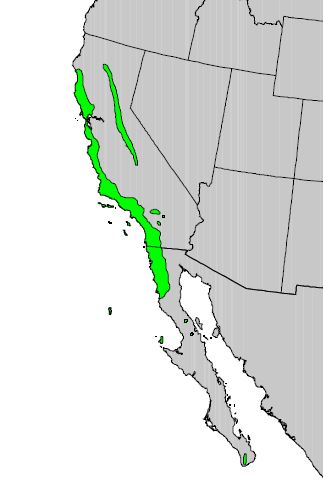
Distribution of toyon.
Toyon occurs in chaparral communities throughout much of California. It is distributed in the Coast Ranges from Humboldt County southward into Baja California and in the foothills of the Sierra Nevada from central California southward into the Transverse Ranges [40,44,45,56]. Heteromeles arbutifolia var. macrocarpa is restricted to the Santa Catalina and San Clemente islands off the coast of southern California [35,46]. It is cultivated in Hawaii [71].
States
- United States: CA HI
- Mexico
Site Characteristics
Toyon is a characteristic species of chaparral and foothill woodland communities throughout its distribution [20,45]. It usually grows in scattered stands [9,56] on semidry, rocky slopes within foothills, mountains, and canyon bottoms at elevations below 4,000 feet (1,220 m) [37,45]. Soils supporting toyon are typically dry and well drained and may occasionally be somewhat saline [58]. Although occurring on a variety of aspects, toyon is most often associated with relatively mesic chaparral communities, occupying cool, north exposures, erosion channels, arroyos, depressions, and toeslopes [20,60].
Plant Communities

Toyon, Solano County, California. (CC BY-NC 4.0)
Toyon is a shrub component of chaparral, woodland, and forest communities throughout much of California [4]. It has not been included as a dominant or indicator in published classification schemes. Hanes [21] lists it as one of a number of woody dominants in chamise (Adenostoma fasciculatum) chaparral, Nuttall's scrub oak (Quercus dumosa) chaparral, and mixed-chaparral communities. In the northern Coast Range and foothills of the northern Sierra Nevada, toyon and chamise codominate low, open communities constituting serpentine chaparral [21,55]. Toyon becomes locally dominant in seral communities which are transitional between coastal sage scrub and chaparral in southern California and the southern part of the Coast Range [4,48]. Coast live oak (Quercus agrifolia) woodlands occupying north slopes in the Coast Ranges often have toyon as a conspicuous subdominant; toyon sometimes becomes dominant within these communities in the central portion of the Coast Range [18].
Toyon is one of a number of tall shrubs constituting scrub oak dominated chaparral [12,25,60]. Common associates within scrub oak chaparral include [22,47] Nuttall's scrub oak, California live oak, hollyleaf cherry (Prunus ilicifolia), birchleaf mountain-mahogany (Cercocarpus betuloides), redberry (Rhamnus crocea), California coffeeberry (Rhamnus california), hoaryleaf ceanothus (Ceanothus crassifolius), chaparral whitethorn (C. leucodermis), chamise, poison-oak (Toxicodendron diversilobum), and honeysuckle (Lonicera spp.). Toyon is also an important component of communities which are transitional between chaparral and coastal sage scrub types [4,21]. California sagebrush (Artemisia californica), California buckwheat (Eriogonum fasciculatum), lotus (Lotus scoparius), and sage (Salvia spp.) are understory associates within transitional communities.
Botanical Description

Toyon berries, San Francisco County, California. (CC0 1.0)
Toyon is a native, broad-leaved, sclerophyllous, arborescent shrub which typically grows from 6 to 10 feet (1.8 to 3 m) tall [9,24,45,56,58]. On more favorable sites toyon may occasionally attain tree stature, reaching heights of approximately 33 feet (10 m); however, in these instances it typically retains a shrublike form [9]. Plants are erect, freely branched, and unarmed [45]. Older branches have gray bark [45]. The dense foliage is composed of simple, evergreen leaves which are from 2 to 4 inches (5 to 10 cm) long and arranged alternately on the stem; leaf margins are sharply toothed and bristly pointed [56,58]. The inconspicuous, bisexual flowers are white in color and occur in loose, somewhat flat, terminal clusters [56]. The bright red, berrylike fruits are approximately 0.25 inch (5 to 6 mm) in diameter and contain one or two, small brown seeds [37,45,46]. Toyon has a strong and much-branched root system that is deeply penetrating and wide spreading [24]. Feeder roots are abundant in the surface humus around the plant base as well as elsewhere throughout the extensive root system. In response to repeated postfire sprouting, toyon sometimes develops an enlarged root crown which is irregularly shaped and platformlike [30]; this structure, however, is not a lignotuber [30,31]. Longevity of toyon is estimated to be from 100 to 200 years [30].
Morphological distinctions between varieties are presented below [45,46]:
- H. a. var. arbutifolia - typical variety; fruit red
- H. a. var. cerina - fruit yellow
- H. a. var. macrocarpa - large fruited form; fruit red; leaves subentire
Raunkiaer Life Form (Raunkiaer 1934)
- Phanerophyte
Seasonal Development
Studies of seasonal cambial growth indicate that toyon is active from December through mid-June, with peak activity occurring between February and April; stem growth ceases from late June to December during the prolonged summer drought [1,43]. Leaves are initiated in the early spring, and maximum size is reached soon afterwards; secondary leaf growth occurs during the remainder of the growing season, resulting in increased tissue density [11]. Flowering occurs from June through July [45,56]. Fruit development is prolonged; berries first appear in August or September and persist until December when they reach maturity [11,58].
Although toyon is able to photosynthesize year-round, carbon is partitioned differentially among plant functions and varies according to season [11]. During the stem growth period in the spring, most fixed carbon goes to the development of the canopy (new leaf and stem tissue) which gives toyon a competitive advantage. During periods of little stem growth, carbon is allocated to root growth, fruit production, and into compounds which apparently provide a degree of predator protection [43]. Although leaves are characterized by high levels of both tannins and cyanogenic glucosides from the time of initiation, tannin levels reach a maximum in September and October when herbivore pressures are particularly high. The pulp of immature fruits contains a toxic cyanogenic glucoside that protects developing fruits from bird predation. During the long maturation process, however, bird dispersal of the seeds is encouraged as cyanogenic glucosides are gradually shifted from pulp to seed, pulp carbohydrate levels increase, and fruits turn from green to bright red. Subsequent seed predation is prevented by the localization of cyanogenic glycosides in the seeds [11].
Compared with other chaparral shrubs, toyon apparently has moderate water use requirements [53]. Maximum water stress generally declines well before the onset of fall rains, apparently in response to a decrease in ambient air temperatures [50].
Regeneration Processes
Toyon regenerates by both sexual and vegetative means. Within the fire-prone chaparral environment, it maintains itself primarily through vigorous sprouting [29,31,32]. Little or no seedling establishment occurs immediately following fire [31,63]. Extended fire-free periods are required for successful seedling establishment and population expansion [32,33].
Vegetative regeneration: During extended fire-free intervals, toyon rejuvenates its crown by continually producing new sprouts from established root crowns [31,33]. Following disturbances such as fire or cutting, toyon sprouts from surviving adventitious buds on the root crown [55,58].
Seedling reproduction: Onset of seed production occurs early in toyon; 2-year-old transplants can produce seed during the second season following outplanting [13]. Abundant seed is produced annually after the first flowering [37,54], and seed production apparently does not decrease with age [29]. Seeds are dispersed in the late fall and winter [32]. Significant, widespread dispersal of the persistent, fleshy fruits occurs through animals, particularly birds [11,30,43,63,64,66]; if not dispersed by animals, seeds fall directly beneath the parent plant. Seeds are short lived and retain their viability for not more than 9 months when dried at room temperature [32]. Germination occurs readily under favorable moisture and temperature conditions, often within 10 to 40 days [37,41]. Seeds germinate without the stimulus of heat or charred wood; in fact, heat treatments are generally lethal to toyon seed [32]. Germinative capacity under greenhouse conditions ranges from 73 to 99 percent [32,37,41]. Although fresh seeds do not need stratification, stored seeds require stratification for 3 months at temperatures of 35 to 41 degrees F (1.6 to 5 degrees C) to enhance germination [37,41].
Toyon seedlings are never very abundant within chaparral communities [63]. Limited observations suggest that seedling establishment is episodic and coincides with periods of above-normal rainfall [31,63]. A series of wet years apparently produces an abundant seed crop and also creates a moisture regime conducive to seedling establishment [31]. Successful establishment occurs within mature chaparral in gaps resulting from the death of senescing, shorter lived species [64]. Although abundant initial establishment may occur in burned or unburned stands during years of above-normal precipitation [64], continued survival is favored beneath mature stands on sites that are relatively mesic (north slopes) and which possess a well-developed litter layer [31]. Seedlings are frequently stunted and susceptible to browsing from small mammals [26]. Consequently, long-term survival beneath mature chaparral is rare [31].
Established seedlings are most common in very old stands (60 to 100+ years) [31,32]. Toyon seedling densities (plants established in recent decades) within a 117-year-old stand of scrub oak chaparral equaled approximately 50 per hectare [33]. Long fire-free intervals apparently allow for the buildup of seedling populations resulting from episodes of establishment. Zedler [64] speculates that gap size is crucial to a seedlings ability to survive to the stage where it sprouts following fire. The average size of unoccupied gaps tends to be larger in infrequently burned stands where the size of senescing individuals is also larger [63,64]. Obligate sprouters such as toyon apparently require fire-free intervals of 100 years or more for significant recruitment of new individuals [31]. Newly emerged toyon seedlings have been observed as early as mid-February on undisturbed mixed-evergreen sites in central California [49]. Mortality was high within these communities with nearly all seedlings dying from damping-off fungus or leaf spot disease [49].
Successional Status
Toyon is a long-lived and relatively shade-tolerant species which is highly persistent within chaparral and woodland chaparral communities [20,22,30]. Although widespread, toyon is not usually abundant [9]. It becomes more common within mesic types of chaparral, particularly stands dominated by scrub oak. Scrub oak chaparral typically experiences reduced fire frequencies relative to chamise chaparral [30]. During extended fire free intervals, toyon is able to outlive, overtop, and shade out many shorter-lived species [64]; seedling establishment then occurs in newly created gaps beneath the mature canopy [47,63]. Successional studies in scrub oak chaparral indicate that limited toyon seedling establishment may occur in stands which remain unburned for 10 to 20 years [23,25]. As a stand matures, toyon gradually increases in prominence until it is an important codominant of 65-year-old stands [47]. In stands beyond 65 years of age, scrub oak and hollyleaf cherry increase in dominance while toyon decreases in size and prevalence [19,23]. However, toyon typically persists within mature chaparral until the next fire occurs, at which time sprouting individuals become part of the initial postfire vegetation [7,33,58]. Toyon is also capable of pioneering eroded sites [58].
Immediate Fire Effects
Toyon is quite resistant to fire mortality [64]. Although aerial portions may be killed, most plants survive fire [23,51,59]. In fact, toyon appears to suffer very little fire mortality even when subjected to short-interval fires. On chaparral sites in southern California, toyon sprouted following a 1979 wildfire and sprouted in 1980 when a grassfire reburned the site [65].
Postfire Regeneration Strategy (Stickney 1989)
- Tall shrub, adventitious-bud root crown
Fire Adaptations
Following fires which kill aerial stems, toyon sprouts vigorously from dormant buds located on a root crown [55,56,58]. The root crown serves as a source of numerous perennating buds and stored carbohydrates, enabling toyon to rapidly reoccupy the initial postfire environment [31,38].
Compared with other chaparral shrubs, toyon is relatively nonflammable [58].
Plant Response to Fire

Toyon sprouting from the root crown after fire in Cleveland National Forest, Orange County, California. (CC BY-NC 4.0)
Toyon is an obligate sprouter following fires on chaparral sites [30,31,64]. Vigorous sprouting is the primary means by which toyon reestablishes in the postfire community [29,32]. Seedlings rarely occur immediately following fire [30,63].
Vegetative regeneration: Toyon sprouts vigorously following fires which kill the aerial stems [24,51,55]. Following a hot, July wildfire in southern California chaparral, toyon plants occupying relatively moist sites produced sprouts within 10 days [51]. Elsewhere on the burn, the majority of toyon individuals had sprouted by December at which time plants usually exhibited at least 12 sprouts per plant and sprout heights of over 6 inches (15 cm) [51]. Although toyon cover is initially reduced following burning, most plants rapidly regain their prefire size and biomass [19,47,61]. Following a wildfire on scrub oak chaparral sites in southern California, toyon produced sprouts 4 to 5 feet (1.2 to 1.5 m) tall within 4.5 years [23].
Seedling reproduction: Unlike many chaparral species, toyon seeds are not well adapted to resist fire or for long-term survival in the soil [32,63]. However, since these short-lived seeds germinate readily under favorable temperature and moisture conditions, some postfire establishment may occur through bird dispersal of off-site seed [63]. Generalized information on obligate sprouters indicates sprouting plants begin to produce seed crops within 1 to 2 years of burning and that postfire fruit crops are often substantial [31].
While seedlings are rarely observed during the first postfire season [51,62,65], exploitation of fire-created gaps can occur during periods of above-normal precipitation [31,63]. Following two wet winters, toyon established seedlings on a 3-year-old burn in Tecate cypress (Cupressus forbesii) chaparral [63]. Unusually large numbers of toyon seedlings occurred on both burned and adjacent unburned sites, but few survived [63]. Although periods of above-normal precipitation are apparently adequate for the initial establishment of toyon seedlings, successful seedling establishment seems restricted to mesic sites beneath mature chaparral where litter layers are well developed [31]. Keeley [31] speculates that recruitment of new toyon individuals is never very abundant and occurs primarily between fires rather than after fire [63].
Fire Regimes
For fire regime information, search FEIS for this species by entering the species name on the Advanced Search page and selecting “Fire Regime” as the publication type.
Fire Management Considerations
Prescribed fire: Toyon is a characteristic component of scrub oak chaparral. These communities generally lack an herbaceous understory and do not carry fire as readily as chamise or coastal sage scrub communities [17].
Fire frequency: Although toyon is a characteristic species of relatively infrequently burned stands of chaparral [22,31], it appears adapted to a wide range of fire frequencies [31]. Few individuals die as a direct result of fire, and seedlings are not established in the immediate postfire environment [62]. Keeley [31] generalizes that obligate sprouting species such as toyon are resilient to a burning regime with a recurrence interval of 10 to 100 years. Stand age at the time of burning can have a significant impact on the recruitment of new toyon individuals, however [23]. Microsites necessary for significant population expansion are largely unavailable in stands with fire-free intervals of less than 100 years [31,64].
Fuels reduction: Domestic goats can be used as a method of fire hazard reduction on forested sites where toyon is a conspicuous component of the understory. In communities dominated by Monterey pine and red gum, cover of toyon at heights of 1.6 to 4.9 feet (0.5-1.5 m) was reduced 60 percent in 1 day with stocking rates of 600 Spanish goats per hectare [67].
Wildlife management: Burning initially increases the palatability of toyon browse; sprouts are generally utilized for up to 2 postfire growing seasons [56,57].
Federal Status
None
Other Status
No entry.
Importance to Wildlife and Livestock
Toyon browse is generally considered of little importance to livestock or wildlife [8,56]. Plants often grow beyond the reach of most livestock [56] and the thick, leathery leaves are largely unpalatable [38,42,56]. Use typically occurs in the late summer or fall when more palatable herbaceous plants are cured [2,39]. The current year's growth is heavily utilized by domestic goats on forested sites dominated by Monterey pine (Pinus radiata) and red gum (Eucalyptus camaldulensis) [67]. Mature fruits are extensively utilized by numerous wildlife species, particularly birds [11,30,37,66]. The California quail, band-tailed pigeon, and raccoon all readily consume toyon berries. Toyon is apparently of localized importance as deer browse in portions of California [56].
Palatability and Nutritional Value
Palatability of toyon browse ranges from low to moderate, depending on plant condition and community associates [2,56]. Mature plants are rarely utilized by livestock or wildlife because of large concentrations of tannins and cyanogenic glycosides [38,42,56]. Following fire, however, toyon produces an abundance of leafy sprouts which are much preferred by black-tailed deer [2,56,57].
Browse ratings for toyon in California are presented below [56]:
| Species | Rating |
|---|---|
| Goats | Good-fair |
| Deer | Good-fair |
| Sheep | Poor-useless |
| Cattle | Useless |
| Horses | Useless |
Cover Value
Toyon is most commonly associated with an array of tall, broad-leaved shrubs constituting scrub oak chaparral [20]. Tall shrub communities dominated by scrub oak lend structural and compositional diversity to a landscape otherwise dominated by shorter statured chamise chaparral and provide important nesting and hiding cover for numerous birds and small mammals.
Value for Rehabilitation or Restoration of Disturbed Sites
Due to its wide-spreading root system and relatively rapid growth following disturbance, toyon is useful for erosion control on dry, steep hillsides [37,58]. On suitable sites, transplants may grow 11 to 18 feet (3.4 to 5.5 m) tall with comparable spreads in approximately 20 years [13]. Toyon is also widely used for wildlife plantings, since the berries are eaten by a variety of bird species [58].
Toyon seed should be collected in the fall [6]. Seedlings can be started in nursery beds using unstratified seed in the fall or stratified seed in the spring. Plants may also be propagated by grafting and by cuttings [37].
Other Uses
Toyon is well known for its large and abundant clusters of bright red berries [10], and plants are often cultivated for ornamental purposes, especially var. macrocarpa [13,45,46]. Sprigs of toyon or "Christmas berry" were once widely used as a commercial substitute for the more traditional English holly (Ilex aquifolium) throughout much of California [56,58]. Today, however, California state law prohibits anyone from collecting the branches of wild toyon [10]. Patches of toyon become prominent in December when the berries are particularly conspicuous [56]. It is thought that the community of Hollywood may have derived its name from the display of toyon on the surrounding foothills [10].
Toyon berries are sweet and spicy and have been used historically for a variety of purposes. West Coast Indian tribes gathered the berries for food and medicinal uses; Spanish settlers concocted a beverage from the berries [8,10]. Channel Island fishermen apparently used toyon bark to tan their fishing nets [10].
Other Management Considerations
Browsing: Although mature toyon is typically unpalatable, heavy use may occur on overgrazed rangelands such as those on Santa Catalina Island. Decades of severe overgrazing by feral animals (pigs, sheep, goats) has removed more palatable species and has converted chaparral stands into open, arborescent woodlands. Within these communities, toyon often exhibits a noticeable browse line and a trend towards increased trunk diameter, canopy area, and height. Toyon can recover from prolonged overuse. On sites where feral sheep grazing was excluded, plants immediately produced basal sprouts and within 3 years lost their pruned appearance [5].
Herbicides: Toyon is sensitive to such herbicides as 2,4-D and 2,4,5-T [51,68]. If sprouts are treated following burning, plants are killed by retreatment [68].
Table A1— Forest and range ecosystems, Bureau of Land Management (BLM) physiographic regions, Kuchler plant associations, Society for American Foresters (SAF) forest cover types, and Society for Rangeland Management (SRM) rangeland cover types in which this species occurs.
Forest and Range Ecosystems (Garrison et al. 1977)
- FRES20 Douglas-fir
- FRES21 Ponderosa pine
- FRES26 Lodgepole pine
- FRES27 Redwood
- FRES28 Western hardwoods
- FRES34 Chaparral - mountain shrub
BLM Physiographic Regions (Bernard and Brown 1977)
- 1 Northern Pacific Border
- 3 Southern Pacific Border
- 4 Sierra Mountains
- 7 Lower Basin and Range
Kuchler Plant Associations (Kuchler 1964)
- K005 Mixed conifer forest
- K006 Redwood forest
- K009 Pine - cypress forest
- K029 California mixed evergreen
- K030 California oakwoods
- K033 Chaparral
- K034 Montane chaparral
- K035 Coastal sagebrush
- K036 Mosaic of K030 and K035
SAF Cover Types (Eyre 1980)
- 232 Redwood
- 234 Douglas-fir - tanoak - Pacific madrone
- 243 Sierra Nevada mixed conifer
- 248 Knobcone pine
- 255 California coast live oak
SRM Rangeland Cover Types (Shiflet 1994)
- No entry
1. Avila, Guacolda; Aljaro, Maria, Araya, Sandra; [and others]. 1975. The seasonal cambium activity of Chilean and California shrubs. American Journal of Botany. 62(5): 473-478. [9791]
2. Biswell, H. H. 1961. Manipulation of chamise brush for deer range improvement. California Fish and Game. 47(2): 125-144. [6366]
3. Bernard, Stephen R.; Brown, Kenneth F. 1977. Distribution of mammals, reptiles, and amphibians by BLM physiographic regions and A.W. Kuchler's associations for the eleven western states. Tech. Note 301. Denver, CO: U.S. Department of the Interior, Bureau of Land Management. 169 p. [434]
4. Bolsinger, Charles L. 1989. Shrubs of California's chaparral, timberland, and woodland: area, ownership, and stand characteristics. Res. Bull. PNW-RB-160. Portland, OR: U.S. Department of Agriculture, Forest Service, Pacific Northwest Experiment Station. 50 p. [7426]
5. Brumbaugh, Robert W.; Leishman, Norman J. 1982. Vegetation change on Santa Cruz Island, California: the effect of feral animals. In: Conrad, C. Eugene; Oechel, Walter C., technical coordinators. Proceedings of the symposium on dynamics and management of Mediterranean-type ecosystems; 1981 June 22-26; San Diego, CA. Gen. Tech. Rep. PSW-58. Berkeley, CA: U.S. Department of Agriculture, Forest Service, Pacific Southwest Forest and Range Experiment Station: 589. [6064]
6. Burkhart, Brad. 1987. A nurseryman's view of revegetation. In: Rieger, John P.; Williams, Bradford K., eds. Proceedings of the second native plant revegetation symposium; 1987 April 15-18; San Diego, CA. Madison, WI: University of Wisconsin Arboretum, Society for Ecological Restoration & Management: 17-21. [4089]
7. Christensen, Norman L.; Muller, Cornelius H. 1975. Effects of fire on factors controlling plant growth in Adenostoma chaparral. Ecological Monographs. 45: 29-55. [4923]
8. Conrad, C. Eugene. 1979. Emergency postfire seeding using annual grass. CHAPS Newsletter. Sacramento, CA: California Department of Forestry, Chaparral Research and Development Program. March: 5-8. [17096]
9. Cooper, W. S. 1922. The broad-sclerophyll vegetation of California. Publ. No. 319. Washington, DC: The Carnegie Institution of Washington. 145 p. [6716]
10. Dale, Nancy. 1986. Flowering plants: The Santa Monica Mountains, coastal and chaparral regions of southern California. Santa Barbara, CA: Capra Press. In cooperation with: The California Native Plant Society. 239 p. [7605]
11. Dement, W. A.; Mooney, H. A. 1974. Seasonal variation in the production of tannins and cyanogenic glucosides in the chaparral shrub, Heteromeles arbutifolia. Oecologia. 15: 65-76. [9789]
12. Dunn, Paul H.; Barro, Susan C.; Wells, Wade G., II; [and others]. 1988. The San Dimas Experimental Forest: 50 years of research. Gen. Tech. Rep. PSW-104. Berkeley, CA: U.S. Department of Agriculture, Forest Service, Pacific Southwest Forest and Range Experiment Station. 49 p. [8400]
13. Everett, Percy C. 1957. A summary of the culture of California plants at the Rancho Santa Ana Botanic Garden 1927-1950. Claremont, CA: The Rancho Santa Ana Botanic Garden. 223 p. [7191]
14. Eyre, F. H., ed. 1980. Forest cover types of the United States and Canada. Washington, DC: Society of American Foresters. 148 p. [905]
15. Epling, Carl; Lewis, Harlan. 1942. The centers of distribution of the chaparral and coastal sage associations. American Midland Naturalist. 27: 445-462. [9793]
16. Garrison, George A.; Bjugstad, Ardell J.; Duncan, Don A.; [and others]. 1977. Vegetation and environmental features of forest and range ecosystems. Agric. Handb. 475. Washington, DC: U.S. Department of Agriculture, Forest Service. 68 p. [998]
17. Green, Lisle R. 1982. Prescribed burning in the California Mediterranean ecosystem. In: Conrad, C. Eugene; Oechel, Walter C., technical coordinators. Proceedings of the symposium on dynamics and management of Mediterranean-type ecosystems; 1981 June 22-26; San Diego, CA. Gen. Tech. Rep. PSW-58. Berkeley, CA: U.S. Department of Agriculture, Forest Service, Pacific Southwest Forest and Range Experiment Station: 464-471. [6052]
18. Griffin, James R. 1977. Oak woodland. In: Barbour, Michael G.; Malor, Jack, eds. Terrestrial vegetation of California. New York: John Wiley and Sons: 383-415. [7217]
19. Hanes, Ted L. 1971. Succession after fire in the chaparral of southern California. Ecological Monographs. 41(1): 27-52. [11405]
20. Hanes, Ted L. 1974. The vegetation called chaparral. In: Rosenthal, Murray, ed. Symposium on living with the chaparral: Proceedings; 1973 March 30-31; Riverside, CA. San Francisco, CA: The Sierra Club: 1-5. [3261]
21. Hanes, Ted L. 1976. Vegetation types of the San Gabriel Mountains. In: Latting, June, ed. Symposium proceedings: plant communities of southern California; 1974 May 4; Fullerton, CA. Special Publication No. 2. Berkeley, CA: California Native Plant Society: 65-76. [4227]
22. Hanes, Ted L. 1977. California chaparral. In: Barbour, Michael G.; Major, Jack, eds. Terrestrial vegetation of California. New York: John Wiley and Sons: 417-469. [7216]
23. Hanes, Ted L.; Jones, Harold W. 1967. Postfire chaparral succession in southern California. Ecology. 48(2): 259-264. [9824]
24. Hellmers, H.; Horton, J. S.; Juhren, G.; O'Keefe, J. 1955. Root systems of some chaparral plants in southern California. Ecology. 36(4): 667-678. [6147]
25. Horton, J. S.; Kraebel, C. J. 1955. Development of vegetation after fire in the chamise chaparral of southern California. Ecology. 36(2): 244-262. [3737]
26. Horton, Jerome S.; Wright, John T. 1944. The wood rat as an ecological factor in southern California watersheds. Ecology. 25(3): 341-351. [10682]
27. Kartesz, John T.; Kartesz, Rosemarie. 1980. A synonymized checklist of the vascular flora of the United States, Canada, and Greenland. Volume II: The biota of North America. Chapel Hill, NC: The University of North Carolina Press; in confederation with Anne H. Lindsey and C. Richie Bell, North Carolina Botanical Garden. 500 p. [6954]
28. Keeley, Jon E. 1977. Seed production, seed populations in soil, and seedling production after fire for 2 congeneric pairs of sprouting and nonsprouting chaparral shrubs. Ecology. 58: 820-829. [6220]
29. Keeley, Jon E. 1977. Fire-dependent reproductive strategies in Arctostaphylos and Ceanothus. In: Mooney, Harold A.; Conrad, C. Eugene, technical coordinators. Symposium on the environmental consequences of fire and fuel management in Mediterranean ecosystems: Proceedings; 1977 August 1-5; Palo Alto, CA. Gen. Tech. Rep. WO-3. Washington, DC: U.S. Department of Agriculture, Forest Service: 391-396. [4868]
30. Keeley, Jon E. 1981. Reproductive cycles and fire regimes. In: Mooney, H. A.; Bonnicksen, T. M.; Christensen, N. L.; [and others], technical coordinators. Fire regimes and ecosystem properties: Proceedings of the conference; 1978 December 11-15; Honolulu, HI. Gen. Tech. Rep. WO-26. Washington, DC: U.S. Department of Agriculture, Forest Service: 231-277. [4395]
31. Keeley, Jon E. 1986. Resilience of Mediterranean shrub communities to fires. In: Dell, B.; Hopkins, A. J. N.; Lamont B. B., editors. Resilience in Mediterranean-type ecosystems. Dordrecht, the Netherlands: Dr. W. Junk Publishers: 95-112. [9826]
32. Keeley, Jon E. 1987. Role of fire in seed germination of woody taxa in California chaparral. Ecology. 68(2): 434-443. [5403]
33. Keeley, J. E.; Brooks, A.; Bird, T.; [and others]. 1986. Demographic structure of chaparral under extended fire-free conditions. In: DeVries, Johannes J., ed. Proceedings of the chaparral ecosystems research conference; 1985 May 16-17; Santa Barbara, CA. Report No. 2. Davis, CA: University of California, California Water Resources Center: 133-137. [4834]
34. Kuchler, A. W. 1964. Manual to accompany the map of potential vegetation of the conterminous United States. Special Publication No. 36. New York: American Geographical Society. 77 p. [1384]
35. Little, Elbert L., Jr. 1979. Checklist of United States trees (native and naturalized). Agric. Handb. 541. Washington, DC: U.S. Department of Agriculture, Forest Service. 375 p. [2952]
36. Lyon, L. Jack; Stickney, Peter F. 1976. Early vegetal succession following large northern Rocky Mountain wildfires. In: Proceedings, Tall Timbers fire ecology conference and Intermountain Fire Research Council fire and land management symposium; 1974 October 8-10; Missoula, MT. No. 14. Tallahassee, FL: Tall Timbers Research Station: 355-373. [1496]
37. Magill, Arthur W. 1974. Photinia arbutifolia Lindl. Christmasberry. In: Schopmeyer, C. S., ed. Seeds of woody plants in the United States. Agriculture Handbook No. 450. Washington: U. S. Department of Agriculture, Forest Service: 582-583. [7726]
38. McDonald, Philip M. 1981. Adaptations of woody shrubs. In: Hobbs, S. D.; Helgerson, O. T., eds. Reforestation of skeletal soils: Proceedings of a workshop; 1981 November 17-19; Medford, OR. Corvallis, OR: Oregon State University, Forest Research Laboratory: 21-29. [4979]
39. Miller, Philip C. 1982. Nutrients and water relations in Mediterranean-type ecosystems. In: Conrad, C. Eugene; Oechel, Walter C., technical coordinators. Proceedings of the symposium on dynamics and management of Mediterranean-type ecosystems; 1981 June 22-26; San Diego, CA. Gen. Tech. Rep. PSW-58. Berkeley, CA: U.S. Department of Agriculture, Forest Service, Pacific Southwest Forest and Range Experiment Station: 325-332. [6034]
40. Minnich, R.; Howard, L. 1984. Biogeography and prehistory of shrublands. In: DeVries, Johannes J., ed. Shrublands in California: literature review and research needed for management. Contribution No. 191. Davis, CA: University of California, Water Resources Center: 8-24. [4998]
41. Mirov, N. T.; Kraebel, C. J. 1937. Collecting and propagating the seeds of California wild plants. Res. Note No. 18. Berkeley, CA: U.S. Department of Agriculture, Forest Service, California Forest and Range Experiment Station. 27 p. [9787]
42. Mooney, Harold A. 1977. The carbon cycle in Mediterranean-climate evergreen scrub communities. In: Mooney, Harold A.; Conrad, C. Eugene, technical coordinators. Proc. of the symposium on the environmental consequences of fire and fuel management in Mediterranean ecosystems; 1977 August 1-5; Palo Alto, CA. Gen. Tech. Rep. WO-3. Washington, DC: U.S. Department of Agriculture, Forest Service: 107-115. [4822]
43. Mooney, H. A.; Chu, Celia. 1974. Seasonal carbon allocation in Heteromeles arbutifolia, a California evergreen shrub. Oecologia. 14: 295-306. [9790]
44. Mooney, H. A.; Harrison, A. T.; Morrow, P. A. 1975. Environmental limitations of photosynthesis on a California evergreen shrub. Oecologia. 19: 293-301. [9788]
45. Munz, Philip A. 1973. A California flora and supplement. Berkeley, CA: University of California Press. 1905 p. [6155]
46. Munz, Philip A. 1974. A flora of southern California. Berkeley, CA: University of California Press. 1086 p. [4924]
47. Patric, James H.; Hanes, Ted L. 1964. Chaparral succession in a San Gabriel Mountain area of California. Ecology. 45(2): 353-360. [9825]
48. Paysen, Timothy E.; Derby, Jeanine A.; Black, Hugh, Jr.; [and others]. 1980. A vegetation classification system applied to southern California. Gen. Tech. Rep. PSW-45. Berkeley, CA: U.S. Department of Agriculture, Forest Service, Pacific Southwest Forest and Range Experiment Station. 33 p. [1849]
49. Pelton, John. 1962. Factors influencing survival and growth of a seedling population of Arbutus menziesii in California. Madrono. 16(8): 237-256. [9048]
50. Poole, Dennis K.; Miller, Philip C. 1975. Water relations of selected species of chaparral and coastal sage communities. Ecology. 56: 1118-1128. [10324]
51. Plumb, T. R. 1961. Sprouting of chaparral by December after a wildfire in July. Technical Paper 57. Berkeley, CA: U.S. Department of Agriculture, Forest Service, Pacific Southwest Forest and Range Experiment Station. 12 p. [9799]
52. Raunkiaer, C. 1934. The life forms of plants and statistical plant geography. Oxford: Clarendon Press. 632 p. [2843]
53. Rundel, Philip W. 1977. Water balance in Mediterranean sclerophyll ecosystems. In: Mooney, Harold A.; Conrad, C. Eugene, technical coordinators. Proc. of the symposium on the environmental consequences of fire and fuel management in Mediterranean ecosystems; 1977 August 1-5; Palo Alto, CA. Gen. Tech. Rep. WO-3. Washington, DC: U.S. Department of Agriculture, Forest Service: 95-106. [4821]
54. Reid, C.; Oechel, W. 1984. Effect of shrubland management on vegetation. In: DeVries, Johannes J., ed. Shrublands in California: literature review and research needed for management. Contribution No. 191. Davis, CA: University of California, Water Resources Center: 25-41. [4999]
55. Sampson, Arthur W. 1944. Plant succession on burned chaparral lands in northern California. Bull. 65. Berkeley, CA: University of California, College of Agriculture, Agricultural Experiment Station. 144 p. [2050]
56. Sampson, Arthur W.; Jespersen, Beryl S. 1963. California range brushlands and browse plants. Berkeley, CA: University of California, Division of Agricultural Sciences, California Agricultural Experiment Station, Extension Service. 162 p. [3240]
57. Taber, Richard D.; Dasmann, Raymond F. 1958. The black-tailed deer of the chaparral: Its life history and management in the North Coast Range of California. Game Bulletin No. 8. Sacramento, CA: State of California, Department of Fish and Game, Game Management Branch. 166 p. [16312]
58. Van Dersal, William R. 1938. Native woody plants of the United States, their erosion-control and wildlife values. Washington, DC: U.S. Department of Agriculture. 362 p. [4240]
59. Vogl, Richard J. 1973. Ecology of knobcone pine in the Santa Ana Mountains, California. Ecological Monographs. 43: 125-143. [4815]
60. Vogl, Richard J. 1976. An introduction to the plant communities of the Santa Ana and San Jacinto Mountains. In: Latting, June, ed. Symposium proceedings: plant communities of southern California; 1974 May 4; Fullerton, CA. Special Publication No. 2. Berkeley, CA: California Native Plant Society: 77-98. [4230]
61. Wirtz, W. O., II. 1982. Postfire community structure of birds and rodents in southern California chaparral. In: Conrad, C. Eugene; Oechel, Walter C., technical coordinators. Proceedings of the symposium on dynamics and management of Mediterranean-type ecosystems; 1981 June 22-26; San Diego, CA. Gen. Tech. Rep. PSW-58. Berkeley, CA: U.S. Department of Agriculture, Forest Service, Pacific Southwest Forest and Range Experiment Station: 241-246. [6025]
62. Zedler, Paul H. 1977. Life history attributes of plants and the fire cycle: a case study in chaparral dominated by Cupressus forbesii. In: Mooney, Harold A.; Conrad, C. Eugene, technical coordinators. Symposium on the environmental consequences of fire and fuel management on Mediterranean ecosystems: Proceedings; 1977 August 1-5; Palo Alto, CA. Gen. Tech. Rep. WO-3. Washington, DC: U.S. Department of Agriculture, Forest Service: 451-458. [4876]
63. Zedler, Paul H. 1981. Vegetation change in chaparral and desert communities in San Diego County, California. In: West, D. C.; Shugart, H. H.; Botkin, D. B., eds. Forest succession: Concepts and application. New York: Springer-Verlag: 406-430. [4241]
64. Zedler, Paul H. 1982. Plant demography and chaparral management in southern California. In: Conrad, C. Eugene; Oechel, Walter C., technical coordinators. Proceedings of the symposium on dynamics and management of Mediterranean-type ecosystems; 1981 June 22-26; San Diego, CA. Gen. Tech. Rep. PSW-58. Berkeley, CA: U.S. Department of Agriculture, Forest Service, Pacific Southwest Forest and Range Experiment Station: 123-127. [6016]
65. Zedler, Paul H.; Gautier, Clayton R.; McMaster, Gregory S. 1983. Vegetation change in response to extreme events: the effect of a short interval between fires in California chaparral and coastal scrub. Ecology. 64(4): 809-818. [4612]
66. Bullock, Stephen H. 1978. Fruit abundance and distribution in relation to types of seed dispersal in chaparral. Madrono. 25: 104-105. [9792]
67. Tsiouvaras, C. N.; Havlik, N. A.; Bartolome, J. W. 1989. Effects of goats on understory vegetation and fire hazard reduction in coastal forest in California. Forest Science. 35(4): 1125-1131. [9767]
68. Stickney, Peter F. 1989. Seral origin of species originating in northern Rocky Mountain forests. Unpublished draft on file at: U.S. Department of Agriculture, Forest Service, Intermountain Research Station, Fire Sciences Laboratory, Missoula, MT; RWU 4403 files. 7 p. [20090]
69. U.S. Department of Agriculture, Soil Conservation Service. 1994. Plants of the U.S.--alphabetical listing. Washington, DC: U.S. Department of Agriculture, Soil Conservation Service. 954 p. [23104]
70. U.S. Department of the Interior, National Biological Survey. [n.d.]. NP Flora [Data base]. Davis, CA: U.S. Department of the Interior, National Biological Survey. [23119]
71. St. John, Harold. 1973. List and summary of the flowering plants in the Hawaiian islands. Hong Kong: Cathay Press Limited. 519 p. [25354]
72. Thompson, Robert S.; Anderson, Katherine H.; Bartlein, Patrick J. 1999. Digital representations of tree species range maps from "Atlas of United States trees" by Elbert L. Little, Jr. (and other publications). In: Atlas climatic parameters and distributions of important trees and shrubs in North America. Denver, CO: U.S. Geological Survey, Information Services (Producer). On file at: U.S. Department of Agriculture, Forest Service, Rocky Mountain Research Station, Fire Sciences Laboratory, Missoula, MT; FEIS files. [92575]