


Lespedeza cuneata, sericea lespedeza
Gucker, Corey. 2010. (Revised from Munger, Gergory T., 2004). Lespedeza cuneata, sericia lespedeza. In: Fire Effects Information System, [Online]. U.S. Department of Agriculture, Forest Service, Rocky Mountain Research Station, Fire Sciences Laboratory (Producer). Available: https://research.fs.usda.gov/feis/species-reviews/lescun
| Abbreviation | Common Name | Scientific Name | Classification | Status |
|---|---|---|---|---|
| Plants | ||||
| LESCUN | sericea lespedeza | Lespedeza cuneata | Life Form: Plants/Forb Kingdom: Plantae Class: Dicot Order: Fabales Family: Fabaceae Genus: Lespedeza | Fed. Protected: No Nativity: Nonnative Invasiveness: Invasive |
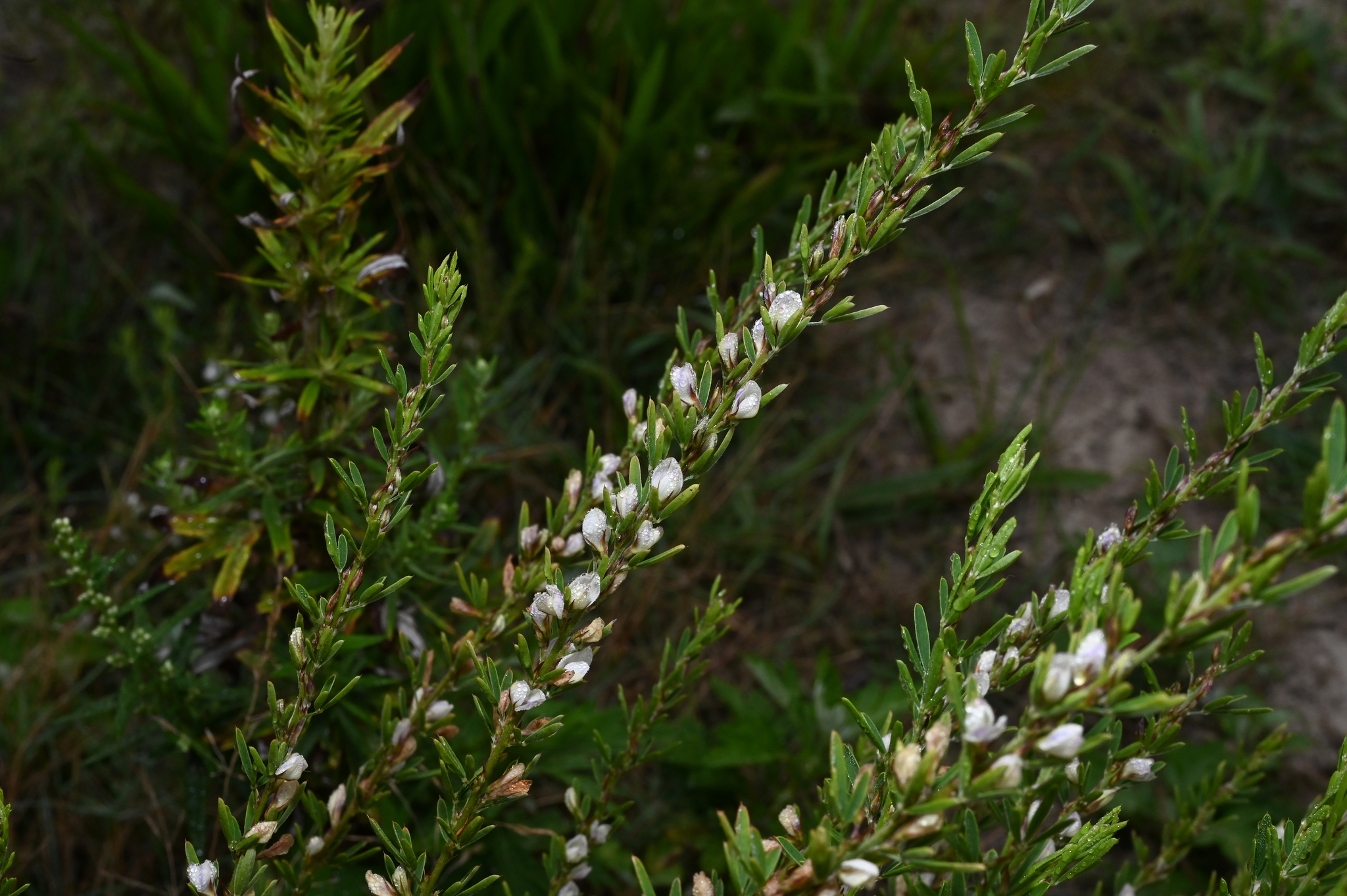


Taxonomy
The scientific name of sericea lespedeza is Lespedeza cuneata (Dum. Cours.) G. Don. (Fabaceae) [39,58,63,94,129,171]. There are 2 sericea lespedeza varieties in North America [59,167]:
- Lespedeza cuneata (Dum. Cours.) G. Don. var. cuneata
- Lespedeza cuneata (Dum. Cours.) G. Don. var. serpens (Nakai) Ohwi
Several cultivars of sericea lespedeza have been developed for agricultural and other uses (see Importance to Livestock and Wildlife and Other Uses) [5,65,110,117,133].
Hybrids
Sericea lespedeza, when crossed with native North American lespedeza species (Lespedeza spp.) including creeping lespedeza (L. repens), tall lespedeza (L. stuevei), and slender lespedeza (L. virginica), failed to produce hybrids [69]. Clewell (Clewell 1966 cited in [177]) reported that hybridization between sericea lespedeza and native lespedezas including slender lespedeza, roundhead lespedeza (L. capitata), and violet lespedeza (L. violacea), was prevented by mismatched chromosome numbers. Native lespedezas had 10 and sericea lespedeza had 19 chromosomes. However, in a later publication, Clewell [25] observed and described spontaneous hybrids between sericea lespedeza and other native lespedezas (creeping lespedeza, tall lespedeza, and trailing lespedeza (L. procumbens)) in Georgia and Alabama. Hybrids grew in the vicinity of their parents. A sericea lespedeza × trailing lespedeza hybrid was described as especially "vigorous", and a sericea lespedeza × creeping lespedeza hybrid had reproduced by rhizomes [25].
Synonyms
for Lespedeza cuneata:
- Lespedeza juncea (L.f.) Pers. var. sericea Maxim.
- Lespedeza sericea Miq. (misapplied) [167]
for Lespedeza cuneata var. serpens:
- Lespedeza latissima (Matsum.) Nakai
- Lespedeza serpens Nakai [167]
Other Common Names
sericea, Chinese bushclover, Chinese lespedeza
General Distribution
Sericea lespedeza is native to eastern and central Asia [6,39,76,156,159]. It was initially planted in the United States in 1896 at the North Carolina Agricultural Experiment Station [125]. In the 1920s and 30s, sericea lespedeza was grown and planted for erosion control and mine reclamation but was not widely utilized as a pasture species until the 1940s [125]. As of 2009, sericea lespedeza was known outside of cultivation as far north as New Jersey and Michigan, as far south as Florida and Texas, and as far west as Nebraska and Oklahoma. Sericea lespedeza populations are also reported in Hawaii [13,39,86]. According to the Colorado Weed Management Association, sericea lespedeza is either absent or very limited in their state [30]. Kartesz [94] also includes Ontario, Canada, in sericea lespedeza's distribution. Guernsey [65] indicates that sericea lespedeza's "range of adaptation" extends from southern New Jersey, west through Illinois and eastern Kansas, and south to eastern Texas and Florida. While this "range" originally indicated where sericea lespedeza might grow successfully in the United States, today it may indicate the range where it may be invasive. The Southeastern Exotic Pest Plant Council reports that sericea lespedeza is especially common in the Piedmont and Coastal Plain regions [147]. Lespedeza cuneata var. serpens occurs only in Missouri [167]. Maps of sericea lespedeza are provided by Plants Database.
Introduction and Spread in North America
Historical and recent planting of sericea lespedeza has contributed substantially to its spread and persistence. In the 1940s in Missouri, sericea lespedeza was widely planted for wildlife cover and forage [72], and in the Southeast, it was commonly planted to stabilize roadside cuts and other erodible sites [7]. Use of sericea lespedeza in mine reclamation was common in the coal mine areas of Kentucky and Virginia and occurred as recently as 1990. Eighteen years after seeding sericea lespedeza on a surface coal mined area in Laurel County, Kentucky, researchers considered sericea lespedeza "adapted to the point of becoming naturalized" [161]. Brothers [18] reported that use of sericea lespedeza as well as Japanese clover (Kummerowia striata) and Korean clover (K. stipulacea) to revegetate mine sites has "contributed to the creation of stable yet very floristically simple nonnative communities". Sericea lespedeza had nearly 100% aerial cover within 3 years of its seeding in coal mine overburden in east-central Texas [143]. In 1985, sericea lespedeza was planted with native grasses on crop land retired as part of the Conservation Reserve Program (CRP) [125], and in 1996 it was planted on a severely eroded timber harvest site in Fort Benning, Georgia [24].
In several parts of its US range there are reports of increases and spread in sericea lespedeza populations. Based on a late 1980s survey, an estimated 11% of Great Smoky Mountains National Park was occupied by sericea lespedeza (Smoky Mountains Exotic Plant Survey cited in [119]). In 2003, sericea lespedeza infested an estimated 8.6 million acres (3.5 million ha) of the United States. About 15% of the US tallgrass prairie region was infested, and the total 5 million acres (2 million ha) was considered at risk of invasion [44]. In Kansas, sericea lespedeza occupied less than 25,000 acres (10,100 ha) in 1989 but in 2003 occupied about 500,000 acres (202,300 ha) (Scott 1995 personal communication cited in [44]), which represented an annual increase of about 24% [44]. As of 2005, it was estimated that sericea lespedeza occupied 5,501,400 acres (2,226,356 ha) of the mid- to southern Great Plains (Duncan and Jachetta 2005 cited in [45]). As of 2008, sericea lespedeza occupied an estimated 337,565 acres (136,610 ha) of southern forests from Louisiana and Arkansas east to Virginia and Florida. Of this area, nearly 67,405 acres (27,280 ha) was in Mississippi and 70,800 acres (28,700 ha) in South Carolina [111]. For information on local spread, see Seed Dispersal.
Site Characteristics

Sericea lespedeza along a roadside edge. (CC BY 3.0 US)
Sericea lespedeza grows on a variety of sites throughout eastern North America. It is most likely found on or near sites where it was planted in the past (see Introduction and Spread in North America, Importance to Wildlife and Livestock, and Other Uses sections). It generally occurs on relatively open sites with little tree or shrub competition (see Plant Communities and Successional Status). Nearly throughout its US range, sericea lespedeza is described along roads, in old fields, prairies, open woodlands, thickets, and on disturbed sites [6,26,58,76,129,156,158].
During transect surveys conducted in Cowley County, Kansas, researchers found that sericea lespedeza populations were positively associated with water (P<0.001) and forest cover (P<0.05). Sericea lespedeza occurred in 12 of 20 survey sites with water within 660 feet (200 m) of the transect. Sericea lespedeza occurred in 14 of 32 sites with forest cover, although maximum forest cover in the study area was only 16% [142]. According to Ohlenbusch and others [125], sericea lespedeza can establish at low population levels in such areas as "fence rows, brushy and grassy areas, and where fire and grazing have been excluded for years", although its persistence on long-undisturbed sites is likely less than on periodically or frequently disturbed sites (see these sources: [98,122,145]).
Climate
The effect of cold winter temperatures on sericea lespedeza survival is uncertain. Established plants have survived low temperatures of -15 ºF (-26 ºC), and there was "only a trace" of mortality in a stand subjected to -17 ºF (-27 ºC) [76]. According to the USDA Natural Resources Conservation Service [167], "prolonged freezing will contribute to winter kill." A late-spring freeze can damage plants, once shoots have sprouted from winter-dormant buds [76]. Sericea lespedeza apparently grows best in areas receiving 30 or more inches (760 mm) of annual precipitation [65,125], although plants do occur in western Oklahoma, where precipitation is less [32].
Elevation
In a mine reclamation handbook, Vogel [170] recommends against planting sericea lespedeza above 2,000 feet (610 m) in northern West Virginia and 1,200 (366 m) feet in Pennsylvania.
Soils
Sericea lespedeza grows on a variety of soil types, with soil textures ranging from clays to sands [39,65,76,110,159]. Roots can penetrate heavy clay subsoils [76], and plants grow over hardpan, provided there is at least 18 inches (46 cm) of permeable soil for root development [65]. Near Ashland, Missouri, sericea lespedeza seeded on eroded sites, lacking an A horizon and with subsoil exposed, had low survival and high winter mortality [72]. Sericea lespedeza also grows in deep sands with organic matter [65]. Diggs and others [39] indicate that it is especially invasive on sandy soils in north-central Texas. While some have noted that sericea lespedeza grows best on well-drained soils [65,159], it is somewhat flood tolerant, especially in winter and if flood waters are cool and flowing [65]. At Cave Run Lake in Kentucky, sericea lespedeza occurred on frequently flooded habitats (0-7.9 feet (2.4 m) above summer pool level) [106].
Sericea lespedeza is frequent in lowland areas with moist soils [84], but its deep, well-developed root system also allows it to grow in sterile, droughty soils [65,76,84,125]. It grows relatively well on infertile soils where many other plants do not thrive [87,110,159] and is less competitive on fertile soils. During field experiments in an upland old field in Jackson County, Illinois, sericea lespedeza cover, density, and biomass were lower on fertilized than unfertilized plots. Cover was significantly reduced after just 1 year of fertilizer treatments, and biomass and density were significantly reduced after 3 years of annual fertilizer treatments (P<0.05) [14].
Sericea lespedeza grows on soils ranging from strongly acid to alkaline [65]. It has grown on soils with a pH as low as 4.0 [112]. Although Guernsey [65] indicated that sericea lespedeza grows best at pH 6.0 to 6.5. The 'Serala' cultivar, which prefers acidic soils, showed reduced growth in soils approaching pH 6.0 [27]. Sericea lespedeza tolerates relatively high levels of soil-soluble aluminum, typical in acidic soils [88]. Significantly reduced sericea lespedeza growth in acidic (pH 4.1-4.3) soils was associated with high levels of manganese (P< 0.05) [27].
Plant Communities
Sericea lespedeza is found in many North American habitats (see Site Characteristics) and may be associated with a variety of plant taxa, functional guilds, and communities. While not intended as an exhaustive or definitive summary, the following table describes US habitats and plant communities where sericea lespedeza is known to occur.
| Location | General habitat | Dominant plant species (when provided) and references |
|---|---|---|
| Arkansas, eastern | prairie remnants | [83] |
| Florida | open hammocks and disturbed sites | [179] |
| Great Plains | waste places, roadsides, open woodlands, thickets, stream valleys, and around lakes and ponds | [63] |
| Kansas | tallgrass prairies within oak savannas | blackjack oak (Quercus marilandica) and post oak (Q. stellata) [48] |
| Kentucky, southwestern | abandoned pastures | tall fescue (Schedonorus arundinaceus) and broomsedge bluestem (Andropogon virginicus) [172] |
| — | reclaimed surface coal mine site | sericea lespedeza-tall fescue-switchgrass (Panicum virgatum) [162] |
| Maryland | deciduous woodlands of Potomac River lowland and Piscatawy Creek floodplain | oak (Quercus spp.) [148] |
| Midwest, Upper | grasslands, savannas, open woodlands, and wetland borders | [37] |
| Missouri | woodlands, thickets, fields, prairies, meadows, disturbed open areas, roadsides, and borders of ponds and swamps | [144] |
| New Jersey | most counties and all physiographic locations; most abundant at pine and oak woodland edges of the Coastal Plain | [145] |
| New York (Long Island) | native grassland remnants | [89] |
| Oklahoma (east and central) | sericea lespedeza herbaceous alliance | sericea lespedeza (described as a "nuisance weed") [78] |
| South Carolina | pine savannas | longleaf pine (Pinus palustris) [55] |
| old-fields | broomsedge bluestem [60] | |
| Tennessee | cedar glade edges | cedar glades are openings within eastern deciduous forests; dominated by eastern redcedar (Juniperus virginiana), on sites with calcareous bedrock near the soil surface [29] |
Botanical Description
This description covers characteristics that may be relevant to fire ecology and is not meant for identification. Sericea lespedeza may be confused with desirable native legumes, including several native lespedeza species. Slender lespedeza may be the easiest to confuse with sericea lespedeza [32,84,125]. Information useful in distinguishing the 2 species is provided online by the Kansas State Agricultural Experiment Station and Cooperative Extension Service and the Oklahoma State Cooperative Extension Service. The Missouri Department of Conservation provides information useful in distinguishing sericea lespedeza from roundhead lespedeza and hairy lespedeza (L. hirta). Keys for identification are available (e.g., [6,39,58,63,129,156,159,171,175,179]). Sericea lespedeza photos and descriptions are also available from the Multi-State Sericea Lespedeza Work Group website.

Sericea lespedeza in bloom, Kent County, Rhode Island. (CC BY 4.0)
Sericea lespedeza is a nonnative, warm-season, short-lived, perennial forb [6,26,39,63,84,110,129,156,159]. Plants are 1.6 to 6.6 feet (0.5-2 m) tall [6,39,63,110,129,156,159], multistemmed [6,39,58,159], and become more branched with age. Multiple stems give plants a shrubby appearance [6,39,58,110,159]. Two- to 3-year-old plants may have 20 to 30 erect, coarse to fine stems arising from the caudex [49,167]. The knobby caudex occurs about 1 to 3 inches (2.5-8 cm) below ground [49]. Leaves are dense along the branches and main stem [6,58,63,110]. Leaflets measure 0.2 to 1 inch (0.5-2.5 cm) long [6,39,58,63,129,159] by 0.06 to 0.2 inch (1.5-6 mm) wide [6].
Inflorescences are solitary or in clusters of 2 to 4 in the axils of upper and median leaves [58,63,129,159]. Both chasmogamous and/or cleistogamous flowers are produced (see Pollination and Breeding System) [110,159]. Fruits are single-seeded [39,63,159], 0.10 to 0.14 inch (2.5-3.5 mm) long [6,39,63,129,159], indehiscent [39] pods [63] or oval legumes [58,129,159]. Seeds are 0.06 to 0.1 inch (1.5-2.5 mm) long [6,159].
Sericea lespedeza develops a 3- to 4-foot (0.9-1.2 m) deep, profusely branched, woody taproot [37,76,125,167]. Short, woody rhizomes that grow near the soil surface have been described [132], although not often.
Raunkiaer Life Form
- Hemicryptophyte [130]
Seasonal Development
Sericea lespedeza is a warm-season plant [110]. Although Guernsey [65] indicates that sericea lespedeza is one of the first plants to begin growth in spring, others indicate that seedling emergence and sprouting from the perennial root system is relatively slow compared with many competing plants [76,178]. Seeds germinate from early April to June in Oklahoma [32], and growth of established plants begins in mid- to late-April in Missouri [144]. Sericea lespedeza produces fruits in October and November in the Carolinas [129]. Senescence occurs following exposure to freezing temperatures [65]. When total nonstructural carbohydrates (TNC) in sericea lespedeza taproots were evaluated monthly at the Range Research Station near Stillwater, Oklahoma, levels were lowest in June after emergence from the root crown that occurred in March or April. The TNC levels increased 11% from June to October, when they were usually highest [54]. Based on experiments from several Oklahoma study sites, root TNC levels increased between June and August sampling dates and decreased between August and October sampling dates [96].
| Location | Dates |
|---|---|
| Alabama | July to September [21] |
| Carolinas | July to September [129] |
| northern Florida | July to September [26] |
| Kansas | late August to early October [6] |
| Michigan | September to October [171] |
| Missouri | late July to October [144] |
| North Carolina | early August to mid-September [180] |
| South Carolina | September [55] |
| north-central Texas | July to October [39] |
| West Virginia | July to September [156] |
| Great Plains | July to October [159] |
| southeastern Great Plains | June to August [63] |
| southern Appalachians | July to September [175] |
Regeneration Processes
Sericea lespedeza is a perennial forb that produces new aboveground growth from the caudex after winter frost or other top-killing events [32,48,76,125,144]. There are reports that sericea lespedeza and sericea lespedeza × creeping lespedeza hybrids reproduce asexually by rhizomes [25,132], although these reports were not common in the reviewed literature. Sericea lespedeza also reproduces sexually and is capable of substantial seed production and seed banking.
Pollination and Breeding System
Sericea lespedeza produces both chasmogamous and cleistogamous flowers [110,159]. Cleistogamous flowers are perfect, and nearly always self-fertilized [70]. Chasmogamous flowers are insect-pollinated, often by bees [21,31,114]. When Cope [31] evaluated crossing in 3 sericea lespedeza populations for 2 to 3 years, cross-pollination of chasmogamous flowers ranged from 16% to 43% and represented 10% to 38% of total seed production. Proportion of chasmogamous flowers produced may be influenced by photoperiod. In the greenhouse, Bates [9] found that the greatest number of chasmogamous flowers produced was under a consistent 13-hour photoperiod. Photoperiods of less than 13 hours generally resulted in fewer chasmogamous flowers, and no chasmogamous flowers were produced at photoperiods of 14 hours, 15 hours, or under "natural day" conditions with 3 hours of light beginning at midnight.
When researchers compared the breeding systems of sericea lespedeza with native lespedeza species in a northeastern Kansas tallgrass prairie, sericea lespedeza produced about 4 times as many chasmogamous flowers/ramet and about 20 times as many chasmogamous flowers/plant (P<0.0001) as roundhead lespedeza, violet lespedeza, or slender lespedeza. Sericea lespedeza utilized 3 pollination modes: self-fertilization of cleistogamous flowers, insect pollination of chasmogamous flowers, and delayed self-fertilization of chasmogamous flowers that failed to be insect pollinated within a certain period of time. At every study site, sericea lespedeza produced chasmogamous flowers each year, while no native species produced chasmogamous flowers every year at every site. During bagging experiments, researchers found that insects were important to the pollination of chasmogamous flowers, suggesting that abundant chasmogamous flower production by sericea lespedeza could lead to competition between it and native lespedezas for pollinators [177]. Later observations showed a greater insect visitation rate/plant for sericea lespedeza than any native species (Woods and Ferguson in preparation cited in [177]).
Seed Production
Sericea lespedeza seed production can be substantial. Seed production rates of 150 million to 300 million seeds/acre were reported for cultivated stands [65]. There are reports that 1,500 seeds can be produced on a single sericea lespedeza stem or ramet [125,132]. Although seed production in natural areas is likely to be less than this, it is an important factor to consider in the management of sericea lespedeza populations.
Seed is often produced in the first year of growth [125,132]. In a field experiment at the Agronomy Research Station in Stillwater, Oklahoma, sericea lespedeza seedlings flowered at 12 weeks old and produced seed as early as 15 weeks old [54].
Studies and field observations indicate that seed production can be affected by soil nutrient levels, moisture, and day length. Seed production is typically greatest on sites with favorable fertility and (especially) moisture [65]. Flowering and seed production were low on sites with low soil phosphorus levels [173]. In tallgrass prairie in Greenwood County, Kansas, researchers observed that late summer droughts decreased sericea lespedeza seed production [11]; however, Mooers and Odgen [114] reported that dry seed yield is greater when the latter part of the fruit-ripening period is dry rather than wet. Seed production may also be related to day length. When 8-, 10-, 12-, 13-, 14-, and 15-hour photoperiods were tested, overall seed production was greatest in the 13-hour treatment [9].
When the sexual reproductive capacity of sericea lespedeza was compared to that of native roundhead lespedeza, violet lespedeza, or slender lespedeza in the Flint Hills tallgrass prairie in northeastern Kansas, sericea lespedeza produced about 3 times as many seeds/ramet as any native (P<0.001). On a per plant basis, sericea lespedeza seed production was about 5 times that of the most fecund natives [177].
Seed Dispersal
Sericea lespedeza seed is dispersed by humans, livestock, wildlife, and disturbances. Haying activities spread seed [125,144], and extensive spread of seed by vehicles was suspected at the Fort Riley Army training area in the Flint Hills of northeastern Kansas. In 1995, sericea lespedeza occurred on 4 study plots but over the next 6 years occupied 4 new plots each year. Occurrence and spread of sericea lespedeza were concentrated in areas associated with mechanized vehicle use [2].
Livestock can disperse seed in manure [32]. From 2 years of collections made from September to November on 7 sites in eastern Kansas, researchers recovered 42 sericea lespedeza seeds in cattle manure [47]. Studies in Missouri and Illinois reported sericea lespedeza growing along horse trails in the Ozark National Scenic Riverways [157] and the Trail of Tears State Forest [20]. During feeding experiments, germination of sericea lespedeza seeds that passed through cattle digestive tracts was 5.5%, which was not significantly different than the germination of untreated seeds (10.5%) but was significantly less than the germination of scarified seeds (63.5%, P<0.05). Of the 4 steers in the study, only 1 readily ate sericea lespedeza seed [11].
Several wildlife species disperse sericea lespedeza seed. In eastern Kansas, researchers recovered 27 sericea lespedeza seeds from white-tailed deer pellets, 11 seeds from bird droppings, and observed 81 seeds moved by hispid cotton rats, which relocated entire seed-bearing stems. These findings involved 7 study sites in eastern Kansas that were visited in the fall for 2 years [47]. When sericea lespedeza seeds were fed to northern bobwhites, germination of seeds that passed through the digestive tract was 34.6%, which was significantly greater than the germination of untreated seeds (19.6%, P<0.05) but not significantly different than the germination of scarified seeds (53.4%). Researchers noted, however, that most seed was scattered and not consumed by northern bobwhites [11].
Mechanical disturbance increased the dispersal distance of sericea lespedeza seed on the Louisiana Coastal Plain. Within 7 years of seeding sericea lespedeza in a pasture and a longleaf pine forest, researchers found seedlings 16 feet (5 m) beyond the seeding area. The dispersal distance was greater following heavy mechanical disturbance in the longleaf pine stand [126].
Seed Banking
The literature suggests that sericea lespedeza produces a seed bank, but long-term seed recovery studies that would show how long seed remains viable in the soil were lacking as of 2010. Some studies state that sericea lespedeza seeds remained viable in the soil for 20 or more years [37,125,144], but no research was provided to support these assertions.
Some sericea lespedeza seed germinated after 4 years in a greenhouse with open windows and no temperature control. Seeds were collected from plants in Kentucky and/or Tennessee and sown in moist soil. No sericea lespedeza seed germinated in the later years of the 8-year experiment; however, germination of any species after year 4 was rare, even for species known to have a long-lived seed bank [8]. An invasive plant manual for the Southeast reported on a study that found 60% germination of sericea lespedeza seeds after cold storage for 55 years. The manual suggested that sericea lespedeza germination in spring may represent only 1% of soil-stored seeds [147].
Two field studies suggest that sericea lespedeza produces a seed bank. Thirty-one years after sericea lespedeza was seeded on a coal mine spoil in Minkers Run, Ohio, mature plants were found on 2 of 4 plots. The frequency of sericea lespedeza seed in soil samples was 80% to 90%, and seed was present in soil collected from all 4 plots [22]. In southern Illinois' Shawnee National Forest, sericea lespedeza did not occur in the aboveground vegetation in Research Natural Areas, but 163 sericea lespedeza seeds/m² emerged from soil collected from 1 plot in a Natural Area [81].
Germination
Several sources suggest that sericea lespedeza seed requires scarification in order to germinate [104,125,160]. According to Tabor [160], only a portion of the annual seed crop is immediately germinable. Others report that a large percentage of sericea lespedeza seeds are hard, and germination is typically less than 25% without scarification [124,125]. Remaining seed becomes scarified and permeable to water slowly over time. This strategy should insure a supply of viable seed in future years when drought or other conditions limit seedling emergence or survival. The USDA Natural Resource Conservation Service [167] reports that approximately 70% to 80% of sericea lespedeza seed can germinate in the first year. Research is needed to determine what proportion of seed germinates in subsequent years and what factors influence these processes. (Also see Seed Banking and Control).
Germination of sericea lespedeza seed varies between chasmogamous and cleistogamous flowers. Germination of seed collected from chasmogamous flowers (26%) was significantly greater than that of seed from cleistogamous flowers (P=0.01). Tested seeds were collected from an oak-hickory (Carya spp.) woodland and old field at Washington University's Tyson Research Center near St Louis, Missouri. Germination of sericea lespedeza seeds was much higher than that of seed collected from native slender lespedeza populations in same area [136]. For more on this study, see Impacts.
Temperature is perhaps the most-studied factor influencing sericea lespedeza seed germination. Qiu and others [128] determined the optimum germination temperature for scarified seeds was 68 to 86 ºF (20-30 ºC). In controlled experiments, researchers found that sericea lespedeza seed failed to germinate at the coldest alternating temperatures tested, 54/43 and 46/36 °F (12/6 and 8/2 °C). Germination was best (about 86%) at the warmest temperatures tested, which included 75/68 and 59/50 °F (24/20 and 15/10 °C) [77]. Others have examined the effects of unusually high temperatures on germination, such as might occur during a fire, with conflicting results.
Exposing sericea lespedeza seeds to heat might increase germination rates [137]. While details are limited, temperatures of 140, 176, and 212 ºF (60, 80, and 100 ºC) apparently enhanced germination of moist seeds. The 176 and 212ºF treatments enhanced germination after 1 minute of exposure, while 4 minutes at 140 ºF were required to increase germination [137].
Martin and others [108], however, found that seed germination was not increased by heating. Seeds were subjected to dry and moist heat treatments for 4 minutes. Germination of sericea lespedeza seeds was not significantly different within a range of moist or dry nonlethal temperatures. Although discrete treatment temperatures were not clearly specified, it appeared that seeds readily germinated at temperatures from 77 to about 194 ºF (25-90 ºC) [108].
More research is needed to determine the effect of elevated temperature on sericea lespedeza seed germination. This topic has important implications concerning fire and sericea lespedeza invasions and spread (see Fire Management Considerations).
Seedling Establishment and Plant Growth
Seedling emergence, seedling establishment, and sprouting of established plants may be relatively slow compared with many competing plants. Seedlings allocate resources to root growth before producing much top-growth [76,109,125,178]. Although young sericea lespedeza seedlings are considered "rather delicate", once plants reach 3 to 4 inches (8-10 cm) tall they are "almost certain to be able to cope with any conditions likely to be encountered" [114]. Although seedlings may establish in dense shade, they grow best in full sun [125]. Fire, especially in spring, may create open sunny sites, which favor seedling establishment and growth (see Fire Management Considerations).
Temperature and day length may influence seedling establishment and growth. Mosjidis [116] found that emergence of sericea lespedeza seedlings was significantly (P< 0.01), positively, and linearly related to day/night temperature. Average percent emergence increased by about 20% for each 6 ºF (3 ºC) temperature increase tested. Seedling height and shoot weight were significantly (P<0.01), positively, and linearly related to day/night temperature and day length, with the greatest seedling growth generally occurring at the highest temperatures and longest days. Temperatures of 64/57 to 86/79 ºF (18/14-30/26 ºC) and day lengths of 11, 13, and 15 hours were evaluated [116].
Young sericea lespedeza seedlings are relatively cold tolerant and can withstand freezing that kills early-season sprouts of established plants. As foliage ages it becomes increasingly sensitive to freezing [65].
Based on sericea lespedeza seed production, germination, and plant growth data collected from old-field and oak-hickory vegetation at Washington University's Tyson Research Center near St Louis, Missouri, researchers developed a population projection matrix that estimated that sericea lespedeza populations were increasing at a rate of 20 times/year. Researchers noted that the sericea lespedeza populations would soon be limited by density dependence and/or carrying capacity [136]. Population growth rate comparisons with native lespedezas and potential impacts associated with rapid population growth are discussed in Impacts.
Vegetative Reproduction and Regeneration
Annual regeneration of sericea lespedeza shoots from the caudex following winter kill [48,63,76,144,159] does not appear to result in broad population expansion. Sericea lespedeza also sprouts following damage of aboveground tissue [32,76,125]. Sprouting from "root buds" [149] and rhizomes [132] has also been described, but in the available literature, regeneration or reproduction by these means was reported less than sprouting from the caudex.
In the Southeast, Clewell [25] observed a creeping lespedeza × sericea lespedeza hybrid that produced 2 plants at the ends of its rhizomes. Rossow [132] reported in detail that sericea lespedeza reproduces asexually by longitudinal fragmentation of its rhizomes. Once severed, taproots were produced at the end of the rhizome that had been connected to the parent plant [132]. However, in his review, Emry [49] suggests that sericea lespedeza likely produces new stems from the root crown (caudex) rather than from rhizomes or stolons.
Sericea lespedeza produced significantly more vegetative buds/ramet (P<0.025) when compared to native roundhead lespedeza, violet lespedeza, and slender lespedeza in the Flint Hills tallgrass prairie in northeastern Kansas. Sericea lespedeza also produced more ramets/plant and in general, grew larger than the natives [177].
Successional Status
Predicting interactions between sericea lespedeza invasion and succession is hindered by a lack of information about which communities are most susceptible to invasion. Available literature suggests that sericea lespedeza often occurs in grasslands, pastures, old fields, or prairies that lack shrub or tree cover but is also found in open woodlands, savannas, or thickets. For more detailed information about invaded plant communities, see Plant Communities.

Sericea lespedeza in the shaded ground layer of a disturbed forest. (CC BY 3.0 US)
There are conflicting reports about sericea lespedeza's tolerance of shade, but rarely were shade tolerance and long-term persistence in shaded habitats distinguished in the literature. The tall, multibranched, upright growth habit and dense foliage typical of established plants suggests that sericea lespedeza could have a competitive advantage for light in grasslands [32,125]. Some report that sericea lespedeza "shows low tolerance for shade" [48]. At the Energy Oak Ridge National Environmental Research Park in Tennessee, sericea lespedeza was typically associated with early-seral communities with abundant sunlight. Sericea lespedeza was ranked as the worst invasive species at Raccoon Creek Cedar Barren, where sunlight levels were much higher than that of closed-canopy woodlands throughout the rest of the Park [42]. In southern Illinois' Shawnee National Forest, sericea lespedeza did not occur in plots that were 30 to 2,400 feet (10-730 m) inside the forest edge, but 163 sericea lespedeza seeds/m² emerged from soil collected from one forest plot [81]. Others suggest that sericea lespedeza "tolerates shade quite well, establishing in dense shade where direct sunlight does not reach during the day", although a subsequent paragraph reads that sericea lespedeza "appears to establish best where competing vegetation is very short, and light is allowed to reach the germinating seed and seedlings" [125]. Sericea lespedeza seedlings established in a pasture and a 40- to 45-year-old longleaf pine stand on the Louisiana Coastal Plain, although productivity was lower in the forest than in the pasture. At midday in the forest, shade ranged from less than 10% to more than 90% full sun [126]. At the University of Missouri Horticulture and Agroforestry Research Center, aboveground weight of 1st-year sericea lespedeza was significantly reduced by 50% shading when compared to 80% shading and full-sun conditions. Aboveground growth of 2nd-year plants, however, was not different between 50% and 80% shade levels, although growth in shade was still significantly lower than in full sun conditions (P<0.05 for both variables) [103]. These findings indicate that shade tolerance may increase with time spent in shaded habitats.
Sericea lespedeza is highly disturbance tolerant, if not disturbance dependent. In its native Asian and nonnative US habitats, sericea lespedeza is found on disturbed sites. In Japan, it is common in the western bracken fern (Pteridium aquilinum)-grassland type, which is maintained through periodic grazing or fire [122]. Surveys of the vegetation of a ski resort in central Japan revealed that sericea lespedeza was most common on periodically disturbed sites that included ski slopes, ski slope edges, and gondola lines. Frequency of sericea lespedeza was greatest (up to 40%) on ski slopes that were mowed 3 to 4 times/year. Herbaceous species dominated most of the vegetation types with sericea lespedeza, although some trees and shrubs occurred beneath the gondolas [98]. In New Jersey, sericea lespedeza often occurs along roads, and rapid linear spread is thought to be facilitated by mowing and other road maintenance operations [145]. Sericea lespedeza persisted after heavy mechanical disturbance in longleaf pine forests on Louisiana's Coastal Plain. Sericea lespedeza was seeded and established in 1995. Trees were harvested in 2000. Plots were spring burned the following year. Tree limbs and roots were piled and burned, stumps were mechanically removed, and plots were disked repeatedly in the following winter. Within 2 years of disking, plots had 1.7 sericea lespedeza seedlings/m². There were clumps of seedlings 30 feet (9 m) beyond the edge of the original planting area [126].
Little is known about longevity of sericea lespedeza populations or the successional impacts of invasions. One review claims that a single plant can form a "large stand" that persists 20 years or more [149]. While more research is needed to determine which communities and successional stages are most prone to invasion by sericea lespedeza and the extent to which invasions may alter succession, the following studies provide some insight.
Field experiments on an Alabama coal mine spoil revealed that although sericea lespedeza is unlikely to be invasive in closed-canopy forests, it may persist through succession from the open grassland stage to the tall woody vegetation stage. Loblolly pine seedlings were planted and sericea lespedeza, tall fescue, and Bermuda grass (Cynodon dactylon) were seeded on experimental plots. Sericea lespedeza was still "in a vigorous condition" after 9 years, but tall fescue and Bermuda grass had mostly disappeared after 4 or 5 years, apparently due to shading by loblolly pines. After 13 years, some sericea lespedeza still persisted in the stand despite complete canopy closure [109].
When monitoring succession on "disposal areas" created during construction of the Tennessee-Tombigbee Waterway, in central Tennessee, northwestern Alabama, and northeastern Mississippi, it appeared that sericea lespedeza limited establishment of woody vegetation. Disposal areas were seeded with a mixture of grasses: weeping lovegrass (Eragrostis curvula), bahiagrass (Paspalum notatum), Bermuda grass, tall fescue, and Italian ryegrass (Lolium multiflorum). Sericea lespedeza occurred in 4 of the 5 seed mixtures. Nine years after seeding, the woody plant abundance in areas dominated by sericea lespedeza (>60% coverage) was significantly (P<0.01) less than in grass-dominated areas. Substantial sericea lespedeza litter was thought to be a barrier to woody plant seed germination. Litter in sericea lespedeza-dominated areas ranged from 1 to 2.5 inches (2.5-6.4 cm) deep. Sericea lespedeza also occurred in dense stands, leaving only 1% of bare soil exposed. In grass-dominated areas, litter was less than 1 inch (2.5 cm) deep, and 5% or more bare soil was exposed. These findings suggest that sericea lespedeza may delay succession from herbaceous to woody plant dominance [74].
Density of sericea lespedeza appeared to increase with increasing time since disturbance in old fields in Aiken, South Carolina. Sericea lespedeza density averaged 5.6 plants/m² and 24 plants/m² on 1- and 12-year old fields, respectively. However, frequency of sericea lespedeza was 5% on 1-year-old fields and 2.5% on 12-year old fields [61].
Immediate Fire Effects
Fire may kill sericea lespedeza seedlings but typically only top-kills established plants [54,66]. Fires soon after the initiation of spring growth may slow development but result in "no permanent damage" to established plants. Fires soon after seedling emergence can eliminate that season's germinants [155].
Postfire Regeneration Strategy
- Caudex or an herbaceous root crown, growing points in soil
- Ground residual colonizer (on site, initial community)
- Secondary colonizer (on- or off-site seed sources) [150]
Fire Adaptations
Established sericea lespedeza plants typically sprout from the surviving caudex following fire [54,66]. Because perennating tissues within the caudex occur about 1 to 3 inches (2.5-8 cm) below the soil surface, plants are likely to survive the heat of most surface fires, despite damage or destruction of aboveground tissue [49]. Several sources also report sericea lespedeza sprouts following mechanical damage of aboveground tissue (see Vegetative Reproduction and Regeneration).
Sericea lespedeza may also regenerate from on-site seed sources on burned sites. Seed germination and seedling establishment may be increased in burned environments [32,64]. In general, seed production is often prolific, and seed banking may be possible.
Some evidence suggests that heat from a fire may scarify dormant seed, increasing germination [137]. However, experiments suggest that high heat levels can kill sericea lespedeza seed. Sericea lespedeza failed to germinate after seeds were exposed to temperatures above 194 ºF (90 ºC) at "high" humidity levels. Germination was 2% after exposure to 212 ºF (100 ºC) at "low" humidity levels [35]. Martin and others [108] reported that under moist or dry conditions, exposure to temperatures above 194 ºF (90 ºC) for 4 minutes killed sericea lespedeza seeds. However, Segelquist [137] found that it required 32 minutes at 212 ºF (100 ºC) to kill sericea lespedeza seeds, although 16 minutes of exposure reduced germination. These results are inconsistent and difficult to extrapolate to field conditions; however, it seems likely that exposure to fire could result in some sericea lespedeza seed mortality.
Plant Response to Fire
Survival of established sericea lespedeza plants and establishment of seedlings following fire are likely to occur on burned sites. Additional fire studies are needed to better characterize sericea lespedeza's response to different fire severities and seasons.
Two sources claimed that fire can encourage or "promote" spread of sericea lespedeza [28,52], although evidence supporting these claims was not provided. In a tallgrass prairie-savanna mosaic in northern Missouri, however, sericea lespedeza establishment and spread were observed after 3 May or April prescribed fires in 5 years. Before the fires, sericea lespedeza was restricted to the sides of a highway dissecting the burned area, but 4 months after the 3rd fire, there were seedlings scattered throughout the area west of the highway [75]. Field experiments in a tallgrass prairie northeast of Stillwater, Oklahoma, however, suggested that early spring fire did not affect sericea lespedeza seed germination, seedling establishment, or mature plants. There were 6 treatment plots. Plots were either mowed or burned on 15 March. Of the 2 mowed plots, 1 had litter removed. Mowed or burned plots received 250 kg/ha of sericea lespedeza seed either before or after mowing or burning. Biomass and density measurements for sericea lespedeza were not significantly different on any plot, suggesting that establishment or survival of sericea lespedeza was not affected by early spring fire or mowing, increased availability of bare ground, or high litter levels. The researcher noted that results only reflected the 1st posttreatment growing season and differences could be realized later [54]. This study is also discussed in the Physical or mechanical control and Use of prescribed fire as a control agent sections.
Fall or late growing-season fires may result in greater mortality of established sericea lespedeza plants than spring or summer fires. In a tallgrass prairie in Oklahoma, a late growing-season fire reduced the abundance of sericea lespedeza seedlings and density of mature stems. The researcher marked 20 large sericea lespedeza plants, 10 of which were not burned and 10 of which were burned in early September of 1996 and 1998. For burned plants, stem height was reduced by 32%, stem number was reduced by 75%, and near the burned plants seedling density was reduced by 78%. Two burned plants were killed. For unburned plants, stem height increased by 13%, stem number increased by 67%, and seedling density increased by 53% [66]. In a pasture at the Range Research Station near Stillwater, Oklahoma, productivity of sericea lespedeza was lower on fall-burned than unburned plots. The prescribed fire occurred on 20 September, when the air temperature averaged 88 °F (31 °C), relative humidity was 32%, and winds averaged 9 miles (14.5 km)/h. These burning conditions produced a fire spread rate of 1 foot (0.3 m)/s, flame lengths and depths of 10 feet (3 m), and resulted in complete consumption of aboveground biomass. In the first postfire growing season, biomass of sericea lespedeza was 4,640 to 7,050 kg/ha on unburned plots and 2,810 to 3,380 kg/ha on fall-burned plots. Observations made very early in the growing season caused the researchers to suspect that plants sprouted and had rebuilt some root carbohydrate reserves after the fire and before going dormant in the winter [54]. In the Piedmont of South Carolina, sericea lespedeza frequency was only slightly reduced by a spring fire and increased following a summer fire. Average frequency of sericea lespedeza was 2% before and 1% after a May fire and 0% before and 11% after an August fire. The prescribed fires burned with "moderate intensity" in loblolly pine stands and consumed up to 50% of surface fuels. Average pre- and postfire frequencies were 1.7% and 0% on unburned plots, respectively [36].
Three studies evaluated the effects of fire in conjunction with grazing in pastures in the Southern Great Plains. Only 1 study evaluated burning and grazing separately. In this study, dense sericea lespedeza stands were burned on 10 or 11 March 1998. Within about 3 months of the fire, seedling densities and densities of established plants were greatest on burned plots, whether grazed or ungrazed. Seedling and stem densities were lowest on unburned and ungrazed plots. However, stem survival from June to August was greatest on unburned and ungrazed plots and lowest on burned and grazed plots [96]:
| Treatment | Seedling density (plants/m²) in June 1998 | Stem density (established shoots/m²) in June 1998 | Stem survival (%) from June-August |
|---|---|---|---|
| Burned and grazed | 105a* | 82a | 44b |
| Unburned and grazed | 45c | 77ab | 47ab |
| Burned and ungrazed | 70b | 83a | 55ab |
| Unburned and ungrazed (control) | 30c | 62b | 74a |
| *Values within a column with the same letter are not significantly different at P<0.05. | |||
In the other studies, grazing and burning treatments were not evaluated separately, making it difficult to determine fire effects alone. These studies found that in cattle-grazed pastures, summer fires reduced the rate of sericea lespedeza spread more than spring fires [33], and density of sericea lespedeza was generally higher in the 1st than in the 2nd or 3rd postfire growing seasons. Studies also revealed that sericea lespedeza persisted on sites burned annually for 3 years [131]. More details on these studies are presented below in Use of prescribed fire as a control agent.
Fuels
As of 2010, there was little information about sericea lespedeza fuel characteristics. A southern silvicultural management guide reports that sericea lespedeza is not a fire hazard [52], and Mooers and Odgen [114] report that fire spread may be limited in pure sericea lespedeza stands even when the previous year's dead stems are present.
Fire Regimes
Information about sericea lespedeza and fire regimes was lacking as of 2010. Research examining the interactions between sericea lespedeza and the fire regimes in invaded habitats and the effects these interactions may have on native communities and ecosystems is needed. For example, sericea lespedeza may be present in remnant or restored native prairie communities [48,83,89], but little is known of its effects, if any, on fire regimes of those communities. Historically, fire has been an important ecological influence in prairie ecosystems [99]. Because sericea lespedeza can tolerate repeated fire [131] and establish on burned sites [75], fire management options may be limited in prairies with sericea lespedeza infestations (see Postfire Establishment and Spread).
However, Irving and others [83] studied the composition of 3 prairie remnants in eastern Arkansas with a long history of annual prescribed burning. Sericea lespedeza was absent from 2 remnants that were mowed for hay in the summer and burned annually in the winter for about 65 years prior to this study. The remnant with sericea lespedeza populations was mowed for hay and "presumably" burned annually for about 50 years and largely undisturbed for the next 16 or so years. On this remnant, sericea lespedeza formed "thick stands around the prairie border", made up 1.6% of total plant density, and occupied 25% of quadrats. It is important to note that this study was not designed to assess the effects of annual burning on sericea lespedeza, and historic community dynamics for these remnants is unknown [83].
For more information on the prevailing fire regimes in vegetation communities where sericea lespedeza may occur, see the Fire Regime Table (table A1). For additional fire regime information, search FEIS for this species by entering the species name on the Advanced Search page and selecting “Fire Regime” as the publication type.
Fire Management Considerations
Potential for Postfire Establishment and Spread
Fire may promote sericea lespedeza seed germination, improve conditions for seedling establishment [64,125,144,149], and "stimulate resprouting" in established plants [149]. A southern silvicultural management guide reports that high light levels and soil disturbances, which are common following fire, encourage sericea lespedeza establishment and population increases [52]. Griffith [64] associated annual burning with the spread of sericea lespedeza. Burning removed residual biomass, which provided open sites for seedling establishment. Ohlenbusch and Bidwell [125] reported similar ideas. They suggested that fire likely increased seedling establishment by scarifying seeds and increasing the light available to emerging seedlings. While postfire establishment may be most common in areas where sericea lespedeza grows in the immediate vicinity, the potential for long-distance seed dispersal by animals and humans suggests that establishment is possible on sites without mature plants in the immediate vicinity. Because sericea lespedeza sprouting and spread have been reported after fire (see Plant Response to Fire), prescribed fire management options in prairies and pine savannas may be limited by the presence of sericea lespedeza [52].
Preventing Postfire Establishment and Spread
Preventing sericea lespedeza from establishing in weed-free burned areas is the most effective and least costly management method. This may be accomplished through early detection and eradication, careful monitoring and follow-up, and limiting dispersal of sericea lespedeza propagules into burned areas. General recommendations for preventing postfire establishment and spread of invasive plants include:
- Incorporate cost of weed prevention and management into fire rehabilitation plans
- Acquire restoration funding
- Include weed prevention education in fire training
- Minimize soil disturbance and vegetation removal during fire suppression and rehabilitation activities
- Minimize the use of retardants that may alter soil nutrient availability, such as those containing nitrogen and phosphorus
- Avoid areas dominated by high priority invasive plants when locating firelines, monitoring camps, staging areas, and helibases
- Clean equipment and vehicles prior to entering burned areas
- Regulate or prevent human and livestock entry into burned areas until desirable site vegetation has recovered sufficiently to resist invasion by undesirable vegetation
- Monitor burned areas and areas of significant disturbance or traffic from management activity
- Detect weeds early and eradicate before vegetative spread and/or seed dispersal
- Eradicate small patches and contain or control large infestations within or adjacent to the burned area
- Reestablish vegetation on bare ground as soon as possible
- Avoid use of fertilizers in postfire rehabilitation and restoration
- Use only certified weed-free seed mixes when revegetation is necessary
For more detailed information on these topics, see the following publications: [4,16,62,166].
Use of Prescribed Fire as a Control Agent
Prescribed fire alone is not likely to control sericea lespedeza [52]. However, fire may be useful as part of an integrated management plan to stimulate germination from the seed bank or to increase utilization by grazing animals. When monthly changes in nonstructural root carbohydrates were evaluated at the Range Research Station near Stillwater, Oklahoma, researchers found carbohydrates were generally lowest in June following the initiation of spring regrowth. Carbohydrate levels increased 11% from June to October, when they were usually highest. Defoliation-type control methods (burning, grazing, or mowing) may be most effective between April and June, when carbohydrate reserves are low [54]. While spring fires may be useful to kill sericea lespedeza seedlings, it may be difficult to burn at this time if fuels are moist or green.
In Cades Cove, Great Smoky Mountains National Park, sericea lespedeza was not well controlled through restoration efforts that included mowing, burning, herbicide, and native seeding treatments. Plots were mowed in late October 1995; treated with an herbicide after the second frost; and in the following spring, plots were seeded with native grasses and forbs. Plots were spring burned annually for the next 4 years. Sericea lespedeza cover remained high (44%) in restoration plots [127].
The Cooperative Quail Study Association [155] indicates that burning prior to germination likely enhances seedling establishment, but fire following spring germination can result in "complete eradication" of seedlings. Inducing greater seed bank germination may be preferable to allowing long-term seed bank persistence, especially if managers are prepared to eliminate newly established plants before additional seed production.
While studies have not established the age at which seedlings can sprout following top-kill by fire, field experiments showed that sprouting was sparse for seedlings ≤6 weeks old (<15%) but profuse for seedlings 9 to 15 weeks old (70-80%). Seedlings as young as 15 weeks produced seed, suggesting that controlling seedlings before this time should prevent seed production [54]. According to Cummings and others [32], increased seed germination following fire should increase effectiveness of herbicides later in the growing season.
Burning in sericea lespedeza stands can increase their utilization by cattle, which may decrease sericea lespedeza abundance. Smith [144] recommends a late-spring burn (mid-May to late June) to increase utilization. In Oklahoma, researchers compared patch-burn and periodic-burn treatments in cattle-grazed tallgrass prairie pastures. Patch-burn treatments involved annually burning one-sixth of the pasture in the spring and another one-sixth in the summer. Each year 2 new one-sixth-sized patches were burned. In the periodic-burn treatment, the entire pasture was burned once every 3 years. Cattle grazing was "moderate" in both pastures. Sericea lespedeza cover increased 1.95%/year under periodic burning but only 0.47%/year under patch burning. There was no unburned comparison. Summer fires reduced the rate of sericea lespedeza spread more than spring fires. Cattle concentrated on the most recently burned patches, and in summer-burned areas, most sericea lespedeza failed to produce seed [33].
When patch-burn treatments and annual full-burn treatments were conducted on cattle-grazed mixed-tallgrass prairie in Woodson County, Kansas, patch-burning appeared to limit the spread of sericea lespedeza. Under patch-burn management, one-third of the site was spring burned each year, so it took 3 years to burn the whole site. Under full-burn management, the entire site was burned annually. Cattle consumed significantly more sericea lespedeza in patch-burned (92%) than full-burned (35%) sites in 1 of 3 years (P<0.1); in the other 2 years, differences were not significant. At the end of 3 years, density of sericea lespedeza was 6.4 plants/0.25 m² on the annually burned site. On patch-burned sites, the density of sericea lespedeza decreased with time since fire. Density was greatest (12.2 plants/0.25 m²) on the patch that burned the spring prior to summer sampling. There were 5 to 6 plants/0.25 m² on patches burned 1 to 2 years earlier [131].
Altered Fuel Characteristics
As of 2010, effects of large sericea lespedeza populations on fuel characteristics in invaded US habitats were not described. These topics are discussed briefly in the Fire Regimes sections above.
Federal Status
None
Other Status
Information on state-level noxious weed status of plants in the United States is available at Plants Database.
Importance to Wildlife and Livestock
Wildlife
Sericea lespedeza has been characterized as valuable wildlife food and cover [6,63,65]. Foliage is eaten by white-tailed deer, rabbits, and wild turkeys [125,159], and seeds are eaten by birds and rodents [56,159]. According to Sheldon and Causey [140], sericea lespedeza is a "good deer food", and in southeastern Kentucky, sericea lespedeza was common year-round in the diets of reintroduced elk [134]. Grasshopper sparrows and meadowlarks nest in sericea lespedeza [38].
In the southeastern United States, sericea lespedeza plantings have been recommended for wildlife, especially northern bobwhites [151]. Benefits of these plantings, however, have not always been realized. Northern bobwhite sometimes feed on sericea lespedeza seed in the Southeast, particularly in late spring when native food sources are scarce [152,153]. Northern bobwhite have also been observed rejecting sericea lespedeza seed in these same areas [154]. Davison [38] indicates that although sericea lespedeza seeds may be eaten by northern bobwhite, it is probably of little importance as a food source, at least in the "deep south". In a controlled feeding study, northern bobwhites fed sericea lespedeza experienced "critical" weight losses. Researchers expected that during severe winter conditions, sericea lespedeza would only sustain northern bobwhites a few days [120]. Over time, sericea lespedeza plantings can become thick and "rough", particularly on "rich lands". Frequent fire is suggested to maintain quality northern bobwhite habitat. Without fire, sericea lespedeza thickets become "havens" for hispid cotton rats and other "objectionable" rodents [151]. Dimmick [40] implied that dense sericea lespedeza stands are poor nesting habitat for nesting northern bobwhite.
Sericea lespedeza has fallen out of favor as a wildlife plant. While there are examples of wildlife utilizing sericea lespedeza, research supporting its importance is lacking [32,125]. Vogel [170] reported that sericea lespedeza is "considered low in value for wildlife by most biologists". Moreover, food and cover are also provided by native plants, or even nonnatives that are not invasive. Where sericea lespedeza is invasive (see Impacts), it can limit the establishment and growth of other plant species, particularly natives, that provide a diversity of food and cover for a variety of native wildlife [125].
Livestock
Sericea lespedeza was introduced as a hay and pasture species in the eastern United States from around the 1920s to 1940s [5,110,125]. Although its subsequent use as hay and forage has apparently not been widespread, there are still contemporary advocates for its utilization (e.g., [5]). Sericea lespedeza was a recommended pasture species in the southeastern United States in particular, where its deep rooting habit allowed for growth and survival through summer droughts [65,133]. Root growth of sericea lespedeza in acid soils is less inhibited than that of alfalfa (Medicago sativa) [87], and sericea lespedeza hay often cures more rapidly than other common hay species [65]. In addition to cattle [64,65,125,133], domestic goats graze sericea lespedeza [51]. Using livestock to control sericea lespedeza is discussed in the Biological control section below.
A number of sericea lespedeza cultivars have been developed, such as 'Arlington', 'Serala', 'AU Lotan', 'AU Donnelly', 'AU Grazer' and 'Interstate', for low-input cattle forage and other uses [5,65,110,117,133]. Stems on these plants are generally shorter, finer, leafier, and more numerous than those of common sericea lespedeza [65,110]. Many of these cultivars were developed with the intent to create a more palatable forage, with lower levels of undesirable tannins (see Palatability and Nutritional Value) [5,115,117].
Palatability and Nutritional Value
While sericea lespedeza has been promoted as a hay and pasture species [5,110,125], it often produces low-quality forage. Sericea lespedeza contains condensed tannins that can reduce digestibility [159]. Grazing and haying are generally limited to young and tender plants (<12-18 inches (30-46 cm) tall) [65,167,170]. Shoots become tough and fibrous with age. As plants mature, protein contents and leaf:stem ratios decrease and tannin contents increase [65]. Palatability of sericea lespedeza decreases for wildlife and cattle after midsummer [37], but the height to which shoots retain palatability is positively related to site fertility [65]. Persistence of the previous season's dead stems can discourage grazing (Koger and others 2002 cited in [44]).
Researchers evaluated the composition of sericea lespedeza from the Appalachian Foothills, the Piedmont Plateau, and the Coastal Plain regions of Alabama. Nitrogen averaged 23.9g/kg, neutral-detergent fiber was 560 g/kg, acid-detergent fiber was 386 g/kg, lignin was 139 g/kg, and cellulose was 242 g/kg [15].
Cover Value
Sericea lespedeza can provide cover for wildlife [6,38,63,65], including rabbits and northern bobwhite [38]. Although sericea lespedeza provides cover for some wildlife species, it may also inhibit establishment and/or growth of native plants and reduce the diversity of cover habitat [32]. In the Impacts section below, this and other invasive characteristics are described.
Other Uses
Sericea lespedeza has been planted for wildlife cover and forage, as well as revegetation, erosion control, and soil improvement in many areas of the central and eastern United States [6,39,63,65,72,125]. It has been planted along agricultural field borders as a wildlife cover species [65] and on disturbed soils of highway embankments, utility rights-of-way, and construction area disposal sites [65,71,74,159]. It has been used for reclamation of surface coal mine sites in the eastern United States [65,80,100,118,170]. For revegetation purposes, sericea lespedeza can provide long-term cover with little to no maintenance requirements [170] and often survives on poor soils where other legumes do not [6].
Although deliberate plantings for honeybees were not explicitly reported, sericea lespedeza is considered a good honey plant [159].
Impacts
Sericea lespedeza has escaped cultivation and become self-establishing and invasive throughout much of the central and eastern United States [5,39,63,113] (see Introduction and Spread in North America). Sericea lespedeza is recognized by federal, state, and local organizations throughout its nonnative US range as a "highly invasive species" that poses a severe or significant threat to native plant communities [10,47,57,95,146,165,169]. Although it is difficult to determine the traits or mechanisms that allow sericea lespedeza to invade, spread, dominate, and persist in certain areas, the following examples clearly demonstrate sericea lespedeza's invasive tendencies.
When population dynamics were compared between sericea lespedeza and the native slender lespedeza at Washington University's Tyson Research Center near St Louis, Missouri, sericea lespedeza populations were more fecund and grew more rapidly than those of slender lespedeza. Sericea lespedeza experienced significantly less herbivory (<1%) than slender lespedeza (10%) (P<0.05). Sericea lespedeza produced more seed than slender lespedeza, and in field conditions, 17% to 26% of sericea lespedeza seed germinated, while only 2% to 3% of slender lespedeza seed germinated. The population growth rate estimated for sericea lespedeza was at least 10 times that estimated for slender lespedeza. Population growth rate differences were unaffected by differences in herbivory levels. Young, small sericea lespedeza plants were much more fecund than young, small slender lespedeza plants [136].
Sericea lespedeza was also more fecund than native lespedeza species in the Flint Hills tallgrass prairie of northeastern Kansas when sexual and asexual reproductive traits were compared (see Pollination and Breeding System, Seed Production, and Vegetative Reproduction and Regeneration sections). Researchers concluded that sericea lespedeza demonstrated fitness homeostasis, which included a "mixed, well-buffered reproductive strategy" that allowed it "to maintain significant levels of seed and vegetative reproduction under a wide range of conditions" [177].
Impacts on Native Plants and Wildlife
Sites invaded by sericea lespedeza can have reduced native plant abundance and diversity and may be less attractive to vertebrate and invertebrate wildlife. Native plant cover and species diversity were lower on a Kansas oak savanna invaded by sericea lespedeza than on sites without sericea lespedeza. Native grasses and forbs represented 5% and 10% of canopy coverage in invaded plots and 79% and 28% in uninvaded plots, respectively. There were 3 times as many native grass and forb species in uninvaded than in invaded plots. The number of macroinvertebrate species in invaded plots was 65 and in uninvaded plots was 24; the number of macroinvertebrate families represented in invaded plots was half that in uninvaded plots [48]. Based on these findings, Eddy and others [47] predicted that sericea lespedeza invasions could reduce native bird abundance and richness and result in overall decreased grassland biota diversity. Reduced grass forage could also mean losses in land value and livelihood for cattle ranchers. In tallgrass prairie in southeastern Kansas, use by vertebrate and invertebrate wildlife species was 55% and 73% lower, respectively, on sites with than without sericea lespedeza. Native canopy cover was only 16% in invaded prairie. The following factors were suggested as reasons for reduced wildlife use in invaded areas: high stem density, lack of singing perches for birds, loss of canopy openings, and reductions in the seasonal availability of foliage, flowers, seeds, and prey insects [46].
Several studies suggest that sericea lespedeza can limit growth of woody vegetation. In a plantation on sandy, droughty soils south of Aiken, South Carolina, height of 3-year-old sand pine (Pinus clausa) seedlings grown in the presence of sericea lespedeza was significantly (P<0.05) less than that of seedlings grown without sericea lespedeza. In stands where sericea lespedeza was dense, sand pine survival was about 50% of that in plots without sericea lespedeza [91]. On the eroded, heavy clay soils of a plantation in the upper Piedmont of South Carolina, loblolly pine seedlings with sericea lespedeza seeded between the rows were 9.3% shorter and had 13.2% less diameter than those without sericea lespedeza. Within 6 years of seeding between tree seedling rows, sericea lespedeza had encroached densely around the tree seedlings [121]. Along a transmission line right-of-way in Georgia, sericea lespedeza developed solid stands and "crowded out or overcame" woody species common to the area within 2 years of planting [139].
Not all studies investigating sericea lespedeza invasions, however, have reported losses in species richness or diversity. In a field study at the Waterloo Wildlife Experimental Station in southeastern Ohio, removing sericea lespedeza did not affect plant species richness or diversity. The researcher suggested that sericea lespedeza's invasive characteristics may be reduced in the northern part of its range [41]. Wright and others [178] characterized sericea lespedeza as "non-aggressive" when seedling emergence of various grasses and legumes commonly used for erosion control were compared in controlled experiments, and according to Hoveland and others [82], sericea lespedeza seedlings "are weak and compete poorly with spring and summer weeds" in Alabama. Even once established, sericea lespedeza may not necessarily become invasive. A Kansas State University Cooperative Extension bulletin reports that in some areas sericea lespedeza grows in ditches, fences rows, or pastures without invading adjacent "well-managed" rangeland and pastures [125]. In pairwise competition experiments conducted in an old field in Tennessee, sericea lespedeza was intermediate in terms of dominance over the 2-year study. Broomsedge bluestem ranked as the most competitive species. In artificially created field communities, orchardgrass (Dactylis glomerata) dominated the 1st growing season, and orchardgrass and broomsedge bluestem codominated in the 2nd growing season [50].
Potential Factors Influencing Impacts
Some studies have identified characteristics and mechanisms by which sericea lespedeza limits the growth of associated vegetation and persists in natural habitats. The characteristics and mechanisms include shading, high water use, herbivore release, allelopathy, other physiological traits, and climate change.
Shading: Field experiments in upland old fields in Jackson County, Illinois, revealed that sericea lespedeza's shading of adjacent plants is important to its successful replacement of native species. Plots where sericea lespedeza was not manipulated or treated had the lowest cover of native species (5%). On plots where sericea lespedeza was treated with herbicide, had its stems tied back, or was clipped near ground level, native species cover was greater (15-20%) [14].
Water use: Ohlenbusch and Bidwell [125] report that sericea lespedeza requires more water than other warm-season plants to produce foliage. Because of this, sericea lespedeza may outcompete neighboring vegetation for water [125].
Herbivore release: At the Konza Prairie Biological Station, sericea lespedeza is "aggressively invading" tallgrass prairie. When researchers compared herbivory levels between native roundhead lespedeza and sericea lespedeza, the total percent leaf area reduction and total percent leaf area missing were significantly greater for roundhead lespedeza than sericea lespedeza (P<0.001) [67].
Allelopathy: Sericea lespedeza is thought to be allelopathic. There is speculation that tannins leached from foliage may have negative effects on associated plants [32,125,149]. Root, stem, leaf, and fruit leachates may negatively impact germination and growth of grasses and forbs [32,41,43,92,125]. In a greenhouse experiment, sericea lespedeza root exudates significantly reduced (P<0.05) the germination and/or emergence of Bermuda grass, bahiagrass, and some tall fescue cultivars [92]. In laboratory experiments, germination of Canada goldenrod (Solidago canadensis) was significantly inhibited by leachates from sericea lespedeza fruits (P<0.0001) and leaves (P=0.0221). Germination of purpletop tridens (Tridens flavus) and Canada goldenrod were significantly lower in soils collected from plots with than from plots without sericea lespedeza (P=0.0107 and 0.0010, respectively) [41]. In another laboratory study, germination of big bluestem (Andropogon gerardii), indiangrass (Sorghastrum nutans), and Kentucky bluegrass (Poa pratensis) was reduced 15% to 27%, 25% to 37%, and 47% to 60%, respectively, when seeds were exposed to sericea lespedeza stem or leaf residues. Germination of little bluestem (Schizachyrium scoparium) and growth of grasses were unaffected by sericea lespedeza stem or leaf residues [43].
Other physiological traits:Sericea lespedeza, once established, can be very persistent. In a field study to investigate sericea lespedeza's seemingly high competitive and tolerance abilities, researchers compared potentially important physiological and morphological characteristics of sericea lespedeza and 2 native tallgrass prairie species: western ragweed (Ambrosia psilostachya) and big bluestem. From June through September, sericea lespedeza generally had the highest total and specific leaf area values, which could lead to greater light absorption, carbon capture and assimilation, and shading of other species. Researchers also found that sericea lespedeza had the most constant photosynthetic rates, stomatal conductance rates, and photosystem efficiency levels, which could convey a high tolerance to adverse growing conditions [1].
Climate change: If future climate changes result in increased moisture as well as carbon dioxide, sericea lespedeza may become even more invasive. During field experiments in Tennessee, researchers used open-top chambers to evaluate the effects of several possible temperature, carbon dioxide, and moisture regimes for sericea lespedeza. Proportional cover of sericea lespedeza was greatest for wet treatments regardless of temperature or carbon dioxide conditions. Late in the growing season, proportional cover of sericea lespedeza was greatest in plots with ambient temperature, elevated carbon dioxide levels, and wet treatments. Proportional cover was lowest at ambient temperature, elevated carbon dioxide levels, and dry treatments [93].
Prevention
It is commonly argued that the most cost-efficient and effective method of managing invasive species is to prevent their establishment and spread by maintaining "healthy" natural communities [107,141] (e.g., avoid road building in wildlands [164]) and by monitoring several times each year [85]. Managing to maintain the integrity of the native plant community and mitigate the factors enhancing ecosystem invasibility is likely to be more effective than managing solely to control the invader [79].
Perhaps the best initial step to prevent establishment and growth of sericea lespedeza populations in uninvaded areas would be to prohibit seeding or planting in nearby areas [149]. As of 1991, however, sericea lespedeza was still listed as a conservation plant useful for erosion control and wildlife food and cover in the Northeast [105]. When introducing native seed into wildlands, only clean, pure seed should be used. Sericea lespedeza reportedly spread west in Kansas and Oklahoma on Conservation Reserve Program (CRP) lands when seeded as a contaminant in grass seed [125].
In regions lacking established sericea lespedeza, vigilantly discouraging its deliberate or accidental planting and watching for its establishment could aid weed control agencies. The state of Colorado has done this [30].
Weed prevention and control can be incorporated into many types of management plans, including those for logging and site preparation, grazing allotments, recreation management, research projects, road building and maintenance, and fire management [166]. See the Guide to noxious weed prevention practices [166] for specific guidelines in preventing the spread of weed seeds and propagules under different management conditions.
Control
Controlling sericea lespedeza will likely require multiple treatments over several seasons. Established plants may sprout in response to mechanical damage of aboveground tissue (see Vegetative Reproduction and Regeneration and Physical and Mechanical Control). A seed bank will likely be present on infested sites, providing the potential for seedling establishment for many subsequent years (see Seed Banking). Despite seemingly successful control of preexisting populations using several different control methods, sericea lespedeza can quickly reestablish and increase to levels equal to or exceeding initial abundance [89]. Despite seemingly successful control of preexisting populations using several different control methods, sericea lespedeza can quickly reestablish and increase to levels equal to or exceeding initial abundance [89]. Subsequent monitoring and follow-up treatments are likely necessary for long-term control. Control should be prioritized to limit the establishment of dense stands [32,125]. Using modeling techniques together with fine-scale, spatially explicit field data collected from herbicide treated, mowed, and combination treatments in tallgrass prairie, Emry [49] found that in treated plots the probability of sericea lespedeza colonization was low, but the probability of persistence was high.
There appear to be two potentially useful strategies for dealing with sericea lespedeza posttreatment establishment from the seed bank. One strategy is to suppress seedling emergence and survival. Maintaining a substantial amount of plant residue or ground cover in early spring can reduce available light at the soil surface, thereby reducing seedling establishment [64]. However, seedling establishment and survival can occur where ground cover and other vegetation is dense [125]. Grazing or burning early in the growing season, through the removal of existing litter and vegetation, could encourage sericea lespedeza seedling establishment [64]. Effective suppression of seedling emergence will be partly determined by the quantity, hardness, and longevity of seeds in the seed bank (see Seed Production, Seed Banking, and Germination) and could be limited in long-infested sites with dense stands. Grazing and burning could be useful in depleting the soil seed bank, which represents the second strategy for dealing with soil-stored seed on infested sites. Grazing or burning may stimulate seed bank germination (see Biological Control and Prescribed Fire sections) [64]. Following stimulation of germination and seedling establishment, follow-up control methods will be necessary. For more information on possible follow-up and integrated control strategies, see the Control and Management sections below.
In all cases where sericea lespedeza is targeted for control, no matter what method is employed, the potential for other invasive species to fill its void must be considered [17]. Control of biotic invasions is most effective when it employs a long-term, ecosystem-wide strategy rather than a tactical approach focused on battling individual invaders [107].
Fire
For information on the use of prescribed fire to control this species, see Fire Management Considerations.
Physical and Mechanical Control
Digging or pulling sericea lespedeza plants is considered difficult because of extensive root development [149]. Sprouting from the root crown following aboveground damage is common (see Vegetative Reproduction and Regeneration). Disking in established sericea lespedeza stands increased rather than decreased growth [152,154].
Some sericea lespedeza control may be provided by carefully timed and repeated cutting or mowing, but these methods alone may not kill mature plants and could damage desirable associated vegetation [32]. According to Guernsey [65], mowing or cutting sericea lespedeza, especially early in the growing season, may result in vigorous regrowth. In central Japan, frequency of sericea lespedeza was greatest on sites mowed 3 to 4 times/year when areas of a ski resort were compared [98]. Complementary control methods, in addition to cutting or mowing, could improve control. Stevens [149] suggests following spring mowing with a midsummer herbicide treatment.
Field experiments at the Agronomy Research Station in Stillwater, Oklahoma, showed that potential for sprouting after clipping generally increased with increasing age of sericea lespedeza seedlings. Sprouting was sparse for seedlings ≤6 weeks old (<15%) but profuse for seedlings 9 to 15 weeks old (70-80%). Seedlings as young as 15 weeks produced seed. Removing the top growth of first-year plants before they formed branches (at 7-8 weeks old) provided the greatest potential for control. Clipping at 12 to 14 weeks old was effective in preventing seed production [54].
Some research suggests that cutting or mowing to control sericea lespedeza populations is most effective when root carbohydrates are lowest; however, mowing operations in the field often failed to provide control. Times of lowest root carbohydrate storage are June according to Farris [54] and during flower bud production according to Smith [144]. According to Guernsey [65], cutting in late fall may weaken plants by reducing carbon storage. On upland old-field plots in Jackson County, Illinois, sericea lespedeza density and cover increased on plots mowed annually in the spring and annually in both the spring and fall. The author suspected that mowing facilitated seedling establishment by increasing sunlight and reducing competition from autumn-olive (Elaeagnus umbellata) [14]. In the tallgrass Welda Prairie in Anderson County, Kansas, time of mowing (mid-June, mid-August, or both) had little effect on established sericea lespedeza populations, but plots mowed in August had 3 times the number of seedlings as those mowed in mid-June or at both times [49].
Although mowing has not provided consistent control of sericea lespedeza in the field, several sources consider repeated mowing necessary to decrease sericea lespedeza abundance and/or spread. Several sources suggest mowing at the flower bud stage for at least 2 to 3 consecutive years to reduce stand "vigor" and spread ([144,149], Remaley 1998 as cited in [145]). Some suggest that frequent mowing to near ground level after plants reach 12 to 18 inches (30-46 cm) tall provides some control [32,125]. On droughty or infertile sites, frequent cutting may be particularly effective [65].
Biological Control
Insect and mammal herbivores have been tested for sericea lespedeza control. As with most other control methods discussed in this review, biological control may be increased if used in conjunction with other control methods.
Preliminary investigations indicate potential for lespedeza webworm (Tetralopha scortealis) as a biological control agent. Studies and observations from Kansas revealed that lespedeza webworms were aggressive sericea lespedeza defoliators and reduced seed production by up to 98%. While the lespedeza webworm could be a useful biocontol, it also attacks native lespedezas, so it is not likely to be released as a biocontrol [47]. In a field study in Eureka, Missouri, established sericea lespedeza plants were not generally affected by simulated herbivory. Only in the smallest size class (1 branch) did mortality or failure to reach the next size class increase with increased leaf loss. Fecundity, growth, and survival were largely unaffected by leaf losses of 20% to 80%, and even at 80% leaf loss, the population growth rate was high. Researchers concluded that a leaf-chewing biocontrol alone would not likely to provide effective control [135].
Studies have shown that grazing infested prairies by cattle or domestic goats can reduce the abundance and/or spread of sericea lespedeza. According to Ohlenbusch and Bidwell [125], though, cattle grazing may be less desirable on sites with an abundance of grasses because cattle graze the grasses before sericea lespedeza. When grazed and ungrazed sites were observed for 5 years in tallgrass prairie in Greenwood County, Kansas, the largest sericea lespedeza plants and densest sericea lespedeza stands occurred in ungrazed areas. In 2 of the 5 years, the researcher observed heavy grazing of sericea lespedeza by the cattle, which were stocked at moderate densities. Areas grazed by domestic goats had closely-grazed prairie species, denuded resting areas, numerous trails, and uprooted grasses [11]. However, good control of sericea lespedeza by domestic goats was reported in Kansas, where the goats had experience feeding on sericea lespedeza. Domestic goats clipped plants to the ground and fed on stems with seeds. Seed production was reduced from 960 seeds/stem to 2 to 3 seeds/stem. Heavy grazing killed about 25% of plants in the 1st year; after 3 years of heavy domestic goat grazing, nearly all adult plants were dead and seedlings had very little aboveground growth. Domestic goats only ate substantial amounts of grass when sericea lespedeza was gone [73].
Some studies have paired grazing with prescribed fire to control sericea lespedeza. For details, see the discussion on Prescribed Fire [33].
Biological control of invasive species has a long history that indicates many factors must be considered before using biological controls. Refer to these sources: [168,174] and the Weed control methods handbook [163] for background information and important considerations for developing and implementing biological control programs.
Chemical Control
While several studies report some level of sericea lespedeza control with herbicides [3,64,97,144,180], other studies suggest poor control or negative nontarget effects with herbicides [33,90,97,125,145]
Ohlenbush and Bidwell [125] reported that very few broadleaf herbicides provided good control of sericea lespedeza. Others reported that herbicide treatments in pastures in the Southern Great Plains partially controlled sericea lespedeza but did not reliably increase the biomass of associated grasses and forbs [33]. After studying a variety of herbicides, Koger and others [97] found that no single herbicide was successful in eradicating established sericea lespedeza plants.
Some findings suggest that sericea lespedeza is most vulnerable to herbicides at times when associated forbs or grasses are also susceptible. Targeted or spot treatments may be useful in reducing negative nontarget herbicide effects. According to a Fact Sheet produced by an exotic plant working group, early to midsummer herbicides treatments provide the best sericea lespedeza control (Remaley 1998 cited in [145]), but at this time, other indigenous forbs are actively growing and vulnerable to herbicides [145]. Researchers recommend spot spraying sericea lespedeza in tallgrass prairies where herbicide-susceptible native forbs grow [123]. Jordan and Jacobs [90] found that herbicide treatments in a grassland in Long Island, New York, were effective on sericea lespedeza but also killed a substantial amount of neighboring, desirable plants. Researchers were able to target sericea lespedeza using wick or glove applicator methods [90].
Although herbicides are often effective in gaining initial control of a new invasion or a severe infestation, rarely are they a complete or long-term solution to weed management [19]. See the Weed control methods handbook [163] for considerations on the use of herbicides in natural areas and detailed information on specific chemicals. Herbicides are more effective on large infestations when incorporated into long-term management plans that include replacement of weeds with desirable species, careful land use management, and prevention of new infestations. Control with herbicides is temporary, as it does not change conditions that allow infestations to occur (e.g., [181]).
The following references provide information on herbicides and application timings that have been effective in controlling sericea lespedeza: Altom and others [1], Smith [144], Griffith [64], Koger and others [97], and Yonce and Skroch [180]. For information specific to herbicides and sericea lespedeza seedlings, see Farris and Murray [53] and Koger and others [97]. Generally, control decreases as the season progresses and plants mature [53]. High temperatures, early frosts, and prolonged drought conditions can decrease herbicide effectiveness [123].
Integrated Management
A combination of complementary control methods may be helpful for more rapid and effective control of sericea lespedeza. Wolf and others [176] developed a 2-year management program to decrease sericea lespedeza abundance while establishing more palatable pasture forage. First-year management involved suppressing sericea lespedeza in the spring by mowing, herbicides, or heavy grazing. In the fall sericea lespedeza was mowed again, and sites were seeded with an annual cover crop. In the 2nd year, the cover crop was grazed or mowed to release sericea lespedeza stems for another late spring or summer suppression treatment. In the fall, sites were fertilized and planted to pasture species [176].
Another integrated management plan, presented by Ohlenbusch and Bidwell [125], involved grazing and/or mowing, fire, and herbicide treatments. For timing, stocking, and procedural details, see [125]. In The Wilds area of Muskingum County, southeastern Ohio, researchers used nonselective herbicide treatments, planted herbicide-resistant soybeans (Glycine max), and maintained the soybean crops for 2 years before planting native prairie species. This procedure reduced sericea lespedeza cover from over 90% to nearly 0% [23]. A weed control identification and control handbook for the Upper Midwest suggests fertilizing grasslands with sericea lespedeza in April, burning in late spring, and then heavily grazing sites with adult cattle, domestic sheep, or domestic goats to control sericea lespedeza [37]. Persistent dead stems can discourage grazing, although the reasons for burning the site prior to grazing were not reported (Koger and others 2002 cited in [44]). Other integrated management procedures are described in the use of prescribed fire as a control agent discussion.
Cultural Control
Altom and others [3] suggest overseeding cool-season grasses in combination with herbicide treatments to suppress sericea lespedeza.
Fertilizing infested areas may reduce sericea lespedeza abundance [144]. During field experiments in an upland old field in Jackson County, Illinois, sericea lespedeza cover, density, and biomass were lower on fertilized than unfertilized plots. Cover was significantly reduced after just 1 year of fertilizer treatments, and biomass and density were significantly reduced after 3 years of annual fertilizer treatments (P<0.05) [14]. Other authors consider sericea lespedeza to be more competitive on nutrient-poor than on fertile sites [6,65]. While the addition of nutrients may reduce the abundance of sericea lespedeza, understanding the effects of these nutrients on the ecosystem as a whole would be necessary to determine its usefulness and viability as a management technique.
Table A1: Fire Regime Table
| Vegetation Community (Potential Natural Vegetation Group) | Fire severity* | Percent of fires | Mean fire interval (years) | Minimum fire interval (years) | Maximum fire interval (years) |
|---|---|---|---|---|---|
| Northern Plains | |||||
| Nebraska Sandhills prairie | Replacement | 58% | 11 | 2 | 20 |
| Mixed | 32% | 20 | — | — | |
| Surface or low | 10% | 67 | — | — | |
| Northern mixed-grass prairie | Replacement | 67% | 15 | 8 | 25 |
| Mixed | 33% | 30 | 15 | 35 | |
| Southern mixed-grass prairie | Replacement | 100% | 9 | 1 | 10 |
| Central tallgrass prairie | Replacement | 75% | 5 | 3 | 5 |
| Mixed | 11% | 34 | 1 | 100 | |
| Surface or low | 13% | 28 | 1 | 50 | |
| Northern tallgrass prairie | Replacement | 90% | 6.5 | 1 | 25 |
| Mixed | 9% | 63 | — | — | |
| Surface or low | 2% | 303 | — | — | |
| Southern tallgrass prairie (East) | Replacement | 96% | 4 | 1 | 10 |
| Mixed | 1% | 277 | — | — | |
| Surface or low | 3% | 135 | — | — | |
| Oak savanna | Replacement | 7% | 44 | — | — |
| Mixed | 17% | 18 | — | — | |
| Surface or low | 76% | 4 | — | — | |
| Oak woodland | Replacement | 2% | 450 | — | — |
| Surface or low | 98% | 7.5 | — | — | |
| Northern Great Plains wooded draws and ravines | Replacement | 38% | 45 | 30 | 100 |
| Mixed | 18% | 94 | — | — | |
| Surface or low | 43% | 40 | 10 | — | |
| Great Lakes | |||||
| Mosaic of bluestem prairie and oak-hickory | Replacement | 79% | 5 | 1 | 8 |
| Mixed | 2% | 260 | — | — | |
| Surface or low | 20% | 2 | — | 33 | |
| Great Lakes pine barrens | Replacement | 8% | 41 | 10 | 80 |
| Mixed | 9% | 36 | 10 | 80 | |
| Surface or low | 83% | 4 | 1 | 20 | |
| Northern oak savanna | Replacement | 4% | 110 | 50 | 500 |
| Mixed | 9% | 50 | 15 | 150 | |
| Surface or low | 87% | 5 | 1 | 20 | |
| Oak-hickory | Replacement | 13% | 66 | 1 | — |
| Mixed | 11% | 77 | 5 | — | |
| Surface or low | 76% | 11 | 2 | 25 | |
| Pine-oak | Replacement | 19% | 357 | — | — |
| Surface or low | 81% | 85 | — | — | |
| Northeast | |||||
| Eastern woodland mosaic | Replacement | 2% | 200 | 100 | 300 |
| Mixed | 9% | 40 | 20 | 60 | |
| Surface or low | 89% | 4 | 1 | 7 | |
| Rocky outcrop pine (Northeast) | Replacement | 16% | 128 | — | — |
| Mixed | 32% | 65 | — | — | |
| Surface or low | 52% | 40 | — | — | |
| Pine barrens | Replacement | 10% | 78 | — | — |
| Mixed | 25% | 32 | — | — | |
| Surface or low | 65% | 12 | — | — | |
| Oak-pine (eastern dry-xeric) | Replacement | 4% | 185 | — | — |
| Mixed | 7% | 110 | — | — | |
| Surface or low | 90% | 8 | — | — | |
| Northern hardwoods (Northeast) | Replacement | 39% | ≥1,000 | — | — |
| Mixed | 61% | 650 | — | — | |
| Appalachian oak forest (dry-mesic) | Replacement | 2% | 625 | 500 | ≥1,000 |
| Mixed | 6% | 250 | 200 | 500 | |
| Surface or low | 92% | 15 | 7 | 26 | |
| South-central US | |||||
| Bluestem-sacahuista | Replacement | 70% | 3.6 | 1 | — |
| Mixed | 30% | 7.7 | 2 | — | |
| Desert grassland | Replacement | 82% | 8 | — | — |
| Mixed | 18% | 37 | — | — | |
| Southern shortgrass or mixed-grass prairie | Replacement | 100% | 8 | 1 | 10 |
| Southern tallgrass prairie | Replacement | 91% | 5 | — | — |
| Mixed | 9% | 50 | — | — | |
| Oak savanna | Replacement | 3% | 100 | 5 | 110 |
| Mixed | 5% | 60 | 5 | 250 | |
| Surface or low | 93% | 3 | 1 | 4 | |
| Oak-hickory savanna | Replacement | 1% | 227 | — | — |
| Surface or low | 99% | 3.2 | — | — | |
| Interior Highlands dry oak/bluestem woodland and glade | Replacement | 16% | 25 | 10 | 100 |
| Mixed | 4% | 100 | 10 | — | |
| Surface or low | 80% | 5 | 2 | 7 | |
| Interior Highlands oak-hickory-pine | Replacement | 3% | 150 | 100 | 300 |
| Surface or low | 97% | 4 | 2 | 10 | |
| Pine bluestem | Replacement | 4% | 100 | — | — |
| Surface or low | 96% | 4 | — | — | |
| Interior Highlands dry-mesic forest and woodland | Replacement | 7% | 250 | 50 | 300 |
| Mixed | 18% | 90 | 20 | 150 | |
| Surface or low | 75% | 22 | 5 | 35 | |
| Gulf Coastal Plain pine flatwoods | Replacement | 2% | 190 | — | — |
| Mixed | 3% | 170 | — | — | |
| Surface or low | 95% | 5 | — | — | |
| West Gulf Coastal plain pine (uplands and flatwoods) | Replacement | 4% | 100 | 50 | 200 |
| Mixed | 4% | 100 | 50 | — | |
| Surface or low | 93% | 4 | 4 | 10 | |
| West Gulf Coastal Plain pine-hardwood woodland or forest upland | Replacement | 3% | 100 | 20 | 200 |
| Mixed | 3% | 100 | 25 | — | |
| Surface or low | 94% | 3 | 3 | 5 | |
| Southern Appalachians | |||||
| Bluestem-oak barrens | Replacement | 46% | 15 | — | — |
| Mixed | 10% | 69 | — | — | |
| Surface or low | 44% | 16 | — | — | |
| Eastern prairie-woodland mosaic | Replacement | 50% | 10 | — | — |
| Mixed | 1% | 900 | — | — | |
| Surface or low | 50% | 10 | — | — | |
| Appalachian shortleaf pine | Replacement | 4% | 125 | — | — |
| Mixed | 4% | 155 | — | — | |
| Surface or low | 92% | 6 | — | — | |
| Table Mountain-pitch pine | Replacement | 5% | 100 | — | — |
| Mixed | 3% | 160 | — | — | |
| Surface or low | 92% | 5 | — | — | |
| Oak-ash woodland | Replacement | 23% | 119 | — | — |
| Mixed | 28% | 95 | — | — | |
| Surface or low | 49% | 55 | — | — | |
| Mixed mesophytic hardwood | Replacement | 11% | 665 | — | — |
| Mixed | 10% | 715 | — | — | |
| Surface or low | 79% | 90 | — | — | |
| Appalachian oak-hickory-pine | Replacement | 3% | 180 | 30 | 500 |
| Mixed | 8% | 65 | 15 | 150 | |
| Surface or low | 89% | 6 | 3 | 10 | |
| Oak (eastern dry-xeric) | Replacement | 6% | 128 | 50 | 100 |
| Mixed | 16% | 50 | 20 | 30 | |
| Surface or low | 78% | 10 | 1 | 10 | |
| Appalachian Virginia pine | Replacement | 20% | 110 | 25 | 125 |
| Mixed | 15% | 145 | — | — | |
| Surface or low | 64% | 35 | 10 | 40 | |
| Appalachian oak forest (dry-mesic) | Replacement | 6% | 220 | — | — |
| Mixed | 15% | 90 | — | — | |
| Surface or low | 79% | 17 | — | — | |
| Southeast | |||||
| Southeast Gulf Coastal Plain Blackland prairie and woodland | Replacement | 22% | 7 | — | — |
| Mixed | 78% | 2.2 | — | — | |
| Everglades sawgrass | Replacement | 96% | 3 | 2 | 15 |
| Surface or low | 4% | 70 | — | — | |
| Pond cypress savanna | Replacement | 17% | 120 | — | — |
| Mixed | 27% | 75 | — | — | |
| Surface or low | 57% | 35 | — | — | |
| Gulf Coast wet pine savanna | Replacement | 2% | 165 | 10 | 500 |
| Mixed | 1% | 500 | — | — | |
| Surface or low | 98% | 3 | 1 | 10 | |
| Longleaf pine/bluestem | Replacement | 3% | 130 | — | — |
| Surface or low | 97% | 4 | 1 | 5 | |
| Longleaf pine (mesic uplands) | Replacement | 3% | 110 | 40 | 200 |
| Surface or low | 97% | 3 | 1 | 5 | |
| Longleaf pine-Sandhills prairie | Replacement | 3% | 130 | 25 | 500 |
| Surface or low | 97% | 4 | 1 | 10 | |
| South Florida slash pine flatwoods | Replacement | 6% | 50 | 50 | 90 |
| Surface or low | 94% | 3 | 1 | 6 | |
| Atlantic wet pine savanna | Replacement | 4% | 100 | — | — |
| Mixed | 2% | 175 | — | — | |
| Surface or low | 94% | 4 | — | — | |
| Coastal Plain pine-oak-hickory | Replacement | 4% | 200 | — | — |
| Mixed | 7% | 100 | — | — | |
| Surface or low | 89% | 8 | — | — | |
| Maritime forest | Replacement | 18% | 40 | — | 500 |
| Mixed | 2% | 310 | 100 | 500 | |
| Surface or low | 80% | 9 | 3 | 50 | |
| Mesic-dry flatwoods | Replacement | 3% | 65 | 5 | 150 |
| Surface or low | 97% | 2 | 1 | 8 | |
| *Fire Severities: Replacement: Any fire that causes greater than 75% top removal of a vegetation-fuel type, resulting in general replacement of existing vegetation; may or may not cause a lethal effect on the plants. Mixed: Any fire burning more than 5% of an area that does not qualify as a replacement, surface, or low-severity fire; includes mosaic and other fires that are intermediate in effects. Surface or low: Any fire that causes less than 25% upper layer replacement and/or removal in a vegetation-fuel class but burns 5% or more of the area [67,101]. | |||||
1. Allred, Brady W.; Fuhlendorf, Samuel D.; Monaco, Thomas A.; Will, Rodney E. 2009. Morphological and physiological traits in the success of the invasive plant Lespedeza cuneata. Biological Invasions. 12: 739-749. [80073]
2. Althoff, Donald P.; Gipson, Philip S.; Pontius, Jeffrey S.; Woodford, Philip B. 2006. Plant community and bare ground trends on Fort Riley, Kansas: implications for monitoring of a highly disturbed landscape. Transactions of the Kansas Academy of Science. 109(3/4): 101-119. [80074]
3. Altom, John V.; Stritzke, Jimmy F.; Weeks, David L. 1992. Sericea lespedeza (Lespedeza cuneata) control with selected postemergence herbicides. Weed Technology. 6(3): 573-576. [20142]
4. Asher, Jerry; Dewey, Steven; Olivarez, Jim; Johnson, Curt. 1998. Minimizing weed spread following wildland fires. Proceedings, Western Society of Weed Science. 51: 49. Abstract. [40409]
5. Ball, D. M.; Mosjidis, J. A. 1995. An objective look at sericea lespedeza. Proceedings, Southern Pasture and Forage Crop Improvement Conference. 51: 50-55. [45568]
6. Bare, Janet E. 1979. Wildflowers and weeds of Kansas. Lawrence, KS: The Regents Press of Kansas. 509 p. [3801]
7. Barkley, T. M. 1983. Field guide to the common weeds of Kansas. Lawrence, KS: University Press of Kansas. 164 p. [3802]
8. Baskin, Carol C.; Baskin, Jerry M. 1988. Germination ecophysiology of herbaceous plant species in a temperate region. American Journal of Botany. 75(2): 286-305. [60185]
9. Bates, R. P. 1955. Effects of photoperiods on plant growth, flowering, seed production, and tannin content of Lespedeza cuneata Don. Agronomy Journal. 47: 564-567. [45576]
10. Bean, Ellen; McClellan, Linnea, tech. eds. 1996. Tennessee exotic plant management manual, [Online]. Southeast Exotic Pest Plant Council (Producer). Available: http://www.tneppc.org/Manual/manual.pdf [2009, March 23]. [46442]
11. Blocksome, Carolyn E. Baldwin. 2006. Sericea lespedeza (Lespedeza cuneata): seed dispersal, monitoring, and effect on species richness. Manhattan, KS: Kansas State University. 125 p. Dissertation. [80127]
12. Boring, Lindsay R.; Hendricks, Joseph J.; Edwards, M. Boyd. 1991. Loss, retention, and replacement of nitrogen associated with site preparation burning in southern pine-hardwood forests. In: Nodvin, Stephen C.; Waldrop, Thomas A., eds. Fire and the environment: ecological and cultural perspectives: Proceedings of an international symposium; 1990 March 20-24; Knoxville, TN. Gen. Tech. Rep. SE-69. Asheville, NC: U.S. Department of Agriculture, Forest Service, Southeastern Forest Experiment Station: 145-153. [16645]
13. Boyce, Richard L. 2009. Invasive shrubs and forest tree regeneration. Journal of Sustainable Forestry. 28(1-2): 152-217. [74291]
14. Brandon, Alice L.; Gibson, David J.; Middleton, Beth A. 2004. Mechanisms for dominance in an early successional old field by the invasive non-native Lespedeza cuneata (Dum. Cours.) G. Don. Biological Invasions. 6: 483-493. [80075]
15. Bransby, D. I.; Ward, C. Y.; Rose, P. A.; Sladden, S. E.; Kee, D. D. 1989. Biomass production from selected herbaceous species in the southeastern USA. Biomass. 20: 187-197. [10136]
16. Brooks, Matthew L. 2008. Effects of fire suppression and postfire management activities on plant invasions. In: Zouhar, Kristin; Smith, Jane Kapler; Sutherland, Steve; Brooks, Matthew L., eds. Wildland fire in ecosystems: Fire and nonnative invasive plants. Gen. Tech. Rep. RMRS-GTR-42-vol. 6. Ogden, UT: U.S. Department of Agriculture, Forest Service, Rocky Mountain Research Station: 269-280. [70909]
17. Brooks, Matthew L.; Pyke, David A. 2001. Invasive plants and fire in the deserts of North America. In: Galley, Krista E. M.; Wilson, Tyrone P., eds. Proceedings of the invasive species workshop: The role of fire in the control and spread of invasive species; Fire conference 2000: 1st national congress on fire ecology, prevention, and management; 2000 November 27 - December 1; San Diego, CA. Misc. Publ. No. 11. Tallahassee, FL: Tall Timbers Research Station: 1-14. [40491]
18. Brothers, Timothy S. 1990. Surface-mine grasslands. Geographical Review. 80(3): 209-225. [77132]
19. Bussan, Alvin J.; Dyer, William E. 1999. Herbicides and rangeland. In: Sheley, Roger L.; Petroff, Janet K., eds. Biology and management of noxious rangeland weeds. Corvallis, OR: Oregon State University Press: 116-132. [35716]
20. Campbell, Jonathan E.; Gibson, David J. 2001. The effects of seeds of exotic species transported via horse dung on vegetation along trail corridors. Plant Ecology. 157(1): 23-35. [77062]
21. Cane, J. H.; Snyder, G. 1986. Searching for pollinators of sericea lespedeza. Highlights of Agricultural Research. Auburn, AL: Auburn University, Alabama Agricultural Experiment Station. 33(2): 13. [45581]
22. Carter, Christy Tucker; Ungar, Irwin A. 2002. Aboveground vegetation, seed bank and soil analysis of a 31-year-old forest restoration on coal mine spoil in southeastern Ohio. The American Midland Naturalist. 147(1): 44-59. [45887]
23. Cavender, Nicole D.; Byrd, Shana M. 2007. Use of Roundup Ready soybeans to reduce Chinese lespedeza (Lespedeza cuneata) competition during establishment of high diversity prairie. In: Cavender, Nicole, ed. Ohio invasive plants research conference proceedings: Continuing partnerships for invasive plant management; 2007 January 18; Ironton, OH. Columbus, OH: Ohio Biological Survey: 41-46. [76574]
24. Cawley, Noel M.; Harris, Willie. 2009. Vegetative effect on surface structural development in highly impacted sandy soils. Soil Science. 174(5): 258-263. [80201]
25. Clewell, Andre F. 1967. Natural hybrids between "sericea" and three native American lespedezas. The Journal of Heredity. 58: 57-58. [80057]
26. Clewell, Andre F. 1985. Guide to the vascular plants of the Florida Panhandle. Tallahassee, FL: Florida State University Press. 605 p. [13124]
27. Cline, Gary R.; Silvernail, Anthony F. 1997. Effects of soil acidity on the growth of sericea lespedeza. Journal of Plant Structure. 20(12): 1657-1666. [45573]
28. Clubine, Steve. 1997. Herbicides and burning for sericea lespedeza control. Native Warm-Season Grass Newsletter. Clinton, MO: Missouri Department of Conservation. 16(1): 4. [80071]
29. Cofer, M. Shea; Walck, Jeffrey L.; Hidayati, Siti N. 2008. Species richness and exotic species invasion in middle Tennessee cedar glades in relation to abiotic and biotic factors. Journal of the Torrey Botanical Society. 135(4): 540-553. [79166]
30. Colorado Weed Management Association. 2009. Colorado's weed list, [Online]. In: Noxious weed info. Greenwood Village, CO: Colorado Weed Management Association (Producer). Available: http://www.cwma.org/nxwdid.htm [2009, May 18]. [73853]
31. Cope, Will A. 1966. Cross-pollination in sericea lespedeza. Crop Science. 6: 469-470. [45577]
32. Cummings, D. Chad; Bidwell, Terrence G.; Medlin, Case R.; Fuhlendorf, Samuel D.; Elmore, R. Dwayne; Weir, John R. 2007. Fact sheet: Ecology and management of sericea lespedeza, [Online]. Oklahoma Cooperative Extension Service NREM-2874. 7 p. Stillwater, OK: Oklahoma State University, Natural Resource Ecology and Management (Producer). Available: http://osufacts.okstate.edu/docushare/dsweb/Get/Document-1338/NREM-2874web%20color.pdf [2010, October 4]. [80646]
33. Cummings, D. Chad; Fuhlendorf, Samuel, D.; Engle, David M. 2007. Is altering grazing selectivity of invasive forage species with patch burning more effective than herbicide treatments? Rangeland Ecology & Management. 60: 253-260. [68275]
34. Cushwa, Charles T.; Hopkins, Melvin; McGinnes, Burd S. 1970. Response of legumes to prescribed burns in loblolly pine stands of the South Carolina Piedmont. Res. Note SE-140. Asheville, NC: U.S. Department of Agriculture, Forest Service, Southeastern Forest Experiment Station. 6 p. [11587]
35. Cushwa, Charles T.; Martin, Robert E.; Miller, Robert L. 1968. The effects of fire on seed germination. Journal of Range Management. 21: 250-254. [11494]
36. Cushwa, Charles Terry. 1967. The effects of prescribed fire on plant succession in pine stands of the Piedmont--with particular emphasis on response of game food plants. Blacksburg, VA: Virginia Polytechnic Institute. 126 p. Dissertation. [35684]
37. Czarapata, Elizabeth J. 2005. Invasive plants of the Upper Midwest: An illustrated guide to their identification and control. Madison, WI: The University of Wisconsin Press. 215 p. [71442]
38. Davison, Verne E. 1945. Wildlife values of the lespedezas. The Journal of Wildlife Management. 9(1): 1-9. [45572]
39. Diggs, George M., Jr.; Lipscomb, Barney L.; O'Kennon, Robert J. 1999. Illustrated flora of north-central Texas. Sida Botanical Miscellany, No. 16. Fort Worth, TX: Botanical Research Institute of Texas. 1626 p. [35698]
40. Dimmick, Ralph W. 1971. The influence of controlled burning on nesting patterns of bobwhite in west Tennessee. Proceedings, Conference of Southeastern Association of Game and Fish Commissioners. 25: 149-155. [44266]
41. Dobrowolski, Wendy Marie. 2001. The inhibition of old-field species by Lespedeza cuneata. Athens, OH: Ohio University. 45 p. Thesis. [80202]
42. Drake, Sara J.; Weltzin, Jake F.; Parr, Patricia D. 2003. Assessment of non-native invasive plant species on the United States Department of Energy Oak Ridge National Environmental Research Park. Castanea. 68(1): 15-30. [49846]
43. Dudley, Dennis M.; Fick, Walter H. 2003. Effects of sericea lespedeza residues on selected tallgrass prairie grasses. Transactions of the Kansas Academy of Science. 106(3/4): 166-170. [80063]
44. Duncan, Celestine A. 2005. Sericea lespedeza--Lespedeza cuneata (Dumont-Cours.) G. Don. In: Duncan, Celestine L.; Clark, Janet K., eds. Invasive plants of range and wildlands and their environmental, economic, and societal impacts. WSSA Special Publication. Lawrence, KS: Weed Science Society of America: 119-127. [60239]
45. Duncan, Celestine A.; Jachetta, John J.; Brown, Melissa L.; Carrithers, Vanelle F.; Clark, Janet K.; DiTomaso, Joseph M.; Lym, Rodney G.; McDaniel, Kirk C.; Renz, Mark J.; Rice, Peter M. 2004. Assessing the economic, environmental, and societal losses from invasive plants on rangeland and wildlands. Weed Technology. 18(Special Issue): 1411-1416. [79163]
46. Eddy, T. 1999. Effects of sericea lespedeza infestations on wildlife habitat in Kansas. In: Pathways to the future: Proceedings, 61st Midwest fish and wildlife conference; 1999 December 5-8; Chicago, IL. [Des Moines, IA]: [Iowa Conservation Commission]: 40. [80185]
47. Eddy, Thomas A.; Davidson, Jeff; Obermeyer, Brian. 2003. Invasion dynamics and biological control prospects for sericea lespedeza in Kansas. Great Plains Research. 13: 217-230. [80072]
48. Eddy, Thomas A.; Moore, Cindy M. 1998. Effects of sericea lespedeza (Lespedeza cuneata (Dumont) G. Don) invasion on oak savannas in Kansas. Transactions, Wisconsin Academy of Sciences, Arts and Letters. 86: 57-62. [45567]
49. Emry, D. Jason. 2008. Population ecology and management of the invasive plant, Lespedeza cuneata. Lawrence, KS: University of Kansas. 135 p. Dissertation. [80209]
50. Engel, E. Cayenne; Weltzin, Jake F. 2008. Can community composition be predicted from pairwise species interactions? Plant Ecology. 195: 77-85. [70370]
51. Escobar, E. N. 1998. Performance of goats grazing on sericea lespedeza (Lespedeza cuneata), a noxious weed in Kansas. Journal of Animal Science. 76(Suppl. 1): 106. [Abstract]. [45832]
52. Evans, C. W.; Moorhead, D. J.; Bargeron, C. T.; Douce, G. K. 2006. Invasive plant responses to silvicultural practices in the South. Bugwood Network BW-2006-03. Tifton, GA: The University of Georgia Bugwood Network. 52 p. Available online: http://www.invasive.org/silvicsforinvasives.pdf. [72425]
53. Farris, Rodney L.; Murray, Don S. 2009. Control of seedling sericea lespedeza (Lespedeza cuneata) with herbicides. Invasive Plant Science and Management. 2(4): 337-344. [80062]
54. Farris, Rodney Lewis. 2006. Adaptation, biology, and control of sericea lespedeza (Lespedeza cuneata), an invasive species. Stillwater, OK: Oklahoma State University. 137 p. Dissertation. [80206]
55. Gaddy, L. L. 1982. The floristics of three South Carolina pine savannahs. Castanea. 47: 393-402. [19924]
56. Gentry, John B.; Smith, Michael H. 1968. Food habits and burrow associates of Peromyscus polionotus. Journal of Mammalogy. 49(3): 562-565. [77152]
57. Georgia Exotic Pest Plant Council. 2006. List of non-native invasive plants in Georgia, [Online]. Southeast Exotic Pest Plant Council (Producer). Available: http://www.gaeppc.org/list.cfm [2009, January 5]. [72787]
58. Gleason, Henry A.; Cronquist, Arthur. 1991. Manual of vascular plants of northeastern United States and adjacent Canada. 2nd ed. New York: New York Botanical Garden. 910 p. [20329]
59. Global Biodiversity Information Facility and Encyclopedia of Life. 2010. Global Names Index (GNI), [Online]. Version 0.9.28. In: Index of scientific names--Scientific names exchange. Copenhagen: Global Biodiversity Information Facility (Producer). Available: http://gni.globalnames.org [2010, August 30]. [80419]
60. Golley, Frank B. 1965. Structure and function of an old-field broomsedge community. Ecological Monographs. 35(1): 113-137. [17419]
61. Golley, Frank B.; Gentry, John B. 1965. A comparison of variety and standing crop of vegetation on a one-year and a twelve-year abandoned field. Oikos. 15(2): 185-199. [77148]
62. Goodwin, Kim; Sheley, Roger; Clark, Janet. 2002. Integrated noxious weed management after wildfires. EB-160. Bozeman, MT: Montana State University, Extension Service. 46 p. Available online: http://www.montana.edu/wwwpb/pubs/eb160.html [2003, October 1]. [45303]
63. Great Plains Flora Association. 1986. Flora of the Great Plains. Lawrence, KS: University Press of Kansas. 1392 p. [1603]
64. Griffith, C. 1996. Sericea lespedeza - a friend or foe? Ag News and Views. 14(10): 4. [45834]
65. Guernsey, Walter J. 1970. Sericea lespedeza: Its use and management. Farmers' Bulletin No. 2245. Washington, DC: U.S. Department of Agriculture. 29 p. [17264]
66. Hamilton, Bob. 2003. Effects of late summer burns on sericea lespedeza. Native Warm Season Grass Newsletter. Clinton, MO: Missouri Department of Conservation. 22(1):4-5. [80061]
67. Han, Xuemei; Dendy, Shauna P.; Garrett, Karen A.; Fang, Liang; Smith, Melinda D. 2008. Comparison of damage to native and exotic tallgrass prairie plants by natural enemies. Plant Ecology. 198: 197-210. [72437]
68. Hann, Wendel; Havlina, Doug; Shlisky, Ayn; [and others]. 2008. Interagency fire regime condition class guidebook. Version 1.3, [Online]. In: Interagency fire regime condition class website. U.S. Department of Agriculture, Forest Service; U.S. Department of the Interior; The Nature Conservancy; Systems for Environmental Management (Producer). 119 p. Available: http://frames.nbii.gov/frcc/documents/FRCC_Guidebook_2008.07.10.pdf [2010, 3 May]. [70966]
69. Hanson, Clarence H.; Cope, Will A. 1955. Interspecific hybridization in Lespedeza. The Journal of Heredity. 46: 233-238. [45574]
70. Hanson, Clarence H.; Cope, Will A. 1955. Reproduction in the cleistogamous flowers of ten perennial species of Lespedeza. American Journal of Botany. 42(7): 624-627. [45571]
71. Harlow, Richard F.; Pinkerton, Bruce W.; Guynn, David C., Jr.; Williams, James G., Jr. 1993. Fertilizer effects on the quality of white-tailed deer forages on utility rights-of-way. Southern Journal of Applied Forestry. 17(1): 49-53. [20713]
72. Harris, Howard L.; Drew, William B. 1943. On the establishment and growth of certain legumes on eroded and uneroded sites. Ecology. 24(2): 135-148. [77102]
73. Hart, Steve. 2000. Stocker goats for controlling sericea lespedeza. In: Ohlenbusch, P., ed. Proceedings: Sericea lespedeza and the future of invasive species--A symposium with a look to the future. MF2453. Manhattan, KS: Kansas State University, Agricultural Experiment Station; Cooperative Extension Service: 12-13. [80213]
74. Hartley, Jeanne J.; Arner, Dale H.; Hartley, Danny R. 1990. Woody plant succession on disposal areas of the Tennessee-Tombigbee Waterway. In: Hughes, H. Glenn; Bonnicksen, Thomas M., eds. Restoration '89: the new management challenge: Proceedings, 1st annual meeting of the Society for Ecological Restoration; 1989 January 16-20; Oakland, CA. Madison, WI: The University of Wisconsin Arboretum; Society for Ecological Restoration: 227-236. [14698]
75. Hartman, George W. 2003. Restoration of a prairie-savanna mosaic in northern Missouri. In: Fore, Stephanie, ed. Promoting prairie: Proceedings of the 18th North American prairie conference; 2002 June 23-27; Kirksville, MO. Kirksville, MO: Truman State University Press: 54-57. [67075]
76. Helm, C. A.; Etheridge, W. C. 1933. Lespedeza sericea: The newest legume for Missouri. Agricultural Experiment Station Bulletin 331. Columbia, MO: University of Missouri, College of Agriculture. 15 p. [45575]
77. Hill, Michael J.; Luck, Richard. 1991. The effect of temperature on germination and seedling growth of temperate perennial pasture legumes. Australian Journal of Agricultural Research. 42(1): 175-189. [76813]
78. Hoagland, Bruce. 2000. The vegetation of Oklahoma: a classification for landscape mapping and conservation planning. The Southwestern Naturalist. 45(4): 385-420. [41226]
79. Hobbs, Richard J.; Humphries, Stella E. 1995. An integrated approach to the ecology and management of plant invasions. Conservation Biology. 9(4): 761-770. [44463]
80. Holl, Karen D.; Cairns, John, Jr. 1994. Vegetational community development on reclaimed coal surface mines in Virginia. Bulletin of the Torrey Botanical Club. 121(4): 327-337. [25959]
81. Honu, Yohanes A. K.; Chandy, Shibi; Gibson, David J. 2009. Occurrence of non-native species deep in natural areas of the Shawnee National Forest, southern Illionois, U.S.A. Natural Areas Journal. 29(2): 177-187. [79164]
82. Hoveland, C. S.; Buchanan, G. A.; Donnelly, E. D. 1971. Establishment of sericea lespedeza. Weed Science. 19(1): 21-24. [46220]
83. Irving, Robert S.; Brenholts, Susan; Foti, Thomas. 1980. Composition and net primary production of native prairies in eastern Arkansas. The American Midland Naturalist. 103(2): 298-309. [21604]
84. Isely, Duane. 1998. Native and naturalized Leguminosae (Fabaceae) of the United States (exclusive of Alaska and Hawaii). Provo, UT: Brigham Young University, Monte L. Bean Life Science Museum. 1007 p. [77050]
85. Johnson, Douglas E. 1999. Surveying, mapping, and monitoring noxious weeds on rangelands. In: Sheley, Roger L.; Petroff, Janet K., eds. Biology and management of noxious rangeland weeds. Corvallis, OR: Oregon State University Press: 19-36. [35707]
86. Jones, Stanley D.; Wipff, Joseph K.; Montgomery, Paul M. 1997. Vascular plants of Texas. Austin, TX: University of Texas Press. 404 p. [28762]
87. Joost, R. E.; Hoveland, C. S. 1986. Root development of sericea lespedeza and alfalfa in acid soils. Agronomy Journal. 78: 711-714. [45580]
88. Joost, Richard E. 1987. Sericea lespedeza, the unrealized potential. Proceedings, Southern Pasture and Forage Crop Improvement Conference. 49: 1-4. [45569]
89. Jordan, Marilyn J.; Lund, Bruce; Jacobs, William A. 2002. Effects of mowing, herbicide and fire on Artemisia vulgaris, Lespedeza cuneata and Euphorbia cyparissias in the Hempstead Plains grassland, Long Island, New York, [Online]. In: Management library: Control methods--plants. In: Global Invasive Species Team (GIST). Arlington, VA: The Nature Conservancy (Producer). Available: http://www.invasive.org/gist/moredocs/artvul01.pdf [2010, May 14]. [46222]
90. Jordan, Marilyn; Jacobs, Bill. 2002. Monitoring effects of Roundup application for control of cypress spurge (Euphorbia cyparissias) and Chinese lespedeza (Lespedeza cuneata) on Long Island, New York, [Online]. In: Weed notes: Monitoring Lespedeza cuneata. In: Management library: Control methods--plants. In: Global Invasive Species Team (GIST). Arlington, VA: The Nature Conservancy (Producer). Available: http://www.invasive.org/gist/moredocs/eupcyp01.pd [2010, October 4]. [46226]
91. Jorgensen, Jacques R. 1985. Sericea influences early survival, growth, and nutrition of sand pine. In: Shoulders, Eugene, ed. Proceedings, third biennial southern silvicultural research conference; 1984 November 7-8; Atlanta, GA. Gen. Tech. Rep. SO-54. New Orleans, LA: U.S. Department of Agriculture, Forest Service, Southern Forest Experiment Station: 363-368. [46218]
92. Kalburtji, K. L.; Mosjidis, J. A. 1993. Effects of sericea lespedeza root exudates on some perennial grasses. Journal of Range Management. 46(4): 312-315. [21738]
93. Kardol, Paul; Cregger, Melissa A.; Campany, Courtney E.; Classen, Aimee T. 2010. Soil ecosystem functioning under climate change: plant species and community effects. Ecology. 92(3): 767-781. [80200]
94. Kartesz, John T. 1999. A synonymized checklist and atlas with biological attributes for the vascular flora of the United States, Canada, and Greenland. 1st ed. In: Kartesz, John T.; Meacham, Christopher A. Synthesis of the North American flora (Windows Version 1.0), [CD-ROM]. Chapel Hill, NC: North Carolina Botanical Garden (Producer). In cooperation with: The Nature Conservancy; U.S. Department of Agriculture, Natural Resources Conservation Service; U.S. Department of the Interior, Fish and Wildlife Service. [36715]
95. Kentucky Exotic Pest Plant Council. 2008. Invasive exotic plant list, [Online]. Southeast Exotic Pest Plant Council (Producer). Available: http://www.se-eppc.org/ky/list.htm [2009, January 5]. [72785]
96. Koger, Clifford Hubert. 1996. Emergence, control, and total nonstructural carbohydrate levels of sericea lespedeza. Stillwater, OK: Oklahoma State University. 96 p. Thesis. [80290]
97. Koger, T. H.; Stritzke, J. F.; Goad, C. L. 1998. Emergence and control of sericea lespedeza. In: Dusky, Joan A., ed. Preparing for the new millennium: Proceedings of the Southern Weed Science Society 51st annual meeting; 1998 January 26-28; Birmingham, AL. In: Proceedings, Southern Weed Science Society. Champaign, IL: Southern Weed Science Society; 51: 77-78. Abstract. [45835]
98. Kubota, Hitomi; Shimano, Koji. 2010. Effects of ski resort management on vegetation. Landscape and Ecological Engineering. 6(1): 61-74. [77084]
99. Kucera, Clair L. 1981. Grasslands and fire. In: Mooney, H. A.; Bonnicksen, T. M.; Christensen, N. L.; Lotan, J. E.; Reiners, W. A., tech. coords. Fire regimes and ecosystem properties: Proceedings of the conference; 1978 December 11-15; Honolulu, HI. Gen. Tech. Rep. WO-26. Washington, DC: U.S. Department of Agriculture, Forest Service: 90-111. [4389]
100. Kuenstler, William F.; Henry, Donald S.; Sanders, Samuel A. 1983. Using prairie grasses for forage production on mine spoil. In: Kucera, Clair L., ed. Proceedings, 7th North American prairie conference; 1980 August 4-6; Springfield, MO. Columbia, MO: University of Missouri: 215-218. [3221]
101. LANDFIRE Rapid Assessment. 2005. Reference condition modeling manual (Version 2.1), [Online]. In: LANDFIRE. Cooperative Agreement 04-CA-11132543-189. Boulder, CO: The Nature Conservancy; U.S. Department of Agriculture, Forest Service; U.S. Department of the Interior (Producers). 72 p. Available: https://www.landfire.gov /downloadfile.php?file=RA_Modeling_Manual_v2_1.pdf [2007, May 24]. [66741]
102. LANDFIRE Rapid Assessment. 2007. Rapid assessment reference condition models, [Online]. In: LANDFIRE. U.S. Department of Agriculture, Forest Service, Rocky Mountain Research Station, Fire Sciences Lab; U.S. Geological Survey; The Nature Conservancy (Producers). Available: https://www.landfire.gov /models_EW.php [2008, April 18] [66533]
103. Lin, C. H.; McGraw, R. L.; George, M. F.; Garrett, H. E. 2004. Shade effects on forage crops with potential in temperate agroforestry practices. Agroforestry Systems. 44(2-3): 109-119. [77086]
104. Logan, R. H.; Hoveland, C. S.; Donnelly, E. D. 1969. A germination inhibitor in the seedcoat of sericea (Lespedeza cuneata (Dumont) G. Don). Agronomy Journal. 61: 265-266. [45564]
105. Lorenz, David G.; Sharp, W. Curtis.; Ruffner, Joseph D. 1991. Conservation plants for the Northeast. Program Aid 1154. [Washington, DC]: U.S. Department of Agriculture, Soil Conservation Service. 43 p. [47719]
106. Luken, James O.; Thieret, John W. 2001. Floristic relationships of mud flats and shorelines at Cave Run Lake, Kentucky. Castanea. 66(4): 336-351. [76230]
107. Mack, Richard N.; Simberloff, Daniel; Lonsdale, W. Mark; Evans, Harry; Clout, Michael; Bazzaz, Fakhri A. 2000. Biotic invasions: causes, epidemiology, global consequences, and control. Ecological Applications. 10(3): 689-710. [48324]
108. Martin, Robert E.; Miller, Robert L.; Cushwa, Charles T. 1975. Germination response of legume seeds subjected to moist and dry heat. Ecology. 56: 1441-1445. [4169]
109. Mays, D. A.; Bengtson, G. W. 1985. `Interstate' sericea lespedeza: a long-term nitrogen source for loblolly pine growing on coal mine spoil. Tree Planters' Notes. 36(3): 9-12. [46219]
110. McGraw, Robert L.; Hoveland, Carl S. 1995. Lespedezas. In: Barnes, Robert F.; Miller, Darrell A.; Nelson, C. Jerry, eds. Forages. Volume 1: An introduction to grassland agriculture. 5th ed. Ames, IA: Iowa State University Press: 261-271. [45323]
111. Miller, James H.; Chambliss, Erwin B.; Oswalt, Christopher M., comps. 2008. Estimates of acres covered by nonnative invasive plants in southern forests, [Online]. In: Maps of occupation and estimates of acres covered by nonnative invasive plants in southern forests using SRS FIA data posted on March 15, 2008. Athens, GA: University of Georgia, Bugwood Network; Washington, DC: U.S. Department of Agriculture, Forest Service; Animal and Plant Inspection Service, Plant Protection and Quarantine (Producers). Available: http://www.invasive.org/fiamaps/summary.pdf [2009, November 6]. [72772]
112. Mkhatshwa, P. D.; Hoveland, C. S. 1991. Sericea lespedeza production on acid soils in Swaziland. Tropical Grasslands. 25(4): 337-341. [19478]
113. Mohlenbrock, Robert H. 1986. [Revised edition]. Guide to the vascular flora of Illinois. Carbondale, IL: Southern Illinois University Press. 507 p. [17383]
114. Mooers. C. A.; Ogden, H. P. 1935. Lespedeza sericea. Bulletin No. 154. Knoxville, TN: University of Tennessee Agricultural Experiment Station. 19 p. [80172]
115. Mosjidia, Jorge A. 1986. Breeding of sericea lespedeza (Lespedeza cuneata (Dumont) G. Don.) in Alabama: A historical outlook. Proceedings, Southern Pasture and Forage Crop Improvement Conference. 42: 30-33. [45570]
116. Mosjidis, J. A. 1990. Daylength and temperature effects on emergence and early growth of sericea lespedeza. Agronomy Journal. 82(5): 923-926. [45563]
117. Mosjidis, J. A. 2001. Registration of `AU Grazer' sericea lespedeza. Crop Science. 41: 262. [45566]
118. Muncy, Jack A. 1989. Reclamation of abandoned manganese mines in southwest Virginia and northeast Tennessee. In: Walker, D. G.; Powter, C. B.; Pole, M. W., compilers. Proceedings of the conference: Reclamation, a global perspective; 1989 August 27-31; Calgary, AB. Edmonton, AB: Alberta Land Conservation and Reclamation Council: 199-208. [14355]
119. Nabors, Pamela J. 1996. The current status and potential spread of an invasive exotic species: Chinese yam (Dioscorea batatas) in the Great Smoky Mountains National Park. Knoxville, TN: University of Tennessee. 149 p. Thesis. [75124]
120. Newlon, Charles F.; Baskett, Thomas S.; Breitenbach, Robert P.; Stanford, Jack A. 1964. Sustaining values of emergency foods for bobwhites. The Journal of Wildlife Management. 28(3): 532-542. [77099]
121. Nix, L. E. 1985. Legume interplanting reduces growth of young loblolly pine on eroded Piedmont sites. In: Shoulders, Eugene, ed. Proceedings of the third biennial southern silvicultural research conference; 1984 November 7-8; Atlanta, GA. Gen. Tech. Rep. SO-54. New Orleans, LA: U.S. Department of Agriculture, Forest Service, Southern Forest Experiment Station: 375-378. [51603]
122. Numata, Makoto. 1969. Progressive and retrogressive gradient of grassland vegetation measured by degree of succession--Ecological judgment of grassland condition and trend: IV. Vegtatio. 19(1/6): 96-127. [77129]
123. Obermeyer, Brian; Davidson, Jeff; Kilgore, Gary. 2009. Spot spraying sericea lespedeza: A cost effective control, [Online]. In: Downloads--Articles and handouts. Americus, KS: Tallgrass Legacy Alliance (Producer). Available: http://www.tallgrasslegacy.com/document_center.cfm?fid=4 [2010, August 4]. [80125]
124. Offutt, Marion L.; Baldridge, Joe D. 1973. The Lespedezas. In: Heath, Maurice E.; Metcalfe, Darrel S.; Barnes, Robert F., eds. Forages: The science of grassland agriculture. 3rd ed. Ames, IA: The Iowa State University Press: 189-198. [21655]
125. Ohlenbusch, Paul D.; Bidwell, Terry; Fick, Walter H.; Kilgore, Gary; Scott, William; Davidson, Jeff; Clubine, Steve; Mayo, Jim; Coffin, Mitch. 2007. Sericea lespedeza: history, characteristics, and identification. MF-2408. Manhattan, KS: Kansas State University Agricultural Experiment Station; Cooperative Extension Service. 6 p. Available online: http://www.ksre.ksu.edu/library/crpsl2/mf2408.pdf. [80166]
126. Pitman, W. D. 2006. Stand characteristics of sericea lespedeza on the Louisiana Coastal Plain. Agriculture, Ecosystems and Environment. 115: 295-298. [80190]
127. Price, Charles A.; Weltzin, Jake F. 2003. Managing non-native plant populations through intensive community restoration in Cades Cove, Great Smoky Mountains National Park, U.S.A. Restoration Ecology. 11(3): 351-358. [71254]
128. Qiu, J.; Mosjidis, J. A.; Williams, J. C. 1995. Variability for temperature of germination in sericea lespedeza germplasm. Crop Science. 35(1): 237-241. [46139]
129. Radford, Albert E.; Ahles, Harry E.; Bell, C. Ritchie. 1968. Manual of the vascular flora of the Carolinas. Chapel Hill, NC: The University of North Carolina Press. 1183 p. [7606]
130. Raunkiaer, C. 1934. The life forms of plants and statistical plant geography. Oxford: Clarendon Press. 632 p. [2843]
131. Rensink, Cade Brion. 2009. Impacts of patch-burn grazing on livestock and vegetation in the tallgrass prairie. Manhattan, KS: Kansas State University. 44 p. Thesis. [80204]
132. Rossow, Melissa A. 2009. Sericea lespedeza in Kansas, including erect bush-clovers in Kansas, [Online]. In: Kansas School Naturalist. 56(Summer). Emporia, KS: Emporia State University, Department of Biology (Producer). Available: http://www.emporia.edu/ksn/v56-summer2009/text.htm [2010, July 20]. [80060]
133. Schmidt, S. P.; Donnelly, E. D.; Hoveland, C. S.; Moore, R. A. 1982. Steers make good gains grazing sericea and alfalfa. Highlights of Agricultural Research. Auburn, AL: Auburn University. 29(4): 4. [45578]
134. Schneider, Jennifer; Maehr, David S.; Alexy, Karen J.; Cox, John J.; Larkin, Jeffery L.; Reeder, Brian C. 2006. Food habits of reintroduced elk in southeastern Kentucky. Southeastern Naturalist. 5(3): 535-546. [75259]
135. Schutzenhofer, Michele R.; Knight, Tiffany M. 2007. Population-level effects of augmented herbivory on Lespedeza cuneata: implications for biological control. Ecological Applications. 17(4): 965-971. [67138]
136. Schutzenhofer, Michele R.; Valone, Thomas J.; Knight, Tiffany M. 2009. Herbivory and population dynamics of invasive and native Lespedeza. Oecologia. 161: 57-66. [80059]
137. Segelquist, C. A. 1971. Moistening and heating improve germination of two legume species. Journal of Range Management. 24: 393-394. [45579]
138. Seymour, Frank Conkling. 1982. The flora of New England. 2nd ed. Phytologia Memoirs 5. Plainfield, NJ: Harold N. Moldenke and Alma L. Moldenke. 611 p. [7604]
139. Sharp, W. C.; Ross, Robert S.; Testerman, M. W.; Williamson, R. 1980. Ability of crownvetch to suppress woody plant invasion. Journal of Soil and Water Conservation. 35(3): 142-144. [77242]
140. Sheldon, John J.; Causey, Keith. 1974. Use of Japanese honeysuckle by white-tailed deer. Journal of Forestry. 72(5): 286-287. [41747]
141. Sheley, Roger; Manoukian, Mark; Marks, Gerald. 1999. Preventing noxious weed invasion. In: Sheley, Roger L.; Petroff, Janet K., eds. Biology and management of noxious rangeland weeds. Corvallis, OR: Oregon State University Press: 69-72. [35711]
142. Silliman, Shawn; Maccarone, Alan D. 2005. Distribution, infestation, and habits of sericea lespedeza (Lespedeza cuneata) in Cowley County, Kansas. Transactions of the Kansas Academy of Science. 108(3/4): 83-92. [80058]
143. Skousen, J. G.; Call, C. A. 1987. Grass and forb species for revegetation of mixed soil-lignite overburden in east central Texas. Journal of Soil and Water Conservation. 42(6): 438-442. [10012]
144. Smith, Tim E. 1993. [Revised 1997]. Vegetation management guideline: sericea lespedeza [Lespedeza cuneata (Dum.-Cours.) Don]. In: Smith, Tim E., ed. Missouri vegetation management guide. Jefferson City, MO: Missouri Department of Conservation, Natural History Division: 128-131. Available online: http://mdc.mo.gov/nathis/exotic/vegman/twentytw.htm [2010, January 21]. [46228]
145. Snyder, David; Kaufman, Sylvan R. 2004. An overview of nonindigenous plant species in New Jersey. Trenton, NJ: New Jersey Department of Environmental Protection, Division of Parks and Forestry, Office of Natural Lands Management, Natural Heritage Program. 107 p. [71446]
146. South Carolina Exotic Pest Plant Council. 2008. Invasive plant list, [Online]. Nashville, TN: Southeast Exotic Pest Plant Council (Producer). Available: http://www.se-eppc.org/southcarolina/SCEPPC_LIST_offical_2008.xls [2009, January 5]. [72717]
147. Southeast Exotic Pest Plant Council. 2003. Southeast Exotic Pest Plant Council invasive plant manual, [Online]. Southeast Exotic Pest Plant Council (Producer). Available: http://www.invasive.org/eastern/eppc/index.html [2005, August 10]. [54193]
148. Steury, Brent W; Davis, Charles A. 2003. The vascular flora of Piscataway and Fort Washington National Parks, Prince Georges and Charles Counties, Maryland. Castanea. 68(4): 271-299. [73054]
149. Stevens, Sandy. 2002. Element stewardship abstract: Lespedeza cuneata (Dumont-Cours.) G. Don-- sericea lespedeza, Chinese bush clover, [Online]. In: Management library: Control methods--plants. In: Global Invasive Species Team (GIST). Arlington, VA: The Nature Conservancy (Producer). Available: http://www.invasive.org/gist/esadocs/documnts/lespcun.pdf [2010, October 4]. [46221]
150. Stickney, Peter F. 1989. Seral origin of species comprising secondary plant succession in Northern Rocky Mountain forests. FEIS workshop: Postfire regeneration. Unpublished draft on file at: U.S. Department of Agriculture, Forest Service, Rocky Mountain Research Station, Fire Sciences Laboratory, Missoula, MT. 10 p. [20090]
151. Stoddard, Herbert L. 1961. Eighth annual report of the Cooperative Quail Study Association--1939-40. In: Stoddard, Herbert L.; Beadel, Henry L.; Komarek, E. V., eds. The Cooperative Quail Study Association: May 1, 1931--May 1, 1943. Misc. Publ. No. 1. Tallahassee, FL: Tall Timbers Research Station: 199-223. [15069]
152. Stoddard, Herbert L. 1961. Fifth annual report of the Cooperative Quail Study Association--1935-36. In: Stoddard, Herbert L.; Beadel, Henry L.; Komarek, E. V., eds. The Cooperative Quail Study Association: May 1, 1931--May 1, 1943. Misc. Publ. No. 1. Tallahassee, FL: Tall Timbers Research Station: 97-117. [15065]
153. Stoddard, Herbert L. 1961. Fourth annual report of the Cooperative Quail Study Association--1934-35. In: Stoddard, Herbert L.; Beadel, Henry L.; Komarek, E. V., eds. The Cooperative Quail Study Association: May 1, 1931--May 1, 1943. Misc. Publ. No. 1. Tallahassee, FL: Tall Timbers Research Station: 67-84. [15063]
154. Stoddard, Herbert L. 1961. Seventh annual report of the Cooperative Quail Study Association--1937-38. In: Stoddard, Herbert L.; Beadel, Henry L.; Komarek, E. V., eds. The Cooperative Quail Study Association: May 1, 1931--May 1, 1943. Misc. Publ. No. 1. Tallahassee, FL: Tall Timbers Research Station: 149-177. [15067]
155. Stoddard, Herbert L. 1961. Third annual report of the Cooperative Quail Study Association--1933-34. In: Stoddard, Herbert L.; Beadel, Henry L.; Komarek, E. V., eds. The Cooperative Quail Study Association: May 1, 1931--May 1, 1943. Misc. Publ. No. 1. Tallahassee, FL: Tall Timbers Research Station: 29-45. [15060]
156. Strausbaugh, P. D.; Core, Earl L. 1977. Flora of West Virginia. 2nd ed. Morgantown, WV: Seneca Books. 1079 p. [23213]
157. Stroh, Esther D.; Struckhoff, Matthew A. 2009. Exotic plant species association with horse trails, old roads, and intact native communities in the Missouri Ozarks. Natural Areas Journal. 29(1): 50-56. [73934]
158. Stubbendieck, James; Coffin, Mitchell J.; Landholt, L. M. 2003. Weeds of the Great Plains. 3rd ed. Lincoln, NE: Nebraska Department of Agriculture, Bureau of Plant Industry. 605 p. In cooperation with: University of Nebraska, Lincoln. [50776]
159. Stubbendiek, James; Conard, Elverne C. 1989. Common legumes of the Great Plains: an illustrated guide. Lincoln, NE: University of Nebraska Press. 330 p. [11049]
160. Tabor, Paul. 1949. Moderate and complete scarification of kudzu and perennial lespedeza seed. Agronomy Journal. 41(10): 491-492. [46137]
161. Thompson, Ralph L.; Vogel, Willis G.; Taylor, David D. 1984. Vegetation and flora of a coal surface-mined area in Laurel County, Kentucky. Castanea. 49(3): 111-126. [75263]
162. Thompson, Ralph L.; Wade, Gary L. 1991. Flora and vegetation of a 12-year-old coal surface-mined area in Rockcastle County, Kentucky. Castanea. 56(2): 99-116. [77098]
163. Tu, Mandy; Hurd, Callie; Randall, John M., eds. 2001. Weed control methods handbook: tools and techniques for use in natural areas. Davis, CA: The Nature Conservancy. 194 p. [37787]
164. Tyser, Robin W.; Worley, Christopher A. 1992. Alien flora in grasslands adjacent to road and trail corridors in Glacier National Park, Montana (U.S.A.). Conservation Biology. 6(2): 253-262. [19435]
165. U.S. Department of Agriculture, Forest Service, Southern Region. 2001. Regional invasive exotic plant species list, [Online]. In: Regional Forester's list and ranking structure: invasive exotic plant species of management concern. In: Invasive plants of southern states list. Southeast Exotic Pest Plant Council (Producer). Available: http://www.se-eppc.org/fslist.cfm [2003, August 25]. [44944]
166. U.S. Department of Agriculture, Forest Service. 2001. Guide to noxious weed prevention practices. Washington, DC: U.S. Department of Agriculture, Forest Service. 25 p. Available online: https://www.fs.usda.gov /invasivespecies/documents/FS_WeedBMP_2001.pdf [2009, November 19]. [37889]
167. U.S. Department of Agriculture, Natural Resources Conservation Service. 2010. PLANTS Database, [Online]. Available: https://plants.usda.gov /. [34262]
168. Van Driesche, Roy; Lyon, Suzanne; Blossey, Bernd; Hoddle, Mark; Reardon, Richard, tech. coords. 2002. Biological control of invasive plants in the eastern United States. Publication FHTET-2002-04. Morgantown, WV: U.S. Department of Agriculture, Forest Service, Forest Health Technology Enterprise Team. 413 p. Available online: http://www.invasive.org/eastern/biocontrol/index.html [2009, November 19]. [54194]
169. Virginia Department of Conservation and Recreation, Division of Natural Heritage. 2003. Invasive alien plant species of Virginia, [Online]. In: Natural Heritage Program--Invasive plants list. Richmond, VA: Virginia Department of Conservation and Recreation, Division of Natural Heritage; Virginia Native Plant Society (Producers). Available: http://www.dcr.virginia.gov/natural_heritage/documents/invlist.pdf [2009, March 23]. [44942]
170. Vogel, Willis G. 1981. A guide for revegetating coal mine soils in the eastern United States. Gen. Tech. Rep. NE-68. Broomall, PA: U.S. Department of Agriculture, Forest Service, Northeastern Forest Experiment Station. 190 p. [15576]
171. Voss, Edward G. 1985. Michigan flora. Part II. Dicots (Saururaceae--Cornaceae). Bulletin 59. Bloomfield Hills, MI: Cranbrook Institute of Science; Ann Arbor, MI: University of Michigan Herbarium. 724 p. [11472]
172. Washburn, Brian E.; Barnes, Thomas G.; Rhoades, Charles C.; Remington, Rick. 2002. Using imazapic and prescribed fire to enhance native warm-season grasslands in Kentucky, USA. Natural Areas Journal. 22(1): 20-27. [42553]
173. Wheeler, W. A.; Hill, D. D. 1957. Grassland seeds. Princeton, NJ: D. Van Nostrand Company. 628 p. [18902]
174. Wilson, Linda M.; McCaffrey, Joseph P. 1999. Biological control of noxious rangeland weeds. In: Sheley, Roger L.; Petroff, Janet K., eds. Biology and management of noxious rangeland weeds. Corvallis, OR: Oregon State University Press: 97-115. [35715]
175. Wofford, B. Eugene. 1989. Guide to the vascular plants of the Blue Ridge. Athens, GA: The University of Georgia Press. 384 p. [12908]
176. Wolf, D.; Fike, J.; Zipper, C. E. 2009. Powell River Project: Conversion of sericea lespedeza-dominant vegetation to quality forages for livestock use. Virginia Cooperative Extension: Publication 460-119. Blacksburg, VA: Virginia Polytechnic Institute and State University. 5 p. [80187]
177. Woods, Teresa M.; Hartnett, David C.; Ferguson, Carolyn J. 2008. High propagule production and reproductive fitness homeostasis contribute to the invasiveness of Lespedeza cuneata (Fabaceae). Biological Invasions. 11(8): 1913-1927. [74267]
178. Wright, D. L.; Blaser, R. E.; Woodruff, J. M. 1978. Seedling emergence as related to temperature and moisture tension. Agronomy Journal. 70: 709-712. [45565]
179. Wunderlin, Richard P. 1998. Guide to the vascular plants of Florida. Gainesville, FL: University Press of Florida. 806 p. [28655]
180. Yonce, Mark H.; Skroch, Walter A. 1989. Control of selected perennial weeds with glyphosate. Weed Science. 37: 360-364. [41720]
181. Youtie, Berta; Soll, Jonathan. 1990. Diffuse knapweed control on the Tom McCall Preserve and Mayer State Park. Grant proposal prepared for the Mazama Research Committee, Portland OR. Unpublished paper on file at: U.S. Department of Agriculture, Forest Service, Rocky Mountain Research Station, Fire Sciences Laboratory, Missoula, MT. 18 p. [38353]