


Sporobolus cryptandrus, sand dropseed
Simonin, Kevin A. 2000. Sporobolus cryptandrus, sand dropseed. In: Fire Effects Information System, [Online]. U.S. Department of Agriculture, Forest Service, Rocky Mountain Research Station, Fire Sciences Laboratory (Producer). Available: https://research.fs.usda.gov/feis/species-reviews/spocry
| Abbreviation | Common Name | Scientific Name | Classification | Status |
|---|---|---|---|---|
| Plants | ||||
| SPOCRY | sand dropseed | Sporobolus cryptandrus | Life Form: Plants/Graminoid Kingdom: Plantae Class: Monocot Order: Cyperales Family: Poaceae Genus: Sporobolus | Fed. Protected: No Nativity: Native Invasiveness: Noninvasive |


Sand dropseed growing in a field in Mason County, Texas (CC BY-NC 4.0).
Taxonomy
The currently accepted name of sand dropseed is Sporobolus cryptandrus (Torr.) A. Gray (Poaceae) [53, 59,61,62]
Synonyms
- Agrostis cryptanda Torr.
Other Common Names
None
General Distribution
Sand dropseed occurs from British Columbia south to southern California and New Mexico, and east to Ontario, Quebec, and Maine and most of the U.S. except for the extreme southeast [62]. Sand dropseed also occurs in Mexico and southern Canada [59].
States and Provinces
- United States: AZ AR CA CO CT DE HI ID IL IN IA KS LA ME MD MA MI MN MS MO MT NE NV NH NJ NM NY NC ND OH OK OR PA RI SD TX UT VT VA WA WV WI WY DC
- Canada: AB BC MB NB ON PQ
- Mexico
Site Characteristics
Sand dropseed occurs in several soil types [103,123,132] and elevations [123] with site characteristics varying according to region. Within the Nebraska sandhills, preferred sites are sandier areas [136] of dry valley bottoms and dune base slopes [47]. Clay soils [36,103], silty clay loam [36], sandy loam [34], sandy alluvial soils [71], and gravelly soils [31,123,130] are also inhabited. In general, open [102] and disturbed areas with permeable, sandy soils [69,70,102] are preferred. Dry sandy ridges and plains are preferred in south-central New Mexico [26]. In southern Ontario, dry prairies with coarse sand and sandy loam are preferred [41].

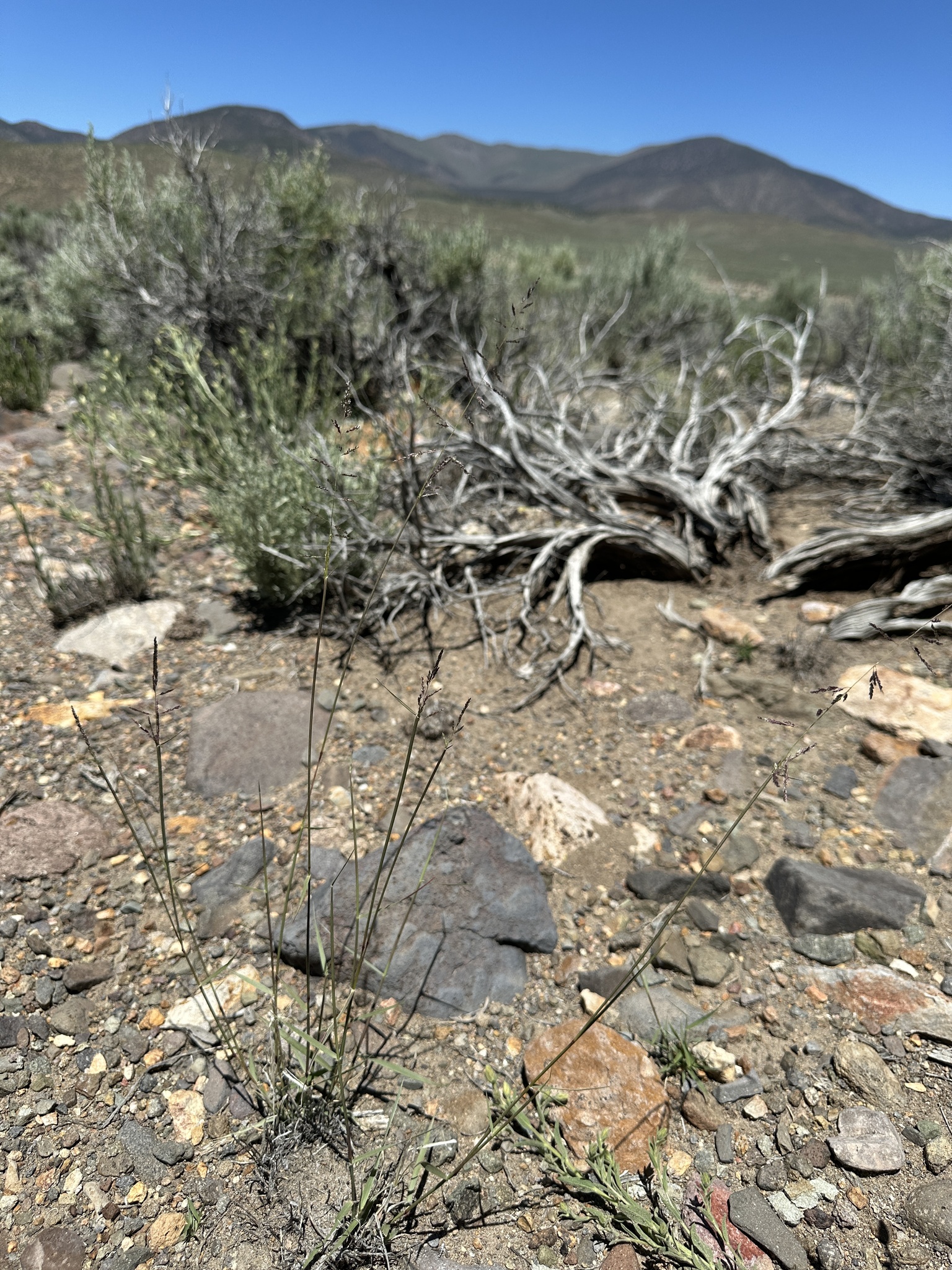
Sand dropseed growing in Lyon County, Nevada, in the Great Basin (CC BY 4.0).
Although sand dropseed prefers well-drained and permeable soils, populations are not restricted. Areas subjected to seasonal flooding are also inhabited by sand dropseed. Sand dropseed occurs under cottonwoods (Populus spp.) within intermittent streambeds [3] and upland areas of playa lakes [63]. Sand dropseed is also found within cottonwood communities of the South Platte and Arkansas river floodplains. [86].
Sand dropseed does not require high amounts of soil moisture. Populations are widespread in the Great Basin where summer rains are inconsistent from year to year and moderate in long-term averages [30].
Some states and relative elevational ranges where sand dropseed occurs:
- Arizona: 200 to 7000 feet (60-2100 m)[70]
- California: 100 to 900 feet (30-270 m)
- Colorado: 3500 to 8000 feet (1100-2400 m)
- Utah: up to 7,000 feet [130]
Plant Communities
Sand dropseed is a climax species in 3 or more associations and a member of the ancestral mixed prairie [31]. Common grass associates are poverty, purple, red and Woton's three awn (Aristida divaricata, A. purpurea, A. purpurea var. longiseta, A. pansa), big, sand and little bluestem (Andropogon gerardii var. gerardii, A. gerardii var. pavaipilus, Schizachyrium scoparium), black , blue and hairy grama (Bouteloua eriopoda, B. gracilis, B. hirsuta), buffalo grass (Buchloe dactyloides),galleta (Hilaria jamesii), Texas wintergrass (Nassella leucotricha), Texas bluegrass (Poa arachnifera), spike and mesa dropseed (Sporobolus flexuous, S. contractus), needlegrass (Heterostipa comata).
Sand dropseed is listed as an indicator or a dominant species in the following publications:
- Ecology of fire in short-grass prairie communities of the Kiowa National Grassland [43]
- Phyto-edaphic communities of the upper Rio Puerco watershed, New Mexico [44]
- Preliminary habitat types of a semiarid grassland [45]
- Classification and ordination of seral plant communities [71]
- Grassland ranges in the southern interior of British Columbia [89]
- The palouse grassland association in northern Utah [121]
- The grasslands of the southern interior of British Columbia [125]
- Plant communities and secondary succession in south-central South Dakota [126]
- Vegetation of the northern part of Cherry County, Nebraska [127]
Botanical Description
Sand dropseed is a warm-season [15,123], shallow-rooted [65], drought resistant [18,26,32], perennial bunch grass [123]. The solid stemmed [26] small tufts [61] of sand dropseed reach 12 to 40 inches (30-100 cm) tall [6,15].
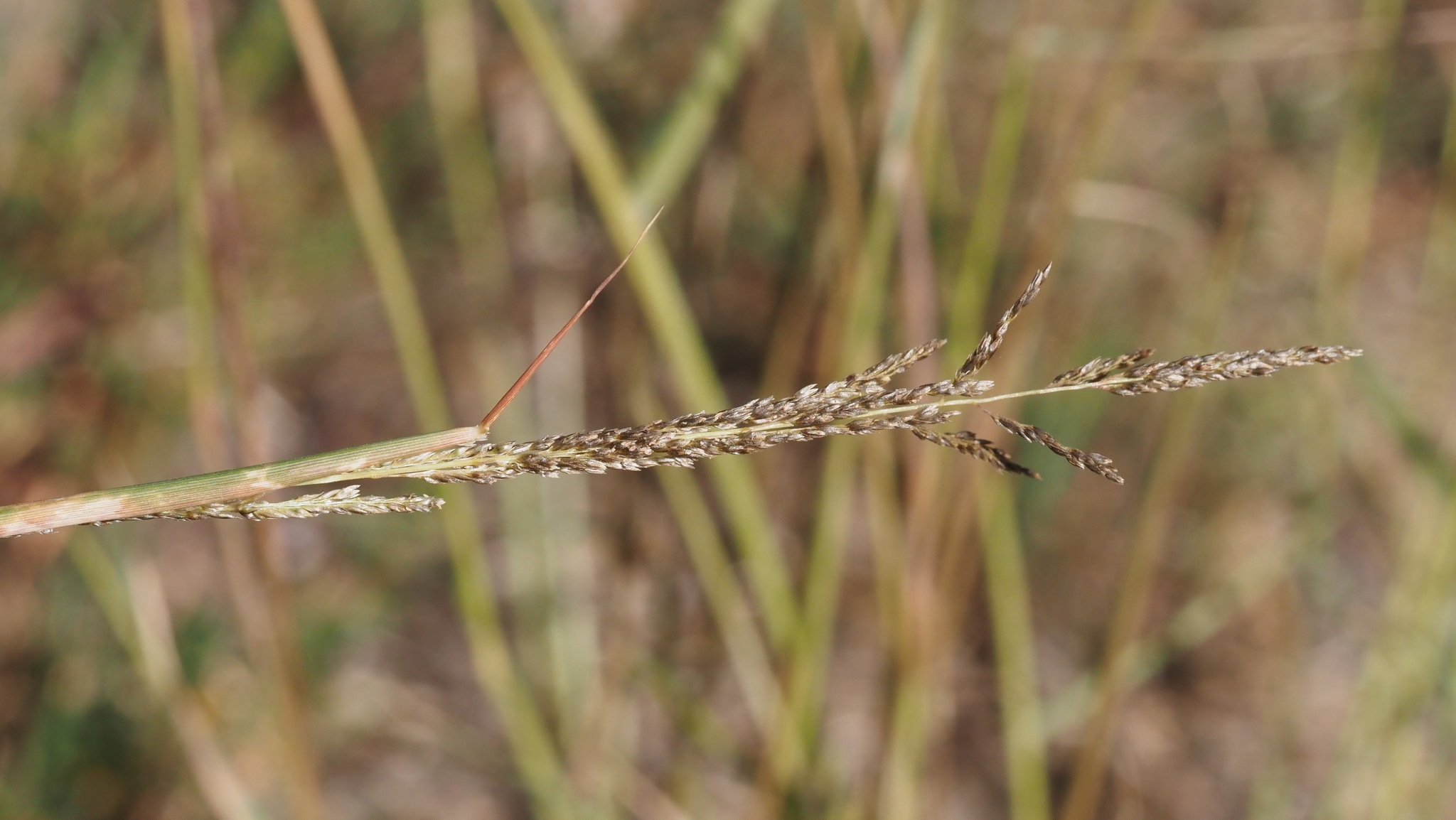
Sand dropseed is a polymorphic species [103,132]. Leaf blades range from 3 to 10 inches (8-25 cm) long and 8/100 to 2/10 of an inch (2-5 mm) wide [51]. The panicle is purplish to lead colored [91,98], with the inflorescence ranging 6 to 16 inches (15-40 cm) long [61,123] and 1 to 6 inches (2-15 cm) wide [123]. A sheath partially encloses the inflorescence [85].

A sand dropseed panicle (CC BY-NC 4.0).
The roots of sand dropseed are fine, 2/100 of an inch (0.5 mm) or less in diameter, stretching from a short stocky rhizome [35]. These fine roots may stretch laterally up to 10 inches (25 cm) and up to 31 inches (78 cm) down through the soil [35]. At 2 to 3 inches (5-8 cm) below the soil surface, lateral roots branch and rebranch continuously forming a dense, soil binding mat [35].
Raunkiaer Life Form
- Hemicryptophyte [106]
Seasonal Development
Phenology of sand dropseed corresponds to water availability. Sand dropseed has almost immediate response to available soil moisture [26]. In general, sand dropseed starts growth late spring [24,103,130] with seed maturing late summer to early fall [22,123]. This is slightly different in arid habitats. In the Chihuahuan desert of New Mexico, flowering was observed to begin in August with fruiting occurring in October [78]. Development occurs rapidly during periods of abundant moisture [26] with induced dormancy during periods of drought between rains [26]. Large amounts of late summer precipitation provide for the possibility of 2 or more reproductive phases [15].
Regeneration Processes
Regeneration is accomplished by seed which sets May to August [51] and by tillering from residual plant parts [123]. A prolific seed producer [31,34,50,60,91], one panicle of sand dropseed has yielded 10,000 seeds [22]. Sand dropseed produces small seed (5,298,000 seeds/lb) [4]. During seed maturation, the upper leaf sheath partially encloses the inflorescence. As the sheath weathers away, seed is disseminated [41]. Weathering of the previous growing season's leaf sheath and dispersal of seed may continue after new growth begins [31]. Rabbits may also be involved in dissemination of seed [21,108].
Contribution of seed to the seed bank is well documented, even within sites where sand dropseed is currently missing [50,110] or low in coverage [29,101]. This large contribution to the seed bank, both within and outside of sand dropseed communities, is consistent with the small seed size and wind dispersal [34]. An evaluation in western Iowa observed a large contribution of viable seed to the seed bank of a deciduous woodland (Cornus and Ulnus spp.) downhill from a ridge top grassland [110].
The number of viable seeds produced and relative seedling vigor are extremely variable for sand dropseed [1,32,39,76,110]. An evaluation in Colorado reported excellent germination and rapid growth [32]. Other studies have found sub-optimal germination and seedling response [39,76]. Compared to other species within the Kansas mixed-grass prairie, sand dropseed produces larger numbers of seed during periods of water stress [22]. In general, seedlings are usually slow to develop [6] but are persistent and drought resistant [6,60].
Studies evaluating germination cues recognize several methods to increase germination. Pricking seeds and scarifying with coarse sand helps germination [74]. Trampling by cattle provides another form of physical scarification. Good response was seen in burned blackbrush (Coleogyne ramosissima) areas aerially seeded and then trampled by cattle [67].
A warm temperature germination requirement suggests seedling emergence and survival are related to late spring environmental conditions [68]. Alternating temperatures between cold and warm gives the best germination responses. The presence of light in conjunction with alternating temperatures also increases germination percentages. For specific temperatures and alternation times please see references [112,114].
In the Nebraska sandhills, the highest germination percent came from seeds within the top 2 inches (5cm) of the soil [101].
Successional Status
Sand dropseed is a colonizer of drought disturbed and previously cultivated lands. Invasion and establishment upon previously abandoned cultivated lands in the southern plains has been observed [132]. Within semi-arid mixed prairie landscapes, sand dropseed is one of the 1st to colonize denuded sandy to silty soil rangelands [60]. Sand dropseed was the principle grass within a field 14 years out of cultivation in Colorado [32]. Sand dropseed is also good at colonizing open spaces associated with heavy grazing [95].
In Texas, sand dropseed is a common invader of short-grass and mid-height grass mesquite/buffalo grass (Buchloe dactyloides) communities [11].
Immediate Fire Effects
Sand dropseed is consumed rapidly by fire [120]. Individual plants are badly damaged [60,105] to completely killed by fire, with younger plants suffering less than older plants [64].
Postfire Regeneration Strategy
- Tussock graminoid
- Initial colonizer - on-site seed
- Secondary colonizer - on-site seed [119]
Fire Adaptations
Sand dropseed is usually killed or topkilled by fire [60,105,120]. Sand dropseed has the potential for postfire regeneration and seedling establishment as seeds within burned areas may remain viable [1]. However, the degree of postfire seedling establishment relative to unburned areas is under debate [1,87]. Postfire regeneration responses may differ according to relative abiotic and biotic site characteristics [1,87].
Plant Response to Fire
The extent of damage imposed by fire upon sand dropseed is related to season of burn. Early spring burns show positive responses in sand dropseed. Within a western wheatgrass (Pascopyrum smithii) community in South Dakota, a spring burn saw increased sand dropseed standing crop for 3 and 4 postburn years [134]. Results for two year successional spring burns in South Dakota also showed increased sand dropseed standing crop [134]. Spring burning in southern Nebraska was associated with positive sand dropseed response [115].
Under periods of water stress sand dropseed's ability to withstand fire is inhibited [60,139]. Drought and fire together cause greater deleterious effects than fire in wet periods [138]. In the northern Great Plains, sand dropseed is usually harmed by fire; however, tolerance to fire was observed when winter and spring precipitation reached levels 40% greater than normal [60]. During wet years (0-40% above normal precipitation) small and medium sized sand dropseed showed no negative responses to fire [137]. Effects are generally negatively associated when sand dropseed is actively growing compared to dormant phases [7,128].
A cheatgrass (Bromus tectorum)-sand dropseed-red threeawn grassland community in Utah was evaluated for 5 years to determine response to fire. The foliage cover (% of surface covered) before and after the fire (1956) was as follows [27]:
| Year | 1955 | 1957 | 1958 | 1960 | 1961 |
| Cheatgrass (% cover) | 37.9 | 64.2 | 55.5 | 59.2 | 63.3 |
| Sand dropseed (% cover) | 14.2 | 10.9 | 7.6 | 9.6 | 7.3 |
| Red threeawn (% cover) | 11.5 | 3.4 | 6.2 | 9.9 | 5 |
Few sand dropseed plants were completely killed by the fire [27].
Sand dropseed phytomass was observed after an October lightning fire in a Nebraska sandhills grassland. Results for the following growing season are summarized below [92]:
| Month | June | July | August | October |
| Phytomass (g/m2) | 3.0 | 4.7 | 7.6 | 11.7 |
| Month | June | July | August | October |
| Phytomass (g/m2) | 4.6 | 2.7 | 4.7 | 8.7 |
The percent occurrence of sand dropseed was monitored 4 and 8 years following a spring burn within a redberry juniper habitat in Texas. No significant differences were seen at 4 and 8 years postburn when compared to the unburned control [84]. In the Texas high plains, a decrease in basal diameter was observed with burns two years in a row, regardless of burn season (spring or fall). Single burns resulted in both increased diameters and no change. Seed stalk production decreased with fall and spring burning [128].
Fire Regimes
The following table describes historic fire regimes for many communities where sand dropseed occurs. For additional fire regime information, search FEIS for this species by entering the species name on the Advanced Search page and selecting “Fire Regime” as the publication type.
| Community or Ecosystem | Dominant Species | Fire Return Interval Range in Years |
|---|---|---|
| California chaparral | Adenostoma and/or Arctostaphylos spp. | <35 to <100 |
| bluestem prairie | Andropogon gerardii var. gerardii-Schizachyrium scoparium | <10 [23,82] |
| Nebraska sandhills prairie | Andropogon gerardii var. paucipilus-Schizachyrium scoparium | < 10 |
| sagebrush steppe | Artemisia tridentata/Pseudoroegneria spicata | 20-70 [23] |
| basin big sagebrush | Artemisia tridentata var. tridentata | 12-43 [113] |
| mountain big sagebrush | Artemisia tridentata var. vaseyana | 5-15 [140] |
| Wyoming big sagebrush | Artemisia tridentata var. wyomingensis | 10-70 (40)** [131,140] |
| coastal sagebrush | Artemisia californica | <35 to <100 |
| saltbush-greasewood | Atriplex confertifolia-Sarcobatus vermiculatus | <35 to <100 |
| desert grasslands | Bouteloua eriopoda and/or Pleuraphis mutica | 5-100 |
| plains grasslands | Bouteloua spp. | <35 |
| blue grama-needle-and-thread grass-western wheatgrass | Bouteloua gracilis-Hesperostipa comata-Pascopyrum smithii | <35 |
| blue gramma-buffalo grass | Bouteloua gracilis-Buchloe dactyloides | <35 |
| grama-galleta steppe | Bouteloua gracilis-Pleuraphis jamesii | <35 to <100 |
| blue grama-tobosa prairie | Bouteloua gracilis-Pleuraphis mutica | <35 to <100 |
| cheatgrass | Bromus tectorum | <10 |
| blackbrush | Coleogyne ramosissima | <35 to <100 |
| Arizona cypress | Cupressus arizonica | <35 to 200 |
| California steppe | Festuca-Danthonia spp. | <35 |
| juniper-oak savanna | Juniperus ashei-Quercus virginiana | <35 |
| western juniper | Juniperus occidentalis | 20-70 |
| Rocky Mountain juniper | Juniperus scopulorum | <35 |
| pinyon-juniper | Pinus-Juniperus spp. | <35 |
| Pacific ponderosa pine* | Pinus ponderosa var. ponderosa | 1-47 |
| Rocky Mountain ponderosa pine* | Pinus ponderosa var. scopulorum | 2-10 |
| mesquite | Prosopis glandulosa | <35 to <100 |
| mesquite-buffalo grass | Prosopis glandulosa-Buchloe dactyloides | <35 |
| Texas savanna | Prosopis glandulosa var. glandulosa | <10 |
| California oakwoods | Quercus spp. | <35 |
| oak-hickory | Quercus-Carya spp. | <35 |
| oak-juniper woodland (Southwest) | Quercus-Juniperus spp. | <35 to <200 |
| northeastern oak-pine | Quercus-Pinus spp. | 10 to <35 |
| oak savanna | Quercus macrocarpa/Andropogon gerardii-Schizachyrium scoparium | 2-14 |
| shinnery | Quercus mohriana | <35 |
| chestnut oak | Q. prinus | 3-8 |
| northern red oak | Quercus rubra | 10 to <35 |
| post oak-blackjack oak | Quercus stellata-Q. marilandica | <10 |
| black oak | Quercus velutina | <35 |
| live oak | Quercus virginiana | 10 to <100 [23] |
*Fire-return interval varies widely; trends in variation are noted in the Species Review. **(Mean). | ||
Fire Management Considerations
In general sand dropseed has the ability to show positive responses to fire in conjunction with reduced competition from neighboring species [134].
Federal Status
None
Other Status
No entry.
Importance to Wildlife and Livestock
Sand dropseed provides fair to good forage for livestock [51,69,123] and poor forage for wildlife [51,123]. Sand dropseed's value as livestock forage is regional and dependent upon season. In spring and summer months, sand dropseed is a useful source of forage in Arizona [6]. In southwestern regions, sand dropseed provides good winter forage [130].
Stems at the base of sand dropseed remain green the majority of winter. If fall rains are adequate, sand dropseed may have a period of renewed growth, producing new shoots in old sheaths [31]. The persistent green base throughout winter makes sand dropseed an important desert winter range plant [130]. Sand dropseed stays green longer on sand than clay [130]. A seasonal evaluation of cattle in New Mexico reports that use within blue grama (Bouteloua gracilis) upland range sites is greatest in September, January, and March [56]. In general, sand dropseed provides fair winter forage for domestic sheep [70,72]. However, it is not a preferred winter forage for domestic sheep in Utah. When other forage species are abundant sand dropseed is used lightly or not at all [54]. Sand dropseed is most preferred by cattle of dune rangelands [47].
Large mammals in general show little use of sand dropseed. Sand dropseed is not preferred by pronghorn [10], bison [100], elk, and deer [93]. The diet of Rocky Mountain bighorn sheep in Colorado includes sand dropseed [109].
Small mammals and birds utilize sand dropseed to a greater extent than large mammals. Scaled quail in the Oklahoma panhandle feed on sand dropseed [116]. Seeds are fed upon by rodents in the Shinnery oak-honey mesquite (Quercus havardii-Prosopis glandulosa) grasslands of New Mexico [13]. In Kansas, sand dropseed provides a major food source for black-tailed jackrabbits [38]. From June to August, sand dropseed is a preferred forage for black-tailed prairie dogs in Colorado [55]. Black-tailed prairie dogs in Oklahoma and South Dakota also utilize sand dropseed [58,96].
Palatability and Nutritional Value
Sand dropseed is palatable when green [11,18], but palatability declines with maturity [69,70,123]. Palatability varies from one region to another [70,130].
The palatability of sand dropseed to livestock and wildlife species has been rated as follows [37]:
| Animal | Colorado | Montana | North Dakota | Utah | Wyoming |
|---|---|---|---|---|---|
| Cattle | Fair | Fair | Fair | Fair | Fair |
| Domestic sheep | Fair | Fair | Fair | Poor | Fair |
| Horses | Fair | Fair | Fair | Fair | Fair |
| Pronghorn | — | Poor | Poor | Fair | Poor |
| Elk | — | Poor | — | Fair | Good |
| Mule Deer | — | Poor | Poor | Fair | Fair |
| White-tailed deer | — | — | Poor | — | Poor |
| Small mammals | Good | — | — | Good | Good |
| Small nongame birds | Good | — | — | Fair | Good |
| Upland game birds | — | — | Poor | Fair | Good |
| Waterfowl | — | — | — | Poor | Poor |
Sand dropseed is rated fair in energy value and poor in protein [37]. As a winter forage species of the Great Basin, sand dropseed provides excellent nutrition but is deficient in phosphorus, carotene and protein [31].
Nutritional value for livestock in accordance with relative phenological stage is [94]:
| Nutrient | Aerial fresh, mature | Aerial without lower stem, fresh, mature | Aerial without lower stem fresh, dormant |
|---|---|---|---|
| Dry matter | 100 | 100 | 100 |
| Ash | 6.3 | 9.4 | 9.3 |
| Crude fiber | 36.7 | 33.3 | 36.3 |
| Ether extract | 1.4 | 1.5 | 1.1 |
| N-free extract | 49.9 | 49.3 | 47.9 |
| Protein (N × 6.25) | 5.7 | 6.4 | 5.5 |
| Digestible protein - cattle | 2.7 | 3.3 | 2.5 |
| Digestible protein - horses | 2.4 | 3.0 | 2.2 |
| Digestible protein - domestic goats | 1.9 | 2.5 | 1.7 |
| Digestible protein - domestic sheep | 2.3 | 2.9 | 2.1 |
| Calcium | 0.30 | 0.32 | 0.40 |
| Phosphorus | 0.13 | 0.13 | 0.11 |
Cover Value
The degree to which sand dropseed provides cover for livestock and wildlife has been rated as follows [37]:
| Animal | North Dakota | Utah | Wyoming |
|---|---|---|---|
| Small mammals | — | Fair | Fair |
| Small nongame birds | Good | Fair | Fair |
| Upland game birds | Good | Fair | Poor |
| Waterfowl | — | Poor | Poor |
In southwest Kansas, sand dropseed provides overhead and ground cover for the lesser prairie chicken, which is listed as vulnerable to extirpation within the state [8].
Value for Rehabilitation of Disturbed Sites
Seed source is an important consideration for any reseeding project involving sand dropseed. A strong similarity in morphology and phenological development is seen between seedlings and the parent [103,114]. Heritable ecotypic variation in plant height, crown area and the number of inflorescences has been correlated with growing season length; increases are seen from north to south and from high to low elevations [103].
Sand dropseed is recommended as a component of grass seed mixtures for sandy and heavy to semi-sandy soils of New Mexico rangelands [18]. Good results are seen reseeding dry low lands receiving less than 9 inches (230mm) of precipitation within rangelands of Utah, Nevada, southern Idaho and western Wyoming [102].
Prolific seed production and large contributions to the soil seed bank are consistent throughout the many habitats of sand dropseed and may be linked to the initiation of sand dropseed within denuded landscapes [32]. A pioneer plant in disturbed areas [24], sand dropseed is an invader of sandy soils especially over grazed and blown-out areas [51]. Establishment within areas previously under water stress is also seen [25]. Within areas suffering from water stress, sand dropseed is an early native recolonizer and shows quick recovery [34]. Reseeded stands on desert grassland ranges had slow development, but seedlings were persistent and drought resistant [6]. Sand dropseed's rooting system helps stabilize sand hills and dunes [16,99].
Several studies have evaluated sand dropseed under different mulching practices within rangelands. When reseeding, sand dropseed responds well to straw mulch [17,111]. In a desert grassland, sand dropseed had increased germination and survival 1st and 2nd growing season when barley straw mulch was used [111]. The following study [49] provides a summary of the effect of litter upon seed bank germination within Arizona chaparral. Results are the number of seedlings emerging from four flats of 2 square feet of soil over a 72-day watering period [49]:
| 1Check | 2Burn | 3Removed | 4Scarify |
|---|---|---|---|
| 10 | 0 | 19 | 8 |
1Check = litter left in place on soil surface 2Burn = litter burned under 3 inches (8 cm) of excelsior 3Removed = litter carefully removed by hand 4Scarify = litter and soil top scarified with hand garden tool | |||
Use of sand dropseed for revegetating soils contaminated by heavy metals has varied results. No germination was observed for sand dropseed used in a seeding mixture applied to an abandoned New Mexico coal surface mine recently covered with 8 to 12 inches (20-30 cm) of topsoil [46]. Container grown plugs of sand dropseed were transplanted in May 1980, to revegetate a coalfield in Utah. Percent survival the 1st year was 91%; the 2nd year, 73%. Mortality observed the 1st year occurred only for sand dropseed individuals planted adjacent to plots of well-established cool season grasses [42].
Soil amendments (hay and composted bark) applied in 1977 to the Utah coalfields had no effect on survival. In the San Juan Basin of New Mexico, sand dropseed was used in a seeding mixture for reclaiming surface coal mines. In areas receiving less than 7 inches (180 mm) annual precipitation sand dropseed was dominant [118]. Sand dropseed is not recommended for revegetating Selenium (Se) enriched soils in Texas. Forage tissues retain high Se levels and shoot weights are drastically lowered within soils of high Se concentration [65].
Other Uses
Sand dropseed is an edible grass used by Native Americans [79].
Other Management Considerations
Abiotic and biotic environmental factors are important regulators of sand dropseed grazing response. Responses to grazing are variable, with increases, decreases and no changes reported [17,20,25,37,57,66,80,81,85,104,107,123,132]. A 59-year data set describing grazing responses in a shadscale community found sand dropseed coverage more responsive to climate and plant associates than grazing pressure. Increase in sand dropseed coverage corresponded spatially with lower coverage of winterfat (Krascheninnikovia lanata), shadscale (Atriplex confertifolia) and budsage (Artemisia spinescens) [5]. Sand dropseed response to domestic sheep winter grazing within the intermountain rangelands of Idaho, Wyoming, Utah and Nevada was directly related to the relative availability of other palatable grasses. An indirect relationship was seen between sand dropseed use and the presence of Indian ricegrass (Achnatherum hymenoides) [73]. A 12-year evaluation within the same region also found a direct positive response for sand dropseed to spring and summer precipitation [73]. Overall, sand dropseed shows good recovery to grazing in water stressed habitats [24,57]. Within arid shrublands, sand dropseed response to different grazing regimes is directly related to previous and current summer precipitation [97]. In the Nebraskan sandhills a direct positive correlation between fall moisture and regrowth was observed [47].
The New Mexico State University Extension recommends the following for seeding New Mexico rangelands with sand dropseed [4]:
| Seeds/ft2(@ 1 lb/acre) | Drilling 40'' rows | Broadcast or drilling (20'' or less) | Broadcast critical area | Soil adaptation |
|---|---|---|---|---|
| 123.0 | 0.5 | 0.5 | 0.5 | sandy, loam |
Sand dropseed shows variable responses to herbicides used for control of woody plant species. Tebuthiuron, used for sand shinnery oak control in Texas, had no effect on sand dropseed forage quality [14]. Similar response was observed using pelleted tebuthiuron to reduce big sagebrush (Artemisia tridentata) populations [88]. The use of 3,6-dichloropicolinic acid on a honey mesquite dominant habitat in Texas had no deleterious effects on sand dropseed populations. Overall production was greater in herbicide treated areas [75]. Picloram applied from June to October for control of redberry juniper (Juniperus erythrocarpa) in Texas reduced sand dropseed growth when spray came into direct contact with plants [117]. A similar study saw greater herbage yields under redberry juniper killed with picloram [52].
Sand dropseed does not compete well within pinyon-juniper (Pinus-Juniperus spp.) woodlands. Three years after the removal of pinyon-juniper, the overall production of sand dropseed increased by 31 times the original amount [28].
Sand dropseed does not respond well to severe soil disturbance. Spring disking within a mesquite rangeland of northwest Texas had significant deleterious effects (p < 0.05) upon sand dropseed coverage and frequency [133].
Table A1— Forest and range ecosystems, Bureau of Land Management (BLM) physiographic regions, Kuchler plant associations, Society for American Foresters (SAF) forest cover types, and Society for Rangeland Management (SRM) rangeland cover types in which this species occurs.
Forest and Range Ecosystems
- FRES14 Oak-pine
- FRES15 Oak-hickory
- FRES20 Douglas-fir
- FRES21 Ponderosa pine
- FRES26 Lodgepole pine
- FRES28 Western hardwoods
- FRES29 Sagebrush
- FRES30 Desert shrub
- FRES31 Shinnery
- FRES32 Texas savanna
- FRES33 Southwestern shrubsteppe
- FRES34 Chaparral-mountain shrub
- FRES35 Pinyon-juniper
- FRES36 Mountain grasslands
- FRES38 Plains grasslands
- FRES39 Prairie
- FRES40 Desert grasslands
- FRES42 Annual grasslands [48]
BLM Physiographic Regions
- 3 Southern Pacific Border
- 4 Sierra Mountains
- 5 Columbia Plateau
- 6 Upper Basin and Range
- 7 Lower Basin and Range
- 8 Northern Rocky Mountains
- 9 Middle Rocky Mountains
- 10 Wyoming Basin
- 11 Southern Rocky Mountains
- 12 Colorado Plateau
- 13 Rocky Mountain Piedmont
- 14 Great Plains
- 15 Black Hills Uplift
- 16 Upper Missouri Basin and Broken Lands [12]
Kuchler Plant Associations
- K005 Mixed conifer forest
- K010 Ponderosa shrub forest
- K011 Western ponderosa forest
- K012 Douglas-fir forest
- K016 Eastern ponderosa forest
- K017 Black Hills pine forest
- K018 Pine-Douglas-fir forest
- K019 Arizona pine forest
- K022 Great Basin pine forest
- K023 Juniper-pinyon woodland
- K024 Juniper steppe woodland
- K026 Oregon oakwoods
- K027 Mesquite bosques
- K028 Mosaic of K002 and K026
- K029 California mixed evergreen forest
- K030 California oakwoods
- K031 Oak-juniper woodland
- K032 Transition between K031 and K037
- K033 Chaparral
- K037 Mountain-mahogany-oak scrub
- K038 Great Basin sagebrush
- K039 Blackbrush
- K040 Saltbush-greasewood
- K043 Paloverde-cactus shrub
- K044 Creosotebush-tarbush
- K045 Ceniza shrub
- K047 Fescue-oatgrass
- K048 California steppe
- K050 Fescue-wheatgrass
- K051 Wheatgrass-bluegrass
- K053 Grama-galleta steppe
- K054 Grama-tobosa prairie
- K055 Sagebrush steppe
- K056 Wheatgrass-needlegrass shrubsteppe
- K057 Galleta-threeawn shrubsteppe
- K058 Grama-tobosa shrubsteppe
- K060 Mesquite savanna
- K061 Mesquite-acacia savanna
- K062 Mesquite-live oak savanna
- K063 Foothills prairie
- K064 Grama-needlegrass-wheatgrass
- K065 Grama-buffalo grass
- K066 Wheatgrass-needlegrass
- K067 Wheatgrass-bluestem-needlegrass
- K068 Wheatgrass-grama-buffalo grass
- K069 Bluestem-grama prairie
- K070 Sandsage-bluestem prairie
- K071 Shinnery
- K074 Bluestem prairie
- K075 Nebraska Sandhills prairie
- K076 Blackland prairie
- K077 Bluestem-sacahuista prairie
- K081 Oak savanna
- K082 Mosaic of K074 and K100
- K084 Cross Timbers
- K085 Mesquite-buffalo grass
- K086 Juniper-oak savanna
- K087 Mesquite-oak savanna
- K088 Fayette prairie
- K089 Black Belt
- K099 Maple-basswood forest
- K100 Oak-hickory
- K104 Appalachian oak forest [83]
SAF Cover Types
- 14 Northern pin oak
- 40 Post oak-blackjack oak
- 42 Bur oak
- 44 Chestnut oak
- 46 Eastern redcedar
- 52 White oak-black oak-northern red oak
- 53 White oak
- 63 Cottonwood
- 66 Ash juniper-redberry (Pinchot) juniper
- 67 Mohrs (shin) oak
- 68 Mesquite
- 69 Sand pine
- 72 Southern scrub oak
- 110 Black oak
- 210 Interior Douglas-fir
- 220 Rocky Mountain juniper
- 229 Pacific Douglas-fir
- 233 Oregon white oak
- 235 Cottonwood-willow
- 236 Bur oak
- 237 Interior ponderosa pine
- 238 Western juniper
- 239 Pinyon-juniper
- 240 Arizona cypress
- 241 Western live oak
- 242 Mesquite
- 243 Sierra Nevada mixed conifer
- 246 California black oak
- 247 Jeffrey pine
- 248 Knobcone pine
- 250 Blue oak-foothills pine [40]
SRM Rangeland Cover Types
- 101 Bluebunch wheatgrass
- 102 Idaho fescue
- 104 Antelope bitterbrush-bluebunch wheatgrass
- 105 Antelope bitterbrush-Idaho fescue
- 106 Bluegrass scabland
- 107 Western juniper/big sagebrush/bluebunch wheatgrass
- 110 Ponderosa pine-grassland
- 201 Blue oak woodland
- 203 Riparian woodland
- 206 Chamise chaparral
- 207 Scrub oak mixed chaparral
- 209 Montane shrubland
- 210 Bitterbrush
- 211 Creosotebush scrub
- 212 Blackbush
- 215 Valley grassland
- 216 Montane meadows
- 304 Idaho fescue-bluebunch wheatgrass
- 309 Idaho fescue-western wheatgrass
- 310 Needle-and-thread-blue grama
- 311 Rough fescue-bluebunch wheatgrass
- 314 Big sagebrush-bluebunch wheatgrass
- 315 Big sagebrush-Idaho fescue
- 316 Big sagebrush-rough fescue
- 320 Black sagebrush-bluebunch wheatgrass
- 321 Black sagebrush-Idaho fescue
- 322 Curlleaf mountain-mahogany-bluebunch wheatgrass
- 401 Basin big sagebrush
- 402 Mountain big sagebrush
- 403 Wyoming big sagebrush
- 405 Black sagebrush
- 406 Low sagebrush
- 408 Other sagebrush types
- 409 Tall forb
- 412 Juniper-pinyon woodland
- 413 Gambel oak
- 414 Salt desert shrub
- 415 Curlleaf mountain-mahogany
- 416 True mountain-mahogany
- 422 Riparian
- 501 Saltbush-greasewood
- 502 Grama-galleta
- 503 Arizona chaparral
- 504 Juniper-pinyon pine woodland
- 505 Grama-tobosa shrub
- 506 Creosotebush-bursage
- 508 Creosotebush-tarbush
- 509 Transition between oak-juniper woodland and mahogany-oak association
- 601 Bluestem prairie
- 602 Bluestem-prairie sandreed
- 603 Prairie sandreed-needlegrass
- 604 Bluestem-grama prairie
- 605 Sandsage prairie
- 606 Wheatgrass-bluestem-needlegrass
- 607 Wheatgrass-needlegrass
- 608 Wheatgrass-grama-needlegrass
- 609 Wheatgrass-grama
- 610 Wheatgrass
- 611 Blue grama-buffalo grass
- 612 Sagebrush-grass
- 613 Fescue grassland
- 614 Crested wheatgrass
- 615 Wheatgrass-saltgrass-grama
- 701 Alkali sacaton-tobosagrass
- 702 Black grama-alkali sacaton
- 703 Black grama-sideoats grama
- 704 Blue grama-western wheatgrass
- 705 Blue grama-galleta
- 706 Blue grama-sideoats grama
- 707 Blue grama-sideoats grama-black grama
- 708 Bluestem-dropseed
- 709 Bluestem-grama
- 710 Bluestem prairie
- 711 Bluestem-sacahuista prairie
- 712 Galleta-alkali sacaton
- 713 Grama-muhly-threeawn
- 714 Grama-bluestem
- 715 Grama-buffalo grass
- 716 Grama-feathergrass
- 717 Little bluestem-Indiangrass-Texas wintergrass
- 718 Mesquite-grama
- 720 Sand bluestem-little bluestem (dunes)
- 722 Sand sagebrush-mixed prairie
- 724 Sideoats grama-New Mexico feathergrass-winterfat
- 727 Mesquite-buffalo grass
- 728 Mesquite-granjeno-acacia
- 729 Mesquite
- 730 Sand shinnery oak
- 731 Cross timbers-Oklahoma
- 732 Cross timbers-Texas (little bluestem-post oak)
- 733 Juniper-oak
- 734 Mesquite-oak
- 801 Savanna
- 802 Missouri prairie [118]
1. Abrams, Marc D. 1988. Effects of burning regime on buried seed banks and canopy coverage in a Kansas tallgrass prairie. The Southwestern Naturalist. 33(1): 65-70. [4415]
2. Abrams, Marc D. 1992. Fire and the development of oak forests. BioScience. 42(5): 346-353. [19215]
3. Albertson, F. W.; Weaver, J. E. 1945. Injury and death or recovery of trees in prairie climate. Ecological Monographs. 15: 393-433. [4328]
4. Allison, Chris. 1988. Seeding New Mexico rangeland. Circular 525. Las Cruces, NM: New Mexico State University, College of Agriculture and Home Economics, Cooperative Extension Service. 15 p. [11830]
5. Alzerreca-Angelo, Humberto; Schupp, Eugene W.; Kitchen, Stanley G. 1998. Sheep grazing and plant cover dynamics of a shadscale community. Journal of Range Management. 51(2): 214-222. [28454]
6. Anderson, Darwin; Hamilton, Louis P.; Reynolds, Hudson G.; Humphrey, Robert R. 1953. Reseeding desert grassland ranges in southern Arizona. Bulletin 249. Tucson, AZ: University of Arizona, Agricultural Experiment Station. 32 p. [4439]
7. Anderson, Kling L.; Smith, Ed F.; Owensby, Clenton E. 1970. Burning bluestem range. Journal of Range Management. 23: 81-92. [323]
8. Applegate, Roger D.; Riley, Terry Z. 1998. Lesser prairie-chicken management. Rangelands. 20(4): 13-15. [28875]
9. Arno, Stephen F. 1980. Forest fire history in the northern Rockies. Journal of Forestry. 78(8): 460-465. [11990]
10. Beale, Donald M.; Smith, Arthur D. 1970. Forage use, water consumption, and productivity of pronghorn antelope in western Utah. Journal of Wildlife Management. 34(3): 570-582. [6911]
11. Bedunah, Donald J.; Sosebee, Ronald E. 1984. Forage response of a mesquite-buffalograss community following range rehabilitation. Journal of Range Management. 37(6): 483-487. [5797]
12. Bernard, Stephen R.; Brown, Kenneth F. 1977. Distribution of mammals, reptiles, and amphibians by BLM physiographic regions and A.W. Kuchler's associations for the eleven western states. Tech. Note 301. Denver, CO: U.S. Department of the Interior, Bureau of Land Management. 169 p. [434]
13. Best, Troy L.; Skupski, Marian P.; Smartt, Richard A. 1993. Food habits of sympatric rodents in the shinnery oak - mesquite grasslands of southeastern New Mexico. The Southwestern Naturalist. 38(3): 224-235. [22136]
14. Biondini, Mario; Pettit, R. D.; Jones, Virgil. 1986. Nutritive value of forages on sandy soils as affected by tebuthiuron. Journal of Range Management. 39(5): 396-399. [15597]
15. Blaisdell, James P.; Holmgren, Ralph C. 1984. Managing Intermountain rangelands--salt-desert shrub ranges. Gen. Tech. Rep. INT-163. Ogden, UT: U.S. Department of Agriculture, Forest Service, Intermountain Forest and Range Experiment Station. 52 p. [464]
16. Bogan, Michael A. 1997. Historical changes in the landscape and vertebrate diversity of north central Nebraska. In: Knopf, Fritz L.; Samson, Fred B., eds. Ecology and conservation of Great Plains vertebrates. Ecological Studies, Vol. 125. New York: Springer-Verlag: 105-130. [28994]
17. Bragg, Thomas B. 1978. Effects of burning, cattle grazing, and topography on vegetation of the choppy sands range site in the Nebraska Sandhills Prairie. In: Hyder, Donald N., ed. Proceedings, 1st international rangeland congress; 1978 August 14-18; Denver, CO. Denver, CO: Society for Range Management: 248-253. [4468]
18. Bridges, J. O. 1942. Reseeding practices for New Mexico ranges. Bull. 291. Las Cruces, NM: New Mexico State University, Agricultural Experiment Station. 48 p. [5204]
19. Britt, Thomas L. 1980. Reestablishment of pronghorn antelope on the Arizona Strip. In: Proceedings, 9th pronghorn antelope workshop; 1980 April 8-10; Rio Rico, AZ. [Place of publication unknown]: [Publisher unknown]: 226-245. On file with: U.S. Department of Agriculture, Forest Service, Intermountain Research Station, Fire Sciences Laboratory, Missoula, MT. [26537]
20. Brock, John H.; Haas, R. H.; Shaver, J. C. 1978. Zonation of herbaceous vegetation associated with honey mesquite in North-central Texas. In: Hyder, Donald N., editor. Proceedings of the first international rangeland congress; 1978 August 14-18; Denver, CO. Denver, CO: Society for Range Management: 187-189. [5494]
21. Brown, H. Leo. 1947. Coaction of jack rabbit, cottontail, and vegetation in a mixed prairie. Transactions, Kansas Academy of Science. 50(1): 28-44. [35543]
22. Brown, H. Ray. 1943. Growth and seed yields of native prairie plants in various habitats of the mixed-prairie. Transactions, Kansas Academy of Science. 46: 87-99. [26146]
23. Brown, James K.; Smith, Jane Kapler, eds. 2000. Wildland fire in ecosystems: effects of fire on flora. Gen. Tech. Rep. RMRS-GTR-42-vol. 2. Ogden, UT: U.S. Department of Agriculture, Forest Service, Rocky Mountain Research Station. 257 p. [33874]
24. Burzlaff, Donald F. 1962. A soil and vegetation inventory and analysis of three Nebraska Sandhills range sites. Research Bulletin 206. Lincoln, NE: University of Nebraska College of Agriculture, Agricultural Experiment Station. 33 p. [21600]
25. Butler, Jack L.; Paintner, Kara J. 1991. Rangeland recovery potential: soil seed content and seed viability. In: Plumb, Glenn E., ed. University of Wyoming: National Park Service Research Center 15th annual report 1991. Laramie, WY: University of Wyoming: 130-135. [29951]
26. Canfield, R. H. 1948. Perennial grass composition as an indicator of condition of Southwestern mixed grass ranges. Ecology. 29: 190-204. [5308]
27. Christensen, Earl M. 1964. Changes in composition of a Bromus tectorum-Sporobolus cryptandrus-Aristida longiseta community following fire. Utah Academy Proceedings. 41(Part I): 53-57. [626]
28. Clary, Warren P.; Jameson, Donald A. 1981. Herbage production following tree and shrub removal in the pinyon-juniper type of Arizona. Journal of Range Management. 34(2): 109-113. [642]
29. Coffin, D. P.; Lauenroth, W. K. 1989. Small scale disturbances and successional dynamics in a shortgrass plant community: interactions of disturbance characteristics. Phytologia. 67(3): 258-286. [34887]
30. Comstock, Jonathan P.; Ehleringer, James R. 1992. Plant adaptation in the Great Basin and Colorado Plateau. The Great Basin Naturalist. 52(3): 195-215. [20094]
31. Cook, C. Wayne; Stoddart, L. A.; Harris, Lorin E. 1954. The nutritive value of winter range plants in the Great Basin as determined with digestion trials with sheep. Bulletin 372. Logan, UT: Utah State University, Agricultural Experiment Station. 56 p. [682]
32. Costello, David F. 1944. Natural revegetation of abandoned plowed land in the mixed prairie association of northeastern Colorado. Ecology. 25(3): 312-326. [25703]
33. Coupland, R. T. 1992. Overview of the grasslands of North America. In: Coupland, R. T., ed. Natural grasslands: Introduction and western hemisphere. Ecosystems of the World 8A. Amsterdam, Netherlands: Elsevier Science Publishers B. V: 147-149. [23824]
34. Coupland, Robert T. 1958. The effects of fluctuations in weather upon the grasslands of the Great Plains. Botanical Review. 24(5): 273-317. [12502]
35. Coupland, Robert T.; Johnson, R. E. 1965. Rooting characteristics of native grassland species of Saskatchewan. Journal of Ecology. 53: 475-507. [702]
36. Denyes, H. Arliss. 1956. Natural terrestrial communities of Brewster County, Texas, with special reference to the distribution of the mammals. The American Midland Naturalist. 55(2): 289-320. [10862]
37. Dittberner, Phillip L.; Olson, Michael R. 1983. The plant information network (PIN) data base: Colorado, Montana, North Dakota, Utah, and Wyoming. FWS/OBS-83/86. Washington, DC: U.S. Department of the Interior, Fish and Wildlife Service. 786 p. [806]
38. Dunn, John P.; Chapman, Joseph A.; Marsh, Rex E. 1982. Jackrabbits: Lepus californicus and allies. In: Chapman, J. A.; Feldhamer, G. A., eds. Wild mammals of North America: biology, management and economics. Baltimore, MD: The John Hopkins University Press: 124-145. [25016]
39. Eddleman, Lee E.; Meinhardt, Patricia L. 1981. Seed viability and seedling vigor in selected prairie plants. In: Stuckey, Ronald L.; Reese, Karen J., eds. The Prairie Peninsula--in the "shadow" of Transeau: Proceedings, 6th North American prairie conference; 1978 August 12-17; Columbus, OH. Ohio Biological Survey Biological Notes No. 15. Columbus, OH: Ohio State University, College of Biological Sciences: 213-217. [3410]
40. Eyre, F. H., ed. 1980. Forest cover types of the United States and Canada. Washington, DC: Society of American Foresters. 148 p. [905]
41. Faber-Langendoen, Don; Maycock, Paul F. 1994. A vegetation analysis of tallgrass prairie in southern Ontario. In: Wickett, Robert G.; Lewis, Patricia Dolan; Woodliffe, Allen; Pratt, Paul, eds. Spirit of the land, our prairie legacy: Proceedings, 13th North American prairie conference; 1992 August 6-9; Windsor, ON. Windsor, ON: Department of Parks and Recreation: 17-32. [24674]
42. Ferguson, Robert B.; Frischknecht, Neil C. 1985. Reclamation on Utah's Emery and Alton coal fields: techniques and plant materials. Res. Pap. INT-335. Ogden, UT: U.S. Department of Agriculture, Forest Service, Intermountain Forest and Range Experiment Station. 78 p. [917]
43. Ford, Paulette L.; McPherson, Guy R. 1996. Ecology of fire in shortgrass prairie communities of the Kiowa National Grassland. In: Warwick, Charles, ed. 15th North American prairie conference: Proceedings; 1996 October 23-26; St. Charles, IL. Bend, OR: The Natural Areas Association: 71-76. [30254]
44. Francis, Richard E. 1986. Phyto-edaphic communities of the Upper Rio Puerco Watershed, New Mexico. Res. Pap. RM-272. Fort Collins, CO: U.S. Department of Agriculture, Forest Service, Rocky Mountain Forest and Range Experiment Station. 73 p. [954]
45. Francis, Richard E.; Aldon, Earl F. 1983. Preliminary habitat types of a semiarid grassland. In: Moir, W. H.; Hendzel, Leonard, tech. coords. Proceedings of the workshop on Southwestern habitat types; 1983 April 6-8; Albuquerque, NM. Albuquerque, NM: U.S. Department of Agriculture, Forest Service, Southwestern Region: 62-66. [956]
46. Francis, Richard E.; Fresquez, P. R.; Gonzales, G. J. 1991. Vegetation establishment on reclaimed coal mine spoils in northwestern New Mexico. Res. Note RM-511. Fort Collins, CO: U.S. Department of Agriculture, Forest Service, Rocky Mountain Forest and Range Experiment Station. 4 p. [17113]
47. Frolik, A. L.; Shepherd, W. O. 1940. Vegetative composition and grazing capacity of a typical area of Nebraska sandhills rangeland. Research Bulletin No. 117. Lincoln, NE: University of Nebraska Agricultural Experimental Station. 39 p. [5417]
48. Garrison, George A.; Bjugstad, Ardell J.; Duncan, Don A.; [and others]. 1977. Vegetation and environmental features of forest and range ecosystems. Agric. Handb. 475. Washington, DC: U.S. Department of Agriculture, Forest Service. 68 p. [998]
49. Glendenington, G. E.; Pase, C. P. 1964. Effects of litter treatment on germination of species found under manzanita. Journal of Range Management. 17: 265-266. [5701]
50. Goss, W. L. 1924. The vitality of buried seeds. Journal of Agricultural Research. 29(7): 349-362. [35541]
51. Gould, Frank W. 1978. Common Texas grasses. College Station, TX: Texas A&M University Press. 267 p. [5035]
52. Graves, Robbie G. 1971. Effects of redberry juniper control on understory vegetation. Lubbock, TX: Texas Tech University. 86 p. Thesis. [19988]
53. Great Plains Flora Association. 1986. Flora of the Great Plains. Lawrence, KS: University Press of Kansas. 1392 p. [1603]
54. Green, Lisle R.; Sharp, Lee A.; Cook, C. Wayne; Harris, Lorin E. 1951. Utilization of winter range forage by sheep. Journal of Range Management. 4: 233-241. [7891]
55. Hansen, Richard M.; Gold, Ilyse K. 1977. Black-tailed prairie dogs, desert cottontails and cattle trophic relations on shortgrass range. Journal of Range Management. 30(3): 210-214. [4644]
56. Havstad, Kris; Pieper, Rex D.; Donart, Gary B.; {and others]. 1979. Cattle diets on a fertilized blue grama upland range site. Journal of Range Management. 32(5): 398-401. [4646]
57. Herbel, Carlton H.; Anderson, Kling L. 1959. Response of true prairie vegetation on major Flint Hills range sites to grazing treatment. Ecological Monographs. 29(2): 171-186. [19]
58. Herman, Margaret; Willard, E. Earl. 1978. Black-footed ferret and its habitat. Missoula, MT: U.S. Department of Agriculture, Forest Service, National Forest System Cooperative Forestry, Forestry Research, Region 1. 24 p. [21527]
59. Hickman, James C., ed. 1993. The Jepson manual: Higher plants of California. Berkeley, CA: University of California Press. 1400 p. [21992]
60. Higgins, Kenneth F.; Kruse, Arnold D.; Piehl, James L. 1989. Effects of fire in the Northern Great Plains. Ext. Circ. EC-761. Brookings, SD: South Dakota State University, Cooperative Extension Service, South Dakota Cooperative Fish and Wildlife Research Unit. 47 p. [14749]
61. Hitchcock, A. S. 1951. Manual of the grasses of the United States. Misc. Publ. No. 200. Washington, DC: U.S. Department of Agriculture, Agricultural Research Administration. 1051 p. [2nd edition revised by Agnes Chase in two volumes. New York: Dover Publications, Inc.]. [1165]
62. Hitchcock, C. Leo; Cronquist, Arthur. 1973. Flora of the Pacific Northwest. Seattle, WA: University of Washington Press. 730 p. [1168]
63. Hoagland, Bruce W.; Collins, Scott L. 1997. Heterogeneity in shortgrass prairie vegetation: the role of playa lakes. Journal of Vegetation Science. 8(2): 277-286. [28437]
64. Hopkins, Harold; Albertson, F. W.; Riegel, Andrew. 1948. Some effects of burning upon a prairie in west-central Kansas. Transactions of the Kansas Academy of Science. 51(1): 131-141. [1191]
65. Hossner, L. R.; Woodard, H. J.; Bush, Janis. 1992. Growth and selenium uptake of range plants propagated in uranium mine spoils. Journal of Plant Nutrition. 15(12): 2743-2761. [25178]
66. Houston, Walter R.; Woodward, R. R. 1966. Effects of stocking rates on range vegetation and beef cattle production in the Northern Great Plains. Technical Bulletin No. 1357. Washington, DC: U.S. Department of Agriculture, Agricultural Research Service. 58 p. In cooperation with: Montana Agricultural Experiment Station. [4285]
67. Hughes, Lee E. 1985. Is wildfire really bad? Rangelands. 7(3): 111-113. [1202]
68. Humphrey, L. David; Schupp, Eugene W. 1999. Temporal patterns of seeding emergence and early survival of Great Basin perennial plant species. The Great Basin Naturalist. 59(1): 35-49. [29654]
69. Humphrey, Robert R. 1955. Forage production on Arizona ranges, IV. Coconino, Navajo, Apache Counties: A study in range condition. Bulletin 266. Tucson, AZ: University of Arizona, Agricultural Experiment Station. 84 p. [5087]
70. Humphrey, Robert R. 1960. Arizona range grasses: Description--forage value--management. Tucson, AZ: University of Arizona, Agricultural Experiment Station. 104 p. [5004]
71. Huschle, Gary; Hironaka, M. 1980. Classification and ordination of seral plant communities. Journal of Range Management. 33(3): 179-182. [1225]
72. Hutchings, Selar S. 1954. Managing winter sheep range for greater profit. Ogden, UT: U.S. Department of Agriculture, Forest Service. 46 p. [23306]
73. Hutchings, Selar S.; Stewart, George. 1953. Increasing forage yields and sheep production on Intermountain winter ranges. Circular No. 925. Washington, DC: U.S. Department of Agriculture. 63 p. [1227]
74. Jackson, Carola V. 1928. Seed germination in certain New Mexico range grasses. Botanical Gazette. 86: 270-294. [3688]
75. Jacoby, P. W.; Meadors, C. H.; Foster, M. A.; Hartmann, F. S. 1982. Honey mesquite control and forage response in Crane County, Texas. Journal of Range Management. 35: 424-426. [5465]
76. Judd, B. I.; Jackson, M. L. 1939. Natural succession of vegetation on abandoned farm lands in the Rosebud soil area of western Nebraska. Journal of the American Society of Agronomy. 31(6): 541-557. [29788]
77. Kartesz, John T. 1994. A synonymized checklist of the vascular flora of the United States, Canada, and Greenland. Volume I--checklist. 2nd ed. Portland, OR: Timber Press. 622 p. [23877]
78. Kemp, Paul R. 1983. Phenological patterns of Chihuahuan desert plants in relation to the timing of water availability. Journal of Ecology. 71: 427-436. [5054]
79. Kindscher, Kelly. 1988. The ethnobotanical use of native prairie plants as food. In: Davis, Arnold; Stanford, Geoffrey, eds. The prairie: roots of our culture; foundation of our economy: Proceedings, 10th North American prairie conference; 1986 June 22-26; Denton, TX. Dallas, TX: Native Prairie Association of Texas: 02.04: 1-3. [25585]
80. Kleiner, Edgar F. 1983. Successional trends in an ungrazed, arid grassland over a decade. Journal of Range Management. 36(1): 114-118. [21578]
81. Klipple, G. E.; Costello, David F. 1960. Vegetation and cattle responses to different intensities of grazing on short-grass ranges on the Central Great Plains. Technical Bulletin No. 1216. Washington, DC: U.S. Department of Agriculture. 82 p. [4284]
82. Kucera, Clair L. 1981. Grasslands and fire. In: Mooney, H. A.; Bonnicksen, T. M.; Christensen, N. L.; [and others], technical coordinators. Fire regimes and ecosystem properties: Proceedings of the conference; 1978 December 11-15; Honolulu, HI. Gen. Tech. Rep. WO-26. Washington, DC: U.S. Department of Agriculture, Forest Service: 90-111. [4389]
83. Kuchler, A. W. 1964. United States [Potential natural vegetation of the conterminous United States]. Special Publication No. 36. New York: American Geographical Society. 1:3,168,000; colored. [3455]
84. Leif, Anthony P. 1987. Bobwhite and scaled quail responses to burning of redberry juniper-dominated rangelands. Lubbock, TX: Texas Tech University. 84 p. Thesis. [23080]
85. Lewis, James K.; Van Dyne, George M.; Albee, Leslie R.; Whetzal, Frank W. 1956. Intensity of grazing: Its effect on livestock and forage production. Bulletin 459. Brookings, SD: South Dakota State College, Agricultural Experiment Station. 44 p. [11737]
86. Lindauer, Ivo E. 1983. A comparison of the plant communities of the South Platte and Arkansas River drainages in eastern Colorado. The Southwestern Naturalist. 28(3): 249-259. [5886]
87. Lippert, Robert D.; Hopkins, Harold H. 1950. Study of viable seeds in various habitats in mixed prairie. Transactions of the Kansas Academy of Science. 53(3): 355-364. [1461]
88. McDaniel, Kirk C.; Balliette, John F. 1986. Control of big sagebrush (Artemisia tridentata) with pelleted tebuthiuron. Weed Science. 34: 276-280. [1596]
89. McLean, Alastair; Marchand, Leonard. 1968. Grassland ranges in the southern interior of British Columbia. Publication 1319. Ottawa, Canada: Canada Department of Agriculture, Division. 18 p. [1622]
90. Moir, W. H. 1983. A series vegetation classification for Region 3. In: Moir, W. H.; Hendzel, Leonard, tech. coords. Proceedings of the workshop on Southwestern habitat types; 1983 April 6-8; Albuquerque, NM. Albuquerque, NM: U.S. Department of Agriculture, Forest Service, Southwestern Region: 91-95. [1672]
91. Morris, H. E.; Booth, W. E.; Payne, G. F.; Stitt, R. E. 1950. Important grasses on Montana ranges. Bull. No. 470. Bozeman, MT: Montana Agricultural Experiment Station. 52 p. [5520]
92. Morrison, Linda C.; DuBois, John D.; Kapustka, Lawrence A. 1986. The vegetational response of a Nebraska sandhills grassland to a naturally occurring fall burn. Prairie Naturalist. 18(3): 179-184. [1696]
93. Mower, Kerry J.; Smith, H. Duane. 1989. Diet similarity between elk and deer in Utah. The Great Basin Naturalist. 49(4): 552-555. [9929]
94. National Academy of Sciences. 1971. Atlas of nutritional data on United States and Canadian feeds. Washington, DC: National Academy of Sciences. 772 p. [1731]
95. Nelson, Enoch W. 1934. The influence of precipitation and grazing upon black grama grass range. Technical Bulletin No. 409. Washington, DC: U.S. Department of Agriculture. 32 p. [4175]
96. O'Meilia, M. E.; Knopf, F. L.; Lewis, J. C. 1982. Some consequences of competition between prairie dogs and beef cattle. Journal of Range Management. 35(5): 580-585; 1982. [1790]
97. Odgen, Phil R. 1975. Biological and environmental constraints for livestock production on arid shrublands. In: Hyder, D. N., ed. Arid shrublands--proceedings of the third workshop of the United States/Australia rangelands panel; 1973 March 26-April 5; Tucson, Arizona. Denver, CO: Society for Range Management: 89-90. [1794]
98. Ohlenbuseh, Paul D.; Hodges, Elizabeth P.; Pope, Susan. 1983. Range grasses of Kansas. Manhattan, KS: Kansas State University, Cooperative Extension Service. 23 p. [5316]
99. Paulsen, Harold A., Jr.; Ares, Fred N. 1962. Grazing values and management of black grama and tobosa grasslands and associated shrub ranges of the Southwest. Tech. Bull. No. 1270. Washington, DC: U.S. Department of Agriculture, Forest Service. 56 p. [4041]
100. Peden, Donald G. 1976. Botanical composition of bison diets on shortgrass plains. The American Midland Naturalist. 96(1): 225-229. [24596]
101. Perez, Claudio J.; Waller, Steven S.; Moser, Lowell E.; [and others]. 1998. Seedbank characteristics of a Nebraska sandhills prairie. Journal of Range Management. 51(1): 52-62. [28570]
102. Plummer, A. Perry; Hull, A. C., Jr.; Stewart, George; Robertson, Joseph H. 1955. Seeding rangelands in Utah, Nevada, southern Idaho and western Wyoming. Agric. Handb. 71. Washington, DC: U.S. Department of Agriculture, Forest Service. 73 p. [11736]
103. Quinn, James A.; Ward, Richard T. 1969. Ecological differentiation in sand dropseed (Sporobolus cryptandrus) Ecological Monographs. 39(1): 61-78. [30452]
104. Quinton, Dee A.; McLean, Alistair; Stout, Darryl G. 1982. Vegetative and reproductive growth of bluebunch wheatgrass in interior British Columbia. Journal of Range Management. 35(1): 46-51. [1927]
105. Rasmussen, G. Allen; McPherson, Guy R.; Wright, Henry A. 1986. Prescribed burning juniper communities in Texas. Management Note 10. Lubbock, TX: Texas Tech University, College of Agricultural Sciences. 5 p. [4043]
106. Raunkiaer, C. 1934. The life forms of plants and statistical plant geography. Oxford: Clarendon Press. 632 p. [2843]
107. Reed, Merton J.; Peterson, Roald A. 1961. Vegetation, soil, and cattle responses to grazing on Northern Great Plains range. Tech. Bull. 1252. Washington, DC: U.S. Department of Agriculture, Forest Service. 79 p. [4286]
108. Riegel, Andrew. 1942. Some observations of the food coactions of rabbits in western Kansas during periods of stress. Transactions, Kansas Academy of Science. 45: 369-373. [35542]
109. Rominger, Eric M.; Dale, Alan R.; Bailey, James A. 1988. Shrubs in the summer diet of Rocky Mountain bighorn sheep. Journal of Wildlife Management. 52(1): 47-50. [3885]
110. Rosburg, Thomas R.; Jurik, Thomas W.; Glenn-Lewin, David C. 1994. Seed banks of communities in the Iowa Loess Hills: ecology & potential contribution to restoration of native grassland. In: Wickett, Robert G.; Lewis, Patricia Dolan; Woodliffe, Allen; Pratt, Paul, eds. Spirit of the land, our prairie legacy: Proceedings, 13th North American prairie conference; 1992 August 6-9; Windsor, ON. Windsor, ON: Department of Parks and Recreation: 221-237. [24697]
111. Roundy, Bruce A.; Biedenbender, Sharon H. 1995. Revegetation in the desert grassland. In: McClaran, Mitchel P.; Van Devender, Thomas R. The desert grassland. Tucson, AZ: The University of Arizona Press: 265-303. [29846]
112. Sabo, David G.; Johnson, Gordon V.; Martin, William C.; Aldon, Earl F. 1979. Germination requirements of 19 species of arid land plants. Res. Pap. RM-210. Fort Collins, CO: U.S. Department of Agriculture, Forest Service, Rocky Mountain Forest and Range Experiment Station. 26 p. [2047]
113. Sapsis, David B. 1990. Ecological effects of spring and fall prescribed burning on basin big sagebrush/Idaho fescue--bluebunch wheatgrass communities. Corvallis, OR: Oregon State University. 105 p. Thesis. [16579]
114. Sayers, Richard L. 1968. Germination requirements of sand dropseed (Sporobolus cryptandrus) and sand lovegrass (Eragrostis trichodes) Fort Collins, CO: Colorado State University. 224 p. Dissertation. [30600]
115. Schacht, Walter; Stubbendieck, J. 1985. Prescribed burning in the loess hills mixed prairie of southern Nebraska. Journal of Range Management. 38(1): 47-51. [2071]
116. Schemnitz, Sanford D. 1961. Ecology of the scaled quail in the Oklahoma Panhandle. Wildlife Monographs: No. 8. Bethesda, MD: The Wildlife Society: 5-47. [23079]
117. Schuster, Joseph L. 1976. Redberry juniper control with picloram. Journal of Range Management. 29(6): 490-491. [19995]
118. Shiflet, Thomas N., ed. 1994. Rangeland cover types of the United States. Denver, CO: Society for Range Management. 152 p. [23362]
119. Stickney, Peter F. 1989. Seral origin of species originating in northern Rocky Mountain forests. Unpublished draft on file at: U.S. Department of Agriculture, Forest Service, Intermountain Research Station, Fire Sciences Laboratory, Missoula, MT; RWU 4403 files. 10 p. [20090]
120. Stinson, Kenneth J.; Wright, Henry A. 1969. Temperatures of headfires in the southern mixed prairie of Texas. Journal of Range Management. 22(3): 169-174. [2257]
121. Stoddart, L. A. 1941. The Palouse grassland association in northern Utah. Ecology. 22(2): 158-163. [2258]
122. Stubbendieck, J.; Nichols, James T.; Roberts, Kelly K. 1985. Nebraska range and pasture grasses (including grass-like plants). E.C. 85-170. Lincoln, NE: University of Nebraska, Department of Agriculture, Cooperative Extension Service. 75 p. [2269]
123. Stubbendieck, James; Hatch, Stephan L.; Butterfield, Charles H. 1992. North American range plants. 4th ed. Lincoln, NE: University of Nebraska Press. 493 p. [25162]
124. Swetnam, Thomas W.; Baisan, Christopher H.; Caprio, Anthony C.; Brown, Peter M. 1992. Fire history in a Mexian oak-pine woodland and adjacent montane conifer gallery forest in southeastern Arizona. In: Ffolliott, Peter F.; Gottfried, Gerald J.; Bennett, Duane A.; [and others], technical coordinators. Ecology and management of oak and associated woodlands: perspectives in the sw United States & n Mexico: Proceedings; 1992 April 27-30; Sierra Vista, AZ. Gen. Tech. Rep. RM-218. Fort Collins, CO: U.S. Department of Agriculture, Forest Service, Rocky Mountain Forest and Range Experiment Station: 165-173. [19759]
125. Tisdale, E. W. 1947. The grasslands of the southern interior of British Columbia. Ecology. 28(4): 346-382. [2340]
126. Tolstead, W. L. 1941. Plant communities and secondary succession in south-central South Dakota. Ecology. 22(3): 322-328. [5887]
127. Tolstead, W. L. 1942. Vegetation of the northern part of Cherry County, Nebraska. Ecological Monographs. 12: 255-292. [4470]
128. Trlica, M. J., Jr.; Schuster, J. L. 1969. Effects of fire on grasses of the Texas high plains. Journal of Range Management. 22: 329-333. [2359]
129. U.S. Department of Agriculture, Soil Conservation Service. 1994. Plants of the U.S.--alphabetical listing. Washington, DC: U.S. Department of Agriculture, Soil Conservation Service. 954 p. [23104]
130. Vallentine, John F. 1961. Important Utah range grasses. Extension Circular 281. Logan, UT: Utah State University. 48 p. [2937]
131. Vincent, Dwain W. 1992. The sagebrush/grasslands of the upper Rio Puerco Area, New Mexico. Rangelands. 14(5): 268-271. [19698]
132. Voigt, P. W.; Oaks, Wendall. 1985. Lovegrasses, dropseeds, and other desert and subtropical grasses. In: Range plant improvement in western North America: Proceedings of a symposium at the annual meeting of the Society for Range Management; 1985 February 14; Salt Lake City, UT. Denver, CO: Society for Range Management: 70-79. [4387]
133. Webb, William M.; Guthery, Fred S. 1983. Response of wildlife food plants to spring discing of mesquite rangeland in northwest Texas. Journal of Range Management. 36(3): 351-353. [4344]
134. Whisenant, Steven G.; Uresk, Dan W. [n.d.]. Effects of fire on vital attributes of a South Dakota, mixed prairie. Draft manuscript. On file with: U.S. Department of Agriculture, Forest Service, Intermountain Research Station, Fire Sciences Laboratory, Missoula, MT. 23 p. [17135]
135. Whisenant, Steven G.; Uresk, Daniel W. 1990. Spring burning Japanese brome in a western wheatgrass community. Journal of Range Management. 43(3): 205-208. [11139]
136. Whitcomb, Robert F. 1989. Nebraska Sand Hills: the last prairie. In: Bragg, Thomas B.; Stubbendieck, James, eds. Prairie pioneers: ecology, history and culture: Proceedings, 11th North American prairie conference; 1988 August 7-11; Lincoln, NE. Lincoln, NE: University of Nebraska: 57-69. [14020]
137. Wright, Henry A. 1974. Effect of fire on southern mixed prairie grasses. Journal of Range Management. 27(6): 417-419. [2614]
138. Wright, Henry A. 1974. Range burning. Journal of Range Management. 27(1): 5-11. [2613]
139. Wright, Henry A.; Bailey, Arthur W. 1980. Fire ecology and prescribed burning in the Great Plains--a research review. Gen. Tech. Rep. INT-77. Ogden, UT: U.S. Department of Agriculture, Forest Service, Intermountain Forest and Range Experiment Station. 60 p. [2618]
140. Young, James A.; Evans, Raymond A. 1981. Demography and fire history of a western juniper stand. Journal of Range Management. 34(6): 501-505. [2659]