


Vaccinium angustifolium, lowbush blueberry
Tirmenstein, D. A. 1991. Vaccinium angustifolium, lowbush blueberry. In: Fire Effects Information System, [Online]. U.S. Department of Agriculture, Forest Service, Rocky Mountain Research Station, Fire Sciences Laboratory (Producer). Available: https://research.fs.usda.gov/feis/species-reviews/vacang
| Abbreviation | Common Name | Scientific Name | Classification | Status |
|---|---|---|---|---|
| Plants | ||||
| VACANG | lowbush blueberry | Vaccinium angustifolium | Life Form: Plants/Shrub Kingdom: Plantae Class: Dicot Order: Ericales Family: Ericaceae Genus: Vaccinium | Fed. Protected: No Nativity: Native Invasiveness: Noninvasive |


Taxonomy

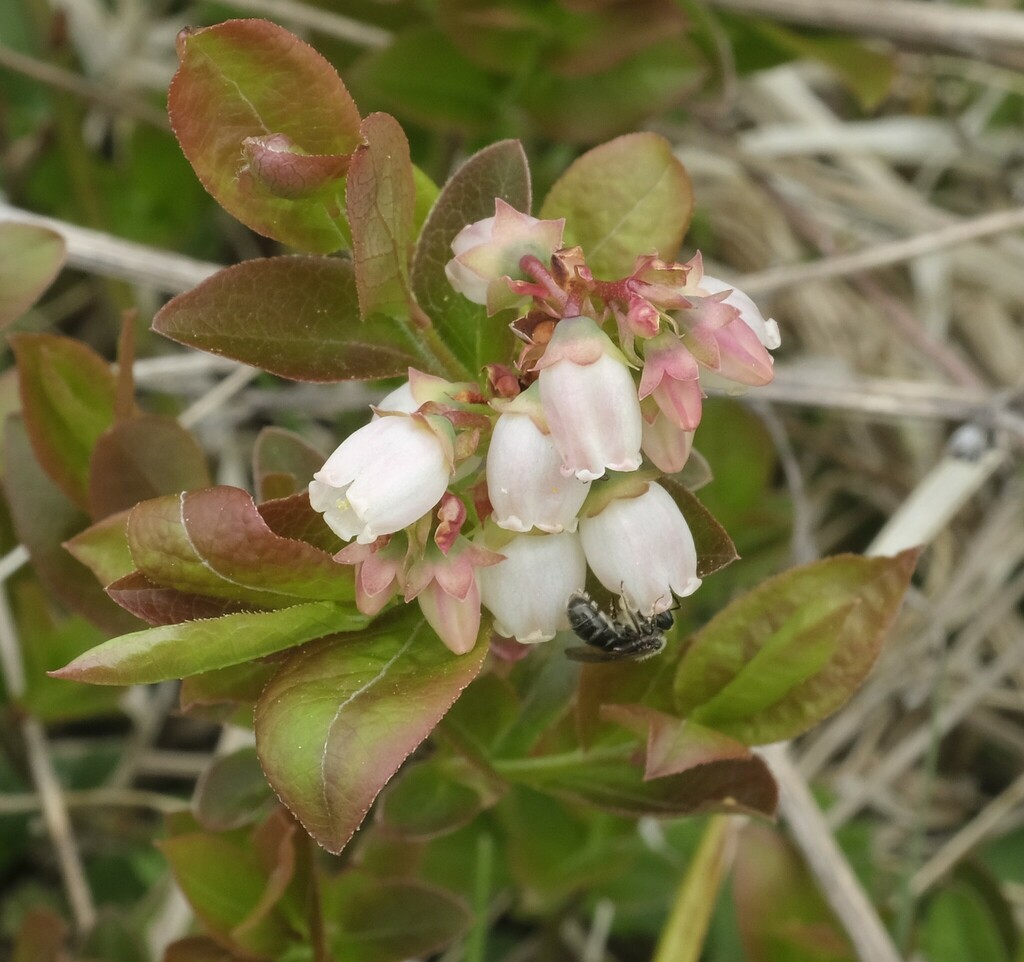
Lowbush blueberry.
The scientific name of lowbush blueberry is Vaccinium angustifolium Ait. (Ericaceae) [77,93]. Autopolyploidy and allopolyploidy are common in Vaccinium spp. [137] and contribute to the taxonomic complexity of this group [34]. Most researchers recognize lowbush blueberry as a single, highly polymorphic, species [157].
Lowbush blueberry hybridizes with many species, including highbush blueberry (V. corymbosum), velvetleaf blueberry, bog blueberry (V. uliginosum), hillside blueberry (V. pallidum), ground blueberry (V. myrsinites), downy blueberry (V. atrococcum), and V. caesariense [34,150,155,157]. Interspecific hybrid swarms have been reported [137]. The entity formerly known as V. angustifolium var. hypolasium Fernald (var. integrefolium Leepage) may be a natural hybrid of velvetleaf blueberry, sweet hurt's blueberry (Vaccinium boreale), and lowbush blueberry [137]. Hybrids of lowbush blueberry and highbush blueberry have been designated as V. atlanticum Bicknell [150].
Synonyms
- Vaccinium angustifolium Aiton var. hypolasium Fernald
- Vaccinium angustifolium Aiton var. laevifolium House
- Vaccinium angustifolium Aiton var. nigrum (Alph. Wood) Dole
- Vaccinium brittonii Porter ex E.P. Bicknell
- Vaccinium lamarckii Camp Vaccinium nigrum (Alph. Wood) Britton
Other Common Names
early low-bush blueberry, low sweet blueberry
General Distribution
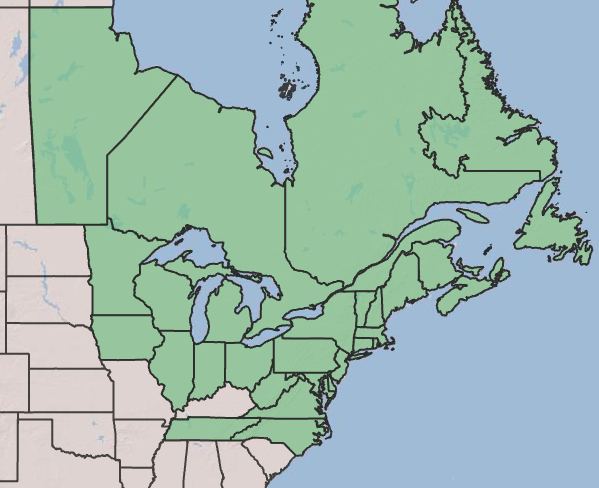
Lowbush blueberry grows from Labrador and Newfoundland westward to southern Manitoba and Minnesota [160]. It extends southward to northern Illinois in the West, and from New England through the Appalachians to West Virginia and Virginia in the East [70,119,157].

Distribution of lowbush blueberry.
States and Provinces
- United States: CT DE IA IL IN ME MA MI MN NH NJ NY NC OH PA RI TN VT VA WV WI
- Canada: LB MB NB NF NS ON PE PQ SK
Site Characteristics
Lowbush blueberry grows in a wide variety of habitats [105]. It occurs in mixed conifer and hardwood forests, in headlands, high moors, upland bogs, peaty barrens, along sandy riverbanks, and on exposed rocky outcrops of the Canadian Shield [49,56,105,157]. Lowbush blueberry is a prominent component of jack pine (Pinus banksiana) barrens, maple groves, oak savannas, and poplar regeneration forests [105,145,157]. It is common in abandoned pastures and clearcuts, and along roadsides [141,157].
Climate: Lowbush blueberry is tolerant of a wide range of temperatures [154]. It grows in areas having a dry, sunny, continental climatic regime receiving an average of 20 inches (500 mm) of precipitation annually, as well as in areas having cloudy maritime climates receiving 61 to 79 inches (1,560-1,950 mm) of precipitation annually [83].
Shade: Shade is detrimental to the growth of lowbush blueberry in the Atlantic Provinces but is necessary for optimal growth in Manitoba's dry, sunny continental climate [83].
Soils: Lowbush blueberry is most commonly associated with light, well-drained acidic soils [124]. Soils generally have a high organic content but may be relatively low in available mineral nutrients [29,77]. Soils are often shallow and discontinuous [152]. Lowbush blueberry grows on loam, sandy loam, gravelly loam, and silt or clay loam developed from sandstone, shale, or glacial drift [49,78,124]. Parent materials vary but include granite, quartzite, gneiss, shale, and sandstone pavement [152]. In much of eastern Ontario, soils have formed over Precambrian bedrock [137]. Lowbush blueberry grows on acidic soils with pH ranging from 2.8 to 6.6 [157] but reportedly thrives on soils with a pH of 4.2 to 5.2 [70,97,157]. Plants generally grow better on undisturbed rather then tilled soil [96]. Lowbush blueberry occurs at elevations from sea level to 4,950 feet (1,500 m) [72,150].
Plant Communities
Lowbush blueberry occurs as an understory dominant or codominant in a variety of forest communities. Common overstory dominants include eastern white pine (Pinus strobus), jack pine (P. banksiana), sugar maple (Acer saccharum), red maple (A. rubrum), and northern red oak (Quercus rubra). Common codominants include Canada beadruby (Maianthemum canadense), pointed-leaved tick trefoil (Desmodium glutinosum), mapleleaf viburnum (Viburnum acerifolium), and hairgrass (Deschampsia spp.). Lowbush blueberry is listed as an indicator or dominant species in the following habitat type classifications:
- Field guide: Habitat classification system for Upper Peninsula of Michigan and Northeast Wisconsin [43]
- Field guide to forest habitat types of northern Wisconsin [98].
Botanical Description
Lowbush blueberry is an erect, low-growing, variable shrub that reaches 2 to 24 inches (5-60 cm) in height [17,34,141,157]. It typically forms dense, extensive colonies [157]. Roots are shallow and fibrous but may possess a taproot, which can extend to 3 feet (1 m) in depth [17,66,72]. Woody rhizomes average 0.18 inch (4.5 mm) in diameter and 2.4 inches (6 cm) in depth [56].
Flowers are borne in short, few-flowered terminals or axillary racemes [94,111,157]. Fruit is a globular berry averaging 0.12 to 0.4 inch (4-11 mm) in diameter [94,150]; some cultivars produce fruit up to 1 inch (2.5 cm) in diameter [7]. The berries are very sweet [150]. Each contains numerous nutlets averaging approximately 0.04 inch (1.2 mm) in length [157].
Raunkiaer Life Form (Raunkiaer 1934)
- Phanerophyte
Seasonal Development

Lowbush blueberry.
Phenological development of lowbush blueberry varies according to geographic location and specific weather conditions [22,62]. Temperature and day length are important regulatory influences [72,76]. Initial floral development begins in the year prior to flowering and fruiting [3]. Floral bud primordia appear during June and early July [22] when day length reaches approximately 15 hours [3]. Development may continue until late October if air temperatures remain above 32 degrees Fahrenheit (0 deg C) with long periods above 50 degrees Fahrenheit (10 deg C) [72]. Leaves harden by mid-July, color by late August, and abscise by late October [72,119].
Plants are dormant in fall [157] and overwinter in a leafless state [72]. Active annual growth can begin as early as March or April [22], but in many areas, both vegetative and flower bud development begins in early May after air temperatures have exceeded 50 degrees Fahrenheit (10 deg C) for a least 3 to 4 consecutive days [72]. Vegetative shoots grow until midsummer [83].
Plants generally flower in May or June of their 2nd year [72,167]. A few flowers may open as early as March in unusually good years, and some plants occasionally flower as late as September or October [154]. Flowering may be delayed by 2 or 3 weeks in cool, coastal areas [72]. Fruit generally ripens from midsummer to late summer, approximately 50 days after anthesis [171]. In an Ontario study, seed dispersal began from June 11 to June 20, peaked in early July, and ended in September [153]. Generalized flowering and fruiting dates for various locations are as follows:
| Location | Flowering | Fruiting |
|---|---|---|
| VA | May-June | July-August [150] |
| NS | June-late July | early-mid-August [72,157] |
| Pictou Co., NS | — | July 17- Oct. 27 [151] |
| ME | — | mid July-August [77] |
| MI | May-June | July-August [44] |
| NJ | April [154] | — |
| ON | May-early June | June-September [153,154,141] |
Regeneration Processes
Lowbush blueberry reproduces vegetatively and by seed [72,111].
Seed production: Plants generally first flower at approximately 4 years of age [72]. Researchers have reported a range of 56 to 64 seeds per berry [21,153]. Viability ranges from 30 to 50 percent [153]. Some clones are self-fertile, others self-sterile [1]. Flowers are generally pollinated by wild bees [119]. Shrubs with relatively few flowers may fail to attract pollinators, and shrubs with fewer than 30 flowers rarely produce fruit. Productive plants may bear more than 400 flowers [156].
Seed dispersal: Seeds of lowbush blueberry are dispersed by various birds and mammals [72,124]. In New England and the Maritime Provinces, the American robin and black bear are particularly effective long distance dispersal agents [72,100,,126,154]. Deer mice, chipmunks, and the red-back vole are important local dispersers [9,100].
Seed banking: Seed banking has not been documented, but researchers have reported the presence of seeds within the top layers of soil [65]. Seed can remain viable for up to 12 years when properly stored [124], and limited seed banking may occur.
Germination: In laboratory tests, germination ranged from 30 to 80 percent [153]. Seed germinates best when exposed to light [72]. Fresh seed germinates readily at 70 degrees Fahrenheit (21 deg C) under a regime of 16 hours light per 24-hour period [72]. Germination generally begins within 3 to 4 weeks and continues for 6 to 8 weeks [48]. Stratification and pretreatment with gibberellin can speed germination [48,125].
Seedling establishment: Seedling establishment appears variable. Seedlings are commonly observed in parts of the Maritime Provinces and in northern Maine [157], where seeds germinate on open sites with high moisture availability [119]. Seedlings are sometimes observed in clearcuts, on burned sites, and in abandoned fields [119]. However, seedlings are rare in eastern Ontario and in many other parts of this species' range [153]. In Ontario, seedling establishment is unlikely unless the following conditions occur: (1) a cool spring follows dispersal, (2) August and September are wet, (3) the winter is mild or there is a good snow cover, and (4) the spring is wet. These conditions have been observed only once during a 40-year period [153]. Poor seedling establishment is generally attributable to unfavorable soil temperatures and water stress [142].
Vegetative regeneration: In many areas, vegetative expansion is the primary mode of regeneration [8,153]. In the absence of disturbance, clones increase by expansion of rhizomes [15,119,124]. After fire or other types of disturbance, plants often sprout from the stem base, from underground rhizomes [157], or from unburned belowground portions of aerial stems [15]. Rhizomes subjected to heat treatment often develop significantly greater numbers of shoots than do untreated rhizomes [56].
Successional Status
Lowbush blueberry is an important recolonizer [57]. Its sprouts are prominent on disturbed sites such as clearcuts, burns, fields, and pastures [17,72,157]. Cover is typically higher on fields derived from hayfields than those derived from woodlots [68]. Lowbush blueberry is an important seral species during the transition from field to forest in various eastern old-field communities [72].
Immediate Fire Effects
Lowbush blueberry is tolerant of heat [56]. Underground portions of the plant generally survive wildfires or prescribed fires [157], even even when all aboveground vegetation is consumed [28,41]. In jack pine barrens, rhizomes have survived brief exposure to fires producing soil surface temperatures up to 1,013 degrees Fahrenheit (545 deg C) [140]. However, exposure to temperatures of 1,295 to 1,513 degrees Fahrenheit (702-823 deg C) for 80 sec apparently resulted in some rhizome mortality [111].
Fire effects vary with fire severity and intensity, and season of burn [136]. Rhizome mortality increases as heat penetration into the soil increases [136]. In a northern Wisconsin muskeg, survival was poor after hot fires burned out layers of sphagnum [161]. Plants are generally most severely harmed by hot summer fires which occur when food reserves are low [55]. Seedlings that lack a well-developed rhizome system are often killed by recurring fires [96].
Postfire Regeneration Strategy (Stickney 1989)
- Small shrub, adventitious-bud root crown
- Rhizomatous shrub, rhizome in soil
Fire Adaptations
Lowbush blueberry is well adapted to fire [29,144]. It generally sprouts from the rhizomes or root crown after aboveground vegetation is removed or damaged by fire. Some seed may be transported on-site by birds and mammals, but seedling establishment is generally limited to favorable sites in good years and appears to play a minimal role in postfire reestablishment. Fire removes decadent aboveground vegetation and promotes vigorous growth [29]. In parts of the Maritimes and the northeastern United States, peatlands, lakes, and rocky outcrops serve as natural fire breaks [59]. Fires in these areas are frequently patchy, creating forest openings into which lowbush blueberry can rapidly expand. Plants within these openings receive sufficient light for good vigor and fruit production.
Plant Response to Fire
Lowbush blueberry generally sprouts from rhizomes and the root crown after aboveground vegetation is consumed by fire [65,83]. Plants may also sprout from buds located on the stem base [83,157], but stems that arise from underground rhizomes are generally more vigorous than those that develop from partially burned aboveground stems [107]. Rhizome sprouting is much slower than crown sprouting [148]. Some reestablishment via seed germination may occur under favorable conditions [117].
Fire intensity and severity, season of burn, community type, and soil are important factors influencing postfire response [138,148,161]. Cover and stem density commonly increase rapidly [55], and recovery may be well underway within 4 to 5 postfire months [55,57]. Lowbush blueberry was well represented within 4 months after an intense fire destroyed all aboveground vegetation in a spruce stand in Manitoba [84]. In many areas, including parts of Nova Scotia and Ontario, lowbush blueberry regains prominence 2 to 3 years after fire [6,106,144]. Although initially reduced after fire in jack pine and black spruce communities, lowbush blueberry increased beyond prefire levels after 5 years [10,42,109]. Recovery may be delayed after hot fires. Lowbush blueberry was present within 13 years after a severe wildfire in a red pine-white pine forest [11]. Hall and others [72] reported that V. a. forma nigrum tends to increase more rapidly than does V. a. forma angustifolium in fields that are burned regularly.
Fruit is not produced the year of the burn but is produced in abundance during the next 3 postfire years [25,28,161]. In general, young healthy plants regenerate more successfully than older, decadent ones [93]. Where clones are extremely decadent, it may take three seasons of postfire growth before fruit production and vigor reach "satisfactory levels" [131]. Some researchers report that burning too frequently can cause fruit yields to decline [25].
Increases in lowbush blueberry after fire may be due in part to the stimulatory effect of nutrients added by ash deposition or changes in pH [70]. Blackened ground absorbs heat and may promote earlier fruit ripening [28].
Season of burn: In general, lowbush blueberry is most reduced by summer fires [50]. Flinn and Wein [58] reported higher stem densities after burning in fall, when plants had completed photosynthate storage and had reserves available for new growth. Smith [138] reported no increases in density or productivity after plants were burned in summer in northern Ontario. Eaton and White [50] observed that the number of sprouts and flowers was greatest after spring fires. Plants burned after July 1 did not sprout until the following year [110]. Plants burned in August, September, October, or November, do not sprout until the following spring [50]. Spring fires typically promote fewer competitors than do fall fires [139]. In commercial blueberry fields, increases in dry matter and percent cover have been noted after both spring and fall fires [139].
For further information on lowbush blueberry to fire, see Fire Case Studies. Also see the Research Project Summary Vegetation change in grasslands and heathlands following multiple spring, summer, and fall prescription fires in Massachusetts, which provides information on prescribed fire and postfire response of plant community species, including lowbush blueberry, that was not available when this species review was originally written.
Fire Regimes
Fire frequencies vary across its wide range, but lowbush blueberry appears well adapted to survive in many fire regimes. In Acadian forests, fire frequencies range from 60 to 1,000 years [55]. In parts of southeastern Labrador, fire occurs an average of once every 500 years [59], and in parts of New Brunswick, an average of once every 370 years [55]. In drier inland areas, fire-free intervals are much shorter. Fire is important in maintaining jack pine communities in which lowbush blueberry occurs as an understory dominant [59]. In jack pine communities of Minnesota, fire frequency has been estimated at 100 years [172]. Fire frequencies in Wisconsin pine barrens have been estimated at 20 to 40 years [163]. Occasional fires maintain the open character of these communities and allow for the continued prominence of lowbush blueberry.
For additional fire regime information, search FEIS for this species by entering the species name on the Advanced Search page and selecting “Fire Regime” as the publication type.
Fire Management Considerations

Fire-pruning of lowbush blueberry.
Prescribed fire: Prescribed fire can be used to improve fruit yields [77,132]. In order to remove decadent aboveground foliage without damaging rhizomes, hot fires should be avoided [124].
Fuels and flammability: Fuel loads are low and discontinuous in xeric jack pine-red pine forests dominated by lowbush blueberry, common juniper (Juniperus communis), lichens, and mosses [24]. Fires in these communities tend to be of irregular intensity. The probability of crown fires increases in later successional stages in more mesic stands [24]. In northeastern New York, Stergas and Adams [145] reported that "fire-line intensities greater than 1500 kW/m can easily develop into crown fires." Low rates of spread may be necessary to keep a prescribed fire under control given the potential fuel loading and heat content of the aboveground understory vegetation, which is dominated by lowbush blueberry, black huckleberry, and lichen [143]. Ash content of low blueberry ranges from 4.20 to 4.54 percent, high heat content from 20,134 to 20,298 KJ/kg, and ash-free high heat content from 21,040 to 21,084 kJ/kg [143]:
Wildlife considerations: In central Wisconsin, prescribed fires are recommended at 4-year intervals where management aims include limiting shrub growth and providing habitat for white-tailed deer, sharp-tailed grouse, and prairie chickens [27]. Fire can be used to aid the restoration of sand barren vegetation [27]. Vogl [163] reported that burning at 10-year intervals would allow lowbush blueberry to reach maximum fruit yields and allow time for maximum fuel accumulations to reduce competing oaks, aspen, and birch. Prescribed fire can be used to increase grouse numbers in Pennsylvania hardwood forests with a lowbush blueberry understory [131].
Disease: Regular burn pruning can limit the spread of red leaf disease [113] and blueberry leaf spot [12]. However, some diseases such as powdery mildew and rust (Pucciniastrum myrtilli) tend to increase with the proliferation of the host plant [12].
Nutrients: Nutrient content of lowbush blueberry foliage is altered by burning [29,78,116]. Leaf tissue from burned plants is typically higher in nitrogen and phosphorus [78]. Comparative values are available [29,116].
Burn pruning of lowbush blueberry in Minnesota
Source
Shubat, Deborah Jo. 1983. Management of native lowbush blueberry for recreational picking in northeastern Minnesota. Minneapolis, MN: University of Minnesota. 79 p. Thesis. [132]
Season/Severity Classification
May/not reported
Study Location
Sites are located along Highway 1 in northeastern Minnesota, south of the Ely Airport, and 2 miles north of Silver Bay on Lake Superior. Specific locations are as follows:
(1) Palisades Site: located 2.5 miles (4 km) northeast of Silver Bay on Highway 61. (SW 1/4 Sec 22, T56N, R7W).
(2) Isabella Tracks: cleared area north of Ely on Highway 1, approximately 0.5 mile (0.8 km) west of Forest Service Headquarters at Isabella, Minnesota. (NE 1/4, SE 1/4, Sec 1, T59N, R9W).
(3) Isabella Sawbill: 12 miles (19 km) east of Isabella, Minnesota, just west of Sawbill Landing (NE 1/4 Sec 1, T60N, R8W).
(4) Ely North: 2 miles (3 km) south of Ely Airport on Highway 120 and Highway 1 (W 1/2, NE 1/4, SW 1/4, Sec 35, T62N, R12W). (5) Ely South: located near Ely, Minnesota (SW 1/4, NW 1/4, NW 1/4, Sec 11, T61N, R12W).
Prefire Vegetative Community
The prefire vegetative community consisted of pure open stands of lowbush blueberry (Vaccinium angustifolium), or stands made up of both lowbush blueberry and velvetleaf blueberry (V. myrtilloides).
(1) Palisade Site: Lowbush blueberry plants were short and "stunted."
(2) Isabella Tracks: Velvetleaf blueberry was the primary lowbush blueberry at this site.
(3) Isabella Sawbill: This stand was made up of young, vigorous lowbush blueberry plants.
(4) Ely North: Many weedy species were intermixed with lowbush blueberry.
(5) Ely South: This stand exhibited few weedy plants. The soil surface was cover with decomposing branches and small logs. Lowbush blueberry plants were described as vigorous.
Target Species Phenological State
Not reported
Site Description
Paired plots, burned (B) and unburned (U), were located at four of the location. The fifth site (Palisade) had only the unburned plot. All plots were on level ground in full sun. Soils were as follows:
| Soil variable | Palisade | Isabella Tracks | Isabella Sawbill | Ely North | Ely South | ||||
|---|---|---|---|---|---|---|---|---|---|
| U | U | B | U | B | U | B | U | B | |
| pH | 4.5 | 5.3 | 5.3 | 5.3 | 5.4 | 5.0 | 5.4 | 5.0 | 4.1 |
| Organic matter | High | Low | Low | Low | Med | Low | Low | Low | Med |
| Nitrogen | Low | Low | Low | Low | Low | Low | Low | Low | Low |
| Texture | Loam | Loamy sand | Sandy loam | Loamy sand | Loamy sand | Loamy sand | Sand | Loamy sand | Sand |
Fire Description
- Palisades Site - not burned.
- Isabella Tracks - mechanically pruned and burn-pruned plots.
- Isabella Sawbill - mechanically pruned and burn-pruned plots.
- Ely North - mechanically pruned and burn-pruned plots.
- Ely South - mechanically pruned and burn-pruned plots.
Dried straw was spread across the burn-pruned plots prior to ignition.
Fire Effects on Target Species
| Site | Burn status | Stems (0.1 m2) | Flower buds/plant | Stem length (cm) | Stand age (yrs) |
|---|---|---|---|---|---|
| Isabella tracks | Burned | 2.3 | 6 | 22 | 3 |
| Unburned | 2. | 8 | 24 | 3 | |
| Isabella sawbill | Burned | 3 | 2.3 | 22 | 2.6 |
| Unburned | 5 | 2.4 | 22 | 2 | |
| Ely north | Burned | 2 | 2 | 23 | 4 |
| Unburned | 2.3 | 1 | 23 | 4 | |
| Ely south | Burned | 3 | 11.6 | 35 | 4 |
| Unburned | 2 | 5.5 | 25 | 5 |
Fire Management Implications
Both burning and mechanical pruning increased stem numbers. However, mechanically pruned plants produced more flower buds than the burn-pruned plants. Tests indicated that mulch should not be applied to recently pruned plants. Fertilizers proved to be most effective on mechanically pruned and untreated plants. They had little effect on recently burned plants. Best results were observed when plants were mechanically clipped or fire pruned in April or November. This experiment suggests that semicultivated stands of lowbush blueberry in Minnesota may need to be pruned every 4 to 5 years rather than every other year as is most common in parts of the Northeast.
Federal Status
None
Other Status
No entry.
Importance to Wildlife and Livestock
Browse: The black bear, eastern cottontail, and white-tailed deer feed on the foliage of lowbush blueberry [71]. In spruce-fir forests of north-central Maine, it is preferred deer browse [112]. In central Pennsylvania, deer use is light year-round [30]; deer often eat overwintering shoots during the early spring [17] and browse plants during fall and winter [131]. Lowbush blueberry is an important moose browse in parts of Maine [112] but is rarely eaten in northeastern Minnesota [85]. Domestic sheep commonly avoid lowbush blueberry browse [72].

Lowbush blueberry.
Fruit and flowers: Fruit is readily eaten by a wide variety of birds and mammals [70]. In some areas, it is a particularly important late summer-early fall ptarmigan food [158]. Flower buds are readily eaten by ruffed grouse during the winter and are considered a major food source during February in some areas [131].
Wildlife species that feed on the fruit include: mammals - black bear, red fox, raccoon, red-backed vole, and many species of mice [17,70,99,132]; birds - American robin, common crow, and eastern bluebird [70,132]. Wildlife species that eat the fruits of Vaccinium spp. in general include: mammals - white-footed mouse, fox squirrel, red squirrel, eastern spotted skunk, gray fox, and many species of chipmunks [100,108,124,157,160]; birds - wild turkey, ruffed grouse, spruce grouse, gray catbird, brown thrasher, rufous-sided towhee, northern mockingbird, black-capped chickadee, red-cockaded woodpecker, starling, cardinal, scarlet tanager, Canada goose, herring gull, whimbrel, quail, and thrushes [108,157,160].
Palatability and Nutritional Value
The food value of berries and browse varies seasonally, and with site characteristics, geographic location, and fire history [29,143].
Fruit: Fruit is an excellent source of vitamin C, natural sugars, niacin, and manganese [31,123]. Berries are relatively high in carbohydrates and soluble solids but contain little sodium or fat [13,31,123,164]. Fruit averages approximately 41 calories per 0.5 cup [123], with sugar concentration ranging from 0.03 to 0.34 percent [168]. Overall nutrient value is rated as moderately low [164]. Average vitamin and mineral content of lowbush blueberry fruit on a wet weight basis is available [31].
Browse: Nitrogen typically decreases from July 22 to September 22 during crop years but increases during years in which no fruit production occurs [147]. Levels of phosphorus, calcium, manganese, potassium, and magnesium also exhibit seasonal fluctuations [147]. Nutrient content of lowbush blueberry leaves is as follows [72]:
| Nutrient | Range of concentration (%) |
|---|---|
| N | 1.50-2.00 |
| P | 0.08-0.121 |
| K | 0.40-0.55 |
| Ca | 0.40-0.65 |
| Mg | 0.15-0.20 |
Cover Value
No entry.
Value for Rehabilitation or Restoration of Disturbed Sites
Lowbush blueberry may have potential use for rehabilitating certain types of disturbed sites. It is tolerant of metals and grows in stunted form on industrially damaged sites near Sudbury, Ontario [165]. Plants have recolonized strip-mined areas in West Virginia [79] and reclaimed mined peatlands of the Northeast [53]. Rhizomes can sometimes aid in preventing soil erosion on steep slopes [72].
Lowbush blueberry can be readily propagated from hard, semihard, and softwood cuttings, and from rhizome segments [26,63,90,95]. Side-shoot cuttings can be used to supplement regular cuttings where rapid propagation is desired [90]. Cuttings generally root within 6 weeks [4]; those taken in fall and winter often root best [82]. Detailed information on vegetative propagation techniques is available [14,47,63,82,95].
Lowbush blueberry can also be propagated by seed [124]. Cleaned seed averages 1,972,174 per pound (4,344/g) [44]. Seedlings can be transplanted to flats after 6 to 7 weeks [12].
Other Uses
Traditional uses: Native Americans traditionally valued lowbush blueberry fruit. Berries were eaten fresh, dried, baked and added to soups, or mixed with venison and other meats [72,132,157]. Early European settlers ate the fruit fresh or used it to make jams, jellies, and preserves [157].
Modern uses: Lowbush blueberry is the most important commercial blueberry in the northeastern United States and Canada [34]. It is grown commercially in Ontario, Nova Scotia, New Brunswick, Quebec, and Maine [31,113]. A major portion of the crop is gathered from managed wild stands [157]. Most fruit is used in processed foods such as pie or muffin mixes, pastries, jam, ice cream, and yogurt [17,31,72,132]. Berries are also used to make wine and various juice products [17,72]. Lowbush blueberry is the blueberry most commonly used for commercial canning [123]. Fruit is also freeze-dried. The development of the frozen food industry in the 1940's promoted rapid expansion of lowbush blueberry cultivation [157].
Recreation use: Throughout its range, the lowbush blueberry is prized by recreational berry-pickers. Blueberry picking is an important recreational activity in many areas [93]. In the early 1980's, an estimated 20 percent of all summer tourists engaged in blueberry picking in parts of the Great Lakes region [132].
Horticultural value: Plants are ornamental and can be used as shrubbery, hedges, or as fruiting ground cover [123]. The cultivar 'Tophat' is used only for ornamental purposes and is well suited for bonsai [123]. Lowbush blueberry has potential for use in breeding northern fruit-producing stock [45,81] and is well suited to small farms, since 5 to 10 acres is sufficient to produce a significant quantity of fruit [7].
Other Management Considerations
Competition: In some areas, lowbush blueberry is described as a "troublesome" brush species that can interfere with red pine regeneration [52]. In other areas, however, jack pine regenerates better in monotypic stands of lowbush blueberry than in mixed stands of sweet-fern, bracken fern (Pteridium aquilinum), and fireweed (Epilobium angustifolium) [41].
Herbicides: Lowbush blueberry can be killed by 2,4-D, and 2,4,5-T [124]. Herbicides have been widely used in commercial fields to eliminate weeds that compete with lowbush blueberry [77,137,172].
Environmental Considerations: Lowbush blueberry is tolerant of acid rain (pH < 3.5) [129]. Studies indicate that plants can survive at least short-term exposure to acid rain with a pH of 2.5. Lowbush blueberry could increase in response to acid rain in boreal forests [129]. It is apparently resistant to emissions produced by zinc smelters [91].
Wildlife: The reproductive success of black bears has been correlated to annual blueberry crops. Poor blueberry crops can limit black bear reproductive success as well as overall survival in aspen-birch-conifer forests of northeastern Minnesota. In Wisconsin bears depredations such as damage to crops and beehives and livestock losses typically increase during poor berry years [125].
Timber harvest: Although opening a closed stand can improve the growth and vigor of lowbush blueberry, clearcutting and postharvest burning does not ensure the development of a lush stand of blueberry [65]. Hall [65] observed that after growing in the heavy shade of a closed forest canopy, many plants were killed by postharvest burns. Survival may be greater if plants are allowed to grow and increase in vigor before burning [65]. Thinning for pulpwood cuttings can result in vigorous growth of lowbush blueberry [65,70] as plants spread by rhizomes into opened areas. Response to various types of timber treatments has been reported [9,10,134].
Fruit production: Lowbush blueberry fruit production is strongly influenced by weather conditions, climate, pollinator availability, light intensity, genetic factors, and nutrient levels at the time of bud initiation [16,70,147]. Fruit production is limited under low light intensity [67,150]; production is virtually nil at 50 to 500 foot-candles [67]. Shade produced by competing weeds can often reduce fruit yields [67].
Cross-pollination by insects is necessary for good fruit set [87,103,168]. Aalders and Hall [1] observed that fruit set ranged from approximately 81 to 90 percent in cross-pollinated plants but from only 0 to 52 percent in self-pollinated plants. Yields tend to be lower in fields containing both velvetleaf blueberry and lowbush blueberry than in fields containing only lowbush blueberry [1]. In some areas, the widespread use of insecticides has decimated wild bee populations. Although honeybees are less effective pollinators than wild bees, growers often add honeybees in an effort to improve fruit set [1,102,111,166].
Table A1— Forest and range ecosystems, Bureau of Land Management (BLM) physiographic regions, Kuchler plant associations, Society for American Foresters (SAF) forest cover types, and Society for Rangeland Management (SRM) rangeland cover types in which this species occurs.
Forest and Range Ecosystems (Garrison et al. 1977)
- FRES10 White - red - jack pine
- FRES11 Spruce – fir
- FRES14 Oak – pine
- FRES15 Oak – hickory
- FRES17 Elm - ash – cottonwood
- FRES18 Maple - beech – birch
- FRES19 Aspen - birch
BLM Physiographic Regions (Bernard and Brown 1977)
- No entry
Kuchler Plant Associations (Kuchler 1964)
- K081 Oak savanna
- K094 Conifer bog
- K095 Great Lakes pine forest
- K096 Northeastern spruce - fir forest
- K100 Oak - hickory forest
- K106 Northern hardwoods
- K107 Northern hardwoods - fir forest
- K108 Northern hardwoods - spruce forest
- K109 Transition between K104 and K106
- K110 Northeastern oak - pine forest
- K111 Oak - hickory - pine forest
SAF Cover Types (Eyre 1980)
- 1 Jack pine
- 5 Balsam fir
- 12 Black spruce
- 13 Black spruce – tamarack
- 14 Northern pin oak
- 15 Red pine
- 16 Aspen
- 18 Paper birch
- 20 White pine - northern red oak - red maple
- 21 Eastern white pine
- 24 Hemlock - yellow birch
- 25 Sugar maple - beech - yellow birch
- 27 Sugar maple
- 30 Red spruce - yellow birch
- 32 Red spruce
- 33 Red spruce - balsam fir
- 34 Red spruce - Fraser fir
- 35 Paper birch - red spruce - balsam fir
- 37 Northern white-cedar
- 39 Black ash - American elm - red maple
- 43 Bear oak
- 44 Chestnut oak
- 51 White pine - chestnut oak
- 52 White pine - black oak - northern red oak
- 53 White oak
- 55 Northern red oak
- 60 Beech - sugar maple
- 107 White spruce
- 108 Red maple
- 110 Black oak
SRM Rangeland Cover Types (Shiflet 1994)
- No entry
1. Aalders, L. E. Hall, I. V. 1962. New evidence on the cytotaxonomy of Vaccinium species as revealed by stomatal measurements from herbarium specimens. Nature. 196: 694. [9176]
2. Aalders, L. E.; Hall, I. V. 1963. The inheritance and taxonomic significance of the "nigrum" factor in the common lowbush blueberry, Vaccinium angustifolium. Canadian Journal of Genetic Cytology. 5: 115-118. [9191]
3. Aalders, L. E.; Hall, I. V. 1964. A comparison of flower-bud development in the lowbush blueberry Vaccinium angustifolium Ait. under greenhouse and field conditions. Proceedings of the American Society for Horticultural Science. 85: 281-284. [9668]
4. Aalders, L. E.; Ismail, A. A.; Hall, I. V.; Hepler, P. R. 1975. Augusta lowbush blueberry. Canadian Journal of Plant Science. 55: 1079. [9498]
5. Abrams, Marc D.; Dickmann, Donald I. 1982. Early revegetation of clear-cut and burned jack pine sites in northern lower Michigan. Canadian Journal of Botany. 60: 946-954. [7238]
6. Abrams, Marc D.; Dickmann, Donald I. 1984. Floristic composition before and after prescribed fire on a jack pine clear-cut site in northern lower Michigan. Canadian Journal of Forest Research. 14: 746-749. [7236] 7. Adams, Sean. 1987. Blueberries from field to muffin tin. Agricultural Research. June/July: 10-13. [9849]
8. Ahlgren, Clifford E. 1960. Some effects of fire on reproduction and growth of vegetation in northeastern Minnesota. Ecology. 41(3): 431-445. [207]
9. Ahlgren, Clifford E. 1966. Small mammals and reforestation following prescribed burning. Journal of Forestry. 64: 614-618. [206]
10. Ahlgren, Clifford E. 1970. Some effects of prescribed burning on jack pine reproduction in northeastern Minnesota. Misc. Rep. 94, Forestry Series 5-1970. Minneapolis, MN: University of Minnesota, Agricultural Experiment Station. 14 p. [7285]
11. Ahlgren, Clifford E. 1976. Regeneration of red pine and white pine following wildfire and logging in northeastern Minnesota. Journal of Forestry. 74: 135-140. [7242]
12. Ahlgren, I. F.; Ahlgren, C. E. 1960. Ecological effects of forest fires. Botanical Review. 26: 458-533. [205]
13. Ballington, J. R.; Ballinger, W. E.; Swallow, W. H.; [and others]. 1984. Fruit quality characterization of 11 Vaccinium species. Journal of the American Society for Horticultural Science. 109(5): 684-689. [10725]
14. Barker, W. G.; Collins, W. B. 1963. The blueberry rhizome: in vitro culture. Canadian Journal of Botany. 41: 1325-1329. [8941]
15. Barker, W. G.; Collins, W. B. 1963. Growth and development of the lowbush blueberry: apical abortion. Canadian Journal of Botany. 41: 1319-1324. [9265]
16. Barker, W. G.; Collins, W. B. 1965. Parthenocarpic fruit set in the lowbush blueberry. American Society for Horticultural Science. 87: 229-233. [9503]
17. Barker, W. G.; Hall, I. V.; Aalders, L. E.; Wood, G. W. 1964. The lowbush blueberry industry in eastern Canada. Economic Botany. 18(4): 357-365. [9019]
18. Barker, W. G.; Wood, F. A.; Collins, W. B. 1963. Sugar-levels in fruits of the lowbush blueberry estimated at four physiological ages. Nature. 198: 810-811. [9018]
19. Bell, Hugh P. 1950. Determinate growth in the blueberry. Canadian Journal of Research. 38(C): 637-644. [9851]
20. Bell, Hugh P. 1953. The growth cycle of the blueberry and some factors of the environment. Canadian Journal of Botany. 31: 1-6. [9188]
21. Bell, Hugh P. 1957. The development of the blueberry seed. Canadian Journal of Botany. 35: 139-153. [9511]
22. Bell, Hugh P.; Burchill, Jane. 1955. Flower development in the lowbush blueberry. Canadian Journal of Botany. 33: 251-258. [9190]
23. Bell, Hugh P.; Giffin, Elspeth C. 1957. The lowbush blueberry: The vascular anatomy of the ovary. Canadian Journal of Botany. 35: 667-673. [9516]
24. Bergeron, Yves; Brisson, Jacques. 1990. Fire regime in red pine stands at the northern limit of the species range. Ecology. 71(4): 1352-1364. [11819]
25. Black, W. N. 1963. The effect of frequency of rotational burning on blueberry production. Canadian Journal of Plant Science. 43: 161-165. [4853]
26. Blatt, C. R. 1983. Management practices and marketable yields of lowbush blueberry. HortScience. 18(6): 938-940. [9194]
27. Blewett, Thomas. 1978. Prairie and savanna restoration in the Necedah National Wildlife Refuge. In: Glenn-Lewin, David C.; Landers, Roger Q., Jr., eds. Proceedings, 5th Midwest prairie conference; 1976 August 22-24; Ames, IA. Ames, IA: Iowa State University: 154-157. [3370]
28. Books, David J. 1972. Little Sioux Burn: year two. Naturalist. 23(3&4): 2-7. [11550]
29. Bourgeron, P. S.; Kratz, A. M.; Weaver, T.; Weidman, N. 1988. Bibliography of Montana vegetation description. Great Basin Naturalist. 48(3): 301-401. [6121]
30. Bramble, W. C.; Goddard, M. K. 1943. Seasonal browsing of woody plants by white-tailed deer in the bear oak forest type. Journal of Forestry. 41(7): 471-475. [3298]
31. Bushway, R. J.; Mc Gann, D. F.; Cook, W. P.; Bushway, A. A. 1983. Mineral and vitamin content of lowbush blueberries (Vaccinium angustifolium Ait.). Journal of Food Science. 48(6): 1878-1880. [9114]
32. Camp, W. H. 1942. A survey of the American species of Vaccinium, subgenus Euvaccinium. Brittonia. 4: 205-247. [6950]
33. Camp, W. H. 1942. On the structure of populations in the genus Vaccinium. Brittonia. 4(2): 189-204. [9512]
34. Camp, W. H. 1945. The North American blueberries with notes on other groups of Vacciniaceae. Brittonia. 5(3): 203-275. [9515]
35. Chandler, F. B. 1941. The relationship of different methods of expressing size of blueberry fruits. American Society for Horticultural Science. 39: 279-280. [9021]
36. Chandler, F. B. 1947. Cultivation of low-bush blueberries. American Society for Horticultural Science. 49: 205-207. [9111]
37. Chandler, F. B.; Hyland, Fay. 1941. Botanical and economic distribution of Vaccinium L. in Maine. Proceedings of the American Society for Horticultural Science. 38: 430-433. [9665]
38. Chandler, F. B.; Mason, I. C. 1942. The effect of mulch on soil moisture, soil temperature, and growth of blueberry plants. American Society for Horticultural Science. 40: 335-337. [9020]
39. Chandler, F. B.; Mason, I. C. 1939. Pruning of the low-bush blueberry. American Society for Horticultural Science. 37: 609-610. [9123]
40. Chandler, F. B.; Mason, I. C. 1943. Pruning of low-bush blueberries. American Society for Horticultural Science. 43: 173-174. [9022]
41. Chrosciewicz, Z. 1970. Regeneration of jack pine by burning and seeding treatments on clear-cut sites in central Ontario. Inf. Rep. 0-X-138. Forest Research laboratory, Ontario Region, Canadian Forestry Service, Department of Fisheries and Forestry. 13 p. [7241]
42. Chrosciewicz, Z. 1976. Burning for black spruce regeneration on a lowland cutover site in southeastern Manitoba. Canadian Journal of Forest Research. 6(2): 179-186. [7280]
43. Coffman, Michael S.; Alyanak, Edward; Resovsky, Richard. 1980. Field guide habitat classification system: For Upper Peninsula of Michigan and northeast Wisconsin. [Place of publication unknown]: Cooperative Research on Forest Soils. 112 p. [8997]
44. Crossley, John A. 1974. Vaccinium L. Blueberry. In: Schopmeyer, C. S., ed. Seeds of woody plants in the United States. Agric. Handb. 450. Washington, DC: U.S. Department of Agriculture, Forest Service: 840-843. [7774]
45. Darrow, George M. 1960. Blueberry breeding, past, present, future. American Horticultural Magazine. 39(1): 14-33. [9126]
46. Dayton, William A. 1931. Important western browse plants. Misc. Publ. 101. Washington, DC: U.S. Department of Agriculture. 214 p. [768]
47. Doran, William L. 1957. Propagation of woody plants by cuttings. Experiment Station Bul. No. 491. Amherst, MA: University of Massachusetts, College of Agriculture. 99 p. [6399]
48. Dweikat, I. M.; Lyrene, P. M. 1989. Response of highbush blueberry seed germination to gibberellin A3 and 6N-benzyladenine. Canadian Journal of Botany. 67: 3391-3393. [9908]
49. Eaton, Leonard J.; Patriquin, David G. 1988. Inorganic nitrogen levels and nitrification potential in lowbush blueberry soil. Canadian Journal of Soil Science. 68(1): 63-75. [9168]
50. Eaton, E. L.; White, R. G. 1960. The relation between burning dates and the development of sprouts and flower buds in the lowbush blueberry. American Society for Horticultural Science. 76: 338-342. [6242]
51. Eyre, F. H., ed. 1980. Forest cover types of the United States and Canada. Washington, DC: Society of American Foresters. 148 p. [905]
52. Eyre, F. H.; Zehngraff, Paul. 1948. Red pine management in Minnesota. Circular No. 778. Washington, DC: U.S. Department of Agriculture. 70 p. [12177]
53. Famous, Norman C.; Spencer, M. 1989. Revegetation patterns in mined peatlands in central and eastern North America studied. Restoration and Management Notes. 7(2): 95-96. [10171]
54. Finn, Chad E.; Luby, J. J. 1986. Inheritance of fruit development interval and fruit size in blueberry progenies. Journal of the American Society for Horticultural Science. 111(5): 784-788. [9602]
55. Flinn, Marguerite Adele. 1980. Heat penetration and early postfire regeneration of some understory species in the Acadian forest. Halifax, NB: University of New Brunswick. 87 p. Thesis. [9876]
56. Flinn, Marguerite A.; Pringle, Joan K. 1983. Heat tolerance of rhizomes of several understory species. Canadian Journal of Botany. 61: 452-457. [8444]
57. Flinn, Marguerite A.; Wein, Ross W. 1977. Depth of underground plant organs and theoretical survival during fire. Canadian Journal of Botany. 55: 2550-2554. [6362]
58. Flinn, Marguerite A.; Wein, Ross W. 1988. Regrowth of forest understory species following seasonal burning. Canadian Journal of Botany. 66: 150-155. [3014]
59. Foster, David R. 1983. The history and pattern of fire in the boreal forest of southeastern Labrador. Canadian Journal of Botany. 61: 2459-2471. [9683]
60. Foster, David R. 1985. Vegetation development following fire in Picea mariana (black spruce) - Pleurozium forests of south-eastern Labrador, Canada. Journal of Ecology. 73: 517-534. [7222]
61. Foster, N. W.; Morrison, I. K. 1976. Distribution and cycling of nutrients in a natural Pinus banksiana ecosystem. Ecology. 57: 110-120. [8515]
62. Frank, R.; Sirons, G. J.; Campbell, R. A.; Mewett, D. 1983. Residues of 2,4-D dichlorprop and picloram in wild berries from treated rights-of-way and conifer release sites in Ontario, 1979-1981. Canadian Journal of Plant Science. 63: 195-209. [10705]
63. Frett, John J.; Smagula, John M. 1983. In vitro shoot production of lowbush blueberry. Canadian Journal of Plant Science. 63(2): 467-472. [9106]
64. Garrison, George A.; Bjugstad, Ardell J.; Duncan, Don A.; [and others]. 1977. Vegetation and environmental features of forest and range ecosystems. Agric. Handb. 475. Washington, DC: U.S. Department of Agriculture, Forest Service. 68 p. [998]
65. Hall, I. V. 1955. Floristic changes following the cutting and burning of a woodlot for blueberry production. Canadian Journal of Agricultural Science. 35: 143-152. [9012]
66. Hall, I. V. 1957. The tap root in lowbush blueberry. Canadian Journal of Botany. 35(6): 933-934. [8942]
67. Hall, Ivan V. 1958. Some effects of light on native lowbush blueberries. American Society for Horticultural Science. 72: 216-218. [8939]
68. Hall, I. V. 1959. Plant populations in blueberry stands developed from abandoned hayfields and woodlots. Ecology. 40(4): 742-743. [9108]
69. Hall, I. V. 1983. Genetic improvement of the lowbush blueberry, Vaccinium angustifolium. Canadian Journal of Plant Science. 63: 1091-1092. [9105]
70. Hall, I. V.; Aalders, L. E.; Barker, W. G. 1964. A preliminary investigation of factors limiting lowbush blueberry production on Cape Breton Island. Canadian Journal of Plant Science. 44: 491-492. [9121]
71. Hall, I. V.; Aalders, L. E.; McRae, K. B. 1982. Lowbush blueberry production in eastern Canada as related to certain weather data. Canadian Journal of Plant Science. 62(3): 809-812. [9160]
72. Hall, Ivan V.; Aalders, Lewis E.; Nickerson, Nancy L.; Vander Kloet, Sam P. 1979. The biological flora of Canada. I. Vaccinium angustifolium Ait., sweet lowbush blueberry. Canadian Field-Naturalist. 93(4): 415-430. [9185]
73. Hall, Ivan V.; Aalders, Lewis E.; Townsend, Lloyd R. 1964. The effects of soil pH on the mineral composition and growth of the lowbush blueberry. Canadian Journal of Plant Science. 44(5): 433-438. [9117]
74. Hall, I. V.; Burrows, J. M.; Hildebrand, P. D. 1986. Lowbush blueberry growth following pruning by a convention and modified burner. Canadian Journal of Plant Science. 66(4): 1033-1035. [9175]
75. Hall, I. V.; Jamieson, A. R.; Brydon, A. D. 1988. Cumberland and Fundy lowbush blueberries. Canadian Journal of Plant Science. 68(2): 553-555. [9186]
76. Hall, I. V.; Ludwig, R. A. 1961. The effects of photoperiod, temperature, and light intensity on the growth of the lowbush blueberry (Vaccinium angustifolium Ait.). Canadian Journal of Botany. 39: 1733-1739. [9073]
77. Hancock, James F.; Draper, Arlen D. 1989. Blueberry culture in North America. HortScience. 24(4): 551-556. [9513]
78. Hanson, Eric J.; Ismail, Amr. A.; Struchtemeyer, Roland A. 1982. Effect of method and date of pruning on soil organic matter and leaf nutrient concentrations of lowbush blueberries. Canadian Journal of Plant Science. 62: 813-817. [9159]
79. Hardt, Richard A.; Forman, Richard T. T. 1989. Boundary form effects on woody colonization of reclaimed surface mines. Ecology. 70(5): 1252-1260. [9470]
80. Heinselman, Miron L. 1970. The natural role of fire in northern conifer forest. In: The role of fire in the Intermountain West: Proceedings of a symposium; 1970 October 27-29; Missoula, MT. Missoula, MT: Intermountain Fire Research Council. In cooperation with: University of Montana, School of Forestry: 30-41. [15735]
81. Hiirsalmi, H. M.; Hietaranta, T. P. 1989. Winter injuries to highbush and lowbush blueberries in Finland. Acta Horticulturae. 241: 221-226. [12158]
82. Hildreth, A. C. 1929. Propagation of the low-bush blueberry. American Society for Horticultural Science. 26: 91-92. [9128]
83. Hoefs, M. E. G.; Shay, Jennifer M. 1981. The effects of shade on shoot growth of Vaccinium angustifolium Ait. after fire pruning in southeastern Manitoba. Canadian Journal of Botany. 59: 166-174. [4977]
84. Holliday, N. J. 1984. Carabid beetles (Coleoptera:Carabidae) from a burned spruce forest (Picea spp.). Canadian Entomologist. 116: 919-922. [8337]
85. Irwin, Larry L. 1985. Foods of moose, Alces alces, and white-tailed deer, Odocoileus virginianus, on a burn in boreal forest. Canadian Field-Naturalist. 99(2): 240-245. [4513]
86. Ismail, Amr A.; Kender, Walter J. 1969. Evidence of a respiratory climacteric in highbush and lowbush blueberry fruit. HortScience. 4(4): 342-344. [9177]
87. Ismail, Amr A.; Kender, Walter J. 1974. Physical and chemical changes associated with the development of the lowbush blueberry fruit (Vaccinium angustifolium Ait.). U. of Maine at Orono, Life Sci. & Agr. Exp. Sta. Technical Bull. 70(May): 1-13. [9642]
88. Ismail, Amr A.; Yarborough, David E. 1981. A comparison between flail mowing and burning for pruning lowbush blueberries. Horticultural Science. 16(3): 318-319. [6377]
89. Jackson, L. P.; Aalders, L. E.; Hall, I. V. 1976. Effects of N, P, and S fertilizers on the vegetative and fruiting response of the lowbush blueberry. Naturaliste Canadien. 103(1): 47-52. [9507]
90. Johnston, Stanley. 1935. Propagating low- and highbush blueberry plants by means of small side shoots. American Society for Horticultural Science. 33: 372-375. [9127]
91. Jordan, Marilyn J. 1975. Effects of zinc smelter emissions and fire on a chestnut-oak woodland. Ecology. 56: 78-91. [3461]
92. Kartesz, John T.; Kartesz, Rosemarie. 1980. A synonymized checklist of the vascular flora of the United States, Canada, and Greenland. Volume II: The biota of North America. Chapel Hill, NC: The University of North Carolina Press; in confederation with Anne H. Lindsey and C. Richie Bell, North Carolina Botanical Garden. 500 p. [6954]
93. Kautz, Edward W. 1987. Prescribed fire in blueberry management. Fire Management Notes. 48(3): 9-12. [9848]
94. Keeler, Harriet L. 1969. Vacciniaceae--huckleberry family. In: Our northern shrubs and how to identify them. New York: Dover Publications, Inc.: 315-342. [9272]
95. Kender, Walter J. 1967. Rhizome development in the lowbush blueberry as influenced by temperature and photoperiod. American Society for Horticultural Science. 90: 144-148. [8938]
96. Kender, Walter J.; Eggert, Franklin P. 1966. Several soil management practices influencing the growth and rhizome development of the lowbush blueberry. Canadian Journal of Plant Science. 46(2): 141-149. [9015]
97. Korcak, Ronald F. 1988. Nutrition of blueberry and other calcifuges. Horticultural Reviews. 10: 183-227. [9612]
98. Kotar, John; Kovach, Joseph A.; Locey, Craig T. 1988. Field guide to forest habitat types of northern Wisconsin. Madison, WI: University of Wisconsin, Department of Forestry; Wisconsin Department of Natural Resources. 217 p. [11510]
99. Krefting, Laurits W.; Ahlgren, Clifford E. 1974. Small mammals and vegetation changes after fire in a mixed conifer-hardwood forest. Ecology. 55: 1391-1398. [9874]
100. Krefting, Laurits W.; Roe, Eugene I. 1949. The role of some birds and mammals in seed germination. Ecological Monographs. 19(3): 269-286. [8847]
101. Kuchler, A. W. 1964. United States [Potential natural vegetation of the conterminous United States]. Special Publication No. 36. New York: American Geographical Society. 1:3,168,000; colored. [3455]
102. Lomond, Derek; Larson, David J. 1983. Honey bees, Apis mellifera (Hymenoptera: Apidae) as pollinators of lowbush blueberry, Vaccinium angustifolium on NF coastal barrens. Canadian Entomologist. 115(12): 1647-1651. [9181]
103. Luby, J. J.; Wildung, D. K.; Munson, S. T. Read, P. E.; Hoover, E. E. 1986. 'Northblue,' 'Northsky,' and 'Northcountry' blueberries. HortScience. 4(4): 342-344. [9178]
104. Lyon, L. Jack; Stickney, Peter F. 1976. Early vegetal succession following large northern Rocky Mountain wildfires. In: Proceedings, Tall Timbers fire ecology conference and Intermountain Fire Research Council fire and land management symposium; 1974 October 8-10; Missoula, MT. No. 14. Tallahassee, FL: Tall Timbers Research Station: 355-373. [1496]
105. Maillette, Lucie. 1988. Apparent commensalism among three Vaccinium species on a climatic gradient. Journal of Ecology. 76: 877-888. [9171]
106. Martin, J. Lynton. 1956. An ecological survey of burned-over forest land in southwestern Nova Scotia. Forestry Chronicle. 32: 313-336. [8932]
107. Martin, Patricia A. E. 1979. Productivity and taxonomy of the Vaccinium globulare, V. membranaceum complex in western Montana. Missoula, MT: University of Montana. 136 p. Thesis. [9130]
108. Martin, Alexander C.; Zim, Herbert S.; Nelson, Arnold L. 1951. American wildlife and plants. New York: McGraw-Hill Book Company, Inc. 500 p. [4021]
109. McRae, D. J. 1979. Forest fire research in Ontario. Forestry Research Newsletter. Sault Ste. Marie, ON: Environment Canada, Forestry Service, Great Lakes Forest Research Centre. Summer: 1-8. [17008]
110. Miller, Melanie. 1976. Shrub sprouting response to fire in a Douglas-fir/western larch ecosystem. Missoula, MT: University of Montana. 124 p. Thesis. [8945]
111. Mohr, H. A.; Kevan, P. G. 1987. Pollinators and pollination requirements of lowbush blueberry (Vaccinium angustifolium Ait. and V. myrtilloides Michx.) and cranberry .... Proceedings of the Entomological Society of Ontario. 118(0): 149-154. [10806]
112. Newton, Michael; Cole, Elizabeth C.; Lautenschlager, R. A.; [and others]. 1989. Browse availability after conifer release in Maine's spruce-fir forests. Journal of Wildlife Management. 53(3): 643-649. [8401]
113. Nickerson, Nancy L.; Mac Neill, B. H. 1987. Studies on the spread of red leaf disease, caused by Exobasidium vaccinii, in lowbush blueberries. Canadian Journal of Plant Pathology. 9: 307-310. [10875]
114. Odell, A. E.; Vander Kloet, S. P.; Newell, R. E. 1989. Stem anatomy of Vaccinium section Cyanococcus and related taxa. Canadian Journal of Botany. 67(8): 2328-2334. [8944]
115. Ohmann, Lewis F.; Grigal, David F. 1966. Some individual plant biomass values from northeastern Minnesota. NC-227. St. Paul, MN: U.S. Department of Agriculture, Forest Service, North Central Forest Experiment Station. 2 p. [8151]
116. Ohmann, Lewis F.; Grigal, David F. 1979. Early revegetation and nutrient dynamics following the 1971 Little Sioux Forest Fire in northeastern Minnesota. Forest Science Monograph 21. Bethesda, MD: The Society of American Foresters. 80 p. [6992]
117. Ohmann, Lewis F.; Grigal, David F. 1981. Contrasting vegetation responses following two forest fires in northeastern Minnesota. American Midland Naturalist. 106(1): 54-64. [8285]
118. Palser, Barbara F. 1961. Studies of floral morphology in the Ericales. V. Organography and vascular anatomy in several United States species of the Vacciniaceae. Botanical Gazette. 123(2): 79-111. [9032]
119. Pritts, Marvin P.; Hancock, James F. 1984. Independence of life history parameters in populations of Vaccinium angustifolium (Ericaceae). Bulletin of the Torrey Botanical Club. 3(4): 451-461. [9165]
120. Pritts, Marvin, P., Hancock, James F.; Roueche, Janet M. 1985. Identifying superior genotypes of blueberry in wild populations. HortScience. 20(3): 409-411. [9156]
121. Raunkiaer, C. 1934. The life forms of plants and statistical plant geography. Oxford: Clarendon Press. 632 p. [2843]
122. Rayment, A. F. 1965. The response of native stands of lowbush blueberry in Newfoundland to nitrogen, phosphorus, and potassium fertilizers. Canadian Journal of Plant Science. 45(2): 145-152. [9124]
123. Reich, Lee. 1988. Backyard blues. Organic Gardening. 35(6): 28-34. [9179]
124. Rogers, Robert. 1974. Blueberries. In: Gill, John D.; Healy, William M., compilers. Shrubs and vines for northeastern wildlife. Gen. Tech. Rep. NE-9. Upper Darby, PA: U.S. Department of Agriculture, Forest Service, Northeastern Forest Experiment Station: 12-15. [14073]
125. Rogers, Lynn. 1976. Effects of mast and berry crop failures on survival, growth, and reproductive success of black bears. Transactions, North American Wildlife Conference. 41: 431-438. [8951]
126. Rogers, Lynn L.; Applegate, Rodger D. 1983. Dispersal of fruit seeds by black bears. Journal of Mammalogy. 64(2): 310-311. [5941]
127. Scheiner, Samuel M. 1988. The seed bank and above-ground vegetation in an upland pine-hardwood succession. Michigan Botanist. 27(4): 99-106. [12396]
128. Scheiner, Samuel M.; Teeri, James A. 1981. A 53-year record of forest succession following fire in northern lower Michigan. Michigan Botanist. 20(1): 3-14. [5022]
129. Scott, Martha G.; Hutchinson, Thomas C.; Feth, Marilyn J. 1989. Contrasting responses of lichens and Vaccinium angustifolium to long-term acidification of a boreal forest ecosystem. Canadian Journal of Botany. 67(2): 579-588. [9257]
130. Seymour, Frank Conkling. 1982. The flora of New England. 2d ed. Phytologia Memoirs 5. Plainfield, NJ: Harold N. Moldenke and Alma L. Moldenke. 611 p. [7604]
131. Sharp, Ward M. 1971. The role of fire in ruffed grouse habitat management. In: Proceedings, Tall Timbers fire ecology conference; 1970 August 20-21; Fredericton, NB. No. 10. Tallahassee, FL: Tall Timbers Research Station: 47-61. [11120]
132. Shubat, Deborah Jo. 1983. Management of native lowbush blueberry for recreational picking in northeastern Minnesota. Minneapolis, MN: University of Minnesota. 79 p. Thesis. [10480]
133. Shutak, Vladimir; Christopher, E. P.; Mc Elroy Leona. 1949. The effect of soil management on the yield of cultivated blueberries. American Society for Horticultural Science. 53: 253-258. [9027]
134. Sidhu, S. S. 1973. Early effects of burning and logging in pine-mixed woods. I. Frequency and biomass of minor vegetation. Inf. Rep. PS-X-46. Chalk River, ON: Canadian Forestry Service, Petawawa Forest Experiment Station. 47 p. [7901]
135. Smagula, John M.; Ismail, Amr A. 1981. Effects of fertilizer application, preceded by terbacil, on growth, leaf nutrient concentration, and yield of the lowbush blueberry. Canadian Journal of Plant Science. 61: 961-964. [9510]
136. Smith, D. W. 1962. Ecological studies of Vaccinium species in Alberta. Canadian Journal of Plant Science. 42: 82-90. [7004]
137. Smith, D. W. 1969. A taximetric study of Vaccinium in northeastern Ontario. Canadian Journal of Botany. 47: 1747-1759. [9193]
138. Smith, D. W. 1971. Surface fires in northern Ontario. In: Proceedings, Tall Timbers fire ecology conference; 1968 March 14-15; Tallahassee, FL. No. 8. Tallahassee, FL: Tall Timbers Research Station: 41-54. [11433]
139. Smith, D. W.; Hilton, R. J. 1971. The comparative effects of pruning by burning or clipping on lowbush blueberries in northeastern Ontario. Journal of Applied Ecology. 81(3): 781-789. [9026]
140. Smith, David W.; Sparling, John H. 1966. The temperatures of surface fires in jack pine barrens. Canadian Journal of Botany. 44(10): 1285-1292. [9011]
141. Soper, James H.; Heimburger, Margaret L. 1982. Shrubs of Ontario. Life Sciences Misc. Publ. Toronto, ON: Royal Ontario Museum. 495 p. [12907]
142. Stark, Nellie M. 1989. The ecology of Vaccinium globulare: seedling establishment and nutrition. In: Wallace, Arthur; McArthur, E. Durant; Haferkamp, Marshall R., compilers. Proceedings--symposium on shrub ecophysiology and biotechnology; 1987 June 30 - July 2; Logan, UT. Gen. Tech. Rep. INT-256. Ogden, UT: U.S. Department of Agriculture, Forest Service, Intermountain Research Station: 164-168. [5946]
143. Stergas, R. L.; Adams, K. B. 1989. Jack pine barrens in northeastern New York: postfire macronutrient concentrations, heat content, and understory biomass. Canadian Journal of Forest Research. 19: 904-910. [8629]
144. Stocks, Brian J.; Alexander, Martin E. 1980. Forest fire behaviour and effects research in northern Ontario: a field oriented program. In: Martin, Robert E.; Edmonds, Robert L.; Faulkner, Donald A.; [and others], eds. Proceedings, 6th conference on fire and forest meteorology; 1980 April 22-24; Seattle, WA. Washington, DC: Society of American Foresters: 18-24. [10291]
145. Tester, John R. 1989. Effects of fire frequency on oak savanna in east-central Minnesota. Bulletin of the Torrey Botanical Club. 116(2): 134-144. [9281]
146. Townsend, L. R. 1966. Effect of nitrate and ammonium nitrogen on the growth of the lowbush blueberry (Vaccinium angustifolium). Canadian Journal of Plant Science. 46(2): 209-210. [9007]
147. Townsend, L. R.; Hall, I. V. 1970. Trends in nutrient levels of lowbush blueberry leaves during four consecutive years of sampling. Le Naturaliste Canadien. 97(4): 461-466. [9256]
148. Trevett, M. F. 1956. Some growth habits of the low-bush blueberry. Maine Farm Research. 3(3): 16-18. [10084]
149. U.S. Department of Agriculture, Natural Resources Conservation Service. 2018. PLANTS Database, [Online]. U.S. Department of Agriculture, Natural Resources Conservation Service (Producer). Available: https://plants.usda.gov/. [34262]
150. Uttal, Leonard J. 1987. The Genus Vaccinium L. (Ericaceae) in Virginia. Castanea. 52(4): 231-255. [6240]
151. Vander Kloet, S. P. 1976. A novel approach to sampling Vaccinium populations. Canadian Journal of Botany. 54: 669-671. [9183]
152. Vander Kloet, S. P. 1976. Nomenclature, taxonomy, and biosystematics of Vaccinium section Cyanococcus in North America I. Natural barriers to gene exchange. Rhodora. 78(815): 503-515. [9184]
153. Vander Kloet, S. P. 1976. A comparison of the dispersal and seedling establishment of Vaccinium angustifolium in Leeds Co., Ontario and Pictou Co., Nova Scotia. Canadian Field-Naturalist. 90(2): 176-180. [9112]
154. Vander Kloet, S. P. 1978. Systematics, distribution, and nomenclature of the polymorphic Vaccinium angustifolium. Rhodora. 80: 358-376. [9115]
155. Vander Kloet, S. P. 1983. The taxonomy of Vaccinium and cyanococcus: a summation. Canadian Journal of Botany. 61 1: 256-266. [9009]
156. Vander Kloet, S. P. 1985. Differences in vegetative and reproductive growth among Ontario, Nova Scotia and Newfoundland populations of Vaccinium angustifolium Aiton. American Midland Naturalist. 113(2): 397-400. [9173]
157. Vander Kloet, S. P. 1988. The genus Vaccinium in North America. Publication 1828. Ottawa: Research Branch, Agriculture Canada. 201 p. [11436]
158. Vander Kloet, S. P.; Austin-Smith, P. J. 1986. Energetics, patterns and timing of seed dispersal in Vaccinium section Cyanococcus. American Midland Naturalist. 115: 386-396. [12523]
159. Vander Kloet, S. P.; Hall, I. V. 1981. The biological flora of Canada. 2. Vaccinium myrtilloides Michx., velvet-leaf blueberry. Canadian Field Naturalist. 95: 329-345. [9107]
160. Van Dersal, William R. 1938. Native woody plants of the United States, their erosion-control and wildlife values. Washington, DC: U.S. Department of Agriculture. 362 p. [4240]
161. Vogl, Richard J. 1964. The effects of fire on a muskeg in northern Wisconsin. Journal of Wildlife Management. 28(2): 317-329. [12170]
162. Vogl, R. J. 1964. The effects of fire on the vegetational composition of bracken-grassland. Wisconsin Academy of Sciences, Arts and Letters. 53: 67-82. [9142]
163. Vogl, Richard J. 1971. Fire and the northern Wisconsin pine barrens. In: Proceedings, annual Tall Timbers Fire ecology conference; 1970 August 20-21; New Brunsick, Canada. No. 10. Tallahassee, FL: Tall Timbers Research Station: 175-209. [2432]
164. Wainio, Walter W.; Forbes, E. B. 1941. The chemical composition of forest fruits and nuts from Pennsylvania. Journal of Agricultural Research. 62(10): 627-635. [5401]
165. Winterhalder, Keith. 1990. The trigger-factor approach to the initiation of natural regeneration of plant communities on industrially-damaged lands at Sudbury, Ontario. In: Hughes, H. Glenn; Bonnicksen, Thomas M., eds. Restoration '89: the new management challenge: Proceedings, 1st annual meeting of the Society for Ecological Restoration; 1989 January 16-20; Oakland, CA. Madison, WI: The University of Wisconsin Arboretum, Society for Ecological Restoration: 215-226. [14697]
166. Wood, G. W. 1961. The influence of honeybee pollination on fruit set of the lowbush blueberry. Canadian Journal of Plant Science. 41: 332-335. [9611]
167. Wood, F. A.; Barker, W. G. 1963. Stem pigmentation in lowbush blueberry. Plant Physiology. 38: 191-193. [9182]
168. Wood, G. W.; Wood, F. A. 1963. Nectar production and its relation to fruitset in the lowbush blueberry. Canadian Journal of Botany. 41: 1675-1679. [11549]
170. Yarborough, David E.; Bhowmik, Prasanta C. 1986. Effect of hexazinone on weeds and on lowbush blueberries in Maine. In: Proceedings of the 40th Annual Meeting of the Northeastern Weed Science Society; [Date of conference unknown]; [Location of conference unknown]. [Place of publication unknown]. [Publisher unknown]. 165-166. [9902]
171. Yarborough, David E.; Hoelper, Antonia L. 1986. Broom grass control in lowbush blueberry fields using postemergence herbicides. In: Proceedings of the 40th Annual Meeting of the Northeastern Weed Science Society; [Date of conference unknown]; [Location of conference unknown]. [Place of publication unknown]. [Publisher unknown]. 154-155. [9901]
172. Young, Roger S. 1952. Growth and development of the blueberry fruit (Vaccinium corymbosum L.) and V. angustifolium Ait. Proceedings of the American Society for Horticultural Science. 59: 167-172. [9663]
173. Heinselman, Miron L. 1973. Fire in the virgin forests of the Boundary Waters Canoe Area, Minnesota. Quaternary Research. 3: 329-382. [282]
174. Stickney, Peter F. 1989. Seral origin of species originating in northern Rocky Mountain forests. Unpublished draft on file at: U.S. Department of Agriculture, Forest Service, Intermountain Research Station, Fire Sciences Laboratory, Missoula, MT; RWU 4403 files. 7 p. [20090]