


Vulpia octoflora, sixweeks grass
Howard, Janet L. 2006. Vulpia octoflora, sixweeks grass. In: Fire Effects Information System, [Online]. U.S. Department of Agriculture, Forest Service, Rocky Mountain Research Station, Fire Sciences Laboratory (Producer). Available: https://research.fs.usda.gov/feis/species-reviews/vuloct
| Abbreviation | Common Name | Scientific Name | Classification | Status |
|---|---|---|---|---|
| Plants | ||||
| VULOCT | sixweeks grass | Vulpia octoflora | Life Form: Plants/Graminoid Kingdom: Plantae Class: Monocot Order: Cyperales Family: Poaceae Genus: Vulpia | Fed. Protected: No Nativity: Native Invasiveness: Noninvasive |


Taxonomy
The scientific name of sixweeks grass is Vulpia octoflora (Walt.) Rydb. (Poaceae) [49,57,77,97,111,112,133,188,230,245]. Varieties recognized by some authorities are:
- Vulpia octoflora (Walt.) Rydb. var. glauca (Nutt.) Fernald [49,57,67,77,133], slender sixweeks grass
- Vulpia octoflora (Walt.) Rydb. var. hirtella (Piper) Henrard [49,57,68,97,112,133,134,137], hairy sixweeks grass
- Vulpia octoflora (Walt.) Rydb. var. octoflora [49,57,77,97,112,133,134,137], sixweeks grass

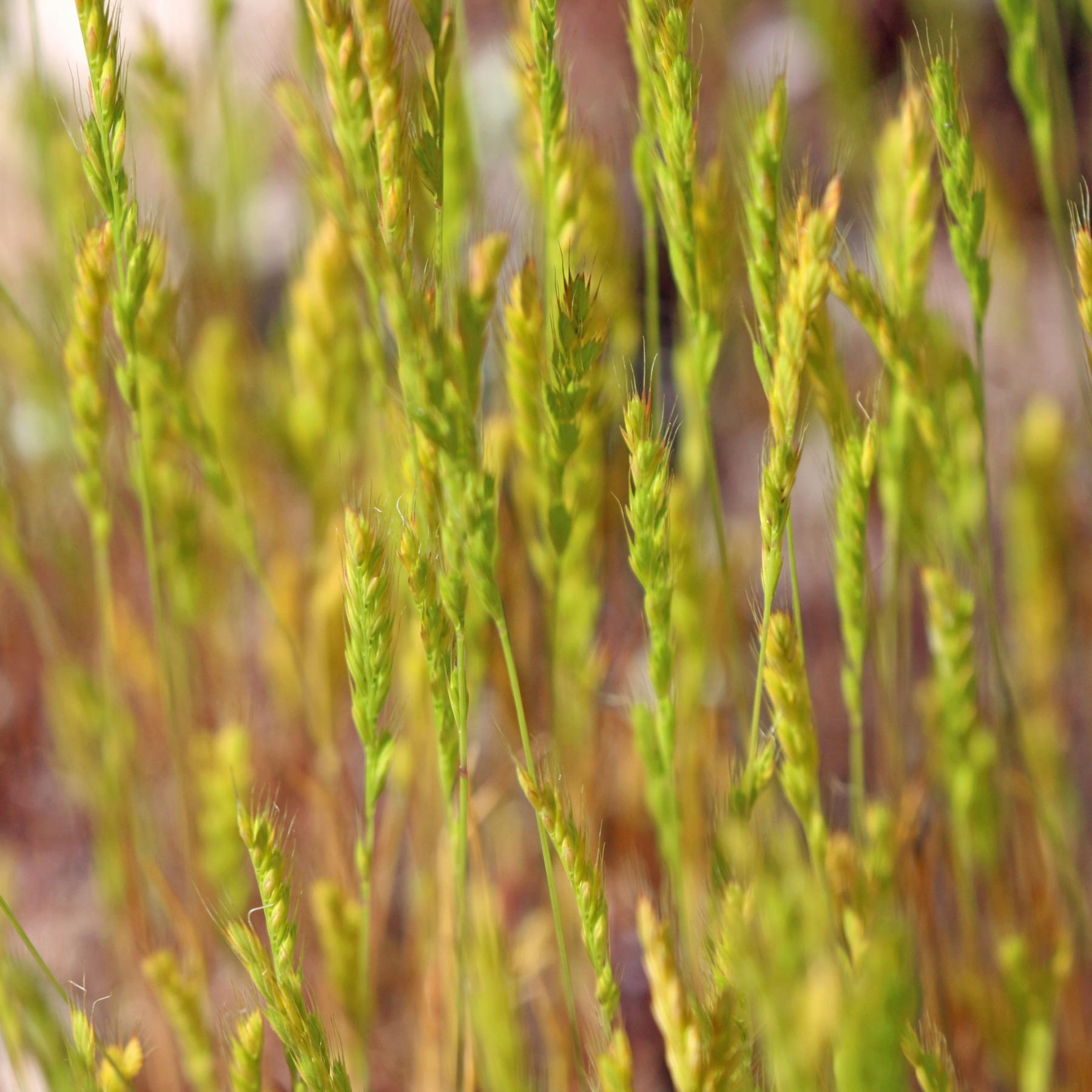
Sixweeks grass growing in Kern County, California (CC BY-NC 4.0).
Other authorities do not recognize sixweeks grass infrataxa [80,137,176,232]. Varieties are based on relative hairiness of the lemmas [57,232], and hairy and glaucous lemma types are not geographically segregated in sixweeks grass. Examples of both types may occur within a single population, or even on the same plant [232].
The genus Vulpia is distinguished by annual life form and cleistogamous breeding habit, while Festuca is perennial and chasmogamous [133]. Not all systematists support the separation of these closely aligned genera [80,176,224,232].
Synonyms
For slender sixweeks grass (Vulpia octoflora (Walt.) Rydb. var. glauca (Nutt.) Fernald [57,67,77]):
- Festuca octoflora Walt. var. tenella (Willd.) Fernald [67,68,137]
- Festuca gracilenta Buckl.
- Festuca tenella Willd.
- Vulpia octoflora var. tenella (Willd.) Fern. [134]
For sixweeks grass (Vulpia octoflora (Walt.) Rydb. var. octoflora [57,77,97,112,137]):
- Festuca octoflora Walt. [67,80,113,137,176,224,232]
Other Common Names
six-weeks grass, common sixweeks grass, eight-flower sixweeks grass, sixweeks fescue, eight-flowered fescue
General Distribution
Sixweeks grass is widely distributed in North America, occurring from British Columbia east to Quebec and south to Baja California Norte, Mexico, the Texas panhandle, and central Florida [111,134,232,240]. Of the varieties, slender sixweeks grass is most common in the northern United States and southern Canada, although its distribution extends to the southern United States. Hairy sixweeks grass occurs in the western United States, Baja California, and Florida. The typical variety (V. octoflora var. octoflora) is most common in the Southeast but occurs across southwestern Canada and all of the United States except the extreme Northeast [111,134]. Grass Manual on the Web provides a map of sixweeks grass's distribution in Canada and the United States. Plants database provides distributional maps of sixweeks grass and its varieties in the United States.

Sixweeks grass growing in British Columbia, Canada (CC BY-NC 4.0).
Although sixweeks grass is widespread, it is uncommon in some vegetation types and is not documented in every ecosystem or plant community where it grows. It may occur in some vegetation types that are not listed below.
States and Provinces
- United States: AL AK AZ AR CA CO CT DE FL GA ID IL IN IA KS KY LA ME MD MA MI MN MS MO MT NE NV NH NJ NM NY NC ND OH OK OR PA RI SC SD TN TX UT VT VA WA WV WI WY DC
- Canada: AB BC ON PE PQ SK
- Mexico: B.C.N.
Site Characteristics
Sixweeks grass is most common on disturbed sites and open areas. It is reported on roadsides, fields, and "waste places" in the Southeast [176,245]. It also occurs on dry stream channels [201], and is common on animal-disturbed sites such as seed harvester ant mounds and prairie dog towns [25,57]. Common locales for sixweeks grass in Michigan include dunelands, lakeshores, roadsides, and oak woodlands [224]. Sixweeks grass favors plant communities with open structure [77,86], occurring on coastal and desert sites in Baja California [240]. Since is drought tolerant and grows on xeric sites that few other grasses can tolerate, it is sometimes a xeric-site indicator [94,139]. An Arizona field experiment showed that sixweeks grass had the lowest relative water requirement (as a ratio of water used:dry-matter production) of 5 southern Arizona annuals [142]. At the end of the Great Drought (1941), Weaver and Mueller [229] found sixweeks grass in "abundance" on depleted tallgrass prairies of eastern Kansas and Nebraska.
Aspect where sixweeks grass grows varies depending upon climate and surrounding vegetation. On morainal mountain grasslands of the Blackfoot Valley of western Montana, sixweeks grass occurred on low, dry, south- and southeastern aspects of the moraines [24]. However, in knob and kettle topography on south-central Washington, sixweeks grass grew on north-facing slopes but not south-facing slopes [179]. In a sand bluestem-prairie sandreed (Andropogon gerardii var. paucipilus-Calamovilfa longifolia) prairie in the Nebraska sandhills, sixweeks grass is most common in depressions [28]. It is reported on lowlands, alluvial flats, and bajadas of the Southwest [138].
Elevation
Sixweeks grass is most common at low elevations. Elevational range by state is:
| Area | Elevation |
|---|---|
| Arizona | <6,500 feet (2,000 m) [113,239] |
| Sawtooth Range, Arizona | 1,600-1,750 feet (490-530 m) [138] |
| California | <7,000 feet (2,000 m) [97,156] |
| Colorado | 3,500-8,500 feet (1,100-2,600 m) feet [88] |
| Nevada | 1,800-6,600 feet (550-2,000 m) [112] |
| New Mexico | 5,000-6,500 feet (1,500-2,000 m) [137] |
| Utah | 2,490-5,510 feet (760-2,290 m) [232] |
| Baja California | low elevations [240] |
Soils

Sixweeks grass growing in a coarse substrate in Inyo County, California (CC BY 4.0).
Sixweeks grass is adapted to a wide range of soils but is most common on coarse-textured soils [208,224]. The soils are often disturbed [77,80,86,224]. Rydberg [187] described sixweeks grass as "characteristic of sandhill regions of Nebraska and Kansas," occurring on sandy riverbanks, draws, and canyon bottoms. Sixweeks grass also grows in loamy and rocky soils [97,104,113,129,137]. Slender sixweeks grass grows on dry, "ruderal" sands on Fire Island National Seashore, New York [59] and on coastal beaches and dunelands of Connecticut [99]. In the Central Great Plains of Kansas, sixweeks grass occurs on "mature, well-developed" soil profiles [2]. It grows on disturbed rocky, sandy, and sandy clay soils in Texas, where parent materials include limestone [57]. Sixweeks grass occurs on shale-derived soils in southern Illinois [139] and on gypsum-derived and alluvial soils in the eastern Mojave Desert [147].
Plant Communities
Sixweeks grass is most frequent in desert grassland, desert shrub [138], sagebrush (Artemisia spp.) [5], short- and mixed-grass prairie [118,229,229], and annual grassland communities [92]. Even in those communities, it is usually a minor grass (<5% cover) [3,61,214,217,234]. Coverage may be more extensive on disturbed or open sites. A botanical survey in Zion National Park, Utah, showed 40% sixweeks grass occurrence in open singleleaf pinyon (Pinus monophylla) communities [87]. Hairy sixweeks grass is common in burned singleleaf pinyon-juniper (Juniperus spp.) woodlands of California [97]. Sixweeks grass was common on heavily grazed bison rangelands in 2 presettlement (1810) surveys of shortgrass prairies [89].
Sixweeks grass is documented in several vegetation types besides those listed above. It grows in shadscale (Atriplex confertifolia), Joshua tree (Yucca brevifolia), and riparian California broomsage (Lepidospartum squamatum) scrub in southeastern California and Nevada [21,22,27]. In Pinnacles National Monument, California, sixweeks grass was present on mostly barren sites with cheatgrass (Bromus tectorum) and woven-spore lichen (Texosporium sancti-jacobi), a rare lichen that occurs on xeric, undisturbed sites [141]. Sixweeks grass occurs in a saguaro-yellow paloverde (Carnegiea gigantea-Cercidium microphyllum) community on the Tonto National Forest, Arizona [42]. Sixweeks grass and red brome (B. rubens) were the 2 most productive annuals in a vegetation survey in Saguaro National Park, Arizona (Esque and Schwalbe, unpublished data cited in [63]). Sixweeks grass also occurs in silver sagebrush-western wheatgrass (Artemisia cana-Pascopyrum smithii) in north-central Colorado [129], and in sand dropseed (Sporobolus cryptandrus) communities of Nebraska [228].
Sixweeks grass was probably an important component of pristine California prairie, growing in the interspaces between dominant bunchgrasses such as purple needlegrass (Nassella pulchra). It may have been more prevalent on dry sites than on wet sites. California prairie is almost entirely replaced by annual grassland, which is dominated by nonnative annual grasses such as ripgut brome (B. diandrus) [92].
Sixweeks grass is not usually named as a dominant species in vegetation classifications. Burzlaff [39] describes 3 sixweeks grass unions and 1 sixweeks grass-forb union on the Nebraska sandhills prairie. Daubenmire [51] defines a plant union as "the smallest structural unit in the organization of vegetation, consisting of 1 or more species that make similar demands on their environment." A winterfat/Sandberg bluegrass (Krascheninnikovia lanata/Poa secunda)-sixweeks grass community was identified on the Snake River Birds of Prey Area of southern Idaho [247]. Sixweeks grass is important in rock outcrop communities of the Cross Timbers region, where a survey showed 11% sixweeks grass presence and 5.4% mean cover on a yellow stonecrop (Sedum nuttallianum)-foliose lichen rock outcrop community in south-central Oklahoma [46]. Sixweeks grass and poverty oatgrass (Danthonia spicata) dominate pristine shale barrens of southern Illinois [139].
Botanical Description
This description provides characteristics that may be relevant to fire ecology, and is not meant for identification. Keys for species identification are available (e.g. [86,97,134,176,245]). Lonard [134] provides a detailed key for distinguishing the varieties.

Sixweeks fescue tufts growing in San Diego County, California (CC BY-SA 4.0).
Sixweeks grass is a native winter or spring annual with a decumbent to erect growth form. Culms are solitary or in small tufts [77,176,206,208,232] that are 3.1 to 23 inches (8-59 cm) tall. Leaves are cauline. The blades are 1 to 2 mm wide and 0.8 to 4 inches (2-10 cm) long. The inflorescence is a narrow, compact panicle 1 to 6 inches (3-16 cm) long. Spikelets are 4.5 to 10 mm long [57,86,97,176,208,232]. The lemmas are awned [67]; awns are 3 to 25 mm long [97,176,208]. The seed is a caryopsis measuring 1.7 to 4 mm in length [77,176]. Mean seed mass for greenhouse-grown plants from the northern Mojave Desert was 0.30 mg/seed [55], while mean seed mass of field samples collected in northern Arizona was 0.49 mg/seed. The Arizona seeds averaged 3.29 × 0.58 mm in length and width [180]. Sixweeks grass roots are fibrous and shallow [165]: maximum rooting depth for Colorado plants was about 5.9 inches (15 cm) [78]. Maximum root depth for sixweeks grass harvested in late June in the Powder River Basin of Wyoming averaged 6.7 inches (17 cm); range was 6.3 to 7.1 inches (16-18 cm) [5]. Sixweeks grass's root:shoot ratio averaged 0.08 g/g for greenhouse-grown plants [55]. Sixweeks grass may form mycorrhizal associations [4].
Raunkiaer Life Form
- Therophyte [177]
Seasonal Development
Sixweeks grass is a cool-season species that establishes in late fall or early spring, flowers in spring or early summer, then matures, sets seed, and dies by late spring or early summer, depending on geographic location [39,39,106,165,208,230]. It is a winter or spring annual in the deserts of the Southwest [33,55,109,138]. Growing season generally extends for several months in wet years, but may be 6 weeks or less in dry years [155,208]. Phenology of sixweeks grass across its distributional range is shown below.
| Area | Germination and seedling emergence | Flowers | Seeds disperse | Plants die |
|---|---|---|---|---|
| Arizona | — | spring [113] | — | — |
| Sonoran Desert, Arizona | — | April-June [155] | — | — |
| California | — | April-June [156] | — | — |
| Mojave Desert, California | fall-winter [15,109] | April-June [155] | — | — |
| Carolinas | — | April-June [176] | — | — |
| Colorado | September-November [104,157] | mid-May-early June [56] | early July-August [104,129,157] | early fall [104,157] |
| Nebraska | — | June-July [203] | — | — |
| Nevada | — | April-June [112] | — | — |
| New Mexico | — | May-July [137] | — | — |
| Chihuahuan Desert, New Mexico | February-March | March | April [119] | — |
| North Dakota | September-December; May-August [106] | — | — | — |
| Texas | — | April-May [57] | — | — |
| Cross Timbers | January [61] | — | — | — |
| Great Plains | March [193] | April-June [80] | — | — |
| Intermountain Region | — | May-June [49] | — | — |
| Ozarks | — | — | June [48] | — |
| Baja California | — | April-June [240] | — | — |
On blue grama-buffalo grass sites in Colorado, sixweeks grass cover declined as plants matured and died. It showed 1.4% and 5.6% cover in May (on black-tailed prairie dog town and undisturbed sites, respectively), 0.3% and 1.7% cover in June, and 0.1% cover (both sites) in August and September [25].
Regeneration Processes
Because it is an annual, sixweeks grass regenerates only from seed [1,54,66,98,109,132,226].
Pollination and Breeding System
The Vulpia genus is cleistogamous [133].
Seed Production
Under favorable conditions, sixweeks grass produces "numerous" small seeds. In the greenhouse, sixweeks grass showed higher rates of seed production than either red brome or pinnate tansymustard (Descurainia pinnata), even though its resource uptake (water and nitrogen) was less. Seed yield can vary greatly across years. A North Dakota study found 283 sixweeks grass seedlings/kg emerged from hay harvested in 1978, while no sixweeks grass seedlings emerging from hay harvested in 1980 and 1981 [183]. Declines ― or total failures ― in the seed crop may occur in drought years; however, sixweeks grass seed production rebounds quickly when climate is favorable [55]. Drought does not necessarily mean seed crop failure. The Great Drought of 1939 to 1941 was the most severe Great Plains drought of the 20th century. During the end of the Great Drought, when associated perennial grasses were mostly dead, sixweeks grass produced "abundant" seed crops in eastern Kansas and Nebraska [3].
Seed Dispersal
Seed is dispersed primarily by wind [3] and sometimes on waterways [74]. The seed awns provide a mechanism for possible animal dispersal, although animal dispersal is not documented. Sixweeks grass may also be dispersed as a contaminant in hay. In North Dakota an equal number of sixweeks grass seedlings (142 seedlings/kg hay) emerged from year-old, unstored hay and year-old hay that was stored in an unheated shed [183].
Seed Banking
As an annual with dormant seeds, sixweeks grass depends entirely on its seed bank for regeneration [1,54,66,98,109,132,226]. Most seeds remain dormant until soil moisture levels are adequate for germination [109]. Even in years of high germination, some viable sixweeks grass seeds remain ungerminated in the seed bank. This reproductive strategy is a hedge against high seedling mortality and poor seed set in any given year [55,168]. For example, sod slabs (20 ft²), removed from mixed-grass prairie and kept in watered flats in a greenhouse, supported 344 sixweeks grass seedlings over a 4-year study period (1929-1932). On 35-cm² quadrats on open prairie during the same period, mean sixweeks grass seedling emergence was "nearly a hundred" in 1929 and 7 in 1931, with no sixweeks grass seedlings present in either 1930 or 1932 [23]. In a blue grama-buffalo grass (Bouteloua gracilis-Buchloe dactyloides) community on the Central Plains Experimental Range of Colorado, sixweeks grass seed had a "relatively homogeneous spatial distribution." Seeds were more numerous on coarse soils, and seed density varied across sample months and years. Seed bank density was [43]:
| Date | Soil texture | Sixweeks grass density (seedlings/m²) |
|---|---|---|
| July 1984 | coarse-textured | 181 |
| fine-textured | 283 | |
| September 1984 | coarse-textured | 2,143 |
| fine-textured | 1,147 | |
| November 1984 | coarse-textured | 8 |
| fine-textured | 0 | |
| March 1985 | coarse-textured | 38 |
| fine-textured | 8 | |
| May 1985 | coarse-textured | 1,140 |
| fine-textured | 400 | |
| July 1985 | coarse-textured | 1,653 |
| fine-textured | 596 | |
| September 1985 | coarse-textured | 91 |
| fine-textured | 45 | |
| November 1985 | coarse-textured | 242 |
| fine-textured | 98 |
Walters [226] found sixweeks grass was "notably dominant" in the seed bank of a creosotebush-yellow paloverde-white bursage (Cercidium microphyllum-Ambrosia dumosa) community near Phoenix, Arizona, but not in aboveground vegetation. Near Reno, Nevada, more viable seeds were found in the litter layer of a basin big sagebrush/cheatgrass (Artemisia tridentata ssp. tridentata/Bromus tectorum) community than in soil. Density (viable sixweeks grass seeds/m²) was [248]:
| Seed location | September | November |
|---|---|---|
| Litter | 4,350 | 900 |
| Soil (0-2.5 cm depth) | 1,200 | 300 |
Grazing may affect seed concentration either negatively or positively. In a seed bank inventory of Colorado pinyon-juniper (Pinus edulis-Juniperus spp.) and blackbrush/Indian ricegrass (Coleogyne ramosissima/Achnatherum hymenoides) communities of southern Utah and northern Arizona, sixweeks grass seed was much more prevalent on ungrazed relict plots (225 seeds/m²) than on heavily, moderately, and lightly grazed plots (125, 110, and 90 seeds/m², respectively) [14]. However, on mixed- and tallgrass prairies where sixweeks grass occurred with highly palatable perennial grasses, sixweeks grass density was greater on sites with heavy and moderate cattle grazing compared to lightly grazed sites [105].
Germination
Germination requires warm temperatures or mechanical scarification of the seed coat to break dormancy [14,55]. Seed dormancy ensures sixweeks grass population survival across unfavorable growing seasons [45]. As an annual, sixweeks grass is sensitive to climate fluctuations and only germinates in years when sufficient moisture is available in upper soil layers [36,101,105]. For example, a Kansas vegetation survey was conducted during (1939 and 1940) and after (1941) the Great Drought. Percentages of available soil moisture in the top 6 inches (20 cm) of soil during sixweeks grass's growing seasons were [36]:
| Year | 1939 | 1940 | 1941 | ||||||
| Month | April | May | June | April | May | June | April | May | June |
| Soil moisture (%) | 6.2 | 0.5 | 2.9 | 7.3 | 4 | 5.3 | 19.2 | 24 | 16.9 |
In this study, sixweeks grass was present in blue grama-buffalo grass-sand dropseed communities. Sixweeks grass density (plants/m²) and mean seed yield (lbs/acre) during that time were [36]:
| Year | Density (plants/m2) | Yield (lbs/acre) |
|---|---|---|
| 1930 | 0.0 | 0.0 |
| 1940 | 0.0 | 0.0 |
| 1941 | 14.0 | 9.0 |
Even though sixweeks grass requires soil moisture during the germination and establishment period, it is highly drought tolerant. Germination and establishment may occur in dry years if sparse rains are favorably timed [3,151,227]. Weaver and Albertson [3] found that sixweeks grass was "abundant" during the Great Drought, when perennial grasses were dying out. Hylton and Bement [105] compared 20-year rates of sixweeks grass establishment on the Central Plains Experimental Range with 20-year weather data (1941-1960) and greenhouse studies. They found best germination (93%-96%) in the greenhouse occurred with constant 68 °F (20 °C) temperature. Alternating day/night temperatures of 59/77 °F (15/25 °C), which closely approximated fall field conditions, produced good germination rates (66%-79%). Sixweeks grass field densities were highest in 1941 and 2nd-highest in 1958. Weather data from the same time period show that temperature and moisture conditions in late August and early September of 1940 and 1957 closely paralleled those producing most favorable germination in the greenhouse [105].
In a greenhouse experiment, DeFalco and others [55] found thinning established seedlings promoted new sixweeks grass germinants.
Seedling Establishment
Sixweeks grass population numbers can vary greatly from year to year [75,125,160]. Germination and seedling establishment are strongly tied to climate fluctuation, with best establishment occurring in relatively wet years that have plentiful precipitation during germination and growth. In a garden study, Lippert and Hopkins [132] reported 35 sixweeks grass seedlings/m² in soil samples collected from a buffalo grass-blue grama community in Kansas. Study time was 73 days, and the garden site was watered [132]. In a creosotebush-white bursage study in Nye County, Nevada, where sixweeks grass is a winter annual, mean seedling emergence of sixweeks grass varied with precipitation [24]:
| Year | Mean precipitation (mm) | Density (plants/m²) | |||
|---|---|---|---|---|---|
| September-October | November-December | January-February | Total (September-February) | ||
| 1971 | 0 | 37 | 8 | 45 | 2.96 |
| 1972 | 0 | 41 | 0 | 41 | 0.53 |
| 1973 | 40 | 29 | 70 | 141 | 5.005 |
| 1973 | 3 | 24 | 35 | 63 | 3.89 |
| 1975 | 25 | 35 | 5 | 63 | 10.108 |
| 1976 | 5 | 4 | 98 | 108 | 7.652 |
A 1992 Montana study showed ample seeds and good seedling establishment, but poor crop maturation. The researchers estimated the seed:plant ratio of sixweeks grass on the Fort Keogh Livestock and Range Research Laboratory by counting seeds in soil samples and measuring seedling density and mature plant biomass. Seed, seedling, and mature (standing crop) measures of the sixweeks grass population ranged as follows [110]:
| Date | Seed density | Seedling density (plants/m²) | Standing crop mean, 1992 (g/m²) |
|---|---|---|---|
| March 1992 | 0-1,865 | — | 0-4 |
| June 1992 | — | 0-1,090 | — |
Nurse plants may facilitate sixweeks grass establishment in arid climates. Creosotebush is a common nurse plant for sixweeks grass and other annuals in the Mojave Desert (review by [71]).
Plant Growth
Growth rate is rapid in dry years, but may be slow compared to most annuals if favorable weather extends the growing season. DeFalco and others [55] suggest sixweeks grass has adapted to low-nitrogen soils by slowing growth; thus, it has less demand for nitrogen compared to most annuals. Plant community structure and type may also affect seedling establishment and growth rates. In adjacent plant communities of the Mojave Desert of California, sixweeks grass establishment and growth varied as follows [26]:
| Plant community | Joshua tree/blackbrush | blackbrush | Utah juniper (J. osteosperma)/blackbrush | ||||||
| Year | 1969 | 1970 | 1971 | 1969 | 1970 | 1971 | 1969 | 1970 | 1971 |
| density (plants/0.1 m²) | 0.22 | 0.46 | 0.06 | 0.14 | 1.42 | 0.35 | 0 | 0 | 0.04 |
| Frequency (%) | 10 | 14 | 4 | 9 | 23 | 10 | 0 | 0 | 4 |
| Height (x, cm) | 7.3 | 3.0 | 4.5 | 2.2 | 3.1 | 5.7 | 0 | 0 | 3.0 |
Vegetative Regeneration
Because it is an annual, sixweeks grass does not sprout from the root crown after it produces seed. It dies. However, annual grasses may die back and sprout from the root crown when wet weather follows a short-term dry period during the growing season [104].
Successional Status
Sixweeks grass is a ruderal species favoring open sites and bare ground [93,112,113,145,165]. It is shade intolerant [139], and its presence is documented on disturbed sites across its distribution [197,198,221]. It was present in black spruce (Picea mariana) plantation plots in New Brunswick, but did not occur in undisturbed, naturally regenerated forest plots [221]. Slender sixweeks grass is noted in early duneland succession on Fire Island, New York [59] and on innundated streambanks of Colorado [74]. Beetle [16] lists it as an "invader" on shortgrass prairie near Laramie, Wyoming. A vegetation survey 3 weeks after the May 1980 eruption of Mt. St. Helens in Washington showed no effect of ashfall on sixweeks grass, which was setting seed even in areas where compacted ash was >1 inch (3 cm) thick [135].
Sixweeks grass occurs on sites disturbed by fossorial rodents [66]. In eastern Colorado it was more common in black-tailed prairie dog towns than on undisturbed blue grama-buffalo grass prairie [25]. Carlson and Crist [40] found sixweeks grass was most common on northern pocket gopher mounds and heavily grazed (≥60% utilization) cattle pastures on the Central Plains Experimental Range of north-central Colorado, and least common on lightly grazed pastures.
Because it is an annual, sixweeks grass cover may change from year to year without a major change in its successional status, particularly on open sites where light and space are not limiting. For example, in a Colorado pinyon-Utah juniper community in northeastern Utah, Austin [12] noted little change in overall plant community composition and species frequency after 10-year remeasurements. Sixweeks grass showed 4% frequency in 1974 and 7% frequency in 1984 [12].
Fire
Sixweeks grass probably held an early seral position in fire-prone ecosystems prior to European settlement [173]. It is still common on burns in early postfire succession [54], but may occur in nearly equal numbers on similar unburned sites that are open. It was, for example, noted on both burned and adjacent unburned sites in a threetip sagebrush-mountain big sagebrush (Artemisia tripartita-A. tridentata var. vaseyana) community near Pocatello, Idaho [1]. Sixweeks grass was seeded in after a 1958 broadcast burn on a clearcut in southwestern North Carolina. By 1995, the site had succeeded to black locust-yellow-poplar (Robinia pseudoacacia-Liriodendron tulipifera) forest. Sixweeks grass frequency and biomass declined as the canopy closed [62]. See Fire Regimes for information on fire regimes of plant communities supporting sixweeks grass and Plant Response to Fire for more information about sixweeks grass response to fire
Old Fields
Sixweeks grass is a common component of old-field succession in palouse and shortgrass prairies [47,52]. In old-field succession on a bluebunch wheatgrass (Pseudoroegneria spicata)-Sandberg bluegrass community near Clarkston, Washington, sixweeks grass showed trace coverage and frequency on young (1-12 years since tilling) and old fields (39-52 years since tilling), and 2% coverage and 82% frequency on untilled sites [52]. It was a component of old fields that had been plowed 53 years before a vegetation survey on the Pawnee National Grasslands and the Central Plains Experimental Range of Colorado. The fields were succeeding to blue grama-buffalo grass communities [44]. In an old-field study in the Cross Timbers region of Texas, sixweeks grass formed 17% cover 1 year after cultivation [61]. Sixweeks grass may be invasive on tallgrass prairies where overgrazing and/or drought has reduced cover of tallgrass species [229].
Abiotic influences: Sixweeks grass was important in drought-induced succession from 1934 to 1940. During the Great Drought, Weaver and Albertson [3] wrote that "the density and extent of [sixweeks grass] stands was astonishing. Bunches consisting of 20 to 30 stems growing out of the dead crowns of little bluestems were found regularly. Two hundred such aggregations of stems in a single square meter were common." After the drought ended, sixweeks grass became less important except on disturbed sites and small openings. The authors placed sixweeks grass in the "2nd weed stage" of tallgrass prairie succession: it established after ruderal weeds such as Russian-thistle (Salsola kali) and narrowleaf goosefoot (Chenopodium leptophyllum) but before native perennial grasses [3].
On the Central Plains Experimental Range, sixweeks grass density and cover were significantly (p<0.05) greater on fine-textured soils compared to coarse-textured soils. Study sites were denuded by hand-pulling aboveground and sieving plant organs from soil to a depth of 4 inches (10 cm), then allowed to recolonize without further treatment [43].
Late Succession
Sixweeks grass occurs in late-successional communities with open ground, such as pinyon-juniper; small openings within closed-canopy communities; and in small disturbances in mostly undisturbed grassland [145]. In a study on northern Wyoming's shortgrass prairie, sixweeks grass occurred in small disturbed areas within lands that had been ungrazed for 40 or more years [191]. Sixweeks grass was found on both undisturbed shortgrass prairie and reclaimed stripmine sites in the Powder River Basin of Wyoming [4,5]. In another Wyoming shortgrass prairie study, sixweeks grass occurred on ungrazed sites and sites experiencing heavy domestic sheep use. The authors suggested that plentiful fall precipitation when sixweeks grass was establishing was more important than level of grazing disturbance in determining sixweeks grass density [125]. Lippert and Hopkins [132] found sixweeks grass on "climax" buffalo grass-blue grama communities of Kansas. In southern Utah and northern Arizona, sixweeks grass occurred on an ungrazed, relict mesa of Glen Canyon National Recreation Area, and on heavily grazed sites on the nearby Navajo Reservation [107]. It was also present on a remote ungrazed, relict site in the Grand Canyon that had not burned since 1889 [194]. On desert grassland of Canyonlands National Park, Utah, sixweeks grass showed 1% or less cover on a site that had been lightly grazed for many years prior to the area being made a Park (which was 10 years prior to the study), and 1% cover on an ungrazed relict area [120]. In chamise (Adenostoma fasciculatum) chaparral of California, sixweeks grass occurred on undisturbed sites beneath chamise and in experimental clearings [71].
Immediate Fire Effects
Fire occurring when plants are mature kills sixweeks grass [53]. If fire occurs early in the growing season, annuals such as sixweeks grass may sprout from the root crown [104]. Fire in any season may reduce the seed bank [53]. Seed in litter or lying on the soil surface is most likely to be killed by fire [248].
It is unclear whether heat breaks seed dormancy and enhances sixweeks grass germination. In an outdoor pot study at Vanderburg Air Force Base, California, Odion [163] found a significant positive effect of heat on seedling emergence. Pre- and postfire soil samples were collected from a maritime chamise community that had not burned for at least 75 years (at Site 1) or 50 years (at Site 2). Prefire soil cores were collected in fall, and both study sites were burned under prescription soon after. Postfire soil samples were also collected [163]. Fire intensity was relatively high (see [164] for fire data). Laboratory treatments for prefire soil samples were a control, heat (100 °C for 7 min.), and heat with chamise charate. Seedling emergence was counted for pre- and postfire soils samples and in the field on prescribed burn plots.
| Site | Prefire treatments | Postfire samples | ||
|---|---|---|---|---|
| Heat | Heat and Charate | Laboratory emergence | Field emergence | |
| Site 1 | 74.8 | 74.8 | 8.8 | 0.1 |
| Site 2 | — | 492.8 | 101.2 | 0.5 |
However, heat or charate treatments had no effect on sixweeks grass germination in another laboratory experiment [20].
Intense heat generated in some shrubland fires can kill shallowly buried seed and seeds in litter. In field and greenhouse studies of the seed bank of a basin big sagebrush community near Reno, Nevada, Young and Evans [248] found 4 times as many viable sixweeks grass seeds in litter than buried in soil, where seeds were less vulnerable to fire. In a greenhouse study, soil cores from unburned chamise plots produced 122 sixweeks grass germinants/300 cm² of soil, while samples taken from an adjacent site that had recently burned produced no germinants [233]. A vegetation survey also illustrates this trend. An eastern Mojave buckwheat-California sagebrush costal sage community in the Santa Monica Mountains of California experienced wildfire on 18 June 1978, and a portion of the site reburned in June 1979. The 1978 fire had relatively long burnout times (2-minute exposure to 9 kcal/sec/m²); reaction intensity of the fire was modeled at 120 kcal/sec/m². The site was a southeast-facing, xeric slope where fortunately, vegetation sampling had been conducted in 1977. Prefire (1977) vegetation sampling showed 30.9% prefire coverage of sixweeks grass. Postfire coverage in spring 1980 was 0.5% [235].
Fire does not always reduce sixweeks grass's soil seed bank. In a seed bank study at La Purisima State Historic Park northwest of Los Angeles, Davis and others [53] found approximately equal numbers of sixweeks germinants from pre- and postfire soils. Soil samples were collected before and after prescribed burning in a maritime chamise community and moved to a greenhouse for seed germination. Mean sixweeks grass germinant volume was 1 plant/250 cm³ in unburned soil and 0.85 plant/250 cm³ in burned soil [53].
Postfire Regeneration Strategy
- Ground residual colonizer (on-site, initial community)
- Initial off-site colonizer (off-site, initial community)
- Secondary colonizer (on-site or off-site seed sources) [204]
Fire Adaptations
Sixweeks grass establishes from soil-stored seed after fire, typically as a component of early postfire vegetation [1,54,66,98,109,132,173,226]. No other means of postfire regeneration are documented, although establishment from off-site wind-, animal-, or water-dispersal seed is possible.
Plant Response to Fire
Sixweeks grass establishes from soil-stored seed in early postfire plant communities [1,48,54,190,238]. It often reaches greatest coverage and frequency in the 1st few years after fire, then declines [54,210]. To date (2006), there are too few fire studies to access sixweeks grass's "typical" response to fire. Some studies show an increase after fire [3,41,52,54,102,172,210]; some show little overall change in sixweeks grass abundance before and after fire [1,42,130,209]; and a minority show a decrease [28,153]. Because it is an annual with its establishment rate closely tied to growing-season precipitation, short-term fire studies that do not provide comparative pre- and postfire precipitation data may provide little insight into sixweeks grass response to fire. Postfire drought will probably impact sixweeks grass's ability to compete for water against deep-rooted perennials. Studies characterizing sixweeks grass response to fire in the short term may show trends, however. As an annual, sixweeks grass's response is most likely linked to fire effect on the seed bank, with severe surface and ground fires most restricting its ability to recover from fire.
Postfire increases in sixweeks grass coverage and frequency are usually not large. Minor postfire increases in sixweeks grass may be statistically insignificant but biologically important. Doubling sixweeks grass production may provide important cover on disturbed sites [3] and enhance wildlife food webs. Sixweeks grass is, for example, highly important in the diet of the Townsend's ground squirrel, a keystone species [161] in sagebrush ecosystems (see Seed Use). A doubling of sixweeks grass seed production may greatly benefit the rodent and its predators.
Positive Fire Effect
Sixweeks grass was the most common annual in maritime coast live oak and chamise communities 1 to 5 years after fire in Santa Barbara County, California [54]. In a survey of postfire vegetation in chamise and mixed-chaparral communities of California, Sweeney [210] found sixweeks grass was most common at postfire year 1, with abundance "decreasing somewhat" on older burns. Daubenmire [52] reported that a July 1961 wildfire ""benefited" sixweeks grass near Clarkston, Washington. The fire occurred in an old field succeeding to a bluebunch wheatgrass-Sandberg bluegrass community. Percent cover of sixweeks grass was low under all conditions, but relative frequency was high in early postfire years [52]:
| Postfire year | Postfire year 2 | Postfire year 4 | Postfire year 12 | |
| Burned sites | Cover (%) | 2 | 1 | trace |
| Frequency (%) | 85 | 62 | 2 | |
| Unburned sites | Cover (%) | 0 | 1 | 1 |
| Frequency (%) | 0 | 28 | 30 | |
Biomass of sixweeks grass greatly increased (547%) on open sites after prescribed fire on the Tonto National Forest, Arizona. Plant response to 3 fires in a saguaro-desert ironwood (Olneya tesota)/white bursage/cholla (Opuntia spp.) community was compared. Study sites included an unburned control and 2 adjacent burn sites. One of the adjacent sites burned in a wildfire on 26 May 1980; the other adjacent site was burned under prescription on 12 June 1981. For each treatment, density and biomass were measured on 2 microhabitats: open/shrub (shrub interspaces or areas with low shrubs) and shade (beneath saguaro or desert ironwood trees). Changes in sixweeks grass density were not significant (p<0.05) across treatments on open/shrub sites. Changes in biomass were significant, with sixweeks grass on the wildfire site showing biomass reduction and other sites showing increases. Changes in density and biomass were not significant on shaded sites. Mean sixweeks grass density and biomass were [41]:
| Microhabitat | Variable | No Fire | 1980 Wildfire | 1981 Prescribed Burn | |||
|---|---|---|---|---|---|---|---|
| 1981 | 1982 | 1981 | 1982 | 1981 | 1982 | ||
| Open/shrub | Density (plants/m²) | 121 | 123 | 20 | 34 | 88 | 153 |
| Biomass (g/m²) | 0.5 | 1.5* | 1.2 | 0.7* | 0.6 | 9.7* | |
| Shade | Density | 84 | 8 | 40 | 35 | 99 | 23 |
| Biomass | 0.3 | 0.3 | 0.5 | 1 | 0.3 | 1.5 | |
| *significant change across treatments (p<0.05) | |||||||
Mean precipitation for the growing season (December-March) is 5.0 inches (127 mm, measured from the nearest weather station). Growing-season precipitation during the fire study years was 10.8 inches (275 mm, 216% of normal) in 1979-1980; 3.5 inches (90 mm, 71% of normal) in 1980-1981; and 6.06 inches (154 mm, 121% of normal) in 1981-1982 [41].
Burn surveys showed that late-season prescribed fires and wildland fires for resource benefit favored sixweeks grass in Dinosaur National Monument, Colorado. Sixweeks grass and/or cheatgrass formed a "major component" of the postfire vegetation on 5 of 6 burn sites. The management objective was to reduce the Wyoming big sagebrush component of the vegetation and increase native grasses including sixweeks grass [172].
No Fire Effect
With or without fire, sixweeks grass typically shows less than 5% cover on most sites. On open or already disturbed sites, fire may have little effect on sixweeks grass's relative coverage. It was noted as a minor grass (<5% cover), for example, on both burned and unburned big sagebrush/bluebunch wheatgrass sites in southeastern Washington [130,131]. Near Pocatello, Idaho, it was noted on both burned and unburned sites 1 year after prescribed fire in a threetip sagebrush-mountain big sagebrush community. Although the dominant species in the seed bank, sixweeks grass was uncommon on both burned or unburned plots. Relative sixweeks grass seedling density and cover at postfire year 1 were [1]:
| Burn status | Burned site | Unburned site |
| Relative seedling density (%) | 0.651 | 0.239 |
| Cover (%) | 0.5 | 0.16 |
After the 1979 Ship Island Fire on the Frank Church-River of No Return Wilderness in Idaho, differences in sixweeks grass coverage on burned vs. unburned plots at postfire years 1 and 2 were insignificant (p=0.05), ranging from 0.8% to 4.7% [209]. Similarly, April 1981 vegetation sampling conducted after an October 1980 prescribed fire in an Arizona saguaro-yellow paloverde community showed no significant (p<0.05) differences in sixweeks grass cover on burned and unburned plots [42].
Negative Fire Effect
Fire may not always benefit sixweeks grass in the short term. On the Arapho Prairie preserve in Nebraska, vegetation analysis was conducted in 1982 after an October 1981 wildfire. Biomass (g/m²) of sixweeks grass on burned and adjacent unburned plots was [153]:
| Burn status | Biomass (g/m2) | |||
|---|---|---|---|---|
| June | July | August | October | |
| Burned | 1.2 | 2.7 | 1.9 | 1 |
| Unburned | 4.7 | 3.3 | 2.3 | 7.4 |
A Nebraska sandhills prairie rangeland showed a decrease in sixweeks grass after May 1976 prescribed burning [28]. Data were not provided.
Longer-term Fire Effects
Many fire studies follow sixweeks grass's response for only postfire years 1 and 2; however, sixweeks grass may occur in later stages of postfire succession providing there are open microsites available. Sixweeks grass showed 4% frequency 4 years after prescribed fire in a redberry juniper community on the Rolling Plains of Texas [127]. Sixweeks grass was present on both burned and unburned blackbrush sites 6 years after wildfire in southwestern Utah and 14 years after wildfire on the Spring Mountain National Recreation Area in southern Nevada. Cover and frequency data were not given [213].
Seed Bank
Fire may reduce but does not deplete the soil seed bank. Over several to many years, postfire seed production replenishes sixweeks grass's seed bank. In a study of seed bank composition and fire effects to seed on different-aged burns, Zammit and Zedler [251] collected soil-litter samples from chamise-desert ceanothus (Ceanothus greggii) stands on the Sky Oaks Biological Field Station and the adjacent Cleveland National Forest near San Diego, California. Soil-litter samples were placed in flats; dry straw burned over half the samples (temperatures of 300-570 °F (150-300 °C) for 1.2-2 min.); then all samples were tested for germination in a greenhouse for 6 months. The researchers found density of germinable sixweeks grass seed was significantly (p<0.05) higher in soil from a 62-year-old stand compared to soil from chamise-desert ceanothus stands of other ages.
| Stand age (years since fire) | 10 | 17 | 36 | 62 | 86 |
| Burned flats | 0.5±0.7 | 0.0 | 0.3±0.5 | 2.2±1.5 | 0.5±0.7 |
| Unburned flats | 0.2±0.4 | 1.2±1.9 | 0.2±0.4 | 4.0±4.5 | 0.4±0.6 |
Fire Season
Few studies have documented seasonal effects of fire to sixweeks grass. However, a study in mixed chamise-mission manzanita-bushrue (Xyloccus bicolor-Cneoridium dumosum) in San Diego County, California, found no significant differences in mean herbaceous cover on spring-burned (10 May 1993) and fall-burn (28-29 October 1993) sites, but overall herbaceous diversity was greater on fall burns. The spring following burning, sixweeks grass was infrequent on spring burns, but at 0.5% frequency and 0.08% cover, it was still 1 of the 10 most common herbs on fall burns [20]. Owensby and Smith [167] reported that in tallgrass prairie, spring burning is most damaging to sixweeks grass because it is actively growing at that time. Prescribed spring fire on a Kansas prairie reduced annual grasses, including sixweeks grass, little barley (Hordeum pusillum), and bromes (Bromus spp.), from 1.5% to 0.3% cover [167].
Fire and Grazing
Cool-season annual prescribed burning and grazing reduced sixweeks grass on the Flint Hills of Kansas. After repeat (1950-1966) annual spring burns and continuous cattle grazing (5 acres/animal unit) on big bluestem-little bluestem-grama (Bouteloua spp.) mixed-grass prairie, annual grasses (sixweeks grass, bromes (Bromus spp.), and little barley) showed less basal cover on burned sites compared to unburned sites, with mid-spring burning most harmful to the annual grasses. Data were collected in the fall of 1966 and pooled for annual grasses. Annual grasses had 7.6% basal cover on unburned sites; 2.1% cover on early spring-burned (20 March) sites; 1.6% cover on mid-spring burned (10 April) sites; and 2.6% cover on late-spring burned (1 May) sites. Bluestems also decreased under this burning-and-grazing prescription, while gramas and Kentucky bluegrass (Poa pratensis) increased [6].
Keeley and others [116] compared postfire establishment and succession on 14 chaparral burn sites in southern California. They noted sixweeks grass had high coverage on only 1 burn: a heavily grazed chamise chaparral site in its 9th year of postfire succession [116].
Postfire Rehabilitation
After a 1996 wildfire in a Utah juniper/basin big sagebrush community in Utah, the burn was chained and seeded with a mix of native and nonnative rangeland grasses before the next growing season. The mix did not include sixweeks grass. Sixweeks grass showed 1% frequency at postfire years 1 and 2 [166]. The treatment did not include a comparative control.
Research Project Summaries
The following Research Project Summaries provide information on prescribed fire use and postfire response of plant community species including sixweeks grass:
- Nonnative annual grass fuels and fire in California's Mojave Desert
- Vegetation response to restoration treatments in ponderosa pine-Douglas-fir forests of western Montana
Fire Regimes
Sixweeks grass occurs in many different ecosystems and plant communities, so it experiences a wide range of fire regimes. In closed-canopy ecosystems such as maple-beech (Acer-Fagus spp.), where hundreds of years may pass without fire, sixweeks grass presence is most likely after canopy-gap disturbances. As long as it is at least sparsely represented in the prefire community, sixweeks grass may become more important when fire does occur in plant communities with long fire return intervals. Sixweeks grass is most important in open-canopy forests, woodlands, grasslands, and shrublands (see Distribution). Fire is important in retaining open structure in most of the communities where sixweeks grass is common. Ponderosa pine (Pinus ponderosa) and oak (Quercus spp.) woodlands, for example, are maintained by frequent understory fire [8,225]. Fire intervals in pinyon-juniper (Pinus-Juniperus spp.) woodlands vary greatly, but fire is important in eventually opening the canopies. Pinyon-juniper communities experience understory burns when fire is frequent, but typically have moderate- to long-interval, stand-replacing fires [152,211]. Frequent fire in annual grasslands and palouse, plains, and mixed-grass prairies maintains the grasslands by preventing invasion of woody plants and reducing litter [169,169,185,205,242]. Fire plays a more variable ecological role in shrublands where sixweeks grass is important. Some of the shrublands (e.g., chamise and other chaparral types) depend on moderate-interval (30-100 years), stand-replacing fire [169]; others are adapted to mixed-severity fires (e.g., big sagebrush) [8,38,148,192]; while many desert shrubland types (such as creosotebush) are poorly adapted to fire [33]. Descriptions of fire regimes of communities where sixweeks grass is important follow.
Desert Shrub
Fire is infrequent in pristine creosotebush-white bursage, Joshua tree, and saguaro communities. Discontinuity of fine fuels in most years hinders the spread of fire, which was historically uncommon to rare [31,33,35,103,162]. In most years, pristine stand structure of these Southwestern desert shrub communities is widely spaced woody plants, some perennial bunchgrasses, and bare interspaces [29,33,34,186]. During wet winters and springs, annuals such as sixweeks grass increase fuels loads. Biomass accumulations from native annuals following an exceptionally wet growing season may provide enough fine fuels to carry a fire in desert ecosystems that otherwise rarely burn [26,212].
Dry sixweeks grass provides little fine fuel biomass in most years because it crumbles so quickly after senescence. During prescribed burning on the Mojave Desert, native annual vegetation including sixweeks grass was unable to sustain fire despite abundant growth after above-average winter rains [33]. Nonnative, invasive annual grasses including red brome, have schismus have increased fuel loads from historic levels. While native annual grasses mostly grow in the protective shade of shrubs, nonnative grasses also grow in shrub interspaces, increasing fuel continuity and fire frequency and severity on invaded sites. Ecological consequences are serious, as most southwestern desert plants are poorly adapted to frequent and/or stand-replacing fire [33,34]. Nonnative annual grasses outcompete sixweeks grass on most desert shrub sites (see Invasives). Sixweeks grass became uncommon after the 1940s, when common Mediterranean grass (S. barbatus) invaded the Mojave Desert and coastal grasslands of California (Clarke, O, personal observation cited in [32]). For detailed information on fine fuel production of sixweeks grass, red brome, schismus, and other Mojave Desert annuals, see the FEIS Research Project Summary Nonnative annual grass fuels and fire in the Mojave Desert.
Sagebrush/Bunchgrass
Prior to the 1890s, probably only a few grass species occupied a prominent position in early postfire sagebrush communities of the Great Basin. Sixweeks grass and small sixweeks grass (Vulpia microstachys) were among the most important of these early postfire annuals. Generally, native Vulpias would increase for a few years, then be suppressed by recovering bunchgrasses such as bluebunch wheatgrass, bottlebrush squirreltail (Elymus elymoides), and Idaho fescue (Festuca idahoensis), and by shrubs such as basin big sagebrush (Artemisia tridentata ssp. tridentata) and rabbitbrush (Chrysothamnus spp.) [173]. Historic fire return intervals in sagebrush ecosystems were variable, ranging from around 20 to 100 years. Most fires were mixed-severity and of small extent, although more widespread fires occurred on some sites [100,242,243]. Cheatgrass and medusahead (Taeniatherum caput-medusae), nonnative annual grasses, have altered fire regimes and successional patterns in some sagebrush communities. Fine fuel loads from dry cheatgrass and/or medusahead can support fire-return intervals as short as 3 to 6 years [173,236].
Short- and Mixed-grass Prairies
Fires were frequent in presettlement prairie ecosystems. Widespread plains grassland fires were often noted in historical records from the early 1880s [89], and presettlement fires probably occurred every 35 years or less. Agriculture, urbanization, and fire exclusion have greatly lengthened fire return intervals on the Great Plains [169,185,242]. A few shortgrass prairies mostly retain their historical composition and structure, although few are absolutely pristine. A wet-year survey of a relict threadleaf sedge (Carex filifolia)-bluebunch wheatgrass-blue grama community in south-central Montana found sixweeks grass and cheatgrass occupied interspaces between bunchgrasses only "occasionally" [244].
Pinyon-juniper Woodlands
Fire return intervals in pinyon-juniper woodlands vary greatly, depending upon fine fuel loads and stand density. Historical fire return interval for western juniper (Juniperus occidentalis) woodlands is estimated at 10 to 30 years. Livestock grazing in pinyon-juniper tends to increase fire return intervals by reducing fine fuels and increasing woody fuel density (review by [243]). Cheatgrass invasion in some pinyon-juniper communities has greatly decreased fire return intervals and increased fire severity [121].
Annual Grasslands
Because they are dominated by nonnative annuals, annual grasslands have no "natural" fire regime. There are no data and few historic records of presettlement fire return intervals in pristine California prairie. Probable mean fire intervals (estimates of fire intervals that are derived from historical or very limited physical evidence) for California prairie are frequent: approximately every 1 to 2 years. Probable mean fire intervals for annual grasslands are every 20 to 30 years [205].
Chaparral
Historic fire return intervals in chamise and mixed-chaparral range from 10 to 90 years [169,210]. Intervals between fires were longer in communities dominated by nonsprouting shrubs, such as bigberry manzanita (Arctostaphylos glauca), than in communities dominated by sprouting shrubs such as chamise [115].
Coastal Sage Scrub Chaparral
Documentation of historic fire intervals in coast sage scrub is lacking. Current fire return intervals vary widely. Total area burned strongly correlates with precipitation during the previous winter, with heaviest burning occurring after wet years. Fire is rare following drought [149]. Vogl [223] estimated an average fire interval of 20 years for lightning-ignited fire in chaparral adjacent to coastal sage scrub. Fire severity is generally higher in coastal sage scrub than in seral chaparral due to higher litter loading and the higher percentage of terpenes in coastal sage scrub vegetation [81,136]. For a California sagebrush-eastern Mojave buckwheat (Artemisia californica-Eriogonum fasciculatum) community on the Cleveland National Forest, California, fire records show that stand-replacing fire occurs at approximate 28-year intervals. Sixweeks grass is noted in early postfire succession in the community [238].
Fuels
Because it usually constitutes less than 5% of the total vegetation and crumbles rapidly upon drying, sixweeks grass typically contributes little fine fuel biomass during the fire season [220].
A few studies provide measures of sixweeks grass fuel loads or fuel loads in plant communities where sixweeks grass is a component of the vegetation. On undisturbed palouse prairie in eastern Washington, annual grasses—with sixweeks grass the most common annual grass—composed less than 2% of total biomass from late May to early June. Live shoot biomass ranged from 50 to 69 g/m², and mostly consisted of perennial bunchgrasses [182]. In a "drier than normal" year, McColley and Hodgkinson [141] found sixweeks grass air-dry production averaged 8.3 lbs/acre on Idaho fescue-threadleaf sedge palouse prairie of east-central Washington. Potvin and Harrison [174] measured September biomass of sixweeks litter at 2.1 gm/m² on the Arapaho Prairie of Nebraska. Whisenant [236] provides the following mean fuel loads for a rubber rabbitbrush (Chrysothamnus nauseosus)/cheatgrass-Sandberg bluegrass-sixweeks grass site on the Snake River Plains of Idaho:
| Fire frequency (#/year) | Fine fuel frequency (%) | Fine fuel quantity (lb/acre) | Elevation (feet) | Burn age when sampled |
| 0.6 | 50 | 705 | 3,570 | 6 |
Fine fuels in pinyon-juniper can vary greatly. In a review, Wright and others [243] gave an average production of western juniper communities in eastern Oregon, which often contain sixweeks grass, at 600 lb/acre, with yields on sites with good soils and high precipitation as high as 1,400 lb/acre.
Leaf area index is a variable in some fuel models (e.g., FARSITE). Hazlet [91] provides leaf area indices for northern Colorado blue grama-buffalo grass communities containing sixweeks grass.
The following table provides fire return intervals for plant communities and ecosystems where sixweeks grass is important. For additional fire regime information, search FEIS for this species by entering the species name on the Advanced Search page and selecting “Fire Regime” as the publication type.
| Community or Ecosystem | Dominant Species | Fire Return Interval Range (years) |
|---|---|---|
| maple-beech-birch | Acer-Fagus-Betula spp. | >1,000 [225] |
| California chaparral | Adenostoma and/or Arctostaphylos spp. | <35 to <100 [169] |
| bluestem prairie | Andropogon gerardii var. gerardii-Schizachyrium scoparium | <10 [123,169] |
| Nebraska sandhills prairie | A. gerardii var. paucipilus-Schizachyrium scoparium | <10 [169] |
| silver sagebrush steppe | Artemisia cana | 5-45 [96,175,242] |
| sagebrush steppe | A. tridentata/Pseudoroegneria spicata | 20-70 [169] |
| basin big sagebrush | A. tridentata var. tridentata | 12-43 [192] |
| mountain big sagebrush | A. tridentata var. vaseyana | 15-40 [8,38,148] |
| Wyoming big sagebrush | A. tridentata var. wyomingensis | 10-70 (x=40) [222,249] |
| coastal sagebrush | A. californica | <35 to <100 |
| saltbush-greasewood | Atriplex confertifolia-Sarcobatus vermiculatus | <35 to <100 |
| desert grasslands | Bouteloua eriopoda and/or Pleuraphis mutica | 5-100 [169] |
| plains grasslands | Bouteloua spp. | <35 [169,242] |
| blue grama-needle-and-thread grass-western wheatgrass | B. gracilis-Hesperostipa comata-Pascopyrum smithii | <35 [169,185,242] |
| blue grama-buffalo grass | B. gracilis-Buchloe dactyloides | <35 [169,242] |
| grama-galleta steppe | B. gracilis-Pleuraphis jamesii | <35 to <100 |
| blue grama-tobosa prairie | B. gracilis-Pleuraphis mutica | <35 to <100 [169] |
| cheatgrass | Bromus tectorum | <10 [173,236] |
| California montane chaparral | Ceanothus and/or Arctostaphylos spp. | 50-100 |
| paloverde-cactus shrub | Parkinsonia microphylla/Opuntia spp. | <35 to <100 [169] |
| curlleaf mountain-mahogany* | Cercocarpus ledifolius | 13-1,000 [11,195] |
| mountain-mahogany-Gambel oak scrub | C. ledifolius-Quercus gambelii | <35 to <100 |
| blackbrush | Coleogyne ramosissima | <35 to <100 [169] |
| California steppe | Festuca-Danthonia spp. | <35 [169,205] |
| black ash | Fraxinus nigra | <35 to 200 [225] |
| juniper-oak savanna | Juniperus ashei-Quercus virginiana | <35 |
| Ashe juniper | J. ashei | <35 |
| western juniper | J. occidentalis | 20-70 |
| Rocky Mountain juniper | J. scopulorum | <35 [169] |
| cedar glades | J. virginiana | 3-22 [85,169] |
| creosotebush | Larrea tridentata | <35 to <100 |
| Ceniza shrub | L. tridentata-Leucophyllum frutescens-Prosopis glandulosa | <35 [169] |
| yellow-poplar | Liriodendron tulipifera | <35 [225] |
| wheatgrass plains grasslands | Pascopyrum smithii | <5-47+ [169,175,242] |
| northeastern spruce-fir | Picea-Abies spp. | 35-200 [60] |
| southeastern spruce-fir | Picea-Abies spp. | 35 to >200 [225] |
| black spruce | P. mariana | 35-200 [60] |
| pine-cypress forest | Pinus-Cupressus spp. | <35 to 200 [8] |
| pinyon-juniper | Pinus-Juniperus spp. | <35 [169] |
| Mexican pinyon | P. cembroides | 20-70 [152,211] |
| shortleaf pine | P. echinata | 2-15 |
| shortleaf pine-oak | P. echinata-Quercus spp. | <10 [225] |
| Colorado pinyon | P. edulis | 10-400+ [72,79,114,169] |
| slash pine | P. elliottii | 3-8 |
| slash pine-hardwood | P. elliottii-variable | <35 [225] |
| longleaf-slash pine | P. palustris-P. elliottii | 1-4 [158,225] |
| longleaf pine-scrub oak | P. palustris-Quercus spp. | 6-10 [225] |
| Pacific ponderosa pine* | P. ponderosa var. ponderosa | 1-47 [8] |
| interior ponderosa pine* | P. ponderosa var. scopulorum | 2-30 [8,13,126] |
| pitch pine | P. rigida | 6-25 [37,95] |
| loblolly pine | P. taeda | 3-8 |
| loblolly-shortleaf pine | P. taeda-P. echinata | 10 to <35 [225] |
| galleta-threeawn shrubsteppe | Pleuraphis jamesii-Aristida purpurea | <35 to <100 |
| eastern cottonwood | Populus deltoides | <35 to 200 [169] |
| aspen-birch | P. tremuloides-Betula papyrifera | 35-200 [60,225] |
| quaking aspen (west of the Great Plains) | P. tremuloides | 7-120 [8,83,146] |
| mesquite | Prosopis glandulosa | <35 to <100 [144,169] |
| mesquite-buffalo grass | P. glandulosa-Buchloe dactyloides | <35 |
| Texas savanna | P. glandulosa var. glandulosa | <10 [169] |
| mountain grasslands | Pseudoroegneria spicata | 3-40 (x=10) [7,8] |
| Rocky Mountain Douglas-fir* | Pseudotsuga menziesii var. glauca | 25-100 [8,8,10] |
| coastal Douglas-fir* | P. menziesii var. menziesii | 40-240 [8,154,184] |
| California mixed evergreen | P. menziesii var. menziesii-Lithocarpus densiflorus-Arbutus menziesii | <35 |
| California oakwoods | Quercus spp. | <35 [8] |
| oak-hickory | Quercus-Carya spp. | <35 [225] |
| oak-juniper woodland (Southwest) | Quercus-Juniperus spp. | <35 to <200 [169] |
| northeastern oak-pine | Quercus-Pinus spp. | 10 to <35 [225] |
| oak-gum-cypress | Quercus-Nyssa-spp.-Taxodium distichum | 35 to >200 [158] |
| southeastern oak-pine | Quercus-Pinus spp. | <10 [225] |
| coast live oak | Q. agrifolia | 2-75 [82] |
| canyon live oak | Q. chrysolepis | <35 to 200 |
| blue oak-foothills pine | Q. douglasii-P. sabiniana | <35 |
| Oregon white oak | Q. garryana | <35 [8] |
| bear oak | Q. ilicifolia | <35 [225] |
| California black oak | Q. kelloggii | 5-30 [169] |
| bur oak | Q. macrocarpa | <10 [225] |
| oak savanna | Q. macrocarpa/Andropogon gerardii-Schizachyrium scoparium | 2-14 [169,225] |
| shinnery | Q. mohriana | <35 [169] |
| chestnut oak | Q. prinus | 3-8 |
| post oak-blackjack oak | Q. stellata-Q. marilandica | <10 |
| black oak | Q. velutina | <35 [225] |
| interior live oak | Q. wislizenii | <35 [8] |
| blackland prairie | Schizachyrium scoparium-Nassella leucotricha | <10 [225] |
| little bluestem-grama prairie | S. scoparium-Bouteloua spp. | <35 [169] |
| elm-ash-cottonwood | Ulmus-Fraxinus-Populus spp. | <35 to 200 [60,225] |
| *fire return interval varies widely; trends in variation are noted in the species review | ||
Fire Management Considerations
Prescribed and wildfires are most likely to benefit or have no effect on sixweeks grass coverage and frequency. Typically a minor grass favored by disturbance, sixweeks grass is well adapted to establish in most early postfire environments. Regarding fire season, spring prescribed burning may reduce sixweeks grass coverage the most, at least in the short term. Widespread fire that burns into the soil, killing seed, can reduce sixweeks grass's ability to recover from fire. Nonnative annual grasses, which outcompete sixweeks grass (see Invasives), can also greatly impact postfire coverage and frequency of sixweeks grass. A postfire reduction in sixweeks grass is likely if annual bromes, schismus, and/or lovegrasses are present before fire or represented in the seed bank.
Federal Status
None
Other Status
Sixweeks grass is endangered in Vermont. Slender sixweeks grass is endangered in New Hampshire [216].
Importance to Wildlife and Livestock
Overall forage value of sixweeks grass is slight due to its sparse growth [112]; however, sixweeks grass provides seasonal forage when green [208]. Productivity of sixweeks grass varies greatly, depending upon precipitation during the establishment period (see Fuels for sample production rates). In the Cross Timbers region of Oklahoma and Texas, Dyksterhuis [61] found light cattle use of sixweeks grass in March, heavy use in April, and light use in May; after that, it was not utilized. Cullen and others [50] noted that cattle on the Gudmundsen Sandhills Laboratory near Whitman, Nebraska, did not graze sixweeks grass in summer.
Wild ungulates and herbivorous small mammals utilize sixweeks grass. Bison, pronghorn, and desert mule deer graze it lightly in spring [122,170,171,196]. Black-tailed jackrabbits consume sixweeks grass (review by [218]). Near Twin Falls, Idaho, they grazed sixweeks grass heavily in April and lightly in June [65]. Black-tailed and white-tailed prairie dogs also graze sixweeks grass [117,118].
Seed Use
Granivorous rodents consume sixweeks grass seeds in summer and fall and may graze new foliage early in the growing season (review by [84]),[69,157,202]. On the Eastern Colorado Range Station, plains pocket gopher consumption peaked during seed set (August) and seedling establishment (November) [157]. In a northern Arizona study, Reichman [179] found Merriam's kangaroo rats and Arizona, Bailey's and rock pocket mice consumed sixweeks grass seeds more than expected based upon availability. A study on the Snake River Birds of Prey Area showed that Townsend ground squirrels consumed sixweeks grass in early March (25% frequency in stomach contents) and heavily in May (100% frequency), when seed was curing [246]. Granivorous songbirds and upland game birds, such as chukar and sharp-tailed grouse, consume sixweeks grass seeds (review by [84],[207]). Relative importance of sixweeks grass forage is largely unstudied for most birds, and sixweeks grass may be very important for some species. It was the top-ranking food for lesser prairie-chickens on a sand sagebrush (Artemisia filifolia)-shortgrass prairie in Oklahoma [108].
Palatability and Nutritional Value
Sixweeks grass is not highly palatable to large herbivores. Palatability is rated as poor for elk, mule deer, and pronghorn [58]. Palatability ratings for livestock generally range from poor to fair [58,84,101,143]. Kelso [117] rated sixweeks grass's forage value as poor to good for cattle and horses and poor to fair for domestic goats and sheep. In a review, Gullion [84] rates sixweeks grass palatability as fair for cattle and domestic sheep. Loosely rooted, sixweeks grass tends to tear out by the roots when grazed, leaving bits of soil that livestock will not consume [207]. Cattle on the Central Plains Experimental Range, Colorado, avoided areas with concentrations of sixweeks grass, and tended to drop sixweeks grass plants inadvertently included in a bite [101,104].
Few studies have measured the nutrient content of sixweeks grass.
| Plant stage | Preflower | Dough stage |
| Date collected | 23 March | 26 April |
| Protein (%) | 18.9 (high)* | 9.36 (fair) |
| Ether extract (%) | 3.01 | 2.05 |
| Crude fiber (%) | 21.86 | 27.34 |
| N-free extract (%) | 41.32 | 47.33 |
| Water (%) | 7.04 | 7.21 |
| Ash (%) | 8.48 | 6.71 |
| K2O (%) | 2.63 | 1.22 |
| CaO (%) | 0.59 (good) | 0.62 (good) |
| MgO (%) | 0.32 | 0.22 |
| P2O5 (%) | 0.79 (good) | 0.43 (fair) |
| *(overall ratings for livestock) | ||
In Arches National Park, Utah, Belnap and Harper [17,18] found sixweeks grass growing on cryptobiotic soil crusts was more nutritious than sixweeks grass on unstable blow-out sands:
| Location type | Cyanobaterial-Collema spp. Sands | Blow-out sands | Significance (p) |
|---|---|---|---|
| N (mg/g) | 22.5 | 19.5 | <0.05 |
| P (mg/g) | 2.5 | 1.4 | <0.0001 |
| K (mg/g) | 18.8 | 16.4 | <0.05 |
| Ca (mg/g) | 6.5 | 5.2 | <0.0001 |
| Mg (µg/g) | 1.5 | 1.3 | <0.01 |
| Cu (µg/g) | 11.0 | 10.4 | NS |
| Fe (µg/g) | 300.3 | 149.4 | <0.01 |
| Ma (µg/g) | 60.3 | 74 | NS |
| Na (µg/g) | 61.5 | 59.8 | NS |
| Zn (µg/g) | 43.0 | 33.0 | NS |
Sixweeks grass seed from northern Arizona averaged 4.1 Kcal/g and 0.002 Kcal/seed [180].
Cover Value
Sixweeks grass provides poor cover for small mammals and birds [58].
Value for Rehabilitation of Disturbed Sites
Sixweeks grass is an important component of several endangered communities including California prairies, desert grasslands, and shale barrens [141]. It may regenerate naturally on some sites. As of 2006, commercial seed was apparently unavailable [216]. On shale barrens of southern Illinois, now reduced to 5.9 acres (2.4 ha) as a result of fire exclusion and oak (Quercus spp.) encroachment, sixweeks grass was represented in the soil seed bank on restored (prescribed burn) sites, but was not found in soil samples from unrestored (unburned) sites [139]. It was also present on an unreclaimed lignite surface mine in east-central Texas [200]. In Colorado, natural sixweeks grass regeneration occurred on both ends of dirt road succession: on new roads created by military vehicles and on long-abandoned roads in old fields [197,198].
Weaver and Alberston [3] credited sixweeks grass as an important soil stabilizer during the Great Drought. In eastern Kansas and Nebraska, it "covered the dead bodies of dead dominants." They write that had this grass been removed, much of the landscape would have lost 95% of its litter and live plant cover [3].
Other Uses
Native Americans in the Southwest traditionally ate roasted sixweeks grass seeds [150].
Other Management Considerations
Invasives
Red brome, cheatgrass and other exotic annuals may outcompete and displace sixweeks grass and other native annuals on some sites [15,130,159,189]. Previously common in the Mojave Desert, sixweeks grass became uncommon after invasion of the nonnative annual grasses red brome, Arabian schismus (Schismus arabicus), and common Mediterranean grass [30]. In a big sagebrush steppe community in the Powder River Basin of Wyoming, Allen and Knight [5] found that sixweeks grass had shallow roots compared to associated annual herbs, so it was unable to extract water from deep soil layers. Nonnative tumble mustard (Sisymbrium altissimum), Russian-thistle, and red brome, and native common pepperweed (Lepidium densiflorum) showed greatest maximum root depths; sixweeks grass showed least maximum root depth of 5 nonnative and 2 native herbs [5]. DeFalco and others [55] suggest that sixweeks grass is best able to compete with red brome after extended drought, because red brome's lack of seed dormancy tends to deplete its soil seed bank (see Seed Banking). Desert sites where sixweeks grass may compete with or even outcompete red brome include hummocks and nitrogen-poor soils [33].
Rangeland
Sixweeks grass is not invasive on well-managed rangelands. Stubbendieck and others [207] stated that it is "usually not a serious weed."
Since it is relatively unpalatable, sixweeks grass is generally favored by moderate to heavy grazing [105,107,178,215]. Valone and Kelt [219] found significantly (p=0.05) more sixweeks grass on ungrazed plots than on cattle-grazed plots in an acacia (Acacia spp.)-dominated desert shrub community of southeastern Arizona. Sixweeks grass increased after long-term summer cattle grazing (0.2 AUM) on the Crescent Lake National Wildlife Refuge, located in Nebraska sandhills prairie [28]. Even short-term intensive grazing may increase sixweeks grass cover [231], and moderate to dense sixweeks grass cover is sometimes used as an indicator of poor or declining rangeland conditions [143,250]. However, total sixweeks grass coverage may be slight even on overgrazed rangelands. Dyksterhuis [61] reported 2.5% to 3.0% sixweeks grass coverage on old fields in the Cross Timbers region of Texas and Oklahoma. The old fields were subjected to year-round, unrestricted cattle grazing. Sixweeks grass was not present on rangelands in good to excellent condition, had 1% cover on fair-condition sites, and 6% cover on poor-condition rangelands [61].
Fertilizer
Nitrogen application on plains grasslands may increase coverage of sixweeks grass and other annual herbs at the expense of blue grama and other palatable perennial grasses [90,101,128].
Control
Applications of either atrazine or simazine controlled sixweeks grass on the Central Plains Experimental Range. Houston and Hyder [101] recommend either spring or fall application. Since sixweeks grass establishment is largely dependent upon weather conditions, they also recommend spraying only when needed, and caution against routine annual control [101].
Table A1— Forest and range ecosystems, Bureau of Land Management (BLM) physiographic regions, Kuchler plant associations, Society for American Foresters (SAF) forest cover types, and Society for Rangeland Management (SRM) rangeland cover types in which this species occurs.
Forest and Range Ecosystems
- FRES10 White-red-jack pine
- FRES11 Spruce-fir
- FRES12 Longleaf-slash pine
- FRES13 Loblolly-shortleaf pine
- FRES14 Oak-pine
- FRES15 Oak-hickory
- FRES16 Oak-gum-cypress
- FRES17 Elm-ash-cottonwood
- FRES18 Maple-beech-birch
- FRES19 Aspen-birch
- FRES20 Douglas-fir
- FRES21 Ponderosa pine
- FRES23 Fir-spruce
- FRES28 Western hardwoods
- FRES29 Sagebrush
- FRES30 Desert shrub
- FRES31 Shinnery
- FRES32 Texas savanna
- FRES33 Southwestern shrubsteppe
- FRES34 Chaparral-mountain shrub
- FRES35 Pinyon-juniper
- FRES36 Mountain grasslands
- FRES38 Plains grasslands
- FRES39 Prairie
- FRES40 Desert grasslands
- FRES42 Annual grasslands [76]
BLM Physiographic Regions
- 1 Northern Pacific Border
- 2 Cascade Mountains
- 3 Southern Pacific Border
- 4 Sierra Mountains
- 5 Columbia Plateau
- 6 Upper Basin and Range
- 7 Lower Basin and Range
- 8 Northern Rocky Mountains
- 9 Middle Rocky Mountains
- 10 Wyoming Basin
- 11 Southern Rocky Mountains
- 12 Colorado Plateau
- 13 Rocky Mountain Piedmont
- 14 Great Plains
- 15 Black Hills Uplift
- 16 Upper Missouri Basin and Broken Lands [19]
Kuchler Plant Associations
- K002 Cedar-hemlock-Douglas-fir forest
- K005 Mixed conifer forest
- K009 Pine-cypress forest
- K010 Ponderosa shrub forest
- K011 Western ponderosa forest
- K012 Douglas-fir forest
- K016 Eastern ponderosa forest
- K017 Black Hills pine forest
- K018 Pine-Douglas-fir forest
- K023 Juniper-pinyon woodland
- K024 Juniper steppe woodland
- K026 Oregon oakwoods
- K027 Mesquite bosques
- K028 Mosaic of K002 and K026
- K029 California mixed evergreen forest
- K030 California oakwoods
- K031 Oak-juniper woodland
- K032 Transition between K031 and K037
- K033 Chaparral
- K034 Montane chaparral
- K035 Coastal sagebrush
- K036 Mosaic of K030 and K035
- K037 Mountain-mahogany-oak scrub
- K038 Great Basin sagebrush
- K039 Blackbrush
- K040 Saltbush-greasewood
- K041 Creosote bush
- K042 Creosote bush-bur sage
- K043 Paloverde-cactus shrub
- K044 Creosote bush-tarbush
- K045 Ceniza shrub
- K046 Desert: vegetation largely lacking
- K047 Fescue-oatgrass
- K048 California steppe
- K050 Fescue-wheatgrass
- K051 Wheatgrass-bluegrass
- K053 Grama-galleta steppe
- K054 Grama-tobosa prairie
- K055 Sagebrush steppe
- K056 Wheatgrass-needlegrass shrubsteppe
- K057 Galleta-threeawn shrubsteppe
- K058 Grama-tobosa shrubsteppe
- K059 Trans-Pecos shrub savanna
- K060 Mesquite savanna
- K061 Mesquite-acacia savanna
- K063 Foothills prairie
- K064 Grama-needlegrass-wheatgrass
- K065 Grama-buffalo grass
- K066 Wheatgrass-needlegrass
- K067 Wheatgrass-bluestem-needlegrass
- K068 Wheatgrass-grama-buffalo grass
- K069 Bluestem-grama prairie
- K070 Sandsage-bluestem prairie
- K071 Shinnery
- K074 Bluestem prairie
- K075 Nebraska Sandhills prairie
- K076 Blackland prairie
- K081 Oak savanna
- K082 Mosaic of K074 and K100
- K083 Cedar glades
- K084 Cross Timbers
- K085 Mesquite-buffalo grass
- K086 Juniper-oak savanna
- K087 Mesquite-oak savanna
- K089 Black Belt
- K096 Northeastern spruce-fir forest
- K097 Southeastern spruce-fir forest
- K098 Northern floodplain forest
- K100 Oak-hickory forest
- K101 Elm-ash forest
- K102 Beech-maple forest
- K103 Mixed mesophytic forest
- K104 Appalachian oak forest
- K106 Northern hardwoods
- K107 Northern hardwoods-fir forest
- K108 Northern hardwoods-spruce forest
- K109 Transition between K104 and K106
- K110 Northeastern oak-pine forest
- K111 Oak-hickory-pine
- K112 Southern mixed forest [124]
SAF Cover Types (Eyre 1980)
- 12 Black spruce
- 16 Aspen
- 40 Post oak-blackjack oak
- 42 Bur oak
- 43 Bear oak
- 44 Chestnut oak
- 45 Pitch pine
- 46 Eastern redcedar
- 50 Black locust
- 57 Yellow-poplar
- 63 Cottonwood
- 66 Ashe juniper-redberry (Pinchot) juniper
- 67 Mohrs (shin) oak
- 68 Mesquite
- 70 Longleaf pine
- 71 Longleaf pine-scrub oak
- 72 Southern scrub oak
- 73 Southern redcedar
- 75 Shortleaf pine
- 80 Loblolly pine-shortleaf pine
- 81 Loblolly pine
- 82 Loblolly pine-hardwood
- 83 Longleaf pine-slash pine
- 84 Slash pine
- 85 Slash pine-hardwood
- 204 Black spruce
- 210 Interior Douglas-fir
- 217 Aspen
- 220 Rocky Mountain juniper
- 222 Black cottonwood-willow
- 229 Pacific Douglas-fir
- 230 Douglas-fir-western hemlock
- 233 Oregon white oak
- 234 Douglas-fir-tanoak-Pacific madrone
- 235 Cottonwood-willow
- 236 Bur oak
- 237 Interior ponderosa pine
- 238 Western juniper
- 239 Pinyon-juniper
- 242 Mesquite
- 243 Sierra Nevada mixed conifer
- 244 Pacific ponderosa pine-Douglas-fir
- 245 Pacific ponderosa pine
- 246 California black oak
- 248 Knobcone pine
- 249 Canyon live oak
- 250 Blue oak-foothills pine
- 255 California coast live oak [64]
SRM Rangeland Cover Types
- 101 Bluebunch wheatgrass
- 102 Idaho fescue
- 103 Green fescue
- 104 Antelope bitterbrush-bluebunch wheatgrass
- 105 Antelope bitterbrush-Idaho fescue
- 106 Bluegrass scabland
- 107 Western juniper/big sagebrush/bluebunch wheatgrass
- 109 Ponderosa pine shrubland
- 110 Ponderosa pine-grassland
- 201 Blue oak woodland
- 202 Coast live oak woodland
- 203 Riparian woodland
- 204 North coastal shrub
- 205 Coastal sage shrub
- 206 Chamise chaparral
- 207 Scrub oak mixed chaparral
- 208 Ceanothus mixed chaparral
- 209 Montane shrubland
- 210 Bitterbrush
- 211 Creosote bush scrub
- 212 Blackbush
- 214 Coastal prairie
- 215 Valley grassland
- 301 Bluebunch wheatgrass-blue grama
- 302 Bluebunch wheatgrass-Sandberg bluegrass
- 303 Bluebunch wheatgrass-western wheatgrass
- 304 Idaho fescue-bluebunch wheatgrass
- 305 Idaho fescue-Richardson needlegrass
- 306 Idaho fescue-slender wheatgrass
- 309 Idaho fescue-western wheatgrass
- 310 Needle-and-thread-blue grama
- 311 Rough fescue-bluebunch wheatgrass
- 312 Rough fescue-Idaho fescue
- 314 Big sagebrush-bluebunch wheatgrass
- 315 Big sagebrush-Idaho fescue
- 316 Big sagebrush-rough fescue
- 317 Bitterbrush-bluebunch wheatgrass
- 318 Bitterbrush-Idaho fescue
- 319 Bitterbrush-rough fescue
- 320 Black sagebrush-bluebunch wheatgrass
- 321 Black sagebrush-Idaho fescue
- 322 Curlleaf mountain-mahogany-bluebunch wheatgrass
- 323 Shrubby cinquefoil-rough fescue
- 324 Threetip sagebrush-Idaho fescue
- 401 Basin big sagebrush
- 402 Mountain big sagebrush
- 403 Wyoming big sagebrush
- 404 Threetip sagebrush
- 405 Black sagebrush
- 406 Low sagebrush
- 407 Stiff sagebrush
- 408 Other sagebrush types
- 411 Aspen woodland
- 412 Juniper-pinyon woodland
- 413 Gambel oak
- 414 Salt desert shrub
- 415 Curlleaf mountain-mahogany
- 416 True mountain-mahogany
- 417 Littleleaf mountain-mahogany
- 418 Bigtooth maple
- 419 Bittercherry
- 421 Chokecherry-serviceberry-rose
- 501 Saltbush-greasewood
- 502 Grama-galleta
- 503 Arizona chaparral
- 504 Juniper-pinyon pine woodland
- 505 Grama-tobosa shrub
- 506 Creosotebush-bursage
- 507 Palo verde-cactus
- 508 Creosotebush-tarbush
- 509 Transition between oak-juniper woodland and mahogany-oak association
- 601 Bluestem prairie
- 602 Bluestem-prairie sandreed
- 603 Prairie sandreed-needlegrass
- 604 Bluestem-grama prairie
- 605 Sandsage prairie
- 606 Wheatgrass-bluestem-needlegrass
- 607 Wheatgrass-needlegrass
- 608 Wheatgrass-grama-needlegrass
- 609 Wheatgrass-grama
- 610 Wheatgrass
- 611 Blue grama-buffalo grass
- 612 Sagebrush-grass
- 613 Fescue grassland
- 614 Crested wheatgrass
- 703 Black grama-sideoats grama
- 704 Blue grama-western wheatgrass
- 705 Blue grama-galleta
- 706 Blue grama-sideoats grama
- 707 Blue grama-sideoats grama-black grama
- 708 Bluestem-dropseed
- 709 Bluestem-grama
- 710 Bluestem prairie
- 713 Grama-muhly-threeawn
- 714 Grama-bluestem
- 715 Grama-buffalo grass
- 716 Grama-feathergrass
- 717 Little bluestem-Indiangrass-Texas wintergrass
- 718 Mesquite-grama
- 719 Mesquite-liveoak-seacoast bluestem
- 720 Sand bluestem-little bluestem (dunes)
- 721 Sand bluestem-little bluestem (plains)
- 722 Sand sagebrush-mixed prairie
- 724 Sideoats grama-New Mexico feathergrass-winterfat
- 727 Mesquite-buffalo grass
- 728 Mesquite-granjeno-acacia
- 729 Mesquite
- 730 Sand shinnery oak
- 731 Cross timbers-Oklahoma
- 732 Cross timbers-Texas (little bluestem-post oak)
- 733 Juniper-oak
- 734 Mesquite-oak
- 735 Sideoats grama-sumac-juniper
- 801 Savanna
- 802 Missouri prairie
- 804 Tall fescue
- 805 Riparian
- 810 Longleaf pine-turkey oak hills
- 812 North Florida flatwoods [199]
1. Akinsoji, Aderopo. 1988. Postfire vegetation dynamics in a sagebrush steppe in southeastern Idaho, USA. Vegetatio. 78: 151-155. [6944]
2. Albertson, F. W. 1937. Ecology of mixed prairie in west central Kansas. Ecological Monographs. 7: 483-547. [5057]
3. Albertson, F. W.; Weaver, J. E. 1944. Nature and degree of recovery of grassland from the great drought of 1933 to 1940. Ecological Monographs. 14(4): 393-479. [2462]
4. Allen, Edith Bach; Allen, Michael F. 1980. Natural re-establishment of vesicular-arbuscular mycorrhizae following stripmine reclamation in Wyoming. Journal of Applied Ecology. 17(1): 139-147. [44048]
5. Allen, Edith Bach; Knight, Dennis H. 1984. The effects of introduced annuals on secondary succession in sagebrush-grassland, Wyoming. The Southwestern Naturalist. 29(4): 407-421. [44452]
6. Anderson, Kling L.; Smith, Ed F.; Owensby, Clenton E. 1970. Burning bluestem range. Journal of Range Management. 23: 81-92. [323]
7. Arno, Stephen F. 1980. Forest fire history in the Northern Rockies. Journal of Forestry. 78(8): 460-465. [11990]
8. Arno, Stephen F. 2000. Fire in western forest ecosystems. In: Brown, James K.; Smith, Jane Kapler, eds. Wildland fire in ecosystems: Effects of fire on flora. Gen. Tech. Rep. RMRS-GTR-42-vol. 2. Ogden, UT: U.S. Department of Agriculture, Forest Service, Rocky Mountain Research Station: 97-120. [36984]
9. Arno, Stephen F.; Gruell, George E. 1983. Fire history at the forest-grassland ecotone in southwestern Montana. Journal of Range Management. 36(3): 332-336. [342]
10. Arno, Stephen F.; Scott, Joe H.; Hartwell, Michael G. 1995. Age-class structure of old growth ponderosa pine/Douglas-fir stands and its relationship to fire history. Res. Pap. INT-RP-481. Ogden, UT: U.S. Department of Agriculture, Forest Service, Intermountain Research Station. 25 p. [25928]
11. Arno, Stephen F.; Wilson, Andrew E. 1986. Dating past fires in curlleaf mountain-mahogany communities. Journal of Range Management. 39(3): 241-243. [350]
12. Austin, Dennis D. 1987. Plant community changes within a mature pinyon-juniper woodland. The Great Basin Naturalist. 47(1): 96-99. [362]
13. Baisan, Christopher H.; Swetnam, Thomas W. 1990. Fire history on a desert mountain range: Rincon Mountain Wilderness, Arizona, U.S.A. Canadian Journal of Forest Research. 20: 1559-1569. [14986]
14. Baskin, Carol C.; Baskin, Jerry M. 2001. Seeds: ecology, biogeography, and evolution of dormancy and germination. San Diego, CA: Academic Press. 666 p. [60775]
15. Beatley, Janice C. 1969. Biomass of desert winter annual plant populations in southern Nevada. Oikos. 20: 261-273. [62340]
16. Beetle, Alan A. 1952. A relic area on the Wyoming shortgrass plains. Journal of Range Management. 5: 141-143. [48300]
17. Belnap, J.; Harper, K. T. 1995. Influence of cryptobiotic soil crusts on elemental content of tissue of two desert seed plants. Arid Soil Research and Rehabilitation. 9: 107-115. [26468]
18. Belnap, Jayne. 1994. Potential role of cryptobiotic soil crusts in semiarid rangelands. In: Monsen, Stephen B.; Kitchen, Stanley G., comps. Proceedings--ecology and management of annual rangelands; 1992 May 18-22; Boise, ID. Gen. Tech. Rep. INT-GTR-313. Ogden, UT: U.S. Department of Agriculture, Forest Service, Intermountain Research Station: 179-185. [24276]
19. Bernard, Stephen R.; Brown, Kenneth F. 1977. Distribution of mammals, reptiles, and amphibians by BLM physiographic regions and A.W. Kuchler's associations for the eleven western states. Tech. Note 301. Denver, CO: U.S. Department of the Interior, Bureau of Land Management. 169 p. [434]
20. Beyers, Jan L.; Wakeman, Carla D. 2000. Season of burn effects in southern California chaparral. In: Keeley, Jon E.; Baer-Keeley, Melanie; Fotheringham, C. J., eds. 2nd interface between ecology and land development in California. U.S. Geological Survey: Open-File Report 0062. Sacramento, CA: U.S. Department of the Interior, Geological Survey, Western Ecological Research Center: 45-55. [60561]
21. Billings, W. D. 1951. Vegetational zonation in the Great Basin of western North America. Union of International Science: Biological Series B. 9: 101-122. [443]
22. Billings, W. E. 1949. The shadscale vegetation zone of Nevada and eastern California in relation to climate and soils. The American Midland Naturalist. 42(1): 87-109. [36960]
23. Blake, Abigail Kincaid. 1935. Viability and germination of seeds and early life history of prairie plants. Ecological Monographs. 5(4): 405-460. [22086]
24. Blinn, Dean W.; Habeck, James R. 1967. An analysis of morainal vegetation in the upper Blackfoot Valley, Montana. Northwest Science. 41(3): 126-140. [4008]
25. Bonham, Charles D.; Lerwick, Alton. 1976. Vegetation changes induced by prairie dogs on shortgrass range. Journal of Range Management. 29(3): 221-225. [3994]
26. Bowns, James E.; West, Neil E. 1976. Blackbrush (Coleogyne ramosissima Torr.) on southwestern Utah rangelands. Research Report 27. Logan, UT: Utah State University, Utah Agricultural Experiment Station. 27 p. [3831]
27. Boyd, Steve. 1999. Vascular flora of the Liebre Mountains, western Transverse Ranges, California. Aliso. 18(2): 93-139. [40639]
28. Bragg, Thomas B. 1978. Effects of burning, cattle grazing, and topography on vegetation of the choppy sands range site in the Nebraska sandhills prairie. In: Hyder, Donald N., ed. Proceedings, 1st international rangeland congress; 1978 August 14-18; Denver, CO. Denver, CO: Society for Range Management: 248-253. [4468]
29. Brooks, M. L.; Matchett, J. R. 2006. Spatial and temporal patterns of wildfires in the Mojave Desert, 1980-2004. Journal of Arid Environments. 67(Supplement): 148-164. [65283]
30. Brooks, Matt; Berry, Kristin. 1999. Ecology and management of alien annual plants in the California deserts. CalEPPC News (California Exotic Pest Plant Council Newsletter). 7(3/4): 4-6. [61753]
31. Brooks, Matthew L.; Matchett, John R. 2003. Plant community patterns in unburned and burned blackbrush (Coleogyne ramosissima Torr.) shrublands in the Mojave Desert. Western North American Naturalist. 63(3): 282-298. [47672]
32. Brooks, Matthew L.; Pyke, David A. 2001. Invasive plants and fire in the deserts of North America. In: Galley, Krista E. M.; Wilson, Tyrone P., eds. Proceedings of the invasive species workshop: The role of fire in the control and spread of invasive species; Fire conference 2000: the 1st national congress on fire ecology, prevention, and management; 2000 November 27 - December 1; San Diego, CA. Misc. Publ. No. 11. Tallahassee, FL: Tall Timbers Research Station: 1-14. [40491]
33. Brooks, Matthew L.; United States Geological Survey. 2000. Competition between alien annual grasses and native annual plants in the Mojave Desert. The American Midland Naturalist. 144(1): 92-108. [61188]
34. Brooks, Matthew Lamar. 1998. Ecology of a biological invasion: alien annual plants in the Mojave Desert. Riverside, CA: University of California. 186 p. Dissertation. [37220]
35. Brown, David E.; Minnich, Richard A. 1986. Fire and changes in creosote bush scrub of the western Sonoran Desert, California. The American Midland Naturalist. 116(2): 411-422. [537]
36. Brown, H. Ray. 1943. Growth and seed yields of native prairie plants in various habitats of the mixed-prairie. Transactions, Kansas Academy of Science. 46: 87-99. [26146]
37. Buchholz, Kenneth; Good, Ralph E. 1982. Density, age structure, biomass and net annual aboveground productivity of dwarfed Pinus rigida Moll. from the New Jersey Pine Barren Plains. Bulletin of the Torrey Botanical Club. 109(1): 24-34. [8639]
38. Burkhardt, Wayne J.; Tisdale, E. W. 1976. Causes of juniper invasion in southwestern Idaho. Ecology. 57: 472-484. [565]
39. Burzlaff, Donald F. 1962. A soil and vegetation inventory and analysis of three Nebraska Sandhills range sites. Research Bulletin 206. Lincoln, NE: University of Nebraska College of Agriculture, Agricultural Experiment Station. 33 p. [21600]
40. Carlson, Joanne M.; Crist, Thomas O. 1999. Plant responses to pocket-gopher disturbances across pastures and topography. Journal of Range Management. 52(6): 637-645. [35010]
41. Cave, George H.; Patten, Duncan T. 1984. Short-term vegetation responses to fire in the upper Sonoran Desert. Journal of Range Management. 37(6): 491-496. [610]
42. Cave, George Harold, III. 1982. Ecological effects of fire in the upper Sonoran Desert. Tempe, AZ: Arizona State University. 124 p. Thesis. [12295]
43. Coffin, D. P.; Lauenroth, W. K. 1989. Small scale disturbances and successional dynamics in a shortgrass plant community: interactions of disturbance characteristics. Phytologia. 67(3): 258-286. [34887]
44. Coffin, Debra P.; Lauenroth, William K.; Burke, Ingrid C. 1996. Recovery of vegetation in a semiarid grassland 53 years after disturbance. Ecological Applications. 6(2): 538-555. [28426]
45. Cohen, Dan. 1966. Optimizing reproduction in a randomly varying environment. Journal of Theoretical Biology. 12: 119-129. [61187]
46. Collins, Scott L.; Mitchell, Gail S.; Klahr, Sabine C. 1989. Vegetation-environment relationships in a rock outcrop community in southern Oklahoma. The American Midland Naturalist. 122: 339-348. [11136]
47. Costello, David F. 1944. Natural revegetation of abandoned plowed land in the mixed prairie association of northeastern Colorado. Ecology. 25(3): 312-326. [25703]
48. Crawford, Hewlette S.; Kucera, Clair L.; Ehrenreich, John H. 1969. Ozark range and wildlife plants. Agric. Handb. 356. Washington, DC: U.S. Department of Agriculture, Forest Service. 236 p. [18602]
49. Cronquist, Arthur; Holmgren, Arthur H.; Holmgren, Noel H.; Reveal, James L.; Holmgren, Patricia K. 1977. Intermountain flora: Vascular plants of the Intermountain West, U.S.A. Vol. 6: The Monocotyledons. New York: Columbia University Press. 584 p. [719]
50. Cullan, Andrew P.; Reece, Patrick E.; Schacht, Walter H. 1999. Early summer grazing effects on defoliation and tiller demography of prairie sandreed. Journal of Range Management. 52(5): 447-453. [41384]
51. Daubenmire, R. 1952. Forest vegetation of northern Idaho and adjacent Washington, and its bearing on concepts of vegetation classification. Ecological Monographs. 22(4): 301-330. [25238]
52. Daubenmire, Rexford. 1975. Plant succession on abandoned fields, and fire influences, in a steppe area in southeastern Washington. Northwest Science. 49(1): 36-48. [745]
53. Davis, Frank W.; Borchert, Mark I.; Odion, Dennis C. 1989. Establishment of microscale vegetation pattern in maritime chaparral after fire. Vegetatio. 84: 53-67. [10159]
54. Davis, Frank W.; Hickson, Diana E.; Odion, Dennis C. 1988. Composition of maritime chaparral related to fire history and soil, Burton Mesa, Santa Barbara County, California. Madrono. 35(3): 169-195. [6162]
55. DeFalco, Lesley A.; Bryla, David R.; Smith-Longozo, Vickie; Nowak, Robert S. 2003. Are Mojave Desert annual species equal? Resource acquistion and allocation for the invasive grass Bromus madritensis subsp. rubens (Poaceae) and two native species. American Journal of Botany. 90(7): 1045-1053. [45275]
56. Dickinson, C. E.; Dodd, Jerrold L. 1976. Phenological pattern in the shortgrass prairie. The American Midland Naturalist. 96(2): 367-378. [799]
57. Diggs, George M., Jr.; Lipscomb, Barney L.; O'Kennon, Robert J. 1999. Illustrated flora of north-central Texas. Sida Botanical Miscellany No. 16. Fort Worth, TX: Botanical Research Institute of Texas. 1626 p. [35698]
58. Dittberner, Phillip L.; Olson, Michael R. 1983. The plant information network (PIN) data base: Colorado, Montana, North Dakota, Utah, and Wyoming. FWS/OBS-83/86. Washington, DC: U.S. Department of the Interior, Fish and Wildlife Service. 786 p. [806]
59. Dowhan, Joseph J.; Rozsa, Ron. 1989. Flora of Fire Island, Suffolk County, New York. Bulletin of the Torrey Botanical Club. 116(3): 265-282. [22041]
60. Duchesne, Luc C.; Hawkes, Brad C. 2000. Fire in northern ecosystems. In: Brown, James K.; Smith, Jane Kapler, eds. Wildland fire in ecosystems: Effects of fire on flora. Gen. Tech. Rep. RMRS-GTR-42-vol. 2. Ogden, UT: U.S. Department of Agriculture, Forest Service, Rocky Mountain Research Station: 35-51. [36982]
61. Dyksterhuis, E. J. 1948. The vegetation of the western Cross Timbers. Ecological Monographs. 18(3): 326-376. [3683]
62. Elliott, Katherine J.; Boring, Lindsay R.; Swank, Wayne T. 1998. Changes in vegetation structure and diversity after grass-to-forest succession in a southern Appalachian watershed. The American Midland Naturalist. 140(2): 219-232. [30080]
63. Esque, Todd C.; Schwalbe, Cecil R. 2002. Alien annual grasses and their relationships to fire and biotic change in Sonoran desertscrub. In: Tellman, Barbara, ed. Invasive exotic species in the Sonoran region. Arizona-Sonora Desert Museum Studies in Natural History. Tucson, AZ: The University of Arizona Press; The Arizona-Sonora Desert Museum: 165-194. [48660]
64. Eyre, F. H., ed. 1980. Forest cover types of the United States and Canada. Washington, DC: Society of American Foresters. 148 p. [905]
65. Fagerstone, Kathleen A.; Lavoie, G. Keith; Griffith, Richard E., Jr. 1980. Black-tailed jackrabbit diet and density on rangeland and near agricultural crops. Journal of Range Management. 33(3): 229-233. [21756]
66. Fahnestock, Jace T.; Larson, Diane L.; Plumb, Glenn E.; Detling, James K. 2003. Effects of ungulates and prairie dogs on seed banks and vegetation in a North American mixed-grass prairie. Plant Ecology. 167(2): 255-268. [60482]
67. Fassett, Norman C. 1951. Grasses of Wisconsin. Madison, WI: The University of Wisconsin Press. 173 p. [21728]
68. Fernald, M. L. 1932. Notes on Festuca octoflora. Rhodora. 34: 209-212. [3698]
69. Flake, Lester D. 1973. Food habits of four species of rodents on a short-grass prairie in Colorado. Journal of Mammalogy. 54(3): 636-647. [60492]
70. Flora of North America Association. 2007. Flora of North America: The flora, [Online]. Flora of North America Association (Producer). Available: http://www.fna.org/FNA [2007, February 22]. [36990]
71. Flores, Joel; Jurado, Enrique. 2003. Are nurse-protege interactions more common among plants from arid environments? Journal of Vegetation Science. 14: 911-916. [56160]
72. Floyd, M. Lisa; Romme, William H.; Hanna, David D. 2000. Fire history and vegetation pattern in Mesa Verde National Park, Colorado, USA. Ecological Applications. 10(6): 1666-1680. [37590]
73. Fraps, G. S.; Cory, V. L. 1940. Composition and utilization of range vegetation of Sutton and Edwards Counties. Bulletin No. 58. College Station, TX: Texas Agricultural Experiment Station. 39 p. [5746]
74. Friedman, Jonathan M.; Osterkamp, W. R.; Lewis, William M., Jr. 1996. Channel narrowing and vegetation development following a Great Plains flood. Ecology. 77(7): 2167-2181. [55984]
75. Frolik, A. L.; Shepherd, W. O. 1940. Vegetative composition and grazing capacity of a typical area of Nebraska sandhill range land. Research Bulletin No. 117. Lincoln, NE: University of Nebraska Agricultural Experimental Station. 39 p. [5417]
76. Garrison, George A.; Bjugstad, Ardell J.; Duncan, Don A.; Lewis, Mont E.; Smith, Dixie R. 1977. Vegetation and environmental features of forest and range ecosystems. Agric. Handb. 475. Washington, DC: U.S. Department of Agriculture, Forest Service. 68 p. [998]
77. Gleason, Henry A.; Cronquist, Arthur. 1991. Manual of vascular plants of northeastern United States and adjacent Canada. 2nd ed. New York: New York Botanical Garden. 910 p. [20329]
78. Goslee, S. C.; Peters, D. P. C.; Beck, K. G. 2001. Modelling invasive weeds in grasslands: the role of allelopathy in Acroptilon repens invasion. Ecological Modelling. 139: 31-45. [39236]
79. Gottfried, Gerald J.; Swetnam, Thomas W.; Allen, Craig D.; Betancourt, Julio L.; Chung-MacCoubrey, Alice L. 1995. Pinyon-juniper woodlands. In: Finch, Deborah M.; Tainter, Joseph A., eds. Ecology, diversity, and sustainability of the Middle Rio Grande Basin. Gen. Tech. Rep. RM-GTR-268. Fort Collins, CO: U.S. Department of Agriculture, Forest Service, Rocky Mountain Forest and Range Experiment Station: 95-132. [26188]
80. Great Plains Flora Association. 1986. Flora of the Great Plains. Lawrence, KS: University Press of Kansas. 1392 p. [1603]
81. Green, Lisle R. 1981. Burning by prescription in chaparral. Gen. Tech. Rep. PSW-51. Berkeley, CA: U.S. Department of Agriculture, Forest Service, Pacific Southwest Forest and Range Experiment Station. 36 p. [19800]
82. Greenlee, Jason M.; Langenheim, Jean H. 1990. Historic fire regimes and their relation to vegetation patterns in the Monterey Bay area of California. The American Midland Naturalist. 124(2): 239-253. [15144]
83. Gruell, G. E.; Loope, L. L. 1974. Relationships among aspen, fire, and ungulate browsing in Jackson Hole, Wyoming. Fort Collins, CO: U.S. Department of Agriculture, Forest Service, Rocky Mountain Forest and Range Experiment Station. 33 p. In cooperation with: U.S. Department of the Interior, National Park Service, Rocky Mountain Region. [3862]
84. Gullion, Gordon W. 1964. Contributions toward a flora of Nevada. No. 49: Wildlife uses of Nevada plants. CR-24-64. Beltsville, MD: U.S. Department of Agriculture, Agricultural Research Service, National Arboretum Crops Research Division. 170 p. [6729]
85. Guyette, Richard; McGinnes, E. A., Jr. 1982. Fire history of an Ozark glade in Missouri. Transactions, Missouri Academy of Science. 16: 85-93. [5170]
86. Hallsten, Gregory P.; Skinner, Quentin D.; Beetle, Alan A. 1987. Grasses of Wyoming. 3rd ed. Research Journal 202. Laramie, WY: University of Wyoming, Agricultural Experiment Station. 432 p. [2906]
87. Harper, Kimball T.; Sanderson, Stewart C.; McArthur, E. Durant. 2003. Pinyon-juniper woodlands in Zion National Park. Western North American Naturalist. 63(2): 189-202. [44853]
88. Harrington, H. D. 1964. Manual of the plants of Colorado. 2nd ed. Chicago: The Swallow Press, Inc. 666 p. [6851]
89. Hart, Richard H.; Hart, James A. 1997. Rangelands of the Great Plains before European settlement. Rangelands. 19(1): 4-11. [27301]
90. Hart, Richard H.; Shoop, Marvin C.; Ashby, Mary M. 1995. Nitrogen and atrazine on shortgrass: vegetation, cattle and economic responses. Journal of Range Management. 48(2): 165-171. [35368]
91. Hazlett, Donald L. 1992. Leaf area development of four plant communities in the Colorado steppe. The American Midland Naturalist. 127(2): 276-289. [18195]
92. Heady, H. F.; Bartolome, J. W.; Pitt, M. D.; Savelle, G. D.; Stroud, M. C. 1992. California prairie. In: Coupland, R. T., ed. Natural grasslands: Introduction and western hemisphere. Ecosystems of the World 8A. Amsterdam, The Netherlands: Elsevier Science Publishers B. V.: 313-335. [23831]
93. Heckman, Charles W. 1999. The encroachment of exotic herbaceous plants into the Olympic National Forest. Northwest Science. 73(4): 264-276. [36188]
94. Heikens, Alice L.; Robertson, Philip A. 1995. Classification of barrens and other natural xeric forest openings in southern Illinois. Bulletin of the Torrey Botanical Club. 122(3): 203-214. [39656]
95. Hendrickson, William H. 1972. Perspective on fire and ecosystems in the United States. In: Fire in the environment: Symposium proceedings; 1972 May 1-5; Denver, CO. FS-276. [Washington, DC]: U.S. Department of Agriculture, Forest Service: 29-33. In cooperation with: Fire Services of Canada, Mexico, and the United States; Members of the Fire Management Study Group; North American Forestry Commission; FAO. [17276]
96. Heyerdahl, Emily K.; Berry, Dawn; Agee, James K. 1994. Fire history database of the western United States. Final report. Interagency agreement: U.S. Environmental Protection Agency DW12934530; U.S. Department of Agriculture, Forest Service PNW-93-0300; University of Washington 61-2239. Seattle, WA: U.S. Department of Agriculture, Pacific Northwest Research Station; University of Washington, College of Forest Resources. 28 p. [+ appendices]. Unpublished report on file with: U.S. Department of Agriculture, Forest Service, Rocky Mountain Research Station, Fire Sciences Laboratory, Missoula, MT. [27979]
97. Hickman, James C., ed. 1993. The Jepson manual: Higher plants of California. Berkeley, CA: University of California Press. 1400 p. [21992]
98. Hild, A. L.; Karl, M. G.; Haferkamp, M. R.; Heitschmidt, R. K. 2001. Drought and grazing. III: root dynamics and germinable seed bank. Journal of Range Management. 54(3): 292-298. [39478]
99. Hill, Steven R. 1996. The flora of Latimer Point and vicinity, New London County, Connecticut. Rhodora. 98(894): 180-216. [44935]
100. Houston, Douglas B. 1973. Wildfires in northern Yellowstone National Park. Ecology. 54(5): 1111-1117. [5781]
101. Houston, W. R.; Hyder, D. N. 1976. Controlling sixweeks fescue on shortgrass range. Journal of Range Management. 29(2): 151-153. [3740]
102. Humes, Hubert Ray. 1960. The ecological effects of fire on natural grasslands in western Montana. Bozeman, MT: Montana State University. 85 p. Thesis. [1213]
103. Humphrey, Robert R. 1974. Fire in the deserts and desert grassland of North America. In: Kozlowski, T. T.; Ahlgren, C. E., eds. Fire and ecosystems. New York: Academic Press: 365-400. [14064]
104. Hyder, D. N.; Bement, R. E. 1964. Sixweeks fescue as a deterrent to blue grama utilization. Journal of Range Management. 17: 261-264. [3415]
105. Hylton, L. O., Jr.; Bement, R. E. 1961. Effects of environment on germination and occurrence of sixweeks fescue. Journal of Range Management. 14: 157-161. [5323]
106. Iverson, Louis R.; Wali, Mohan K. 1982. Buried, viable seeds and their relation to revegetation after surface mining. Journal of Range Management. 35(5): 648-652. [23855]
107. Jeffries, Douglas L.; Klopatek, Jeffrey M. 1987. Effects of grazing on the vegetation of the blackbrush association. Journal of Range Management. 40(5): 390-392. [248]
108. Jones, R. E. 1963. Identification and analysis of lesser and greater prairie chicken habitat. Journal of Wildlife Management. 27: 757-778. [5522]
109. Juhren, Marcella; Went, F. W.; Phillips, Edwin. 1956. Ecology of desert plants. IV. Combined field and laboratory work on germination of annuals in the Joshua Tree National Monument, California. Ecology. 37(2): 318-330. [12975]
110. Karl, Michael G.; Heitschmidt, R. K.; Haferkamp, Marshall R. 1999. Vegetation biomass dynamics and patterns of sexual reproduction in a northern mixed-grass prairie. The American Midland Naturalist. 141(2): 227-237. [48340]
111. Kartesz, John T.; Meacham, Christopher A. 1999. Synthesis of the North American flora (Windows Version 1.0), [CD-ROM]. In: North Carolina Botanical Garden (Producer). In cooperation with: The Nature Conservancy, Natural Resources Conservation Service, and U.S. Fish and Wildlife Service. [36715]
112. Kartesz, John Thomas. 1988. A flora of Nevada. Reno, NV: University of Nevada. 1729 p. [In 2 volumes]. Dissertation. [42426]
113. Kearney, Thomas H.; Peebles, Robert H.; Howell, John Thomas; McClintock, Elizabeth. 1960. Arizona flora. 2nd ed. Berkeley, CA: University of California Press. 1085 p. [6563]
114. Keeley, Jon E. 1981. Reproductive cycles and fire regimes. In: Mooney, H. A.; Bonnicksen, T. M.; Christensen, N. L.; Lotan, J. E.; Reiners, W. A., tech. coords. Fire regimes and ecosystem properties: Proceedings of the conference; 1978 December 11-15; Honolulu, HI. Gen. Tech. Rep. WO-26. Washington, DC: U.S. Department of Agriculture, Forest Service: 231-277. [4395]
115. Keeley, Jon E.; Zedler, Paul H. 1978. Reproduction of chaparral shrubs after fire: a comparison of sprouting and seeding strategies. The American Midland Naturalist. 99(1): 142-161. [4610]
116. Keeley, Sterling C.; Keeley, Jon E.; Hutchinson, Steve M.; Johnson, Albert W. 1981. Postfire succession of the herbaceous flora in southern California chaparral. Ecology. 62(6): 1608-1621. [5778]
117. Kelso, Leon H. 1939. Food habits of prairie dogs. Circ. No. 529. Washington, DC: U.S. Department of Agriculture. 1-15. [61322]
118. Kelso, Leon. 1931. Some notes on young desert horned larks. The Condor. 33(2): 60-65. [60499]
119. Kemp, Paul R. 1983. Phenological patterns of Chihuahuan Desert plants in relation to the timing of water availability. Journal of Ecology. 71: 427-436. [5054]
120. Kleiner, Edgar F. 1983. Successional trends in an ungrazed, arid grassland over a decade. Journal of Range Management. 36(1): 114-118. [21578]
121. Knapp, Paul A. 1995. Intermountain West lightning-caused fires: climatic predictors of area burned. Journal of Range Management. 48(1): 85-91. [24426]
122. Krausman, Paul R.; Kuenzi, Amy J.; Etchberger, Richard C.; Rautenstrauch, Kurt T.; Ordway, Leonard L.; Hervert, John J. 1997. Diets of mule deer. Journal of Range Management. 50(5): 513-522. [27845]
123. Kucera, Clair L. 1981. Grasslands and fire. In: Mooney, H. A.; Bonnicksen, T. M.; Christensen, N. L.; Lotan, J. E.; Reiners, W. A., tech. coords. Fire regimes and ecosystem properties: Proceedings of the conference; 1978 December 11-15; Honolulu, HI. Gen. Tech. Rep. WO-26. Washington, DC: U.S. Department of Agriculture, Forest Service: 90-111. [4389]
124. Kuchler, A. W. 1964. United States [Potential natural vegetation of the conterminous United States]. Special Publication No. 36. New York: American Geographical Society. 1:3,168,000; colored. [3455]
125. Lang, Robert L.; Barnes, Oscar K.; Rauzi, Frank. 1956. Shortgrass range: grazing effects on vegetation and on sheep gains. Bull. 343. Laramie, WY: Wyoming Agricultural Experiment Station. 32 p. [12188]
126. Laven, R. D.; Omi, P. N.; Wyant, J. G.; Pinkerton, A. S. 1980. Interpretation of fire scar data from a ponderosa pine ecosystem in the central Rocky Mountains, Colorado. In: Stokes, Marvin A.; Dieterich, John H., tech. coords. Proceedings of the fire history workshop; 1980 October 20-24; Tucson, AZ. Gen. Tech. Rep. RM-81. Fort Collins, CO: U.S. Department of Agriculture, Forest Service, Rocky Mountain Forest and Range Experiment Station: 46-49. [7183]
127. Leif, Anthony P. 1987. Bobwhite and scaled quail responses to burning of redberry juniper-dominated rangelands. Lubbock, TX: Texas Tech University. 84 p. Thesis. [23080]
128. Lesica, Peter L.; DeLuca, Thomas H. 2000. Sweetclover: a potential problem for the northern Great Plains. Journal of Soil and Water Conservation. 55(3): 259-261. [40878]
129. Liang, Y. M.; Hazlett, D. L.; Lauenroth, W. K. 1989. Biomass dynamics and water use efficiencies of five plant communities in the shortgrass steppe. Oecologia. 80(2): 148-153. [43066]
130. Link, Steven O.; Gee, Glendon W.; Downs, Janelle L. 1990. The effect of water stress on phenological and ecophysiological characteristics of cheatgrass and Sandberg's bluegrass. Journal of Range Management. 43(6): 506-513. [14114]
131. Link, Steven O.; Gee, Glendon W.; Thiede, Michael E.; Beedlow, Peter A. 1990. Response of a shrub-steppe ecosystem to fire: soil water and vegetational change. Arid Soil Research and Rehabilitation. 4(3): 163-172. [15466]
132. Lippert, Robert D.; Hopkins, Harold H. 1950. Study of viable seeds in various habitats in mixed prairie. Transactions of the Kansas Academy of Science. 53(3): 355-364. [1461]
133. Lonard, Robert I.; Gould, Frank W. 1974. The North American species of Vulpia (Gramineae). Madrono. 22(5): 217-280. [3826]
134. Lonard, Robert Irvin. 1970. A biosystematic study of the genus Vulpia (Gramineae). College Station, TX: Texas A&M University. 154 p. Dissertation. [3827]
135. Mack, Richard N. 1981. Initial effects of ashfall from Mount St. Helens on vegetation in eastern Washington and adjacent Idaho. Science. 213: 537-539. [7898]
136. Malanson, George P.; O'Leary, John F. 1985. Effects of fire and habitat on post-fire regeneration in Mediterranean-type ecosystems: Ceanothus spinosus chaparral and Californian coastal sage scrub. Acta Oecologica. 6(20): 169-181. [6180]
137. Martin, William C.; Hutchins, Charles R. 1981. A flora of New Mexico. Volume 2. Germany: J. Cramer. 2589 p. [37176]
138. Mauz, Kathryn. 1999. Flora of the Sawtooth Mountains, Pinal County, Arizona. Desert Plants. 15(2): 3-27. [38731]
139. McCall, Robin K.; Gibson, David J. 1999. The regeneration potential of a threatened southern Illinois shale barren. Journal of the Torrey Botanical Society. 126(3): 226-233. [48333]
140. McColley, Phillip D.; Hodgkinson, Harmon S. 1970. Effect of soil depth on plant production. Journal of Range Management. 23(3): 189-192. [1591]
141. McCune, Bruce; Rosentreter, Roger. 1992. Texosporium sancti-jacobi, a rare western North American lichen. Bryologist. 95(3): 329-333. [18432]
142. McGinnies, W. G.; Arnold, Joseph F. 1939. Relative water requirement of Arizona range plants. Technical Bulletin No. 80. Tucson, AZ: University of Arizona, Agricultural Experiment Station: 167-246. [4441]
143. McLean, A.; Lord, T. M.; Green, A. J. 1970. Utilization of the major plant communities in the Similkameen Valley, British Columbia. Journal of Range Management. 24: 346-351. [7626]
144. McPherson, Guy R. 1995. The role of fire in the desert grasslands. In: McClaran, Mitchel P.; Van Devender, Thomas R., eds. The desert grassland. Tucson, AZ: The University of Arizona Press: 130-151. [26576]
145. McPherson, James K.; Muller, Cornelius H. 1969. Allelopathic effects of Adenostoma fasciculatum, "chamise", in the California chaparral. Ecological Monographs. 39(2): 177-198. [13559]
146. Meinecke, E. P. 1929. Quaking aspen: A study in applied forest pathology. Tech. Bull. No. 155. Washington, DC: U.S. Department of Agriculture. 34 p. [26669]
147. Meyer, Susan E. 1986. The ecology of gypsophile endemism in the eastern Mojave Desert. Ecology. 67(5): 1303-1313. [49011]
148. Miller, Richard F.; Rose, Jeffery A. 1995. Historic expansion of Juniperus occidentalis (western juniper) in southeastern Oregon. The Great Basin Naturalist. 55(1): 37-45. [25666]
149. Minnich, Richard A. 1983. Fire mosaics in southern California and northern Baja California. Science. 219: 1287-1294. [4631]
150. Moerman, Dan. 2003. Native American ethnobotany: A database of foods, drugs, dyes, and fibers of Native American peoples, derived from plants, [Online]. Dearborn, MI: University of Michigan (Producer). Available: http://herb.umd.umich.edu/herb/search.pl [2006, June 29]. [62492]
151. Moir, W. H.; Trlica, M. J. 1976. Plant communities and vegetation pattern as affected by various treatments in shortgrass prairies of northeastern Colorado. The Southwestern Naturalist. 21(3): 359-371. [2803]
152. Moir, William H. 1982. A fire history of the High Chisos, Big Bend National Park, Texas. The Southwestern Naturalist. 27(1): 87-98. [5916]
153. Morrison, Linda C.; DuBois, John D.; Kapustka, Lawrence A. 1986. The vegetational response of a Nebraska Sandhills grassland to a naturally occurring fall burn. Prairie Naturalist. 18(3): 179-184. [1696]
154. Morrison, Peter H.; Swanson, Frederick J. 1990. Fire history and pattern in a Cascade Range landscape. Gen. Tech. Rep. PNW-GTR-254. Portland, OR: U.S. Department of Agriculture, Forest Service, Pacific Northwest Research Station. 77 p. [13074]
155. Mulroy, Thomas W.; Rundel, Philip W. 1977. Annual plants: adaptations to desert environments. BioScience. 27(2): 109-114. [12919]
156. Munz, Philip A.; Keck, David D. 1973. A California flora and supplement. Berkeley, CA: University of California Press. 1905 p. [6155]
157. Myers, Gary T.; Vaughan, Terry A. 1964. Food habits of the plains pocket gopher in eastern Colorado. Journal of Mammalogy. 45(4): 588-598. [55048]
158. Myers, Ronald L. 2000. Fire in tropical and subtropical ecosystems. In: Brown, James K.; Smith, Jane Kapler, eds. Wildland fire in ecosystems: Effects of fire on flora. Gen. Tech. Rep. RMRS-GTR-42-vol. 2. Ogden, UT: U.S. Department of Agriculture, Forest Service, Rocky Mountain Research Station: 161-173. [36985]
159. Nagel, Jennifer M.; Huxman, Travis E.; Griffin, Kevin L.; Smith, Stanley D. 2004. CO2 enrichment reduces the energetic cost of biomass construction in an invasive desert grass. Ecology. 85(1): 100-106. [47153]
160. Nelson, James F.; Chew, Robert M. 1977. Factors affecting seed reserves in the soil of a Mojave Desert ecosystem, Rock Valley, Nye County, Nevada. American Midland Naturalist. 97(2): 300-320. [62415]
161. Nydegger, Nicholas C.; Smith, Graham W. 1986. Prey populations in relation to Artemisia vegetation types in southwestern Idaho. In: McArthur, E. Durant; Welch, Bruce L., compilers. Proceedings--symposium on the biology of Artemisia and Chrysothamnus; 1984 July 9-13; Provo, UT. Gen. Tech. Rep. INT-200. Ogden, UT: U.S. Department of Agriculture, Forest Service, Intermountain Research Station: 152-156. [1787]
162. O'Leary, John F.; Minnich, Richard A. 1981. Postfire recovery of creosote bush scrub vegetation in the western Colorado Desert. Madrono. 28(2): 61-66. [3973]
163. Odion, Dennis C. 2000. Seed banks of long-unburned stands of maritime chaparral: composition, germination behavior, and survival with fire. Madrono. 47(3): 195-203. [38720]
164. Odion, Dennis C.; Davis, Frank W. 2000. Fire, soil heating, and formation of vegetation patterns in chaparral. Ecological Monographs. 70(1): 149-169. [35515]
165. Ohlenbusch, Paul D.; Hodges, Elizabeth P.; Pope, Susan. 1983. Range grasses of Kansas. Manhattan, KS: Kansas State University, Cooperative Extension Service. 23 p. [5316]
166. Ott, Jeffrey E. 2001. Vegetation of chained and non-chained rangelands following wildfire and rehabilitation in west-central Utah. Provo, UT: Brigham Young University. 79 p. Thesis. [46563]
167. Owensby, Clenton E.; Smith, Ed F. 1973. Burning true prairie. In: Hulbert, Lloyd C., ed. 3rd Midwest prairie conference proceedings; 1972 September 22-23; Manhattan, KS. Manhattan, KS: Kansas State University, Division of Biology: 1-4. [18770]
168. Pake, Catherine E.; Venable, D. Lawrence. 1996. Seed banks in desert annuals: implications for persistence and coexistence in variable environments. Ecology. 77(5): 1427-1435. [27369]
169. Paysen, Timothy E.; Ansley, R. James; Brown, James K.; Gottfried, Gerald J.; Haase, Sally M.; Harrington, Michael G.; Narog, Marcia G.; Sackett, Stephen S.; Wilson, Ruth C. 2000. Fire in western shrubland, woodland, and grassland ecosystems. In: Brown, James K.; Smith, Jane Kapler, eds. Wildland fire in ecosystems: Effects of fire on flora. Gen. Tech. Rep. RMRS-GTR-42-volume 2. Ogden, UT: U.S. Department of Agriculture, Forest Service, Rocky Mountain Research Station: 121-159. [36978]
170. Peden, D. G.; Van Dyne, G. M.; Rice, R. W.; Hansen, R. M. 1974. The trophic ecology of Bison bison L. on shortgrass plains. Journal of Applied Ecology. 11: 489-497. [1861]
171. Peden, Donald G. 1976. Botanical composition of bison diets on shortgrass plains. The American Midland Naturalist. 96(1): 225-229. [24596]
172. Perryman, Barry L.; Olson, Richard A.; Petersburg, Stephen; Naumann, Tamara. 2002. Vegetation response to prescribed fire in Dinosaur National Monument. Western North American Naturalist. 62(4): 414-422. [43906]
173. Peters, Erin F.; Bunting, Stephen C. 1994. Fire conditions pre- and postoccurrence of annual grasses on the Snake River Plain. In: Monsen, Stephen B.; Kitchen, Stanley G., comps. Proceedings--ecology and management of annual rangelands; 1992 May 18-22; Boise, ID. Gen. Tech. Rep. INT-GTR-313. Ogden, UT: U.S. Department of Agriculture, Forest Service, Intermountain Research Station: 31-36. [24249]
174. Potvin, M. A.; Harrison, A. T. 1984. Vegetation and litter changes of a Nebraska Sandhills prairie protected from grazing. Journal of Range Management. 37(1): 55-58. [25456]
175. Quinnild, Clayton L.; Cosby, Hugh E. 1958. Relicts of climax vegetation on two mesas in western North Dakota. Ecology. 39(1): 29-32. [1925]
176. Radford, Albert E.; Ahles, Harry E.; Bell, C. Ritchie. 1968. Manual of the vascular flora of the Carolinas. Chapel Hill, NC: The University of North Carolina Press. 1183 p. [7606]
177. Raunkiaer, C. 1934. The life forms of plants and statistical plant geography. Oxford: Clarendon Press. 632 p. [2843]
178. Reed, Merton J.; Peterson, Roald A. 1961. Vegetation, soil, and cattle responses to grazing on northern Great Plains range. Tech. Bull. 1252. Washington, DC: U.S. Department of Agriculture, Forest Service. 79 p. [4286]
179. Reichman, O. J. 1975. Relation of desert rodent diets to available resources. Journal of Mammalogy. 56(4): 731-751. [4572]
180. Reichman, O. J. 1976. Relationships between dimensions, weights, volumes, and calories of some Sonoran Desert seeds. The Southwestern Naturalist. 20(4): 573-574. [12326]
181. Rickard, W. H. 1975. Vegetation of knob and kettle topography in south-central Washington. Northwest Science. 49(3): 147-152. [43169]
182. Rickard, W. H. 1985. Biomass and shoot production in an undisturbed sagebrush-bunchgrass community. Northwest Science. 59(2): 126-133. [1981]
183. Ries, R. E.; Hofmann, L. 1983. Number of seedlings established from stored prairie hay. In: Brewer, Richard, ed. Proceedings, 8th North American prairie conference; 1982 August 1-4; Kalamazoo, MI. Kalamazoo, MI: Western Michigan University, Department of Biology: 3-4. [3112]
184. Ripple, William J. 1994. Historic spatial patterns of old forests in western Oregon. Journal of Forestry. 92(11): 45-49. [33881]
185. Rowe, J. S. 1969. Lightning fires in Saskatchewan grassland. The Canadian Field-Naturalist. 83: 317-324. [6266]
186. Rundel, Philip W.; Gibson, Arthur C. 1996. Ecological communities and processes in a Mojave Desert ecosystem: Rock Valley, Nevada. Cambridge; New York: Cambridge University Press. 369 p. [61799]
187. Rydberg, P. A. 1915. Phytogeographical notes on the Rocky Mountain region V. Grasslands of the subalpine and montane zones. Bulletin of the Torrey Botanical Club. 42(11): 629-642. [60596]
188. Rydberg, Per Axel. 1909. Studies on the Rocky Mountain flora--19. Bulletin of the Torrey Botanical Club. 36: 531-541. [29598]
189. Salo, L. F.; McPherson, G. R.; Williams, D. G. 2005. Sonoran Desert winter annuals affected by density of red brome and soil nitrogen. The American Midland Naturalist. 153(1): 95-109. [62540]
190. Sampson, Arthur W.; Burcham, L. T. 1954. Costs and returns of controlled brush burning for range improvement in northern California. Range Improvement Studies No. 1. Sacramento, CA: California Department of Natural Resources, Division of Forestry. 41 p. [41820]
191. Samuel, Marilyn J.; Hart, Richard H. 1994. Sixty-one years of secondary succession on rangelands of the Wyoming high plains. Journal of Range Management. 47: 184-191. [23026]
192. Sapsis, David B. 1990. Ecological effects of spring and fall prescribed burning on basin big sagebrush/Idaho fescue--bluebunch wheatgrass communities. Corvallis, OR: Oregon State University. 105 p. Thesis. [16579]
193. Savage, D. A.; Heller V. G. 1947. Nutritional qualities of range forage plants in relation to grazing with beef cattle on the Southern Plains Experimental Range. Tech. Bull. No. 943. Washington, DC: U.S. Department of Agriculture. 61 p. [5680]
194. Schmutz, Ervin M.; Michaels, Charles C.; Judd, B. Ira. 1967. Boysag Point: a relict area on the North Rim of Grand Canyon in Arizona. Journal of Range Management. 20: 363-369. [2083]
195. Schultz, Brad W. 1987. Ecology of curlleaf mountain mahogany (Cercocarpus ledifolius) in western and central Nevada: population structure and dynamics. Reno, NV: University of Nevada. 111 p. Thesis. [7064]
196. Schwartz, Charles C.; Nagy, Julius G. 1976. Pronghorn diets relative to forage availability in northeastern Colorado. Journal of Wildlife Management. 40(3): 469-478. [4937]
197. Shantz, H. L. 1917. Plant succession on abandoned roads in eastern Colorado. The Journal of Ecology. 5(1): 19-42. [60503]
198. Shaw, R. B.; Diersing, V. E. 1990. Tracked vehicle impacts on vegetation at the Pinon Canyon Maneuver Site, Colorado. Journal of Environmental Quality. 19: 234-243. [24484]
199. Shiflet, Thomas N., ed. 1994. Rangeland cover types of the United States. Denver, CO: Society for Range Management. 152 p. [23362]
200. Skousen, J. G.; Call, C. A.; Knight, R. W. 1990. Natural revegetation of an unreclaimed lignite surface mine in east-central Texas. The Southwestern Naturalist. 35(4): 434-440. [21195]
201. Smith, Michael A.; Dodd, Jerrold L.; Skinner, Quentin D.; Rodgers, J. Daniel. 1993. Dynamics of vegetation along and adjacent to an ephemeral channel. Journal of Range Management. 46(1): 56-64. [20350]
202. Stamp, Nancy E.; Ohmart, Robert D. 1978. Resource utilization by desert rodents in the lower Sonoran Desert. Ecology. 59(4): 700-707. [49025]
203. Steiger, T. L. 1930. Structure of prairie vegetation. Ecology. 11(1): 170-217. [3777]
204. Stickney, Peter F. 1989. FEIS postfire regeneration workshop--April 12: Seral origin of species comprising secondary plant succession in Northern Rocky Mountain forests. 10 p. Unpublished draft on file at: U.S. Department of Agriculture, Forest Service, Intermountain Research Station, Fire Sciences Laboratory, Missoula, MT. [20090]
205. Stromberg, Mark R.; Kephart, Paul; Yadon, Vern. 2001. Composition, invasibility, and diversity in coastal California grasslands. Madrono. 48(4): 236-252. [41371]
206. Stubbendieck, J.; Nichols, James T.; Roberts, Kelly K. 1985. Nebraska range and pasture grasses (including grass-like plants). E.C. 85-170. Lincoln, NE: University of Nebraska, Department of Agriculture, Cooperative Extension Service. 75 p. [2269]
207. Stubbendieck, James; Coffin, Mitchell J.; Landholt, L. M. 2003. Weeds of the Great Plains. 3rd ed. Lincoln, NE: Nebraska Department of Agriculture, Bureau of Plant Industry. 605 p. In cooperation with: University of Nebraska - Lincoln. [50776]
208. Stubbendieck, James; Hatch, Stephan L.; Butterfield, Charles H. 1992. North American range plants. 4th ed. Lincoln, NE: University of Nebraska Press. 493 p. [25162]
209. Stucker, Donald E.; Peek, James M. 1984. Response of bighorn sheep to the Ship Island Burn. Report submitted to the Northern Forest Fire Laboratory: Supplement No. INT-80-108CA. 33 p. On file at: U.S. Department of Agriculture, Forest Service, Intermountain Research Station, Fire Sciences Laboratory, Missoula, MT. [17070]
210. Sweeney, James R. 1956. Responses of vegetation to fire: A study of the herbaceous vegetation following chaparral fires. University of California Publications in Botany. [Berkeley, CA: University of California Press]. 28(4): 143-250. [3776]
211. Swetnam, Thomas W.; Baisan, Christopher H.; Caprio, Anthony C.; Brown, Peter M. 1992. Fire history in a Mexican oak-pine woodland and adjacent montane conifer gallery forest in southeastern Arizona. In: Ffolliott, Peter F.; Gottfried, Gerald J.; Bennett, Duane A.; Hernandez C., Victor Manuel; Ortega-Rubio, Alfred; Hamre, R. H., tech. coords. Ecology and management of oak and associated woodlands: perspectives in the southwestern United States and northern Mexico: Proceedings; 1992 April 27-30; Sierra Vista, AZ. Gen. Tech. Rep. RM-218. Fort Collins, CO: U.S. Department of Agriculture, Forest Service, Rocky Mountain Forest and Range Experiment Station: 165-173. [19759]
212. Thatcher, Albert P. 1975. The amount of blackbrush in the natural plant community is largely controlled by edaphic conditions. In: Stutz, Howard C., ed. Wildland shrubs: Proceedings--symposium and workshop; 1975 November 5-7; Provo, Utah. Provo, Utah: Brigham Young University: 155-156. [2315]
213. Thomas, P. A. 1991. Response of succulents to fire: a review. International Journal of Wildland Fire. 1(1): 11-22. [14991]
214. Towne, E. Gene; Hartnett, David C.; Cochran, Robert C. 2005. Vegetation trends in tallgrass prairie from bison and cattle grazing. Ecological Applications. 15(5): 1550-1559. [60222]
215. Turner, George T. 1971. Soil and grazing influences on a salt-desert shrub range in western Colorado. Journal of Range Management. 24(1): 31-37. [46158]
216. U.S. Department of Agriculture, Natural Resources Conservation Service. 2007. PLANTS Database, [Online]. Available: https://plants.usda.gov / [2007, February 22]. [34262]
217. Uresk, Daniel W.; Severson, Kieth E. 1998. Response of understory species to changes in ponderosa pine stocking levels in the Black Hills. The Great Basin Naturalist. 58(4): 312-327. [29413]
218. Vallentine, John F. 1971. Range development and improvements. Provo, UT: Brigham Young University Press. 516 p. [2414]
219. Valone, Thomas J.; Kelt, Douglas A. 1999. Fire and grazing in a shrub-invaded arid grassland community: independent or interactive ecological effects? Journal of Arid Environments. 42(1): 15-28. [31026]
220. Van Devender, Thomas R.; Felger, Richard S.; Burquez M., Alberto. 1997. Exotic plants in the Sonoran Desert region, Arizona and Sonora. In: Kelly, M.; Wagner, E.; Warner, P., eds. Proceedings, California Exotic Pest Plant Council symposium; 1997 October 2-4; Concord, CA. Volume 3. Berkeley, CA: California Exotic Pest Plant Council: 10-15. [44103]
221. Veinotte, Cam; Freedman, Bill; Maass, Wolfgang; Kirstein, Friederike. 2003. Comparison of the ground vegetation in spruce plantations and natural forest in the Greater Fundy ecosystem. The Canadian Field-Naturalist. 117(4): 531-540. [50507]
222. Vincent, Dwain W. 1992. The sagebrush/grasslands of the upper Rio Puerco area, New Mexico. Rangelands. 14(5): 268-271. [19698]
223. Vogl, Richard J. 1976. An introduction to the plant communities of the Santa Ana and San Jacinto Mountains. In: Latting, June, ed. Symposium proceedings: plant communities of southern California; 1974 May 4; Fullerton, CA. Special Publication No. 2. Berkeley, CA: California Native Plant Society: 77-98. [4230]
224. Voss, Edward G. 1972. Michigan flora. Part I: Gymnosperms and monocots. Bloomfield Hills, MI: Cranbrook Institute of Science; Ann Arbor, MI: University of Michigan Herbarium. 488 p. [11471]
225. Wade, Dale D.; Brock, Brent L.; Brose, Patrick H.; Grace, James B.; Hoch, Greg A.; Patterson, William A., III. 2000. Fire in eastern ecosystems. In: Brown, James K.; Smith, Jane Kapler, eds. Wildland fire in ecosystems: Effects of fire on flora. Gen. Tech. Rep. RMRS-GTR-42-vol. 2. Ogden, UT: U.S. Department of Agriculture, Forest Service, Rocky Mountain Research Station: 53-96. [36983]
226. Walters, Gretchen M. 2003. Winter ephemeral vegetation and seed banks of four north-facing slopes in the Sonoran Desert. Madrono. 50(1): 45-52. [44810]
227. Weaver, J. E. 1968. Prairie plants and their environment: A fifty-year study in the Midwest. Lincoln, NE: University of Nebraska Press. 276 p. [17546]
228. Weaver, J. E.; Bruner, W. E. 1945. A seven-year quantitative study of succession in grassland. Ecological Monographs. 15(3): 297-319. [60667]
229. Weaver, J. E.; Mueller, I. M. 1942. Role of seedlings in recovery of midwestern ranges from drought. Ecology. 23: 275-294. [5599]
230. Weber, William A.; Wittmann, Ronald C. 1996. Colorado flora: eastern slope. 2nd ed. Niwot, CO: University Press of Colorado. 524 p. [27572]
231. Weigel, Jeffrey R.; McPherson, Guy R.; Britton, Carlton M. 1989. Effects of short-duration grazing on winter annuals in the Texas Rolling Plains. Journal of Range Management. 42(5): 372-375. [9325]
232. Welsh, Stanley L.; Atwood, N. Duane; Goodrich, Sherel; Higgins, Larry C., eds. 1987. A Utah flora. The Great Basin Naturalist Memoir No. 9. Provo, UT: Brigham Young University. 894 p. [2944]
233. Went, F. W.; Juhren, G.; Juhren, M. C. 1952. Fire and biotic factors affecting germination. Ecology. 33(3): 351-364. [4919]
234. West, N.E. 1983. Southeastern Utah galleta-threeawn shrub steppe. In: West, Neil E., ed. Temperate deserts and semi-deserts. New York: Elsevier Scientific Publishing Company: 413-421. (Goodall, David W., ed. in chief; Ecosystems of the world; vol. 5). [2509]
235. Westman, W. E.; O'Leary, J. F.; Malanson, G. P. 1981. The effects of fire intensity, aspect and substrate on post-fire growth of Californian coastal sage scrub. In: Margaris, N. S.; Mooney, H. A., eds. Components of productivity of Mediterranean climate regions--basic and applied aspects. The Hague, The Netherlands: Dr. W. Junk Publishers: 151-179. [13593]
236. Whisenant, Steven G. 1990. Changing fire frequencies on Idaho's Snake River Plains: ecological and management implications. In: McArthur, E. Durant; Romney, Evan M.; Smith, Stanley D.; Tueller, Paul T., comps. Proceedings--symposium on cheatgrass invasion, shrub die-off, and other aspects of shrub biology and management; 1989 April 5-7; Las Vegas, NV. Gen. Tech. Rep. INT-276. Ogden, UT: U.S. Department of Agriculture, Forest Service, Intermountain Research Station: 4-10. [12729]
237. Whisenant, Steven G. 1990. Postfire population dynamics of Bromus japonicus. The American Midland Naturalist. 123: 301-308. [11150]
238. White, Thomas C.; Stephenson, John; Sproul, Fred. 1995. Postburn monitoring of the Eagle Fire: first year recovery on sites seeded with buckwheat and coastal sage. In: Keeley, Jon F.; Scott, Tom, eds. Brushfires in California: ecology and resource management: Proceedings; 1994 May 6-7; Irvine, CA. Fairfield, WA: International Association of Wildland Fire: 185-187. [43340]
239. Wiens, John F. 2000. Vegetation and flora of Ragged Top, Pima County, Arizona. Desert Plants. 16(2): 3-31. [39488]
240. Wiggins, Ira L. 1980. Flora of Baja California. Stanford, CA: Stanford University Press. 1025 p. [21993]
241. Williams, Thomas A. 1897. Grasses and forage plants of the Dakotas. Bulletin No. 6. Washington, DC: U.S. Department of Agriculture, Division of Agrostology. 47 p. [4280]
242. Wright, Henry A.; Bailey, Arthur W. 1982. Fire ecology: United States and southern Canada. New York: John Wiley & Sons. 501 p. [2620]
243. Wright, Henry A.; Neuenschwander, Leon F.; Britton, Carlton M. 1979. The role and use of fire in sagebrush-grass and pinyon-juniper plant communities: A state-of-the-art review. Gen. Tech. Rep. INT-58. Ogden, UT: U.S. Department of Agriculture, Forest Service, Intermountain Forest and Range Experiment Station. 48 p. [2625]
244. Wright, John C.; Wright, Elnora A. 1948. Grassland types of south central Montana. Ecology. 29(4): 449-460. [2627]
245. Wunderlin, Richard P. 1998. Guide to the vascular plants of Florida. Gainesville, FL: University Press of Florida. 806 p. [28655]
246. Yensen, Eric; Quinney, Dana L. 1992. Can Townsend's ground squirrels survive on a diet of exotic annuals? The Great Basin Naturalist. 52(3): 269-277. [20990]
247. Yensen, Eric; Quinney, Dana L.; Johnson, Kathrine; Timmerman, Kristina; Steenhof, Karen. 1992. Fire, vegetation changes, and population fluctuations of Townsend's ground squirrels. The American Midland Naturalist. 128(2): 299-312. [19682]
248. Young, James A.; Evans, Raymond A. 1975. Germinability of seed reserves in a big sagebrush community. Weed Science. 23(5): 358-364. [2654]
249. Young, James A.; Evans, Raymond A. 1981. Demography and fire history of a western juniper stand. Journal of Range Management. 34(6): 501-505. [2659]
250. Zacek, Joseph C.; Hunter, Harold E.; Bown, T. A.; Ross, Robert L. 1977. Montana grazing guides. [Washington, DC]: U.S. Department of Agriculture, Soil Conservation Service. 12 p. On file with: U.S. Department of Agriculture, Forest Service, Rocky Mountain Research Station, Fire Sciences Laboratory, Missoula, MT. [2687]
251. Zammit, C.; Zedler, P. H. 1994. Organization of the soil seed bank in mixed chaparral. Vegetatio. 111: 1-16. [23457]