


Chamaecyparis lawsoniana, Port Orford-cedar
Duchac, Leila S. 2023. Chamaecyparis lawsoniana, Port Orford-cedar. In: Fire Effects Information System, Online. U.S. Department of Agriculture, Forest Service, Rocky Mountain Research Station, Missoula Fire Sciences Laboratory (Producer). Available: https://research.fs.usda.gov/feis/species-reviews/chalaw
| Abbreviation | Common Name | Scientific Name | Classification | Status |
|---|---|---|---|---|
| Plants | ||||
| CHALAW | Port Orford-cedar | Chamaecyparis lawsoniana | Life Form: Plants/Tree Kingdom: Plantae Class: Conifer Order: Pinales Family: Cupressaceae Genus: Chamaecyparis | Fed. Protected: No Nativity: Native Invasiveness: Noninvasive |
Port Orford-cedar is a large, long-lived conifer with a narrow distribution in northwestern California and southwestern Oregon. It typically occurs in scattered stands from coastal dunes to high-elevation forests, where it often codominates with other conifer species. Port Orford-cedar requires perennial moisture availability; in dry forests it is associated with riparian zones, stream edges, and bogs. Port Orford-cedar grows on soils with a variety of parent materials including ultramafic or serpentine soils, where few other conifer species can grow.
Port Orford-cedar reproduces by seed. Trees begin producing seed at 5 to 20 years old. They produce seed every year, with large seed crops every 4 to 5 years. Seeds are dispersed by gravity, wind, and water, although they are not dispersed far by wind. Most seeds are only viable for the first year after dispersal and do not form a long-term persistent seedbank. Port Orford-cedar is generally considered moderately shade-tolerant and can regenerate under a range of conditions, from shaded forest to open, recently burned areas.
Large Port Orford-cedar are likely to survive most surface fires because they have thick bark, they self-prune low branches, and are resistant to decay. However, seeds, seedlings, and saplings are easily damaged or killed by fire of any severity. Seeds can germinate within the first year after fire, and seedlings can grow quickly in open areas, including recently burned sites. However, because Port Orford-cedar seeds have a relatively short dispersal distance, establishment may be limited in large, high-severity burned patches when no mature trees survive.
Plant communities where Port Orford-cedar is dominant or codominant historically experienced relatively frequent, low- or mixed-severity fires. However, Port Orford-cedar also occurs in areas with a history of infrequent, stand replacing fires.
Historically, Port Orford-cedar was an important timber species, with strong, decay-resistant wood. However, nearly all of the known old-growth stands have been eliminated due to the combination of Phytophthora lateralis (a nonnative root pathogen) infection, intensive harvesting in the early 20th century, and large fires in the early 21st century. Efforts to control the spread of P. lateralis include removing roadside trees, cleaning equipment, and careful timing of logging and restoration efforts.
Climate change projections suggest that Port Orford-cedar may experience range contractions and shifts due to drier, warmer conditions. The potential for greater wildfire frequency, size, and/or severity, may threaten Port Orford-cedar’s long-term persistence in some areas.




Taxonomy

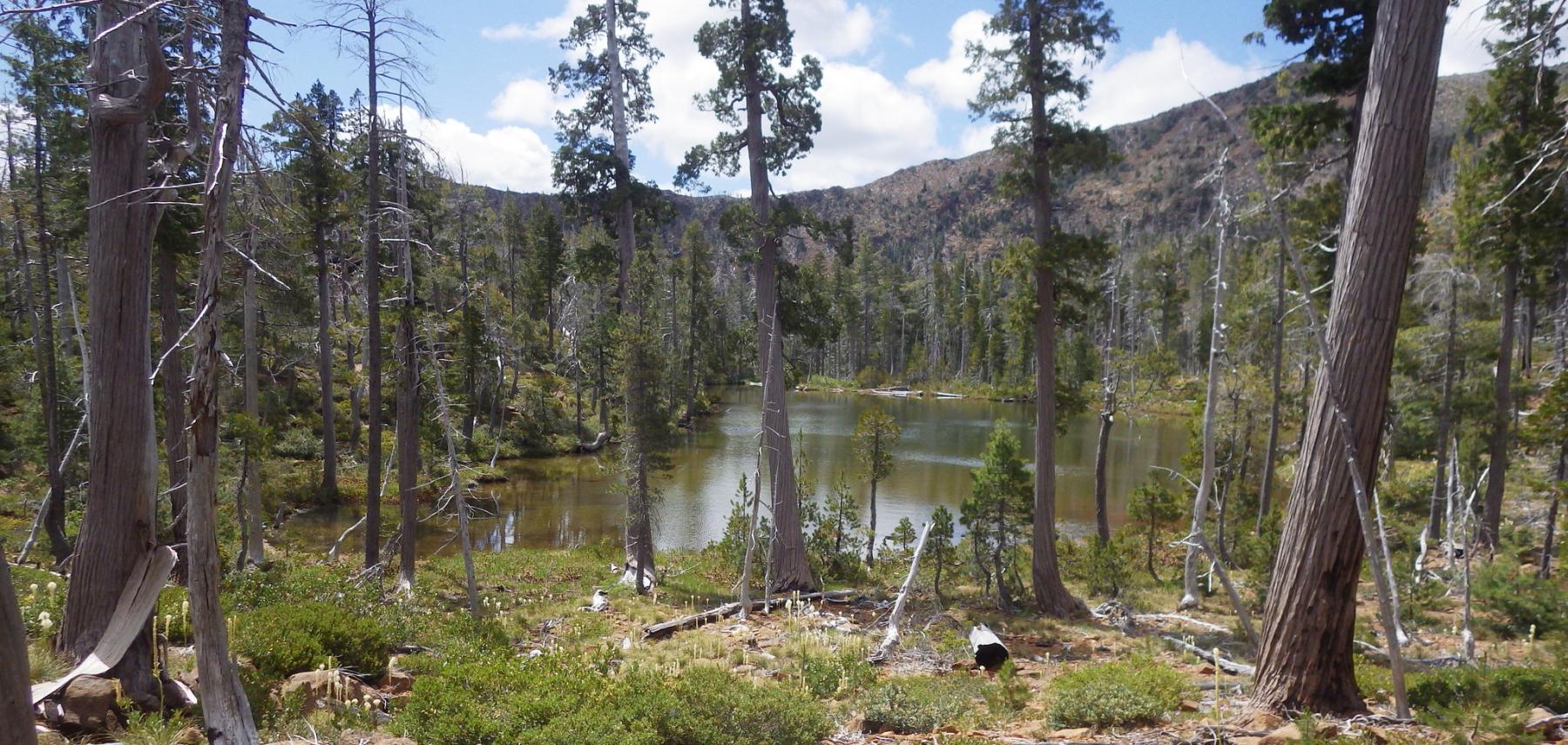
Port Orford-cedar surrounding a lake in Curry County, Oregon (CC BY-NC).
The scientific name for Port Orford-cedar is Chamaecyparis lawsoniana (A. Murray bis.) Parlatore (Cupressaceae) [4,21,45,49,62]. There are no infrataxa. As an important ornamental tree, there are over 200 recognized cultivars of Port Orford-cedar in the United States and Europe [36,98].
Flora of North America (2023) recognizes two other Chamaecyparis species in North America: Chamaecyparis thyoides (Atlantic white-cedar), which is restricted to wetlands along the Atlantic coast [21,93]; and Chamaecyparis nootkatensis (yellow-cedar), which has a range that overlaps with Port Orford-cedar but extends farther north through Washington, coastal British Columbia, and into Alaska [21]. Other systematists recognize Callitropsis as the accepted genus for yellow-cedar (e.g., [93]).
Common names are used throughout this Species Review. For scientific names of plants mentioned in this review, see table A1.
Synonyms
There are no currently recognized synonyms; however, some publications use Cupressus lawsoniana (e.g., [83]).
Other Common Names
false cypress, ginger-pine, Lawson cypress, Lawson’s cypress, Oregon-cedar, Port-Orford-cedar, Port Orford cedar, Port Orford white-cedar

Figure 1—Distribution of Port Orford-cedar in Oregon and California.
General Distribution
Port Orford-cedar has a restricted range spanning approximately 350 km of northwest California and southwest Oregon [4,5,31,42,84,103,106] (fig. 1). Most of its distribution is in low- to mid-elevation forests within 80 km of the coast [106]. From there its distribution spreads inland, with isolated populations in higher-elevation forests on Mount Shasta in the southern Cascade Range in California [21,33,42] and in the western Klamath and Siskiyou mountains in Oregon and California [42,84].
States and Provinces
- United States: CA, OR [93]
Site Characteristics
Port Orford-cedar occurs from sea level to about 2,000 m elevation (table 1), in four of the vegetation zones described by Franklin and Dyrness (1988) [23] (table 2). Because it has very little drought resistance, it often occurs on landforms associated with a perennial source of water [2,36,40,67,106]. Trees can grow within stream channels, and roots may be in contact with moving water [36,48]. In the mixed-evergreen zone, Port Orford-cedar is restricted to moist, protected drainages, riparian areas, and areas around lakes, springs, bogs, and fens [2,36,40,67,103,106] (fig. 2). However, individuals occur without perennial surface water in coastal forests of the Sitka spruce and western hemlock zones, which receive perennial moisture from marine fog.
| Area | Elevational range (m) |
|---|---|
| North America | 0–1,500 [21] |
| California and Oregon; excluding Mount Shasta area | 0–1,500 [103] |
| California | <1,700 [4] |
| California; Mount Shasta area | <1,950 [103] |
| California/Oregon border; Illiniois River Drainage | 1,158–1,280 [2] |
| Plant Community | Number of Stands Examined | Elevational Range (m) | Predominant Parent Material(s) |
|---|---|---|---|
| Sitka spruce zone | |||
| Port Orford-cedar–Sitka spruce | 3 | 10–140 | Unstable sand, stable sand, sandstone ironpan |
| Sitka spruce–Port Orford-cedar | 2 | 10 | Eocene sandstone |
| Redwood–Port Orford-cedar | 2 | 100–220 | Recent alluvium |
| Western hemlock zone | |||
| Port Orford-cedar–western hemlock/common beargrass | 12 | 600–980 | Ultramafic |
| Western hemlock–Port Orford-cedar/Pacific rhododendron–salal | 6 | 220–700 | Sedimentary |
| Western hemlock–Port Orford-cedar/western swordfern–redwood-sorrel | 12 | 300–820 | Sedimentary |
| Mixed-conifer zone | |||
| Pine–Port Orford-cedar/huckleberry oak–common beargrass | 11 | 360–1,360 | Ultramafic |
| Port Orford-cedar–tanoak | 16 | 420–960 | Ultramafic |
| White fir zone | |||
| White fir–western hemlock–Port Orford-cedar | 10 | 910–1,260 | Granitic mix and ultramafic granitic |
| White fir–Port Orford-cedar/herb | 15 | 900–1,540 | Ultramafic mix |
| Fir–Port Orford-cedar/herb | 15 | 1,040–1,450 | Granitics and schist |
Port Orford-cedar is mostly found on northern, northwestern, or northeastern aspects [40,103], especially in the drier, low and mid-elevation forests of its distribution (e.g., Klamath-Siskiyou montane serpentine mixed conifer woodlands).
Climate varies across Port Orford-cedar’s distribution, from maritime-influenced, coastal fog belt rainforests, inland to mediterranean climate forests, and upslope to cool, subalpine forests [67,106]. The wettest forests near the coast receive up to 225 cm of precipitation annually [67], while drier interior forests receive 100 to 150 cm, nearly all as rain [67,105,106]. Isolated populations in subalpine forests receive ~125 cm of precipitation annually, with some falling as snow [105,106]. Coastal and montane sites remain relatively cool and moist throughout the year, while lower-elevation inland forests have cool winters and warm, dry summers. Across ten sites in all four vegetation zones in Port Orford-cedar’s range, the summer mean daily maximum temperature at a low-elevation mixed-pine site in the Klamath mountains exceeded 35 °C, while that at coastal western hemlock, mid-elevation tanoak, and montane white fir sites remained below 22 °C. Mean daily winter maximum temperatures ranged from 3 to 8 °C across the four vegetation zones [105].

Figure 2—Port Orford-cedar surrounding a lake in the Kalmiopsis Wilderness, Curry County, Oregon (CC BY-NC).
Port Orford-cedar grows on soils with a variety of parent materials [67,103,106], although Port Orford-cedar-dominated communities are most common on soils with ultramafic, granitic, and sedimentary parent materials (table 2). Soil depth and texture also vary widely from deep, fine loams to shallow, rocky soils [67,103,106]. Soil pH tends to be acidic to neutral, ranging from 4.2 to 7.0 [103].
Soil characteristics and associated moisture availability may affect Port Orford-cedar growth and abundance. Growth rates likely vary among sites and plant communities, with the largest trees of the same age class growing in moist, dense forests such as Sitka spruce–coast Douglas-fir [103,106], and the smallest trees in dry pine–Port Orford-cedar communities with ultramafic or serpentine soils [40]. Although they occur in a range of soil types, Port Orford-cedar-dominated communities appear to be most common on serpentine soils with perched water tables, where moisture is constantly available [67]. For example, in high-elevation white fir forests, Port Orford-cedar is “most dominant” on wet serpentine soils, and it occurs elsewhere in scattered stands [103,106]. Few other species tolerate or thrive on ultramafic and serpentine soils, therefore Port Orford-cedar may be relatively more abundant on these sites, but individual trees likely remain relatively small [40,103,106].
Plant Communities
The following information comes primarily from NatureServe (2009) [66] unless otherwise indicated. LANDFIRE Biophysical Settings (BpSs) are listed in bold font and their associated codes are in parentheses [57].
Port Orford-cedar is a named canopy dominant or codominant in eight terrestrial ecosystems [66] and associated BpSs [57] in southwestern Oregon and northwestern California. Rather than dominating the canopy over large areas, Port Orford-cedar occurs in scattered stands within these ecosystems, codominating with one or more other conifer species [31,66]. Forests where Port Orford-cedar is dominant or codominant typically have 60% to 100% overstory canopy cover and 25% to 60% shrub cover [67]. Canopy and shrub cover are generally lower and more patchy in areas with ultramafic or serpentine soils [5,67] (see Site Characteristics).
Due to a combination of intensive timber harvesting, large fires, and the pathogen Phytophthora lateralis, which causes a fatal root rot in Port Orford-cedar, few old-growth stands of Port Orford-cedar remain [106].
Sitka Spruce Zone
California Coastal Redwood Forest (10150)
North Pacific Hypermaritime Seasonal Sitka Spruce Forest (10360)
In wet coastal forests within 25 km of the ocean that receive year-round moisture from fog, Port Orford-cedar codominates stands with combinations of redwood, coast Douglas-fir, western hemlock, and Sitka spruce. Common understory species include Cascade barberry, salal, California huckleberry and multiple species of ferns. These coastal ecosystems include rare dune forests on the southern Oregon coast, where Port Orford-cedar makes up 15% to 80% cover and codominates with coast Douglas-fir and Sitka spruce [16]. Trees grow on stabilized dunes with shallow, sandy soil. The most common understory species in these associations is California huckleberry [16].
Western Hemlock Zone
North Pacific Maritime Mesic-wet Douglas-fir–Western Hemlock Forest (10390)
Slightly inland of the coastal fog belt, in the Coast Ranges in southwestern Oregon and northern California and in the western Siskiyou Mountains, Port Orford-cedar codominates with multiple conifer and hardwood species. Port Orford-cedar occurs in scattered stands where it codominates with coast Douglas-fir, western hemlock, and western redcedar. Red alder and bigleaf maple can also occur in the canopy or subcanopy, with red alder more common in disturbed areas. Although shrub species vary widely in this community, salal, Cascade barberry, Pacific rhododendron, and California huckleberry commonly dominate the understory in areas where Port Orford-cedar is a canopy dominant [66].
Mixed Evergreen Zone
Mediterranean California Mixed Evergreen Forest (10432)
In the northern, coastal western Siskiyou mountains, Port Orford-cedar codominates with several species including coast Douglas-fir, canyon live oak, tanoak, Pacific madrone, California laurel, western hemlock, and giant chinquapin. The shrub understory is dense and includes California huckleberry, Pacific rhododendron, salal, Cascade barberry, and western swordfern [57,66].
Klamath-Siskiyou Lower Montane Serpentine Mixed Conifer Woodland (10210)
Klamath-Siskiyou Upper Montane Serpentine Mixed Conifer Woodland (10220)
Mediterranean California Mesic Serpentine Woodland and Chapparal (10340)
At low- to mid-elevations farther inland, Port Orford-cedar occurs mainly on serpentine soils along riparian corridors. Diversity in these communities is high and can include coast Douglas-fir, gray pine, sugar pine, western white pine, foxtail pine, Jeffrey pine, knobcone pine, tanoak, incense-cedar,yellow-cedar, Shasta red fir, Sargent’s cypress, and California laurel in the canopy; and manzanita, huckleberry oak, ceanothus, California buckthorn, toyon, chamise, and beargrass in the shrub layer. Because Port Orford-cedar has a scattered distribution and is restricted to riparian zones within these communities, it may not occur with some of the dry-forest species [66].
White Fir Zone
Mediterranean California Mesic Mixed-Conifer Forest and Woodland (10280)
Mediterranean California Red Fir Forest (10320)
At high elevations (1,600–1,950 m) in the Klamath-Siskiyou Mountains and around Mount Shasta in northern California [5,21,52,103], isolated populations of Port Orford-cedar occur with many conifer species including Shasta red fir, lodgepole pine, mountain hemlock, Jeffrey pine, white fir, coast Douglas-fir, western white pine, and incense-cedar. As in other zones, Port Orford-cedar is rarely found in pure stands. Port Orford-cedar distribution is scattered, but it is most common at lakeshores, river edges, and along rocky mountain streams at the upper end of its elevation range. In these areas it can make up 73% of the canopy cover. Shrubs associated with riparian areas where Port Orford-cedar is most dense include western Labrador tea, alpine spicywintergreen, Pacific ninebark, thinleaf alder, redosier dogwood, and dwarf bilberry. Herbaceous plants include California pitcher plant, twinflower, western rattlesnake plantain, whiteveined wintergreen, and hairy brackenfern [52].
Wetlands
Port Orford-cedar occurs on the edges of serpentine fen ecosystems in coastal low-elevation areas of the Klamath mountains (e.g., Mediterranean California Serpentine Fen [66]). These fen ecosystems are rare and include rare carnivorous plants, California pitcher plant and roundleaf sundew, and fen specialists fewflower spikerush, fringed cottongrass, California sedge, and tufted hairgrass [66]. Port Orford-cedar can establish and spread into these fens if fire is excluded, but with regular fire, Port Orford-cedar, coast Douglas-fir, western white pine [51], and Jeffrey pine are restricted to the edges, where they do not interfere with fen-dependent species [66]. Port Orford-cedar is at times considered an indicator of these communities, where it can grow into large, mature trees [51].
Botanical Description
This description covers characteristics that may be relevant to fire ecology and is not meant for identification. Identification keys are available (e.g., [4,21,62]).

Figure 3—Seed cones (round, pale green structures) and pollen cones (small brown clusters above) on Port Orford-cedar on the Six Rivers National Forest, Klamath County, California (CC BY-NC).
Aboveground
Port Orford-cedar is a large, long-lived coniferous tree that grows in a cone or pyramid shape [4,92]. It can grow as tall as 73 m [9], but typical height of mature trees is 40 to 60 m [4,21,25,92]. Trunk diameter of mature trees ranges from 1 to 3.6 m [21,25,106]. Bark is thick (10-25 cm) [4,21,106] and fibrous [4] with large, uneven, ridges [4,21,92]. Leaves are evergreen, small (2-3 mm long) [21,92], scale-like and overlapping on flat branchlets [4,92]. New growth at branch tips appears lacy or feathery [92].
Pollen cones are 2 to 4 mm long [21]. Seed cones are round, 5 to 14 mm in diameter, have 5 to 12 scales, and are not resinous (fig. 3). Each scale contains 2 to 4 small (2-5 mm) seeds [4,21]. Seeds have wings approximately the same length as the seed [9,21,92].
Belowground
Port Orford-cedar roots are generally shallow, fibrous [36], and of small diameter [106]. There is no taproot; instead, vertical sinkers extend downward from the shallow root network near the soil surface [103,106]. Roots of adjacent trees overlap and often graft to each other [29,106]. Roots form relationships with several species of mycorrhizal fungi [106]. Because Port Orford-cedar grows close to streams, rivers, and bogs, roots are often in direct contact with water [36,48].
Stand Structure
Port Orford-cedar typically occurs in mixed stands with other conifers, and rarely in pure stands [52,66,84,92]. Forest structure can vary widely from open to dense depending on the plant community and stand age [5,36,52,66]. See Table 3 for examples.
All age classes can be represented in a typical Port Orford-cedar stand, depending on disturbance history. For example, stands with a history of frequent fire may have an uneven age structure (see Successional Status). In stands infected with the root pathogen Phytophthora lateralis, which spreads via zoospores in flowing water, older trees—especially those growing along stream edges—have high mortality rates, and smaller, younger trees are more numerous [42]. See Additional Management Considerations for more detailed discussion of P. lateralis’ effects on Port Orford-cedar.
| Plant Community | Tree Density | Sapling Density | Seedling Density | Basal Area | Stand Age, range (median) |
|---|---|---|---|---|---|
| Western hemlock zone | |||||
| Port Orford-cedar–western hemlock/common beargrass | 273 | 439 | 539 | 102 | 145–400+ (312+) |
| Western hemlock–Port Orford-cedar/Pacific rhododendron–salal | 198 | 107 | 380 | 68.4 | 145–400+ (305) |
| Western hemlock–Port Orford-cedar/western swordfern–redwood-sorrel | 131 | 218 | 313 | 76.4 | 70–400+ (400+) |
| Mixed-evergreen zone | |||||
| Pine–Port Orford-cedar/huckleberry oak–common beargrass | 133 | 133 | 320 | 18.9 | 60–400+ (150) |
| Port Orford-cedar–tanoak | 287 | 1,008 | 636 | 89.9 | 100–400+ (270) |
| White fir zone | |||||
| White fir–western hemlock–Port Orford-cedar | 221 | 243 | 397 | 46 | 250–400+ (355) |
| White fir–Port Orford-cedar/herb | 552 | 1,264 | 678 | 87 | 75–400+ (300+) |
| Fir–Port Orford-cedar/herb | 182 | 464 | 347 | 65.9 | 60–400+ (280) |
Raunkiaer Life Form
- Phanerophyte [75]
Seasonal Development
Most Port Orford-cedar seeds germinate in spring, although some seeds germinate in summer [44], and nearly all viable seeds germinate within the first year after dispersal [44,101,103,106]. Port Orford-cedar’s pollen cones open in March in Oregon [106]. Seed cones mature the year they are pollinated [4,21,92], ripen through summer, and seeds mature in fall. Cones open in fall, dispersing seeds from fall through the following spring [106].
Timing of peak seed dispersal varies by forest type and among years, but not by temperature or rainfall frequency. In 11 stands in 4 forest types throughout Port Orford-cedar’s range in Oregon and California, seeds were collected approximately monthly from seed traps over 2 years (September 1974–September 1976). Generally, seed dispersal was underway when collection began in September and peaked sometime before January, followed by lower levels of dispersal through winter and spring. Most seed rain occurred “after the rains began”, suggesting that, although timing of peak seed dispersal was not correlated with rainfall frequency, rain may assist in releasing seeds from open cones [100,101].
Port Orford-cedar mainly grows from spring to fall [102,106]. During the dry summer months, when other species may experience water deficits and slower growth, Port Orford-cedar does not, because it grows near perennial water sources. Timing of growth initiation in spring varies depending on daily temperature, stand density, and plant community; plants start growing earlier in warmer, open sites compared to cool sites, and they stop growing earlier during excessive summer heat [102].
Other than the above information about variation in seed dispersal timing, specific information was not available regarding regional differences in phenology.
Regeneration Processes
Port Orford-cedar reproduces by seed [9,34,103,106]. Rarely, Port Orford-cedar may reproduce by layering in the wild [40,51,106]. It can be grown from stem cuttings in nursery settings [9,106].
Pollination and Breeding System
Port Orford-cedar is monoecious and can self-pollinate or outcross with other individuals [106]. Like many conifers, Port Orford-cedar is wind-pollinated. Seed and pollen cones are on the same branches [106].
Seed Production and Predation
Port Orford-cedar produces seeds annually beginning between approximately 5 and 20 years old [41,103,106]. Seed production may peak when trees are around 100 years old [41]. Although cones can contain over 50 seeds, only a fraction of them may be viable [9,106]. In nursery experiments each cone produced a mean of nine filled seeds [9].
While complete seed crop failure is rare, seed production varies widely among years. Trees rarely produce large seed crops 2 years in a row, more commonly producing a large crop every 4 to 5 years. Variations in seed production do not appear to depend on tree age or site characteristics, nor do they appear to be regionally synchronized [100,106]. Seeds collected monthly over a 3-year period from 11 stands throughout its range in Oregon and California [100] showed that Port Orford-cedar annual seed production varied from 20,000 to 4,600,000 seeds/ha and 600 to 185,000 seeds/m2 of tree basal area. Seed production per square meter of basal area did not vary with elevation, vegetation zone, stand age, mean temperature, or soil type. Even though sites on serpentine soil were deemed “marginal” for Port Orford-cedar growth (see Site Characteristics and Plant Communities), seed production was similar to that on other soil types [100]. Trees grown in the open may produce more seed than those grown in shade [106]. Seedfall in a single season varied widely among four contrasting sites in southwest Oregon [101], but it was not significantly correlated to measured site characteristics such as elevation, stand age, latitude, vegetation zone, parent material, temperature, or precipitation [100,106].
Port Orford-cedar seeds are eaten by rodents, and cedar-specialist insects consume or damage seeds. Larvae of both the Port Orford-cedar midge (Janetiella siskiyou) and the incense-cedar tip moth (Argyresthia libocedrella) destroy Port Orford-cedar seeds, either by eating them or causing deformities [20,68]. In years when moths are abundant, either species can reduce or completely eliminate the seed crop in a stand [9,106]. Although an early report suggests some species of rodents “dislike” Port Orford-cedar seeds (Moore 1940 cited in [106]), squirrels and other rodents harvest and eat seeds, both from cones on trees [103] and on the ground [101,106]. Seed predation from rodents does not appear to have population-level impacts on Port Orford-cedar [106].
Seed Dispersal
Port Orford-cedar seeds have small wings and are dispersed by gravity, wind, and water [9,98,100,101,103,106]. Cones mature in fall and open to release seeds in September or October through spring [106]. In cultivation, cones open readily when dried [9].
Although Port Orford-cedar seeds have wings, they are not dispersed far by wind [106] and fall more directly to the ground [103]. Estimates of dispersal distance into clearcut logged areas range from 50 to 110 m, or one to three tree heights [106]. The wings appear to help Port Orford-cedar seeds float in water [103], suggesting an adaptation for water dispersal.
Seed Banking
Port Orford-cedar has a transient seed bank, because most Port Orford-cedar seeds are only viable for the first year after dispersal [101,103,106]. No information is available regarding seed bank density, and only one study of seed longevity in the field was available. In spring, Port Orford-cedar seeds were placed in litter of an old-growth coast Douglas-fir forest, and a portion of these seeds (~2,000) were collected and tested for germination each spring for 4 successive years. Only 1% of the collected seeds germinated in the first spring (1 year after placing in litter), none germinated the second year, and 0.5% germinated in the third and fourth years [44].
Stored seeds may remain viable for many years under some conditions. Freezing seeds with less than 10% moisture [9,98] appears to retain viability. Germination rates of Port Orford-cedar seeds stored for 11 years at -15 °C [9] were comparable to those of fresh seed [104]. Seeds stored at 0 °C lost viability over time, from 93% viability for fresh seed to 43% viability after 7 years storage [98].
Germination
Port Orford-cedar seeds typically germinate in spring [9,44,98,101], although some seeds germinate in summer [44]. Germination rates in nursery settings and field experiments are typically below 50% [9,41,100] and can be as low as 1% [44]. In a study at 11 sites throughout Port Orford-cedar’s range in southwestern Oregon and northwestern California, seeds that dispersed early and late in the dispersal period germinated at lower rates than those that dispersed during the rest of the dispersal period [100]. Cold stratification does not appear to improve germination rates [9,104]. One author suggested that warmer temperatures, specifically air temperature remaining above 5 °C for several days, may stimulate a burst of germination [101]. Low germination rates are common in the Chamaecyparis genus, but the underlying cause is unknown [98].
Germination rates may be higher on disturbed soils [101], or when seeds are shallowly buried in litter or soil [9,98]. In 4 plots in southwest Oregon, 52% of Port Orford-cedar seeds germinated in plots with spaded soil (meant to simulate disturbance from windthrow or landslide), compared to 15% in plots where litter was burned, 11% in plots where litter was removed (to simulate erosion by water), and 24% in undisturbed control plots. Site characteristics such as elevation, vegetation zone, and temperature did not appear to affect germination rates as much as disturbance treatments, but the greatest number of seeds germinated in a dense stand of young Sitka spruce and Port Orford-cedar, and the fewest germinated in a stand of old-growth western hemlock and Port Orford-cedar [100,101]. In nursery practice, Port Orford-cedar seeds are broadcast and covered with less than 1 cm of soil [9,98].
Seedling Establishment and Mortality
Seedlings can establish in shaded or open conditions [40,101,106], although establishment rates may be higher in the open [101]. Port Orford-cedar may establish soon after fire or clearcutting on some sites (see Successional Status and Plant Response to Fire). However, in high-elevation forests in northwestern California, Port Orford-cedar’s ability to establish after fire is listed as low, below mountain hemlock, coast Douglas-fir, white fir, and Shasta red fir (Sawyer and Thornburgh 1977, cited in [106]). In a plantation study, natural seeding from nearby trees was sufficient to restock clearcut areas with Port Orford-cedar, as long as the clearcuts were less than 200 m wide (James and Hayes 1954, cited in [106]). In the main part of its range, Port Orford-cedar appears to regenerate sufficiently from seed in the open or beneath the forest canopy to maintain a range of size and age classes in natural stands [106] (see Stand Structure). Seedlings generally produce mature foliage within the first year [22].
Seedlings grow slower in shade than in open conditions [40,101,106]. At 10 sites across Port Orford-cedar’s range [101], shaded seedlings averaged 3 mm, 14 mm, and 27 mm above the cotyledons after about 1, 2, and 3 years of growth, respectively [101,106]. Seedlings grown in the open in southwestern Oregon averaged 36 mm and 79 mm tall after 1 and 2 years of growth [41]. Nursery-grown seedlings grew 25 to 100 mm above the cotyledons in the first year [106].
Port Orford-cedar establishes on a variety of soil types, including organic soils. In one study of riparian vegetation in the Oregon Coast Range, all Port Orford-cedar seedlings were found growing on rotten wood [63]. Seedlings may grow faster on some soil types, although information is limited. Port Orford-cedar seedlings were collected from four sites with different soil types (inland sedimentary rock, inland ultramafic, coastal wet dune, and coastal Blacklock soil), and transplanted in a greenhouse into either the original source soil, or one of the other three soil types. After 34 weeks, regardless of seedling source, seedlings were tallest in sedimentary rock soils and shortest in dune and Blacklock soils; however, growth varied widely among both populations and soil types (Plocher 1977, in [106]). This variation may be due, in part, to genetic variation among populations [5].
Seedling survival seems to be low (0-6%) and may depend on light, plant community, and soil condition. Only 5% of all seedlings survived more than 2 years after seeds were planted in plots under 4 conditions (burned litter, removed litter, spaded soil after removing litter, and undisturbed control) at each of 4 sites. Over all 4 sites, 89 seeds germinated in burned litter plots and 118 seeds germinated in removed litter plots, but none of these germinants survived more than 5 months. On spaded plots, 270 seeds germinated, and 14 had survived after 2 years. On control plots, 17 seeds germinated and 1 had survived after 2 years. Complete mortality at one site was attributed to deep shade. Seedling survival was best on the site with the most light, although statistical significance was not tested [101].
Plant Growth and Mortality
Port Orford-cedar begins bearing cones between about 5 and 20 years old [9,103]. The trees can live for centuries. The oldest known individuals are nearly 600 years old [14,103,106], and mature stands frequently include trees over 400 or 500 years old [25,70].
Drought, wind, frost, or a combination of these, were historically major causes of Port Orford-cedar mortality [106]. Currently, infection of Port Orford-cedar by P. lateralis is likely the most significant cause of mortality (see Additional Management Considerations). McNellis (2021) estimated a 0.30% annual mortality rate for Port Orford-cedar using data collected for Forest Inventory Analysis (FIA) from 2000-2019. However, that analysis did not include trees killed by fire, therefore annual mortality rates are likely higher. The study did not detail primary causes of mortality for Port Orford-cedar [60].

Figure 4—Average height of Port Orford-cedars in three age classes and three plant community categories in Oregon and California.
Growth rates of Port Orford-cedar after the sapling stage appear to vary based on plant community, soil type, and water availability [14,24,40,53,56,103,106]. Young trees grow quickly in open stands with serpentine soils, but grow more slowly when they are overtopped by taller trees of other species and conditions become more shaded [40,103,106]. At 45 sites in 8 plant communities across Port Orford-cedar’s range, trees in all age classes assessed (i.e., ~100 - 300 years old) were tallest in the mesic coast Douglas-fir–Port Orford-cedar/swordfern–redwood-sorrel community (“Swordfern”, fig. 4). Trees in the mixed-pine–Port Orford-cedar/huckleberry oak/beargrass plant community on serpentine soils (“Mixed Pine”, fig. 4) were the next tallest at ~100 years old (18 m), but by ~200 and 300 years, trees in mixed pine communities were the shortest on average (29 m) compared to the other 7 plant communities (31 to 63 m) [40]. Consistent moisture availability throughout the year promotes Port Orford-cedar’s annual growth, as found in a dendrochronology study in the Siskiyou Mountains from 1420 to 2000. Trees produced wide rings during years with consistent moisture and very narrow tree rings during years of inconsistent moisture or drought [14]. In general, Port Orford-cedar appears to grow more steadily throughout its life than coast Douglas-fir [103,106].
Vegetative Reproduction and Regeneration
Port Orford-cedar generally does not reproduce vegetatively, although it may occasionally reproduce by layering in bogs [51], sand dunes, and some high-elevation forests (reviews by [40,106]). Anecdotally, branches from fallen trees on the southwest Oregon coast developed into healthy adult trees (A.N. Roberts, personal communication cited by Zobel (1985) [106]), and “clonal trunks” were observed growing from a long, horizontal root of a dead tree in a coastal bog [51]. Layering or other vegetative reproduction appear to be rare in wildlands and may require particularly high moisture availability [51].
In cultivation, Port Orford-cedar is commonly propagated from cuttings [9,19,106] from branch tips, which are treated with rooting hormone and planted in perlite or peat [9].
Successional Status
Shade Tolerance
Port Orford-cedar is generally classified as moderately shade-tolerant [36,67,81,97,101,105,106] and can regenerate under a range of conditions, from shaded forest to open, recently burned areas [36,40,67,101,105]. Shade tolerance may be highest for seedlings, which often experience shaded conditions, and decrease as trees mature and approach the canopy (Sudworth 1908, as cited by [106]). Although seedlings are shade tolerant, establishment may be greatest after canopy opening disturbances [101] (see Succession).
In areas where Port Orford-cedar is a canopy dominant, it typically also occurs as seedlings, saplings, and understory trees [40,106] (see Stand Structure). However, deep shade may reduce germination and survival rates [101]. Across Port Orford-cedar’s range, live saplings occurred on sites with canopy cover ranging from 63% to >99% [105]. However, germination and seedling survival were low in each of four forested stands ranging from 92% to >99% canopy cover, especially those with the greatest canopy cover (i.e., most shade) (table 4) [101,106]. Further study of germination and survival rates over a wider range of light conditions could clarify the relationship between shade and Port Orford-cedar germination and survival.
| Site, Canopy Cover | Number of germinants (%) | Sept 1976 Number survived (%) | Aug 1977 Number survived (%) | Oct 1978 Number survived (%) |
|---|---|---|---|---|
| Young Forest, >99% | 284 (35) | 60 (21) | 7 (2) | 0 |
| Old Forest, >99% | 32 (4) | 15 (47) | 4 (13) | 2 (6) |
| Mid-age, High-elevation, 98% | 80 (10) | 40 (50) | 12 (15) | 3 (4) |
| Young, Mid-elevation, 92% | 98 (12) | 57 (58) | 20 (20) | 10 (10) |
Succession
Port Orford-cedar is generally considered an early establisher after clearcutting or fire [5,17,42,84,106] and may be a dominant or codominant species during all stages of succession. In some plant communities, fire may facilitate Port Orford-cedar’s persistence by killing less fire-resistant species and allowing Port Orford-cedar to dominate [42]. One report suggests that as of the mid-20th century, most natural “west coast mixed” stands of Port Orford-cedar established after fire [41]. Port Orford-cedar relative abundance and dominance may change over time, and these patterns likely vary among plant communities and site characteristics (e.g., [40]). One report describes Port Orford-cedar occurring in the canopy with other tree species during early seral stages (i.e., for the first 25 years after small clearcuts and partial cuts), after which faster-growing conifers overtop it and it becomes a slow-growing understory tree. This stage can last several centuries. As faster-growing, but shorter-lived trees die and leave gaps in the canopy, Port Orford-cedar is again able to grow more quickly and become a canopy dominant in late succession, when it often codominates with western hemlock [70]. It may codominate in late succession with western hemlock or white fir on sedimentary or granitic substrates, and it may be the primary late-successional dominant on ultramafic (i.e., serpentine) substrates, where other tree species are more inhibited [40]. Mature Port Orford-cedar trees are often over 400 years old [70].
Port Orford-cedar occurs in uneven-aged stands because it can establish in shaded, undisturbed forests [70,106] or in pulses after fire and other disturbances [40]. The frequency and severity of fires influence Port Orford-cedar’s age class structure in a particular stand. On sites characterized by frequent fires, seedlings and saplings would frequently be killed, and large numbers of seedlings would establish after fires. In 18 study sites across its range, Port Orford-cedar seedlings (<1 m tall and >2-3 years old) and saplings (DBH <15 cm and >1 m tall) occurred at higher density than trees (DBH >15 cm). Beyond the sapling stage, density varied among size classes and plant communities. For example, in the western hemlock–Port Orford-cedar/Pacific rhododendron/salal community, smaller trees (15–30 and 30-45 cm DBH size classes) occurred at stem densities of 12 and 16 trees/ha, whereas stem density of larger trees (45–60 and 75–90 cm DBH size classes) was over twice as high at 33 and 34 trees/ha, respectively. The author suggests that these uneven densities among age classes resulted from fires killing saplings and small trees, while large trees survived to produce seed from which shade-tolerant seedlings established in the understory [40]. This pattern was also observed in redwood forests of northern California, where Port Orford-cedar, coast Douglas-fir, redwood, and western hemlock established after a moderate-severity fire about 250 years before the study, which apparently killed trees that were less than about 150 years old at the time of the fire. No Port Orford-cedar older than 250 years was present at the time of the study, but researchers observed seedlings and understory Port Orford-cedar trees that had continued to establish after the fire, and suggested that the large individuals that survived the fire and provided seeds for these trees had since died [97].
Immediate Fire Effects
Few studies quantify immediate fire effects on Port-Orford-cedar; however, large trees are likely to survive most surface fires and are described as fire-resistant [5,17,40,42,84,103,106]. Seedlings and small trees are likely to be injured [3] or killed by fire, while pole-sized trees are less likely to be injured or killed and are described as “moderately” fire-resistant [106]. Port Orford-cedar does not resprout vegetatively after injury or top-kill by fire.
Port Orford-cedar has small, fragile seeds [9] that are unlikely to survive fire.
Postfire Mortality
Port Orford-cedar postfire mortality likely depends on the degree of injury sustained, such as the amount of cambium killed or the percentage of crown scorch. After the 2002 Biscuit Fire and the 2005 Blossom Fire, both in southwestern Oregon, of 69 Port Orford-cedar trees assessed in the two burned areas, 11 had died and 58 survived 3 years after fire (data were collected independently after each fire). Tree height, diameter at breast height (DBH), bark thickness, and bark char height were not significantly different between live and dead trees. For example, the range of DBH for surviving trees was 14 to 152 cm (median = 61 cm), and for dead trees was 13 to 104 cm (median = 40.6 cm). However, cambium kill rating (CKR, measured as number of tree quadrants (0-4) with dead cambium) and percentage of crown volume scorched were higher for dead than live trees, on average. Port Orford-cedar trees that died had a significantly higher average CKR (3.7) than those that survived (2.3), although some trees with a CKR of 4 survived. Port Orford-cedars that died averaged 40.9% crown volume scorch compared to 9.9% in surviving trees, although this was not a statistically significant finding, likely due to small sample size [30]. A predictive model of postfire mortality based on the same dataset found that higher crown volume scorch (%) and smaller DBH were the best predictors of postfire mortality, although the small sample size limited the accuracy of the model [12]. Data from the Fire and Tree Mortality Database, which compiles tree damage and survival information after wildfires across the United States [13] shows that some of these same fire-damaged trees eventually died. Postfire mortality was 5 trees (7.2 %) in year 1, 11 trees (16%) in year 3, and 13 trees (19%) in year 5 [13]. No other published information was found documenting delayed mortality in Port Orford-cedar after fire.
A comparison of these Port Orford-cedar mortality data with those of 13 other conifer species assessed within multiple burned areas in the Pacific Northwest, suggests that Port Orford-cedar is among the most fire-resistant conifers in the Pacific Northwest: western larch and Port Orford-cedar averaged roughly 15% mortality, while all other species averaged 25% to 55% mortality 3 years after fire. However, this finding is tentative because data on Port Orford-cedar are based on only two fires and 69 trees [30].
Port Orford-cedar mortality from fire may differ among plant communities or soil types, and survival may be more likely on non-serpentine soils and in riparian areas. The 2002 Biscuit Fire burned 202,329 ha of dry mixed-conifer forest in southwestern Oregon and northwestern California. Before the fire, Port Orford-cedar forest occurred on 37,596 ha of the area that burned, of which 18,979 ha (~50%) burned at stand-replacing severity. After the fire, approximately 27,472 ha of the burned area was no longer classified as Port Orford-cedar forest, presumably because all or most Port Orford-cedars were killed. Live Port Orford-cedar was strongly associated with riparian areas after the fire. The study also assessed the effect of soil type on mortality in the portion of the fire that burned in Oregon. Of the 9,656 ha that were still classified as Port Orford-cedar forest in Oregon (i.e., did not burn at stand-replacing severity), approximately half was on serpentine soils and half was on non-serpentine soils. Aerial surveys indicated that 34% of the area on serpentine soil and 13% of the area on non-serpentine soil was characterized by dead trees [6].
Postfire Regeneration Strategy
- Tree without adventitious buds and without a sprouting root crown
- Crown residual colonizer (on site, initial community)
- Initial off-site colonizer (off site, initial community)
- Secondary colonizer (on- or off-site seed sources) [90]
Fire Adaptations
Adaptations that allow large Port Orford-cedar trees to survive surface fires include thick, undulating bark; self-pruning of lower branches; and decay-resistant wood. Bark thickness varies, creating an undulating pattern of bark around the base of the tree, but can be as thick as 25 cm [17,106]. Both the overall thickness and the uneven distribution of the bark—with some very thick areas—contribute to Port Orford-cedar’s fire resistance [106]. Fires may burn through thinner sections of bark into the cambium, but not through the areas where bark is thickest. Large Port Orford-cedar trees growing in forested conditions can self-prune up to 46 m, protecting live branches and needles from surface fires. In open environments, however, self-pruning may not occur, and branches often bend downward to reach the ground [17]. Due to its decay-resistant wood, fire scars on Port Orford-cedar (fig. 5) do not easily rot or become infected by insects [106]. Small scars may heal completely [106], allowing the tree to survive long-term without risk of further damage.

Figure 5—Mature Port Orford-cedar in Humboldt County, California, with a fire scar at the base of the trunk (CC BY-NC).
Stevens et al. (2020) used three traits related to plant morphology (bark thickness, degree of self-pruning, and maximum tree height) and three traits related to litter flammability (flame length, percentage consumption, and flame duration) to assign fire resistance scores (FRS) to 29 western conifer species. Port Orford-cedar had thicker bark than all other species except giant sequoia and redwood. However, degree of self-pruning and maximum tree height were around the middle of the range of values assigned to the species studied, and its litter flammability scores were in the middle and lower end of the range of values assigned, which resulted in a FRS of 0.55, where zero is the least fire resistant and 1.0 the most. Based on this score, Port Orford-cedar was classified as a “frequent-fire associated” species along with western larch and western white pine. These species typically occur in mixed-conifer stands with a history of frequent fire but are rarely dominant [89].
Port Orford-cedar is classified as a colonizer after fire or logging [5,17,42,84,106]. Fire creates a seedbed that may be favorable for Port Orford-cedar seedling establishment by removing litter and decreasing shade at the soil surface (see Seedling Establishment and Mortality), and trees that survive fire produce seed that disperses onto these seedbeds. However, seedling establishment data are limited, and it is unclear whether Port Orford-cedar seedling establishment is favored in the postfire environment compared to other types of disturbance or undisturbed sites. In a study of Port Orford-cedar germination and survival, 0 of 89 germinants survived 1 year after germination on a substrate of burned litter, while some germinants survived at least 3 years in spaded (to imitate upturned soil from windthrow or landslide) and undisturbed control plots [101] (see Germination and Seedling Establishment and Mortality).
Plant Response to Fire
Much of the information about Port Orford-cedar’s response to fire is limited to general statements and anecdotal reports; only five known publications report data on postfire survival (see Postfire Mortality) [6,30] and regeneration [8,34,106] of Port Orford-cedar, and details are lacking.
Port Orford-cedar seeds can germinate in the first postfire year [101], and seedlings can grow quickly in open areas [17,80,106], including recently burned sites [17,40,80,103,106]. However, only one study quantified Port Orford-cedar establishment in the short-term after fire. Two years after the 2002 Biscuit Fire, Port Orford-cedar seedling density was highly variable in riparian areas. Port Orford-cedar was absent from riparian areas along class 1 streams (fish-bearing streams with steady flow), had a mean density of 4 seedlings/ha (range = 0-80 seedlings/ha) along class 2 streams (fish-bearing streams with moderate flow), and 20 seedlings/ha (range = 0-560/ha) along class 3 streams (few fish and low flow). All fire severity metrics (percentage of crown scorch, scorch height, basal area mortality, and exposed mineral soil) were lowest along class 1 streams. Fire severity metrics were similar along class 2 and 3 streams, except percentage of exposed mineral soil was highest along class 3 streams. Prefire data are not provided [34]. Twenty-eight years after the 1954 Nickel Creek Fire in Coos County, Oregon, Port Orford-cedar occurred in all size classes on a “relatively poor”, high-elevation site on serpentine soil (table 5) [106], suggesting a low- or moderate-severity fire that left mature trees on-site to provide seeds for continued postfire regeneration. The 1994, mixed-severity Bear Fire in northwestern California left a mosaic of low-, moderate-, and high-severity burned patches, with near complete mortality of the canopy in high-severity patches, which comprised about 15% of the burned area. Before the Bear Fire, Port Orford-cedar occurred as seedlings and saplings in the understory as well as mature trees in the canopy. Nearly all the Port Orford-cedars in one drainage were killed, raising concerns about a lack of seed source for Port Orford-cedar to repopulate it [32,84]. No additional information was given on Port Orford-cedar’s postfire mortality, but a fire in 2017 burned the entire drainage again with near complete canopy mortality, suggesting little to no Port Orford-cedar remains in the drainage [79].
| Diameter Class (cm) | 0–2 | 3–7 | 8–12 | 13–17 | 18–27 | 28–53 | 53+ |
| Stems/ha | 1,546 | 57 | 20 | 20 | 30 | 44 | 12 |
Although Port Orford-cedar is classified by many as a colonizer after fire or logging (see Successional Status), postfire establishment may be limited on some sites and in some plant communities [5,17,42,84,106]. For example, Port Orford-cedar is classified as having “low colonizing ability after fire” in high-elevation forests in northwestern California, where it codominates with mountain hemlock, coast Douglas-fir, white fir, and/or Shasta red fir (Sawyer and Thornburgh, cited in [106]). Port Orford-cedar seeds have a relatively short dispersal distance (50-80 m, see Seed Dispersal), so establishment may be limited in large, high-severity burned patches when no mature trees survive. In a study of natural regeneration after experimental logging of redwood forest in northwestern California (comparing clearcutting, selective thinning, and shelterwood harvest—with and without broadcast burning), Port Orford-cedar had established in all treated stands 5 years after logging, but only on unburned plots; no Port Orford-cedar had established on burned plots. The following year, it was still present on unburned plots in all three treatments, as well as on burned plots in the shelterwood stand [8]. No information was provided on when or how plots were burned relative to the logging treatments.
Fuel Characteristics
Port Orford-cedar contributes mostly to surface and canopy fuels. It contributes little to ground fuels because its litter is made up of branchlets rather than individual leaves, which break into smaller pieces but are slow to decompose into humus. The litter layer is moderately shallow (1–4 cm) in undisturbed Port Orford-cedar communities, and Port Orford-cedar litter “appears to burn faster” than that of other species [106]. Litter flammability trials indicate that, compared to 28 other western conifer species, Port Orford-cedar’s litter ranks relatively low for flame length and percentage consumed, and mid-range for flame duration [89]. After logging, Port Orford-cedar needles remain on twigs that do not collapse on the forest floor. Observations suggest that this litter dries quickly, has good aeration, and “ignites explosively when dry” [106]. Fallen and standing dead trees remain longer than those of other species, contributing to surface and mid-canopy fuel loads [5,84].
Because it is decay-resistant, all parts of Port Orford-cedar trees remain in ecosystems for longer than those of associated conifer species [5,42,84]. Port Orford-cedar seedlings and saplings provide surface and ladder fuels; large trees provide ladder and crown fuels [84]. In areas where fire has been excluded, or in riparian areas where fire is infrequent, the slow decay rate of Port Orford-cedar can lead to heavy fuel loads [84]. Contribution to ladder fuels differs with stand structure. Large Port Orford-cedar trees grown under a forest canopy can self-prune up to 46 m, and thus provide little ladder fuel. However, trees grown in the open can have branches that reach the ground and act as ladder fuel [17]. Stands infected with the root pathogen Phytophthora lateralis may contain large numbers of dead trees, which may increase the risk of stand-replacing fire due to increases in dry, available fuels from standing and fallen dead trees [42,84].
Within dry, frequent-fire forests (e.g., Klamath-Siskiyou montane serpentine mixed-conifer forests), Port Orford-cedar tends to dominate cool and wet microhabitats (e.g., streamsides and deeply shaded gullies), where ignitions are less likely to spread than in adjacent drier forests [1], resulting in less frequent fires, and possibly less severe fires [34]. For example, median historical fire intervals estimated in the Klamath Mountains were longer in riparian areas (33 years) than adjacent upland forests (7 years) (see Fire Regimes, below) [83].
For information about Port Orford-cedar stand density and stand age, see Stand Structure.
Fire Regimes
Port Orford-cedar occurs in plant communities with varied historical fire regime characteristics (table 6). In most of its range, fire regimes were characterized by relatively frequent, low- or mixed-severity fires [57,61,82,83]. Less commonly, Port Orford-cedar dominates or codominates plant communities with long-interval, stand-replacement historical fire regimes [57]. Large Port Orford-cedars are fire resistant, and surviving trees disperse seeds into burned areas [1,15,17,34,42,84,89,106], which enables Port Orford-cedar to establish and persist in areas with historically frequent, low- and mixed-severity fire regimes. In these areas, historical ignitions are attributed to a combination of lightning and burning by American Indians, who used fire extensively as a management tool [54,55,61].
Fire scar studies indicate a history of frequent fires on sites in the Klamath Mountains where Port Orford-cedar occurs [61,82,83]. For example, between 1376 and 1938 in a high-elevation lake basin dominated by Port Orford-cedar, the mean composite fire interval for all fires was 14.8 years (min = 2 years, max = 76 years). Most fires were small (59% of fire scars occurred on only one tree), and the mean interval between large fires (i.e., scars on >1 tree at 2 or more sites) was 63.3 years. Individual Port Orford-cedar trees had between 1 and 9 fire scars and indicated a mean fire interval of 44.5 years (min = 5.8 years, max = 88 years) [82]. Mid-elevation riparian areas where Port Orford-cedar occurs had historical median fire intervals between 16 to 42 years, and adjacent uplands had median fire intervals between 7 and 13 years. Information was not given about Port Orford-cedar occurrence on the upland sites [83]. Across 13 mixed-conifer and mixed-evergreen sites in the Rogue River Basin in Oregon, historical median fire intervals ranged from 5 to 14 years. Although it was not a codominant on any of these sites, Port Orford-cedar comprised 10% of the 106 fire-scarred trees sampled in this study [61].
Over a century of fire exclusion has altered fire regimes and forest structure across much of Port Orford-cedar’s range. Between 1984 and 2015, an order of magnitude (9.3%–12.8%) less area burned than expected under historical modeled fire regimes in forests of the Pacific Northwest. Deficits were greatest (i.e., largest reduction in area burned was largest) in forests in the Klamath Mountains and in areas that historically experienced mostly frequent, low-severity fires. In these areas more high-severity fire occurred more than would be expected historically. For example, in Klamath-Siskiyou Lower and Upper Montane Serpentine Mixed Conifer Woodlands, area burned at low-severity (758 ha) was only 0.63% of expected (120,068 ha) under modeled historical fire regimes, area burned at moderate-severity was 70% of expected, and area burned at high-severity was 260% of expected. Smaller deficits were found—across all severities—in areas with historically moderate or mixed-severity fire regimes. For example, in Mediterranean California Mixed Evergreen Forest–Coastal communities, area burned at low severity was 46% of expected, area burned at moderate-severity was 16% of expected, and area burned by high-severity was 39% of expected [39]. Fire-scar data in the Rogue River Basin suggest that fire regime disruption occurred between 1852 and 1906, after which fire was intentionally suppressed or otherwise excluded [61]. On the Six Rivers National Forest in the Klamath Mountains of California, tree density and basal area tripled between the late 19th century and the early 2000s. Additionally, species composition shifted, with fewer oaks and more conifer species in contemporary forests. Authors attribute this densification and species composition shift mainly to fire exclusion beginning in the early 20th century [55].
The following descriptions of historical fire regime characteristics come from LANDFIRE successional models of Biophysical Settings (BpS) [57]. BpS names are in bold font and BpS codes are in parentheses. See Table 6 for fire intervals and severities derived from models for these BpS and see the LANDFIRE BpS section of this review for additional details.
Sitka Spruce Zone
In the wet, coastal North Pacific Hypermaritime Sitka Spruce Forest (10360), historical fire regimes were dominated by infrequent, high-severity fire. This community extends along the coasts of Oregon, Washington, and into British Columbia, but Port Orford-cedar is only present in scattered stands in southwestern Oregon. California Coastal Redwood Forests (10150) consists of two forest types: a wet, coastal fog type and a drier, interior type. Port Orford-cedar occurs mainly in the wet, coastal type, where historical fire regimes were dominated by infrequent, high severity fires [57].
Western Hemlock Zone
Port Orford-cedar occurs on northern aspects and wet streamsides in low- to mid-elevation wet North Pacific Maritime Mesic-Wet Douglas-fir – Western Hemlock Forests (10390) in the southern Oregon Coast Range. These forests have historical fire regimes characterized by infrequent, stand-replacement fires [57].
Mixed-evergreen Zone
Historical fire regimes in mixed-evergreen forests where Port Orford-cedar occurs vary from frequent, low-severity fires in dry forests to somewhat infrequent, mixed- and high-severity fires in more mesic forests. In dry Klamath-Siskiyou Upper and Lower Montane Serpentine Mixed-conifer Forests (10210, 10220) and Mediterranean California Dry-mesic Mixed Conifer Forests (10270), historical fire regimes were dominated by low-severity surface fires. In the somewhat more moist coastal Mediterranean California Mixed-Evergreen Forest (10432), historical fires were predominantly mixed-severity, and low- and replacement-severity fires occurred infrequently (in late-seral and early-seral shrub stages, respectively). In the Mediterranean California Mesic Serpentine Woodland and Chaparral (10340), most fires were modeled as mixed severity, and the rest stand-replacement severity [57].
White Fir Zone
Where Port Orford-cedar occurs at higher elevations, in Mediterranean California Mesic Mixed-Conifer Forest and Woodland (10280) and Mediterranean California Red Fir Forest (10320), historical fire regimes are characterized by mostly and low- and mixed-severity fires with infrequent stand-replacement fires. As in other forests, Port Orford-cedar is mainly restricted to streamsides and wet areas in these forests, where it may be protected from severe fire [57].
Wetlands
Port Orford-cedar occurs around the margins of Mediterranean California Serpentine Fens [66] in the Klamath Mountains from low to mid elevations. Historical fire intervals are unknown for these isolated communities, but they occur in small pockets within other Klamath Mountain forests where fires were historically frequent and mostly low or mixed severity (Klamath-Siskiyou Upper and Lower Montane Serpentine Mixed-conifer Forests (10210, 10220) and Mediterranean California Dry-mesic Mixed Conifer Forests (10270)). Frequent fire is thought to be necessary to keep trees—including Port Orford-cedar, coast Douglas-fir, western white pine, and Jeffrey pine—from establishing and interfering with the rare carnivorous plants that grow in the fens [51,66,67].
| Biophysical Setting (BpS) Name (BpS Code) | Mean Fire Interval, All Fires | Mean Fire Interval, Replacement- severity Fires (% of total) | Mean Fire Interval, Mixed-severity Fires (% of total) | Mean Fire Interval, Low-severity Fires (% of total) | Fire Regime Group |
|---|---|---|---|---|---|
| Sitka Spruce Zone | |||||
| California Coastal Redwood Forest (10150)b | 30 | 408 (7%) | N/A | 32 (93%) | I-C |
| North Pacific Hypermaritime Sitka Spruce Forest (10360) | 657 | 657 (100%) | N/A | N/A | V-B |
| Western hemlock Zone | |||||
| North Pacific Maritime Mesic-wet Douglas-fir-Western Hemlock Forest (10390) | 404 | 404 (100%) | N/A | N/A | V-A |
| Mixed-evergreen Zone | |||||
| Klamath-Siskiyou Lower Montane Serpentine Mixed-Conifer Woodland (10210) | 9 | 229 (5%) | 70 (13%) | 11 (82%) | I-B |
| Klamath-Siskiyou Upper Montane Serpentine Mixed Conifer Woodland (10220) | 9 | 231 (5%) | 70 (13%) | 11 (82%) | I-B |
| Mediterranean California Dry-Mesic Mixed-Conifer Forest and Woodland (10270) | 8 | 337 (3%) | 32 (26%) | 12 (71%) | I-B |
| Mediterranean California Mesic Serpentine Woodland and Chaparral (10340) | 68 | 182 (37%) | 108 (63%) | N/A | III-A |
| Mediterranean California Mixed-Evergreen Forest – Coastal (10432) | 40 | 221 (18%) | 60 (66%) | 252 (16%) | III-A |
| White fir Zone | |||||
| Mediterranean California Mesic Mixed-Conifer Forest and Woodland (10280) | 15 | 237 (6%) | 47 (33%) | 25 (61%) | I-B |
| Mediterranean California Red Fir Forest (10320) | 25 | 189 (14%) | 58 (43%) | 58 (43%) | I-C |
a Fire interval for each BpS is expressed in years for all severity classes combined (All Fires) and for each fire severity class separately. Percent of fires is the percent of all fires modeled that fall into each severity class [57]. b Modeled fire intervals shown for this BpS do not distinguish between coastal and interior types. | |||||
See these FEIS publications for information on historical fire regimes in plant communities in which Port Orford-cedar is most common or dominant:
- Fire regimes of California montane mixed-conifer communities
- Fire regimes of Pacific Northwest coastal forests
- Fire regimes of montane riparian communities in California and southwestern Oregon
For additional fire regime information, search FEIS for this species by entering the species name on the Advanced Search page and selecting “Fire Regime” as the publication type.
Fire Management Considerations
Over the past century, fire exclusion practices have reduced the area burned [39] and disrupted historical frequent fire regimes [61,82] throughout much of Port Orford-cedar’s range, resulting in denser forests with increased fuel loads and shifts from open conifer-oak woodlands toward closed-canopy conifer forests [39,55] (See Fire Regimes). These altered forests present additional fire management concerns, especially as climate change may increase frequency, severity, and extent of fires in areas where Port Orford-cedar occurs (see Management Under a Changing Climate).
Information is not available on the use of prescribed fire in Port Orford-cedar stands, although it has been suggested as a possible treatment for managing Phytophthora lateralis, a nonnative root pathogen that kills Port Orford-cedar [5,7,77,106]. Results from two studies suggest fire [7] and heat [35] reduce survival of P. lateralis in the short-term. On the 2002 Biscuit Fire in southwestern Oregon, P. lateralis infection rates of planted seedlings declined over 5 postfire years. Authors suggest that a combination of heat from the fire, fewer live trees (potential hosts), and increased soil temperatures after the fire—due to the open canopy and dark, charred soil surface—likely contributed to declining infection rates over time. However, some of the area was also planted with seedlings that were bred to be resistant to P. lateralis, and it is unclear if these seedlings were included in the analysis [7]. Experimental heat treatments showed no survival of P. lateralis after exposure to temperatures of 30 °C for 18 days or 40 °C for 7 days [35]. Because young Port Orford-cedar trees are easily killed by fire, prescribed burning to manage P. lateralis may be most useful in areas with large, fire-resistant trees. In young stands of infected Port Orford-cedar, even low-intensity fire could injure or kill small trees.
Management treatments such as thinning, prescribed burning, and salvage logging in areas with known P. lateralis infections can be challenging because these activities often occur during the wetter months, which coincide with greater risk of P. lateralis spread because the pathogen travels through water [5,18]. One report suggests that salvage logging after the 2002 Biscuit Fire in southwestern Oregon may have contributed to the spread of P. lateralis into new watersheds [18]. Fire suppression practices during active wildfires (e.g., driving heavy machinery between watersheds, distributing water from infected ponds) could also unintentionally spread P. lateralis to uninfected areas [42]. Recommendations for harvest and management activities in or near infected areas during the wet season (when infection risk is high) include vehicle washing, walking to sites instead of driving, not moving debris from one site to another, and avoiding driving routes that pass through infected areas [5].
See Additional Management Considerations for more information about managing areas with P. lateralis infection.
Federal Status
None [94]
Other Status
IUCN Red List [46]:
- Near Threatened, Population Increasing
Natureserve 2021 [67]:
- National Rank G4: Apparently Secure
- California: Unranked
- Oregon: Vulnerable
Importance to Wildlife and Livestock
Port Orford-cedar is not a primary food source for wildlife, likely because its distribution is scattered and patchy; however, it is browsed by some ungulates and small mammals, and seeds are consumed by rodents [37,56,64,80,91]. Similarly, it is not a primary nesting or cover species, but marbled murrelets, a sensitive seabird species, appear to nest in stands containing Port Orford-cedar [16,73,74].
Palatability and Nutritional Value
Many species of herbivores browse Port Orford-cedar, especially seedlings in timber plantations [37,56,64,80,91]. In a plantation in coastal Oregon, 10% of planted Port Orford-cedar seedlings were browsed by deer, mountain beaver, and rabbits [80]. In another plantation in the Oregon Coast Range— north of Port Orford-cedar’s native range—up to 55% of seedlings were damaged or killed by rodents, especially mountain beaver, and rabbits. Mountain beaver or rabbits (or both) also killed pole-sized trees by girdling [56]. Deer browsing can be heavy at times; one author noted that a timber company stopped planting Port Orford-cedar because it was so quickly consumed by deer [64], and another observed deer damage from browsing on up to 90% of Port Orford-cedar seedlings within the first 4 growing seasons [37].
Rodents harvest cones and consume seeds, although Port Orford-cedar seeds are apparently not preferred compared to those of other conifers [101,103]. Black bears appear to feed on cambium of Port Orford-cedar in spring [5,27]. The only known documented observation of black bear feeding damage was on a 25-foot-tall Port Orford-cedar in a stand mixed with redwoods. Bark was stripped from the base of nearly the entire circumference of the tree in a manner similar to known black bear feeding damage on adjacent redwoods [27].
Port Orford-cedar needle nutrient and water content was not significantly different than that of other conifers; however, Lepidopterans avoided eating Port Orford-cedar needles compared to those of other conifers. Larvae that fed on Port Orford-cedar often died, and adults rarely laid eggs on Port Orford-cedar compared to other conifer species. Authors suggest that Port Orford-cedar needles may contain compounds that act as feeding deterrents to some Lepidopterans [38].
Cover Value
Port Orford-cedar appears to be used as nesting habitat for marbled murrelets, a federally threatened seabird [16,73,74]. In surveys for marbled murrelets on the Six Rivers National Forest in northwestern California, the only detections outside of redwood forest were in a drainage dominated by old-growth Port Orford-cedar [73,74]. In dune forests in coastal southern Oregon, marbled murrelets nest on horizontal branches of mature Port Orford-cedar, especially those with the fern, leathery polypody, growing on the branches [16]. Although it was not documented in the literature, many other bird species surely nest, roost, and forage in Port Orford-cedar stands as well.
Value for Restoration of Disturbed Sites
Port Orford-cedar adds shade and woody debris to fish-bearing streams, and its fibrous roots stabilize streambanks [36,47,65]. However, due to the spread of the fatal root pathogen, P. lateralis, its use in riparian restoration was limited [37] until P. lateralis resistant strains of Port Orford-cedar were developed [69,88]. Resistant trees are being planted in efforts to restore species diversity where Port Orford-cedar was previously lost to disease [37,88]. Port Orford-cedar has also been planted in restoration efforts on serpentine soils, which are difficult to restore due to high concentrations of heavy metals in the soil. In a restoration of a mine site on the Six Rivers National Forest in northwestern California, over 73% of the 81 Port Orford-cedar seedlings survived 3 years after planting [43]. Port Orford-cedar, especially individuals with disease resistance, may be one of the only suitable tree species for restoring riparian areas with serpentine soil [5].
Other Uses
Port Orford-cedar from the United States was highly desirable for its strong wood and decay-resistant properties, and it was an important species in timber plantations in the western United States from the 1800s until the mid-1900s. Its wood was especially valuable in the Japanese timber market, but P. lateralis has virtually eliminated Port Orford-cedar’s commercial value, and very little is still harvested in the United States [5,36]. Port Orford-cedar has been planted and used extensively for lumber in Europe, where P. lateralis was not a problem until the early 2000s [10].
Port Orford-cedar is also an important ornamental tree with over 200 recognized cultivars in the United States and Europe [36,98].
Extracts from Port Orford-cedar heartwood and other plant parts have antimicrobial properties, which have been studied for commercial and medical use [26,58,71,72,85,99]. Potential applications include termite and other pest control [26,58], antifungal and antibacterial therapies [72,85,99], and treatment of herpes simplex virus in humans [71].
Other Management Considerations
Phytophthora lateralis, an oomycete root pathogen, causes fatal root rot in Port Orford-cedar [5,36,47,48,106]. Its origins are unconfirmed, but it first appeared in nurseries in the United States [36,106], then expanded into natural populations in the early 1950s [36,48,78]. Once infected, seedlings and saplings die within weeks, and large trees die within 1 to 4 years [5]. The disease has led to extensive dieback through most of Port Orford-cedar’s range. Many large, mature trees along streams have been lost to P. lateralis [42], and regenerating seedlings are easily killed [42]. One author suggests that trees over 30 years old are more susceptible to infection [96]. Mortality from P. lateralis has led to a change in stand structure in some areas, with more young trees and fewer large, mature trees than in uninfected stands [5,42].
P. lateralis spreads either through accidental deposit of infected soil near a stream crossing, or from zoospores transported through water downstream from an infected Port Orford-cedar [5,47,48]. Additionally, Port Orford-cedar roots graft to those of adjacent trees, and P. lateralis can spread directly through these grafted root tissues [5,29,48,106]. The pathogen spreads quickly through a watershed once a tree is infected, and it can rapidly kill up to 44% (or possibly more) of the Port Orford-cedars in an affected population [47]. Observations in stands where P. lateralis has been present for 10 to 30 years show that not all trees in a stand are killed or infected [76]. P. lateralis can survive at least 7 years without a host if conditions remain favorable [42].
Management strategies to reduce the spread of P. lateralis include washing vehicles and equipment, removing Port Orford-cedar along roadsides, restricting recreational access, and prescribed burning (see Fire Management Considerations) [16,36,77]. Applying multiple strategies together appears to slow the spread of P. lateralis into new watersheds [16,28,47,77]. Washing trucks and boots reduced the amount of P. lateralis inoculum in an experimental setting. P. lateralis spread gradually decreased over 12 years after removing Port Orford-cedar trees along roadsides (a.k.a, “sanitation treatments”). In the treatment year (year 0), 29% of seedlings were infected, 1 year after treatment 17% were infected, and by 12 years after treatment, only 2% of trees were infected [28].
Natural resistance to the pathogen has been observed but is not well understood [53,69]. Researchers have also worked to develop disease-resistant seedlings for restoration and timber planting [7,77,86,87]; as of 2021, disease-resistant trees were being used for restoration and reforestation [88].
Spread of P. lateralis appears to have slowed since the early 2000s, compared to the rate of spread from the 1970s to 2000 [47]. Management, especially reduction of vehicle traffic into uninfected watersheds, seems to help reduce spread. However, patterns of spread are unpredictable, and other factors may be at play, including naturally resistant individuals or populations, and a lack of remaining trees to infect [47].
See Hansen et al. (2000) [36] for management recommendations and Sniezko et al. (2012) [86] and Sniezko and Liu (2021) [88] for information on genetic resistance breeding programs.
Management Under a Changing Climate
Port Orford-cedar relies on constant access to moisture for its survival, and it may experience a range reduction if climate changes result in reduced precipitation and increased periods of drought in areas where it occurs.
Decreases in Port Orford-cedar’s climate envelope (area in which climate is appropriate for a species’ survival) were predicted under each of two conditions. Under the “full dispersal” condition, where species move fully into the projected climate envelope available to them, its climate envelope decreased by 64.5%, while under the “no dispersal” condition, where species do not move into the projected climate envelope, its climate envelope decreased by 97.9% [59]. However, Port Orford-cedar often occurs on protected northern aspects and in moist, cool bottoms of deep valleys—sites that may act as climate refugia even as surrounding areas experience more drastic changes in moisture and temperature [95]. Some climate models predict drying trends that could increase wildfire frequency and severity in riparian areas in areas where Port Orford-cedar occurs [42], which may reduce their value as wildfire refugia.
Climate changes that increase the potential for greater fire frequency, size, and/or severity, could threaten Port Orford-cedar’s long-term persistence in some areas. However, the effects of these changes may only be apparent over centuries or millennia [11]. A pollen reconstruction of Port Orford-cedar’s prehistorical distribution showed striking differences in the vegetation surrounding two mountain lakes in the Siskiyou Mountains in California over the past ~14,000 years. Charcoal evidence indicated that both lakes experienced relatively infrequent fire, averaging less than 1 fire per 1000 years, although fires were relatively more frequent and more severe at the warmer, drier inland lake. At that lake, Port Orford-cedar appeared to occur only sporadically and for relatively short periods between 10,000 and 9,000 years BP and between 7,000 and 5,000 years BP. At the cooler, wetter lake site with a more maritime climate and less frequent and less severe fire, Port Orford-cedar has persisted without interruption since shortly after deglaciation, over 14,000 years BP. Climate in the two periods when Port Orford-cedar occurred at the inland lake appears to be relatively cooler and wetter than other periods. The authors suggest that more frequent and severe fires eventually extirpated Port Orford-cedar from the drier inland lake [11]. Although Port Orford-cedar currently persists in areas with a history of frequent fire, its long-term persistence in those areas may not be possible if fires become, larger, more severe, and/or more frequent [42].
| Biophysical Setting | Mean Fire Interval (years) | Fire Severity Percent (%) | ||||||
|---|---|---|---|---|---|---|---|---|
| Code | Fire Regime Group | Low | Mixed | Replacement | All | Low | Mixed | Replacement |
| Series 10150 - California Coastal Redwood Forest | ||||||||
| 10150_2_3_4 | I-C | 32 | 408 | 30 | 93 | 0 | 7 | |
| Series 10280 - Mediterranean California Mesic Mixed Conifer Forest and Woodland | ||||||||
| 10280_2_3 | I-B | 25 | 47 | 237 | 15 | 61 | 33 | 6 |
| 10280_4_6_7_12 | I-C | 33 | 46 | 148 | 17 | 51 | 37 | 12 |
| Series 10320 - Mediterranean California Red Fir Forest | ||||||||
| 10320_2_3_7 | I-C | 58 | 58 | 189 | 25 | 43 | 43 | 14 |
| Series 10321 - Mediterranean California Red Fir Forest - Cascades | ||||||||
| 10321_6 | I-C | 58 | 176 | 149 | 34 | 58 | 19 | 23 |
| Series 10322 - Mediterranean California Red Fir Forest - Southern Sierra | ||||||||
| 10322_6 | III-A | 78 | 317 | 294 | 52 | 66 | 16 | 18 |
| Series 10210 - Klamath-Siskiyou Lower Montane Serpentine Mixed Conifer Woodland | ||||||||
| 10210_2_3_6_7 | I-B | 11 | 70 | 229 | 9 | 82 | 13 | 5 |
| Series 10220 - Klamath-Siskiyou Upper Montane Serpentine Mixed Conifer Woodland | ||||||||
| 10220_2_3_6_7 | I-B | 11 | 70 | 231 | 9 | 82 | 13 | 5 |
| Series 10360 - North Pacific Hypermaritime Sitka Spruce Forest | ||||||||
| 10360_1_2 | V-B | 657 | 657 | 0 | 0 | 100 | ||
| Series 10390 - North Pacific Maritime Mesic-Wet Douglas-fir-Western Hemlock Forest | ||||||||
| 10390_1_2_3_7 | V-A | 404 | 404 | 0 | 0 | 100 | ||
| Summary | ||||||||
| Minimum | 11 | 46 | 148 | 9 | 0 | 0 | 5 | |
| Maximum | 78 | 317 | 657 | 657 | 93 | 43 | 100 | |
| Mean | 38 | 112 | 295 | 125 | 54 | 17 | 29 | |
| Median | 33 | 70 | 234 | 28 | 60 | 15 | 13 | |
| Percentage of fires in 3 fire severity classes, derived from LANDFIRE succession modeling. Replacement-severity fires cause >75% kill or top-kill of the upper canopy layer; mixed-severity fires cause 26%-75%; low-severity fires cause <26%. | ||||||||
| LANDFIRE. 2020. Biophysical settings models and descriptions, [Online]. Washington, DC: U.S. Department of Agriculture, Forest Service; U.S. Department of the Interior; U.S. Geological Survey; Arlington, VA: The Nature Conservancy, (Producers). Available: https://www.landfirereview.org/search.php [96496] | ||||||||
Table A1—Plant species.
| Common name | Scientific name |
|---|---|
| Trees | |
| bigleaf maple | Acer macrophyllum |
| California laurel | Umbellularia californica |
| canyon live oak | Quercus chrysolepis |
| coast Douglas-fir | Pseudotsuga menziesii var. menziesii |
| foxtail pine | Pinus balfouriana |
| giant chinquapin | Chrysolepis chrysophylla |
| gray pine | Pinus sabiniana |
| incense-cedar | Calocedrus decurrens |
| Jeffrey pine | Pinus jeffreyi |
| knobcone pine | Pinus attenuata |
| lodgepole pine | Pinus contorta var. murrayana |
| mountain hemlock | Tsuga mertensiana |
| Pacific madrone | Arbutus menziesii |
| ponderosa pine | Pinus ponderosa |
| red alder | Alnus rubra |
| redwood | Sequoia sempervirens |
| Sargent’s cypress | Hesperocyparis sargentii |
| Shasta red fir | Abies magnifica var. shastensis |
| Sitka spruce | Picea sitchensis |
| sugar pine | Pinus lambertiana |
| tanoak | Notolithocarpus densiflorus |
| western hemlock | Tsuga heterophylla |
| western larch | Larix occidentalis |
| western redcedar | Thuja plicata |
| western white pine | Pinus monticola |
| white fir | Abies concolor |
| yellow-cedar | Callitropsis nootkatensis |
| Shrubs | |
| alpine spicywintergreen | Gaultheria humifusa |
| beaked hazelnut | Corylus cornuta |
| California buckthorn | Frangula californica susbsp. tomentella |
| California huckleberry | Vaccinium ovatum |
| Cascade barberry | Mahonia nervosa |
| ceanothus | Ceanothus spp. |
| chamise | Adenostoma fasciculatum |
| dwarf bilberry | Vaccinium cespitosum |
| western Labrador tea | Ledum glandulosum |
| manzanita | Arctostaphylos spp. |
| Pacific ninebark | Physocarpus capitatus |
| Pacific rhododendron | Rhododendron macrophyllum |
| redosier dogwood | Cornus sericea subsp. sericea |
| salal | Gaultheria shallon |
| thinleaf alder | Alnus incana subsp. tenuifolia |
| toyon | Heteromeles arbutifolia |
| Forbs | |
| California pitcher plant | Darlingtonia californica |
| roundleaf sundew | Drosera rotundifolia |
| twinflower | Linnaea borealis |
| western rattlesnake plantain | Goodyera oblongifolia |
| whiteveined wintergreen | Pyrola picta |
| Graminoids | |
| California sedge | Carex californica |
| fewflower spikerush | Eleocharis quinqueflora |
| fringed cottongrass | Eriophorum crinigerum |
| tufted hairgrass | Deschampsia cespitosa |
| Ferns and Fern Allies | |
| hairy brackenfern | Pteridium aquilinum var. pubescens |
| leathery polypody | Polypodium scouleri |
| western swordfern | Polystichum munitum |
1. Atzet, Thomas; Wheeler, David L. 1982. Historical and ecological perspectives on fire activity in the Klamath Geological Province of the Rogue River and Siskiyou National Forests. R6-Range-102-1982. Portland, OR: U.S. Department of Agriculture, Forest Service, Pacific Northwest Region. 16 p. [6252]
2. Atzet, Thomas. 1979. Description and classification of the forests of the upper Illinois River drainage of southwestern Oregon. Corvallis, OR: Oregon State University. 211 p. Dissertation. [6452]
3. Baker, Frederick S. 1929. Effect of excessively high temperatures on coniferous reproduction. Journal of Forestry. 27(8): 949-975. [29098]
4. Baldwin, Bruce G.; Goldman, Douglas H.; Keil, David J.; Patterson, Robert; Rosatti, Thomas J.; Wilken, Dieter H., eds. 2012. The Jepson manual. Vascular plants of California, 2nd. ed.: Berkeley, CA: University of California Press. 1568 p. [86254]
5. Betlejewski, Frank; Casavan, Kirk C.; Stevens, Roderick D.; al., et. 2003. A range-wide assessment of Port-Orford-cedar (Chamaecyparis lawsoniana) on federal lands. BLM/OR/WA/PL-004-1792. Portland, OR: Bureau of Land Management, Oregon State Office. 200 p. [97202]
6. Betlejewski, Frank. 2006. Port-Orford-cedar mapping within the Biscuit Fire [poster]. Central Point, OR: Forest Service, Forest Health Protection, Southwest Oregon Forest Insect and Disease Service Center. [97203]
7. Betlejewski, Frank. 2009. Persistence of Phytophthora lateralis after wildfire: Preliminary monitoring results from the 2002 Biscuit Fire. In: Goheen, Ellen Michaels; Frankel, Susan J., tech. coords. Proceedings of the fourth meeting of the International Union of Forest Research Organizations (IUFRO) working party S07.02.09: Phytophthoras in forests and natural ecosystems.; 2007 August 26-31; Monterey, CA. Gen. Tech. Rep., PSW-GTR-221. Albany, CA: U.S. Department of Agriculture, Forest Service, Pacific Southwest Research Station.: 155-157. [81557]
8. Boe, Kenneth N. 1975. Natural seedlings and sprouts after regeneration cuttings in old-growth redwood. Res. Pap. PSW-111. Berkeley, CA: U.S. Department of Agriculture, Forest Service, Pacific Southwest Forest and Range Experiment Station. 17 p. [9897]
9. Bonner, Franklin T. 2008. Chamaecyparis Spach: White-cedar. In: Bonner, Franklin T.; Karrfalt, Robert P., eds. Woody plant seed manual. Agric. Handbook No. 727. Washington, DC: U.S. Department of Agriculture, Forest Service: 391-395. [79133]
10. Brasier, Clive M.; Franceschini, Selma; Vettraino, Anna Maria; Hansen, Everett M.; Green, Sarah; Robin, Cecile; Webber, Joan F.; Vannini, Andrea. 2012. Four phenotypically and phylogenetically distinct lineages in Phytophthora lateralis. Fungal Biology. 116(12): 1232-1249. [96429]
11. Briles, Christy E.; Whitlock, Cathy; Bartlein, Patrick J.; Higuera, Philip. 2008. Regional and local controls on postglacial vegetation and fire in the Siskiyou Mountains, northern California, USA. Palaeogeography, Palaeoclimatology, Palaeoecology. 265(1-2): 159-169. [97511]
12. Cansler, C. Alina; Hood, Sharon M.; van Mantgem, Phillip J.; Varner, J. Morgan. 2021. A large database supports the use of simple models of post-fire tree mortality for thick-barked conifers, with less support for other species. Fire Ecology. 16: 25. [95352]
13. Cansler, C. Alina; Hood, Sharon M.; Varner, J. Morgan; van Mantgem, Phillip J.; Agne, Michelle C.; Andrus, Robert A.; Ayres, Matthew P.; Ayres, Bruce D.; Bakker, Jonathan D.; Battaglia, Michael A.; Bentz, Barbara J.; Breece, Carolyn R.; Brown, James K.; Cluck, Daniel R.; Coleman, Tom W.; Corace, R. Gregory; Covington, W. Wallace; Cram, Douglas S.; Cronan, James B.; Crouse, Joseph E.; Das, Adrian J.; Davis, Ryan S.; Dickinson, Darci M.; Fitzgerald, Stephen A.; Ful , Peter Z.; Ganio, Lisa M.; Grayson, Lindsay M.; Halpern, Charles B.; Hanula, Jim L.; Harvey, Brian J.; Kevin Hiers, J.; Huffman, David W.; Keifer, MaryBeth; Keyser, Tara L.; Kobziar, Leda N.; Kolb, Thomas E.; Kolden, Crystal A.; Kopper, Karen E.; Kreitler, Jason R.; Kreye, Jesse K.; Latimer, Andrew M.; Lerch, Andrew P.; Lombardero, Maria J.; McDaniel, Virginia L.; McHugh, Charles W.; McMillin, Joel D.; Moghaddas, Jason J.; O Brien, Joseph J.; Perrakis, Daniel D. B.; Peterson, David W.; Prichard, Susan J.; Progar, Robert A.; Raffa, Kenneth F.; Reinhardt, Elizabeth D.; Restaino, Joseph C.; Roccaforte, John P.; Rogers, Brendan M.; Ryan, Kevin C.; Safford, Hugh D.; Santoro, Alyson E.; Shearman, Timothy M.; Shumate, Alice M.; Sieg, Carolyn H.; Smith, Sheri L.; Smith, Rebecca J.; Stephenson, Nathan L.; Stuever, Mary; Stevens, Jens T.; Stoddard, Michael T.; Thies, Walter G.; Vaillant, Nicole M.; Weiss, Shelby A.; Westlind, Douglas J.; Woolley, Travis J.; Wright, Micah C. 2020. The fire and tree mortality database, for empirical modeling of individual tree mortality after fire. Scientific Data. 7: 194. [97531]
14. Carroll, Allyson L.; Jules, Erik S. 2005. Climatic assessment of a 580-year Chamaecyparis lawsoniana (Port Orford cedar) tree-ring chronology in the Siskiyou Mountains, USA. Madrono. 52(2): 114-122. [96487]
15. Chappell, Christopher B.; Crawford, Rex C.; Barrett, Charley; Kagan, Jimmy; Johnson, David H.; O'Mealy, Mikell; Green, Greg A.; Ferguson, Howard L.; Edge, W. Daniel; Greda, Eva L.; O'Neil, Thomas A. 2001. Wildlife habitats: Descriptions, status, trends, and system dynamics. In: Johnson, David H.; O'Neil, Thomas A., eds. Wildlife-habitat relationships in Oregon and Washington. Corvallis, OR: Oregon State University Press: 22-114. [63870]
16. Christy, John A. 2013. Rare plant associations, Oregon Dunes National Recreation Area, Sutton Recreation Area, and Heceta Sand Dunes ACEC/ONA. Institute of Natural Resources Publications. 7. Portland, OR: Institute for Natural Resources. 26 p. [97421]
17. Collingwood, G. H.; Brush, Warren D. 1964. Knowing your trees. 2nd ed. [Revised edition edited by Devereux Butcher]. Washington, DC: The American Forestry Association. 349 p. [22497]
18. DellaSala, D. A.; Nagle, G.; Fairbanks, R.; Odion, D.; Williams, J. E.; Karr, J. R.; Frissell, C.; Ingalsbee, T. 2006. The facts and myths of post-fire management: A case study of the Biscuit fire, southwest Oregon. Ashland, OR: World Wildlife Fund, Klamath-Siskiyou Program. 31 p. [97422]
19. Doran, William L. 1957. Propagation of woody plants by cuttings. Experiment Station Bulletin No. 491. Amherst, MA: University of Massachusetts, College of Agriculture. 99 p. [6399]
20. Elliott, Leslie; Sniezko, Richard A. 2000. Cone and seed production in a Port-Orford-cedar containerized orchard. In: Hansen, E.; Sutton, W., eds. Proceedings of the first international meeting on Phytophthoras in forest and wildland ecosystems (IUFRO Working Party 7.02.09); 1999 August 30 - September 3; Grants Pass, OR. Corvallis, OR: Oregon State University: 105-106. [97512]
21. Flora of North America Editorial Committee, eds. 2022. Flora of North America north of Mexico, [Online]. Flora of North America Association (Producer). Available: http://www.efloras.org/flora_page.aspx?flora_id=1. [36990]
22. Franklin, Jerry F. 1961. A guide to seedling identification for 25 conifers of the Pacific Northwest. Portland, OR: U.S. Department of Agriculture, Pacific Northwest Forest and Range Experiment Station. 65 p. [90773]
23. Franklin, Jerry F.; Dyrness, C. T. 1988. Natural vegetation of Oregon and Washington. Corvallis, OR: Oregon State University Press. 468 p. [92533]
24. Franklin, Jerry F.; Hemstrom, Miles A. 1981. Aspects of succession in the coniferous forests of the Pacific Northwest. In: West, Darrell C.; Shugart, Herman H.; Botkin, Daniel B. Forest succession: Concepts and application. 1st ed. New York. Springer-Verlag, Inc.: 212-229. [7931]
25. Franklin, Jerry F.; Warning, Richard H. 1980. Distinctive features of the northwestern coniferous forest development, structure, and function. In: Waring, Richard H., ed. Forests: Fresh perspectives from ecosystem analysis. Proceedings of the 40th annual Biology Colloquium; 1979 April 27-28; Corvallis, OR. Corvallis, OR: Oregon State University Press: 59-86. [97423]
26. Giatropoulos, Athanassios; Pitarokili, Danae; Papaioannou, Fotini; Papachristos, Dimitrios P.; Koliopoulos, George; Emmanouel, Nickolaos; Tzakou, Olga; Michaelakis, Antonios. 2013. Essential oil composition, adult repellency and larvicidal activity of eight Cupressaceae species from Greece against Aedes albopictus (Diptera: Culicidae). Parasitology Research. 112(3): 1113-1123. [96432]
27. Giusti, Gregory A. 1990. Observation of black bear, Ursus americanus, feeding damage to Port Orford cedar, Chamaecyparis lawsoniana, in Del Norte county, California. California Fish and Game. 76(2): 127-128. [96081]
28. Goheen, Donald J.; Mallams, Katrina; Betlejewski, Frank; Hansen, Everett. 2012. Effectiveness of vehicle washing and roadside sanitation in decreasing spread potential of Port-Orford-cedar root disease. Western Journal of Applied Forestry. 27(4): 170-175. [96486]
29. Gordon, Donald E.; Roth, Lewis F. 1976. Root grafting of Port-Orford-cedar - an infection route for root rot. Forest Science. 22(3): 276-278. [96471]
30. Grayson, Lindsay M.; Progar, Robert A.; Hood, Sharon M. 2017. Predicting post-fire tree mortality for 14 conifers in the Pacific Northwest, USA: Model evaluation, development, and thresholds. Forest Ecology and Management. 399: 213-226. [92017]
31. Griffin, James R.; Critchfield, William B. 1972. The distribution of forest trees in California. Res. Pap. PSW-82. Berkeley, CA: U.S. Department of Agriculture, Forest Service, Pacific Southwest Forest and Range Experiment Station. 118 p. [1041]
32. Griffith, Rob; Laurent, Tom; Williams, Barbara; Riley, Jules; Haessig, Polly; VandeWater, Robbie; Sharp, Devi; Hacking, Tony; Schoeppach, Bill; Janemark, Fran; Creasy, Max. 1994. BAER team burned-area report: Bear Fire. Unpublished paper on file with: U.S. Department of Agriculture, Forest Service, Intermountain Research Station, Fire Sciences Laboratory, Missoula, MT. 25 p. [97207]
33. Gruell, George E. 1995. Historic role of fire on Hart Mountain National Antelope Refuge, Oregon, and Sheldon National Wildlife Refuge, Nevada. Sheldon, OR: U.S. Department of the Interior, Fish and Wildlife Service. 47 p. [92485]
34. Halofsky, Jessica E. 2007. Fire severity and vegetation response to fire in riparian areas of the Biscuit and B&B Complex Fires, Oregon. Corvallis, OR: Oregon State University. 156 p. Dissertation. [88376]
35. Hansen, E. M.; Hamm, P. B. 1996. Survival of Phytophthora lateralis in infected roots of Port Orford cedar. Plant Disease. 80(9): 1075-1078. [97425]
36. Hansen, Everett M.; Goheen, Donald J.; Jules, Erik S.; Ullian, Barbara. 2000. Managing Port-Orford-cedar and the introduced pathogen Phytophthora lateralis. Plant Disease. 84(1): 4-14. [96082]
37. Harrington, Constance A.; Gould, Peter J.; Sniezko, Richard A. 2012. Growth and survival of Port-Orford-cedar families on three sites on the south Oregon Coast. Western Journal of Applied Forestry. 27(3): 156-158. [96485]
38. Hatcher, Paul Edwin. 1989. Host plants and nutrition in conifer-feeding Lepidoptera. Oxford, UK: Oxford Polytechnic, School of Biological and Molecular Sciences. 397 p. Thesis. [97428]
39. Haugo, Ryan D.; Kellogg, Bryce S.; Cansler, C. Alina; Kolden, Crystal A.; Kemp, Kerry B.; Robertson, James C.; Metlen, Kerry L.; Vaillant, Nicole M.; Restaino, Christina M. 2019. The missing fire: Quantifying human exclusion of wildfire in Pacific Northwest forests, USA. Ecosphere. 10(4): e02702. [93439]
40. Hawk, Glenn Martin. 1977. Comparative study of temperate Chamaecyparis forests. Corvallis, OR: Oregon State University. 195 p. Dissertation. [9759]
41. Hayes, G. L. 1958. Silvical characteristics of Port-Orford-cedar. Silvical Series No. 7. Portland, OR: U. S. Department of Agriculture, Forest Service, Pacific Northwest Forest and Range Experiment Station. 11 p. [6340]
42. Hilberg, L. E.; Reynier, W. A.; Kershner, J. M. 2019. Port-Orford-cedar (Chamaecyparis lawsoniana): Northern California Climate Change Vulnerability Assessment Synthesis. Version 1.0. Bainbridge Island, WA: EcoAdapt. 25 p. [96472]
43. Hoover, Lisa D.; McRae, John D.; McGee, Elizabeth A.; Cook, Carolyn. 1999. Horse Mountain Botanical Area serpentine revegetation study. Natural Areas Journal. 19(4): 361-367. [67806]
44. Isaac, L. A. 1940. Life of seed in the forest floor. In: Briegleb, P. A.; Kachin, Theodore; Isaac, L. A.; McComb, Fremont; Munger, Forest, T. T. Forest Research Note. Vol. 31. Portland, OR. U.S. Department of Agriculture, Forest Service, Pacific Northwest Forest and Range Experiment Station. Chapter 14. [9485]
45. ITIS. 2022. Chamaecyparis lawsoniana. In: The Integrated Taxonomic Information System (ITIS) database, [Online]. Available: http://www.itis.gov/index.html [2022, April 1]. [51763]
46. IUCN. 2022. The IUCN red list of threatened species, [Online]. Version 2022-2. International Union for Conservation of Nature & Natural Resources (Producer). Available: http://www.iucnredlist.org [2022, August 4]. [48717]
47. Jules, E. S.; Steenbock, C. M.; Carroll, A. L. 2015. Update on the 35-year expansion of the invasive root pathogen, Phytophthora lateralis, across a landscape of Port Orford cedar (Chamaecyparis lawsoniana). Forest Pathology. 45(2): 165-168. [96085]
48. Jules, Erik S.; Kauffman, Matthew J.; Ritts, William D.; Carroll, Allyson L. 2002. Spread of an invasive pathogen over a variable landscape: A nonnative root rot on Port Orford cedar. Ecology. 83(11): 3167-3181. [43601]
49. Kartesz, J. T., The Biota of North America Program (BONAP). 2015. Taxonomic Data Center, [Online]. Chapel Hill, NC: The Biota of North America Program (Producer). Available: http://bonap.net/tdc [maps generated from Kartesz, J. T. 2015. Floristic synthesis of North America, Version 1.0. Biota of North America Program (BONAP) (in press)]. [84789]
50. Kauffmann, Michael Edward. 2013. Conifers of the Pacific slope: A field guide to the conifers of California, Oregon, and Washington. 1st ed. Bayside, CA: Backcountry Press. 144 p. [97521]
51. Keeler-Wolf, Todd. 1986. An ecological survey of the proposed Stone Corral - Josephine Peridotite Research Natural Area (L. E. Horton - Darlingtonia Bog Research Natural Area) on the Six Rivers National Forest, Del Norte County, California. Purchase order # 40-9AD6-5-907. Unpublished report on file at: U.S. Department of Agriculture, Forest Service, Rocky Mountain Research Station, Fire Sciences Laboratory, Missoula, MT. 69 p. [12307]
52. Keeler-Wolf, Todd. 1990. Ecological surveys of Forest Service Research Natural Areas in California. Gen. Tech. Rep. PSW-GTR-125. Berkeley, CA: U.S. Department of Agriculture, Forest Service, Pacific Southwest Research Station. 177 p. [94285]
53. Kitzmiller, Jay H. 2006. Range-wide genetic variation in Port-Orford-cedar (Chamaecyparis lawsoniana [A. Murr.] Parl.)--III: Survival and growth in coastal and inland field test plantations. Journal of Sustainable Forestry. 23(3): 1-46. [66085]
54. Knight, Clarke A.; Anderson, Lysanna; Bunting, M. Jane; Champagne, Marie; Clayburn, Rosie M.; Crawford, Jeffrey N.; Klimaszewski-Patterson, Anna; Knapp, Eric E.; Lake, Frank K.; Mensing, Scott A.; Wahl, David; Wanket, James; Watts-Tobin, Alex; Potts, Matthew D.; Battles, John J. 2022. Land management explains major trends in forest structure and composition over the last millennium in California's Klamath Mountains. Proceedings of the National Academy of Sciences. 119(12): e2116264119. [97624]
55. Knight, Clarke A.; Cogbill, Charles V.; Potts, Matthew D.; Wanket, James A.; Battles, John J. 2020. Settlement-era forest structure and composition in the Klamath Mountains: Reconstructing a historical baseline. Ecosphere. 11(9): e03250. [97622]
56. Krygier, James T. 1958. Survival and growth of thirteen tree species in coastal Oregon. PNW Research Paper No. 26. Portland, OR: US Dept. of Agriculture, Forest Service, Pacific Northwest Forest and Range Experiment Station. 20 p. [97204]
57. LANDFIRE. 2020. Biophysical settings models and descriptions, [Online]. Washington, DC: U.S. Department of Agriculture, Forest Service; U.S. Department of the Interior; U.S. Geological Survey; Arlington, VA: The Nature Conservancy (Producers). Available: http://www.landfirereview.org/search.php [2022, February 2]. [96496]
58. Liu, Yaojian. 2004. Study on the termiticidal components of Juniperus virginiana, Chamaecyparis nootkatensis and Chamaecyparis lawsoniana. Baton Rouge, LA: Louisiana State University. 69 p. thesis. [96433]
59. McKenney, Daniel W.; Pedlar, John H.; Lawrence, Kevin; Campbell, Kathy; Hutchinson, Michael F. 2007. Potential impacts of climate change on the distribution of North American trees. BioScience. 57(11): 939-948. [70374]
60. McNellis, Brandon; Smith, Alistair M. S.; Hudak, Andrew T.; Strand, Eva K. 2021. Tree mortality in western U.S. forests forecasted using forest inventory and random forest classification. Ecosphere. 12(3): e03419. [96086]
61. Metlen, Kerry L.; Skinner, Carl N.; Olson, Derek R.; Nichols, Clint; Borgias, Darren. 2018. Regional and local controls on historical fire regimes of dry forests and woodlands in the Rogue River Basin, Oregon, USA. Forest Ecology and Management. 430: 43-58. [93012]
62. Meyers, Stephen C.; Jaster, Thea; Michell, Katie E.; Hardison, Linda K. 2015. Flora of Oregon; Volume 1: Pteridophytes, gymnosperms, and monocots. Fort Worth, TX: Botanical Research Institute of Texas. 592 p. [94736]
63. Minore, Don; Weatherly, Howard G. 1994. Riparian trees, shrubs, and forest regeneration in the coastal mountains of Oregon. New Forests. 8(3): 249-263. [23455]
64. Mitchell, Glenn E. 1950. Wildlife-forest relationships in the Pacific Northwest region. Journal of Forestry. 48(1): 26-30. [6923]
65. National Park Service. 2004. Port-Orford-cedar management in Redwood National and State Parks, Del Norte County, California: Environmental assessment. Crescent City, CA: US Department of Interior, National Park Service, Redwood National & State Parks. 61 p. [96165]
66. NatureServe. 2009. International ecological classification standard: Terrestrial ecological classifications. In: NatureServe Central Databases. Arlington, VA: NatureServe (Producer). 1172 p. Available: http://downloads.natureserve.org/get_data/data_sets/veg_data/nsDescriptions.pdf [2020, July 21]. [94380]
67. NatureServe. 2022. NatureServe Explorer, [Online]. Arlington, VA: NatureServe (Producer). Available: https://explorer.natureserve.org/. [94379]
68. Nijveldt, W. 1984. The host plant range of Janetiella siskiyou (Felt, 1917) (Diptera: Cecidomyiidae). Entomologische Berichten. 44(1): 187. [97426]
69. Oh, E.; Hansen, E. M.; Sniezko, R. A. 2006. Port-Orford-cedar resistant to Phytophthora lateralis. Forest Pathology. 36(6): 385-394. [96470]
70. Ohmann, Janet L. 1984. Port-Orford-cedar (Chamaecyparis lawsoniana (A. Murr.) Parl.). FS-228. Madison, WI: Forest Products Laboratory. 7 p. [97208]
71. Pagani, Debiaggi M.; Cereda, P. M.; Landini, P.; Romero, E. 1988. Antiviral activity of Chamaecyparis lawsoniana extract: Study with Herpes Simplex virus Type 2. Microbiologica. 11(1): 55-61. [96703]
72. Pala-Paul, Jesus; Usano-Alemany, Jaime; Granda, Elena; Soria, Ana-Cristina. 2012. Antifungal and antibacterial activity of the essential oil of Chamaecyparis lawsoniana from Spain. Natural Products Communications. 7(10): 1383-1386. [96453]
73. Paton, Peter W. C.; Ralph, C. John. 1990. Distribution of the marbled murrelet at inland sites in California. Northwestern Naturalist. 71(3): 72-84. [23188]
74. Ralph, C. John; Paton, Peter W. C.; Zakis, Aivars; Strachan, Gary. 1990. Breeding distribution of the marbled murrelet in Redwood National Park and vicinity during 1988. In: van Riper, Charles, III; Stohlgren, Thomas J.; Veirs, Stephen D., Jr.; Hillyer, Silvia Castillo, eds. Examples of resource inventory and monitoring in National Parks of California: Proceedings of the 3rd biennial conference on research in California's national parks; 1988 September 13-15; Davis, CA. Transactions and Proceedings Series No. 8. Washington, DC: U.S. Department of the Interior, National Park Service.: 57-70. [61415]
75. Raunkiaer, C. 1934. The life forms of plants and statistical plant geography. Oxford, England: Clarendon Press. 632 p. [2843]
76. Robertson, Allen; Jones, Steve. 1995. Forest pest conditions in California --1995. California Forest Pest Conditions Reports. San Luis Obispo, CA: California Forest Pest Council; USDA, Forest Service, Pacific Southwest Region, Forest Pest Management. 31 p. [48213]
77. Rose, Donald L.; Chapman, Laura; Martisch, Mike. 1999. Conservation strategy for Port-Orford-cedar. In: Hansen, Everett M.; Sutton, Wendy. Proceedings from the first international meeting on Phytophthoras in forest and wildland ecosystems: Phytophthora disease of forest trees; 1999 Aug 30 - Sept 3; Grants Pass, OR. IUFRO Working Party 7.02.09. Corvallis, OR: Forest Research Laboratory, Oregon State University: 87-90. [96482]
78. Roth, Lewis F.; Trione, Edward J.; Ruhmann, William H. 1957. Phytophthora induced root rot of native Port-Orford cedar. Journal of Forestry. 55(4): 294-298. [96702]
79. Ruediger, Luke. 2018. The Eclipse Fire report. Orleans, CA: Klamath Forest Alliance. 27 p. [97526]
80. Ruth, Robert H. 1956. Plantation survival and growth in two brush-threat areas in coastal Oregon. Res. Pap. 17. Portland, OR: U.S. Department of Agriculture, Forest Service, Pacific Northwest Forest and Range Experiment Station. 14 p. [6722]
81. Sarr, Daniel A. 2004. Multiscale controls on woody riparian vegetation: Distribution, diversity, and tree regeneration in four western Oregon watersheds. Corvallis, OR: Oregon State University. 150 p. Dissertation. [97424]
82. Skinner, Carl N. 2003. Fire history of upper montane and subalpine glacial basins in the Klamath Mountains of northern California. In: Proceedings of fire conference 2000: The 1st national congress on fire ecology, prevention, and management.; 2000 November 27-December 1; San Diego, CA. Tallahassee, FL: Tall Timbers Research Station: 145-151.
83. Skinner, Carl N. 2003. A tree-ring based fire history of riparian reserves in the Klamath Mountains. In: Faber, Phyllis M., ed. California riparian systems: Processes and floodplains management, ecology and restoration. Riparian habitat and floodplains conference proceedings; 2001 March 12-15; Sacramento, CA. Sacramento, CA: Riparian Habitat Joint Venture: 116-119. [85054]
84. Skinner, Carl N.; Taylor, Alan H.; Agee, James K.; Briles, Christy E.; Whitlock, Cathy L. 2018. Klamath Mountains bioregion. In: van Wagtendonk, Jan W.; Sugihara, Neil G.; Stephens, Scott L.; Thode, Andrea E.; Shaffer, Kevin E.; Fites-Kaufman, Jo Ann, eds. Fire in California's ecosystems. 2nd edition. Oakland, CA: University of California Press: 171-193. [93242]
85. Smith, Eileen C. J.; Williamson, Elizabeth M.; Wareham, Neale; Kaatz, Glenn W.; Gibbons, Simon. 2007. Antibacterials and modulators of bacterial resistance from the immature cones of Chamaecyparis lawsoniana. Phytochemistry. 68(2): 210-217. [96431]
86. Sniezko, R. A.; Hamlin, J.; Hansen, E. M. 2012. Operational program to develop Phytophthora lateralis-resistant populations of Port-Orford-cedar (Chamaecyparis lawsoniana). In: Sniezko, Richard A.; Yanchuk, Alvin D.; Kliejunas, John T.; Palmieri, Katharine M.; Alexander, Janice M.; Frankel, Susan J., tech. coords. Proceedings of the fourth international workshop on the genetics of host-parasite interactions in forestry: Disease and insect resistance in forest trees.; 2011 July 31-August 5; Eugene, OR. Gen. Tech. Rep. PSW-GTR-240. U.S. Department of Agriculture, Forest Service, Pacific Southwest Research Station: 65-79. [97625]
87. Sniezko, Richard A.; Hamlin, Jim; Hansen, Everett M.; Lucas, Sunny. 2012. Nine year survival of 16 Phytophthora lateralis resistant and susceptible Port-Orford-cedar families in a southern Oregon field trial. In: Sniezko, Richard A.; Yanchuk, Alvin D.; Kliejunas, John T.; Palmieri, Katharine M.; Alexander, Janice M.; Frankel, Susan J., tech. coords. Proceedings of the fourth international workshop on the genetics of host-parasite interactions in forestry: Disease and insect resistance in forest trees; 2011 Jul 31- Aug 5; Eugene, OR. Gen. Tech. Rep. PSW-GTR-240. Pacific Southwest Research Station, Forest Service, U.S. Department of Agriculture: 348-355. [96484]
88. Sniezko, Richard A.; Liu, Jun-Jun. 2021. Prospects for developing durable resistance in populations of forest trees. New Forests. 52(6): 1-17. [97427]
89. Stevens, Jens T.; Kling, Matthew M.; Schwilk, Dylan W.; Varner, J. Morgan; Kane, Jeffrey M. 2020. Biogeography of fire regimes in western U.S. conifer forests: A trait-based approach. Global Ecology and Biogeography. 29(5): 944-955. [95605]
90. Stickney, Peter F. 1989. Seral origin of species comprising secondary plant succession in northern Rocky Mountain forests. FEIS workshop: Postfire regeneration. Unpublished draft on file at: U.S. Department of Agriculture, Forest Service, Rocky Mountain Research Station, Missoula Fire Sciences Laboratory. 10 p. [20090]
91. Taber, Richard D. 1961. The black-tailed deer: A review of ecology and management. Revue d'Ecologie, Terre et Vie. 2-3: 221-245. [17027]
92. Turner, Mark; Kuhlmann, Ellen. 2014. Trees and Shrubs of the Pacific Northwest. Portland, OR: Timber Press, Inc. 448 p. [95533]
93. USDA, NRCS. 2023. The PLANTS database, [Database]. Greensboro, NC: U.S. National Plant Data Team, (Producer). Available: https://plants.usda.gov/. [34262]
94. USDI, Fish and Wildlife Service. 2022. Endangered Species Program, [Online]. U.S. Department of the Interior, Fish and Wildlife Service, (Producer). Available: https://www.fws.gov/endangered/. [86564]
95. van Mantgem, Phillip; Sarr, Daniel A. 2015. Structure, diversity, and biophysical properties of old-growth forests in the Klamath Region, USA. Northwest Science. 89(2): 170-181. [90044]
96. Vander Schaaf, D.; Schindel, M.; Borgias, D.; Mayer, C.; Tolman, D.; Kittel, G.; Kagan, J.; Keeler-Wolf, T.; Serpa, L.; Hak, J. Popper, K. 2004. Klamath Mountains ecoregional conservation assessment. Portland, OR: The Nature Conservancy. 207 p. [97514]
97. Veirs, Stephen D., Jr. 1982. Coast redwood forest: Stand dynamics, successional status, and the role of fire. In: Means, Joseph E., ed. Forest succession and stand development research in the Northwest: Proceedings of the symposium; 1981 March 26; Corvallis, OR. Corvallis, OR: Oregon State University, Forest Research Laboratory: 119-141. [4778]
98. Young, James A.; Young, Cheryl G. 1992. Seeds of woody plants in North America. [Revised and enlarged edition]. Portland, OR: Dioscorides Press. 407 p. [72640]
99. Zazhskyi, V. V.; Davydenko, P. O.; Kulishenko, O. M.; Borovik, I. V.; Kabar, A. M.; Brygadyrenko, V. V. 2020. Antibacterial and fungicidal effect of ethanol extracts from Juniperus sabina, Chamaecyparis lawsoniana, Pseudotsuga menziesii and Cephalotaxus harringtonia. Regulatory Mechanisms in Biosystems. 11(1): 105-109. [96430]
100. Zobel, Donald B. 1979. Seed production in forests of Chamaecyparis lawsoniana. Canadian Journal of Forest Research. 9(3): 327-335. [9071]
101. Zobel, Donald B. 1980. Effect of forest floor disturbance on seedling establishment of Chamaecyparis lawsoniana. Canadian Journal of Forest Research. 10(4): 441-446. [9057]
102. Zobel, Donald B. 1983. Twig elongation patterns of Chamaecyparis lawsoniana. Botanical Gazette. 144(1): 92-103. [9068]
103. Zobel, Donald B. 1990. Chamaecyparis lawsoniana (A. Murr.) Parl. Port-Orford-cedar. In: Burns, Russell M.; Honkala, Barbara H., technical coordinators. Silvics of North America. Volume 1. Conifers. Agric. Handb. 654. Washington, DC: U.S. Department of Agriculture, Forest Service: 88-96. [13372]
104. Zobel, Donald B. 1990. Effects of low temperature, seed source, and seed age on germination of Chamaecyparis lawsoniana. Canadian Journal of Forest Research. 20(7): 1053-1059. [12096]
105. Zobel, Donald B.; Hawk, Glenn M. 1980. The environment of Chamaecyparis lawsoniana. The American Midland Naturalist. 103(2): 280-297. [9066]
106. Zobel, Donald B.; Roth, Lewis F.; Hawk, Glenn M. 1985. Ecology, pathology, and management of Port-Orford-cedar (Chamaecyparis lawsoniana). Gen. Tech. Rep. PNW-184. Portland, OR: U.S. Department of Agriculture, Forest Service, Pacific Northwest Forest and Range Experiment Station. 161 p. [9245]