


Scutellaria mexicana, Mexican bladdersage
Brahmsteadt, Taryn R. 2024. Scutellaria mexicana, Mexican bladdersage. In: Fire Effects Information System, [Online]. U.S. Department of Agriculture, Forest Service, Rocky Mountain Research Station, Missoula Fire Sciences Laboratory (Producer). Available: https://research.fs.usda.gov/feis/species-reviews/scumex
This review summarizes the information that was available in the scientific literature as of 2023 on the biology, ecology, and effects of fire on Mexican bladdersage in North America.
Mexican bladdersage is a shrub or subshrub that can grow to 2 m tall. It has wide-spreading branches ending in spine-like tips, photosynthetic stems, and small, drought-deciduous leaves. It spreads vegetatively by rhizomes and establishes by seed.
Mexican bladdersage is native to North American warm deserts and occurs most often in washes, bajadas, plains, and hillslopes in the southwestern United States to northern Mexico. It is drought tolerant and typically grows in areas with winter-dominant or bimodal precipitation patterns. It often dominates desert wash scrub and Joshua tree woodlands and commonly occurs in a variety of other desert scrub communities.
Fire typically top-kills Mexican bladdersage, and it may be killed by fire under some conditions. Based on comparisons of burned and unburned sites, abundance may increase after fire by resprouting from rhizomes or prolific seedling establishment. Degree of resprouting depends on fire and site characteristics. Populations also may decrease in density or cover after fire or show no specific pattern of response.
Historically, plant communities dominated by Mexican bladdersage did not have enough fine fuel to carry fire in most years. Patches of vegetation were separated by large areas of bare ground, and cover of annual and perennial herbs was sparse and discontinuous, except after one or more relatively wet years. Fuel and fire regime characteristics in contemporary warm desert scrub communities have likely shifted outside the range of historical variation, primarily due to the introduction and spread of invasive grasses. Invasive grasses have fueled many wildfires in Mexican bladdersage communities over the last several decades. These fires may lead to permanent vegetation type conversion on frequently or severely burned sites.
Climate models suggest that North American warm deserts may become warmer and drier over the next century possibly causing a shift in Mexican bladdersage phenology. Shifts in the timing of moisture availability could result in changes in vegetation community structure and composition. Climate change and variability may benefit invasive plant species that may interfere with Mexican bladdersage establishment and persistence.

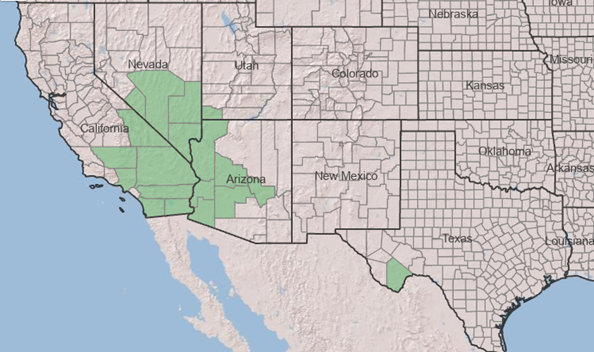


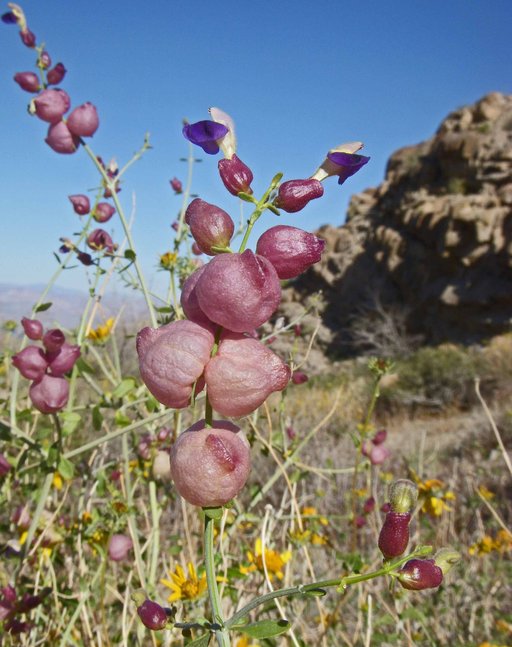


Figure 1—Mexican bladdersage in San Bernardino County.
Taxonomy
The scientific name of Mexican bladdersage is Scutellaria mexicana (Torr.) A.J. Patton (Lamiaceae) [6,9,105,118]. Mexican bladdersage was recognized as the sole member of the genus Salazaria [115,165], until morphological [105] and genetic [124] taxonomic analyses determined that it is firmly nested within the genus Scutellaria. There are no recognized subspecies or varieties.
Common names are used throughout this Species Review. See the Appendix for scientific names of plants and animals mentioned in this review.
Synonyms
- Salazaria mexicana (Torr.) [38,68,161]
Other Common Names
Mexican bladdersage, paperbag bush, bladder sage
General Distribution
Mexican bladdersage is native to all North American warm deserts— the Mojave, Sonoran, and Chihuahuan—and the transition zone to the Great Basin cold desert. It occurs in the southwestern United States and northern Mexico, from southern California and southern Nevada at its northern extent [38] (fig. 2), to northern Baja California Sur, Durango, and Nuevo León, Mexico in the south [42].

Figure 2—Distribution of Mexican bladdersage in the United States. Mexican bladdersage also occurs in northern Mexico [42], and it may occur in New Mexico [6,32,68,87,153].
It is unclear whether its distribution extends into southern New Mexico, although it occurs in both Arizona and Texas, as well as adjacent Chihuahua, Mexico [165]. Carter (1997) describes it as a “rare shrub of southern New Mexico counties” [32], and Allred et. al. (2020) states that no wild populations are known in New Mexico, but that it may occasionally escape cultivation [6].
States and Provinces
- United States: AZ, CA, NM, NV, TX, UT [68,87,145]
- Mexico: BCS, BHC, CHH, COA, DUR [88], SON [42], NLE [125]
Site Characteristics
Although Mexican bladdersage occurs in much of the Chihuahuan Desert, little information is available about site characteristics in that desert [91]. Most of the information in this section comes from sites outside of the Chihuahuan Desert.
Mexican bladdersage grows in arid climates with bimodal or winter precipitation patterns. Annual precipitation over Mexican bladdersage’s distribution ranges from 5 to 40 cm, depending on elevation and location, and varies greatly from year to year. Summer precipitation occurs during late summer monsoons, when localized, high-intensity thunderstorms deliver sometimes significant amounts of rain. All three of the North American warm deserts exhibit seasonal rainfall bimodality to some degree, with the relative contribution of winter precipitation generally decreasing from west to east. Precipitation peaks in winter in the Mojave Desert, grades from winter-dominant to summer-dominant precipitation across the Sonoran desert, and peaks in summer in the Chihuahuan Desert [86,144,170].
Mexican bladdersage is drought-tolerant [79], but extended drought may cause high mortality. For example, 100% mortality was recorded at one site in Joshua Tree National Park after 3 years of precipitation deficits, followed by a 4th year of extreme precipitation deficit [90].
Across its range, summer temperatures commonly exceed 89.6 °F (32 °C) and, although winters are relatively warm [73], temperatures drop below freezing (32 °F/0 °C) with some regularity [86], although not usually for long durations.
Mexican bladdersage has a wide elevational range, from about 300 m up to 1,900 m (table 1) [9,71,153].
| Area | Elevational range (m) |
|---|---|
| Southwest | 300-1,100 [153] |
| Arizona | Usually <900 [71]; 350-1,350 [33] |
| California | <1,900 [9]; <1,500 [98] |
| California, eastern Mojave Desert | 1,000-1,675 [142] |
| Nevada | 370-1,700 [68] |
| Nevada, south-central | 1,100-1,400 [12]; 700-1,280 [123] |
| New Mexico | 900-1,100 [87], 910-1,070 [32] |
| Trans-Pecos Texas | 670-940 [115] |
| Utah, Washington County | 940-1,400 [149,161] |
Mexican bladdersage occurs on a variety of landforms and topographic positions [83]. It is often abundant in frequently disturbed habitats including arroyos [12], canyons, and washes [136], and it can dominate disturbed upland sites [29] such as those grazed by livestock. It frequently occurs in washes that snake through upper bajadas and in the arroyos and canyons of higher-elevation mountains [72]. It also occurs in undisturbed upland communities on cinder cones, alluvial bajadas [100], hillslopes, and alluvial terraces [109].
Mexican bladdersage often grows on dry, well-drained, coarse-textured soils. Soil textures include silty clays [100], sandy loams [133], sands [136], often with a large percentage of gravels [9] and cobbles [33]. Mexican bladdersage may dominate on soils derived from volcanic [133], calcareous [167], or granitic parent materials [29], typically of alluvial or colluvial origin [26,109,133].
Plant Communities
Mexican bladdersage is a dominant or common component in desert wash scrub [12,72] and Joshua tree woodlands [99,111,141]. It is an indicator of upper bajada Mojave scrub and wash vegetation types (Thomas et al. 2002 cited in [72]). It is also common in, but does not typically dominate creosotebush scrub, blackbrush scrub, upland mixed desert scrub, and pinyon-juniper woodlands [47,101,109,141]. It occurs in perennial grass-dominated communities in the East Mojave highlands in Nevada and California and in semi-desert grasslands in west-central Arizona. [91].
Mexican bladdersage often dominates frequently disturbed warm desert arroyo and wash communities [12,54,68,86,142], and it may reach its largest size and greatest densities in desert washes [76]. In the Panamint Mountains in Death Valley National Park, Mexican bladdersage occurred most frequently in washes, dominating mid- and high-elevation washes, sometimes as the sole shrub. It also sometimes occurred on disturbed slopes, and on rocky southwest-facing slopes without evident disturbance [141].
Where Mexican bladdersage dominates upland sites, vegetation is often recovering from disturbances [29,123] such as fire, grazing, or other anthropogenic impacts [72,141]. Some Mexican bladdersage-dominated stands may be in a post-disturbance (or early-seral) “phase” of a previously stable vegetation community. These stands may not have well-defined unifying characteristics other than vegetative dominance by Mexican bladdersage [72]. Disturbed communities may be codominated by Cooper’s goldenbush [5,14,91,122], and have high cover of nonnative annuals, particularly of redstem stork’s bill [72].
The following discussion is organized by vegetation Groups and Macrogroups described by NatureServe [101] and others (as cited), which correspond to Biophysical Settings (BpS) described by LANDFIRE [77].
Warm Semi-Desert Shrub & Herb Dry Wash & Colluvial Slope Group
BpS: North American Warm Desert Riparian Systems – Stringers (11552)

Figure 3—Dense cover of Mexican bladdersage in Mexican Bladdersage Shrubland Alliance [28] in Kern County, California.
This group is part of the North American Warm-Desert Xeric-Riparian Scrub Macrogroup [101]. Mexican bladdersage is one of a wide variety of woody species that dominate these intermittently flooded washes and arroyos that dissect bajadas, mesas, plains, and basin floors throughout the warm deserts of the western U.S. and northwestern Mexico. This group is restricted to intermittently flooded upland drainages, which occur as linear or braided features within desert scrub- or desert grassland-dominated landscapes. Species composition and structure vary, ranging from sparse and patchy to moderately dense canopies. Stands are often distributed along drainage banks, but sometimes occur within the channel. Mexican bladdersage is a named dominant in one alliance and two associations within this group [101]:
- Desert Almond – Mexican Bladdersage Northern Mojave Desert Wash Scrub Alliance
- Mexican Bladdersage Shrubland Association (fig. 3)
- Burrobrush – Mexican Bladdersage Shrubland Association
The Desert Almond – Mexican Bladdersage Northern Mojave Desert Wash Scrub Alliance is typically found in washes and canyon bottoms in Arizona and California between 750 and 1,900 m in the northern Mojave and Sonoran Deserts. Vegetation is characterized by an open to intermittent shrub layer dominated by Mexican bladdersage, desert almond, or the imperiled California endemic, Mojave Desert plum.
The Mexican Bladdersage Shrubland Association is included in this group but is not defined by wash characteristics. It occurs on south- and west-facing slopes of volcanic cinder cones in Arizona, California, and Nevada. Mexican bladdersage dominates the shrub layer, often with rough jointfir and water jacket [47,101]. California recognizes a Mexican Bladdersage Alliance, which is classified as sensitive by the California Department of Fish and Wildlife [28].
Mojave Mid-Elevation Mixed Desert Scrub Group
BpS: Mojave Mid-Elevation Mixed Desert Scrub (10820)
This group occurs over extensive areas of the Mojave Desert and Great Basin transition zone at mid-elevations above creosotebush – white bursage desert scrub and below desert woodlands. These communities are often dominated by blackbrush and a variety of desert scrub species including Mexican bladdersage. Mexican bladdersage occurs as a named codominant species in two associations in this group [101]:
- Nevada Joint-fir - (Mexican Bladdersage, Burrobrush) Shrubland Association
- Joshua Tree / (Desert Almond, Mexican Bladdersage) Wooded Shrubland Association
Mexican bladdersage occurs and may be subdominant in blackbrush scrub in the Mojave and Sonoran Deserts [22,60,128,141], particularly at the lower elevational extent of blackbrush stands in washes [81]. Mexican bladdersage is an important species in the Blackbrush Mojave Desert Scrub Alliance [101]. It is likely to have low cover in undisturbed blackbrush scrub and have higher cover on moderately disturbed (e.g., by grazing or fire) sites [72].
Mexican bladdersage occurs but does not dominate in the following groups:
Mojave-Sonoran Bajada & Valley Desert Scrub Group
BpS: Sonora-Mojave Creosotebush – White Bursage Desert Scrub (10870)
Mexican bladdersage is among several species of shrubs and dwarf-shrubs that may be present to codominant in plant communities dominated by creosotebush and white bursage. These communities are characterized by an open, xeromorphic shrub layer and a typically sparse herbaceous layer with seasonal cover of annual grasses and forbs. Substrates are typically well-drained, sandy soils derived from colluvium or alluvium, and often are calcareous with a caliche hardpan or a pavement surface. Vegetation is often very sparse, and bare ground may be a major feature [101]. In southern Nevada, Mexican bladdersage occurred frequently in or near washes in creosotebush – white bursage communities [81].
Of five creosotebush – white bursage alliance types (i.e., site types) across the Mojave Desert, Mexican bladdersage codominated one of ten associations within the upper-elevation type [72].
Great Basin Pinyon-Juniper Woodland Group
BpS: Great Basin Pinyon-Juniper Woodland (10190)
Mexican bladdersage grows in the open, shrubby understory of pinyon-juniper communities of the mountain ranges of the Mojave Desert region and eastern foothills of the Sierra Nevada into Arizona [33,97,107,127]. In the Colorado Desert, Mexican bladdersage, along with burrobrush, Parish’s goldeneye, Eastern Mojave buckwheat, and Cooper’s goldenbush, may dominate early- to mid-successional stands after fire [127].
Mexican bladdersage is also characteristically present in the Utah Juniper – Joshua Tree / Black Grama Woodland Association in the Intermountain Utah Juniper Open Woodland Group [101].
Colorado Plateau Blackbrush – Mormon-tea Shrubland Group
BpS: Colorado Plateau Blackbrush – Mormon-tea Shrubland (10780)
Mexican bladdersage occurs in geographically distinct (i.e., distinct from the Mojave Mid-Elevation Mixed Desert Scrub Group) blackbrush-dominated stands with vegetation characteristic of the Colorado Plateau. Other widespread shrubs may be present, but not dominant, and the herbaceous layer is typically sparse and dominated by perennial grasses. Stands occur between 560 and 1,800 m on typically shallow, calcareous substrates on sandstone or limestone bedrock. Mexican bladdersage is likely more common in blackbrush-dominated stands than jointfir (i.e., Mormon-tea)-dominated stands [109].
Californian Annual Grassland & Forb Meadow Group
BpS: California Central Valley and Southern Coastal Grassland (11290)
Mexican bladdersage is one of several emergent shrub species that occur at low cover in the Menzies' Fiddleneck – Bristly Fiddleneck – Phacelia species Meadow Alliance, which is seasonally dominated by annual grasses and forbs. This alliance occurs in California on upland slopes, broad valleys, grazed or recently burned hills, and fallow fields. Soils are well-drained and loamy, and they are often subject to high levels of bioturbation [101].
North American Warm Semi-Desert Cliff, Scree & Pavement Sparse Vegetation Group
This group consists of barren and sparsely vegetated stands where physical or chemical properties limit vegetative growth on a variety of landforms across the southwestern U.S. and northern Mexico in the Chihuahuan, Sonoran, and Mojave deserts, extending south along coastal areas around the Gulf of California [35,101].

Figure 4—Mexican bladdersage in flower and fruit with the distinctive inflated calyces that inspire the common names “bladdersage” and “paperbag bush.”
Botanical Description
This description covers characteristics that may be relevant to fire ecology and is not meant for identification. Identification keys are available (e.g., [6,9,118]).
Aboveground Description
Mexican bladdersage is a perennial shrub [41] generally ranging in height from 0.5 to 1.3 m [68], but occasionally growing up to 2 m tall [6,108,115]. Under some growing conditions, it may grow as a subshrub [95,165]. Plants exhibit intricate, wide-spreading branching, with living and dead branches intertwining and ending in rigid, spine-like tips [36,71,87,98,149,153]. Leaves are small and often sparse, growing up to 2 cm long and 1 cm wide, sometimes much smaller, [9,38]. Leaves are drought-deciduous [90,127], but green stems photosynthesize as much as leaves [8,50] and remain photosynthetically active for up to 5 years [36].
Buds at the base of leaves generally produce two bilateral [108], short-stalked, two-lipped flowers from each of the 3 to 10 nodes closest to the end of the branch [9]. The calyces of flowers persist in fruit as distinctive, papery, inflated bladders [32,115,161], inspiring the common names “bladdersage” and “paperbag bush” [84,153] (fig. 4). Each fruit contains four nutlets [84,153]; however, not all nutlets mature [38].
Belowground Description

Figure 5—Rhizomes and shoots of Mexican bladdersage.
Mexican bladdersage arises from intricately branched, narrow rhizomes [105] (fig. 5) that spread close to the soil surface [134]. Although it spreads by these rhizomes, there is no common rhizome to all aerial stems. It may be that as new aerial stems develop from spreading rhizomes, those rhizomes detach from older rhizomes and stems [135].
Shoot mass of Mexican bladdersage slightly exceeds root mass, based on an average of five samples collected in a desert wash in the Mojave Desert in southern California. The average root mass was 72% of the average shoot mass [49].
Raunkiaer Life Form
- Phanerophyte
- Geophyte [117]
Population Structure
Mexican bladdersage-dominated communities generally have an open to intermittent shrub canopy layer. Mexican bladdersage also occurs in clusters or as scattered individuals in many desert scrub and woodland communities where it is not dominant [47,100]. In one desert scrub community in southern Nevada with 114 Mexican bladdersage plants, 104 of those occurred in groups with interlocking foliage whereas only 10 occurred as isolated shrubs [154]. Mexican bladdersage is more likely to occur in clumps as density increases [34].
Seasonal Development
Mexican bladdersage grows new leaves and green stems in the relatively cool and wet season, starting in February and peaking in mid-May in southern Nevada. The drought-deciduous leaves drop in early August when temperatures are high and water potential is low [36]. It remains leafless for much of the year [134].
Mexican bladdersage produces flowers in spring through early summer throughout its range. It sometimes flowers in the fall [15,33,68,71,115]. Herbarium specimens collected between 1902 and 2006 suggest that spring-flowering shrubs including Mexican bladdersage flowered over a month earlier in Maricopa County (including the Phoenix metropolitan area) than outside of Maricopa County. The authors suggest that differences in flowering times may be due to higher temperatures in Phoenix caused by the urban heat island effect [102].
| Area | Flowering period |
|---|---|
| Great Basin | April to June [38] |
| Sonoran Desert | March to June [129] |
| Arizona | March to October [33]; March to May, and October [71] |
| California | March to June [9,98] |
| California, Eastern Mojave | April to June [142] |
| California, eastern Kern County | Mid-April to early May; peaks in late April [67] |
| Nevada | April to September [68] |
| Nevada, Central-southern | April to June [12] |
| New Mexico | May and June [87] |
| Trans-Pecos Texas | May to November [115] |
| Utah, Washington County | April to June [149] |
| Baja California, Mexico | March to June [165] |
Regeneration Processes
Mexican bladdersage reproduces sexually and regenerates from seed [45,69]. It can also sprout and spread from rhizomes [36,46], and it can resprout following top-kill or injury. Resprouting is likely an adaptation developed in response to flooding or drought [51], which also allows it to resprout after top-kill by fire [5,91].
Pollination and Breeding System
Flowers of Mexican bladdersage are perfect [108] and are pollinated by insects. The tubular flowers are specialized to deposit pollen on the back of the head and thorax of pollinators. Observations suggest that Mexican bladdersage may be dependent on digger bees for pollination in southern Nevada [164].
Seed Production and Predation
Mexican bladdersage begins producing flowers and fruits when it is 2 to 3 years old [46], and it can produce abundant seed [45], likely depending on annual weather patterns and growing conditions.
Each flower produces four seeds, although not all reach maturity [38]. For example, 100 dry bladders collected near Mojave, California, in June contained only 64 seeds, despite the theoretical capacity for 400 [69]. Poor fill may indicate that relatively few seeds matured, that some fell out of the hole in the bottom of the papery bladder, or that another fate befell the “missing” seeds (e.g., predation).
Seed-consuming ants, rodents, [40], and birds [25,104,116] affect the fate of seeds in the deserts of the southwestern United States and northern Mexico, although no specific information is available about their effects on Mexican bladdersage seed.
Seed Dispersal

Figure 6—Flowers and inflated calyces of a flowering and fruiting Mexican bladdersage individual.
The papery, inflated calyces of Mexican bladdersage (fig. 6) are dispersed by wind while the seeds are still enclosed [37,85,108,168]. It is possible that some seeds disperse near the parent plant by falling out of a hole in the end of the inflated calyx while the bladder is still attached to the plant, although this was not described in the literature. No information was available about dispersal distances, but Minnich (1995) lists Mexican bladdersage as an opportunistic colonizer "characterized by long distance seed dispersal by wind" [95].
Seed Banking and Germination
Field observations about seed banking and germination requirements in Mexican bladdersage were lacking in the available literature. Observations of seed stored under varied conditions (fig. 7) suggest that Mexican bladdersage seed viability may decrease somewhat rapidly under field conditions. Shortly after collection, 84% of Mexican bladdersage seeds stored in a growth chamber at 15 °C germinated when rolled in moist paper towels. After storage in a warehouse—under conditions most similar to field conditions—germination rate decreased rapidly between the first and second years, then decreased steadily over time, nearing 0% after 11.5 years [70]. For additional information about this study see Restoration of Disturbed Sites.
Mexican bladdersage seeds do not have a dormancy period, and seeds optimally germinated at 15 °C in a growth chamber [70]. Kay et al. (1988) assigned Mexican bladdersage a seed storage rating of “excellent,” with sealed and humidity-controlled storage required to maintain seed viability [70].
Seeds can germinate 5 to 10 days after planting, from fall through spring. Seedlings are highly susceptible to damp-off and other fungi if conditions are too wet (e.g., under outdoor nursery winter conditions) [46].

Figure 7—Mexican bladdersage germination rates remained above 70% after sealed storage at various temperatures over 12 years; whereas germination decreased steadily after storage under warehouse conditions, which were most like field conditions.
Seedling Establishment and Mortality
Very little information about Mexican bladdersage seedling establishment and mortality was found in the available literature.
When grown in a nursery setting, mortality of Mexican bladdersage seedlings was relatively high despite good growing conditions. Seedling mortality and damage were caused by damp-off and other fungi, transplanting, excessive moisture, rabbit damage, and frost. Fungi-related mortality was lower when seeds were planted later in the season than those planted prior to the wet season. Some nursery-raised plantings experienced frost damage in winter. Young plants experienced substantial rabbit damage, and all new plantings required protective caging [46]. In 1941, of 300 seeds that germinated, 45 seedlings reached 2.5 to 10 cm tall and were planted into full sun on a rocky hard clay ridge. Six years after the seedlings were planted, nine individuals still survived [45] (see Restoration of Disturbed Sites).
Observations indicate that Mexican bladdersage seedlings establish readily after fires under some conditions (see Plant Response to Fire). In southern California, numerous seedlings established in burned creosotebush scrub and burned blackbrush scrub, apparently from seeds that dispersed onto the sites from long distances by wind [95].
Vegetative Reproduction and Regeneration
Mexican bladdersage can reproduce and spread from rhizomes [36,135]. It can resprout and may spread from rhizomes following disturbances that result in top-kill or injury [91]. Everett (2012) describes spread by “underground root suckers” [46]; it is unclear whether this refers to rhizomes or root sprouts. No other mention of root sprouts was found in the literature.
Plant Growth and Mortality
Mexican bladdersage is described as a short-lived pioneer [95,148,160], intermediate-lived shrub [158], and long-lived shrub [121,151]. Relative to very long-lived desert shrub species, such as creosotebush, Mexican bladdersage has high recruitment and mortality, traits typically shared with short- or intermediate-lived shrubs that tend to respond positively to disturbances [96,148,156,158].
Information about Mexican bladdersage growth rates is anecdotal. One observation indicates that shoots sprouting from rhizomes can grow 0.5 to 1 m in the first year [36]. After a fire in a pinyon-juniper woodland community, Mexican bladdersage resprouted vigorously, growing 0.6 to 0.9 meters in the first 4 postfire years, the growth rate slowing thereafter [5]. Individuals grown from seed in a nursery then outplanted to desert sites measured 0.3 to 0.9 m tall and 0.3 to 1.5 m wide after 10 to 15 years [45].
Successional Status
Mexican bladdersage is classified as an early successional, pioneer species [95,156,160], although it also grows in undisturbed and late successional communities. It often dominates in habitats with regular fluvial, aeolian, or anthropogenic disturbances [72,96,121], and may increase abundance in response to natural [156] or anthropogenic disturbances [3,30,137,160]. For example, Mexican bladdersage and other shrubs that respond favorably to fluvial disturbance and cattle grazing often dominate or provide significant cover in upper bajada scrub communities [72,141]. Mexican bladdersage also occurs in undisturbed and late successional communities [48,121,151]. Its prevalence in late successional communities may change in response to precipitation fluctuations in desert systems [13].
After disturbance, long-lived species with low establishment rates may be replaced by shorter-lived perennial species with high establishment rates [152]. For example, at intermediate elevations near Victorville, California, Mexican bladdersage established soon after a series of fires, along with burrobrush, Virgin River brittlebush, threadleaf snakeweed, and rayless goldenhead, replacing fire-intolerant, long-lived shrubs and arboreal succulents. In Joshua Tree National Park, Mexican bladdersage, burrobrush, big galleta, and desert needlegrass replaced blackbrush after fire [95]. It likely dominates ephemeral, postfire successional stages in many other blackbrush communities [72]. Mexican bladdersage abundance does not always increase after disturbance [91,137,140]. For example, about 6 years after a fire in Cooper’s goldenbush-dominated scrub at Cima Dome, Arizona, Mexican bladdersage occurred with <1% cover on burned plots and 2% cover on unburned plots [91].
Long-term effects of disturbance on Mexican bladdersage abundance may vary among sites. Mexican bladdersage was a substantial component of undisturbed vegetation in three geomorphic site types on two old military targets in the Cerbat Mountains of the eastern Mojave Desert, Arizona. Forty years after surface soil (up to 0.2 m) was removed with bulldozers, changes in cover and density of Mexican bladdersage differed among sites. On the two geomorphically youngest surfaces (an active alluvial floodplain and an intermittently active bajada), Mexican bladdersage had higher density (150 and 750 plants/ha, respectively) in disturbed plots than in undisturbed control plots (100 plants/ha in both), but differences in cover were not significant. In contrast, on the geomorphically oldest surface (an isolated alluvial terrace), Mexican bladdersage had significantly lower cover (2.3%) and density (250 plants/ha) in disturbed plots than in undisturbed control plots (5.5% cover, 975 plants/ha density) [137].
Immediate Fire Effects
Mexican bladdersage may be top-killed [5,91] or killed by fire [10,95]. When Mexican bladdersage burns, the relatively thin aboveground stems are likely to be incinerated, but rhizomes may survive in the soil [36]. Postfire sprouting from rhizomes likely depends on fire intensity, fire timing, soil burn severity, and degree of plant damage [2].
Information on immediate effects of fire on seeds was not available. Observations of dense seedling establishment soon after fire suggest that seeds may survive in the soil seed bank [10]; however, the source of these plants was not verified (i.e., they may have been from rhizomes or off-site seed). Some authors suggest that Mexican bladdersage relies on off-site seed sources that are dispersed by wind to colonize burns [10,95].
Postfire Regeneration Strategy
- Shrub likely without a sprouting root crown
- Rhizomatous shrub, rhizome in soil
- Initial off-site colonizer (off site, initial community)
- Possible, but not confirmed: Ground residual colonizer (on site, initial community) [139]
Fire Adaptations
Many desert plants are poorly adapted to fire [24], which is one reason fire is thought to have been historically rare in the North American warm deserts [77,170]. Postfire resprouting in desert species such as Mexican bladdersage may have evolved as a response to historical climatic or physical stressors, such as drought or flash flooding, rather than to fire. Resprouting can help desert species such as Mexican bladdersage persist with increased fire occurrence [16,51,150,166], although it is unclear what frequency of fire it can tolerate.
No information about effects of fire on seed survival was available, and no observations of postfire establishment from the soil seed bank were found in the literature. More information is needed on these topics.
Plant Response to Fire
Little information was available in the literature about Mexican bladdersage response to fire, and available information was mostly anecdotal. Only eight studies provide data on postfire abundance and none of these have prefire data. Studies that compare burned areas to unburned areas are often inconclusive, as many rely on adjacent unburned areas that may not share all site characteristics or be an accurate analog of the prefire community composition of the burned area.
Mexican bladdersage has been described as an increaser after fire [3], either from sprouting [5,91] or from prolific seedling establishment [10,95]. However, its postfire response varies. Observations show Mexican bladdersage abundance was higher [5,91], lower [80,91,131,140], or similar [78] on burned or disturbed sites compared to undisturbed sites.
Disparate postfire responses may be due to differences fire characteristics [163], precipitation patterns, site characteristics [130], or plant characteristics such as age, size, and phenology. Mexican bladdersage resprouting rates and postfire seedling establishment are likely to be affected by fire severity, postfire moisture availability [130], repeated fires [20], or differences in site and plant community characteristics [130].
Observations indicate that Mexican bladdersage can resprout after being top-killed by fire [5,45,89], although this response is inconsistent and poorly described in the literature. Only one author described resprouting rates based on prefire observations, when resprouting occurred for 100% of individuals on a sunny, moderate, south-facing slope in a small, transplanted population (n=9). Postfire sprouts reached their prefire size within 1 year after fire [45]. A second study reported resprouting individuals that grew between 0.6 and 0.9 m over 4 years [5]. Additional data describing postfire resprouting or growth rates are not available, because the few studies that report Mexican bladdersage response to fire compare burned areas to adjacent, unburned controls, rather than comparing prefire and postfire data.
Observations indicate that Mexican bladdersage can establish from seed dispersed from adjacent, unburned areas after fire [10,95]; however, information on postfire establishment from the soil seed bank was not available.
Postfire Response by Vegetation Group
Of the two NatureServe Groups where Mexican bladdersage may be dominant, postfire response information comes only from studies in the Mojave Mid-Elevation Mixed Desert Scrub Group. Information is lacking about Mexican bladdersage response to fire in the Warm Semi-Desert Shrub & Herb Dry Wash & Colluvial Slope Group (i.e., in desert washes where Mexican bladdersage is mostly likely to dominate). However, some fire studies may have included desert washes within the mosaic of mixed desert scrub study sites. Of the five NatureServe Groups where Mexican bladdersage may be common, information about its postfire response was only available from studies in the Mojave-Sonoran Bajada & Valley Desert Scrub Group and the Great Basin Pinyon-Juniper Woodland Group.
Mojave Mid-Elevation Mixed Desert Scrub Group
While most information about Mexican bladdersage response to fire comes from studies in this vegetation Group, information is limited within individual plant community types (i.e., desert scrub, blackbrush, and Joshua tree woodlands).
Desert Scrub Communities
In desert scrub communities, long-lived dominant shrubs are often replaced by relatively short-lived pioneer shrubs after fire [96]. On some desert scrub sites, native perennial grass cover may increase after fire and persist for many years. McAuliffe (2016) suggests that this may indicate a return to presettlement conditions in parts of the southeastern Mojave Desert, when these areas may have been dominated by shrub-steppe vegetation, before livestock grazing and fire exclusion led to dominance of desert scrub. Mexican bladdersage is a common associate on these desert scrub sites that are dominated by grasses and sprouting shrubs after fire [91].
Mexican bladdersage was among the species recorded in a desert scrub community burned in 1994 and monitored 4, 10, and 19 years after fire in the Lanfair Valley, California. Mexican bladdersage was not present in adjacent, unburned control transects, but it was one of several subdominant shrubs said to have “resprouted following incineration of above-ground stems” in burned areas. Control transects had low cover of emergent Joshua trees and were dominated by Cooper’s goldenbush in the shrub layer and big galleta in the herbaceous layer. Four years after fire, the burned site was dominated by big galleta and resprouting shrubs including Mexican bladdersage, Nevada jointfir, and littleleaf ratany, with each contributing 2% to total canopy cover. These species continued to dominate burned sites 10 and 19 years after the fire (table 3). Cover of big galleta, in particular, continued to increase in the years following the fire [91].
| Plant species | Unburned site 4 March 1998 | Burned site 4 March 1998 | Burned site 30 Oct 2004 | Burned site 19 Sept 2013 |
|---|---|---|---|---|
| Mexican bladdersage | 0 | 2 | 2 | 3 |
| Big galleta | 12.5 | 17 | 15.5 | 34.5 |
| Cooper’s goldenbush | 14.5 | 0 | 0 | 0 |
| Joshua tree | 0.5 | 0 | 0 | 0.5 |
| Eastern Mojave buckwheat | 7.5 | 0 | 0 | 0 |
| Horsebrush | 3.0 | 0 | 0 | 0 |
| Buckhorn cholla | 4.0 | 0 | 0 | 0 |
| Nevada jointfir | 3.0 | 2 | 6 | 5.5 |
| Littleleaf ratany | 2.0 | 2 | 3 | 3.5 |
At nearby Cima Dome, shrubs comprised less than 7% cover in burned plots compared to ~35% in adjacent unburned mixed desert scrub plots. Cooper’s goldenbush dominated unburned plots with 25% cover but had <1% cover in burned plots. Frequency and cover of Mexican bladdersage was also higher in unburned plots (0.12 and 2%, respectively) than in burned plots (0 and <1%), although statistical analyses were not conducted. While the grasses James’ galleta and black grama occurred in unburned plots (each with 5% cover), they dominated burned plots—each with 12% cover [91].
Blackbrush Communities
Throughout much of its range, blackbrush communities may go through several successional phases after fire, including a phase dominated by Mexican bladdersage [72]. Blackbrush is easily killed by fire [20] and can be replaced by resprouting shrubs within the burn and/or by seedlings established from off-site seed sources, including Mexican bladdersage [5,95]. However, information regarding both postfire sprouting and seedling establishment is limited for Mexican bladdersage.
In blackbrush communities above 1,400 m elevation in Joshua Tree National Park, Mexican bladdersage cover was about 1% in unburned control plots, and about 15% on 8- to 12-year-old burned plots. Blackbrush dominated unburned plots, whereas Mexican bladdersage, burrobrush, big galleta, and desert needlegrass dominated burned plots. The author suggests that Mexican bladdersage established from seed dispersed into burned areas from off-site sources [95].
Joshua Tree Woodland Communities
Only two studies were available with information on Mexican bladdersage postfire response in Joshua tree woodlands in 1- to 12-year-old burns. In the first study, two fires occurred in 1968 and 1978 in sparse Joshua tree woodland communities in Joshua Tree National Park, where unburned control plots were dominated by blackbrush, Mojave yucca, mormon tea, Mexican bladdersage, and burrobrush. Ten years after a fire in 1968, Mexican bladdersage codominated burned areas with Mojave yucca and desert wishbone-bush. Mexican bladdersage relative density was 27.1% in the burned plot, compared to 11.1% in the unburned control plot. The author mentions that Mexican bladdersage has lower absolute density but higher relative density in burned plots compared to unburned plot. They categorized Mexican bladdersage as a species that remained at a stable level after fire. Of the six species in this category, Mexican bladdersage was the only one not observed to resprout after the fire. On a similar site that burned in August 1978, no living Mexican bladdersage was observed immediately after the fire or in May 1979. By June 1979, Mexican bladdersage seedlings occurred at 0.3% relative density, where they were the only identifiable perennial seedlings occurring with annual species. Mexican bladdersage had 16.8% relative cover (8.4% absolute cover) in adjacent unburned transects. Additional data is not available for absolute density or percent cover [10].
In the second study in this community type, a series of fires burned in Joshua tree woodlands codominated by California juniper or singleleaf pinyon at the southwestern edge of the Mojave Desert in Victor Valley, California. Mexican bladdersage frequency was 1.7% in unburned plots, and plots located in 2- to 12-year-old burns (n=6). However, its cover was collectively lower along burned transects (0.2%) than along an unburned control transects (0.4%) [140].
Mojave-Sonoran Bajada & Valley Desert Scrub Group
After fires at intermediate elevations in the late 1970s and early 1980s in the Mojave Desert, creosotebush and white bursage were likely replaced by long-distance wind-dispersing colonizers, including Mexican bladdersage, Virgin River brittlebush, burrobrush, and threadleaf snakeweed in the short-term [95,96]. On creosotebush scrub transects in Lucerne Valley (n=3) and near Victorville, California (n=4), cover of creosotebush and white bursage was lower on burned than unburned transects. Mexican bladdersage did not occur on unburned transects, but it occurred with about 2% to 4% cover on 4- to 10-year-old burned transects [95].
Repeated fires may reduce abundance of Mexican bladdersage in creosotebush scrub communities. Mexican bladdersage occurred at low density (<5 individuals/600 m2) and cover (<1%) on unburned, once-burned, and twice-burned sites, but was not present on sites burned three times after a series of patchy wildfires left a mosaic of burned and unburned creosotebush scrub in the Mojave Desert. Fires burned in 1984, 1986, 1987, and 1993, leaving a patchwork of areas burned one, two, or three times. Density, cover, and species richness of live perennial plants were measured 5 and 14 years after the 1993 fire. Mexican bladdersage density and cover were similar for both years. Perennial plant density, cover, and species richness were lower on burned than unburned areas, especially areas burned three times. Perennial plant cover was 5 to 100 times lower in burned areas. Ninety-one percent of the native perennial species present in unburned areas were present on once-burned areas, 73% in twice-burned areas, and 32% in thrice-burned areas [20].
Great Basin Pinyon-Juniper Woodland Group
Pinyon-juniper woodlands are poorly adapted to fire, and shrubs including Mexican bladdersage, burrobrush, Parish’s goldeneye, Eastern Mojave buckwheat, and Cooper’s goldenbush are likely to dominate these sites after fire [5,97]. After a fire in a singleleaf pinyon-California juniper woodland in Joshua Tree National Park, Mexican bladdersage resprouted vigorously, growing 0.6 to 0.9 meters in the first 4 years after fire. Five years after the fire, its growth rate slowed, but it codominated burned sites along with desert almond and Sonoran scrub oak. Mexican bladdersage density was 17% greater in burned plots than unburned control plots, on average. It occurred on two of the three burned plots, where it contributed 34.4% and 8.5% to relative plant cover. No cover data were available for Mexican bladdersage on unburned control plots, where blackbrush and narrowleaf goldenbush dominated the sparse understory. Singleleaf pinyon and California juniper were virtually eliminated on burned sites, and no seedlings of either species were found 6 years after fire [5].
Fuel Characteristics
Mexican bladdersage exhibits dense, intricate branching [98] of intertwined living and dead stems [36]. Aboveground parts of Mexican bladdersage are often consumed by fire because of their relatively small size, fine branching, and high horizontal and vertical fuel continuity [95]. As plant density increases, Mexican bladdersage tends to exhibit increasingly clumped distributions [34,72], a common pattern for plants that spread by rhizomes [135]. It occurs at its largest size and greatest densities in washes and arroyos [76] and can occur at densities that are likely high enough to carry fire in wash and arroyo communities (personal observation).
In most years, desert scrub communities where Mexican bladdersage occurs are fuel-limited, because typically discontinuous vegetation and sparse understories limit ignition and fire spread. However, during periods with above-average precipitation, native annuals may occur in densities sufficient to carry fire [44], and nonnative annual grasses can contribute substantially to fine fuel loads and continuity [23] increasing the likelihood for ignitions and large fires [166]. Patches of bare ground that previously impeded fire spread become fuel bridges that can increase fire extent. This is especially true after two or more consecutive wet years because high establishment and seed production during the 1st wet year can result in even greater establishment during the 2nd wet year [16,94,120].
Invasive annual grasses, particularly annual brome species, often grow at higher densities under shrubs in desert scrub communities, and Mexican bladdersage may be associated with relatively low [4] or high [19] densities of invasive grasses, depending on habitat, weather, or climate characteristics. Climate change is likely to further exacerbate invasion by nonnative, fire-adapted grasses and increase the length of fire seasons in the North American warm deserts [1].
Fire Regimes
Estimated historical fire regime characteristics differ among plant communities where Mexican bladdersage is common or dominant, but they are generally characterized as having stand-replacing fires at long intervals (see LANDFIRE Biophysical Settings section) [77,100].
Fire regimes in contemporary desert scrub communities may be outside the historical range in variation in some areas, due to both an increase in human-caused ignitions and populations of nonnative invasive plants—especially grasses [126]. Under some conditions Mexican bladdersage may be resilient to shorter fire intervals, but many of its associated native species are not, and may be eliminated as a result.
Successive years of high rainfall are generally necessary for large fires to occur in desert scrub communities [23]. After one or more years of above-average precipitation, native and especially nonnative annuals may grow at higher densities and establish a fine fuel layer sufficient to carry fire [18,166]. Nonnative grasses can increase fine fuel loads and continuity on invaded sites, which may alter fire regime characteristics and create a feedback loop that results in an invasive grass/fire cycle, characterized by frequent fires and limited recovery of native plants [16,39,74,92]. Historically, native annuals did not occur in densities sufficient to carry fire as often as contemporary nonnatives, so fire intervals were longer [77]. Climate change and invasive species are likely to continue to alter fire regimes in Mexican bladdersage communities in the arid southwest, which is likely to see more ignitions, larger fires, and more invasions by nonnative grasses [1].
See LANDFIRE Biophysical Settings section for modeled historical fire regime characteristics and links to descriptions of Biophysical Settings.
Several nonnative invasive plants have impacted or have the potential to impact fuel and fire regime characteristics in the warm deserts of North America. These include the annual grasses compact brome, red brome [132], cheatgrass [169], Bermuda grass [31], and common Mediterranean grass [24]; and perennial grasses buffelgrass [64,93], fountain grass, and Lehmann’s lovegrass [166]. Annual invasive forbs such as redstem stork’s bill [17,61] and Sahara mustard [65] can also contribute to cover and continuity of fine surface fuels.
See these FEIS Fire Regime publications for information on fire regimes in plant communities where Mexican bladdersage is most common or dominant:
- Desert riparian communities
- Mojave mid-elevation mixed desert scrub communities
- Creosotebush-white bursage desert scrub communities
- Chihuahuan creosotebush desert scrub communities
- Great Basin pinyon-juniper communities
- California pinyon-juniper communities
- Inter-mountain basins semi-desert shrub-steppe communities
For additional fire regime information, search FEIS for this species by entering the species name on the Advanced Search page and selecting “Fire Regime” as the publication type.
Fire Management Considerations
Fire is generally considered harmful to the desert scrub communities where Mexican bladdersage dominates and occurs. While the impact of shorter fire intervals on Mexican bladdersage may not be straightforward (see Plant Response to Fire), associated native species that are not resilient to fire may be eliminated and native communities may be converted from desert scrub to grassland and steppe vegetation dominated by nonnative species (see Fire Regimes). Therefore, fire prevention and postfire recovery of native species are important management considerations for Mexican bladdersage communities.
Fire prevention in Mexican bladdersage communities includes preventing human-caused ignitions and managing nonnative invasive plants. Repeated burning may reduce Mexican bladdersage abundance [20]. Therefore, preventing large fires and the establishment of an invasive grass/fire cycle [17,21] will likely help maintain Mexican bladdersage populations. Climate change is also expected to exacerbate fire extent and frequency [106], partly by increasing invasibility of native ecosystems by nonnative species [1].
Federal Status
None [147]
Other Status
Mexican bladdersage is ranked Vulnerable (S3) at the state level in Utah and is Unranked in other U.S. states where it occurs. The global population is Secure (G5) [101].
Burrobrush-Mexican bladdersage shrublands of the Mojave Desert are ranked Vulnerable (G3). Other NatureServe ecosystems where Mexican bladdersage is a dominant component have not yet been assessed for ranking [101].
Importance to Wildlife and Livestock
Some sources indicate that Mexican bladdersage provides forage for domestic livestock in the drier portions of its range (e.g., [68,71,103]), but other sources generally indicate that livestock [62,112], as well as large wildlife [55,75], do not eat Mexican bladdersage except in small amounts. Nonetheless, it may provide important food and habitat for several insect species [27,52,57,162], and likely provides cover for birds and small animals (see Cover Value).
While rabbits and other rodents may consume young Mexican bladdersage plants [45], neither desert bighorn sheep nor domestic sheep showed a preference for it [56,112].
Several insects rely upon Mexican bladdersage for suitable food or habitat, and it may provide an important nectar source on some sites. The white-lined sphinx moth frequently feeds upon Mexican bladdersage nectar, and it may be a preferred host plant for their caterpillars [27]. Mexican bladdersage is the only known host plant for the mirid bug Larinocereusbalius [162]. Las Vegas perdita is a fairy bee endemic to Clark County, Nevada, which may specialize on Mexican bladdersage, although more sampling is necessary to discern that relationship. The role the fairy bee may play in pollination is unclear [52]. The desert black swallowtail feeds upon the nectar of Mexican bladdersage to an unknown degree [27].
Hummingbirds have been observed feeding on Mexican bladdersage nectar [164].
Palatability and Nutritional Value
Mexican bladdersage is apparently not a preferred food source for native browsers [55,56,112]. It has been listed in botanical texts as a source of forage for domestic livestock in the drier portions of its range [68,71], but support for this was not found in scientific literature.
Cover Value
Blackbrush desert scrub with codominant or associated Mexican bladdersage can provide extensive, high-density cover for Gambel’s quail in Nevada [54] and mountain quail in California [143]. Communities including Mexican bladdersage and other spiny or thorny vegetation, such as catclaw acacia, desert willow, pale desert-thorn, desertsenna, and desert almond form dense clumps that serve as refuges for Gambel’s quail in desert wash scrub [54].
Mexican bladdersage grows in Mojave and Sonoran desert washes where threatened desert tortoises occur [14,43,119], and preferentially select wash habitats [11,66]. Desert tortoise experts assigned Mexican bladdersage a moderate rating for cover value, indicating that Mexican bladdersage likely provides some degree of shelter to desert tortoises from the sun and predators [131]. Mexican bladdersage may also provide beneficial wash and upland habitat for a variety of other desert animals, including rodents [82,138], insects [162], and birds [155].
Restoration of Disturbed Sites
Mexican bladdersage often occurs in naturally disturbed areas, such as washes, arroyos [12,123], and canyons [68,142], as well as disturbed upland sites [123,137,157,160], which suggests it may be a good candidate species for restoration of some disturbed sites.
Mexican bladdersage has been seeded in restoration efforts [59], but documented outcomes are not available. Collection of the relatively large, easily visible bladders may expedite seed collection, but Kay et al. (1983) found poor fill of seeds in the bladders, only finding 64 seeds in 100 bladders [69]. Higher fill may occur [38]; however, information is lacking.
In one seed viability study, between 72% and 86% of Mexican bladdersage seeds germinated after 9 years of storage at various temperatures where seeds were dried and stored with humidity control (fig. 7). However, when stored under warehouse conditions (i.e., not temperature- or humidity-controlled), germination rates decreased steadily over the study period. Viability decreased to 50% around 3.5 years, less than 20% after 7 years, and nearly 0% after 11 years [70]. At the Rancho Santa Ana Botanic Garden, nursery workers found that untreated seed exhibited excellent germination in 5 to 10 days, and that excellent germination was still possible even if seeds were 6 or more years old. In this case, seeds were cleaned and stored in two-quart glass jars in a “cool, even-temperatured storeroom” prior to germination [46].
Little information from restoration efforts using Mexican bladdersage as an outplant is available, but the Rancho Santa Ana Botanic Garden planted and monitored several cohorts of planted Mexican bladdersage. Cohorts were planted from bare root seedlings or from nursery-grown seedlings. Overall, 192 individuals were planted between 1927 and 1947, and 50 were recorded as “still alive,” presumably in 1950. One cohort consisted of 35 individuals that were outplanted to a field site with silty clay soils. Thirteen years later, the surviving nine individuals “burned to the ground” but sprouted and had returned to their previous size within 1 year and seemed to be in better condition [45].
The Rancho Santa Ana Botanic Garden planted another cohort of 300 greenhouse-grown seedlings. Germination and survivorship were initially high, with 257 seedlings surviving to be transplanted to larger pots. Forty-five individuals were planted on a rocky ridge when they were 5 months old, but it is not clear if those plants were the only survivors from the initial 300 seedlings. These plants produced abundant flowers and seeds 2 years after they were outplanted. Several “splendid specimens” developed in this cohort. Seven years after planting, only nine plants were still alive [45].
Despite what nursery workers considered to be good growing conditions, nursery seedlings had relatively high mortality rates due to factors such as frosts, rabbit damage, and damp off. Surviving individuals sometimes reached impressive sizes and at least one individual survived 25 years [46].
In general, Mexican bladdersage transplants did best in rocky, porous soil, but many lived in heavy clay, provided they didn’t receive too much water [45].
On the Nevada Test Site in southern Nevada, four Mexican bladdersage individuals were outplanted and three died within the first year, and the fourth died during the next year [63].
Other Uses
Mexican bladdersage is occasionally grown as an ornamental in cultivation [6].
Other Management Considerations
The endangered Lane Mountain milkvetch, which usually grows through the canopies of low shrubs, was commonly found to use Mexican bladdersage as a host plant. Mexican bladdersage was one of six shrub species that hosted Lane Mountain milkvetch 75% of the time [146].
Management Under a Changing Climate
The deserts of the southwestern United States are particularly vulnerable to climate change and increasing climate variability because desert organisms already live near their limits for water and temperature stress. Models predict that the American Southwest and northern Mexico will become drier in the 21st century due to climate change [7], including the entire range of Mexican bladdersage. Aridlands already show evidence of a warming trajectory, and scientists have detected warming climate patterns in the Mojave [53], Sonoran [159], and Chihuahuan Deserts [58]. Desert species, including Mexican bladdersage, may have increased water demands as their habitat warms [7], which may cause drought deciduous shrubs to lose their leaves earlier in the season, decrease overall photosynthetic capacity, and reduce available soil water.
Many climate models predict that precipitation patterns will shift or decrease across most of the warm deserts of the American southwest and Mexico [1,7,114]. Rain variability may increase in monsoon-driven aridlands in conjunction with total rainfall decreases, which may not be captured in global climate change models [110] and may result in soil water content below plant thresholds more often [114]. Mexican bladdersage may be highly vulnerable to regional effects of climate change, particularly as related to deficits of cool-season precipitation. For example, Mexican bladdersage experienced 100% mortality on study transects near Joshua Tree National Park following a 4-year drought [90].
Under a warmer, drier climate, Mexican bladdersage could require more water [7], flower earlier in the year [102], or shift its range [53]. Phenology shifts could have far-reaching impacts if flowering times or other phenological events misalign with pollinator activity, precipitation timing, or other ecological or climate factors, but plant responses to climate change and likely ecosystem impacts are not well-understood [113].
In the western United States, wildfire activity is predicted to continue to increase [1,106]. This could reduce Mexican bladdersage populations if Mexican bladdersage abundance is reduced or eliminated after some fire intensity threshold or number of repeated burns [20]. Fire season is likely to start earlier due to projected decreases in spring precipitation and relative humidity [1]. Wet winters are predicted to become less frequent, which may favor species with long-lasting seed banks and mitigate the grass/fire cycle. However, climate change is predicted to increase fire frequency, promote invasive species establishment and spread, and intensify wildfire-invasion feedback loops in aridlands [1].
| Biophysical Setting | Mean Fire Interval (years) | Fire Severity Percent (%) | ||||||
|---|---|---|---|---|---|---|---|---|
| Code | Fire Regime Group | Low | Mixed | Replacement | All | Low | Mixed | Replacement |
| Series 10190 - Great Basin Pinyon-Juniper Woodland | ||||||||
| 10190_13_14 | III-B | 780 | 337 | 474 | 157 | 20 | 47 | 33 |
| 10190_15 | III-B | 765 | 335 | 475 | 156 | 20 | 47 | 33 |
| 10190_4 | V-A | 814 | 467 | 640 | 203 | 25 | 43 | 32 |
| 10190_6_7_9_12_16_17_18_19 | V-A | 898 | 865 | 440 | 0 | 49 | 51 | |
| Series 10780 - Colorado Plateau Blackbrush-Mormon-tea Shrubland | ||||||||
| 10780_15 | V-A | 282 | 282 | 0 | 0 | 100 | ||
| Series 10820 - Mojave Mid-Elevation Mixed Desert Scrub | ||||||||
| 10820_12_15_16_17_23_24 | V-B | 815 | 815 | 0 | 0 | 100 | ||
| 10820_14 | V-A | 406 | 406 | 0 | 0 | 100 | ||
| 10820_4_13 | V-A | 399 | 399 | 0 | 0 | 100 | ||
| Series 10870 - Sonora-Mojave Creosotebush-White Bursage Desert Scrub | ||||||||
| 10870_4_6_12_13_14_15_17_24_25 | V-A | 329 | 329 | 0 | 0 | 100 | ||
| Series 11290 - California Central Valley and Southern Coastal Grassland | ||||||||
| 11290_4_5 | II-A | 4 | 4 | 0 | 0 | 100 | ||
| Series 11552 - North American Warm Desert Riparian Systems - Stringers | ||||||||
| 11552_13_14_15 | V-B | 735 | 735 | 0 | 0 | 100 | ||
| Summary | ||||||||
| Minimum | 765 | 335 | 4 | 4 | 0 | 0 | 32 | |
| Maximum | 814 | 898 | 865 | 815 | 25 | 49 | 100 | |
| Mean | 786 | 509 | 493 | 357 | 6 | 17 | 77 | |
| Median | 780 | 402 | 474 | 329 | 0 | 0 | 100 | |
| Percentage of fires in 3 fire severity classes, derived from LANDFIRE succession modeling. Replacement-severity fires cause >75% kill or top-kill of the upper canopy layer; mixed-severity fires cause 26%-75%; low-severity fires cause <26%. | ||||||||
| LANDFIRE. 2020. Biophysical settings models and descriptions, [Online]. Washington, DC: U.S. Department of Agriculture, Forest Service; U.S. Department of the Interior; U.S. Geological Survey; Arlington, VA: The Nature Conservancy, (Producers). Available: https://www.landfirereview.org/search.php [96496] | ||||||||
Table A1
| Common name | Scientific name |
|---|---|
| Cacti | |
| buckhorn cholla | Cylindropuntia acanthocarpa |
| Forbs | |
| bristly fiddleneck | Amsinckia tessellata |
| desert wishbone-bush | Mirabilis laevis |
| Lane Mountain milkvetch | Astragalus jaegerianus |
| Menzies' fiddleneck | Amsinckia menziesii |
| phacelia | Phacelia spp. |
| redstem stork's bill* | Erodium cicutarium |
| Sahara mustard* | Brassica tournefortii |
| Graminoids | |
| Bermuda grass* | Cynodon dactylon |
| big galleta | Pleuraphis rigida |
| black grama | Bouteloua eriopoda |
| buffelgrass* | Pennisetum ciliare |
| cheatgrass* | Bromus tectorum |
| common Mediterranean grass* | Schismus barbatus |
| compact brome* | Bromus madritensis |
| desert needlegrass | Pappostipa speciosa |
| crimson fountaingrass* | Pennisetum setaceum |
| James' galleta | Pleuraphis jamesii |
| Lehmann's lovegrass* | Eragrostis lehmanniana |
| red brome* | Bromus rubens |
| Shrubs | |
| blackbrush | Coleogyne ramosissima |
| burrobrush | Hymenoclea salsola |
| Cooper's goldenbush | Ericameria cooperi |
| creosotebush | Larrea tridentata |
| desert almond | Prunus fasciculata |
| desertsenna | Senna armata |
| Eastern Mojave buckwheat | Eriogonum fasciculatum |
| horsebrush | Tetradymia spp. |
| Jointfir; Mormon-tea | Ephedra spp. |
| littleleaf ratany | Krameria erecta |
| Mojave Desert plum | Prunus eremophila |
| Mojave yucca | Yucca schidigera |
| mormon tea | Ephedra viridis |
| narrowleaf goldenbush | Ericameria linearifolia |
| Nevada jointfir | Ephedra nevadensis |
| pale desert-thorn | Lycium pallidum |
| Parish's goldeneye | Viguiera parishii |
| rayless goldenhead | Acamptopappus sphaerocephalus |
| rough jointfir | Ephedra aspera |
| Sonoran scrub oak | Quercus turbinella |
| threadleaf snakeweed | Gutierrezia microcephala |
| Virgin River brittlebush | Encelia virginensis |
| water jacket | Lycium andersonii |
| white bursage | Ambrosia dumosa |
| Trees | |
| California juniper | Juniperus californica |
| catclaw acacia | Senegalia greggii |
| desert willow | Chilopsis linearis |
| Joshua tree | Yucca brevifolia; Yucca jaegeriana |
| juniper | Juniperus spp. |
| pinyon | Pinus spp. |
| singleleaf pinyon | Pinus monophylla |
Table A2
| Common name | Scientific name |
|---|---|
| Arthropods | |
| desert black swallowtail | Papilio polyxenes coloro |
| digger bees | Anthophora spp. |
| Las Vegas perdita | Perdita cracens |
| none | Larinocereus balius |
| white-lined sphinx moth | Hyles lineata |
| Birds | |
| Gambel's quail | Callipepla gambelii |
| hummingbirds | Trochilidae |
| mountain quail | Oreotyx pictus |
| Mammals | |
| desert bighorn sheep | Ovis canadensis nelsonii |
| domestic sheep* | Ovis aries |
| rabbit | Leporidae |
1. Abatzoglou, John T.; Kolden, Crystal A. 2011. Climate change in western US deserts: Potential for increased wildfire and invasive annual grasses. Rangeland Ecology & Management. 64(5): 471-478. [92501]
2. Abella, S. R. 2009. Post-fire plant recovery in the Mojave and Sonoran Deserts of western North America. Journal of Arid Environments. 73(8): 699-707. [81859]
3. Abella, Scott R. 2010. Disturbance and plant succession in the Mojave and Sonoran Deserts of the American Southwest. International Journal of Environmental Research and Public Health. 7(4): 1248-1284. [95419]
4. Abella, Scott R.; Craig, Donovan J.; Chiquoine, Lindsay P.; Prengaman, Kathryn A.; Schmid, Sarah M.; Embrey, Teague M. 2011. Relationships of native desert plants with red brome (Bromus rubens): Toward identifying invasion-reducing species. Invasive Plant Science and Management. 4(1): 115-124. [98829]
5. Allison, Anita E. 1984. Post-fire regeneration: Mojave Desert, pinyon-juniper belt. Twin Research Report: Report #3. Twentynine Palms, CA: Joshua Tree National Monument. 32 p. [63252]
6. Allred, Kelly W.; Jercinovic, Eugene M.; DeWitt, Ivey. 2020. Flora Neomexicana III: An illustrated identification Manual; Part 2: Dicotyledonous plants. 2nd ed. Independently published. 795 p. [94735]
7. Archer, Steven R.; Predick, Katharine I. 2008. Climate change and ecosystems of the southwestern United States. Rangelands. 30(3): 23-28. [96376]
8. Avila Lovera, Eleinis. 2018. Do plants with photosynthetic stems respond differently to drought? An ecophysiological evaluation of desert communities. Riverside, CA: University of California. 117 p. Dissertation. [98850]
9. Baldwin, Bruce G.; Goldman, Douglas H.; Keil, David J.; Patterson, Robert; Rosatti, Thomas J.; Wilken, Dieter H., eds. 2012. The Jepson manual. Vascular plants of California. 2nd ed. Berkeley, CA: University of California Press. 1568 p. [86254]
10. Baldwin, Randolph F. 1979. The effects of fire upon vegetation in Joshua Tree National Monument. [Senior thesis report]. Santa Barbara, CA: University of California. Unpublished paper on file at: U.S. Department of Agriculture, Forest Service, Rocky Mountain Research Station, Fire Sciences Laboratory, Missoula, MT. 76 p. [40113]
11. Baxter, Ronald J. 1988. Spatial distribution of desert tortoises (Gopherus agassizii) at Twentynine Palms, California: Implications for relocations. In: Szaro, Robert C.; Severson, Kieth E.; Patton, David R., technical coordinators. Management of amphibians, reptiles, and small mammals in North America: Proceedings of the symposium; 1988 July 19-21; Flagstaff, AZ. Gen. Tech. Rep. RM-166. Fort Collins, CO: U.S. Department of Agriculture, Forest Service, Rocky Mountain Forest and Range Experiment Station: 180-189. [07112]
12. Beatley, Janice C. 1976. Vascular plants of the Nevada Test Site and central-southern Nevada: Ecologic and geographic distributions. [Washington, DC]: U.S. Energy Research and Development Administration, Office of Technical Information, Technical Information Center. 308 p. Available from U.S. Department of Commerce, National Technical Information Service, Springfield, VA. TID-26881/DAS. [63152]
13. Beatley, Janice C. 1979. Fluctuations and stability in climax shrub and woodland vegetation of the Mojave, Great Basin and Transition Deserts of southern Nevada. Israel Journal of Botany. 28(3-4): 149-168. [98826]
14. Berry, Kristin H.; Yee, Julie L.; Shields, Timothy A.; Stockton, Laura. 2020. The catastrophic decline of tortoises at a fenced natural area. Wildlife Monographs. 205(1): 1-53. [98830]
15. Boone, Jim. 2024. Mexican bladdersage [paperbag bush] (Salazaria mexicana). Desert Wildlife Consultants, LLC (Producer). Available: www.birdandhike.com/Veg/Species/Shrubs/Salaza_mex/_Sal_mex.htm [98952]
16. Brooks, M. L.; Matchett, J. R. 2006. Spatial and temporal patterns of wildfires in the Mojave Desert, 1980-2004. Journal of Arid Environments. 67(Supplement): 148-164. [65283]
17. Brooks, Mathew L.; Chambers, Jeanne C. 2011. Resistance to invasion and resilience to fire in desert shrublands of North America. Rangeland Ecology & Management. 64(5): 431-438. [84701]
18. Brooks, Matthew L. 1999. Alien annual grasses and fire in the Mojave Desert. Madrono. 46(1): 13-19. [34386]
19. Brooks, Matthew L. 2009. Spatial and temporal distribution of non-native plants in upland areas of the Mojave Desert. In: Webb, R. H.; Fenstermaker, L. F.; Heaton, J. S.; Hughson, D. L.; McDonald, E. V.; Miller, D. M., eds. The Mojave Desert: Ecosystem processes and sustainability. 1st edition. Reno, NV: University of Nevada Press: 101-124. [97405]
20. Brooks, Matthew L. 2012. Effects of high fire frequency in creosote bush scrub vegetation of the Mohave Desert. International Journal of Wildland Fire. 21(1): 61-68. [84624]
21. Brooks, Matthew L.; D'Antonio, Carla M.; Richardson, David M.; Grace, James B.; Keeley, Jon E.; DiTomaso, Joseph M.; Hobbs, Richard J.; Pellant, Mike; Pyke, David. 2004. Effects of invasive alien plants on fire regimes. BioScience. 54(7): 677-688. [50224]
22. Brooks, Matthew L.; Esque, Todd C.; Duck, Tim. 2007. Creosotebush, blackbrush, and interior chaparral shrublands. In: Hood, Sharon M.; Miller, Melanie, eds. Fire ecology and management of the major ecosystems of southern Utah. Gen. Tech. Rep. RMRS-GTR-202. Fort Collins, CO: U.S. Department of Agriculture, Forest Service, Rocky Mountain Research Station: 97-110. [71082]
23. Brooks, Matthew L.; Minnich, Richard A. 2006. Southeastern deserts bioregion. In: Sugihara, Neil G.; van Wagtendonk, Jan W.; Shaffer, Kevin E.; Fites-Kaufman, Joann; Thode, Andrea E., eds. Fire in California's ecosystems. Berkeley, CA: University of California Press: 391-414. [65559]
24. Brooks, Matthew L.; Minnich, Richard A.; Matchett, John R. 2018. Southeastern deserts bioregion. In: van Wagtendonk, Jan W.; Sugihara, Neil G.; Stephens, Scott L.; Thode, Andrea E.; Shaffer, Kevin E.; Fites-Kaufman, Jo Ann, eds. Fire in California's ecosystems. 2nd ed. Oakland, CA: University of California Press: 353-378. [93914]
25. Brown, James H.; Reichman, O. J.; Davidson, Diane W. 1979. Granivory in desert ecosystems. Annual Review of Ecology and Systematics. 10: 201-227. [98831]
26. Butterfield, Bradley James. 2009. Structure and dynamics of Sonoran Desert perennial plant communities. Tucson, AZ: Arizona State University. 147 p. Dissertation. [97310]
27. Caldwell, Jeffrey Allen. 2017. California plants as resources for Lepidoptera: A guide for gardeners, restorationists and naturalists. Sacramento, CA: California Native Plant Society. 575 p. [98827]
28. California Dept. of Fish and Wildlife. 2024. California natural community list. Sacramento, CA: California Dept. of Fish and Wildlife. Available online: https://wildlife.ca.gov/Data/VegCAMP/Natural-Communities. [98832]
29. California Native Plant Society. 2024. A manual of California vegetation, [Online]. Sacramento, CA: California Native Plant Society, (Producer). Available: https://www.cnps.org/vegetation/manual-of-california-vegetation [2024, Jan 18]. [94257]
30. Cardiff, Steven W.; LaPre, Lawrence F. 1980. The effects of commercial harvesting of Mojave yucca (Yucca schidigera) on desert bird populations. Contract CA-060-CT8-000077. Riverside, CA: U.S. Department of the Interior, Bureau of Land Management, Desert Plant Staff. 28 p. Unpublished paper on file with: U.S. Department of Agriculture, Forest Service, Rocky Mountain Research Station, Fire Sciences Laboratory, Missoula, MT. [64786]
31. Carey, Jennifer H. 1995. Cynodon dactylon. In: Fire Effects Information System, [Online]. U.S. Department of Agriculture, Forest Service, Rocky Mountain Research Station, Fire Sciences Laboratory (Producer). Available: https://www.fs.usda.gov/database/feis/plants/graminoid/cyndac/all.html [2024, January 11]. [98834]
32. Carter, Jack L. 1997. Trees and shrubs of New Mexico. Boulder, CO: Johnson Books. 534 p. [72647]
33. Christy, Christy M.; Damrel, Dixie Z.; Henry, April M.; Nare, Amy E. T.; Puente-Martinez, Raul; Walters, Gretchen M. 2003. Lamiaceae mint family: Part one: Agastache Gronov., Hyptis Jacq., Lamium L., Leonurus L., Marrubium L., Monarda L., Monardella Benth., Nepeta L., Salazaria Torr., Stachys L., Teucrium L., and Trichostema L. Journal of the Arizona-Nevada Academy of Science. 35(2): 151-169. [98822]
34. Cody, M. L. 1986. Spacing patterns in Mojave Desert plant communities: Near-neighbor analyses. Journal of Arid Environments. 11(3): 199-217. [04411]
35. Colorado State University, Center for Environmental Management. 2022. 2021 South range vegetation classification: Nellis Air Force Base, Creech Air Force Base, and the Nevada Test and Training Range. Final Report. Ft. Collins, CO: Colorado State University. 90 p. [98824]
36. Comstock, J. P.; Cooper, T. A.; Ehleringer, J. R. 1988. Seasonal patterns of canopy development and carbon gain in nineteen warm desert shrub species. Oecologia. 75(3): 327-335. [22222]
37. Coville, Frederick Vernon. 1893. Botany of the Death Valley expedition: A report on the botany of the expedition sent out in 1891 by the U.S. Department of Agriculture to make a biological survey of the region of Death Valley, California. Contributions from the U.S. National Herbarium. Vol. IV. Washington D.C.: Government Printing Office. 363 p. [98851]
38. Cronquist, Arthur; Holmgren, Arthur H.; Holmgren, Noel H.; Reveal, James L.; Holmgren, Patricia K. 1984. Intermountain flora: Vascular plants of the Intermountain West, U.S.A. Vol. 4: Subclass Asteridae, (except Asteraceae). New York: The New York Botanical Garden. 573 p. [00718]
39. D'Antonio, Carla M.; Vitousek, Peter M. 1992. Biological invasions by exotic grasses, the grass/fire cycle, and global change. Annual Review of Ecology and Systematics. 23: 63-87. [20148]
40. DeFalco, Lesley A.; Esque, Todd C.; Nicklas, Melissa B.; Kane, Jeffrey M. 2012. Supplementing seed banks to rehabilitate disturbed Mojave Desert shrublands: Where do all the seeds go? Restoration Ecology. 20(1): 85-94. [98836]
41. Dittberner, Phillip L.; Olson, Michael R. 1983. The Plant Information Network (PIN) data base: Colorado, Montana, North Dakota, Utah, and Wyoming. FWS/OBS-83/86. Washington, DC: U.S. Department of the Interior, Fish and Wildlife Service. 786 p. [00806]
42. eFloraMex. 2023. Mexican Scutellaria (Torr.) A. J. Paton, [Online]. In: The electronic flora of Mexico. National Council of Science and Technology (CONACyT) (PRONACES 311084), [Producer]. Available: https://efloramex.ib.unam.mx/cdm_dataportal/taxon/79094478-eb3e-49d9-8dbe-cad1345ca557 [98819]
43. Esque, Todd C. 1994. Diet and diet selection of the desert tortoise (Gopherus agassizii) in the northeast Mojave Desert. Fort Collins, CO: Colorado State University. 243 p. Thesis. [67597]
44. Esque, Todd C.; Webb, Robert H.; Wallace, Cynthia S. A.; van Riper, Charles, III; McCreedy, Chris; Smythe, Lindsay. 2013. Desert fires fueled by native annual forbs: Effects of fire on communities of plants and birds in the lower Sonoran Desert of Arizona. The Southwestern Naturalist. 58(2): 223-233. [87384]
45. Everett, Percy C. 1957. A summary of the culture of California plants at the Rancho Santa Ana Botanic Garden, 1927-1950. Claremont, CA: The Rancho Santa Ana Botanic Garden. 223 p. [07191]
46. Everett, Percy C. 2012. A second summary of the culture of California plants at the Rancho Santa Ana Botanic Garden, 1950-1970. Version 1.1. Claremont, CA: The Rancho Santa Ana Botanic Garden. 541 p. [94252]
47. Federal Geographic Data Committee, Vegetation Subcommittee. 2021. U.S. National Vegetation Classification, [Online]. Vers. 2.03. Washington, DC: Federal Geographic Data Committee, (Producer). Available: http://usnvc.org/ [2024, Jan 20]. [90140]
48. Gabbert, W. D.; Schultz, B. W.; Angerer, J. P.; Ostler, W. K. 1995. Plant succession on disturbed sites in four plant associations in the northern Mojave Desert. In: Roundy, Bruce A.; McArthur, E. Durant; Haley, Jennifer S.; Mann, David K., compilers. Proceedings: Wildland shrub and arid land restoration symposium; 1993 October 19-21; Las Vegas, NV. Gen. Tech. Rep. INT-GTR-315. Ogden, UT: U.S. Department of Agriculture, Forest Service, Intermountain Research Station: 183-188. [24846]
49. Garcia-Moya, Edmondo; McKell, Cyrus M. 1970. Contribution of shrubs to the nitrogen economy of a desert-wash plant community. Ecology. 51(1): 81-88. [52371]
50. Gibson, Arthur C. 1998. Photosynthetic organs of desert plants. BioScience. 48(11): 911-913, 916-920. [29240]
51. Gould, Stephen Jay; Vrba, Elisabeth S. 1982. Exaptation - A missing term in the science of form. Paleobiology. 8(1): 4-15. [98838]
52. Griswald, Terry; Higbee, Stacy; Messinger, Olivia. 2006. Pollination ecology final report for biennium 2003, Clark County, Nevada (2004-2005). Logan, UT: USDA-ARS Bee Biology & Systematics Laboratory. 103 p. [98821]
53. Guida, Ross J.; Abella, Scott R.; Smith, William J.; Stephen, Haroon; Roberts, Chris L. 2014. Climate change and desert vegetation distribution: Assessing thirty years of change in southern Nevada's Mojave Desert. Professional Geographer. 66(2): 311-322. [98840]
54. Gullion, Gordon W. 1960. The ecology of Gambel's quail in Nevada and the arid Southwest. Ecology. 41(3): 518-536. [49039]
55. Gullion, Gordon W. 1964. Wildlife uses of Nevada plants. Contributions toward a flora of Nevada: No. 49. CR-24-64. Beltsville, MD: U.S. Department of Agriculture, Agricultural Research Service, Crops Research Division; Washington, DC: U.S. National Arboretum, Herbarium. 170 p. [06729]
56. Halloran, Arthur F.; Crandell, Harry B. 1953. Notes on bighorn food in the Sonoran zone. The Journal of Wildlife Management. 17(3): 318-320. [98823]
57. Henry, Thomas J.; Schuh, Randall T. 1979. Redescription of Beamerella Knight and Hambletoniola Carvalho and included species (Hemiptera: Miridae) with a review of their relationships. American Museum Novitates. 2689: 1-13. [98841]
58. Hoerling, Martin P.; Dettinger, Michael; Wolter, Klaus; Lukas, Jeff; Eischeid, Jon; Nemani, Rama; Liebmann, Brant; Kunkel, Kenneth E. 2013. Present weather and climate: Evolving conditions. In: Garfin, Gregg; Jardine, Angela; Merideth, Robert; Black, Mary; LeRoy, Sarah, eds. Assessment of climate change in the Southwest United States. National Climate Assessment 2013 Report. Washington, DC: Island Press: 74-96. [97414]
59. Holden, Mark; Miller, Carol. 1995. New arid land revegetation techniques at Joshua Tree National Monument. In: Roundy, Bruce A.; McArthur, E. Durant; Haley, Jennifer S.; Mann, David K., compilers. Proceedings: Wildland shrub and arid land restoration symposium; 1993 October 19-21; Las Vegas, NV. Gen. Tech. Rep. INT-GTR-315. Ogden, UT: U.S. Department of Agriculture, Forest Service, Intermountain Research Station: 99-101. [24832]
60. Holland, Robert F. 1986. Preliminary descriptions of the terrestrial natural communities of California. Sacramento, CA: California Department of Fish and Game. 156 p. [12756]
61. Howard, Janet L. 1992. Erodium cicutarium. In: Fire Effects Information System, [Online]. U.S. Department of Agriculture, Forest Service, Rocky Mountain Research Station, Fire Sciences Laboratory (Producer). Available: www.fs.usda.gov/database/feis/plants/forb/erocic/all.html [2024, January 11]. [98842]
62. Humphrey, Robert R. 1953. Forage production on Arizona ranges: III. Mohave County: A study in range condition. Bulletin 244. Tucson, AZ: University of Arizona, Agricultural Experiment Station. 79 p. [04440]
63. Hunter, R. B.; Wallace, A.; Romney, E. M. 1980. Fencing enhances shrub survival and growth for Mojave Desert revegetation. Great Basin Naturalist Memoirs: Soil-plant-animal relationships bearing on revegetation and land reclamation in Nevada deserts. Provo, UT: Brigham Young University. No. 4: 212-215. [98844]
64. Innes, Robin J. 2022. Pennisetum ciliare, buffelgrass. In: Fire Effects Information System, [Online]. U.S. Department of Agriculture, Forest Service, Rocky Mountain Research Station, Missoula Fire Sciences Laboratory (Producer). Available: www.fs.usda.gov/database/feis/plants/graminoid/pencil/all.html [98237]
65. Innes, Robin J. 2023. Brassica tournefortii, Sahara mustard. In: Fire Effects Information System, [Online]. U.S. Department of Agriculture, Forest Service, Rocky Mountain Research Station, Missoula Fire Sciences Laboratory (Producer). Available: www.fs.usda.gov/database/feis/plants/forb/bratou/all.html [98218]
66. Jennings, Bryan W. 1997. Habitat use and food preferences of the desert tortoise, Gopherus agassizii, in the western Mojave Desert and impacts of off-road vehicles. In: Van Abbema, Jim, ed. Proceedings: Conservation, restoration, and management of tortoises and turtles: An international conference; 11-16 July 1993: State University of New York. Albany, NY: New York Turtle & Tortoise Society: 42-45. [98843]
67. Jennings, W. Bryan. 2001. Comparative flowering phenology of plants in the western Mojave Desert. Madrono. 48(3): 162-171. [40717]
68. Kartesz, John Thomas. 1988. A flora of Nevada. Reno, NV: University of Nevada. 1729 p. Dissertation. [42426]
69. Kay, Burgess L.; Graves, Walter L. 1983. Revegetation and stabilization techniques for disturbed desert vegetation. In: Webb, Robert H.; Wilshire, Howard G. Environmental effects of off-road vehicles. Springer Series on Environmental Management. New York, NY: Springer: 325-340. [98949]
70. Kay, Burgess L.; Graves, Walter L.; Young, James A. 1988. Long-term storage of desert shrub seed. Mojave Revegetation Notes. No. 23: 1-12. [98845]
71. Kearney, Thomas H.; Peebles, Robert H.; Howell, John Thomas; McClintock, Elizabeth. 1960. Arizona flora. 2nd ed. Berkeley, CA: University of California Press. 1085 p. [06563]
72. Keeler-Wolf, Todd. 2007. Mojave Desert scrub vegetation. In: Barbour, Michael G.; Keeler-Wolf, Todd; Schoenherr, Allan A., eds. Terrestrial vegetation of California. Berkeley, CA: University of California Press: 609-625. [82716]
73. Kemp, Paul R. 1989. Seed banks and vegetation processes in deserts. In: Leck, Mary Allessio; Parker, V. Thomas; Simpson, Robert L., eds. Ecology of soil seed banks. San Diego, CA: Academic Press: 257-281. [60865]
74. Klinger, Rob; Brooks, Matt. 2017. Alternative pathways to landscape transformation: Invasive grasses, burn severity and fire frequency in arid ecosystems. Journal of Ecology. 105(6): 1521-1533. [92303]
75. Krausman, Paul R.; Kuenzi, Amy J.; Etchberger, Richard C.; Rautenstrauch, Kurt T.; Ordway, Leonard L.; Hervert, John J. 1997. Diets of mule deer. Journal of Range Management. 50(5): 513-522. [27845]
76. Krzysik, Anthony J. 1994. Biodiversity and the threatened/endangered/sensitive species of Fort Irwin CA: The National Training Center mission, training effects, and options for natural resources management and mitigation. USACERL Tech. Rep. EN-94/07. Champaign, IL: U.S. Army Corps of Engineers, Construction Engineering Research Laboratories. 118 p. [98847]
77. LANDFIRE. 2020. Biophysical settings models and descriptions, [Online]. Washington, DC: U.S. Department of Agriculture, Forest Service; U.S. Department of the Interior; U.S. Geological Survey; Arlington, VA: The Nature Conservancy, (Producers). Available: http://www.landfirereview.org/search.php [2024, February 2]. [96496]
78. Leary, Patrick J. 1979. A study of vegetational reinvasion following natural fire in Joshua Tree National Monument: I. Preliminary report. Contribution Number CPSU/UNLV No. 019/01. Las Vegas, NV: University of Nevada, Department of Biological Sciences, Cooperative National Park Resources Studies Unit. 34 p. Unpublished report on file with: U.S. Department of Agriculture, Forest Service, Rocky Mountain Research Station, Fire Sciences Laboratory, Missoula, MT. [40180]
79. Lei, Simon A. 1999. Effects of severe drought on biodiversity and productivity in a creosote bush-blackbrush ecotone of southern Nevada. In: McArthur, E. Durant; Ostler, W. Kent; Wambolt, Carl L., compilers. Proceedings: Shrubland ecotones; 1998 August 12-14; Ephraim, UT. Proceedings RMRS-P-11. Ogden, UT: U.S. Department of Agriculture, Forest Service, Rocky Mountain Research Station: 217-221. [36090]
80. Lei, Simon A. 1999. Vegetation recovery and soil properties in blackbrush (Coleogyne ramosissima Torr.) shrubland ecotones. Journal of the Arizona-Nevada Academy of Science. 32(2): 105-115. [38855]
81. Lei, Simon Adams. 1995. A gradient analysis of Coleogyne communities in southern Nevada. Las Vegas, NV: University of Nevada. 127 p. Thesis. [98848]
82. Logan, Mary Kotschwar. 2016. Assessing site occupancy of Mohave ground squirrels: Implications for conservation. The Journal of Wildlife Management. 80(2): 208-220. [98849]
83. Lowe, Charles H. 1964. Arizona's natural environment: Landscapes and habitats. Tucson, AZ: The University of Arizona Press. 136 p. [20736]
84. MacKay, Pam. 2003. Mojave Desert wildflowers: A field guide to wildflowers, trees, and shrubs of the Mojave Desert, including the Mojave National Preserve, Death Valley National Park, and Joshua Tree National Park. A Falcon Guide. Guilford, CT: Falcon. 338 p. [65313]
85. MacMahon, James A. 1985. The Audubon Society nature guides: Deserts. New York: Alfred A. Knopf. 638 p. [04956]
86. MacMahon, James A.; Wagner, Frederic H. 1985. The Mojave, Sonoran and Chihuahuan Deserts of North America. In: Evenari, Michael; Noy-Meir, Imanuel; Goodall, David W. eds. 12A: Hot deserts and arid shrublands. Ecosystems of the world. Amsterdam: Elsevier: 105-201. [95987]
87. Martin, William C.; Hutchins, Charles R. 1981. A flora of New Mexico. Volume 2. Germany: J. Cramer. 2589 p. [37176]
88. Martinez-Gordillo, M. J.; Bedolla-Garcia, B.; Cornejo-Tenorio, G.; Fragoso-Martinez, I.; Garcia-Pena, M. del R.; Gonzalez-Gallegos, J. G.; Lara-Cabrera, S. I.; Zamudio, S. 2017. Lamiaceae de Mexico. Botanical Sciences. 95(4): 780-806. [98951]
89. Mastroguiseppe, R. J.; Mastroguiseppe, J. D. 1980. A study of Pinus balfouriana Grev. & Balf. (Pinaceae). Systematic Botany. 5(1): 86-104. [1546]
90. McAuliffe, J. R.; Hamerlynck, E. P. 2010. Perennial plant morality in the Sonoran and Mojave deserts in response to severe, multi-year drought. Journal of Arid Environments. 74(8): 885-896. [81411]
91. McAuliffe, Joseph R. 2016. Perennial grass-dominated plant communities of the eastern Mojave Desert region. Desert Plants. 32(1): 8-91. [91546]
92. McDonald, C. J.; McPherson, G. R. 2011. Fire behavior characteristics of buffelgrass-fueled fires and native plant community composition in invaded patches. Journal of Arid Environments. 75(11): 1147-1154. [83896]
93. McDonald, Christopher J.; McPherson, Guy R. 2013. Creating hotter fires in the Sonoran Desert: Buffelgrass produces copious fuels and high fire temperatures. Fire Ecology. 9(2): 26-39. [87751]
94. McLaughlin, Steven P.; Bowers, Janice E. 1982. Effects of wildfire on a Sonoran Desert plant community. Ecology. 63(1): 246-248. [01619]
95. Minnich, Richard A. 1995. Postfire succession in desertscrub communities of southern California. In: Fletcher-Jones, Anne, ed. The Desert Tortoise Council: Proceedings of 1994 symposium; 1994. San Bernardino, CA: Desert Tortoise Council: 93-112. [97152]
96. Minnich, Richard A. 1996. Fire ecology of exotic grasses in the California desert. In: Lovich, Jeff; Randall, John; Kelly, Mike, eds. Proceedings, California Exotic Pest Plant Council: Symposium '95; 1995 October 6-8; Pacific Grove, CA. Berkeley, CA: California Exotic Pest Plant Council: 61. [44031]
97. Minnich, Richard A. 2007. Southern California conifer forests. In: Barbour, Michael G.; Keeler-Wolf, Todd; Schoenherr, Allan A., eds. Terrestrial vegetation of California. Berkeley, CA: University of California Press: 502-538. [82711]
98. Munz, Philip A. 1974. A flora of southern California. Berkeley, CA: University of California Press. 1086 p. [04924]
99. Munz, Philip A.; Keck, David D. 1959. A California flora. Berkeley, CA: University of California Press. 1104 p. [04592]
100. NatureServe. 2009. International ecological classification standard: Terrestrial ecological classifications. In: NatureServe Central Databases. Arlington, VA: NatureServe. 1172 p. Available online: http://downloads.natureserve.org/get_data/data_sets/veg_data/nsDescriptions.pdf [2023, July 21]. [94380]
101. NatureServe. 2024. NatureServe Explorer, [Online]. Arlington, VA: NatureServe (Producer). Available: https://explorer.natureserve.org [94379]
102. Neil, Kaesha. 2008. Effects of urbanization on flowering phenology in the metropolitan phoenix region of USA: Findings from herbarium records. Tempe, AZ: Arizona State University. 117 p. Dissertation. [98852]
103. Nichol, A. A. 1952. [Revised]. The natural vegetation of Arizona. Tech. Bull. 68. Tucson, AZ: University of Arizona, Agricultural Experiment Station: 189-230. [Revisions by W. S. Phillips]. [03928]
104. Parmenter, Robert R.; MacMahon, James A.; Vander Wall, Stephen B. 1984. The measurement of granivory by desert rodents, birds and ants: A comparison of an energetics approach and a seed-dish technique. Journal of Arid Environments. 7(1): 75-92. [98853]
105. Paton, Alan. 1990. A global taxonomic investigation of Scutellaria (Labiatae). Kew Bulletin. 45(3): 399-450. [98818]
106. Pechony, O.; Shindell, D.T. 2010. Driving forces of global wildfires over the past millennium and the forthcoming century. Proceedings of the National Academy of Sciences. 107(45): 19167-19170 [+ suppl.]. [90856]
107. Peinado, M.; Aguirre, J. L.; Delgadillo, J. 1997. Phytosociological, bioclimatic and biogeographical classification of woody climax communities of western North America. Journal of Vegetation Science. 8(4): 505-528. [28564]
108. Pendleton, Rosemary L.; Pendleton, Burton K.; Harper, Kimball T. 1989. Breeding systems of woody plant species in Utah. In: Wallace, Arthur; McArthur, E. Durant; Haferkamp, Marshall R., comps. Proceedings--symposium on shrub ecophysiology and biotechnology; 1987 June 30 - July 2; Logan, UT. Gen. Tech. Rep. INT-256. Ogden, UT: U.S. Department of Agriculture, Forest Service, Intermountain Research Station: 5-22. [05918]
109. Peterson, Eric B. 2008. International vegetation classification alliances and associations occurring in Nevada with proposed additions. Carson City, NV: Nevada Natural Heritage Program. 347 p. [77864]
110. Petrie, M. D.; Collins, S. L.; Gutzler, D. S.; Moore, D. M. 2014. Regional trends and local variability in monsoon precipitation in the northern Chihuahuan Desert, USA. Journal of Arid Environments. 103: 63-70. [98820]
111. Phillips, Edwin A.; Page, Karen K.; Knapp, Sandra D. 1980. Vegetational characteristics of two stands of Joshua tree woodland. Madrono. 27(1): 43-47. [05809]
112. Phillips, Ralph L.; McDougald, Neil K.; Sullins, James. 1996. Plant preference of sheep grazing in the Mojave Desert. Rangelands. 18(4): 141-144. [26882]
113. Piao, Shilong; Liu, Qiang; Chen, Anping; Janssens, Ivan A.; Fu, Yongshuo; Dai, Junhu; Liu, Lingli; Lian, Xu; Shen, Miaogen; Zhu, Xiaolin. 2019. Plant phenology and global climate change: Current progresses and challenges. Global Change Biology. 25(6): 1922-1940. [98871]
114. Polley, Wayne H.; Briske, David D.; Morgan, Jack A.; Wolter, Klaus; Bailey, Derek W.; Brown, Joel R. 2013. Climate change and North American rangelands: Trends, projections, and implications. Rangeland Ecology & Management. 66(5): 512-528. [98950]
115. Powell, A. Michael. 1988. Trees and shrubs of Trans-Pecos Texas: Including Big Bend and Guadalupe Mountains National Parks. Big Bend National Park, TX: Big Bend Natural History Association. 536 p. [06130]
116. Price, Mary V.; Joyner, Jamie W. 1997. What resources are available to desert granivores: Seed rain or soil seed bank? Ecology. 78(3): 764-773. [64824]
117. Raunkiaer, C. 1934. The life forms of plants and statistical plant geography. Oxford, England: Clarendon Press. 632 p. [02843]
118. Rebman, Jon P.; Gibson, Judy; Rich, Karen. 2016. Annotated checklist of the vascular plants of Baja, California, Mexico. Proceedings of the San Diego Society of Natural History. San Diego, CA: San Diego Natural History Museum. 45: 1-353. [96406]
119. Riedle, J. Daren; Averill-Murray, Roy C.; Lutz, Clayton L.; Bolen, Darren K. 2008. Habitat use by desert tortoises (Gopherus agassizii) on alluvial fans in the Sonoran Desert, south-central Arizona. Copeia. No. 2: 414-420. [98870]
120. Rogers, G. F.; Vint, M. K. 1987. Winter precipitation and fire in the Sonoran Desert. Journal of Arid Environments. 13(1): 47-52. [05547]
121. Rowlands, Peter G. 1980. Recovery, succession, and revegetation in the Mojave Desert. In: Rowlands, Peter G., ed. The effects of disturbance on desert soils, vegetation and community processes with emphasis on off road vehicles: A critical review. Special Publication. Riverside, CA: U.S. Department of the Interior, Bureau of Land Management, Desert Plan Staff: 75-120. [20680]
122. Rowlands, Peter Glanville. 1978. The vegetation dynamics of the Joshua tree (Yucca brevifolia Engelm.) in the southwestern United States of America. Riverside, CA: University of California. 192 p. Dissertation. [63111]
123. Rundel, Philip W.; Gibson, Arthur C. 1996. Ecological communities and processes in a Mojave Desert ecosystem: Rock Valley, Nevada. Cambridge; New York: Cambridge University Press. 369 p. [61799]
124. Salimov, Rashad A.; Parolly, Gerald; Borsch, Thomas. 2001. Overall phylogenetic relationships of Scutellaria (Lamiaceae) shed light on the origin of the predominantly Caucasian and Irano-Turanian S. orientalis group. Willdenowia. 51(3): 395-427. [98869]
125. Salinas-Rodriguez, Maria M.; Estrada-Castillon, Eduardo; Villarreal-Quintanilla, Jose Angel. 2013. Flora and phytogeography of the Canon de Iturbide, Nuevo Leon, Mexico. Journal of the Botanical Research Institute of Texas. 7(2): 803-819. [98825]
126. Schmid, Mary K.; Rogers, Garry F. 1988. Trends in fire occurrence in the Arizona upland subdivision of the Sonoran Desert, 1955 to 1983. The Southwestern Naturalist. 33(4): 437-444. [06103]
127. Schoenherr, Allan A.; Burk, Jack H. 2007. Colorado desert vegetation. In: Barbour, Michael G.; Keeler-Wolf, Todd; Schoenherr, Allan A., eds. Terrestrial vegetation of California. Berkeley, CA: University of California Press: 657-682. [82717]
128. Shreve, Forrest. 1942. The desert vegetation of North America. Botanical Review. 8(4): 195-246. [05051]
129. Shreve, Forrest; Wiggins, Ira L. 1964. Vegetation and flora of the Sonoran Desert. Stanford, CA: Stanford University Press. Vol. 1-2. 1740 p. [21016]
130. Shryock, Daniel F.; Esque, Todd C.; Chen, Felicia C. 2015. Topography and climate are more important drivers of long-term, post-fire vegetation assembly than time-since-fire in the Sonoran Desert, US. Journal of Vegetation Science. 26(6): 1134-1147. [92517]
131. Shryock, Danile F.; Esque, Todd C.; Chen, Felicia C. 2015. A 30-year chronosequence of burned areas in Arizona - Effects of wildfires on vegetation in Sonoran Desert tortoise (Gopherus morafkai) habitats. Open-File Report 2015-1060. Reston, VA: U.S. Dept. of Interior, U.S. Geological Survey. 61 p. [98868]
132. Simonin, Devin A. 2001. Bromus madritensis, Bromus rubens. In: Fire Effects Information System, [Online]. U.S. Department of Agriculture, Forest Service, Rocky Mountain Research Station, Fire Sciences Laboratory (Producer). Available: https://www.fs.usda.gov /database/feis/plants/graminoid/brospp/all.html [2024, January 12]. [98867]
133. Smith, S. D.; Herr, C. A.; Leary, K. L.; Piorkowski, J. M. 1995. Soil-plant water relations in a Mojave Desert mixed shrub community: A comparison of three geomorphic surfaces. Journal of Arid Environments. 29(3): 339-351. [29820]
134. Spjut, Richard W. 2013. Salazaria Lamiaceae. In: World Botanical Associates: Trees and shrubs of Kern County, [Online]. Bakersfield, CA: World Botanical Associates. Available: http://www.worldbotanical.com/salazaria.htm. [98866]
135. Spjut, Richard W. 2023. Personal communication [Email to Taryn Brahmsteadt]. 18 October. Information regarding underground structures of Mexican bladdersage. Bakersfield, CA: World Botanical Associates. Unpublished information on file with: U.S. Department of Agriculture, Forest Service, Rocky Mountain Research Station, Fire Sciences Laboratory, Missoula, MT. [98865]
136. Stark, N. 1966. Review of highway planting information appropriate to Nevada. Bulletin No. B-7. Reno, NV: University of Nevada, College of Agriculture, Desert Research Institute. In cooperation with: Nevada State Highway Department. 209 p. [00047]
137. Steiger, John W.; Webb, Robert H. 2000. Recovery of perennial vegetation in military target sites in the eastern Mohave Desert, Arizona. Open-File Report OF 00-355. Reston, VA: U.S. Dept. of Interior, U.S. Geological Survey. 30 p. [98863]
138. Stevens, Richard D.; Tello, J. Sebastian. 2009. Micro and macro of habitat associations in Mojave Desert rodent communities. Journal of Mammalogy. 90(2): 388-403. [98864]
139. Stickney, Peter F. 1989. Seral origin of species comprising secondary plant succession in northern Rocky Mountain forests. FEIS workshop: Postfire regeneration. Unpublished draft on file at: U.S. Department of Agriculture, Forest Service, Rocky Mountain Research Station, Fire Sciences Laboratory, Missoula, MT. 10 p. [20090]
140. Takeda, Donald. 1971. Effects of fire on the Joshua tree/pinyon-juniper ecotone in southern California. Los Angeles, CA: California State University. 42 p. Thesis. [63129]
141. Thomas, Kathryn A.; Keeler-Wolf, Todd; Franklin, Janet; Stine, Peter. 2004. Mojave Desert Ecosystem Program: Central Mojave vegetation database. Final Report. Sacramento, CA: U.S. Geological Survey, Western Ecological Research Center & Southwest Biological Science Center. 265 p. [98862]
142. Thorne, Robert F.; Prigge, Barry A.; Henrickson, James. 1981. A flora of the higher ranges and the Kelso Dunes of the eastern Mojave Desert in California. Aliso. 10(1): 71-186. [03767]
143. Troy, Ronald J.; Coates, Peter S.; Connelly, John W.; Gillette, Gifford; Delehanty, David J. 2013. Survival of mountain quail translocated from two distinct source populations. Journal of Arid Environments. 77(5): 1031-1037. [98861]
144. Turner, Raymond M.; Brown, David E. 1982. Sonoran desertscrub. In: Brown, David E., ed. Biotic communities of the American Southwest--United States and Mexico. Desert Plants. 4(1-4): 181-221. [2375]
145. USDA, NRCS. 2024. The PLANTS database, [Database]. Greensboro, NC: U.S. National Plant Data Team, (Producer). Available: https://plants.usda.gov/. [34262]
146. USDI, Fish and Wildlife Service. 2010. Endangered and threatened wildlife and plants; Proposed revised designation of critical habitat for Astragalus jaegerianus (Lane Mountain milk-vetch). Federal Register. 75(62): 16404-16421. [98873]
147. USDI, Fish and Wildlife Service. 2022. Endangered Species Program, [Online]. U.S. Department of the Interior, Fish and Wildlife Service (Producer). Available: https://www.fws.gov/endangered/. [86564]
148. Vamstad, M. S.; Rotenberry, J. T. 2010. Effects of fire on vegetation and small mammal communities in a Mojave Desert Joshua tree woodland. Journal of Arid Environments. 74(10): 1309-1318. [81191]
149. Van Buren, Renee; Cooper, Janet G.; Shultz, Leila M.; Harper, Kimball T. 2011. Woody plants of Utah. A field guide with identification keys to native and naturalized trees, shrubs, cacti, and vines. Logan, UT: Utah State University Press. 513 p. [93924]
150. van Etten, Eddie J. B.; Brooks, Matthew L.; Greenville, Aaron C.; Wardle, Glenda M. 2022. Editorial: Fire regimes in desert ecosystems: Drivers, impacts and changes. Frontiers in Ecology and Evolution. 10: 1-3. [98860]
151. Vasek, F. C.; Johnson, H. B.; Eslinger, D. H. 1975. Effects of pipeline construction on creosote bush scrub vegetation of the Mojave Desert. Madrono. 23(1): 1-13. [03429]
152. Vasek, Frank C. 1979. Early successional stages in Mojave Desert scrub vegetation. Israel Journal of Botany. 28 (3-4): 133-148. [04579]
153. Vines, Robert A. 1960. Trees, shrubs, and woody vines of the Southwest. Austin, TX: University of Texas Press. 1104 p. [07707]
154. Wallace, A.; Romney, E. M. 1972. Radioecology and ecophysiology of desert plants at the Nevada Test Site. Rep. TID-25954. [Washington, DC]: U.S. Atomic Energy Commission, Office of Information Services. 439 p. [15000]
155. Wauer, Roland H. 1964. Ecological distribution of the birds of the Panamint Mountains, California. The Condor. 66(4): 287-301. [98859]
156. Webb, Robert H.; Steiger, John W.; Newman, Evelyn B. 1988. The response of vegetation to disturbance in Death Valley National Monument, California. U.S. Geological Survey Bulletin 1793. Washington, DC: U.S. Department of the Interior, Geological Survey. 69 p. [08915]
157. Webb, Robert H.; Steiger, John W.; Turner, Raymond M. 1987. Dynamics of Mojave Desert shrub assemblages in the Panamint Mountains, California. Ecology. 68(3): 478-490. [02473]
158. Webb, Robert H.; Wilshire, Howard G.; Henry, Mary Ann. 1983. Natural recovery of soils and vegetation following human disturbance. In: Webb, Robert H.; Wilshire, Howard G. Environmental effects of off-road vehicles: Impacts and management in arid regions. 1st ed. New York, NY: Springer-Verlag: 279-302. [98874]
159. Weiss, Jeremy L.; Overpeck, Jonathan T. 2005. Is the Sonoran Desert losing its cool? Global Change Biology. 11(12): 2065-2077. [95504]
160. Wells, Philip V. 1961. Succession in desert vegetation on streets of a Nevada ghost town. Science. 134(3480): 670-671. [04959]
161. Welsh, Stanley L.; Atwood, N. Duane; Goodrich, Sherel; Higgins, Larry C., eds. 2016. A Utah flora. 5th ed. Provo, UT: Brigham Young University. 987 p. [94185]
162. Wheeler, A. G. 2008. First host-plant and new distribution records of the plant bug Larinocerus personatus (Knight), with notes on the host and distribution of the related Hambletoniola antennata Carvalho (Hemiptera: Miridae: Phylinae). Proceedings of the Entomological Society of Washington. 110(4): 1233-1238. [98857]
163. Whelan, Robert J. 1995. The ecology of fire. Cambridge, UK: Cambridge University Press. 346 p. [52343]
164. Wiesenborn, William D. 2019. Pollination of Scutellaria mexicana (Lamiaceae) in southern Nevada by Anthophora bees. Western North American Naturalist. 79(2): 195-203. [98856]
165. Wiggins, Ira L. 1980. Flora of Baja California. Stanford, CA: Stanford University Press. 1025 p. [21993]
166. Wilder, Benjamin T.; Jarnevich, Catherine S.; Baldwin, Elizabeth; Black, Joseph S.; Franklin, Kim A.; Grissom, Perry; Hovanes, Katherine A.; Olsson, Aaryn; Maulsa, Jim; Kibria, Abu S. M. G.; Li, Yue M.; Lien, Aaron M.; Ponce, Alejandro; Rowe, Julia A.; Soto, Jose R.; Stahl, Maya R.; Young, Nicholas E.; Betancourt, Julio L. 2021. Grassification and fast-evolving fire connectivity and risk in the Sonoran Desert, United States. Frontiers in Ecology and Evolution. 9: e955561 [+Supplement]. [96620]
167. Wilson, Bert. 2024. Salazaria mexicana, Bladder-Sage. In: Nature of California. Available: https://www.laspilitas.com/nature-of-california/plants/594--salazaria-mexicana [98854]
168. Zona, Scot. 2017. Fruit and seed dispersal of Salvia L. (Lamiaceae): A review of the evidence. 82(2). The Botanical Review: 195-212. [98817]
169. Zouhar, Kris. 2003. Bromus tectorum. In: Fire Effects Information System, [Online]. U.S. Department of Agriculture, Forest Service, Rocky Mountain Research Station, Fire Sciences Laboratory (Producer). Available: https://www.fs.usda.gov/database/feis/plants/graminoid/brotec/all.html. [92768]
170. Zouhar, Kristin. 2023. Fire regimes of Sonoran desert scrub communities. In: Fire Effects Information System, [Online]. U.S. Department of Agriculture, Forest Service, Rocky Mountain Research Station, Missoula Fire Sciences Laboratory (Producer). Available: www.fs.usda.gov/database/feis/fire_regimes/Sonoran_desert_scrub/all.html. [98816]